
1. Moving the Markets
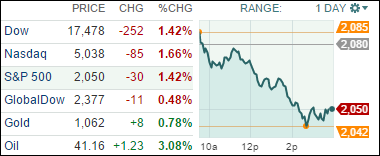
The S&P 500 index dropped back into the red for 2015, and the Dow ended down 252 points at 17,478 today after the ECB announced fresh stimulus efforts that didn’t meet the lofty expectations of investors.
It was all about Europe today, as ECB President Mario Draghi failed to deliver on the market’s hopes for a steep interest rate cut. The failure to give the EU market the amount of stimulus it hoped for caused the euro to spike against the dollar, a development that hinders the ECB’s ability to jump-start growth and boost “dangerously” low inflation. Let us not forget that a stronger euro makes European exports more expensive and less competitive.
On to China. China’s government praised this week’s decision by the IMF to add the yuan to the world’s elite reserve currencies, saying it was recognition of the government’s decades-long effort to reform its economy. The move by the IMF on Monday comes as China is at economic and financial crossroads. Slowing growth has pushed the ruling communist party to jettison the state-led development model and to advocate for a more market-driven, less interventionist system. The yuan will join the reserve currencies on Oct. 1, 2016, bringing the total number of currencies to five, along with the Japanese yen, U.S. dollar, British pound and euro.
Wall Street on Friday is poised for the November employment report. If the U.S. economy continued to create jobs at a solid pace last month, after producing a better-than-expected 271,000 jobs in October, it will likely cement a Fed rate hike on Dec. 16, barring any shocks between now and then.
To no surprise, all of our 10 ETFs in the Spotlight slipped with the indexes and closed lower. Healthcare (XLV) took top billing with -2.19% while Consumer Staples (XLP) showed the most stability by surrendering only -0.52%.
 The recent stream of data indicates everything is good enough for the Fed to proceed as planned with a rate-hike in December, said Michael Gapen, Chief US Economist. Although the latest inflation report came in softer than many had expected, it was no surprise; again that was just further softness in core goods prices, being weighed down by a stronger dollar and excess capacity abroad.