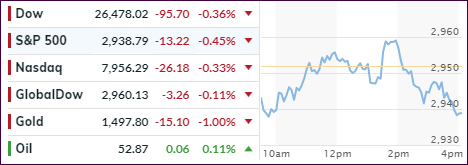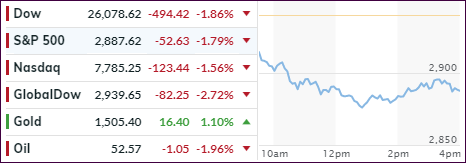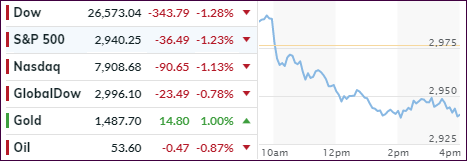
[Chart courtesy of MarketWatch.com]
- Moving the markets
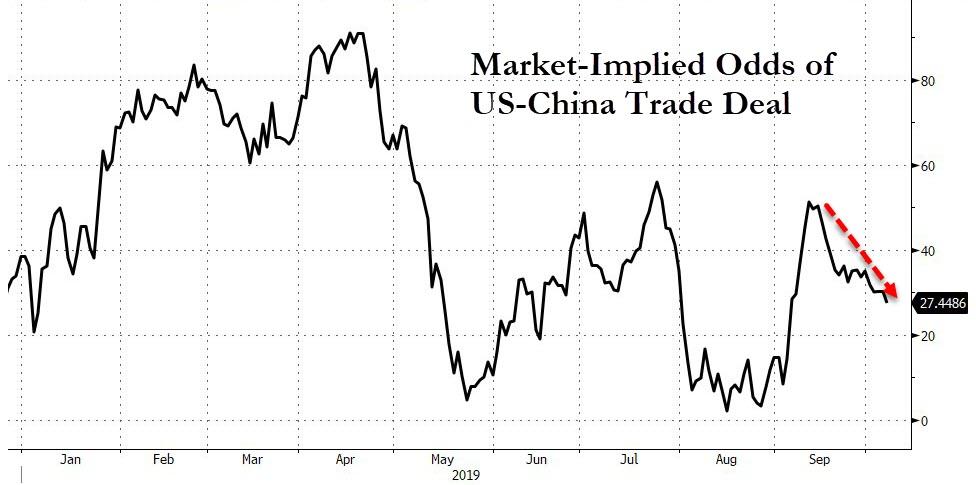
After the Chinese offered not much hope for a successful outcome of the upcoming trade meeting, today it was the US’s turn to up the ante by blacklisting 28 Chinese companies due to alleged human-rights violations against Muslim minorities.
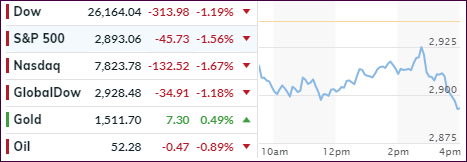
Should this mutual hostility fest continue, Friday’s scheduled high-level trade meeting might be over before it even starts. So, it came as no surprise that the markets sold off sharply, as “trade hope” has been one of the constant drivers of equities.
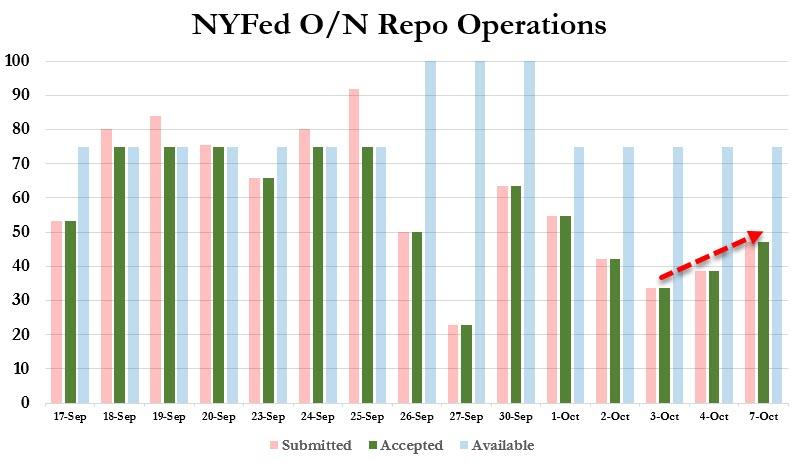
Then Fed head Powell attempted, with modest success, to levitate equities by announcing something that sounded like QE (Quantitative Easing) but wasn’t given that name. Here’s part of what he said:
While a range of factors may have contributed to these developments, it is clear that without a sufficient quantity of reserves in the banking system, even routine increases in funding pressures can lead to outsized movements in money market interest rates. This volatility can impede the effective implementation of monetary policy, and we are addressing it.
Indeed, my colleagues and I will soon announce measures to add to the supply of reserves over time.
Consistent with a decision we made in January, our goal is to provide an ample supply of reserves to ensure that control of the federal funds rate and other short-term interest rates is exercised primarily by setting our administered rates and not through frequent market interventions. Of course, we will not hesitate to conduct temporary operations if needed to foster trading in the federal funds market at rates within the target range.
“I want to emphasize that growth of our balance sheet for reserve management purposes should in no way be confused with the large-scale asset purchase programs that we deployed after the financial crisis.”
ZH supplied the rough translation of the above:
Don’t confuse balance sheet growth for “reserve management” with balance sheet growth for “stock market management.”
While that helped equities to regain some footing, it was short-lived, as Trump stepped up by announcing notable actions against human rights abusers in China, which just about destroyed any gains from Powell’s talk and furthermore may have put a big temporary nail in the trade coffin.
Stocks had enough of this and south we went in a hurry with the major indexes closing not only at new lows for the day but also hitting critical technical levels.
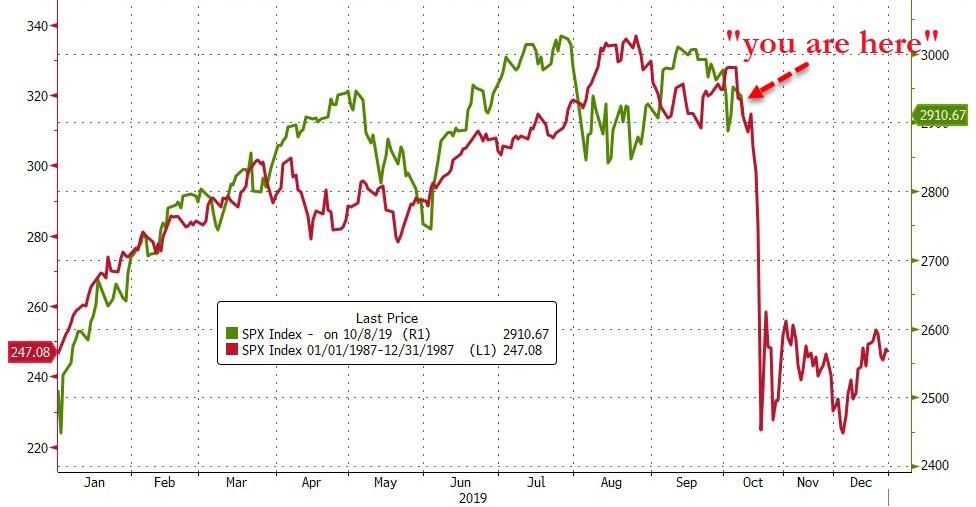
For the last 1.5 years, ZH has been tracking current market direction compared to events leading up to the crash of 1987, as this chart shows.
While history may not repeat, the above chart makes a solid case, that it may. Additionally, our main directional indicator, the Domestic Trend Tracking Index (TTI), pierced its long-term trend line to the downside today by -0.39% for the first time since February.
While this is only a scant piercing, it nevertheless indicates that tough times for stocks could be ahead. I will watch developments closely, and if more weakness persists tomorrow, will start liquidating some of our more volatile holdings with the remainder being on the chopping block soon thereafter.
I would not be the least bit surprised, given current and recent chaotic events, if we find ourselves back on the safety of the sidelines very soon and watching the markets self-destruct.
Read More