A Puke-A-Thon For Equities

Ulli Market Commentary Contact

[Chart courtesy of MarketWatch.com]

  1. Moving the markets

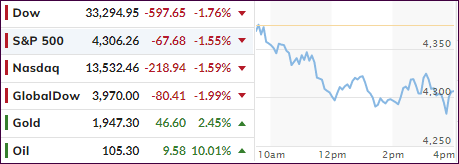
As the Russia-Ukraine conflict spreads and intensifies, it should come as no surprise that equities eventually would be affected negatively. We have seen some late session comeback attempts, but current geopolitical conditions may make it very difficult to continue these efforts.

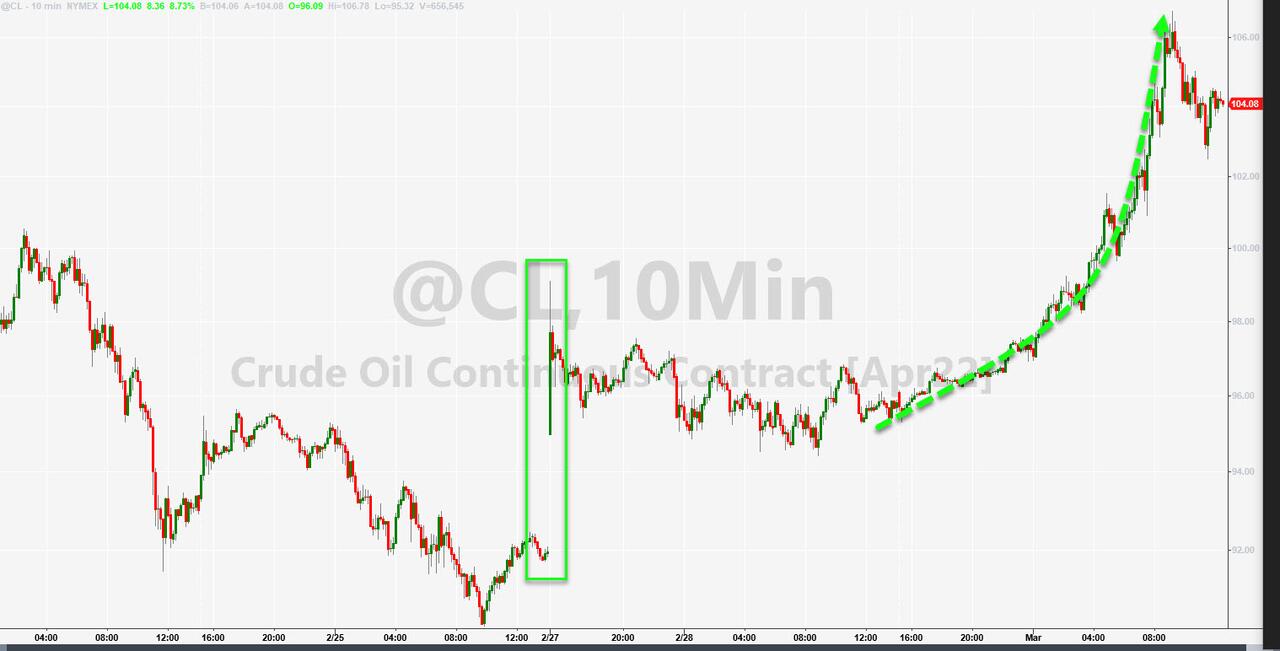
The reality, that sanctioning others may have a boomerang effect came into play today, when crude oil surged over to $100, making future gasoline price hikes at the pump a virtual certainty. Commodities rallied in sync, with my favorite index (DBC), which we own, spiking 4% on the day.  

With our domestic Trend Tracking Index (TTI-section 3 below) diving deeper into bear market territory, equities seem to be stuck in a fog of uncertainty and lack incentive to stabilize—at least for the time being.

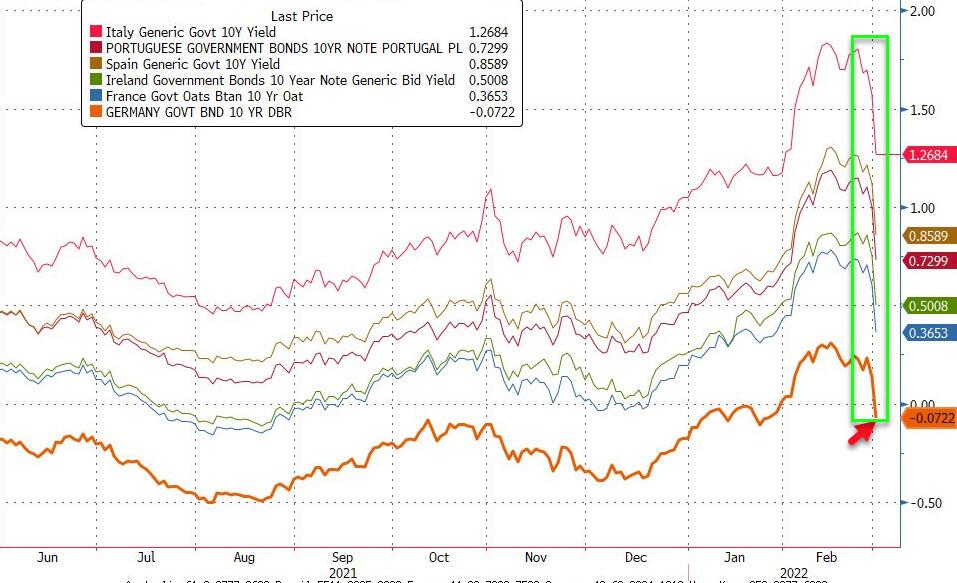
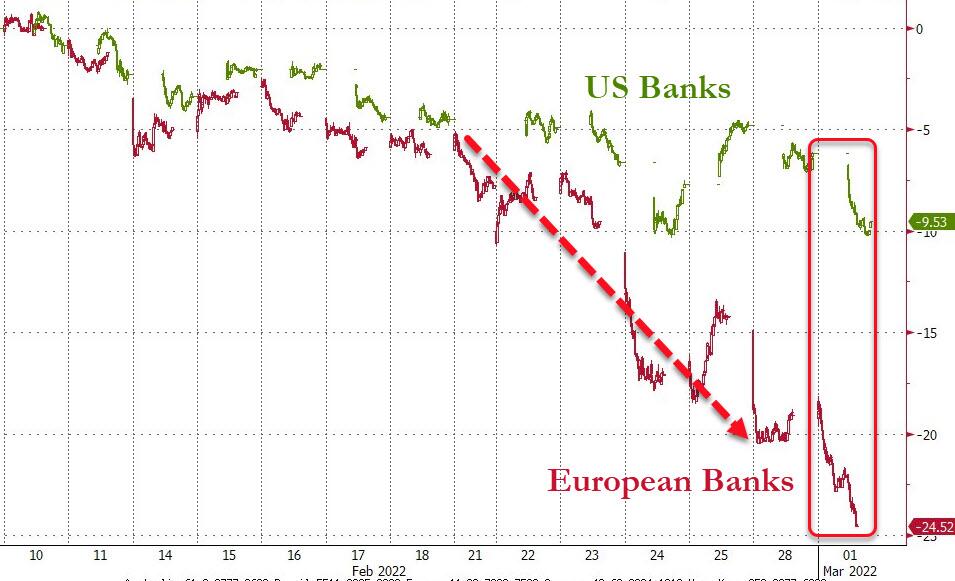
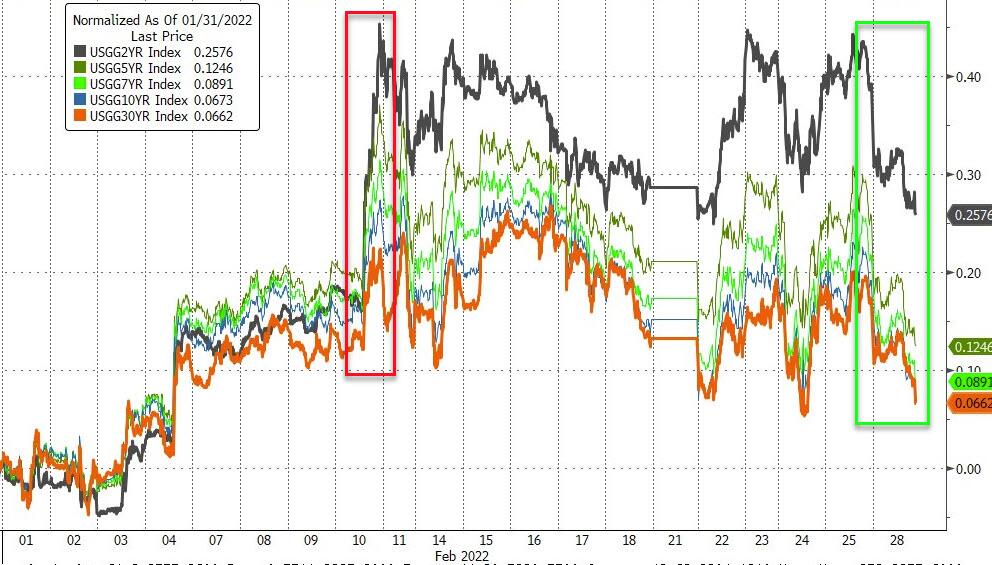
Bond yields around the world crashed, with some having their biggest drops since 1992 (UK-10-year). While US banks were the worst performers today, their European cousins were in much worse shape, down some 25% in the last few days, as Bloomberg shows here.

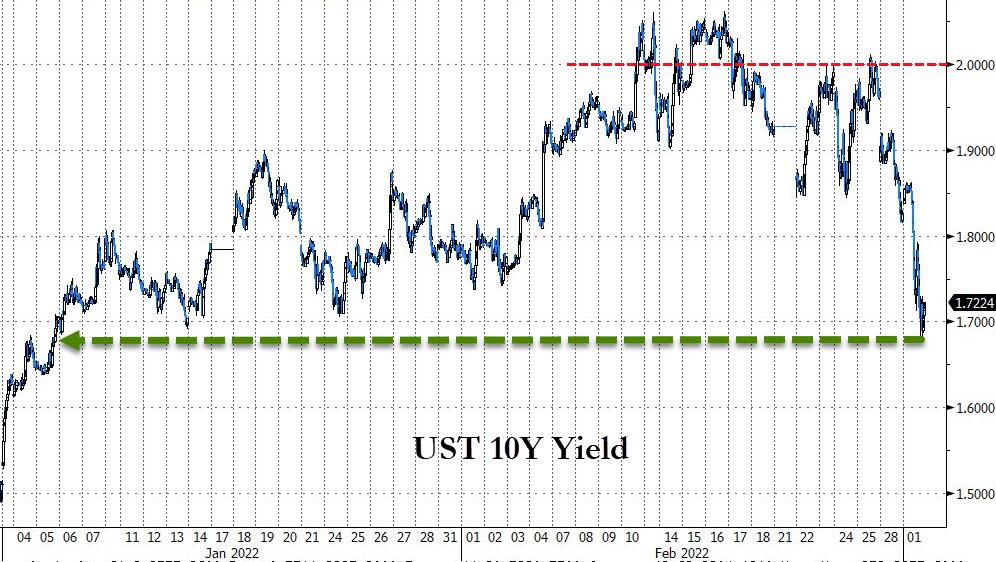
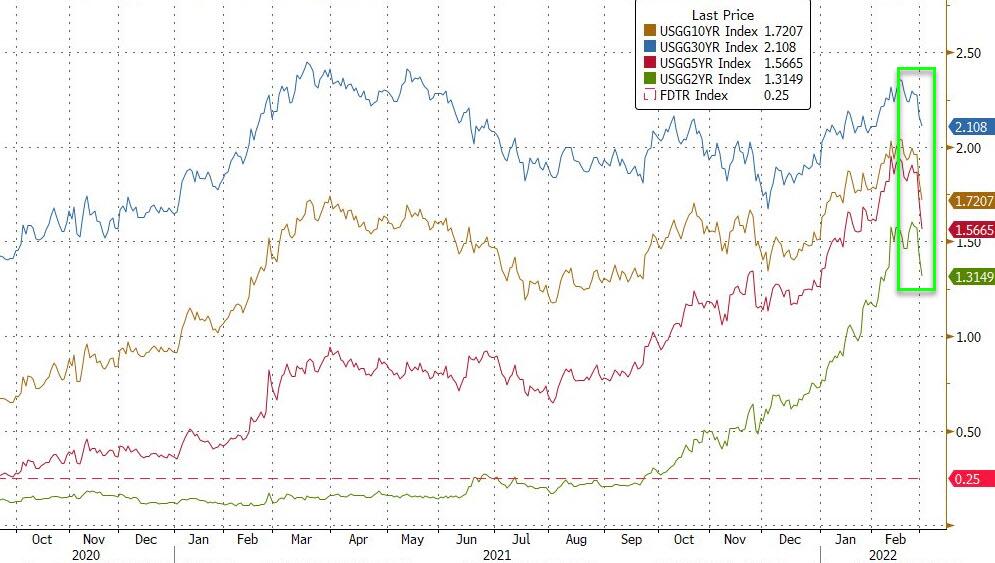
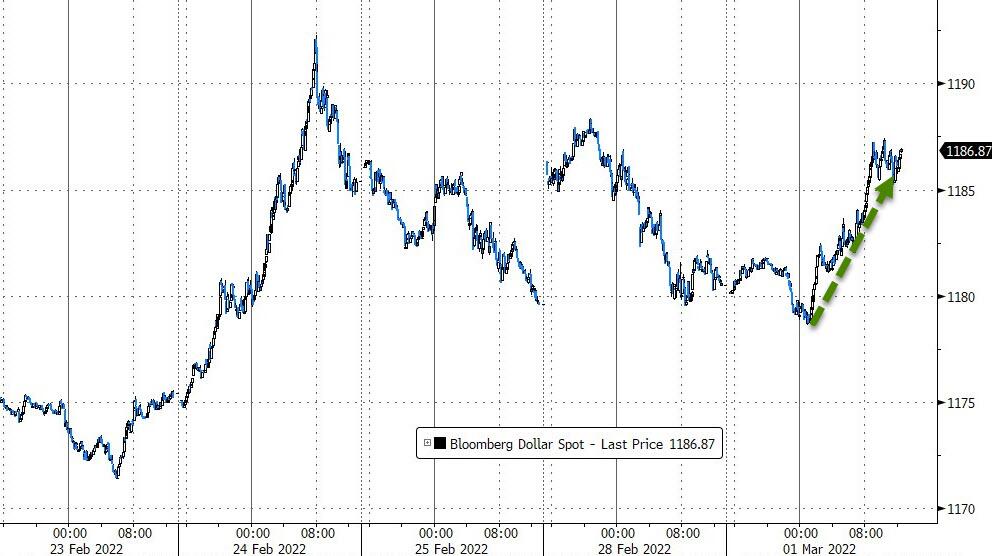
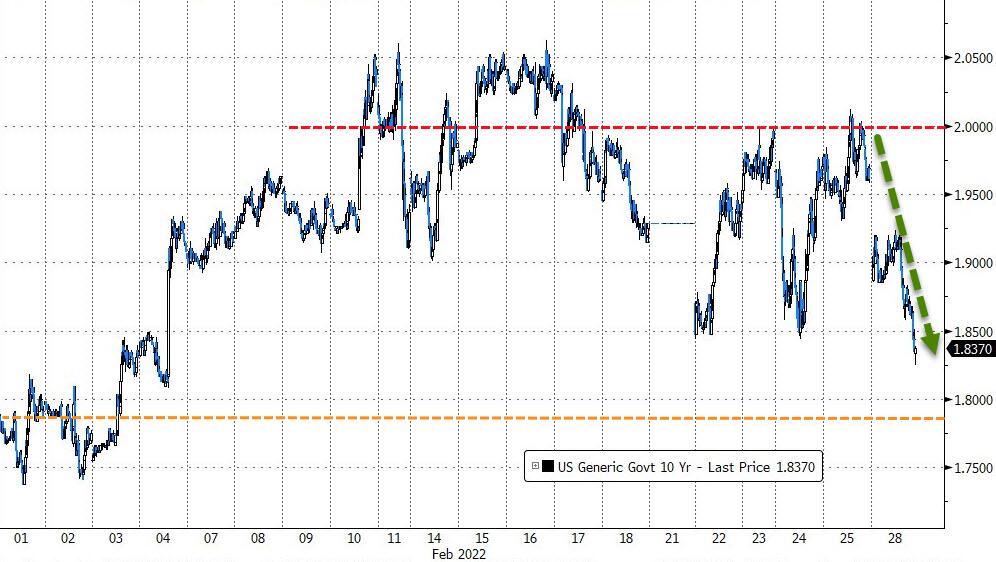
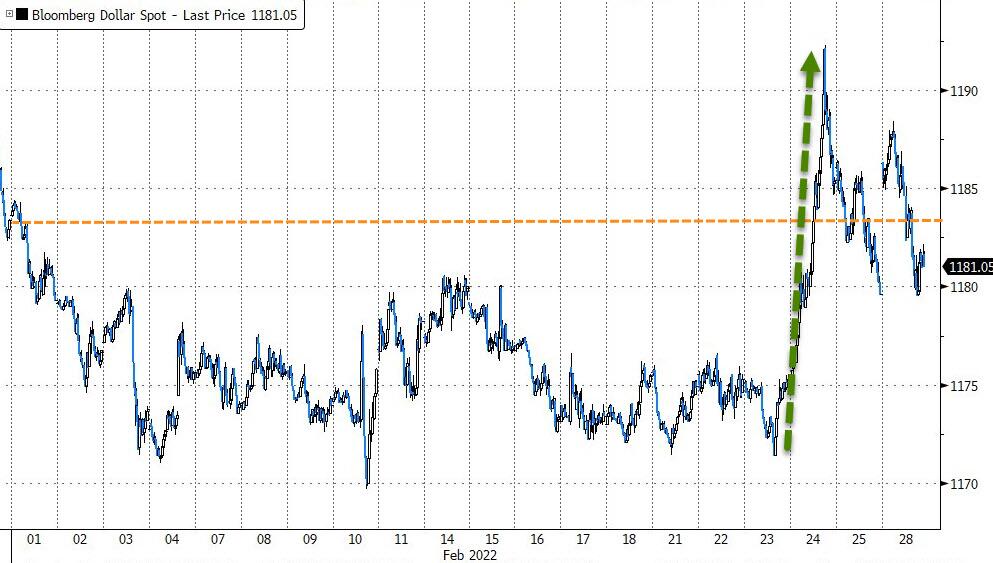
Here at home, the 10-year yield tumbled to below 1.7%, a level last seen at the beginning of January. All other maturities showed similar performances. With the flight to safety on traders’ minds, the US Dollar rebounded and closed higher.

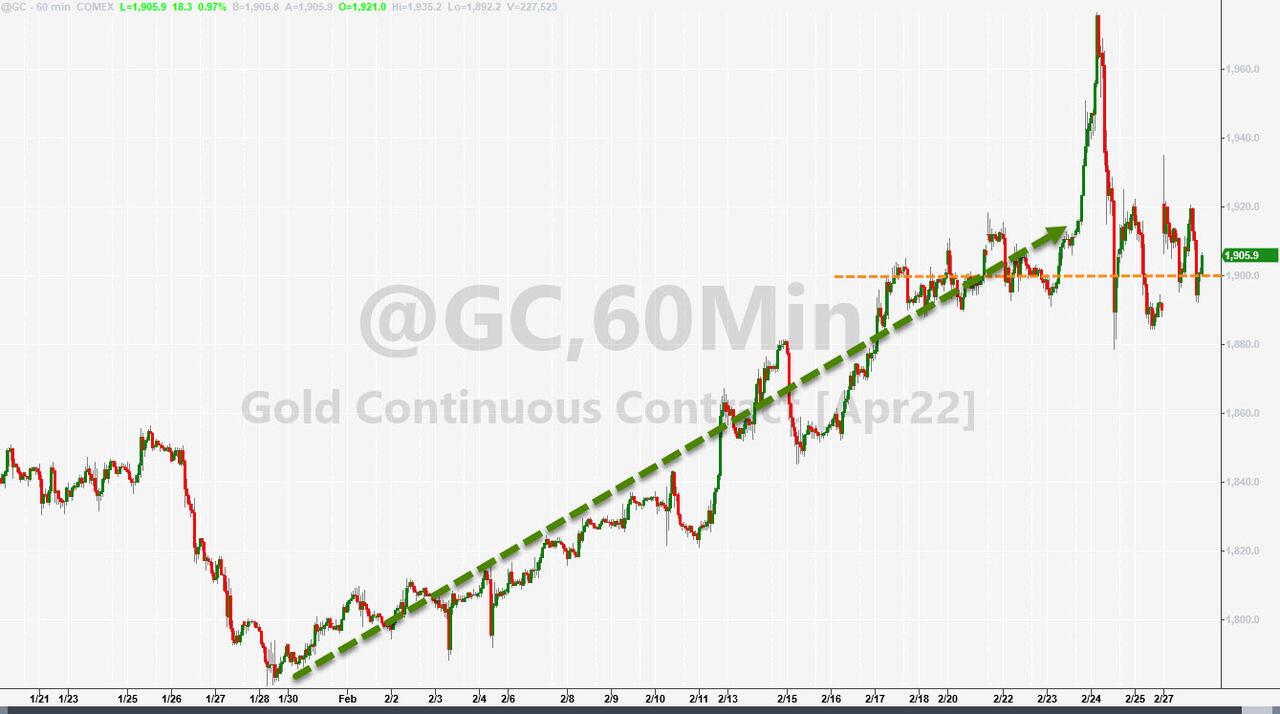
Gold did what it’s supposed to, namely rally during times of uncertainty, and the precious metal did not disappoint, as it surged +2.57% for the session.

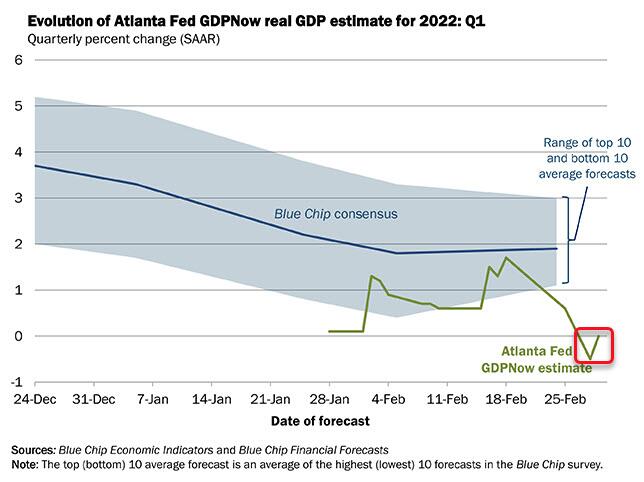
Among all this upheaval, the Atlanta Fed announced their GDP estimate for Q1 2022. I hate to be the bearer of bad news, but the number they spewed out was a big fat ZERO. In other words, no growth, and when coupling this with the inflationary trends we’re seeing, it appears to me that “Stagflation” is now firmly baked into the cake.

Read More
Fighting Uncertainty

Ulli Market Commentary Contact

[Chart courtesy of MarketWatch.com]

  1. Moving the markets

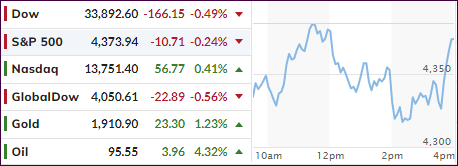
Volatility reigned supreme in the markets, but in the end, this session did not turn out as bad as had been feared over the weekend. With the Russia-Ukraine war heating up and sanctions being announced around the world, there will be more fallout ahead for all parties involved.

After being down some 500 points early on, the Dow, along with the other two major indexes, roundtripped yet managed to find a bottom late in the session, which turned into catalyst for digging themselves out of a deep hole.

As a result, we only closed moderately in the red with the Nasdaq eking out a 0.41% gain, after having been down over 3% in the overnight session. February, however, was a rough one for stocks with all indexes posting sharp monthly losses.

ZH summed up February like this:

It’s almost difficult to remember now, but February started with a lingering focus on the Omicron wave of the virus and the expected business interruptions that COVID was again causing. The virus has since faded in the US although it still has a very real presence in Asia.

The realization that inflation does not appear to be temporary and may be more persistent than recent past bouts of higher prices has also caused markets to increase expectations for the number of rate hikes that the Fed is likely to initiate in the imminent hiking cycle.

And as we exit February, Goldman’s Chris Hussey notes that attention is now divided between what the Fed will say (and do) on March 16th and how the situation between Russia and Ukraine will evolve. Against this backdrop of rising inflation, rates, and geopolitical risk, Energy and Materials outperformed again in February.

As could be expected, during times of turbulence, bonds benefited today as yields retreated with the 10-year pulling back to 1.82%, but for the month, all yields were higher. The US Dollar dropped today and ended the month moderately lower, while gold successfully defended its $1,900 level.  

Any kind of “war” presents a “risk off” environment, during which reduced exposure and/or flight into those sectors benefitting from the current situation, is a sensible way to go.

Everything we are currently witnessing is simply unprecedented and predictions are merely wild guesses likely influenced by wishful thinking.

We are facing many unknowns, and a more conservative approach to investing with less exposure will better protect our portfolios, should the unknowns increase in magnitude and pull equities deeper into bear market territory.

Read More

ETFs On The Cutline – Updated Through 02/25/2022

Ulli ETFs on the Cutline Contact

Below, please find the latest High-Volume ETF Cutline report, which shows how far above or below their respective long-term trend lines (39-week SMA) my currently tracked ETFs are positioned.

This report covers the HV ETF Master List from Thursday’s StatSheet and includes 312 High Volume ETFs, defined as those with an average daily volume of more than $5 million, of which currently 88 (last week 75) are hovering in bullish territory. The yellow line separates those ETFs that are positioned above their trend line (%M/A) from those that have dropped below it.

Take a look:                                                                   

The HV ETF Master Cutline Report

In case you are not familiar with some of the terminology used in the reports, please read the Glossary of Terms. If you missed the original post about the Cutline approach, you can read it here.

ETF Tracker Newsletter For February 25, 2022

Ulli ETF Tracker Contact

ETF Tracker StatSheet          

You can view the latest version here.

EXPLODING INTO THE WEEKEND

[Chart courtesy of MarketWatch.com]

  1. Moving the markets

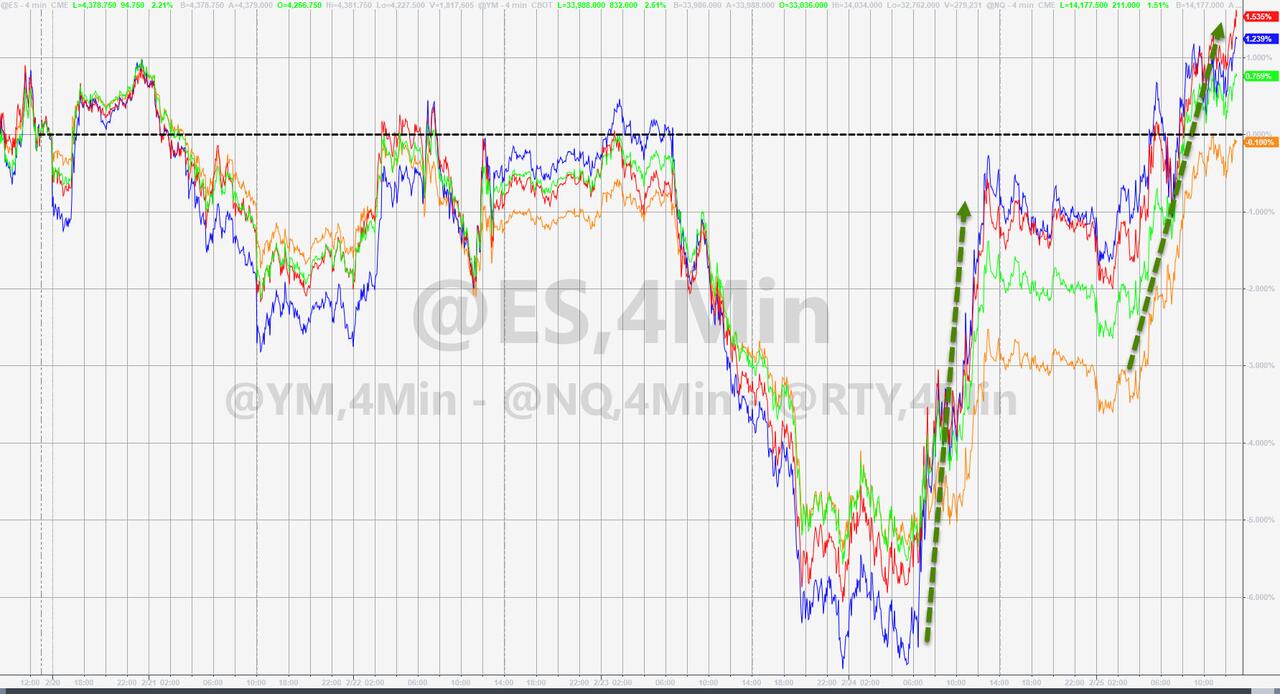
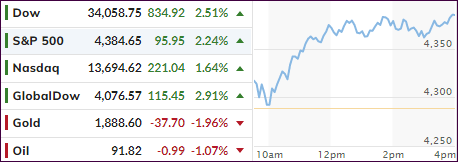
The markets continued their upward explosion from a low of -850 points yesterday, which was entirely wiped out, with the index adding another 800-point for a comeback range of almost 1,700 Dow points—in 2 days.

It now appears that there was an overreaction to the downside with the financial risks being perceived as less than was anticipated. Helping today’s ramp was an announcement by the Kremlin that Putin had agreed to organize negotiations with Ukraine’s Zelensky to discuss Ukraine’s “neutral status.”

ZeroHedge reported the timeline:

  • KREMLIN SAYS PUTIN HAS AGREED TO ORGANISE NEGOTIATIONS AFTER ZELENSKIY SAID HE WAS READY TO DISCUSS UKRAINIAN NEUTRALITY
  • KREMLIN SAYS WE HAVE NOTIFIED THE UKRAINIANS OF PROPOSAL TO HOLD TALKS IN MINSK
  • KREMLIN SAYS PUTIN HAS CALLED BELARUS’S LUKASHENKO TO ORGANISE MINSK TALKS WITH UKRAINE
  • KREMLIN SAYS PUTIN HAS AGREED TO ORGANISE NEGOTIATIONS AFTER ZELENSKIY SAID HE WAS READY TO DISCUSS UKRAINIAN NEUTRALITY

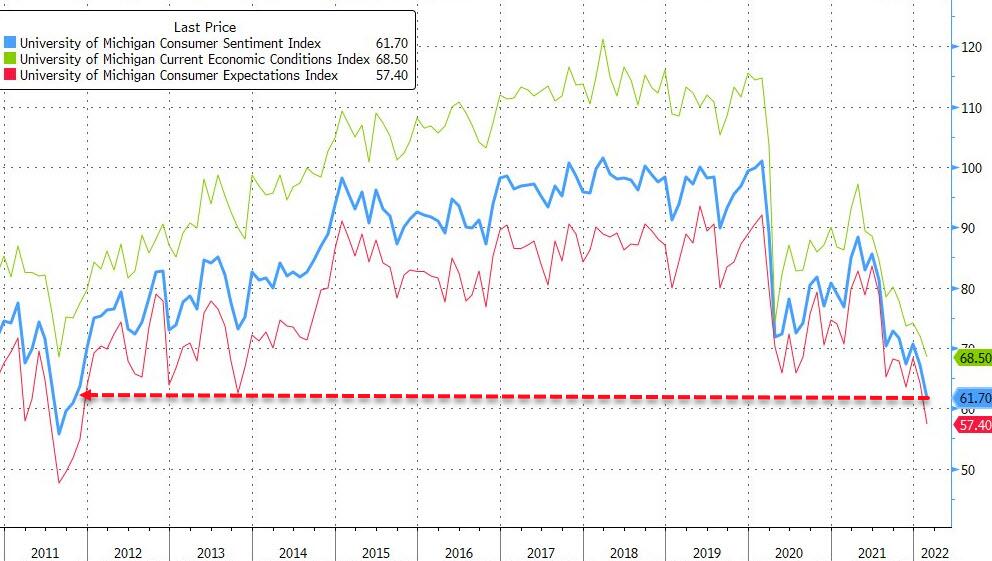
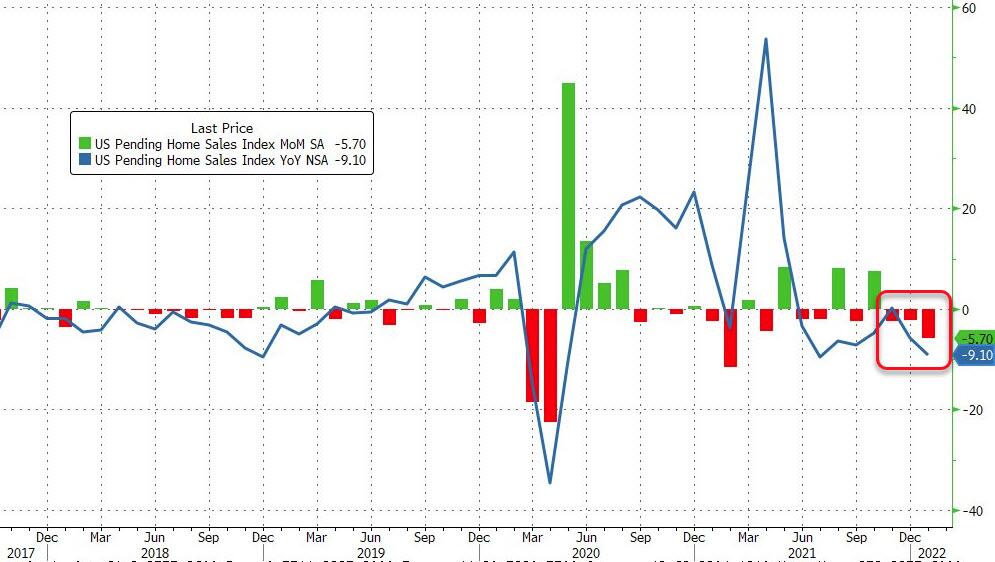
That was sufficient news to keep the bullish mood going, with economic news, global and domestic, being pushed aside or simply being neglected. Nobody cared that Consumer Sentiment remained at an 11-year low, or that US Pending Home Sales plunged in January due to soaring mortgage rates.

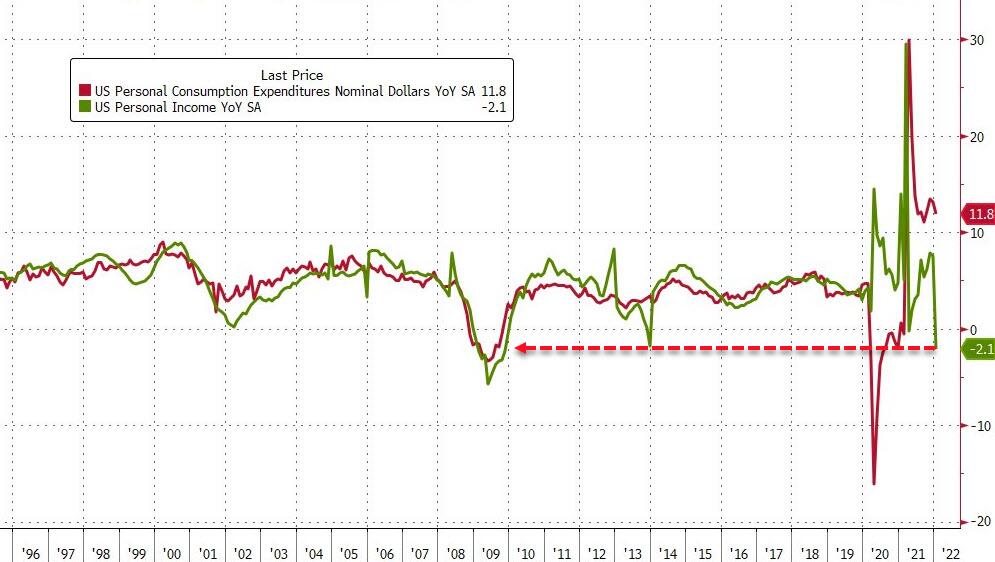
Adding insult to injury was the news that the Fed’s favorite inflation indicator came in hotter than expected, as ZH reported, and reached 40-year highs. Personal income experienced its biggest YoY drop since November 2009.

None of this mattered during this Holiday shortened week, which ZH summed up like this:

But by the end of the week (during which many bloviated that Putin was potentially starting WW3), stocks were higher, Fed rate-hike trajectory had shifted hawkishly, oil was unchanged, gold was flat, safe-haven Treasuries were sold, cryptos were lower, and Biden approval ratings were higher.

Bond yields closed higher, the US Dollar rallied while oil, crude and precious metals were essentially unchanged over the past 4 trading days.

It sure looked like the ultimate outcome when it comes to “bad news is good news,” and it influenced our trend tracking status, whose southerly direction has suddenly become questionable, that is if this rebound indeed has legs.

Right now, it looks like we’ve experienced one of the biggest head fakes I have seen in decades with the bearish trend reversing within 2 days and pushing our main directional indicator, the Domestic TTI, back into bullish territory—although by only a fraction, as you can see in section 3 below.

Whether that will potentially turn into a new “Buy” signal or simply be a hiccup in an ongoing bear market, is the unanswered question. I am sure, we may get some hints next week as to whether economic realty will take center stage again.

Read More

Weekly StatSheet For The ETF Tracker Newsletter – Updated Through 02/24/2022

Ulli ETF StatSheet Contact

ETF Data updated through Thursday, February 24, 2022

Methodology/Use of this StatSheet:

1. From the universe of over 1,800 ETFs, I have selected only those with a trading volume of over $5 million per day (HV ETFs), so that liquidity and a small bid/ask spread are assured.

2. Trend Tracking Indexes (TTIs)

Buy or Sell decisions for Domestic and International ETFs (section 1 and 2), are made based on the respective TTI and its position either above or below its long-term M/A (Moving Average). A crossing of the trend line from below accompanied by some staying power above constitutes a “Buy” signal. Conversely, a clear break below the line constitutes a “Sell” signal. Additionally, I use an 12% trailing stop loss on all positions in these categories to control downside risk.

3. All other investment arenas do not have a TTI and should be traded based on the position of the individual ETF relative to its own respective trend line (%M/A). That’s why those signals are referred to as a “Selective Buy.” In other words, if an ETF crosses its own trendline to the upside, a “Buy” signal is generated. Here too, I recommend trailing sell stop of 12%, or less, depending on your risk tolerance.

If you are unfamiliar with some of the terminology, please see Glossary of Terms and new subscriber information in section 9.     

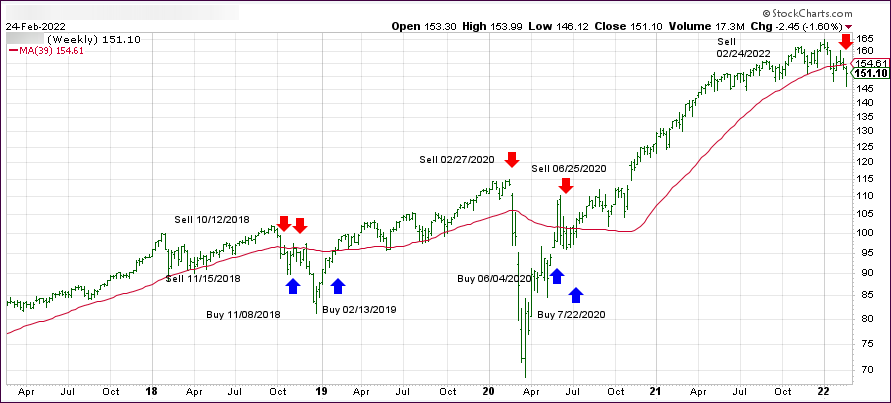
1. DOMESTIC EQUITY ETFs: SELL — since 02/24/2020

Click on chart to enlarge

Our main directional indicator, the Domestic Trend Tracking Index (TTI-green line in the above chart) has just broken below its long-term trend line (red) by -2.24% and confirmed the “Sell” signal as of today.

Read More

Digging Out Of A Deep Hole

Ulli Market Commentary Contact

[Chart courtesy of MarketWatch.com]

  1. Moving the markets

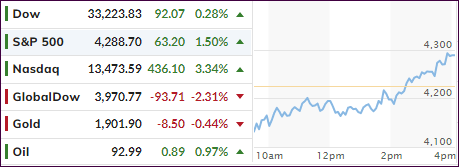
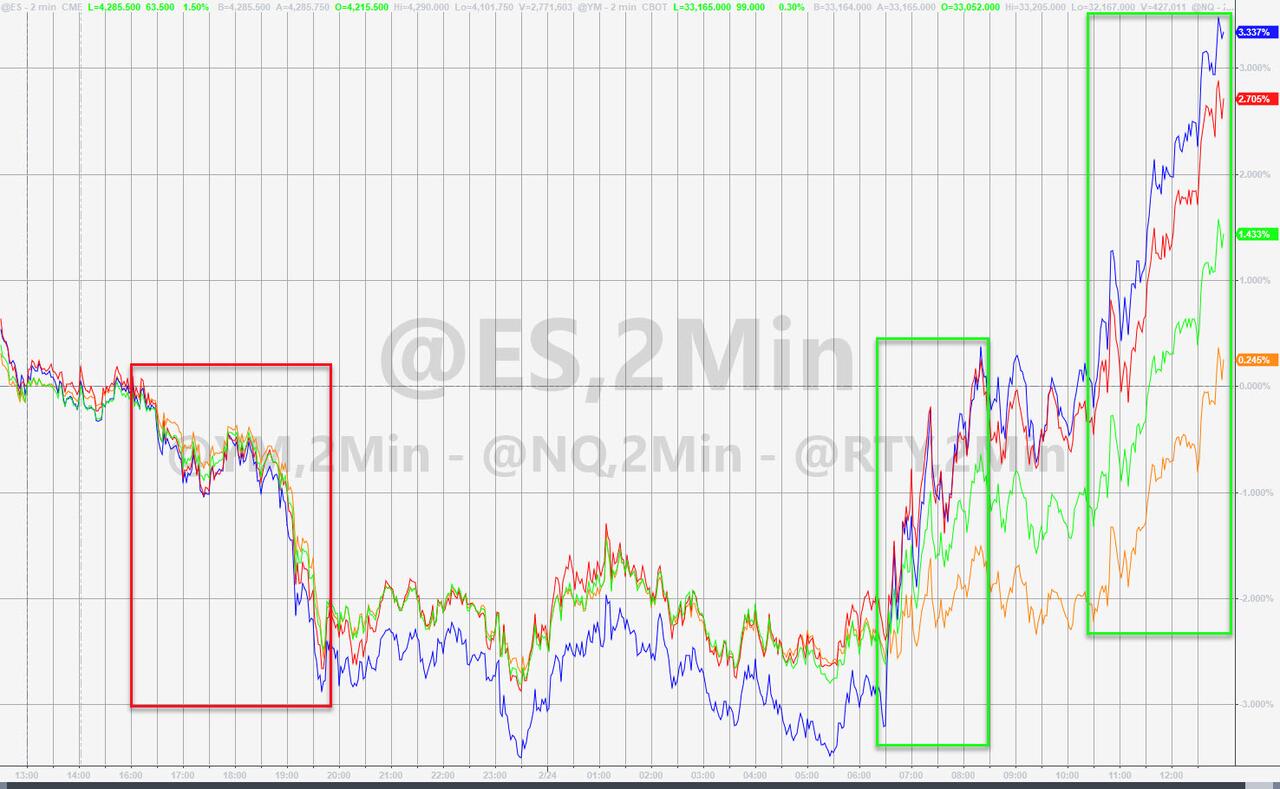
The Russian-Ukraine saber rattling shifted into overdrive and pulled equities down sharply with the Dow down over 850 points at its low of the session.

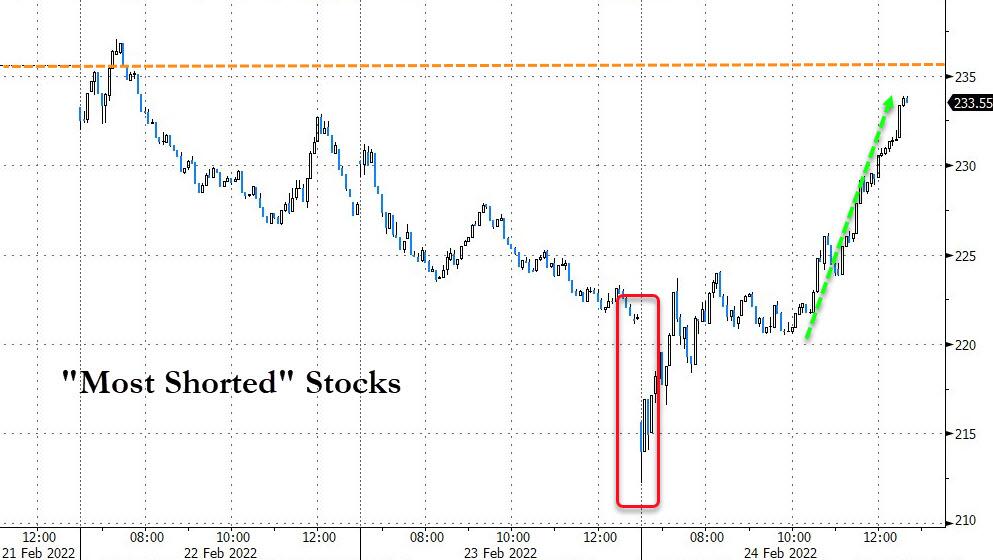
As if by magic, a stunning afternoon comeback managed to wipe out all the morning’s losses with the major indexes ending in the green, as the Nasdaq ruled supreme, and the always present short-squeeze lent its usual assist.  

Apparently, traders and algo alike ignored warnings such as the one from Wells Fargo’s analyst “now is not a time to be buying the dip in stocks.” It’s difficult to fathom that the so-called worst invasion since WW 2 is a buying opportunity, as ZH put it.

Nomura’s Charlie McElligott cleared things up by explaining it this way:

If it’s hedge unwinds, not optimism that is driving this, it may leave us open to pullback thereafter unless flows sustain.

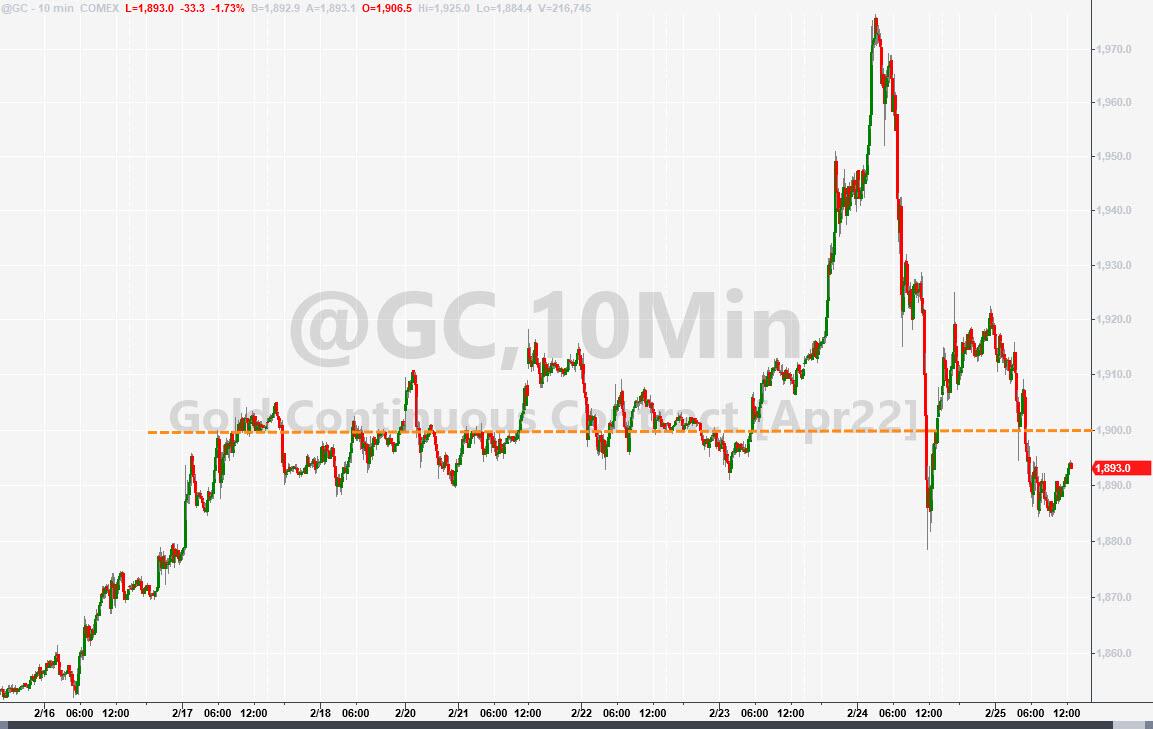
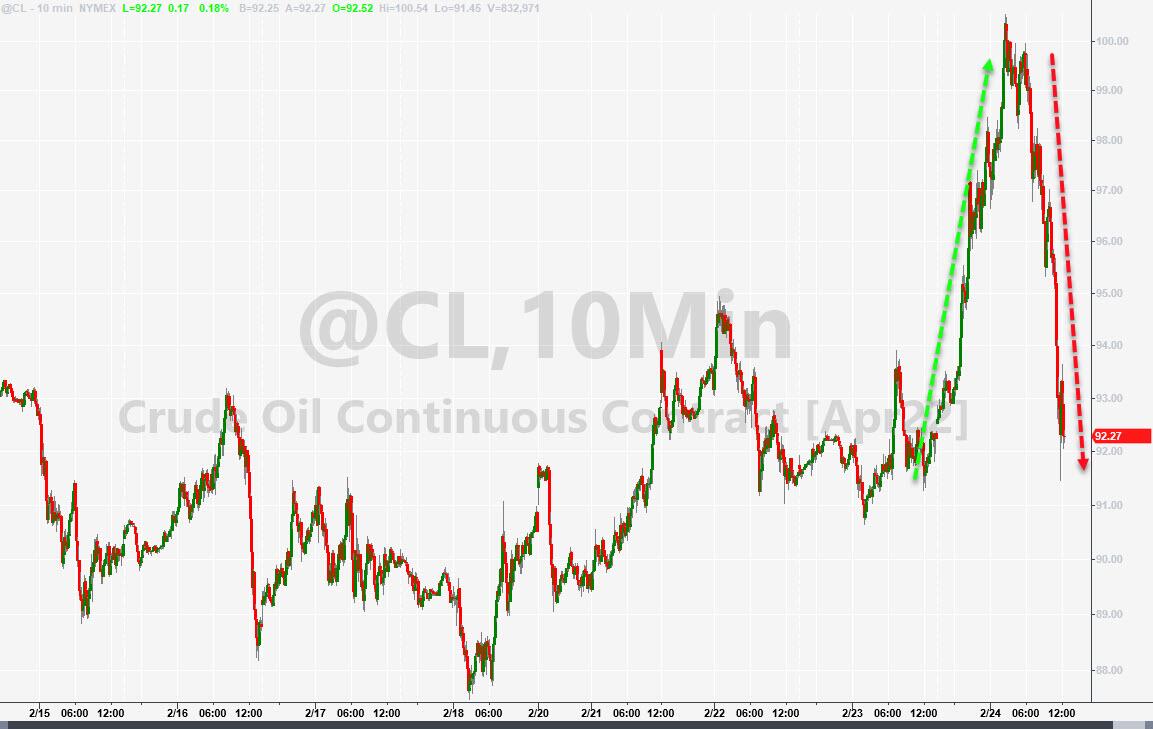
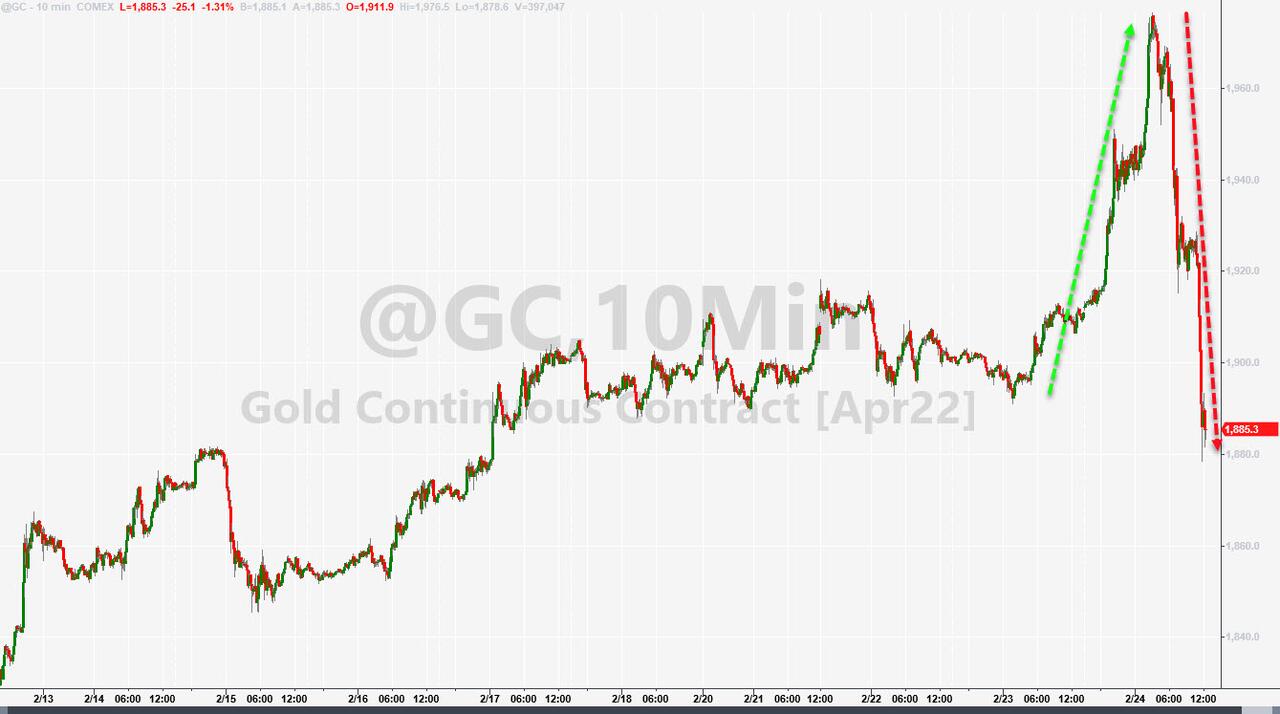
Roundtripping in a wild fashion was Crude Oil, which exploded to over $100 but gave back most of its gains. Gold followed suit and reversed its early advances by losing the $1,900 level.

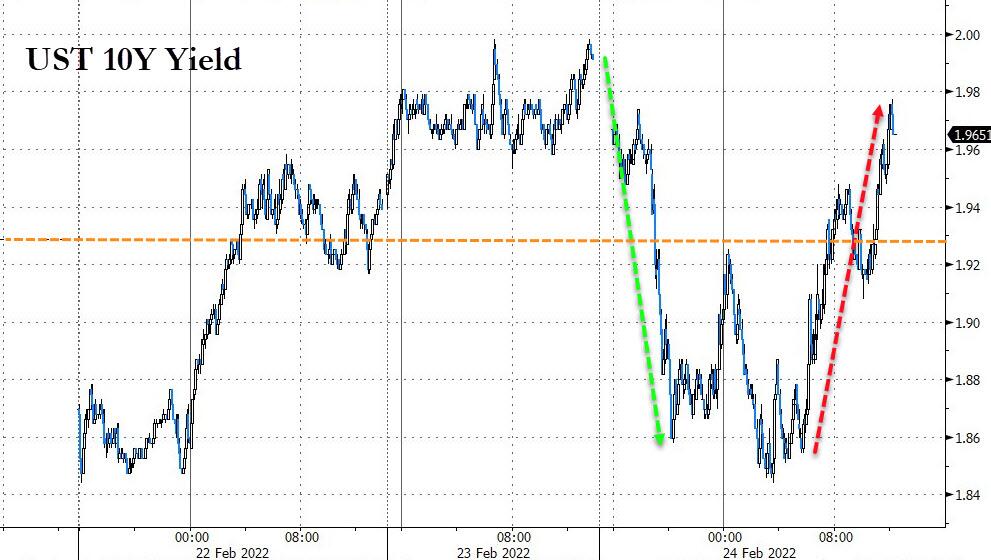
Bond yields enjoyed the rollercoaster ride as well but, while serving as a “safe haven” first (lower yields), then spiking and thereby covering an unusual broad trading range.

Makes you wonder if tomorrow will bring joy or revulsion.

Read More