Domestic “Sell” Signal Generated

Ulli Market Commentary Contact

[Chart courtesy of MarketWatch.com]

  1. Moving the markets

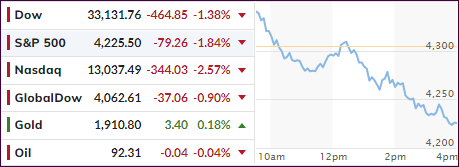
Finally, after several weeks of bouncing above and below my domestic trend line, which separates bullish from bearish territory, today’s downside piercing was enough to confirm that the existing “Buy” cycle had finally come to an end. For tracking purposes, the effective date will be tomorrow, February 24th.

This shift to “Sell” mode only affects “broadly diversified domestic equity ETFs and mutual funds.” Sector and County funds shown in my Thursday StatSheet remain in “selective” Buy mode, meaning they are in bullish territory, if they remain above their respective trend lines (%M/A).

As posted yesterday, in my advisor practice we had only minimal domestic exposure left, the main position of which I already liquidated earlier in the session. It seemed that, due to all the geopolitical distractions, traders and algos alike had not realized that the most widely followed indicator, the S&P 500, had not only dropped below its 200-day M/A a few days ago but also into “correction” territory.

Of course, in this topsy turvy world we are living in, there is no way to assess how long we will remain out of the domestic market. In the meantime, however, I have shifted some assets into a few sector funds, which have been performing well and look to do so in the future given the continuing rise of inflation along with ever-increasing commodity and energy prices.

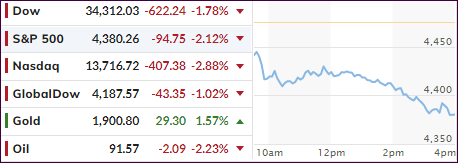
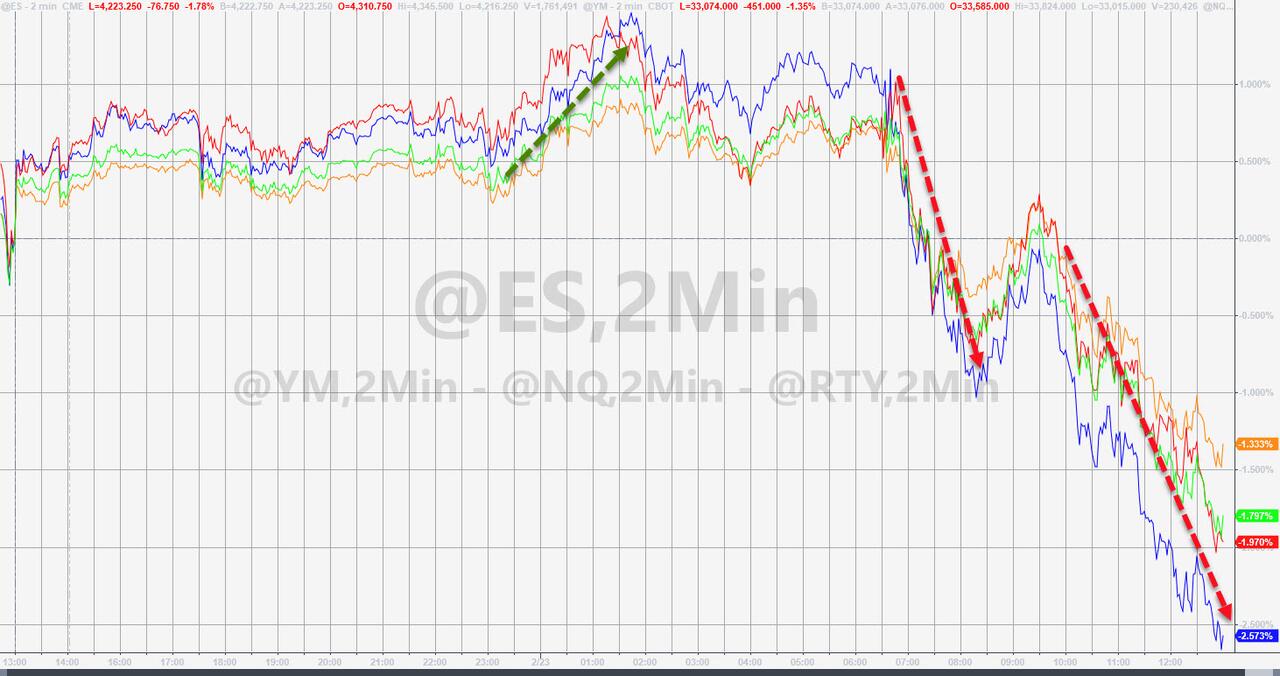
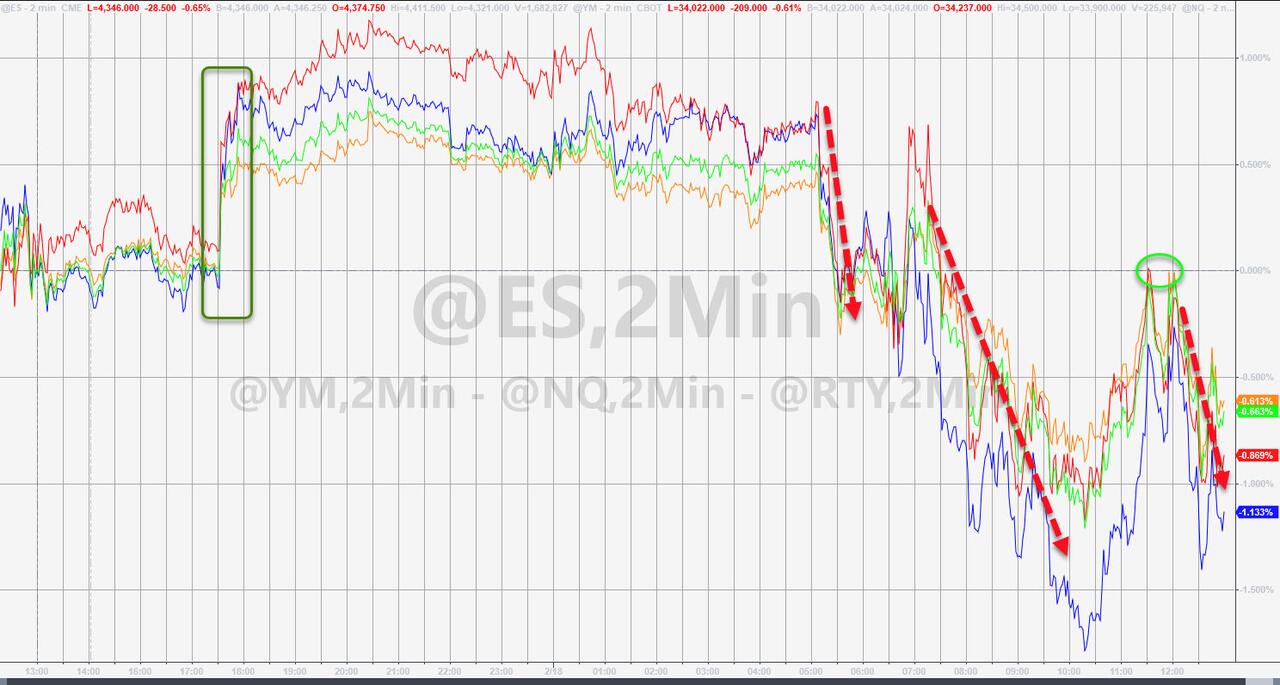
The major indexes, while holding up initially, plunged into the close and reached their lowest level in 2022. In a more shocking context, ZeroHedge reported that SmallCaps have now given up ALL of 2021’s gains (now down 1.4% from 12/31/20), and the Nasdaq is only up 1% from the end of 2020. Ouch! So much for Buy and Hold when the bear strikes.

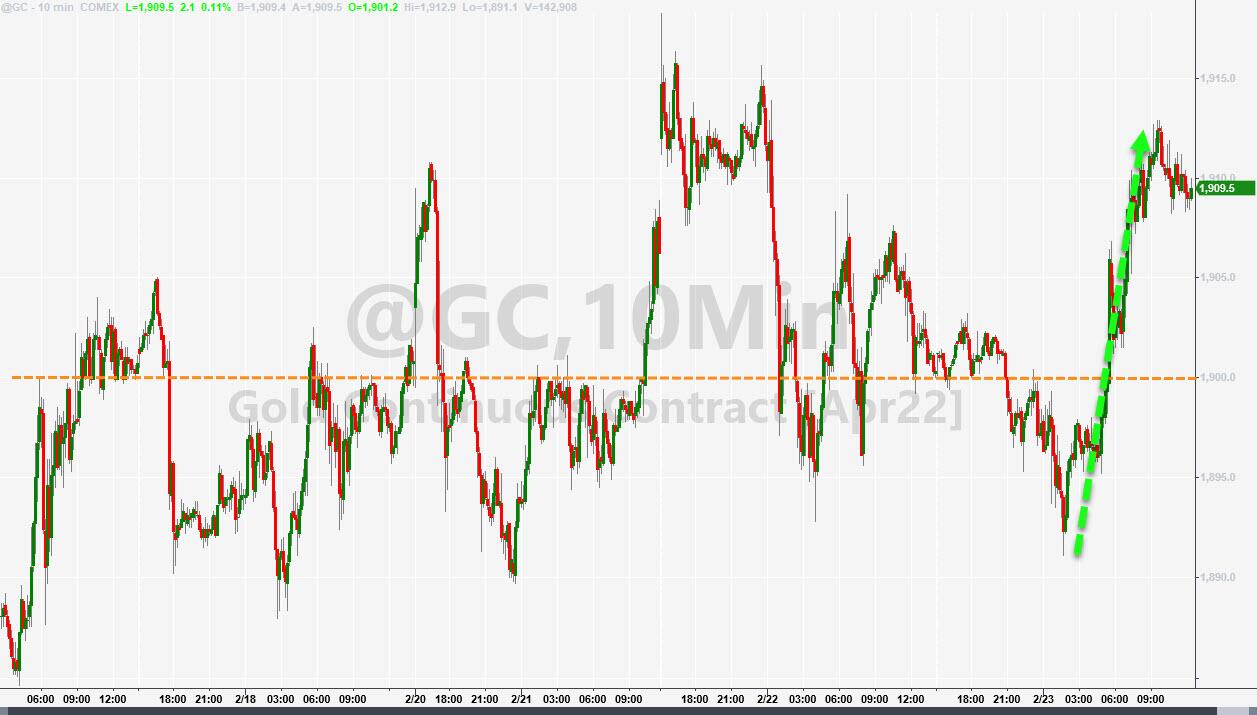
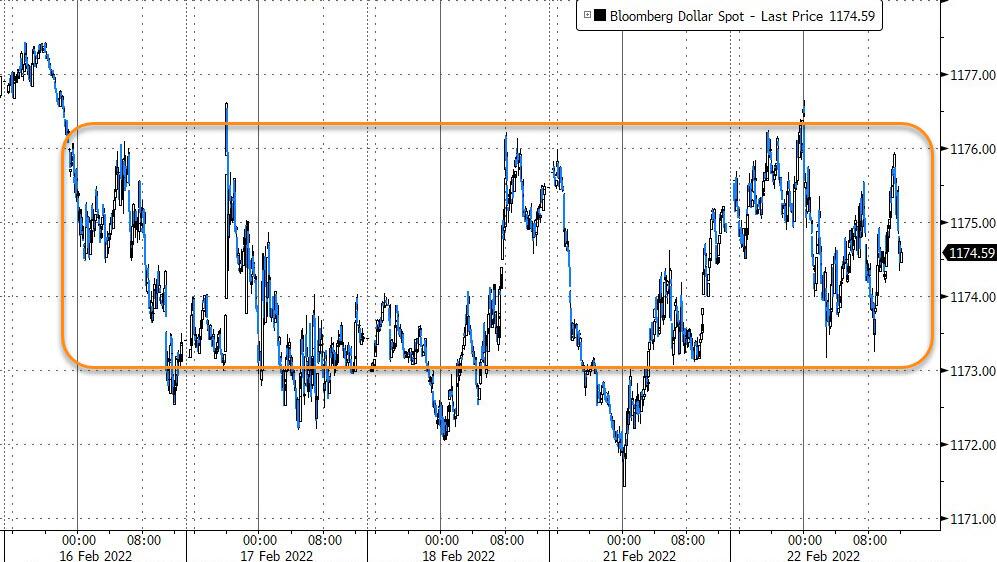
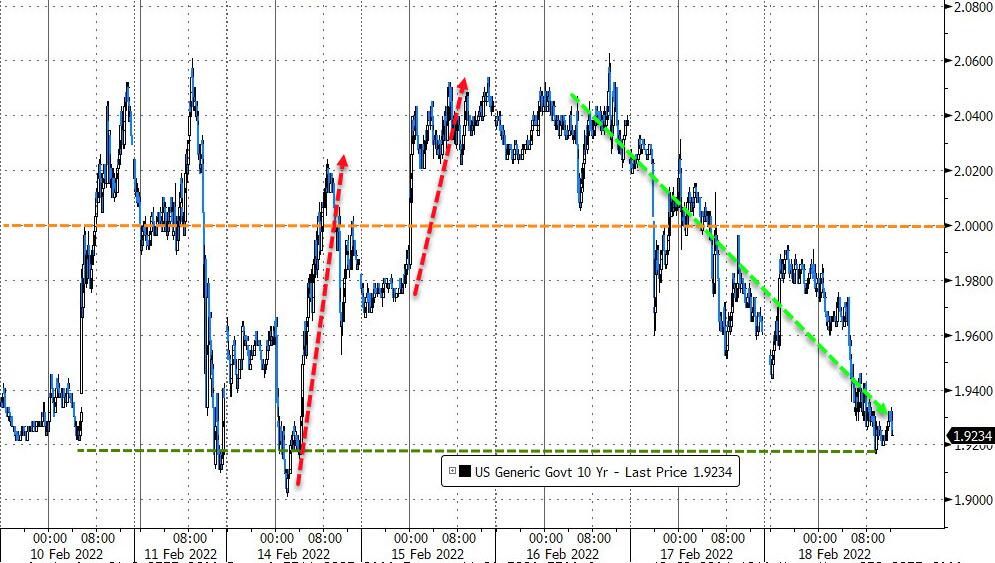
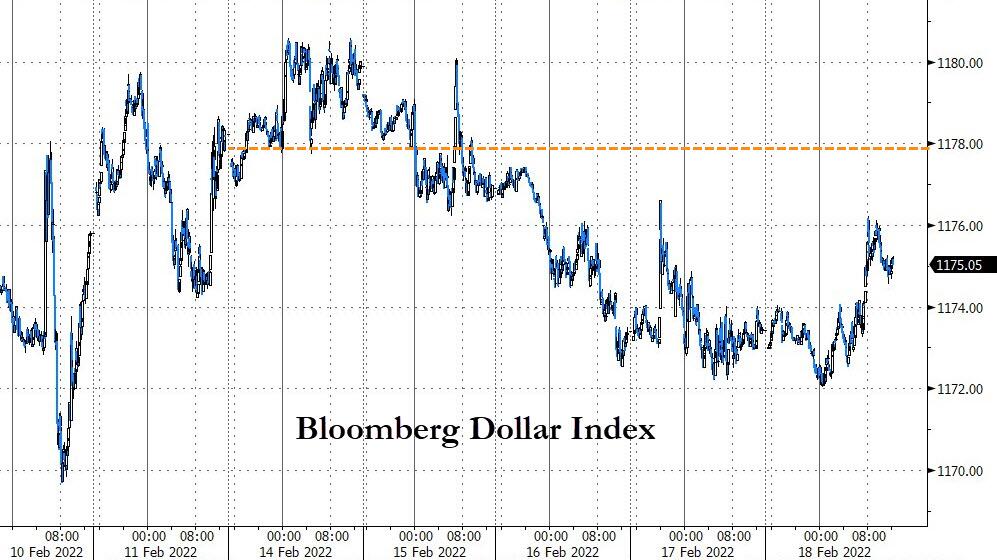
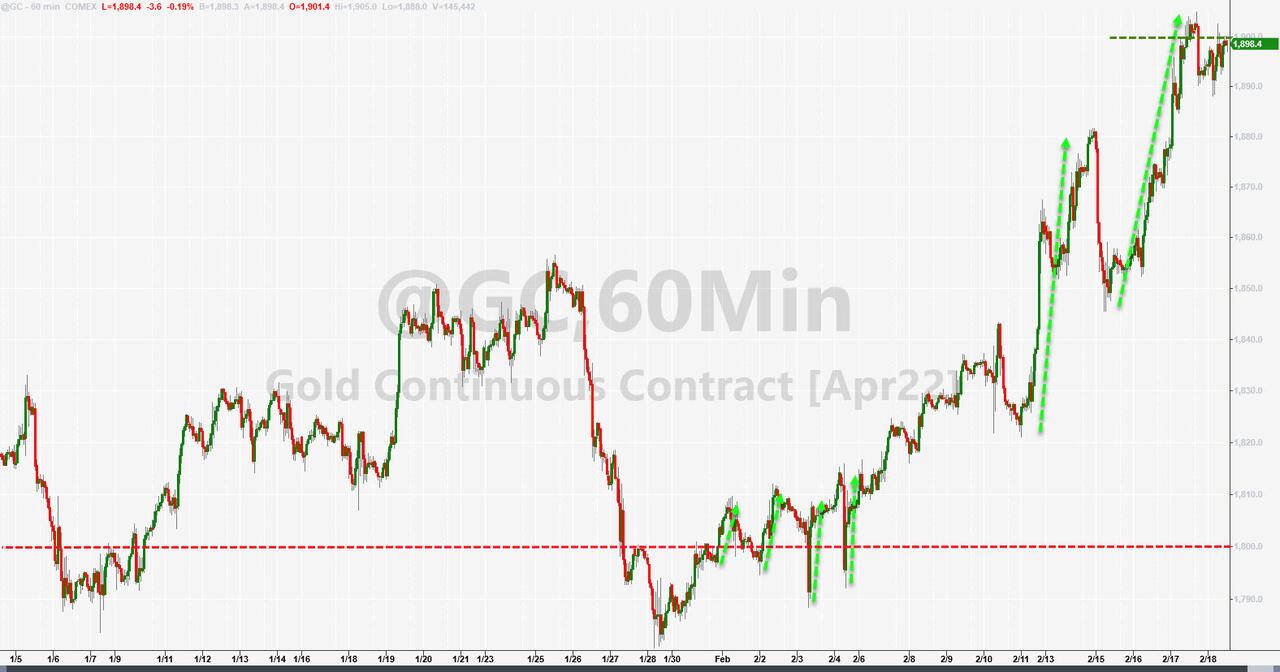
Despite the sell-off in stocks, bond yields rose thereby inflicting more pain on those investors who hold bonds as “protection” against equity weakness. The US Dollar whipsawed and ended about unchanged. To no surprise, gold managed to eke out another gain, albeit a small one.  

In my mind, the open question is this one: Will this be the beginning of the long-overdue pricking of the stock market bubble, or will the Fed try to pull a rabbit of its hat—again?

Read More
Melting Down And Not Melting Up

Ulli Market Commentary Contact

[Chart courtesy of MarketWatch.com]

  1. Moving the markets

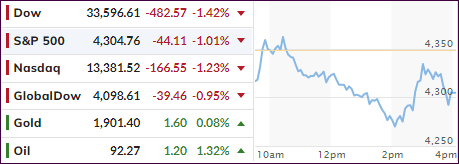
Given the overall geopolitical tensions, some real and some made up, I would have expected the markets to take a steeper dive. However, the pullback was slow and steady with no panic selling, but a melt-up attempt during the last hour hit the skids.

The major indexes gave back over 1% with the S&P 500 faring the best, despite the fact that it has now dropped below its widely watched 200-day M/A by -3.44%, which is a bearish signal. Apparently, traders and algos alike chose to ignore it for the time being.

Much jawboning by the current administration about sanctions on Russian banks and wealthy individuals occupied the MSM headlines, which was repeated in solidarity by the U.K. government.

While the Russia-Ukraine conflict will occupy center stage for some time to come, it does not look to have war implications, which is why the markets remained calm, but that could change in coming weeks.

After all, there are many more items on the economic menu that have the power to affect stocks negatively. Higher interest rates, surging inflation affecting oil and food prices, along with shortages (truckers), are just a few that to me may have more of a market impact than what happens in Ukraine.

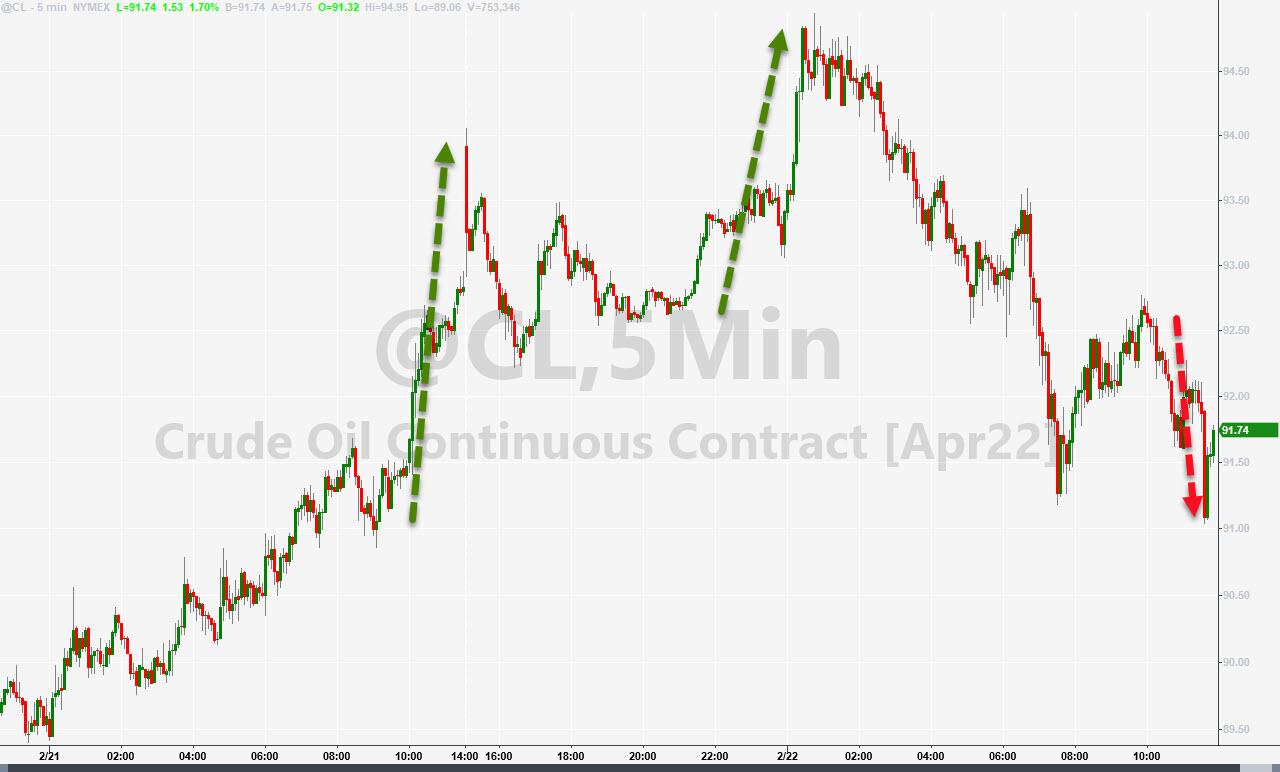
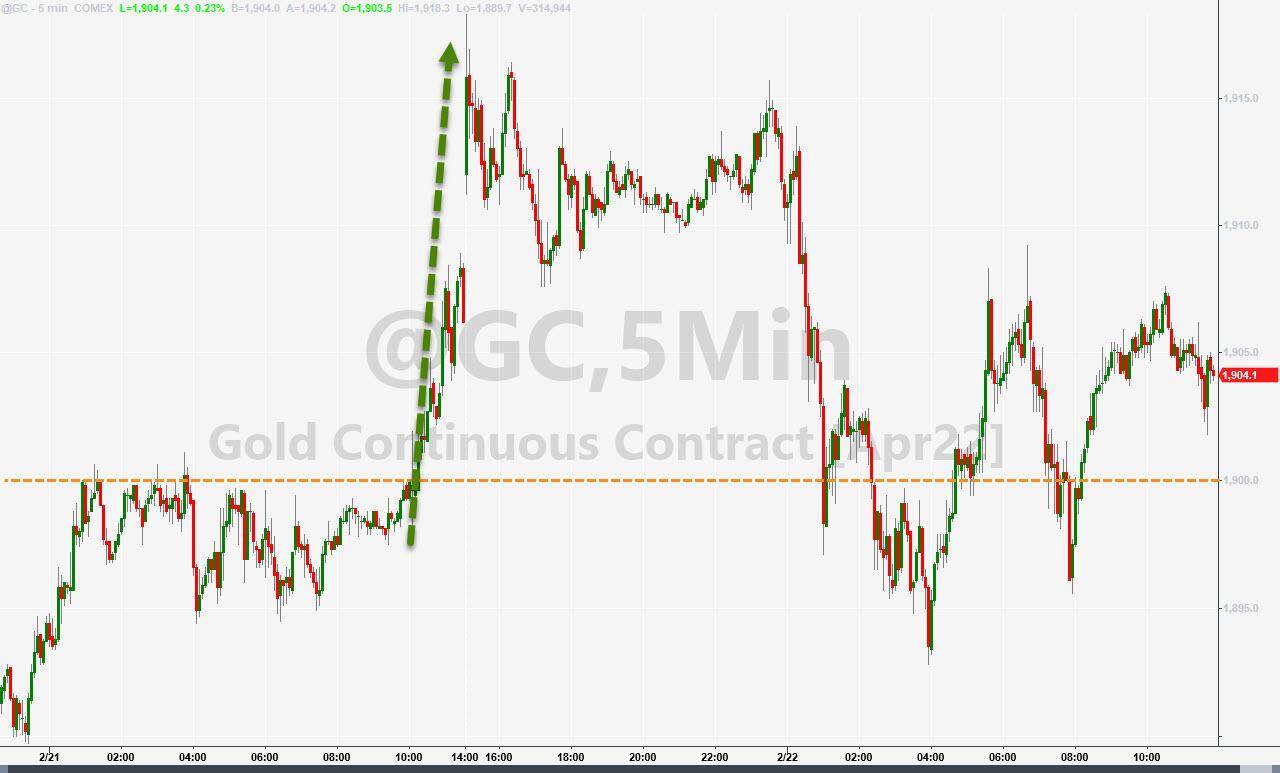
Bond yields went sideways to slightly higher, which was imitated by a directionless US Dollar, while oil prices spiked and look to be heading towards the $100 level. Gold regained the $1,900 point by advancing just a tad for the session.  

See section 3 below regarding the update about our Trend Tracking Indexes (TTIs).

Read More

ETFs On The Cutline – Updated Through 02/18/2022

Ulli ETFs on the Cutline Contact

Below, please find the latest High-Volume ETF Cutline report, which shows how far above or below their respective long-term trend lines (39-week SMA) my currently tracked ETFs are positioned.

This report covers the HV ETF Master List from Thursday’s StatSheet and includes 312 High Volume ETFs, defined as those with an average daily volume of more than $5 million, of which currently 75 (last week 65) are hovering in bullish territory. The yellow line separates those ETFs that are positioned above their trend line (%M/A) from those that have dropped below it.

Take a look:                                                                   

The HV ETF Master Cutline Report

In case you are not familiar with some of the terminology used in the reports, please read the Glossary of Terms. If you missed the original post about the Cutline approach, you can read it here.      

ETF Tracker Newsletter For February 18, 2022

Ulli ETF Tracker Contact

ETF Tracker StatSheet          

You can view the latest version here.

CHOPPING AND DROPPING

[Chart courtesy of MarketWatch.com]

  1. Moving the markets

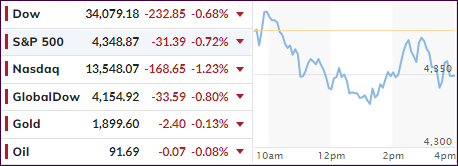
Despite several attempts to reclaim their respective unchanged lines, the major indexes failed and, after chopping around aimlessly all week, succumbed to selling pressure. The S&P 500 surrendered 1.6% over the past 5 trading days, while the indexes scored their second consecutive losing week.

Though options expirations, about $2.2 trillion, influenced some of the erratic market behavior, it was predominantly the continued MSM saga about the Russia-Ukraine conflict that put investors and algos on edge. The latest “attack” headline had no longer a date and time attached to it but was merely referring to an upcoming “event” in a few days.

Headlines in general created much confusion ahead of the 3-day weekend with ZH featuring some of the major ones:

  • 0809ET *DONBAS SEPARATISTS SAY WOMEN, CHILDREN TO LEAVE FOR RUSSIA: IFX
  • 0838ET *PUTIN: RUSSIA ISN’T AGAINST TALKS ON U.S. SECURITY PROPOSALS
  • 0845ET Russia creating ‘false provocations’ in Ukraine in past 24-48 hours: Blinken
  • 1040ET *FED’S EVANS: POLICY WRONG-FOOTED, NEEDS SUBSTANTIAL ADJUSTMENT
  • 1049ET *ECB OFFICIALS EDGE TOWARD 2022 RATE HIKE TO STEM INFLATION
  • 1100ET ITAR-TASS: Powerful explosion rocks downtown Donetsk — Donetsk News Agency
  • 1107ET *BIDEN CALL WITH TRANSATLANTIC LEADERS SET FOR 2:30PM ET
  • 1240ET *WILLIAMS: HAVE ROOM TO TRIM BAL SHEET MORE QUICKLY THAN BEFORE, SEES FED MOVING TO NORMAL RATES QUICKER THAN ’16, ’17
  • 1256ET *DRAGHI: DISCUSSED WITH PUTIN INCREASING GAS SUPPLIES TO ITALY (just made us laugh)
  • 1448ET *BELIEVE RUSSIA BEHIND CYBERATTACKS ON UKRAINE BANKS: NEUBERGER
  • 1510ET *BRAINARD: I BELIEVE WE WILL TURN NEXT TO BALANCE SHEET RUNOFF
  • 1515ET *U.S. BELIEVES RUSSIA POSITIONED FOR UKRAINE ATTACK: PSAKI
  • 1555ET *SUBSTANTIAL PROGRESS BEING MADE IN IRAN NUCLEAR TALKS: PSAKI   

Despite the Fed having called an emergency meeting last Monday, nothing was revealed nor reported on. Rumor on the Street has it that the Fed is way behind the curve and committed a policy error.

One analyst described the Fed’s dilemma like this:

The Fed is trapped. It can do two things and only two. It can keep it all going, print money and embrace the growing inflation or it can raise interest rates, stop the money printing, and crash the economy and all the markets.  In an election year with a failing Administration, what do you think they will do? 

Bond yields eased with the 10-year attempting to crawl above the 2% level but failed during this session. The US Dollar advanced today but slipped for the week. Gold, while pulling back a fraction today, had a profitable 5 trading days by rising over 3%.

Our Domestic TTI (section 3) remained below its dividing line between bullish and bearish territory for the second day in a row—but enough to call an end to this current “Buy” cycle. However, that could change in a hurry.

At times, I look at other leading indicators, which can cast a light on future direction. High yield credit compared to the S&P can offer some valuable insight:

Given the fact that my Domestic TTI has dropped into bearish territory and High Yield credit has sharply decoupled from the S&P 500, I wonder if this is an indication of things to come?

Hmmm…

Read More

Weekly StatSheet For The ETF Tracker Newsletter – Updated Through 02/17/2022

Ulli ETF StatSheet Contact

ETF Data updated through Thursday, February 17, 2022

Methodology/Use of this StatSheet:

1. From the universe of over 1,800 ETFs, I have selected only those with a trading volume of over $5 million per day (HV ETFs), so that liquidity and a small bid/ask spread are assured.

2. Trend Tracking Indexes (TTIs)

Buy or Sell decisions for Domestic and International ETFs (section 1 and 2), are made based on the respective TTI and its position either above or below its long-term M/A (Moving Average). A crossing of the trend line from below accompanied by some staying power above constitutes a “Buy” signal. Conversely, a clear break below the line constitutes a “Sell” signal. Additionally, I use an 12% trailing stop loss on all positions in these categories to control downside risk.

3. All other investment arenas do not have a TTI and should be traded based on the position of the individual ETF relative to its own respective trend line (%M/A). That’s why those signals are referred to as a “Selective Buy.” In other words, if an ETF crosses its own trendline to the upside, a “Buy” signal is generated. Here too, I recommend trailing sell stop of 12%, or less, depending on your risk tolerance.

If you are unfamiliar with some of the terminology, please see Glossary of Terms and new subscriber information in section 9.     

1. DOMESTIC EQUITY ETFs: BUY — since 07/22/2020

Click on chart to enlarge

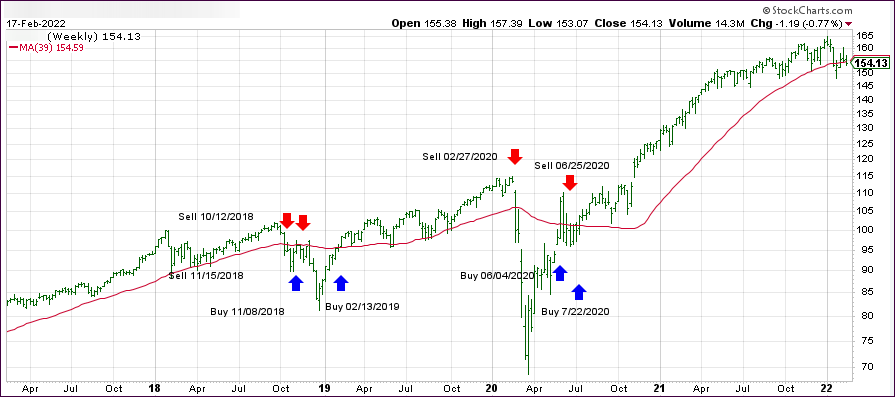
Our main directional indicator, the Domestic Trend Tracking Index (TTI-green line in the above chart) has just dipped below its long-term trend line (red) by a scant -0.19% and still teeters on the edge of losing its “BUY” mode.

Read More

On The Cusp Of A Sell Signal

Ulli Market Commentary Contact

[Chart courtesy of MarketWatch.com]

  1. Moving the markets

If you think recent market behavior was downright nutty, nonsensical, and non-directional, you are not only correct, but you are also not alone.

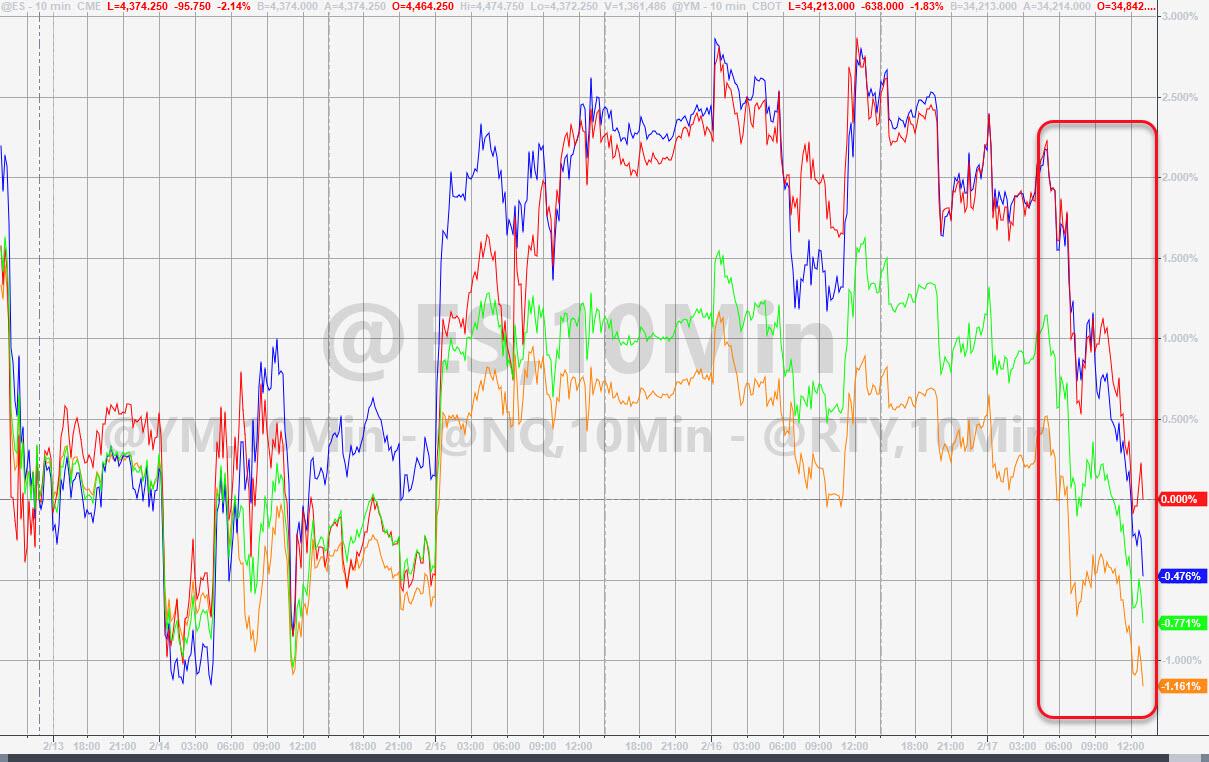
After Tuesday’s relief bounce, and yesterday’s comeback, traders were disappointed today that there was no follow-through buying, but also that the bears emerged full force and slammed the major indexes back to a level last seen the end of January.

The alleged conflict between Russia and Ukraine was pushed hard by MSM, with no evidence provided, as tension at their border impacted market sentiment and pushed our main directional indicator (TTI-section 3 below) back into the red—though by only a fraction of a percent.  

I think that other geopolitical issues like Canada’s freezing of bank accounts, the US economy slowing (higher jobless claims and tumbling housing starts) and the potential of hyperinflation contributed considerably to today’s market spanking.

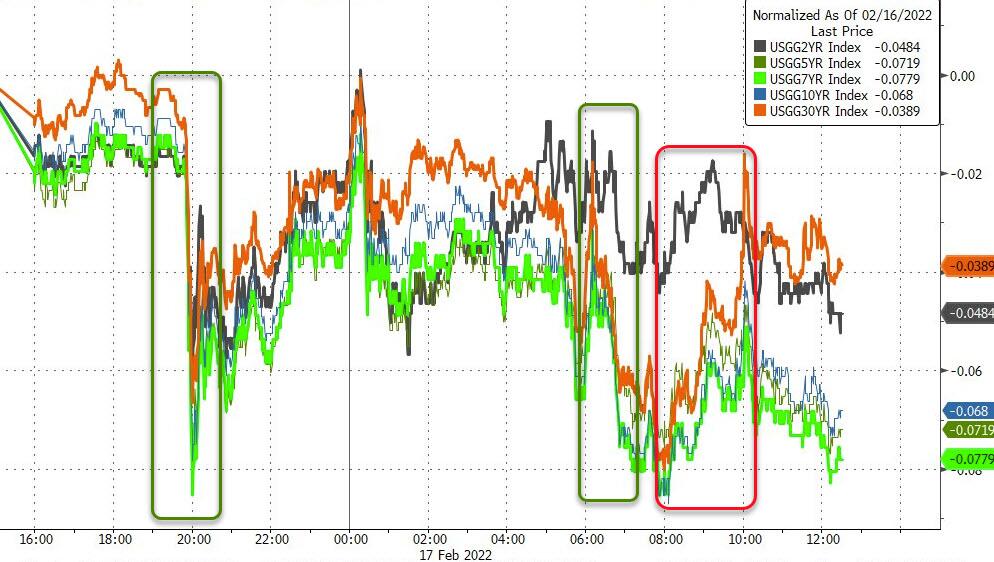
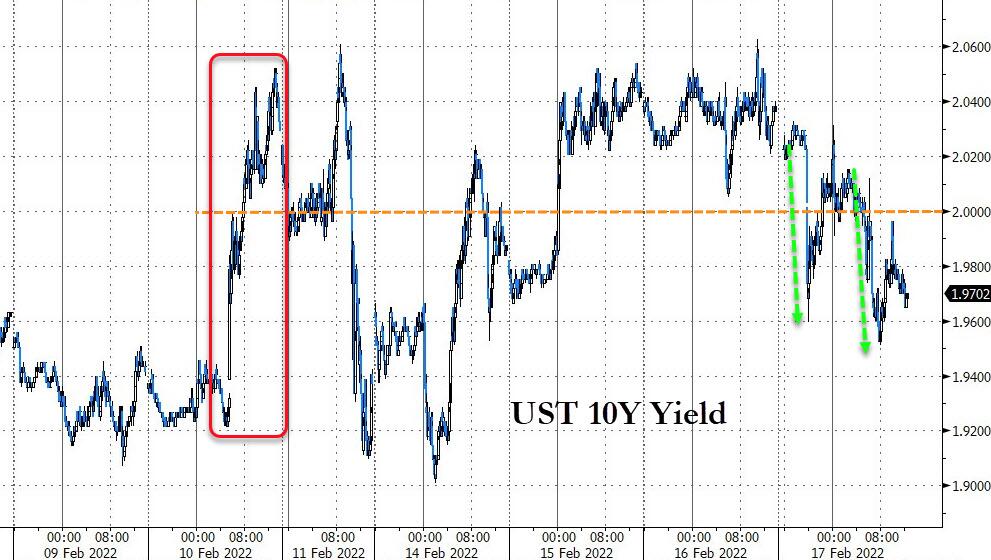
It turned out to be the worst day of the year for equities with all sectors puking evenly, however, SmallCaps took the lead and dumped -3.27%. Bond yields were down again, with the 10-year dropping back below its 2% level.

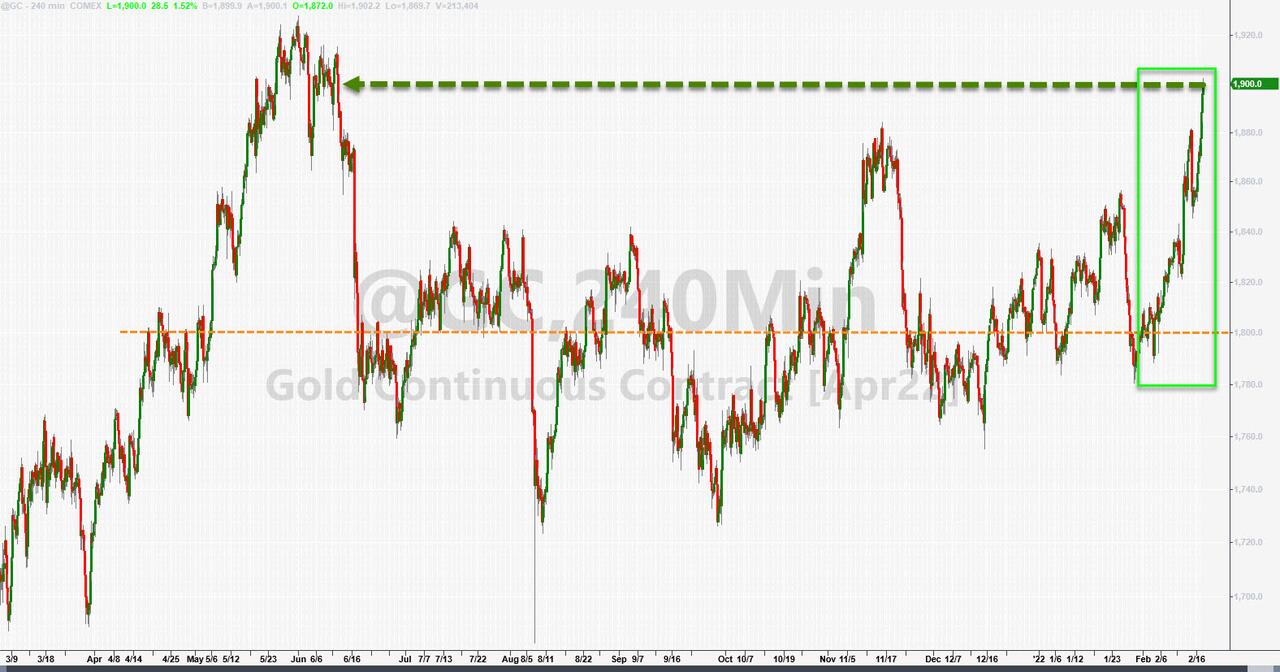
The shining star of the day was gold, which added a solid +1.54% to reclaim its $1,900 level by a tad and reached a point last seen in June 2021.

The market behavior of the recent past, pushing our Trend Tracking Index (TTI) in and out of bullish territory, is a sign to me that we are nearing an inflection point, meaning a major change in direction (bearish) has become a distinct possibility. Even ZH pointed to this bon mot, which seems to support my thoughts:

As Bloomberg’s Ven Ram noted, the Warren Buffett indicator – Total stock market capitalization divided by GDP – suggests that the recent frenzy that drove stock valuations to astronomical highs is yet to deflate fully.

Exactly.

Read More