
1. Moving the Markets
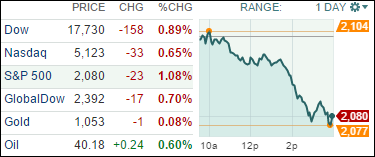
U.S. stocks were mixed most of the day, but then all three major benchmarks sank and finished down as news spread of a reported mass shooting in California. A standout amid the downturn was Yahoo (YHOO) as shares gained 5.8% on speculation the embattled tech icon may be acquired by an unspecified buyer.
In a midday Washington speech, Federal Reserve chair Yellen signaled that the Fed is all but certain to raise interest rates this month for the first time in nearly a decade, saying that gains in the economy and labor market have met the central bank’s goals.
Wall Street is still trying to discern if the health of the U.S. economy is vibrant enough to cope with rising rates, especially after yesterday’s reading on U.S. manufacturing in November, which contracted for the first time since the end of 2012. On the other side, in Europe, ECB chief Draghi is going the opposite direction by jawboning about another QE (Quantitative Easing) program for the region, which is surprising in that central banks usually coordinate and streamline their efforts.
Also, Wall Street also got the November reading on job creation in the private sector. The ADP report topped expectations, with private employers adding 217,000 jobs last month, which is above the 192,000 that had analysts had forecast.
Oil continues to stay at depressed prices. U.S. Crude Oil slid more than 4% to back to $40 a barrel, as inventories climbed.
In a reversal from yesterday’s session, all of our 10 ETFs in the Spotlight headed south as any follow through momentum to the upside was absent. Topping the list of losers was the Select Dividend ETF (DVY) with -1.54%. Resisting this sell-off the most were the Consumer Staples (XLP) with -0.50%.
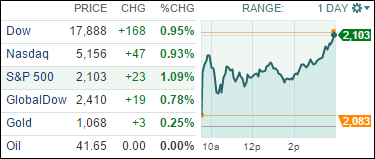
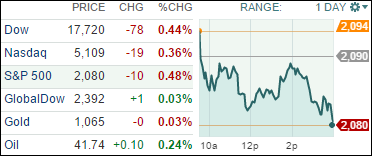
 The recent stream of data indicates everything is good enough for the Fed to proceed as planned with a rate-hike in December, said Michael Gapen, Chief US Economist. Although the latest inflation report came in softer than many had expected, it was no surprise; again that was just further softness in core goods prices, being weighed down by a stronger dollar and excess capacity abroad.
 JP Morgan Asset Management, the exchange-traded fund issuing arm of the investment bank JP Morgan, recently joined hands with FTSE Russell to leverage their respective capabilities in investment science and index designing.