Rallying into August

Ulli Market Commentary Contact

[Chart courtesy of MarketWatch.com]

  1. Moving the markets

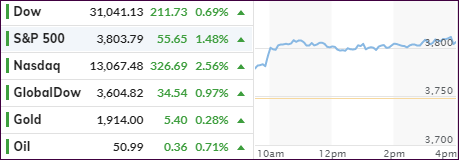
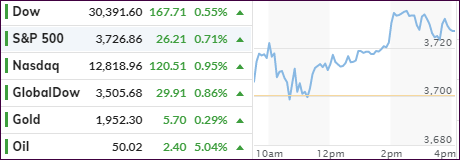
Friday’s last hour rebound served as a foundation for further advances, as the major indexes did not skip a beat, opened to the upside, never looked back, and ended up scoring another green close, which greatly benefitted our current positions. Helping matters was the impact of another strong short squeeze.

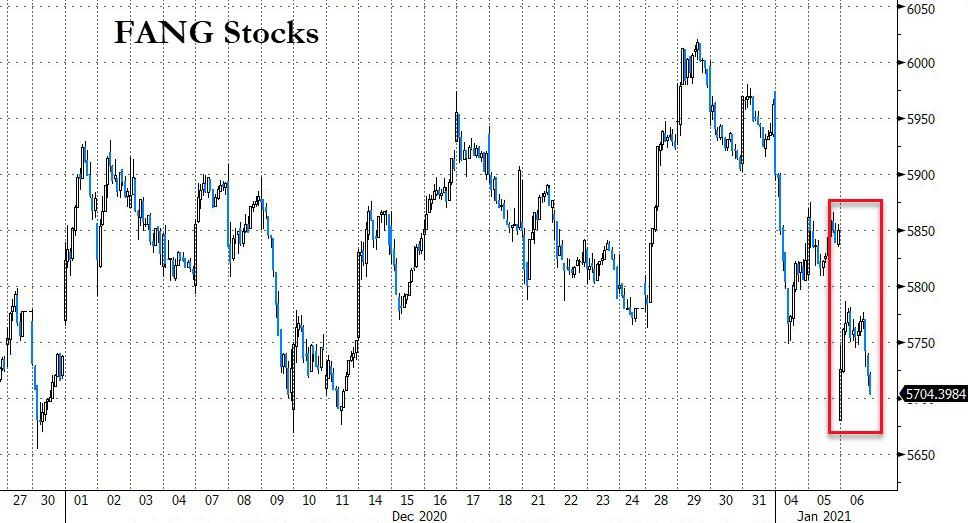
As we’ve seen in the past, the tech sector (Nasdaq) ruled by showing the strongest gains and surging to another high, while the S&P 500 placed 3rd among the major indexes.

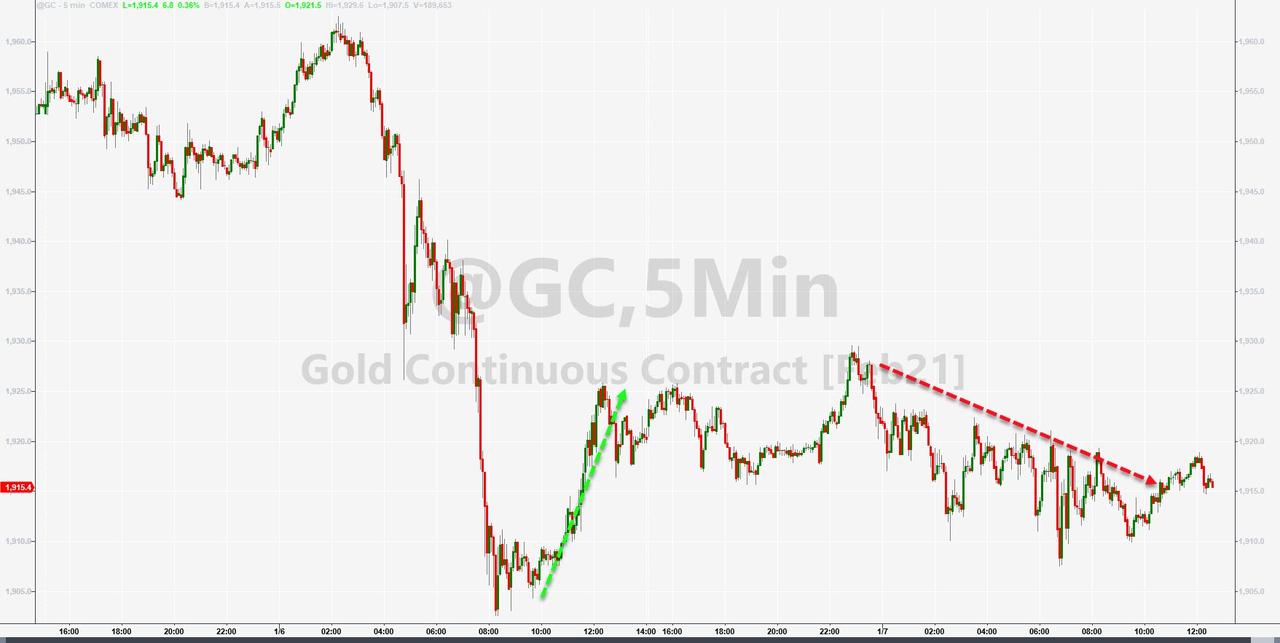
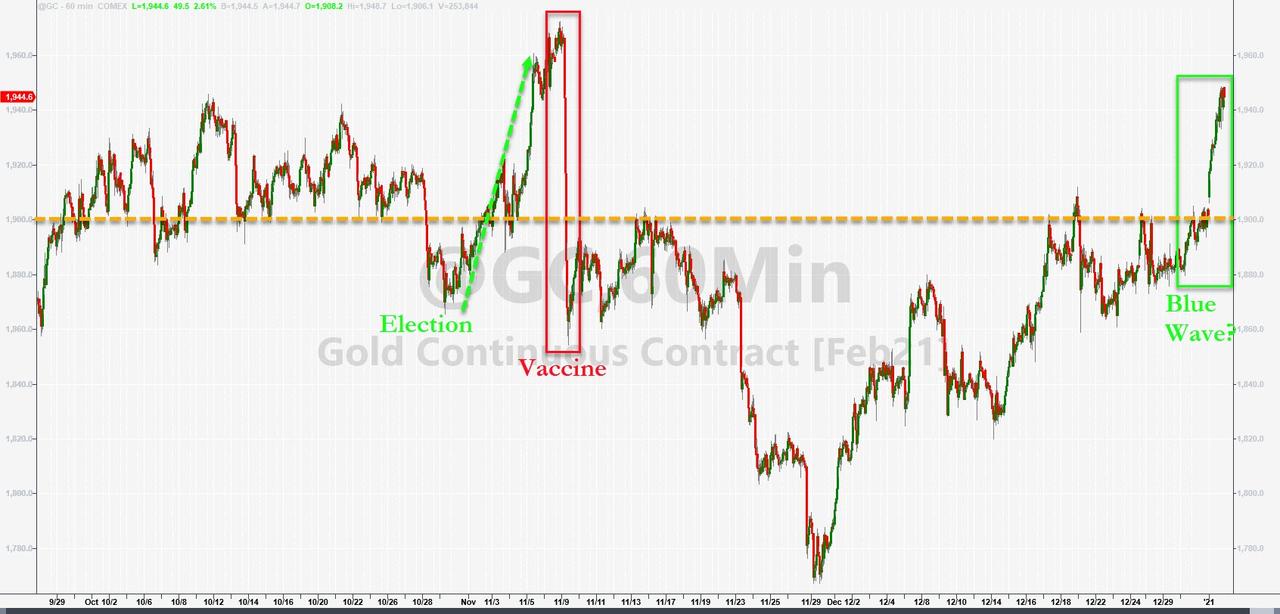
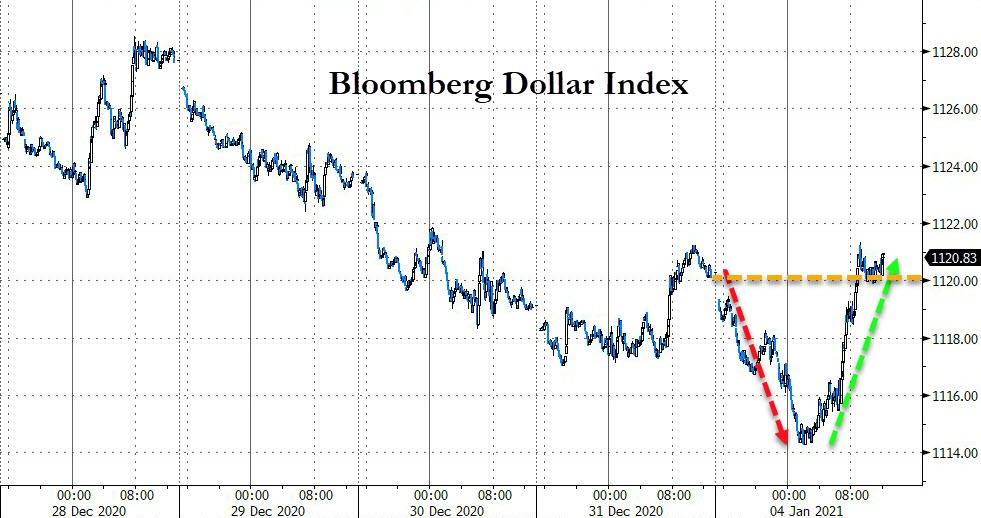
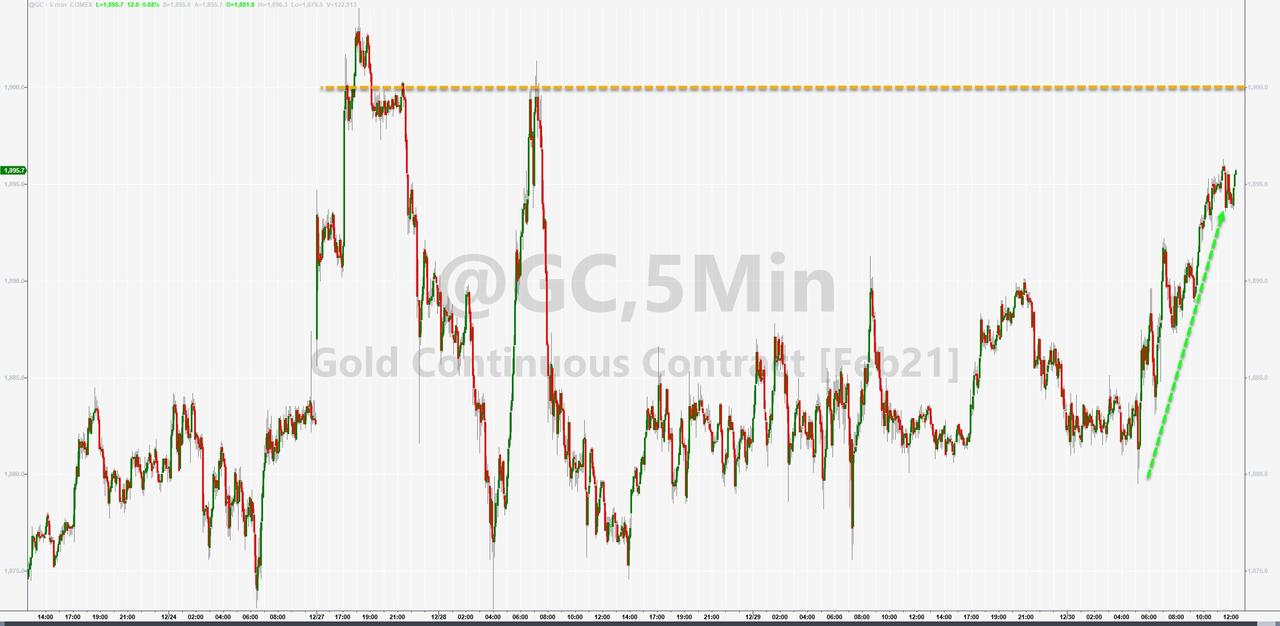
After a solidly higher opening, GLD bounced around aimlessly, slipped into the red but managed a nice bounce back into the close. It seems that the $2k glass ceiling appears to present formidable overhead resistance, but it will be broken eventually. Today, gold’s weakness was caused by a rallying dollar.

In economic news we learned that a manufacturing gauge rose while new orders jumped better than had been expected, which helped the bullish cause but still raised questions about its sustainability. Similar positive numbers in Europe and China supported their markets as well.

In terms of a new stimulus package, MarketWatch reported:

Market participants were also focused on the fact that there are no signs of a stimulus package between Democrats and Republicans after negotiations over the weekend failed to yield a replacement for a $600-a-week boost to unemployment benefits that expired Friday.

At issue for Democrats and Republicans is the amount of unemployment assistance for Americans. The White House has come out in favor of reducing the federal assistance to $200 a week, Democrats have called for keeping it at $600 a week. However, the parties appear to both support a fresh round of stimulus checks of $1,200 for workers.

Right now, upward momentum continues, and we will stay on board subject our exit strategy.

Read More

ETFs On The Cutline – Updated Through 07/31/2020

Ulli ETFs on the Cutline Contact

Below, please find the latest High-Volume ETF Cutline report, which shows how far above or below their respective long-term trend lines (39-week SMA) my currently tracked ETFs are positioned.

This report covers the HV ETF Master List from Thursday’s StatSheet and includes 312 High Volume ETFs, defined as those with an average daily volume of more than $5 million, of which currently 198 (last week 198) are hovering in bullish territory. The yellow line separates those ETFs that are positioned above their trend line (%M/A) from those that have dropped below it.

Take a look:                                                                   

The HV ETF Master Cutline Report

In case you are not familiar with some of the terminology used in the reports, please read the Glossary of Terms. If you missed the original post about the Cutline approach, you can read it here.      

ETF Tracker Newsletter For July 31, 2020

Ulli ETF Tracker Contact

ETF Tracker StatSheet          

You can view the latest version here.

CLOSING THE WEEK WITH A BANG

[Chart courtesy of MarketWatch.com]

  1. Moving the markets

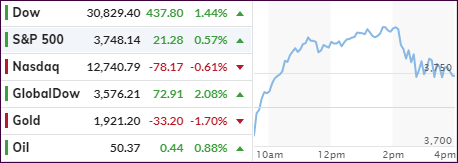
After Big Tech delivered blow-out earnings after the close yesterday, the futures market had the Nasdaq up by some 2% stoking hopes that the regular cash market would follow that bullish premise.

It was not meant to be, as the major indexes, despite starting the session in the green, lost momentum and subsequently dropped below their respective unchanged lines, but gold resisted the sell-off.

The Nasdaq fared the best despite mixed earnings results, disappointing econ data and the same inconclusive jawboning about the next corona virus rescue package by Dems and Reps on Capitol Hill.  

Just as thigs looked the bleakest, a powerful rally pulled equities out of their doldrums, momentum reversed, and we closed out the week and the month with a bang. If you had to guess which asset class scored the best during July and said the “Nasdaq,” you would be wrong, as this chart shows:

Gold (GLD) was the clear winner with +10.79% with the Nasdaq (QQQ) taking a distant 3rd place despite a respectful +7.35%, and the Dow being the laggard with +2.38%.

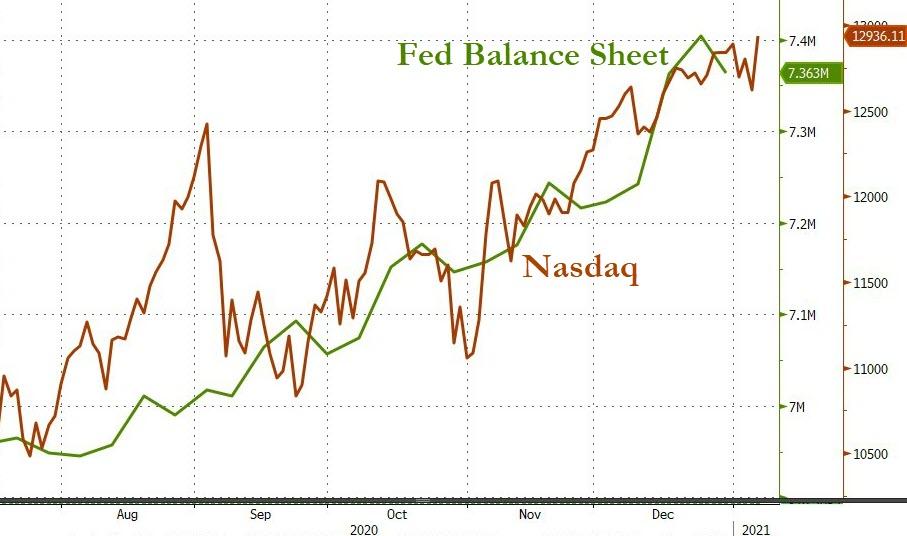
This asset bubble has now been seemingly blown out of proportion, thanks to Fed intervention, with ZH pointing to these stats:

All-time high monthly close in S&P 500

All-time low 10Y yield close

All-time high in gold

And then summing up the month:

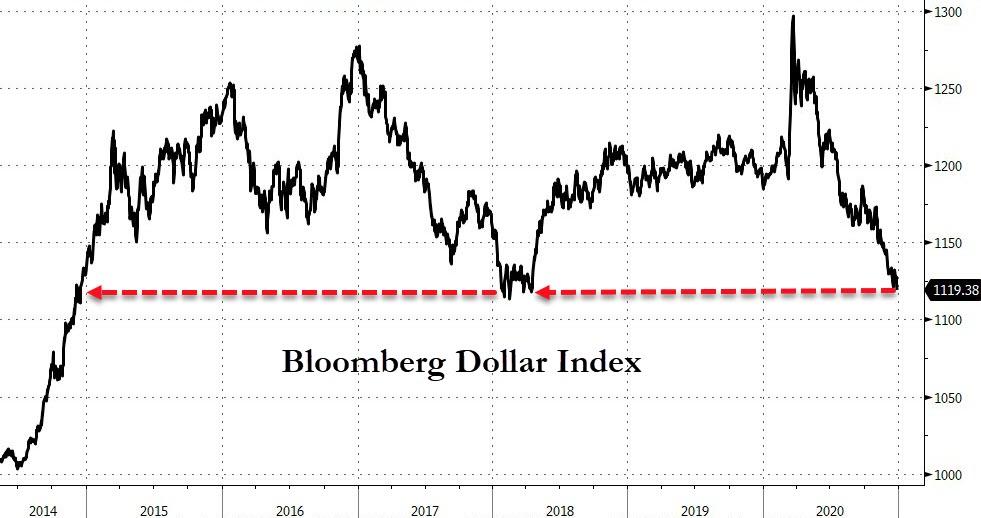
Stocks up, Bonds up, Gold up, Silver up, Oil up, Crypto up, Dollar Down (along with Fed credibility.)

Be that as it may, the major trends for our selected ETFs remain bullish and will keep us invested until a substantial reversal occurs that triggers our exit strategy.   

Read More

Weekly StatSheet For The ETF Tracker Newsletter – Updated Through 07/30/2020

Ulli ETF StatSheet Contact

ETF Data updated through Thursday, July 30, 2020

Methodology/Use of this StatSheet:

1. From the universe of over 1,800 ETFs, I have selected only those with a trading volume of over $5 million per day (HV ETFs), so that liquidity and a small bid/ask spread are assured.

2. Trend Tracking Indexes (TTIs)

Buy or Sell decisions for Domestic and International ETFs (section 1 and 2), are made based on the respective TTI and its position either above or below its long-term M/A (Moving Average). A crossing of the trend line from below accompanied by some staying power above constitutes a “Buy” signal. Conversely, a clear break below the line constitutes a “Sell” signal. Additionally, I use a 7.5% trailing stop loss on all positions in these categories to control downside risk.

3. All other investment arenas do not have a TTI and should be traded based on  the position of the individual ETF relative to its own respective trend line (%M/A). That’s why those signals are referred to as a “Selective Buy.” In other words, if an ETF crosses its own trendline to the upside, a “Buy” signal is generated. Since these areas tend to be more volatile, I recommend a wider trailing sell stop of 7.5% -10% depending on your risk tolerance.

If you are unfamiliar with some of the terminology, please see Glossary of Terms and new subscriber information in section 9.     

1. DOMESTIC EQUITY ETFs: BUY — since 07/22/2020
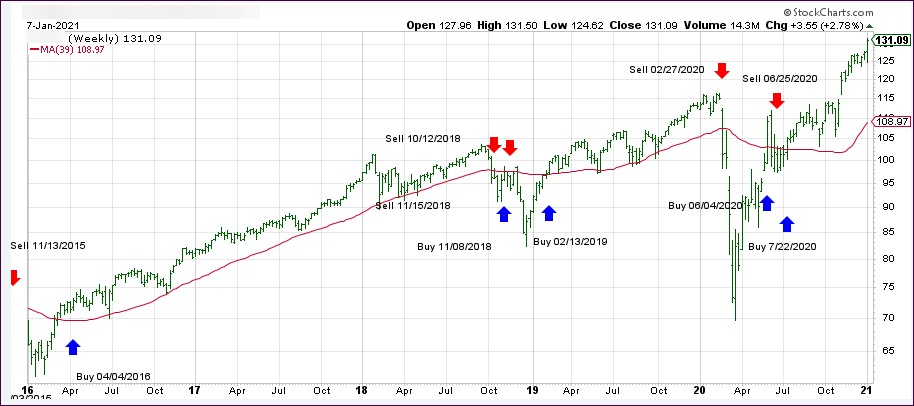
Click on chart to enlarge

Our main directional indicator, the Domestic Trend Tracking Index (TTI-green line in the above chart) has now rallied above its long-term trend line (red) by +3.43% and is in “BUY” mode as posted.

Read More
Plunging Economy—Nasdaq Survives Weakness

Ulli Market Commentary Contact

[Chart courtesy of MarketWatch.com]

  1. Moving the markets

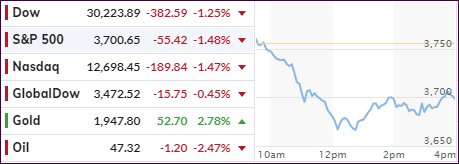
Early this morning, the Dow was down some 500 points, and other major indexes showed similar weakness, as the US economy plunged an enormous as well as unprecedented -32.9% in the second quarter confirming what I have said before: There is no V-shape recovery on the horizon. At best, we can hope for a drawn-out version.

ZH provided these details:

And while the drop – which was generally priced in – was some 5 times worse than the adjusted Q1 GDP of -6.9%, it was just fractionally better than the -34.5% expected. Then again, with a third of the US economy effectively going offline in Q2, a worse outcome than during the great depression, a few percent here and there doesn’t really matter.

The second-quarter decrease in real GDP reflected decreases in consumer spending, exports, inventory investment, business investment, and housing investment that were partially offset by an increase in government spending. Imports, a subtraction in the calculation of GDP, decreased.

That said, the biggest contributor to the overall GDP drop was the crash in consumption – the decrease in consumer spending reflected decreases in services (led by health care) and goods (led by clothing and footwear).

As if that was not bad enough, a rise in initial jobless claims for the second straight week indicated that economic activity has slowed down as opposed to satisfying the prospects of growth. Continuing jobless claims disappointed as well, as they rose for the first time in 8 weeks from 16.15 million to 17.02 million, according to ZH.

That means, a total of 54.13 million Americans has now applied for jobless benefits for the first time since the lockdowns began. That equates to almost 1/3 of the working population. Ouch!

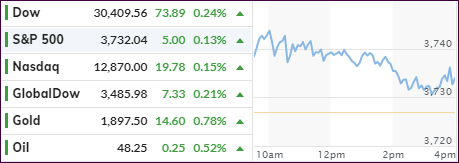
The markets headed south in a hurry but managed to climb out of that initial hole and recovered most of the early losses. The Nasdaq ended up in the green by a comfortable margin, with the Dow and S&P 500 remaining in the red, as the former lagged all indexes.

In the end, the sell-off could have been far worse, so it’s now up the after-hours tech earnings to determine whether we will see red or green numbers tomorrow.

Read More

Fed Satisfies Markets

Ulli Market Commentary Contact

[Chart courtesy of MarketWatch.com]

  1. Moving the markets

Markets were in a bullish mood right after the opening bell and slowly ascended in anticipation of positive news from the Fed meeting.

That turned out to be the case, as the Federal Reserve left benchmark interest rates unchanged and promised to provide support until the threat of further negative economic impact by the coronavirus has passed.

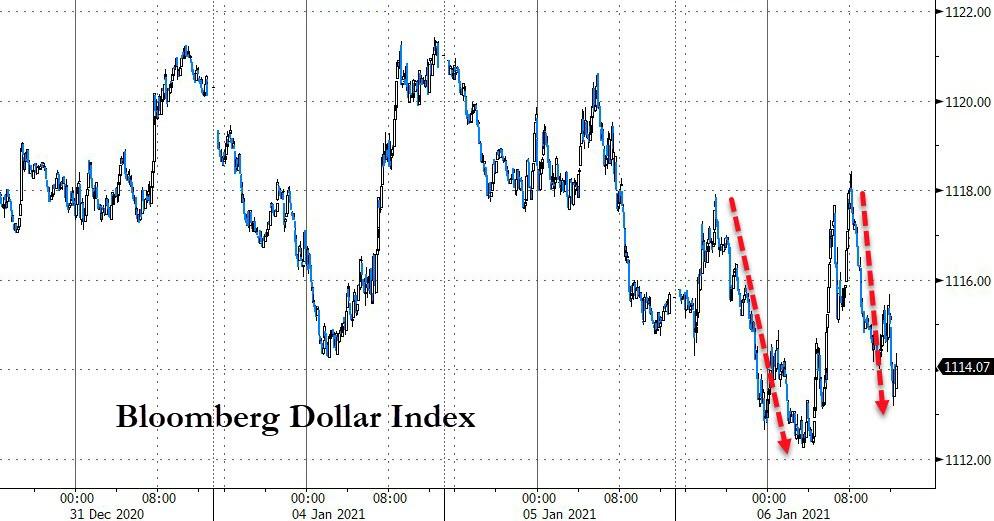
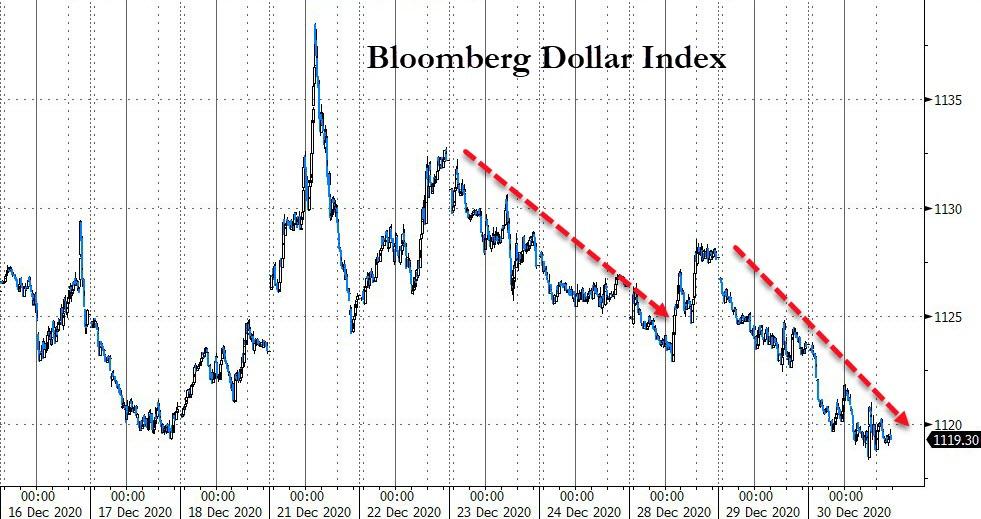
Assurances and hints like “do whatever I can do for as long as it takes,” were enough to send stocks and gold higher, while the US Dollar continued on its southerly path. This was exactly what markets had expected, and up we went.

ZH summed it up like this:

Powell initially promised The Fed will “do whatever it takes for as long as it takes” and stocks and gold spiked.

Everything was fine until Powell reiterated a statement on the pace of recovery slowing and everything reversed.

But then Powell promised to “adjust forward guidance and asset-buying if needed” and the market assumed that if the recovery is slowing that can only mean MOAR!!!!

And stocks rallied back to their highs with Small Caps dramatically outperforming (as The Dow lagged) …

But, one portfolio manager was cautious:

“The market was operating under the assumption that the Fed will do whatever it has to do to support the market” and policy makers “didn’t disappoint on that front,” said Phil Toews, chief executive and lead portfolio manager of New York-based Toews Corp., which manages $1.9 billion.

“If markets falter over the coming months, the ability of the Fed to act as a put under the markets will be tested,” Toews said via email; “if markets begin to fall despite the Fed’s bond-buying power, it would be a tipping point that would be a huge sell indicator.”

I agree with this assessment, just because the Fed shows its willingness to support the markets, does not mean they will be able to execute as planned, but I am certain that their fortitude will be tested at some time in the future.

Tomorrow’s massive earnings reports will likely influence market direction, but for right now, we’re enjoying the bullish ride.

Read More