Below, please find the latest High-Volume ETF Cutline report, which shows how far above or below their respective long-term trend lines (39-week SMA) my currently tracked ETFs are positioned.
This report covers the HV ETF Master List from Thursday’s StatSheet and includes 312 High Volume ETFs, defined as those with an average daily volume of more than $5 million, of which currently 253 (last week 253) are hovering in bullish territory. The yellow line separates those ETFs that are positioned above their trend line (%M/A) from those that have dropped below it.
In case you are not familiar with some of the terminology used in the reports, please read the Glossary of Terms. If you missed the original post about the Cutline approach, you can read it here.
The much-anticipated jobs numbers turned into a huge disappointment and were downright shocking when the BLS revealed that only 266k jobs were added vs. expectations of 1 million.
Worse yet was the fact that, when looking under the hood, as ZH pointed out, it became clear that had it not been for some 187k workers added in food service and drinking places (waiters and bartenders), as well as 72k in gambling, amusement and recreation workers, the April print would have been virtually unchanged from last month. Ouch!
Not to worry, the markets in their infinite wisdom took this economic horror show and concluded that bad news is good news again, which CNBC explained like this:
Investors bet that the big jobs miss could keep the easy policies of the Federal Reserve in place, including record low interest rates and a massive bond-buying program. Tech stocks, which have been winning under the low-rates regime during the pandemic, outperformed after the data release.
To make sure, you understand that today’s bad numbers were good news, Treasury Secretary Yellen came out and said this:
I would note that the jobs report is a little bit stronger than the headline numbers might suggest on the hiring front.
Huh?
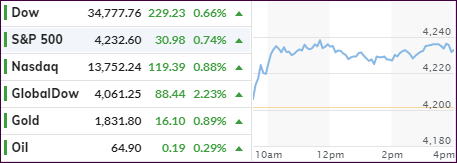
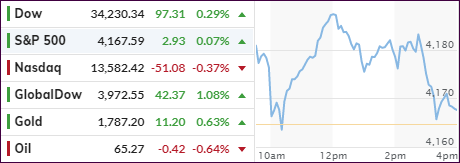
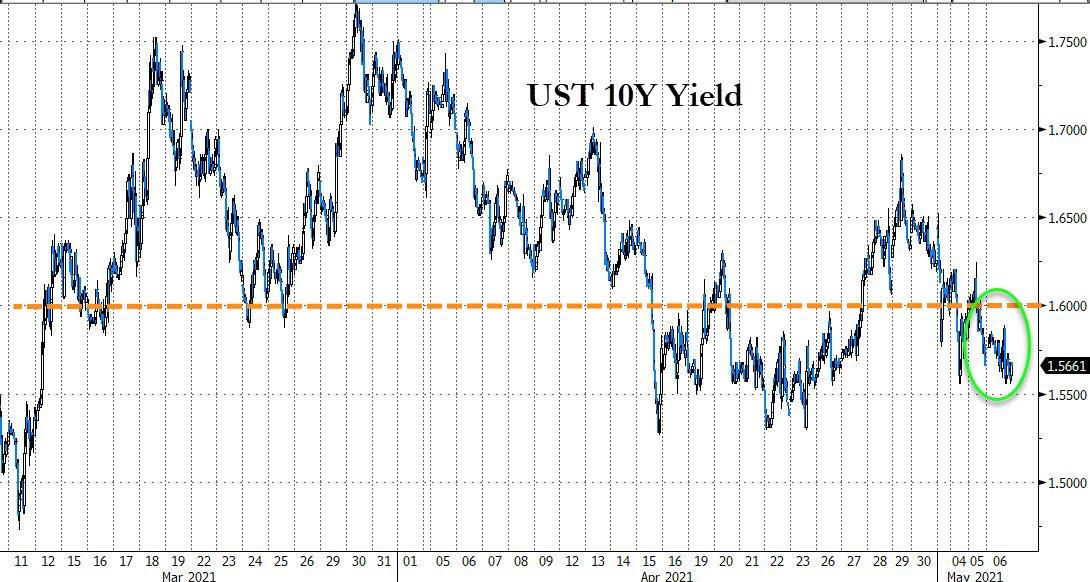
Be that as it may, the markets surged, with the Dow setting another record, and all 3 major indexes closed in the green, with the Nasdaq leading for a change. Bond yields dipped and ripped with the 10-year almost unchanged, while the US Dollar plunged again.
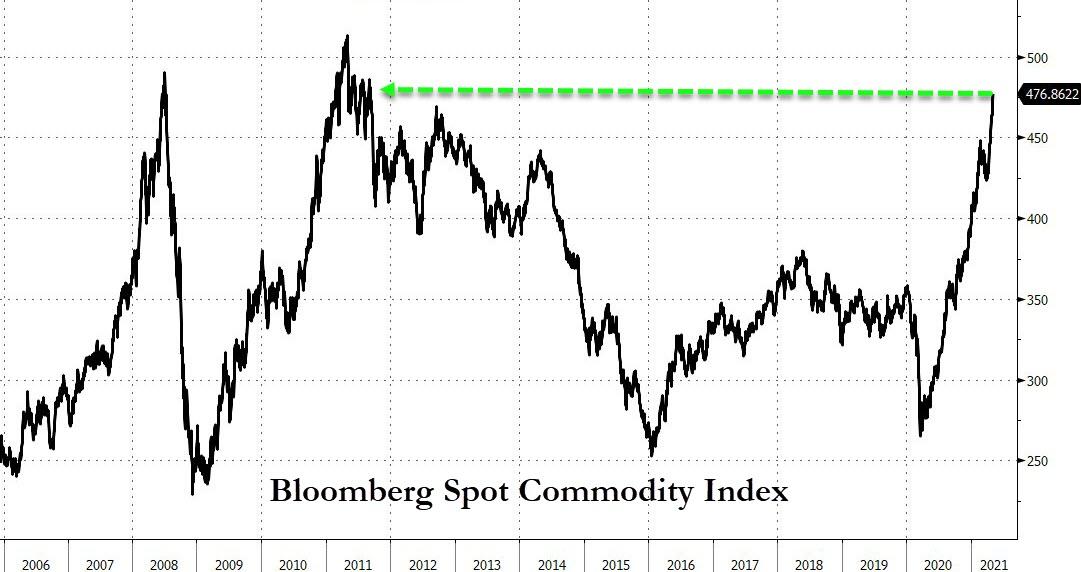
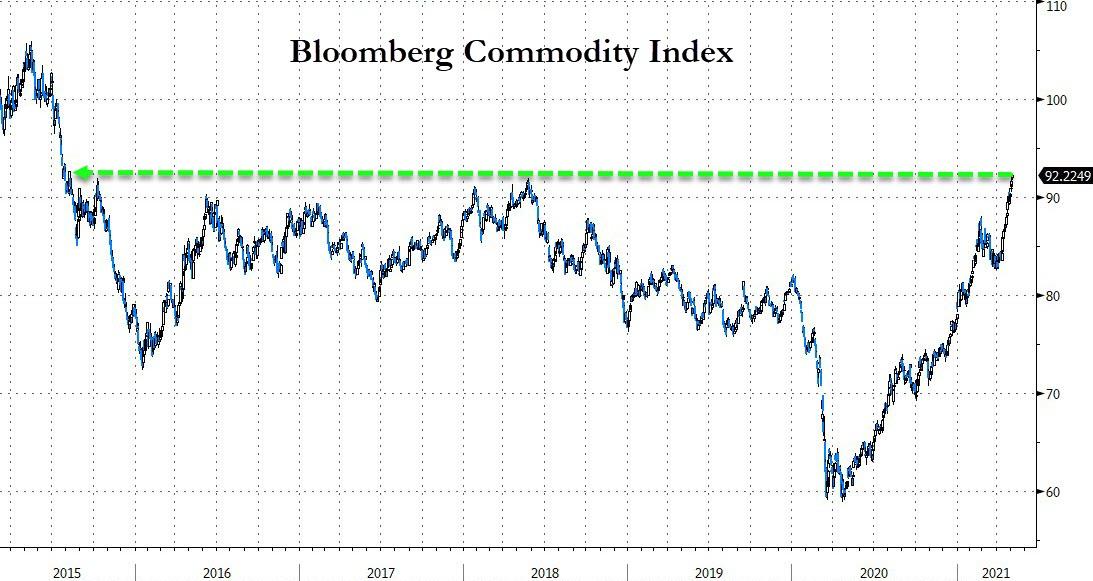
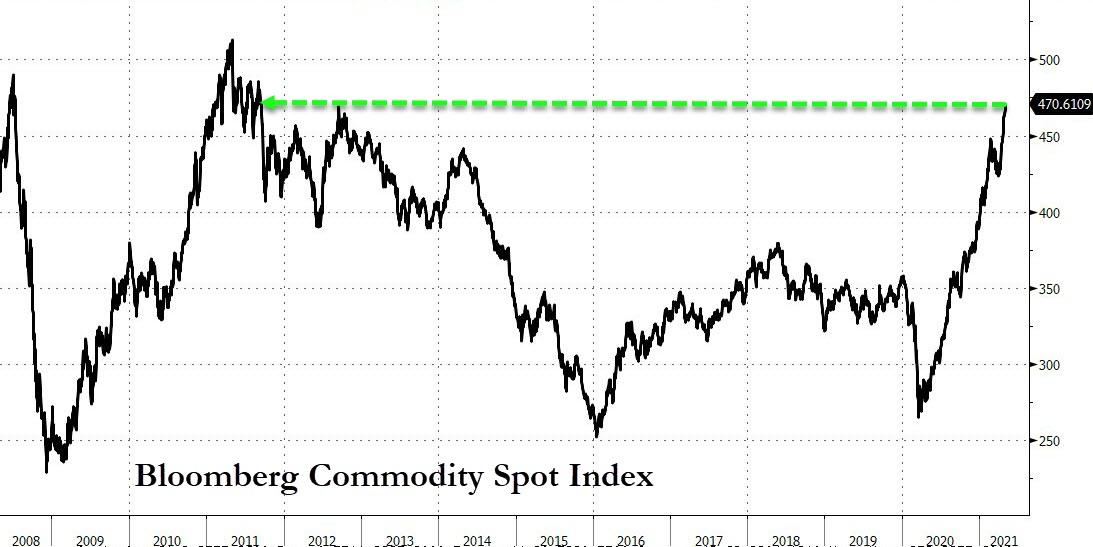
Commodities continued their run to towards taking out the 2011 high with the index being up an amazing 65% YoY, which is a record spike, according to ZH.
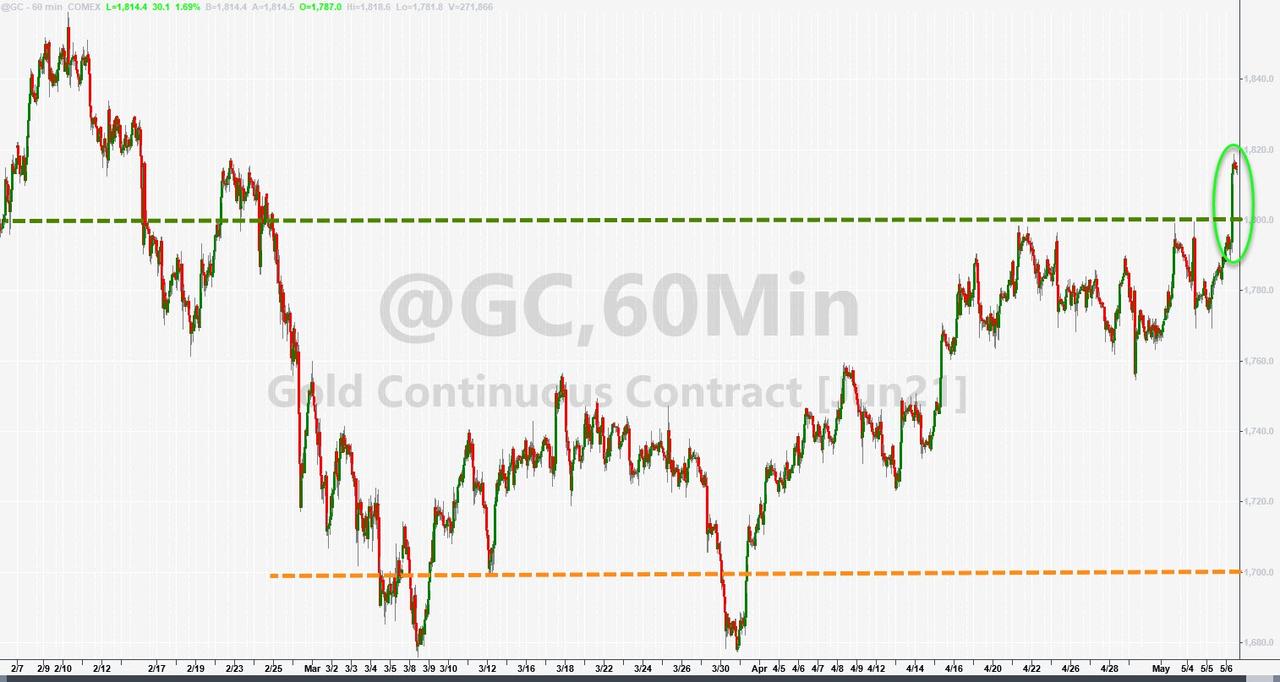
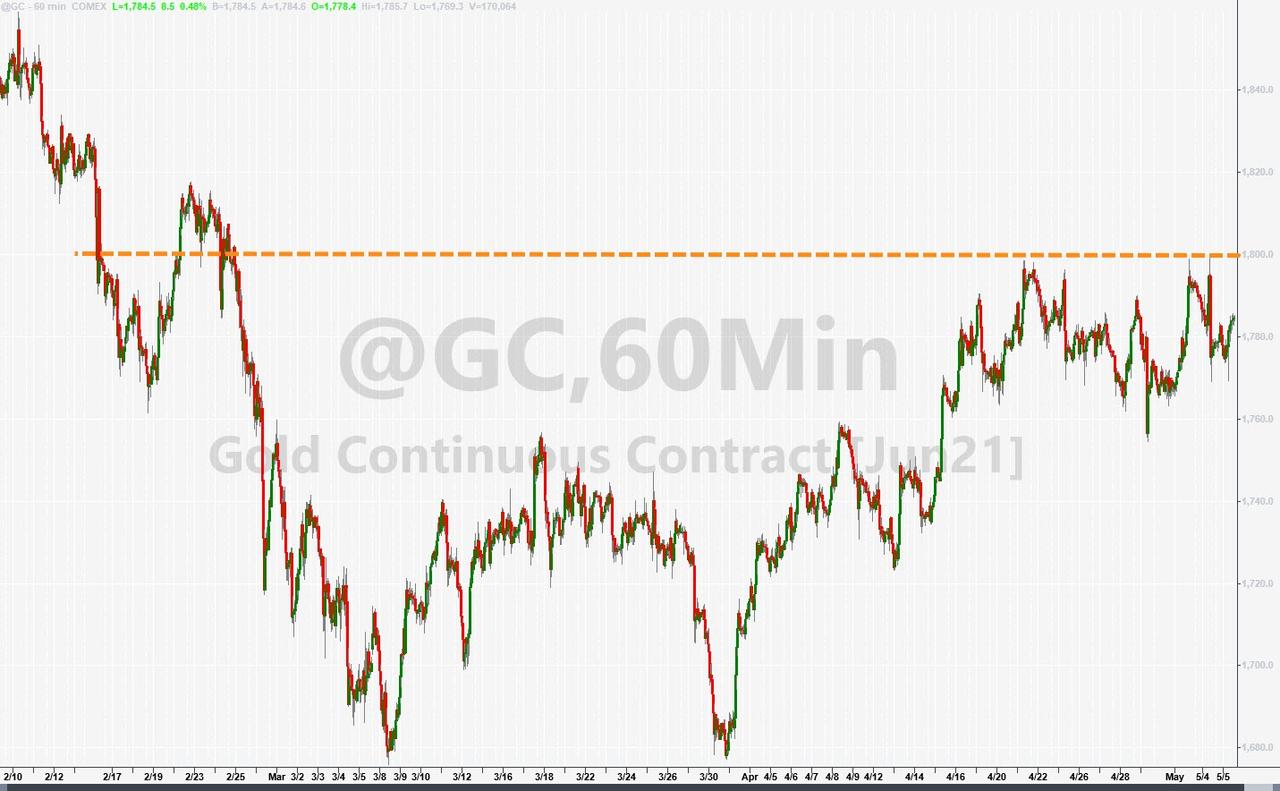
All the uncertainty, with inflationary concerns on the rise, benefited Gold, which not only ended at $1,840, its highest level in 3 months, but also had its best week since last November.
I think, as inflation turns out not to be “transitory,” as the Fed would have us believe, the precious metal may just be in the early stages of a new bull run.
1. From the universe of over 1,800 ETFs, I have selected only those with a trading volume of over $5 million per day (HV ETFs), so that liquidity and a small bid/ask spread are assured.
2. Trend Tracking Indexes (TTIs)
Buy or Sell decisions for Domestic and International ETFs (section 1 and 2), are made based on the respective TTI and its position either above or below its long-term M/A (Moving Average). A crossing of the trend line from below accompanied by some staying power above constitutes a “Buy” signal. Conversely, a clear break below the line constitutes a “Sell” signal. Additionally, I use an 8% trailing stop loss on all positions in these categories to control downside risk.
3. All other investment arenas do not have a TTI and should be traded based on the position of the individual ETF relative to its own respective trend line (%M/A). That’s why those signals are referred to as a “Selective Buy.” In other words, if an ETF crosses its own trendline to the upside, a “Buy” signal is generated. Since these areas tend to be more volatile, I recommend a wider trailing sell stop of 8%-10% depending on your risk tolerance.
If you are unfamiliar with some of the terminology, please see Glossary of Termsand new subscriber information in section 9.
1. DOMESTIC EQUITY ETFs: BUY— since 07/22/2020
Click on chart to enlarge
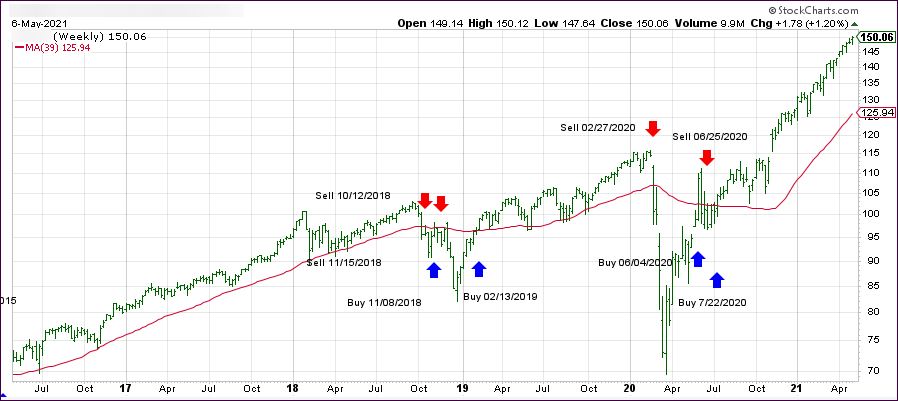
Our main directional indicator, the Domestic Trend Tracking Index (TTI-green line in the above chart) has now rallied above its long-term trend line (red) by +20.18% and remains in “BUY” mode as posted.
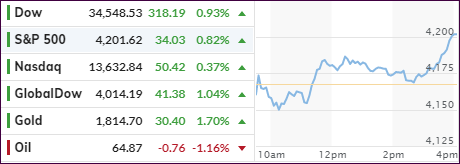
Early weakness gave way to a mid-day pump, which was followed by a date session rip with all three major indexes closing in the green. The laggard again was the Nasdaq, as “value” continued outperform “growth.” YTD, the Russell 1000 Value index has gained 17%, while the Russell 1000 Growth Index shows only a meager 5%.
It seemed like traders were front running tomorrow’s jobs report, which is highly anticipated due to its representation of the labor market recovery. If today’s much improved weekly Initial Jobless Claims, which dropped to a pandemic low of 498k vs. expectations of 527k, is any indication, we might be in for a surprise. Despite today’s encouraging improvement, keep in mind that over 16 million Americans remain “on the dole.”
“Today’s read is another proof point that we’re one step closer to full economic recovery, sooner than some may have expected,” said Mike Loewengart, managing director of investment strategy at E-Trade Financial. “As we see some serious momentum building on the jobs front, all eyes will be on how this plays into action taken by the Fed, if any.”
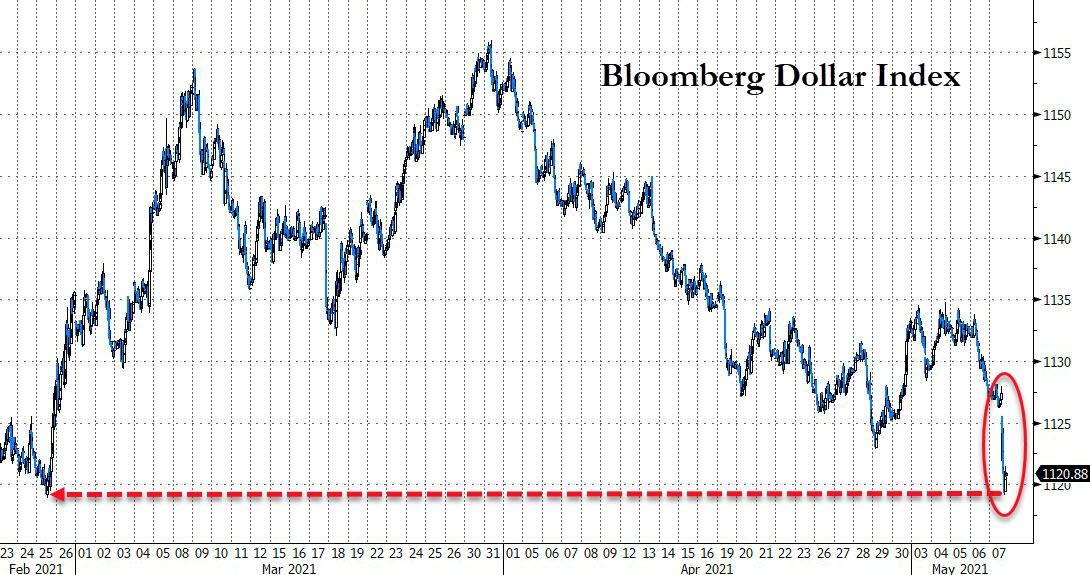
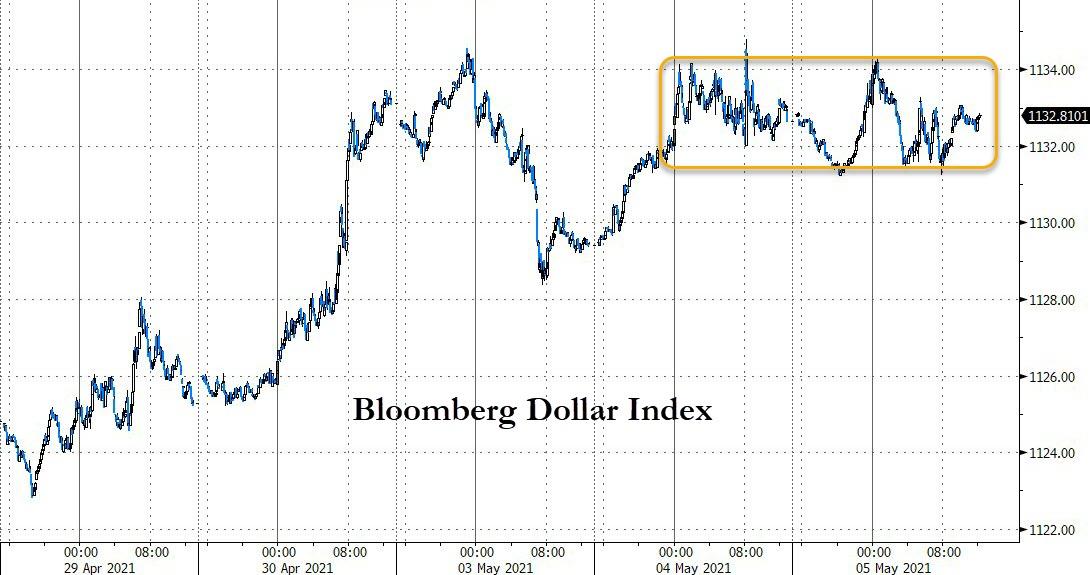
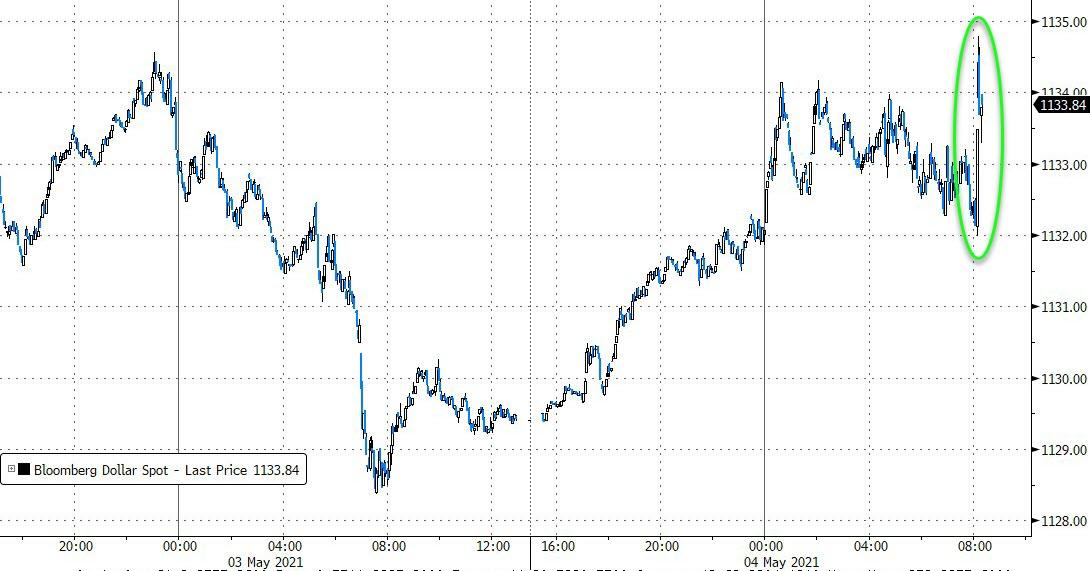
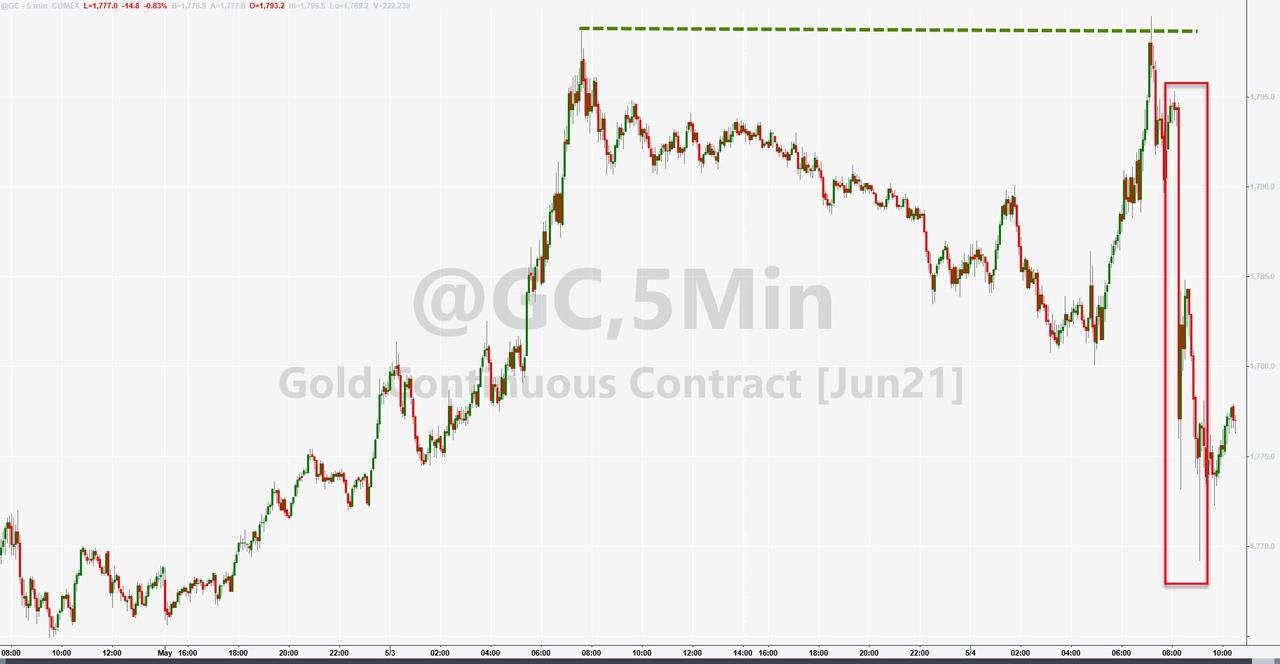
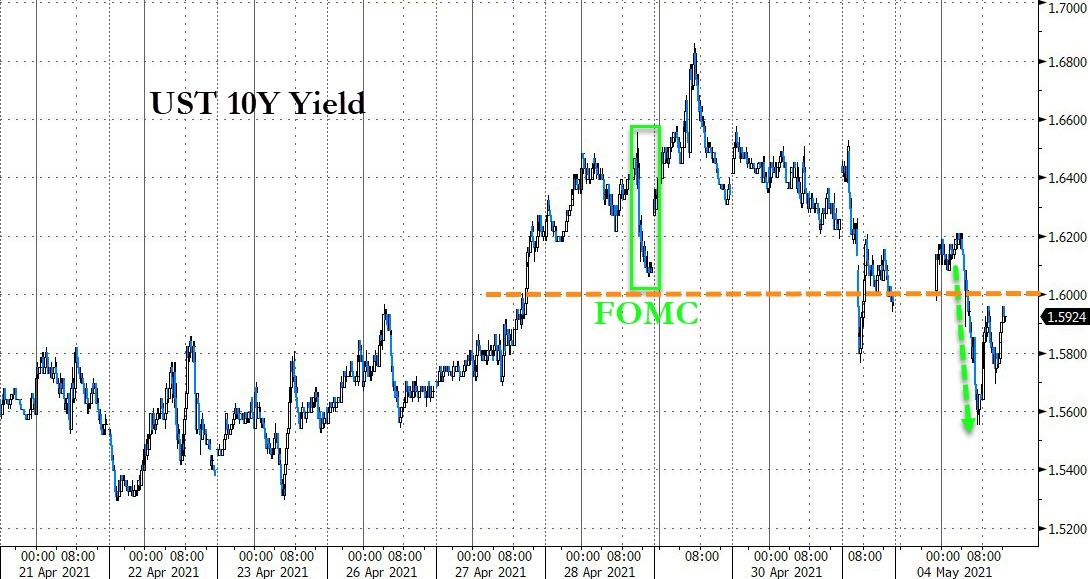
Bond yields were in retreat mode with the 10-year holding steady below the 1.6% mark, while the US Dollar did its best imitation of a swan dive, as Bloomberg demonstrates in this chart. This combination did wonders for Gold, which surged 1.7% and finally recaptured its $1,800 level.
We will now have to wait and see if tomorrow’s jobs report can indeed live up to these high expectations, or if we will be witnessing the old standby routine, namely “buy the rumor, sell the fact.”
Supporting the initial comeback bounce in the markets was Treasury Secretary Yellen, who completely reversed her hawkish talk on interest rates.
ZeroHedge presented it this way:
“Let me be clear it’s not something I’m predicting or recommending,” Yellen says about rates, flip-flopping her earlier perspective entirely.
Then she addressed the issue of inflation, toeing the establishment line that it will be “transitory” for the next six months or so…
She added that if there is an inflation problem, she is certain the Federal Reserve can be counted on to address it.
That’s all it took to pull the major indexes out of the basement and into green territory, at least early on and before the roller coaster ride opened up. Supporting actors were strong earnings results and general optimism, but they did not help the Nasdaq to return above its unchanged line.
Volatility picked up in part due to inflationary forces being hard at work, with the Bloomberg Commodity Index adding another up day, it’s 16th straight and the highest level since 2015. However, keep in mind that the Fed considers this “transitory,” though they are living under the illusion that they are equipped to control accelerating prices.
A major sell program kicked in later in the session and took the starch out of upward momentum, just about the time as the Biden administration supported the waiver on Covid vaccine-patents at the WTO, as ZH pointed out.
Bond yields spiked initially above the 1.6% level but sold off into the close dropping to 1.57%. The US Dollar trod water all day and traded in a tight range, while Gold managed to eke out a small gain but was unable to conquer its $1,800 level.
And, as we have seen lately, “value” outperformed “growth.”
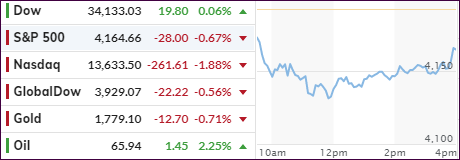
After yesterday’s strong bullish bounce into May, the picture looked anything but warm and fuzzy this morning, when the major dropped sharply but managed to rebound off their lows, however, only the Dow climbed back into the green.
The Nasdaq had its worst day since March, as fears of rising inflation, concerns of higher bond yields as well as the Biden administration’s potential tax hikes extracted their pound of flesh from the tech sector.
It was none other than Treasury Secretary and former Fed head Janet Yellen, who put the bulls on notice that changes might be forthcoming. Here are her highlights:
“It may be that interest rates will have to rise a little bit to make sure our economy doesn’t overheat.”
“We’ve gone for way too long letting long-term problems fester in our economy.”
Ouch! That was enough to send the markets reeling, and— stocks puked as one would expect at the first signs of the punchbowl being taken away…as ZeroHedge commented so eloquently.
That was followed up by another bon mot, namely: We wonder what Jay Powell will have to say about Janet stepping on his toes? Did she just start the process of thinking about thinking about thinking about normalization?
Tongue in cheek comments aside, the US Dollar jumped after Yellen’s remarks, which demolished Gold’s early gains and pushed the precious metal back into the red. Value outperformed Growth with RPV storming back into the green during the afternoon recovery.
The 10-year bond yield chopped around aimlessly but ended up below the 1.6% level. For sure, as I have commented on may occasions, inflation is a concern and you only need to look at trend of the Commodity Index, which continued its rise to the highest since 2011, as ZH pointed out.
And again, via ZH, Bloomberg updated the Global Liquidity Proxy, which shows that, absent of further stimulus, the S&P 500 may drop but find support around the 3,900 level.