Below, please find the latest High-Volume ETF Cutline report, which shows how far above or below their respective long-term trend lines (39-week SMA) my currently tracked ETFs are positioned.
This report covers the HV ETF Master List from Thursday’s StatSheet and includes 312 High Volume ETFs, defined as those with an average daily volume of more than $5 million, of which currently 268 (last week 269) are hovering in bullish territory. The yellow line separates those ETFs that are positioned above their trend line (%M/A) from those that have dropped below it.
In case you are not familiar with some of the terminology used in the reports, please read the Glossary of Terms. If you missed the original post about the Cutline approach, you can read it here.
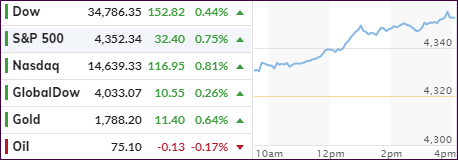
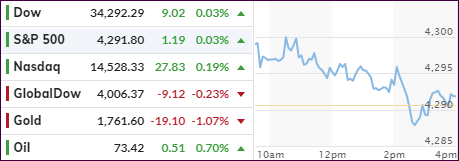
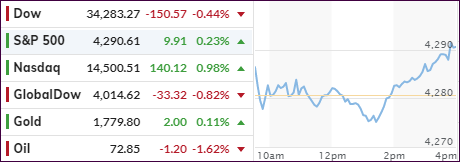
While the major indexes managed a green close yesterday, the Dow gave back about half of its early gains, but it could have been worse had it not been for the closing bell to “save” the markets from further declines.
And that is exactly what transpired, not only this morning but also during last night’s futures trading, namely that the rebound now appeared to have been a dead-cat-bounce with the sour mood continuing the entire session thus wiping out more than yesterday’s gains.
With options expiration lurking and the fallout from the GME short-squeeze debacle continuing, during which the once considered “untouchable” hedge funds’ short positions were squeezed to a degree never seen before, the battle raged on pushing up the stock another +67.9%. It is not known yet how many hedge funds had to be given a financial emergency enema, just to keep them alive.
It was the 6 million retail investors and their Robinhood accounts that unnerved the markets and made sure that the billionaire “hedgers” learned to use a little more discretion, by not shorting more than the entire market float, as they now have become intimately acquainted with the possible consequences of such actions.
As I pointed out 2 days ago, much of the selling in stocks and bonds was attributable to those hedge funds with outsized margin calls to sell everything they could to meet them—just to stay alive.
Added CNBC:
Shares of GameStop jumped 67.9% after Robinhood said it would allow limited buying of the stock and other heavily shorted names after restricting access the day before. Robinhood raised more than $1 billion from its existing investors overnight, in addition to tapping bank credit lines, to ensure it had the capital required to allow some trading again in volatile stocks like GameStop.
Investors are concerned that if GameStop continues to rise in such a volatile fashion, it may ripple through the financial markets, causing losses at brokers like Robinhood and forcing hedge funds who bet against the stock to sell other securities to raise cash.
For sure, fears have increased that this GameStop mania could be indicative of the market bubble I have talked about before, because none of the daily trading activities are a representation of the underlying economy, but merely a function of liquidity supported by the actions of the Fed. That may eventually contribute to more chaotic trading and possibly give the bearish crowd something to cheer about.
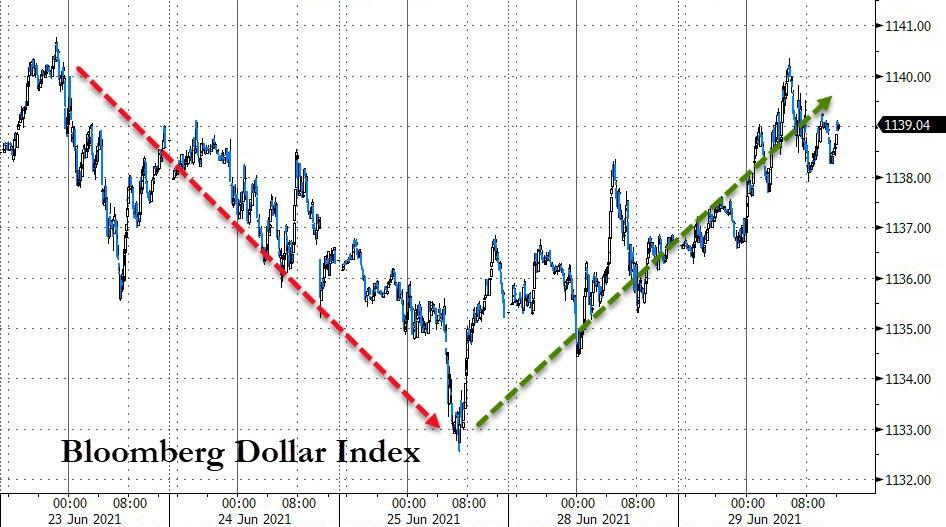
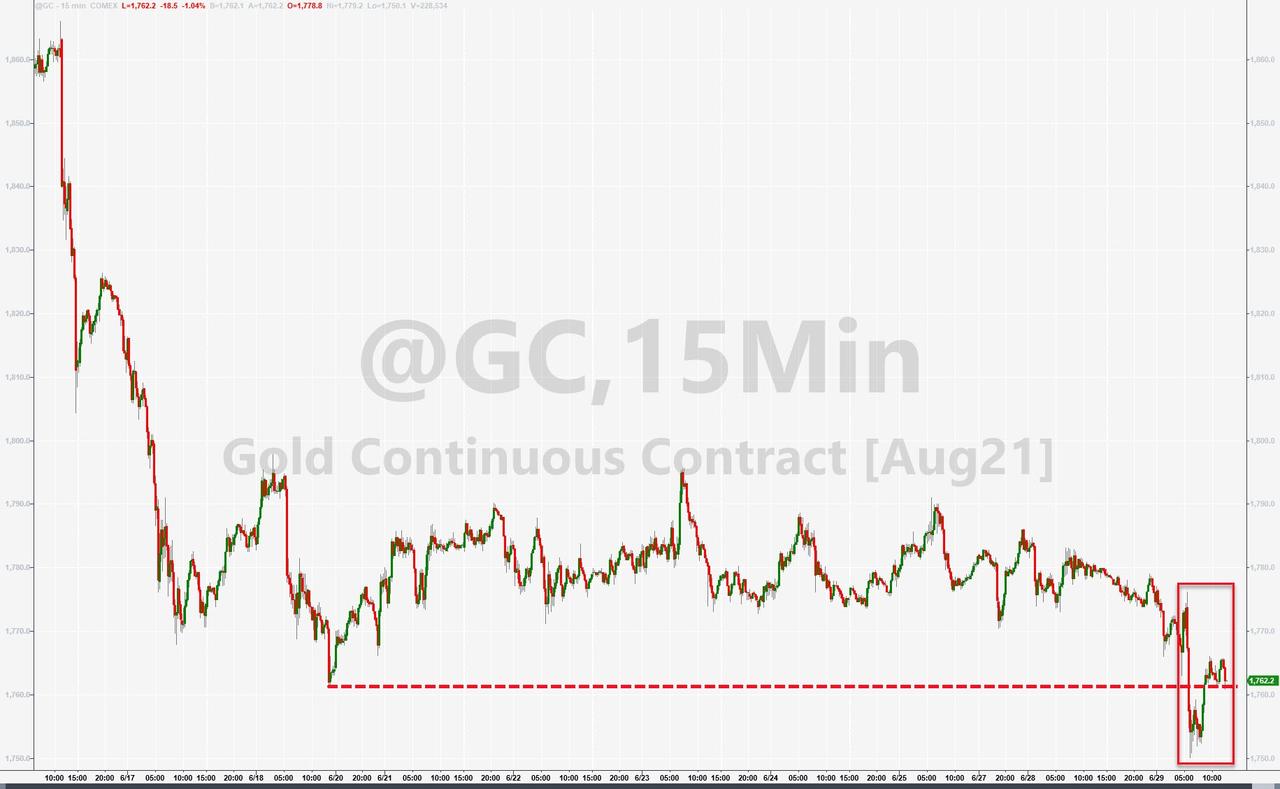
In the end, the markets scored their first losing month in four, with the Dow and S&P 500 dropping 2% and 1.1% respectively, but SmallCaps maintained their winning streak. The US Dollar scored its first monthly win since September, while Gold surged on various occasions, but every bounce was met with selling pressure, as ZH pointed out.
Yet, despite all this upheaval, panic and nervousness, the S&P 500 remains within 3.5% of its all-time highs. Go figure.
ETF Data updated through Thursday, January 28, 2021
Methodology/Use of this StatSheet:
1. From the universe of over 1,800 ETFs, I have selected only those with a trading volume of over $5 million per day (HV ETFs), so that liquidity and a small bid/ask spread are assured.
2. Trend Tracking Indexes (TTIs)
Buy or Sell decisions for Domestic and International ETFs (section 1 and 2), are made based on the respective TTI and its position either above or below its long-term M/A (Moving Average). A crossing of the trend line from below accompanied by some staying power above constitutes a “Buy” signal. Conversely, a clear break below the line constitutes a “Sell” signal. Additionally, I use a 7.5% trailing stop loss on all positions in these categories to control downside risk.
3. All other investment arenas do not have a TTI and should be traded based on the position of the individual ETF relative to its own respective trend line (%M/A). That’s why those signals are referred to as a “Selective Buy.” In other words, if an ETF crosses its own trendline to the upside, a “Buy” signal is generated. Since these areas tend to be more volatile, I recommend a wider trailing sell stop of 7.5%-10% depending on your risk tolerance.
If you are unfamiliar with some of the terminology, please see Glossary of Termsand new subscriber information in section 9.
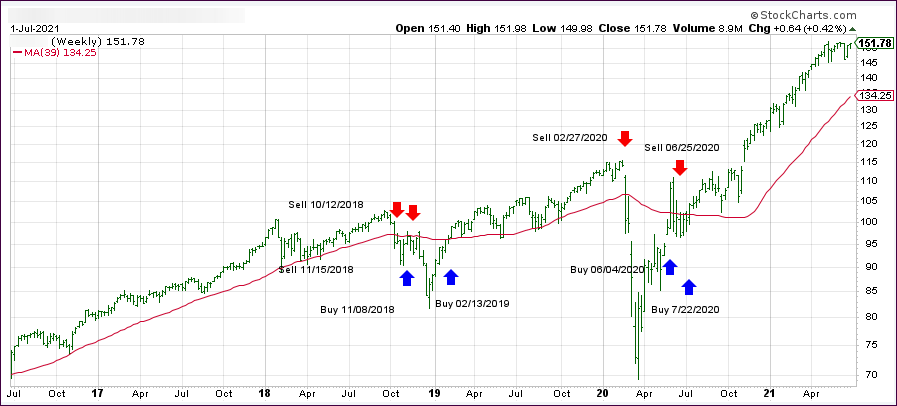
1. DOMESTIC EQUITY ETFs: BUY — since 07/22/2020
Click on chart to enlarge
Our main directional indicator, the Domestic Trend Tracking Index (TTI-green line in the above chart) has now rallied above its long-term trend line (red) by +15.99% and remains in “BUY” mode as posted.
Even though the futures markets benefited for a little while from Microsoft’s blow-out earnings yesterday, that positive sentiment did not last long with the major indexes plunging right at the opening of the regular session.
A few factors came into play and contributed to today’s plunge:
The markets melted up over the past couple of months in almost a vertical fashion, supported by intense speculative behavior from retail investors, so a correction has been way overdue.
All eyes were on the Fed today, which opted to hold interest rates near zero and left unchanged its massive bond-buying program. Fed head Powell stressed that the economy remains far from a recovery, a point that I have repeatedly made.
The short squeeze of stocks like GME continued unabated causing some of the billionaire hedge fund shorts a world of hurt with some of them likely needing to be bailed out.
The events around GME, along with others, and the pain experienced by the leveraged short-sellers were worsening, as the stock catapulted to the $385 level. It’s almost funny when you consider that based on economic analysis heavy shorting by the pros of this stock backfired, after an army of retail speculators poured into the stock via massive share purchases and options and drove it to higher highs in the process forcing the shorts to cover thereby throwing more gasoline on the fire.
In the end, not only did the short sellers tried to cover, but they also had to face gigantic margin calls, which caused them to sell off any asset they held indiscriminately, thereby contributing to today’s broad sell off.
In other words, amateur traders made the pros puke their longs to cover their short losses. Ouch!
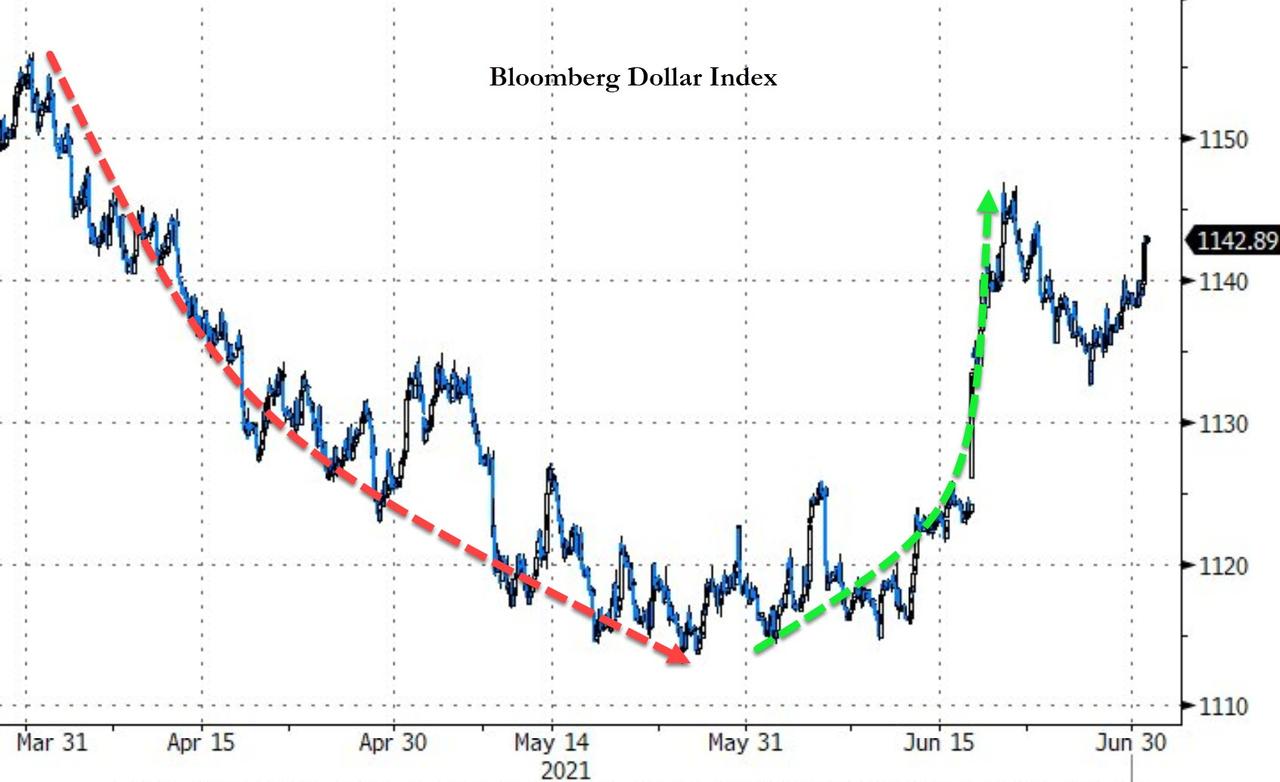
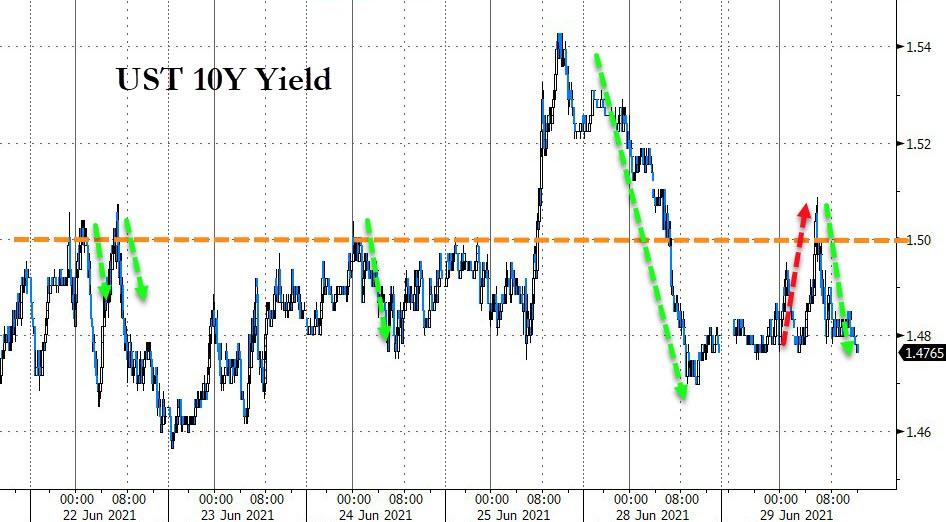
To no surprise, bond yields dropped to 1%, and the US Dollar rallied. With the major indexes surrendering 2%-2.5%, Gold held up well during this Sell-A-Thon by only giving back -0.65%.
To show you how downright stupid some of the market moves were, ZH pointed to the holding company for Blockbuster’s liquidation, which is up a rather amusing 4,900% in the last two days, as this chart shows.
Let’s see if that kind of insanity continues tomorrow. I will be pressed for time and may write an early and shortened market commentary, if possible.
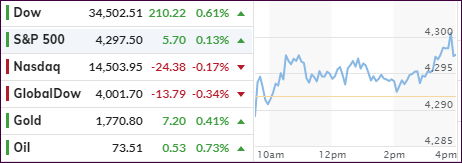
The direction the futures markets take is not always an indication as to what will happen during the regular trading session. Such was the case last night, with the major indexes were down some -0.5%, but they opened in the green yet ended up meandering aimlessly all day.
Even Nasdaq trading was subdued with Big Tech earnings on deck, as well as a slew of reports from blue-chip companies, as we are heading to the center of the earnings season.
Volatility reigned supreme in some areas, as CNBC reported:
Wild swings resumed in heavily shorted stocks, including GameStop and AMC Entertainment, as enthusiastic retail investors active in chat rooms continued to bet against short-selling hedge funds. The volatility has some investors concerned about stocks becoming detached from fundamentals as speculation runs rampant.
As I have pounced on for years, fundamentals are no longer important, it is reckless and rampant speculation mixed with complacent and bubbly investor sentiment, all of which can potentially have a negative effect on the markets. But right now, “fear not,” seems to be the meme, “the Fed has our back and will do anything in their power to not let markets collapse.”
In the meantime, the Fed began its two-day meeting and tomorrow’s policy statement will be analyzed down to every word to be sure that any potential market rescue efforts remain in place.
While I am writing this, Microsoft just reported blowout earnings, which should bode well for the direction of the Nasdaq tomorrow.
Despite the major indexes being flat today, the biggest 3-day short squeeze since March/April last year pushed the most-shorted stocks back to record highs, as ZH reported.
The US Dollar drifted lower, but Gold could not find the spark to use that weakness as a springboard for advances, so the precious metal remained stuck in its current trading range.