Fed Mouth Pieces Jawbone Markets Lower

Ulli Market Commentary Contact

[Chart courtesy of MarketWatch.com]

  1. Moving the markets

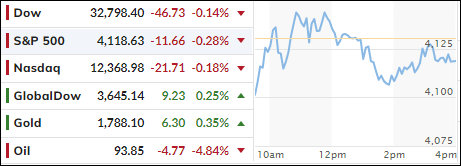
I have been commenting almost daily on last week’s rally, which was entirely based on wishful thinking that the Fed will have to pivot back to lowering rates. Due to the US having slipped into a recession, traders, who have been frontrunning the market, expected that this event will have to happen sooner rather than later.

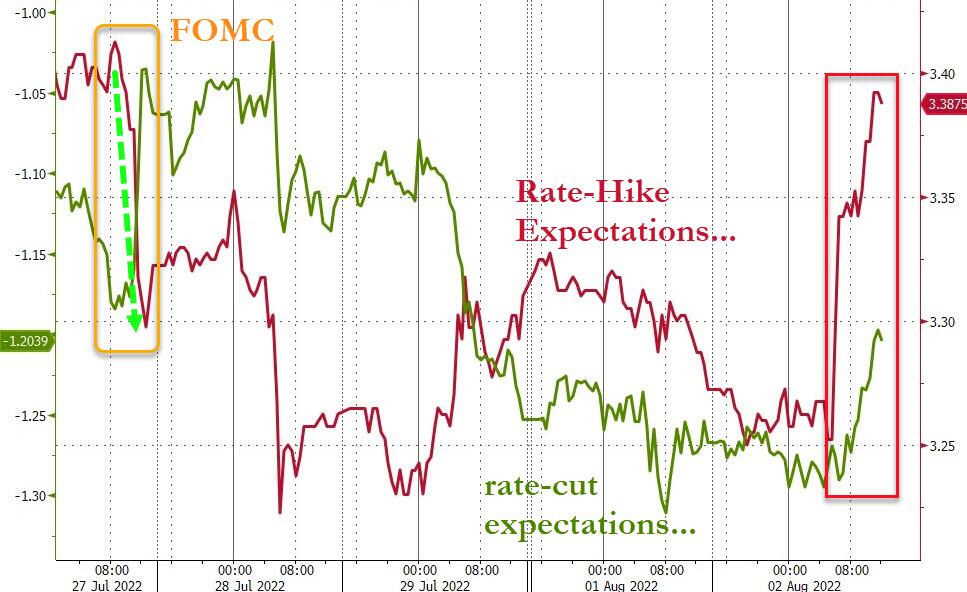
However, today, we saw a parade of Fed speakers debunking the hope for a Fed pivot by presenting nothing but hawkish thoughts. ZeroHedge summed up the speakers like this:

SF Fed’s Mary Daly jawboned the doves back by stating that The Fed is “nowhere near done” on fighting inflation, adding that “we have made a good start, and I feel really pleased with where we’ve gotten to by this point,” but inflation is “far too high.”

“It really would be premature to unwind all of that and say the job is done,” she said.

“I also think that we’ve been with this high inflation for a while, and really getting too confident that we’ve already solved the problem,” Daly said, adding that the Fed needs to “keep committed until we actually see it in the data.” 

Chicago Fed President Charles Evans said he is hopeful that reaching 3.5% by the end of the year is “still reasonable.”

“I think that there’s enough time to play out that 50 is a reasonable assessment, but 75 could also be okay” at the September meeting, he said.

“I doubt that more would be called for” at that meeting, Evans added. But Evans warned that “if we don’t see improvement before too long, we might have to rethink the path a little bit higher.”

Cleveland Fed’s Loretta Mester said she saw “no signs of a recession” offering no dovish pivot signal by noting that “we have to get inflation under control.”

To really drive the point home, Mester concluded that she “hasn’t seen anything suggesting inflation is leveling off.”

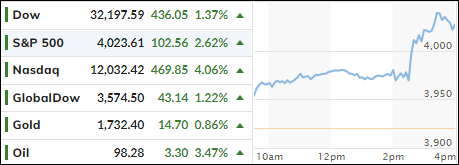
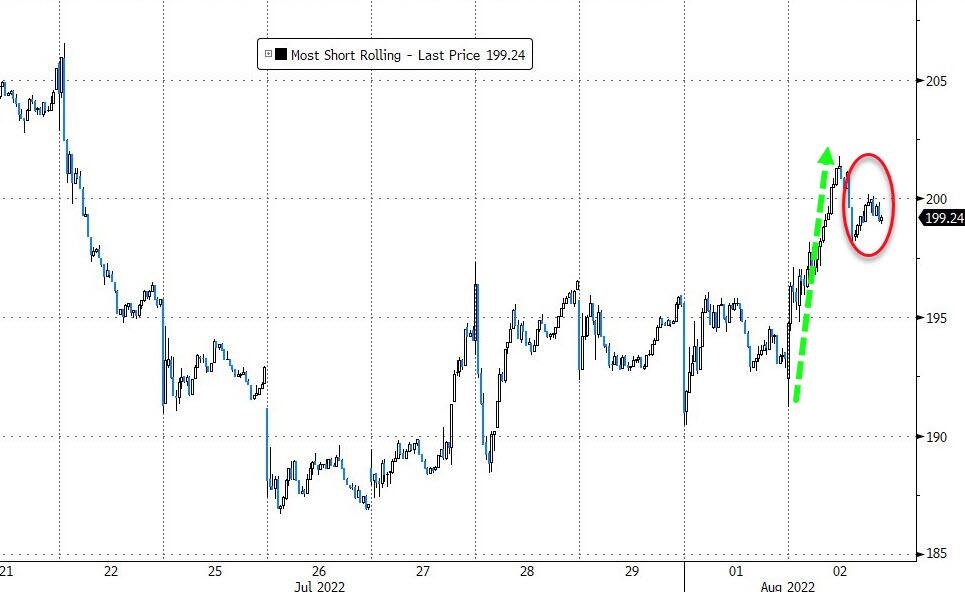
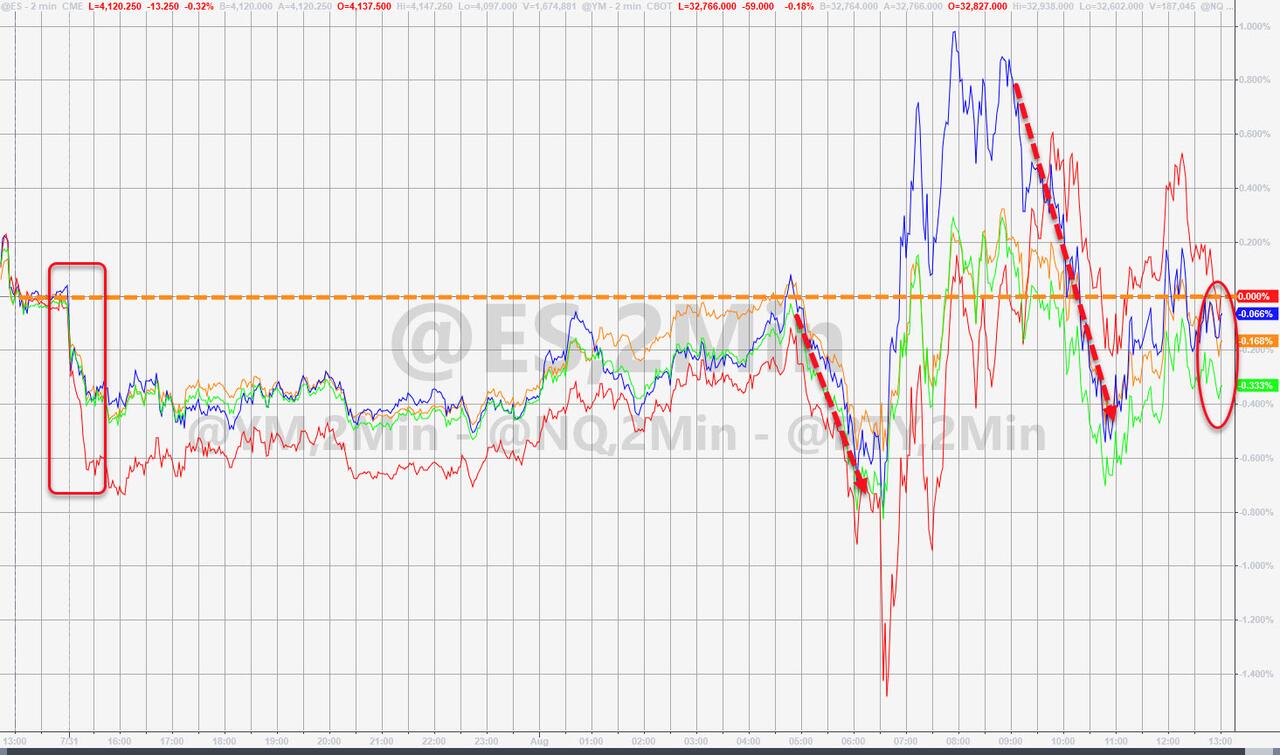
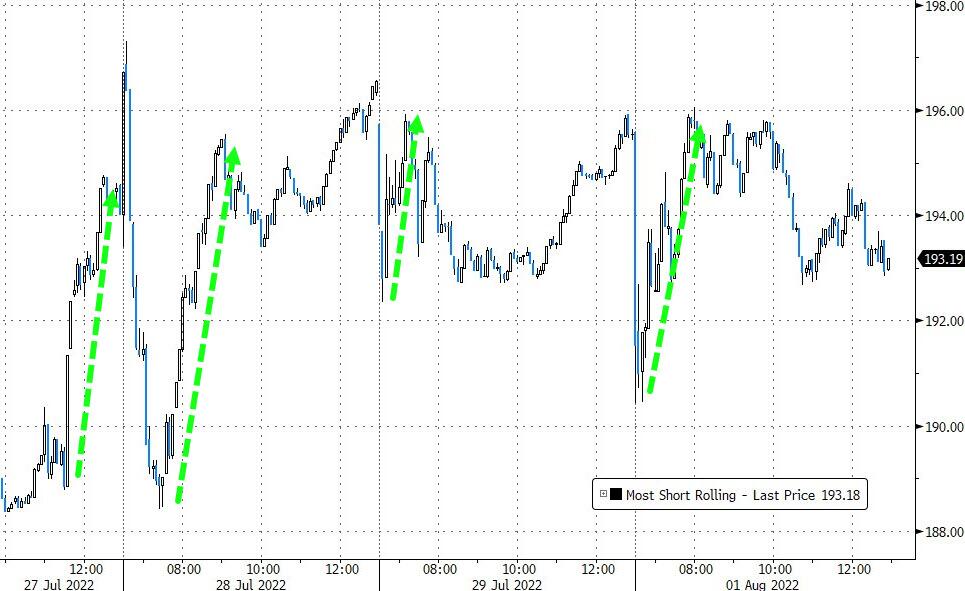
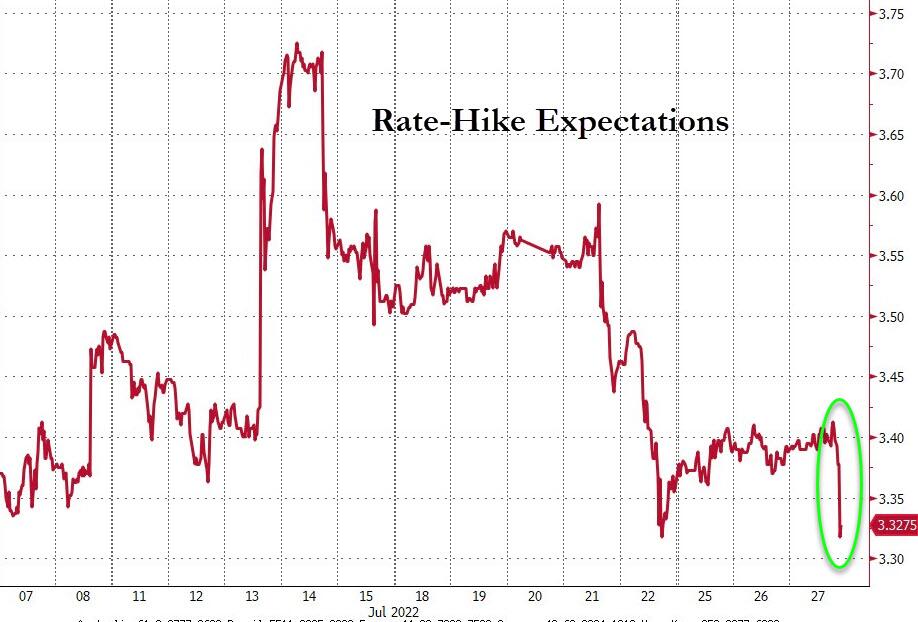
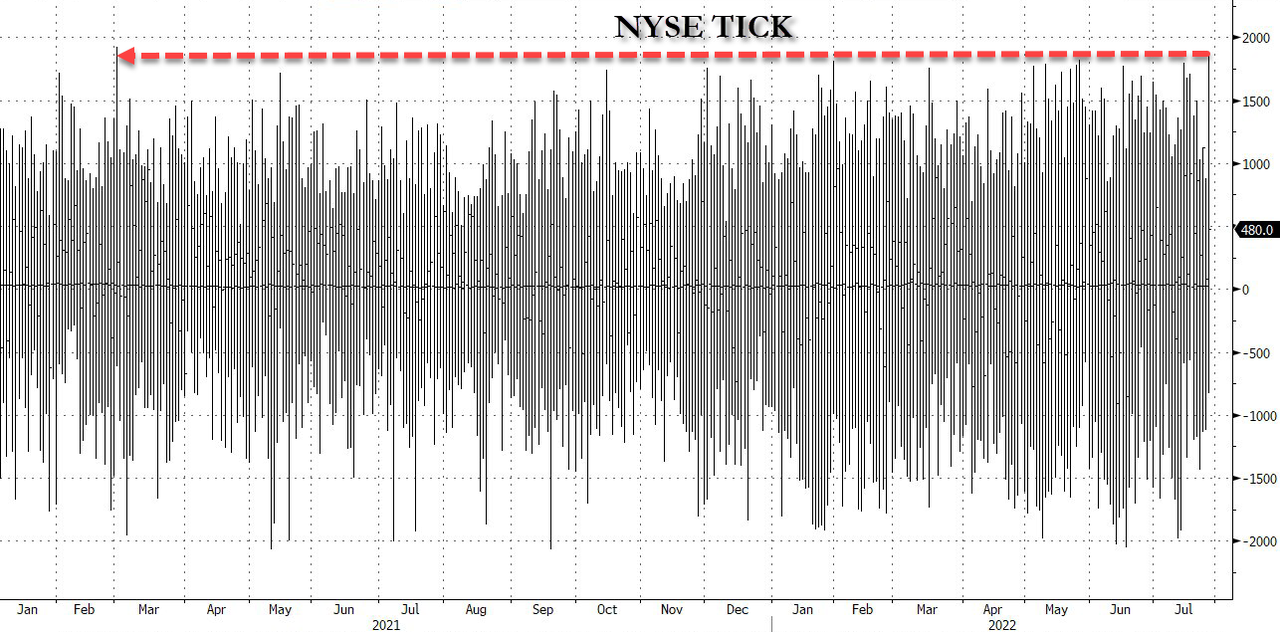
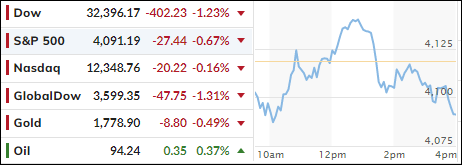
As a result, rate hike expectations headed north and the markets went south, although the losses were moderate. The early rebound happened with the support of a short squeeze, which petered out in the afternoon.

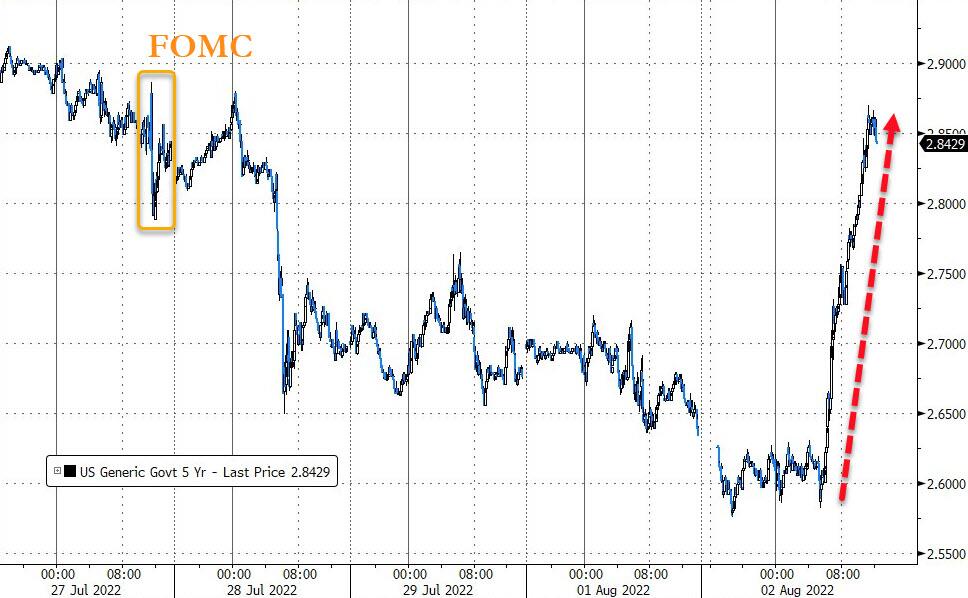
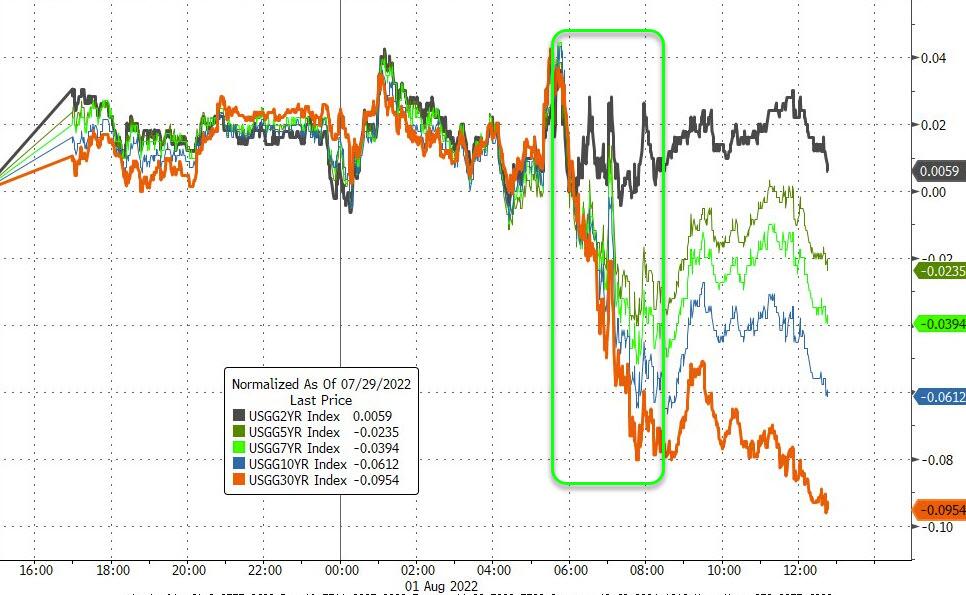
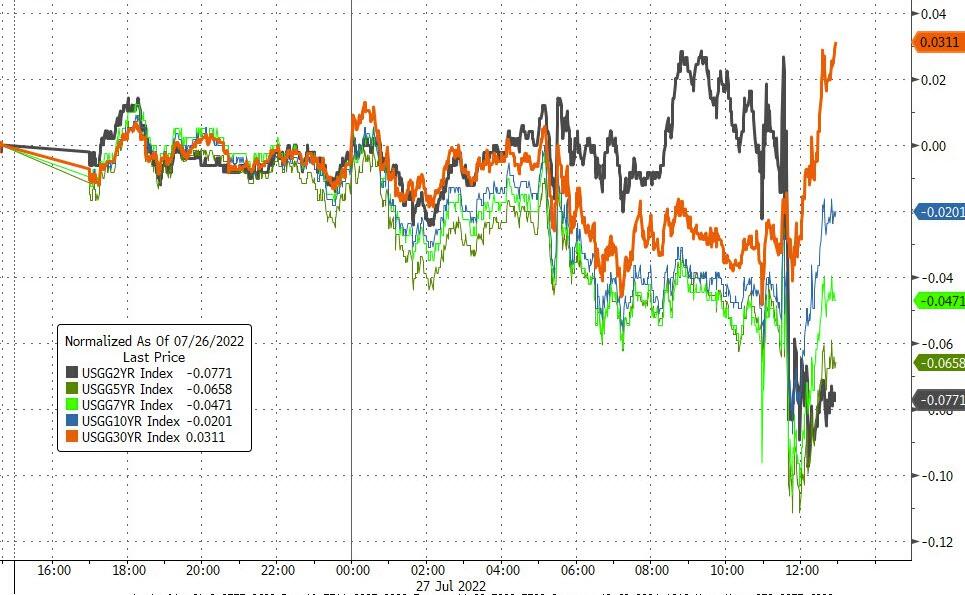
Bond yields surged with the 5-year scoring its biggest daily rise since 3/17/20, according to ZeroHedge. The widely followed 10-year rallied almost 18 bps to close at 2.75%.

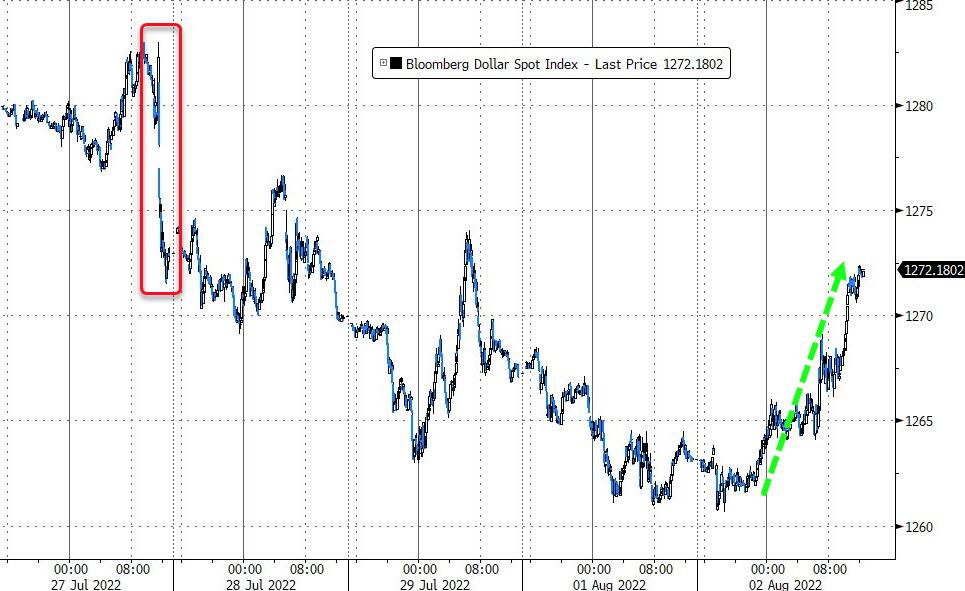
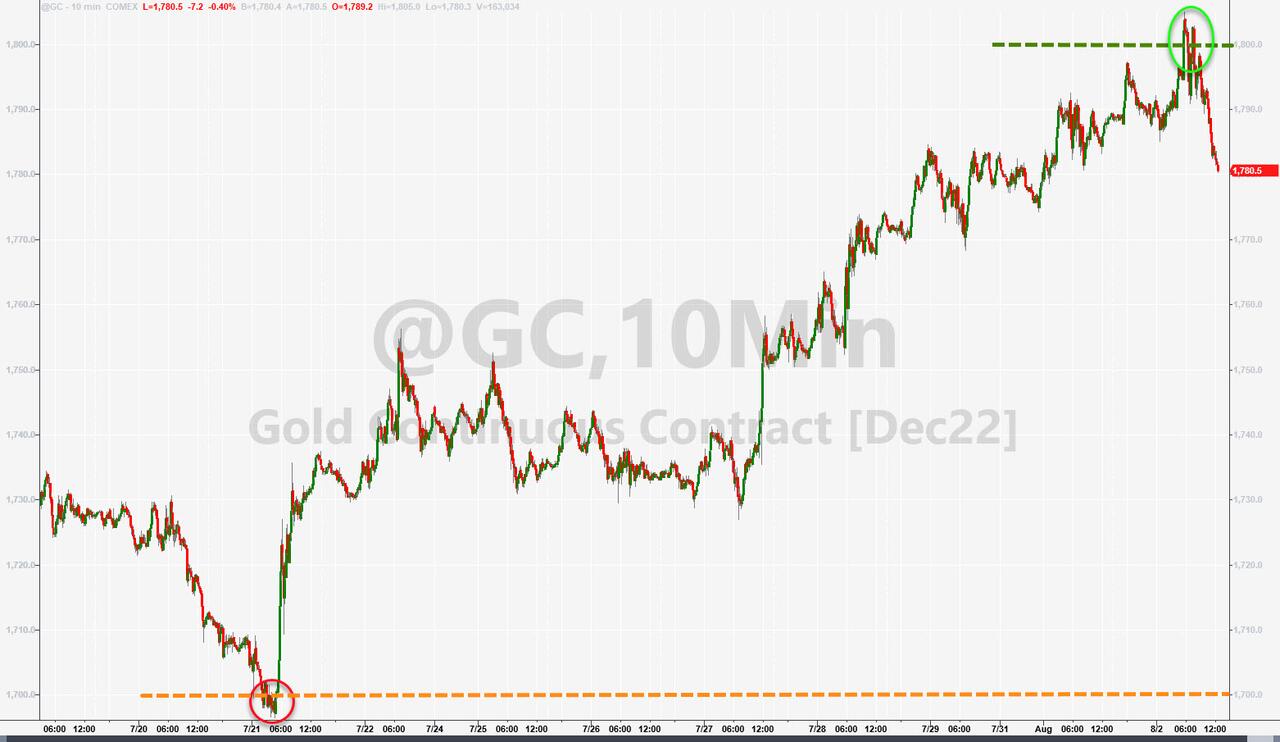
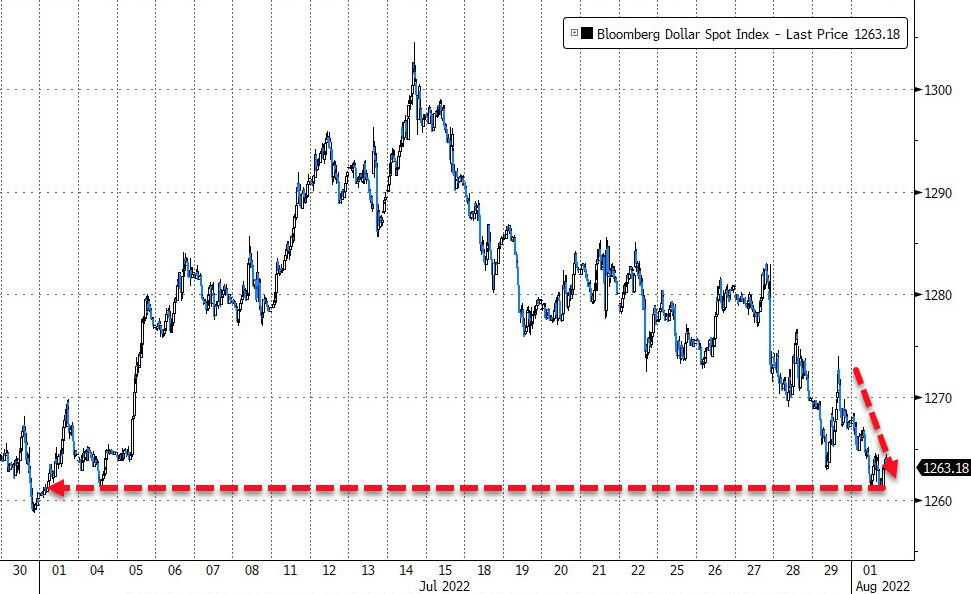
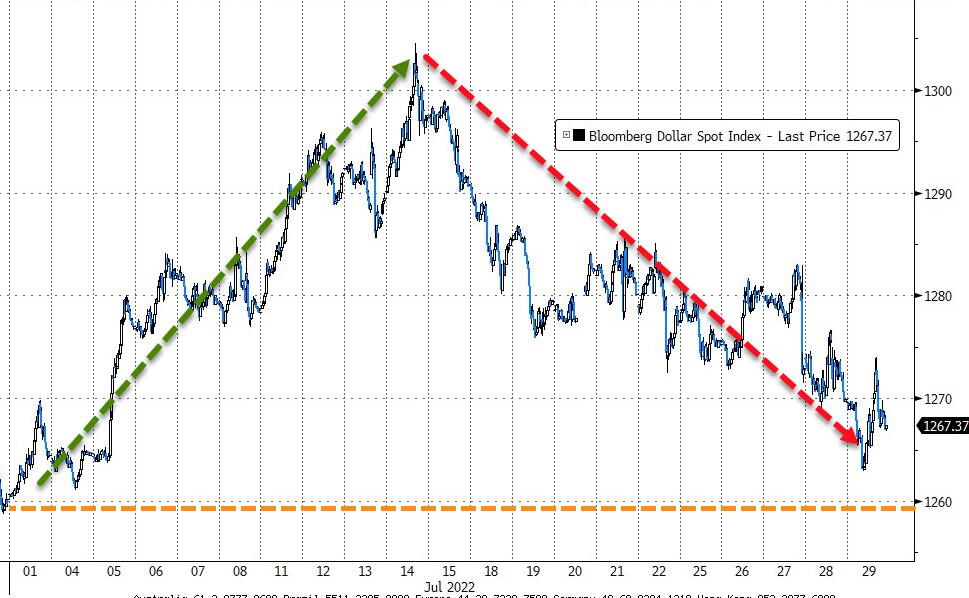
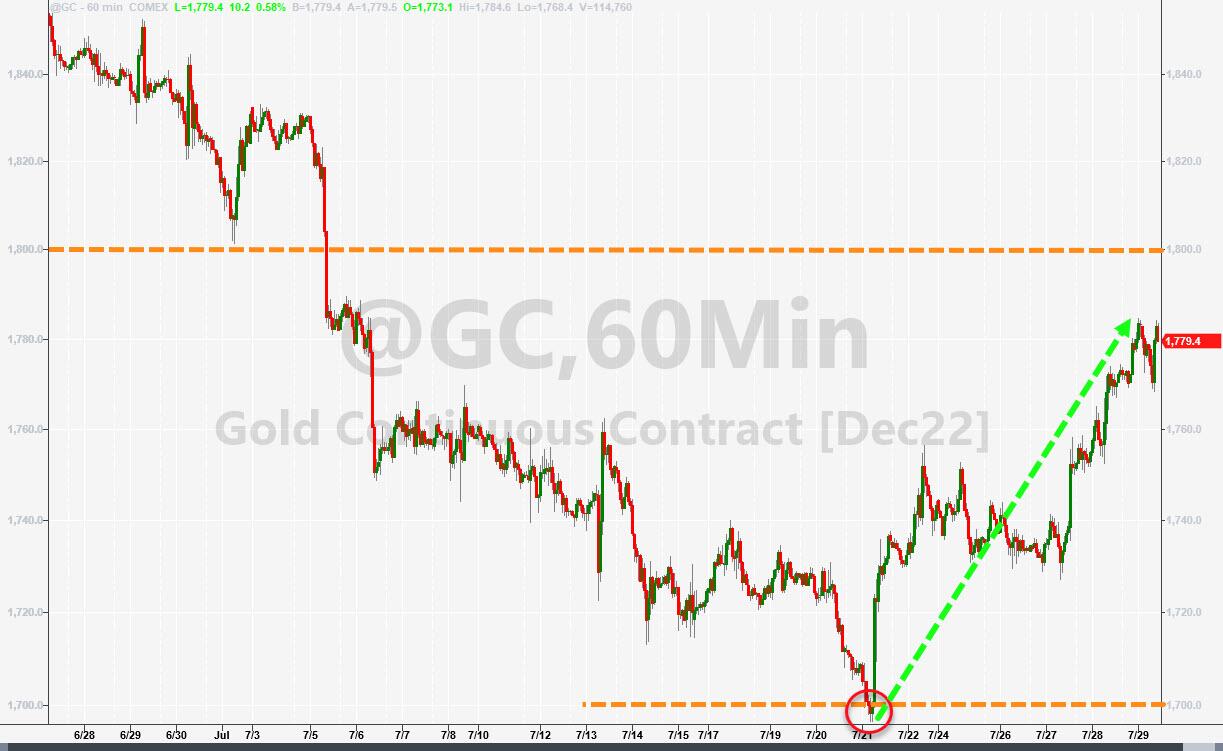
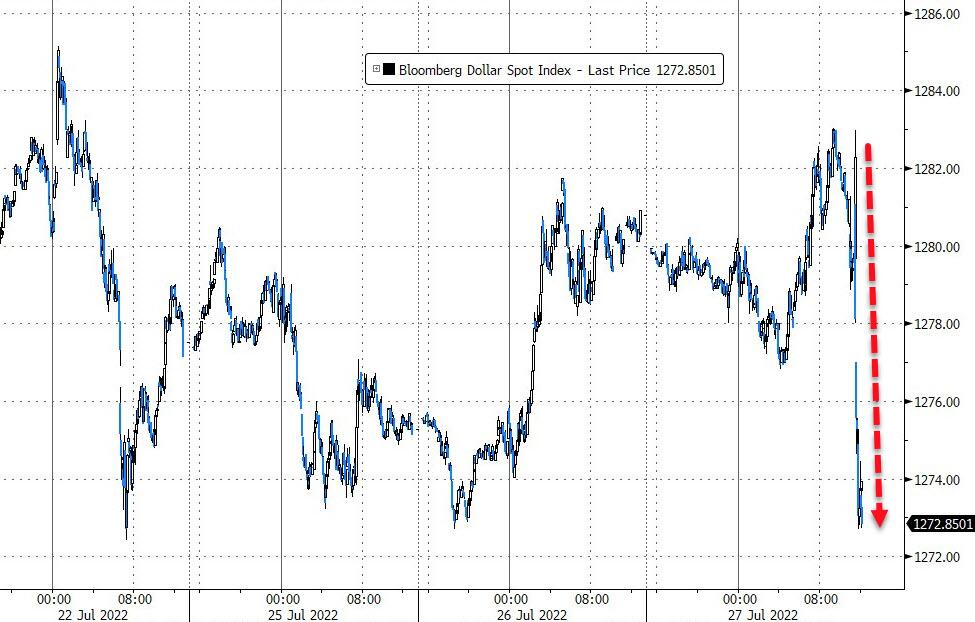
With rising yields, it came as no surprise that the US Dollar gained and gold dropped after briefly piercing the $1,800 level.  

Adding to those uncertainties was Nancy Pelosi’s much debated and questioned “visit” to Taiwan, which for sure increased US/China tensions with any repercussions still being unknown. Anxieties could even worsen once she tries leave tomorrow after spending the night on the island.

Interestingly, Blomberg noted that “company executives are getting much more worried about economic growth, judging by their earnings conference calls,” even as stocks staged a furious rebound in July.

Hmm…I wonder how that will affect future market behavior.

Read More
Stumbling Into August

Ulli Market Commentary Contact

[Chart courtesy of MarketWatch.com]

  1. Moving the markets

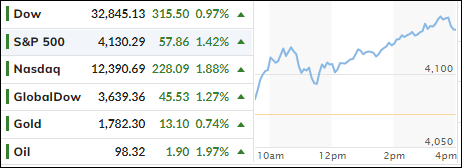
Last week’s relentless hope that Fed head Powell will be forced to pivot due to recessionary forces (lower rates), which triggered a nice rebound, became questionable as to its timing and may not happen as quickly as the markets had expected. That could affect the duration of the current bullish run.

The major indexes slipped moderately after bouncing around their respective unchanged lines, as concerns reigned supreme about the Fed’s progress to stem the course of inflation.  

As per ZeroHedge, three things changed today:

1) Jawboning – A smorgasbord of Fed (former and current) Speakers jawboned down the idea that a Fed Pivot is imminent.

2) Really Ugly Global Data – ISM Manufacturing data was bad and GDPNOW followed suit with a sizable downgrade of its Q3 growth forecast, (which followed terrible data out of China and EU)

3) WW3 Worries – Perhaps only of side notice, but Pelosi’s plan to visit Taiwan raises the risk of WW3 and that is just too bad of news to be buying.

An opening short squeeze helped pull the major indexes out of the red zone, but the effort faded in the afternoon.

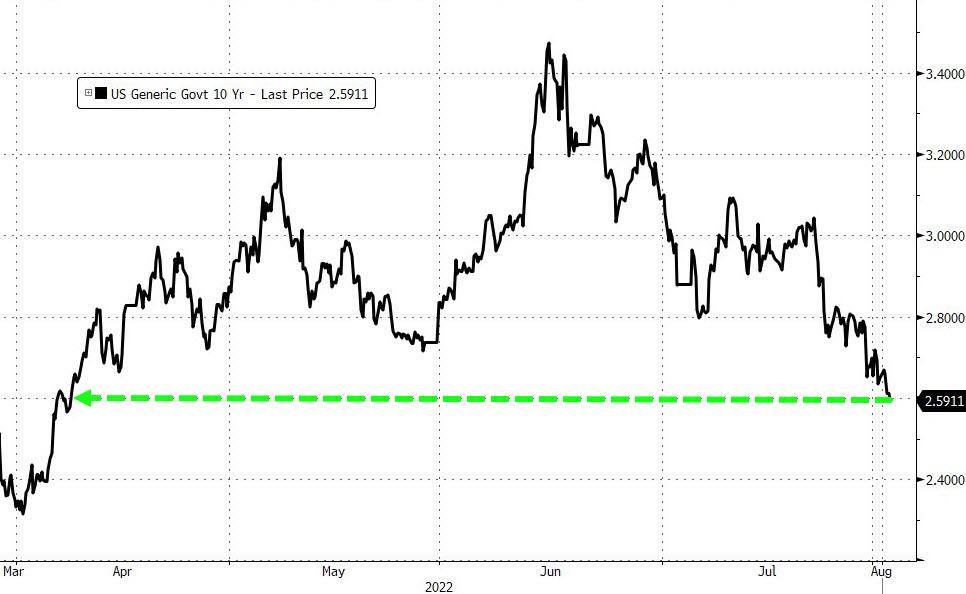
Bond yields were mixed, with the 10-year slipping to 2.59%, which was its lowest since the beginning of April. The US Dollar retreated as well and touched a 1-month low.

Gold continued jumping off its $1,700 level and is heading towards the $1,800 marker.   

Market direction will remain headline news dependent with the July nonfarm payrolls report, due out later this week, being a decider as to whether some economists will continue to proclaim the “no recession” mantra. Strong jobs growth has led some to believe that we are not in one, despite two consecutive quarters of negative GDP.

Read More

ETFs On The Cutline – Updated Through 07/28/2022

Ulli ETFs on the Cutline Contact

Below, please find the latest High-Volume ETF Cutline report, which shows how far above or below their respective long-term trend lines (39-week SMA) my currently tracked ETFs are positioned.

This report covers the HV ETF Master List from Thursday’s StatSheet and includes 312 High Volume ETFs, defined as those with an average daily volume of more than $5 million, of which currently 38 (last week 23) are hovering in bullish territory. The yellow line separates those ETFs that are positioned above their trend line (%M/A) from those that have dropped below it.

Take a look:                                                                   

The HV ETF Master Cutline Report

In case you are not familiar with some of the terminology used in the reports, please read the Glossary of Terms. If you missed the original post about the Cutline approach, you can read it here.      

ETF Tracker Newsletter For July 29, 2022

Ulli ETF Tracker Contact

ETF Tracker StatSheet          

You can view the latest version here.

MAKING UP JUNE’S LOSSES

[Chart courtesy of MarketWatch.com]

  1. Moving the markets

Despite the Fed’s rate hike of 75 bps on Wednesday and yesterday’s Q2 negative GDP print of -0.9%, the markets perceived all of it as a positive, never mind the fact that two consecutive negative GDP readings are and have been an indicator for the last 50 years that we have dropped into a recessionary economic environment.

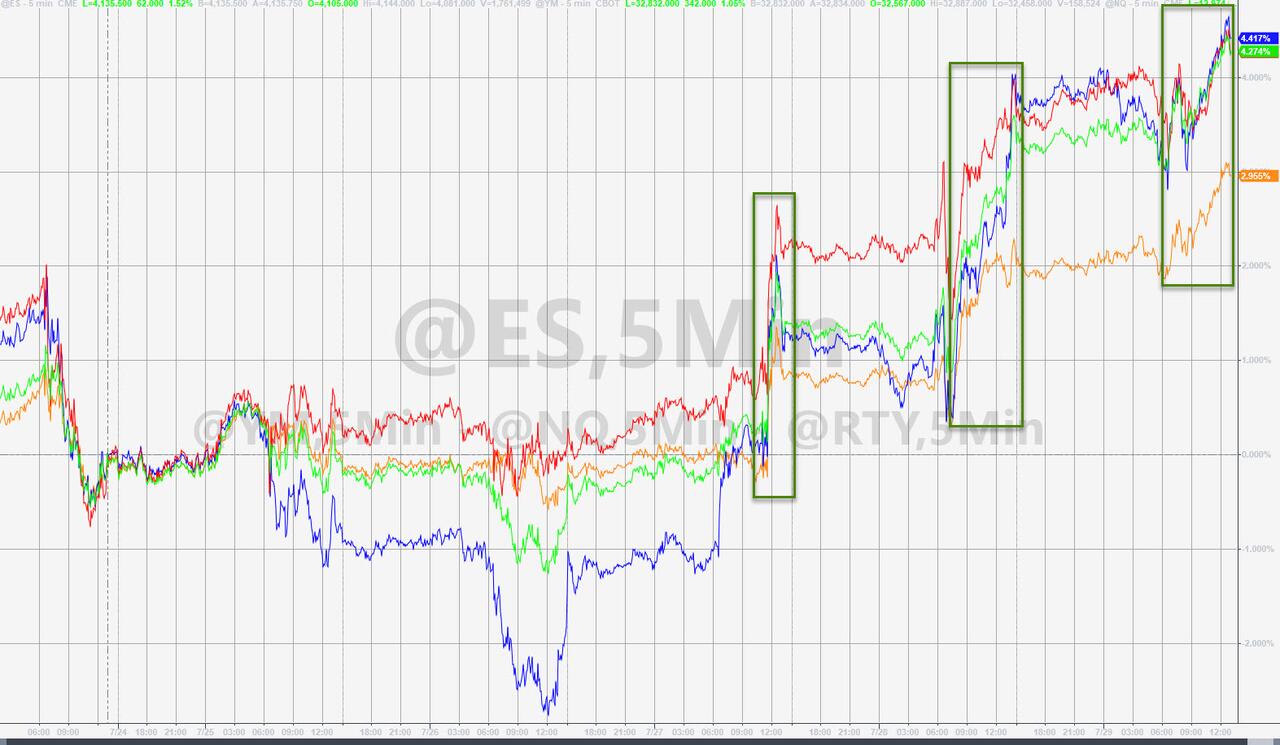
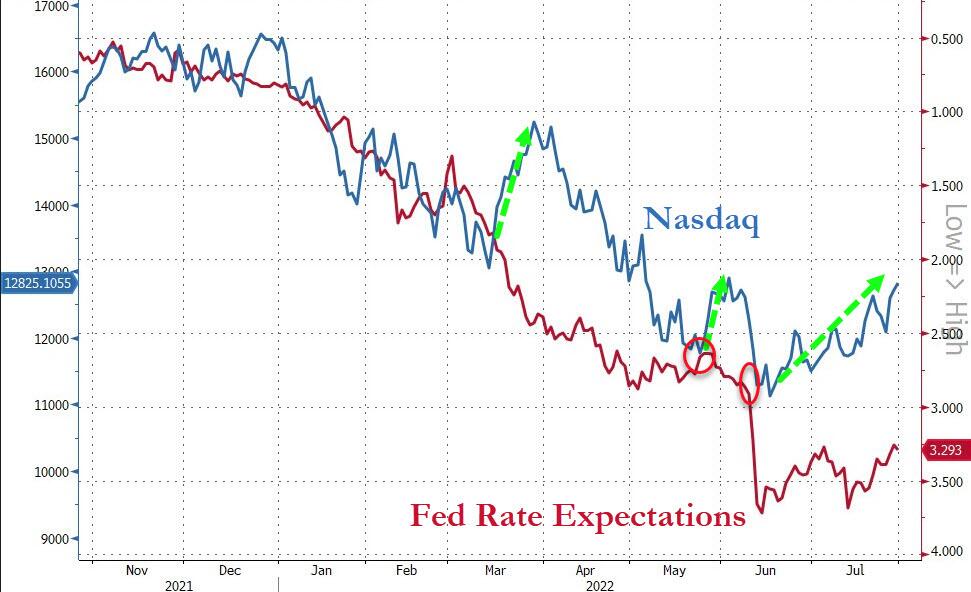
But those bad news were seen as good news, mainly due to Fed chief Powell leaving the door open that any future rate increases may be of a lesser magnitude. Analysts were quick to point out as that statement being the much-awaited Fed pivot, meaning potentially lower rates and, as a result, a resumption of the bull market.

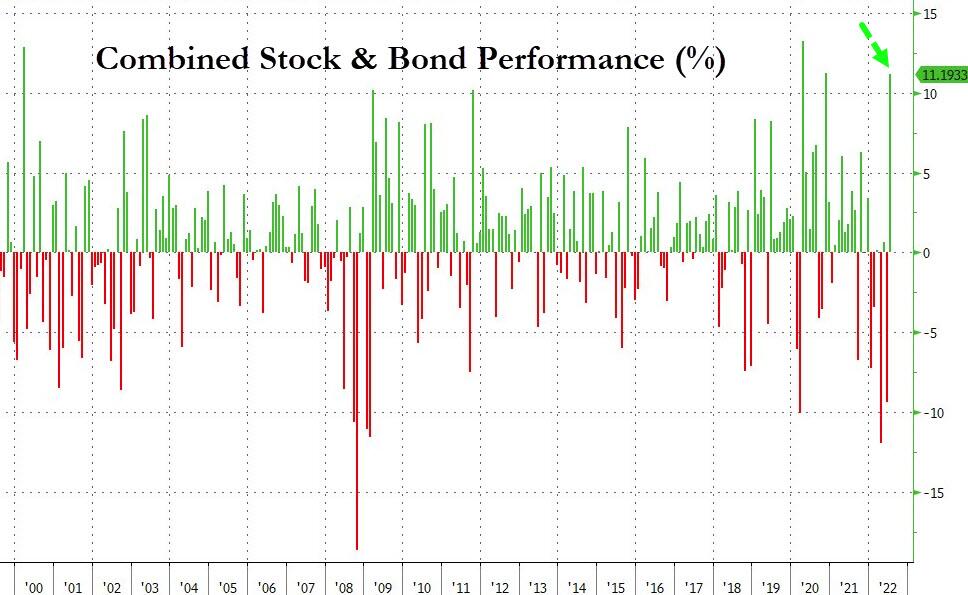
Consequently, we witnessed 3 days of front running in anticipation of that future change in policy by the Fed. For sure, the buy-and-hold crowd was happy, as the month of July produced a 9.1% gain for the S&P 500, thereby recapturing the losses sustained in June. With bond yields sliding, the combination stock/bond portfolio finally performed positively after getting spanked all year.   

While this was certainly a step in the right direction, YTD the S&P 500 is still down -14.50%, but July turned out to be the best month for the major averages since November 2020.

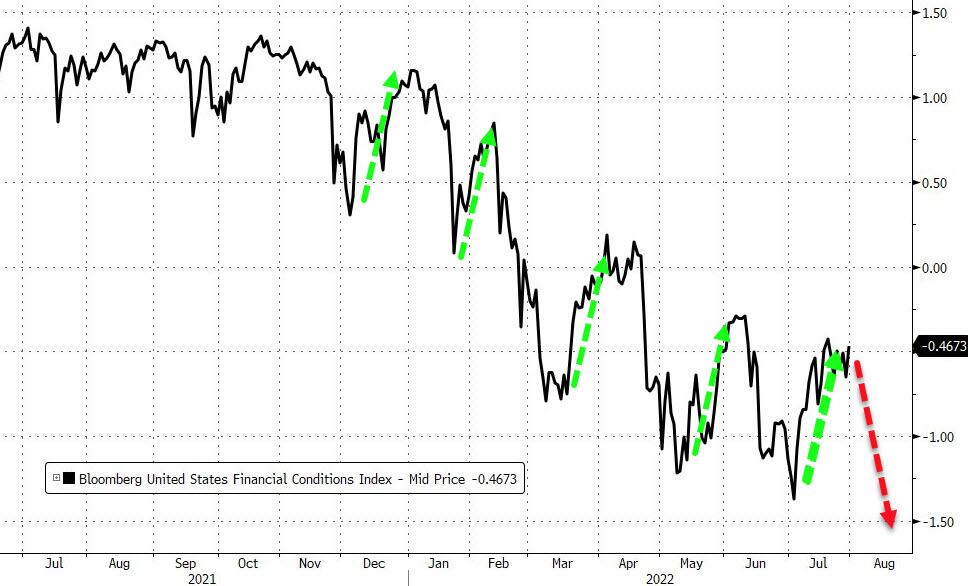
While our Trend Tracking Indexes (TTIs-section 3 below) greatly improved, they remain on the bearish side of their respective trend lines, however, a few more days of upward momentum may change their direction back to bullish and will allow us to consider exposure in domestic equities again.

Still, looking past this “bad news is good news” scenario, reality could still throw a monkey wrench into this emerging trend. Inflation remains worrisome and, if Fed head Powell does not pivot, as has happened before, but instead decides to get more serious with his inflation fighting effort via more rate hikes, you can kiss this rebound rally goodbye.

On the economic front, MarketWatch posted this:

Today, the Bureau of Economic Analysis reported that June’s personal consumption index climbed 6.8% on a 12-month basis. This inflation indicator, which is watched closely by the Fed, hit its highest level since January 1982.

In the end, this may prove to be still a bear market rally, although a powerful one, and we need more time to see if that’s the case, or if a new bull market can indeed sustain itself on nothing else but ‘Powell-Pivot’ hope, as ZeroHedge called it.  

Hmm…

The US Dollar roundtripped and only ended marginally higher for the month. Gold, with the help of a sinking dollar and sliding interest rates, made some headway but was not able to recapture all its early losses.

ZeroHedge summed up the potential Powell pivot like this:

The trouble for ‘bad news is good news’ dip-buyers is simple – it’s path-dependent! You have to cross the tightening cycle Rubicon into recession before The Fed will step back in and save the world. How many of these dip-buyers have the stones to face that path?

Yes, how many indeed will have that fortitude?

Read More

Weekly StatSheet For The ETF Tracker Newsletter – Updated Through 07/28/2022

Ulli ETF StatSheet Contact

ETF Data updated through Thursday, July 28, 2022

Methodology/Use of this StatSheet:

1. From the universe of over 1,800 ETFs, I have selected only those with a trading volume of over $5 million per day (HV ETFs), so that liquidity and a small bid/ask spread are assured.

2. Trend Tracking Indexes (TTIs)

Buy or Sell decisions for Domestic and International ETFs (section 1 and 2), are made based on the respective TTI and its position either above or below its long-term M/A (Moving Average). A crossing of the trend line from below accompanied by some staying power above constitutes a “Buy” signal. Conversely, a clear break below the line constitutes a “Sell” signal. Additionally, I use an 12% trailing stop loss on all positions in these categories to control downside risk.

3. All other investment arenas do not have a TTI and should be traded based on the position of the individual ETF relative to its own respective trend line (%M/A). That’s why those signals are referred to as a “Selective Buy.” In other words, if an ETF crosses its own trendline to the upside, a “Buy” signal is generated. Here too, I recommend trailing sell stop of 12%, or less, depending on your risk tolerance.

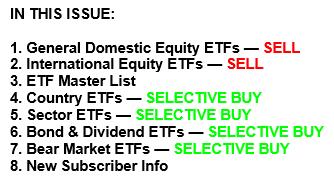
If you are unfamiliar with some of the terminology, please see Glossary of Terms and new subscriber information in section 9.     

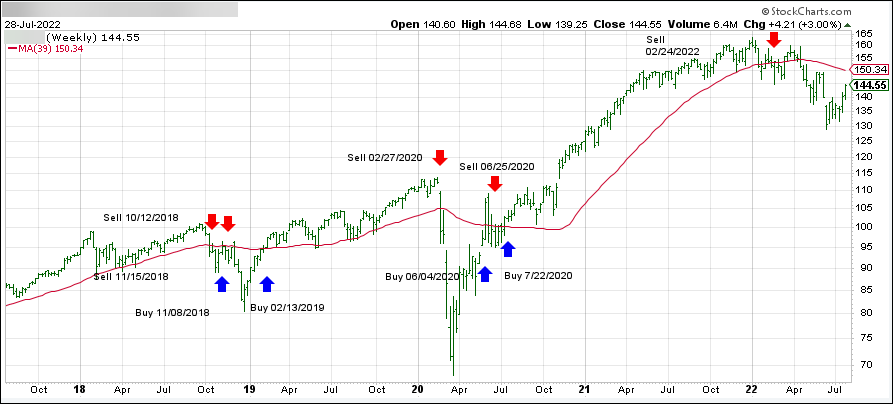
1. DOMESTIC EQUITY ETFs: SELL — since 02/24/2022

Click on chart to enlarge

Our main directional indicator, the Domestic Trend Tracking Index (TTI-green line in the above chart) has broken below its long-term trend line (red) by -4.03% and remains in “SELL” mode.  

Read More

Bad News Is Good News: Fed’s Rate Hike Pleases Markets

Ulli Market Commentary Contact

[Chart courtesy of MarketWatch.com]

  1. Moving the markets

Only thing mattered today, and that was the announcement by the Fed on interest rates. Traders and algos alike engaged in the usual front running, and today they were not disappointed, as the Fed did not surprise with an unexpected hike of 1% but satisfied expectations of 0.75 increase.

Late in the session, markets were even more encouraged after Fed head Powell left the door open, about the size of the Central Bank’s rate move at the next meeting in September, while noting that he would eventually slow down the magnitude of future rate hikes:

“As the stance of monetary policy tightens further, it likely will become appropriate to slow the pace of increases while we assess how our cumulative policy adjustments are affecting the economy and inflation.”

That was music to the ears of traders and upward momentum accelerated making this a celebratory day for the bulls, especially after Powell opined that, against all evidence, he does not think the U.S economy is currently in a recession. He also added that he “takes the first estimate for Q2 GDP (due out tomorrow) with a grain of salt.”

Hmm, that goes along with his insistence during 2021 that inflation is “transitory.” Rate hike expectations tumbled—at least for today when “bad news was good news” again.”

Be that as it may, ZeroHedge noted that the largest buy program since March 2021 contributed to today’s Ramp-A-Thon, most likely due to Powell’s indication of slowing the pace of hikes in the nebulous future.

Short-term Bond yields plunged, as the US Dollar was spanked, and gold rallied.

The issue remains whether the Fed will really pivot to lower rates as the markets now expect, which would be seen as “green light” or an “all clear” for equities. Strategist Ajay Rajadhyaksha at Barclays called it this way:

Policy officials would try to avoid the mistake they made in April. That month, central bankers talked down the size of rate hikes that would be ultimately needed, prompting bond traders to question the Fed’s commitment to its inflation target. Treasury yields spiked, spurring losses across assets. The S&P 500 dropped almost 9% for the worst month since the pandemic crash.

He then concluded:

The Fed has seen what happens when it prematurely declares victory over inflation and is unlikely to repeat that mistake.

Stocks and bonds are both hoping that the Fed will pivot away from its commitment to overtightening. It’s a hope that is likely to be dashed this week.

While today was a “feel good” session, it remains to be seen whether this turns out to be just another head fake.  

Read More