Climbing Out Of A Hole

Ulli Market Commentary Contact

[Chart courtesy of MarketWatch.com]

  1. Moving the markets

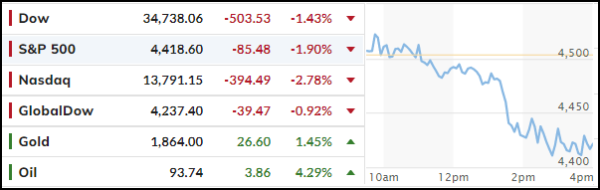
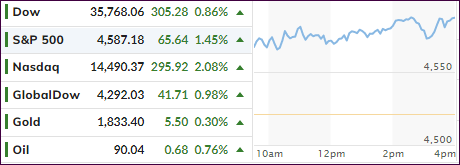
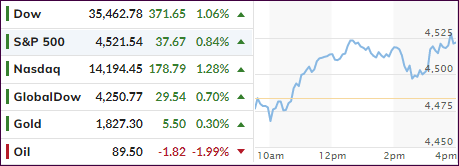
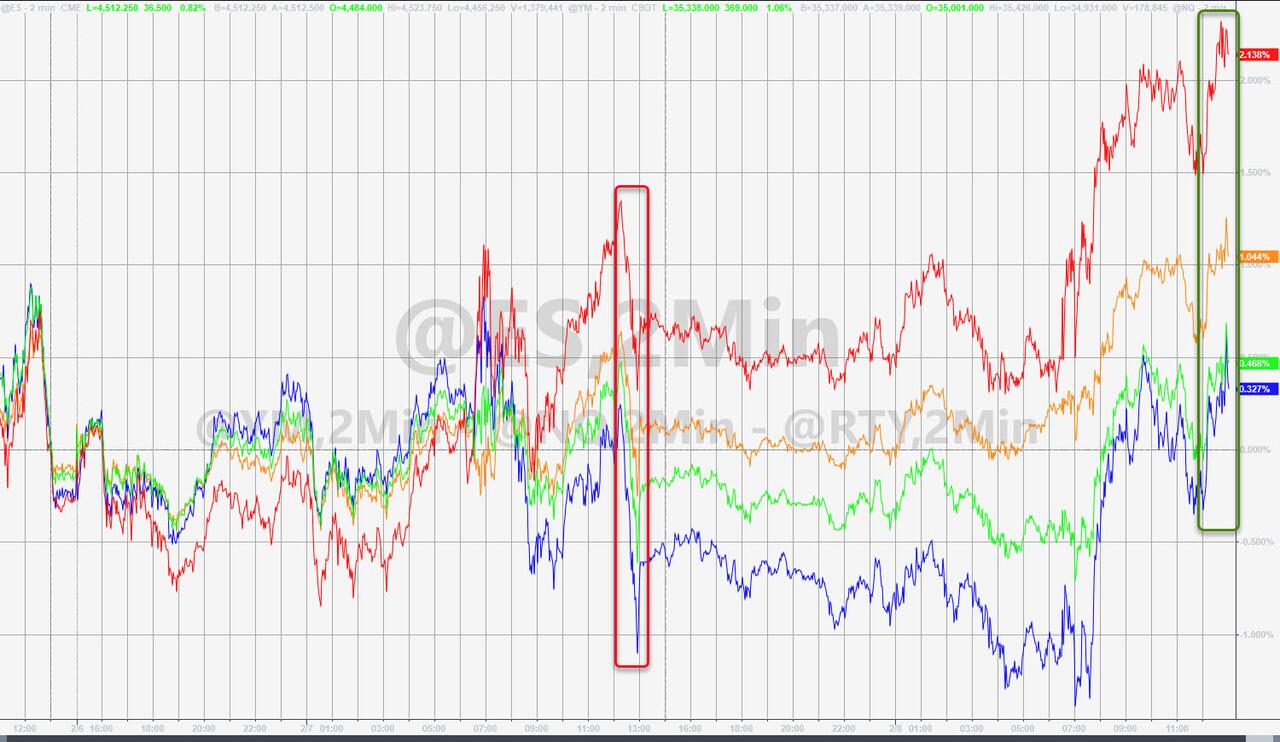
Two of the three major indexes found themselves in an early hole, but late session bullishness reversed the initial trend and assured a steady upward climb. The Dow reached its unchanged line, the S&P 500 ended up with moderate gains, but the Nasdaq bounced in the green all day and produced a solid advance of 0.73%.

The 3-day losing streak is now in the rearview mirror with some support coming from the widely analyzed FOMC report, which showed that the Central Bank could begin tapering its asset-purchase program as soon as by the middle of November:

Participants generally assessed that, provided that the economic recovery remained broadly on track, a gradual tapering process that concluded around the middle of next year would likely be appropriate,” the minutes said.

No surprises there, so traders focused on the CPI numbers. The index jumped 0.4% in September from the prior month and 5.4% year over year vs. expectations of 0.3% or an annualized rate of 5.3%. Of course, one analyst could not help himself by stating that most of these inflationary pressures are transitory. Yeah right.

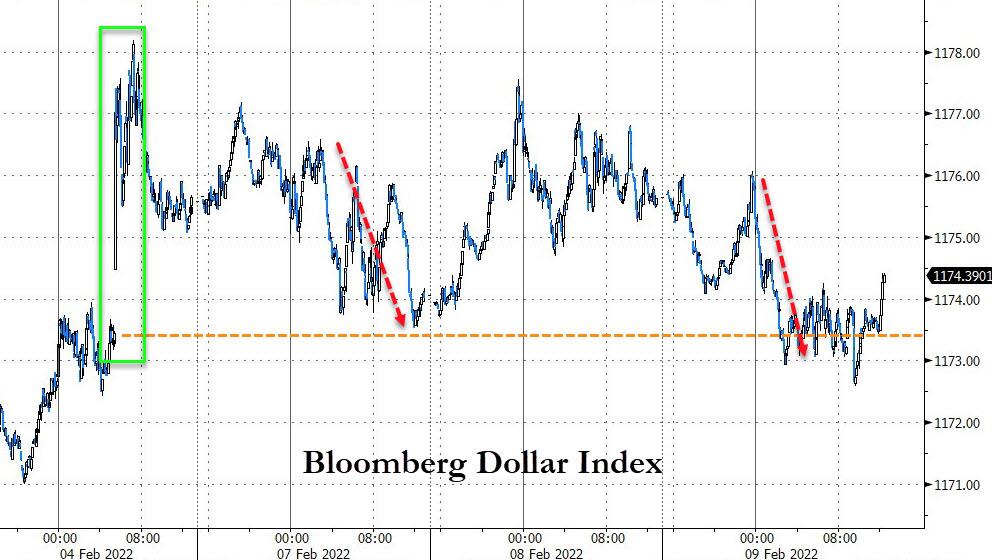
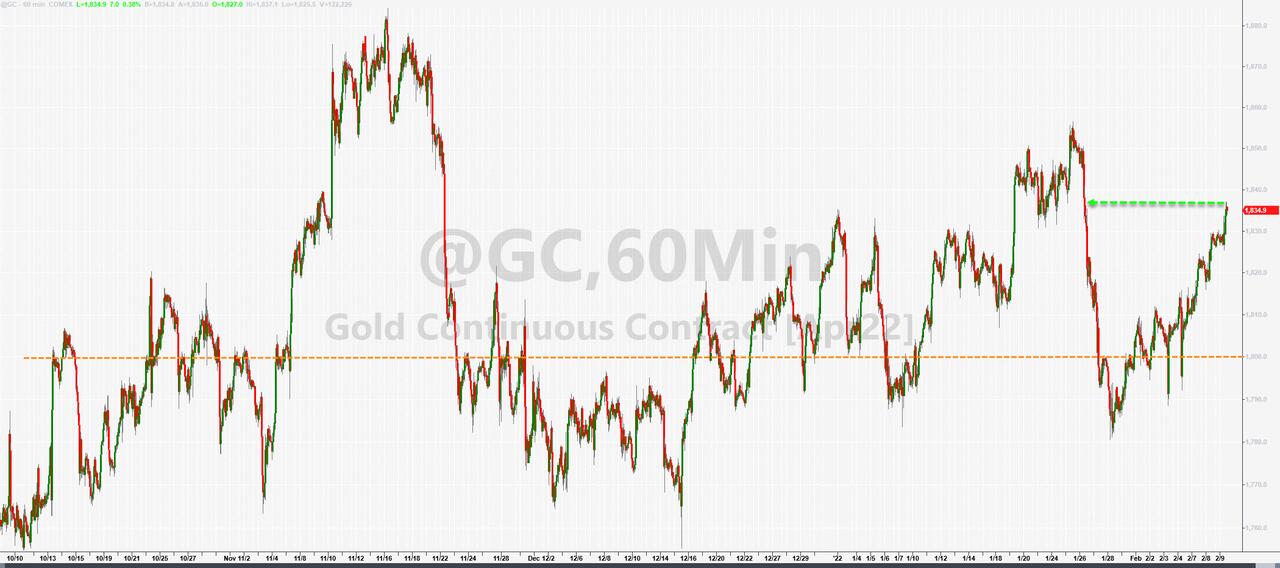
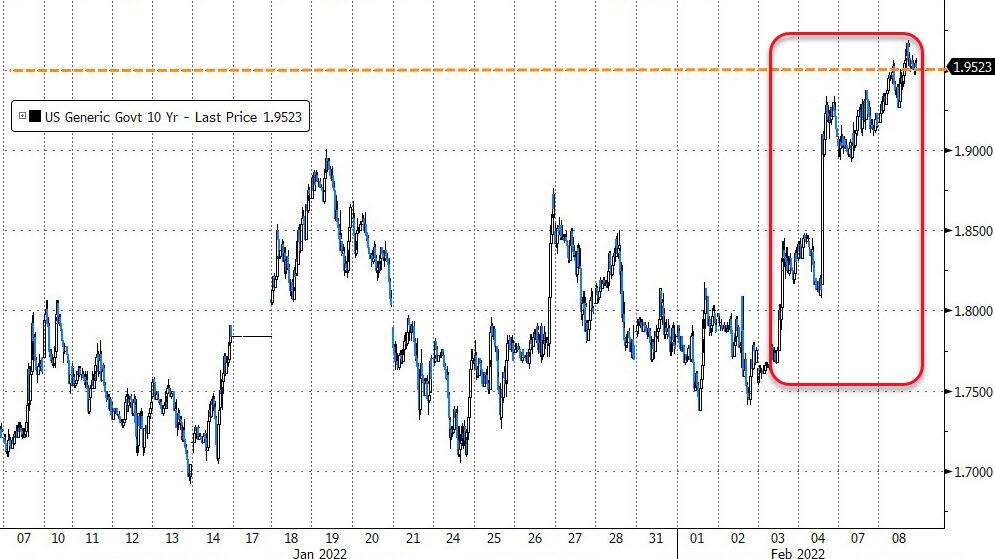
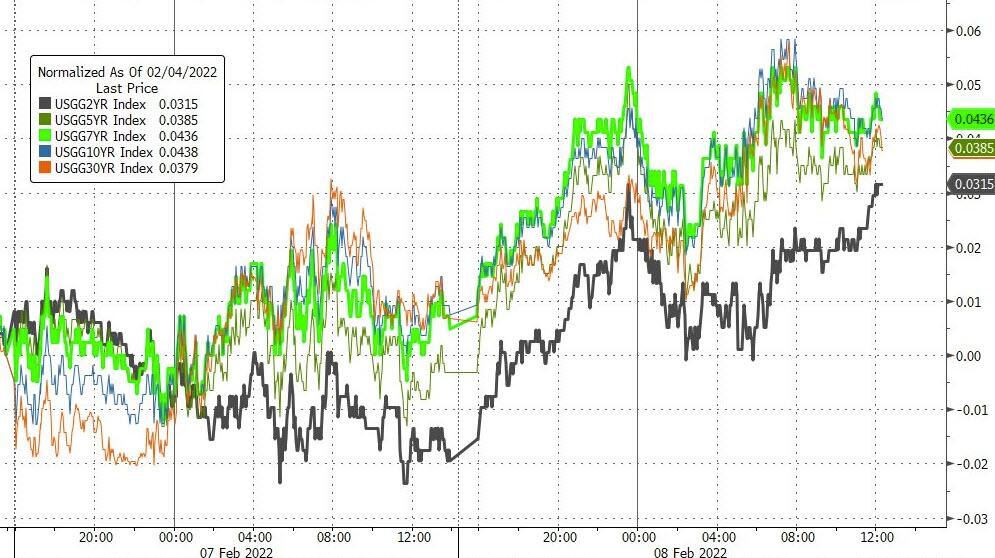
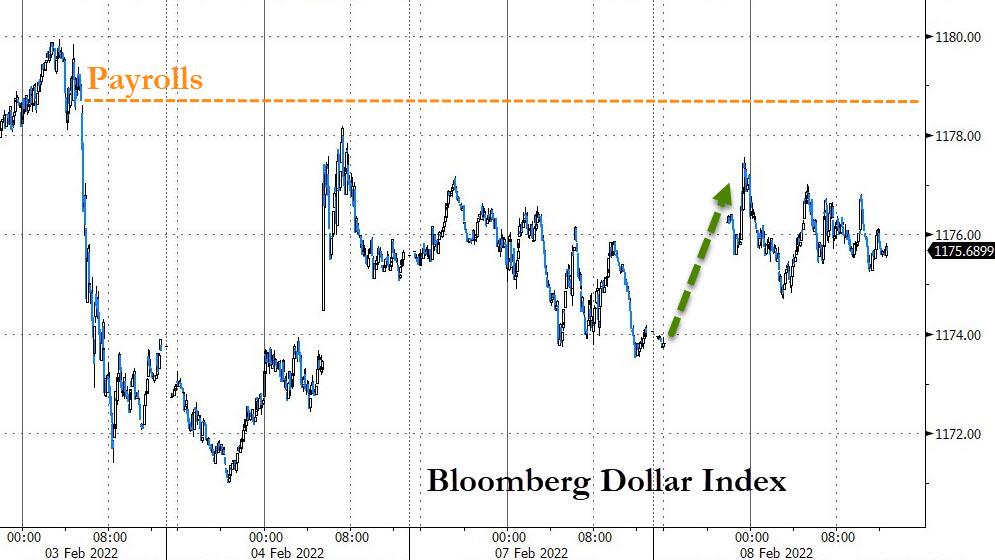
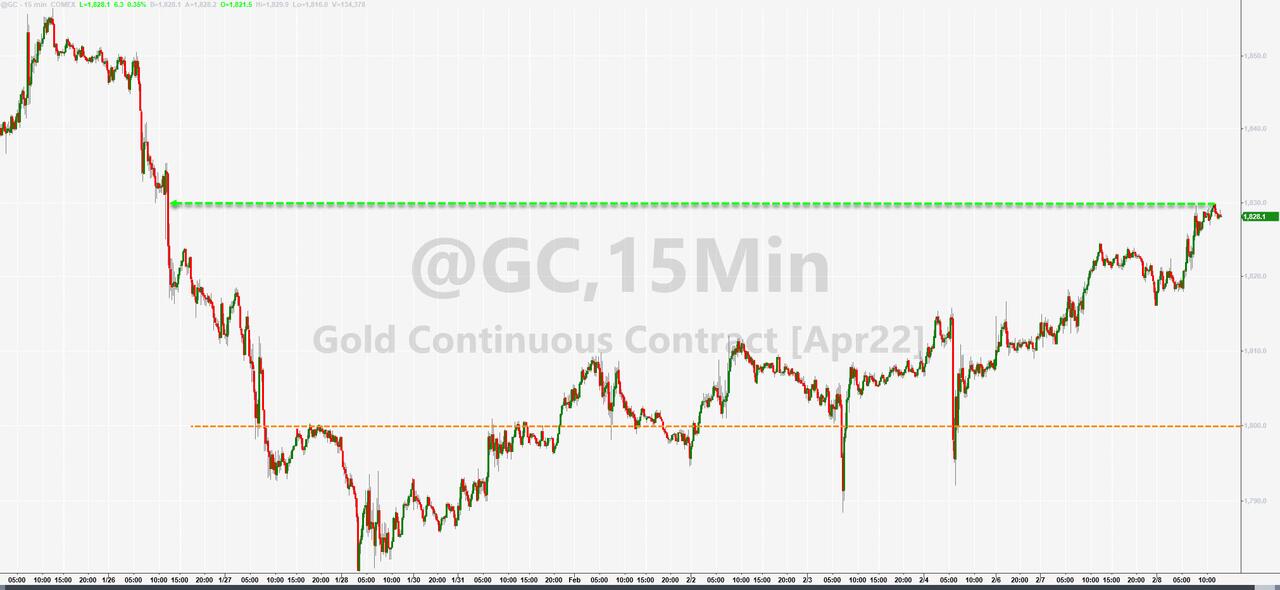
The US Dollar dipped and ripped and then lost all momentum and closed down -0.51%, joined by 10-year bond yields, which also showed weakness. This combination, coupled with continued uncertainty, proved to be a boon for gold with the precious metal roaring towards its $1,800 level and gaining almost 2%.

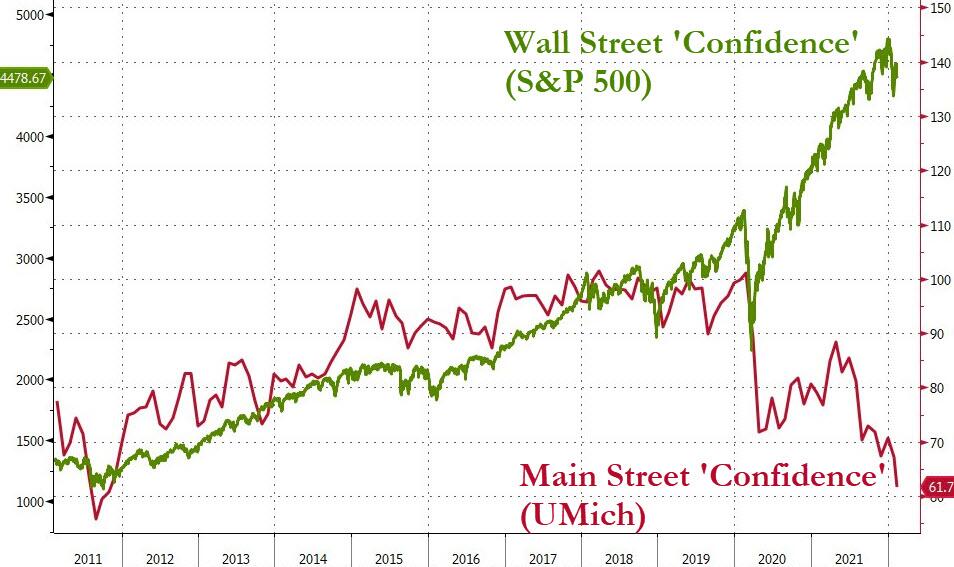
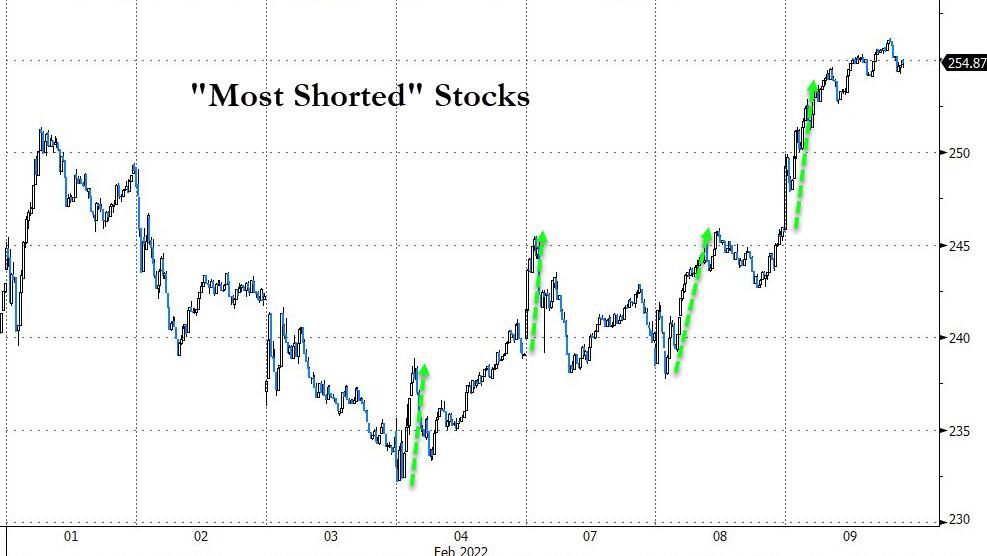
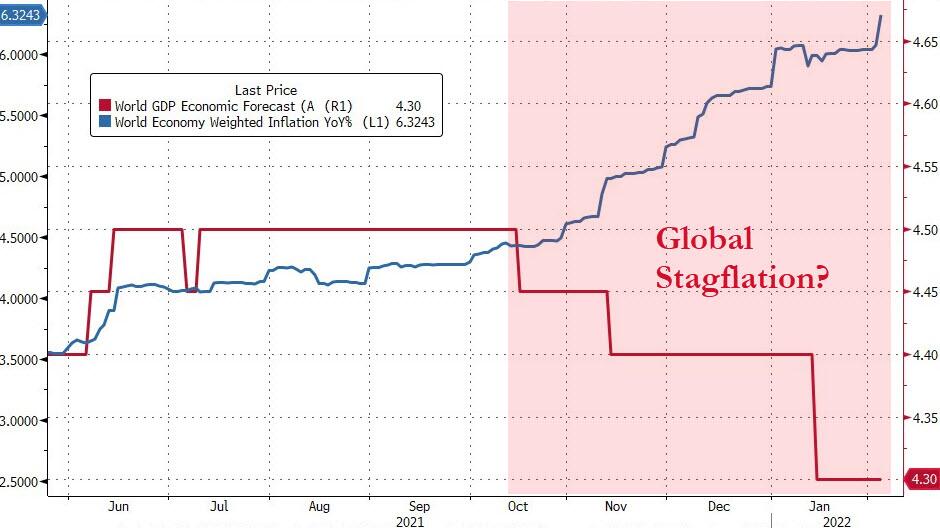
Despite the rebound supported by dip buyers, there is one segment of the markets that still does not participate, as Bloomberg shows in this chart. Makes me wonder why…

Read More

Churning And Burning

Ulli Market Commentary Contact

[Chart courtesy of MarketWatch.com]

  1. Moving the markets

It had to happen eventually, and today was the day when Atlanta Fed President Bostic finally broke away from the common theme, and confirmed what I have been saying all year:

Price surges caused by supply-chain disruptions, or the reopening of the services sector are likely to last, i.e., they are not transitory, and seem to be broadening to more parts of the economy, i.e., getting worse.

In other words, inflation will be with us and will not be of a transitory nature. While other Fed officials are singing a different tune, I would not be surprised if they adopt this type of narrative—eventually.

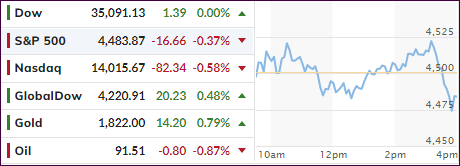
The markets continued to be affected by volatility, and the result was sloppy and choppy trading, with dip buyers finding no reason to step in and clean up this mess. With a key inflation reading (CPI) ahead of us, as well as retails sales numbers, and the earnings season on deck, the major indexes slid for the third straight session.

Adding to this uncertainty is Wednesday’s release of the minutes from September’s FOMC meeting, which will be dissected for any clues about the Central Bank’s plans to reduce easy monetary policy.

Headwinds abound, and traders are looking for directional guidance wherever they can find it, with slower economic growth ahead being a major threat.

During this session, the US Dollar ended up a tad, as 10-year bond yields slipped to 1.573%, which allowed Gold to edge higher by a moderate 0.32%. While this day was volatile, it was quiet with tight trading ranges prevailing across the indexes, but this will likely change given the variety of upcoming events.

Read More

Cranking And Tanking

Ulli Market Commentary Contact

[Chart courtesy of MarketWatch.com]

  1. Moving the markets

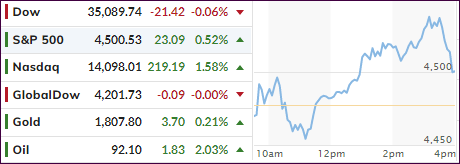
An early broad rally bit the dust, with the major indexes losing all initial gains and not just sliding into the red but also closing at the lows of the session.

While the bond market was closed in the US, the Chinese probably wish theirs would have been too, but no such luck. They were fully open, and traders took advantage of it by focusing on one thing only, namely selling.

ZeroHedge called it this way:

In the aftermath of our viral post “”Catastrophic” Property Sales Mean China’s Worst-Case Scenario Is Now In Play”, China property firms bonds were hit with another wrecking ball on Monday as Evergrande was set to miss its third round of (offshore) bond payments in as many weeks and rival Modern Land became the latest scrambling to delay deadlines.

And then this:

“It’s a disastrous day,” Clarence Tam, fixed income PM at Avenue Asset Management in Hong Kong, told Reuters, highlighting how even some supposedly safer “investment grade” firms had now seen 20% wiped off their bonds. “We think it’s driven by global fund outflow….

As I mentioned before when the Evergrande story broke a weeks ago “there is never just one cockroach,” a theory that has proven correct with a host of other Chinese developers trying to find a way to avoid the unavoidable.

Adding to that uncertainty from the usual suspects like surging oil prices, ever increasing inflation, economic concerns with the impending third quarter earnings season on deck, and it came as no surprise that the markets shifted into retreat mode.

While at first rangebound, the US Dollar broke out to the upside and closed higher causing gold to pretty much tread water and go nowhere.

In the end, it seemed that traders and computer algos alike tried to grapple with these various events. As it turned out, at least for this session, the path of least resistance was to the downside.

Read More

ETFs On The Cutline – Updated Through 10/08/2021

Ulli ETFs on the Cutline Contact

Below, please find the latest High-Volume ETF Cutline report, which shows how far above or below their respective long-term trend lines (39-week SMA) my currently tracked ETFs are positioned.

This report covers the HV ETF Master List from Thursday’s StatSheet and includes 312 High Volume ETFs, defined as those with an average daily volume of more than $5 million, of which currently 171 (last week 177) are hovering in bullish territory. The yellow line separates those ETFs that are positioned above their trend line (%M/A) from those that have dropped below it.

Take a look:                                                                   

The HV ETF Master Cutline Report

In case you are not familiar with some of the terminology used in the reports, please read the Glossary of Terms. If you missed the original post about the Cutline approach, you can read it here.      

ETF Tracker Newsletter For October 8, 2021

Ulli ETF Tracker Contact

ETF Tracker StatSheet          

You can view the latest version here.

FLAT FOR THE DAY BUT HIGHER FOR THE WEEK

[Chart courtesy of MarketWatch.com]

  1. Moving the markets

It was a good news bad news scenario as the latter, namely a disappointing jobs report faced the former, that is optimism about the short-term debt ceiling bill, which has pushed the ultimate decision into early December.

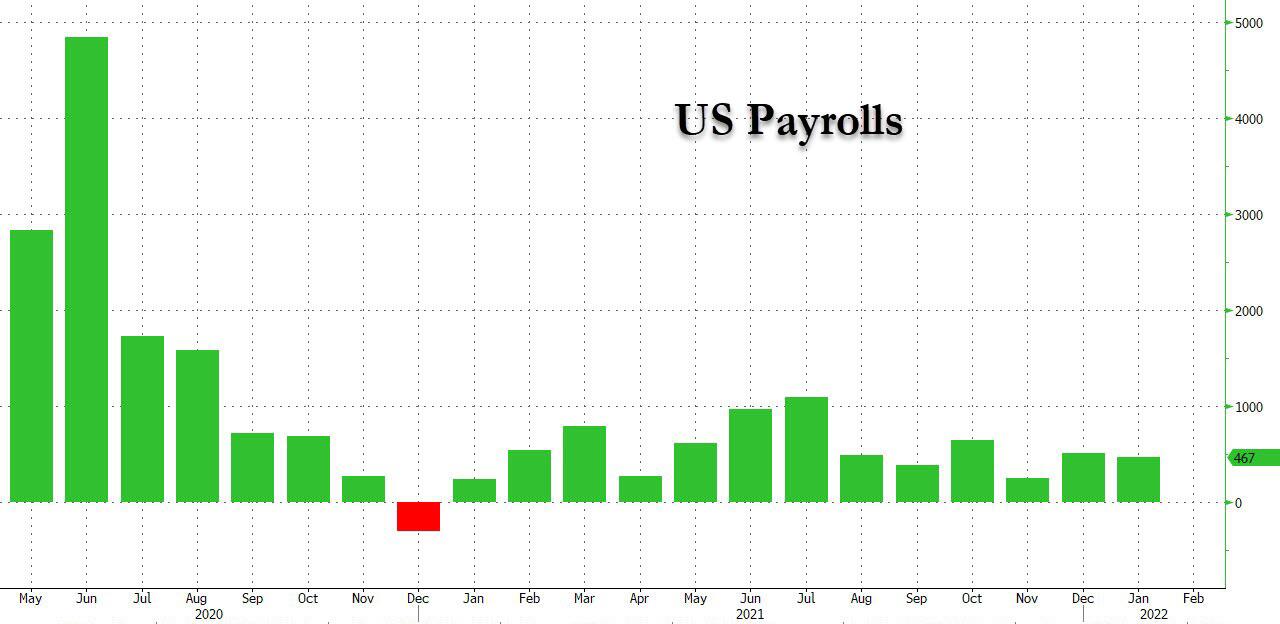
The jobs report itself offered a similar scenario with the disappointment being the meager addition of only 194k jobs in September, which was well below expectations of 500k.

Coming in as a positive surprise was the unemployment rate, which fell to 4.8%, much lower than forecast, to a level last seen in 2016. Adding to the slightly bullish mood was the August jobs report, which was revised up to 366k from the initial 235k.

It was a volatile week, but equities hung in there despite debt ceiling uncertainty, but be aware that market risk remains due spiking inflation, Covid concerns and exploding bond yields with the weekly chart looking like this.

The US Dollar did an about face today, plunging first on news of dismal jobs data but then recovering and ending the week higher. Gold was directionless and ended the week flat.

On deck next week is the start of earnings season, which also can offer unexpected surprises.

Read More

Weekly StatSheet For The ETF Tracker Newsletter – Updated Through 10/07/2021

Ulli ETF StatSheet Contact

ETF Data updated through Thursday, October 7, 2021

Methodology/Use of this StatSheet:

1. From the universe of over 1,800 ETFs, I have selected only those with a trading volume of over $5 million per day (HV ETFs), so that liquidity and a small bid/ask spread are assured.

2. Trend Tracking Indexes (TTIs)

Buy or Sell decisions for Domestic and International ETFs (section 1 and 2), are made based on the respective TTI and its position either above or below its long-term M/A (Moving Average). A crossing of the trend line from below accompanied by some staying power above constitutes a “Buy” signal. Conversely, a clear break below the line constitutes a “Sell” signal. Additionally, I use an 8% trailing stop loss on all positions in these categories to control downside risk.

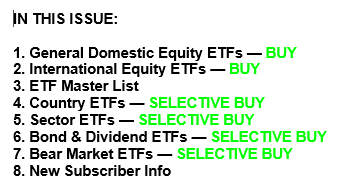
3. All other investment arenas do not have a TTI and should be traded based on the position of the individual ETF relative to its own respective trend line (%M/A). That’s why those signals are referred to as a “Selective Buy.” In other words, if an ETF crosses its own trendline to the upside, a “Buy” signal is generated. Since these areas tend to be more volatile, I recommend a wider trailing sell stop of 8%-10% depending on your risk tolerance.

If you are unfamiliar with some of the terminology, please see Glossary of Terms and new subscriber information in section 9.     

1. DOMESTIC EQUITY ETFs: BUY — since 07/22/2020

Click on chart to enlarge

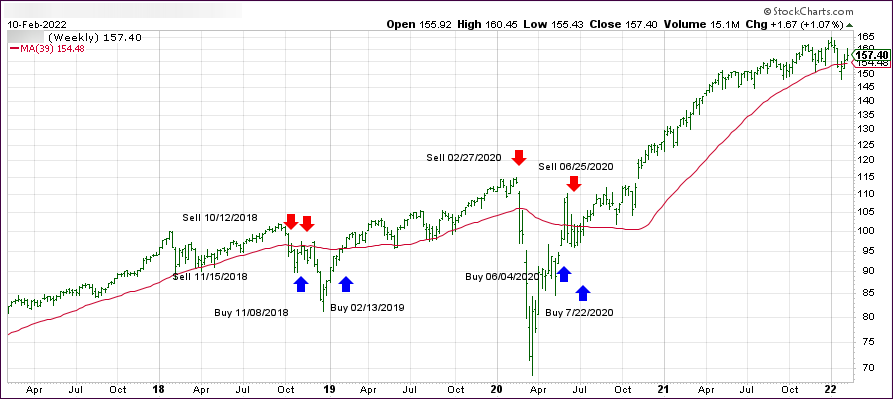
Our main directional indicator, the Domestic Trend Tracking Index (TTI-green line in the above chart) has now rallied above its long-term trend line (red) by +5.62% and remains in “BUY” mode as posted.

Read More