Fed Hikes Rates Sharply—Will Stay Aggressive

Ulli Market Commentary Contact

[Chart courtesy of MarketWatch.com]

  1. Moving the markets

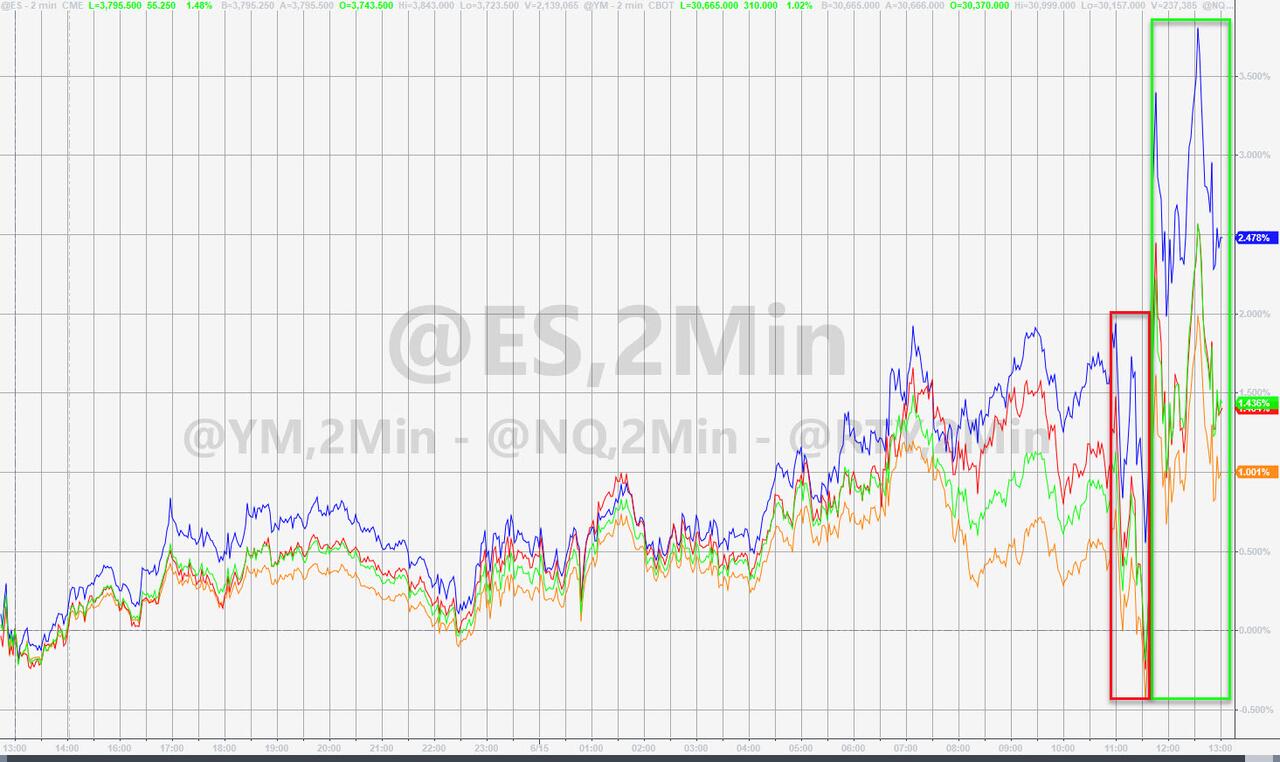
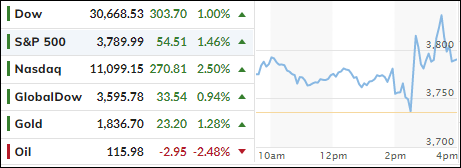
The much-anticipated Fed announcement came and went, with the Fed hiking rates by 75 basis points, its largest increase since 1994. They also hinted at a similar increase in July, which indicated some seriousness about its inflation fighting efforts, but it also caught traders of guard.

It’s been no secret that the Fed’s policy has been out of sync with inflation realities, so today’s aggressive stance pleased the markets—at least for the time being. The question remains whether the Fed is now hiking rates into a recession.

So far, the answer is “very likely,” as the Atlanta Fed slashed its Q2 forecast to 0.00% from the recent 0.9%, which means the US is on the verge of a technical recession after Q1’s contraction, as ZeroHedge called it.

Yet, Fed head Powell had this to say:

The US economy is in a strong position and well positioned to deal with higher interest rates.

There is no sign of a broader slowdown in the economy that I can see.

Hmm, I am sure that Powell will have eat these words eventually, in the same way he had to walk back the “inflation is transitory” scheme.  

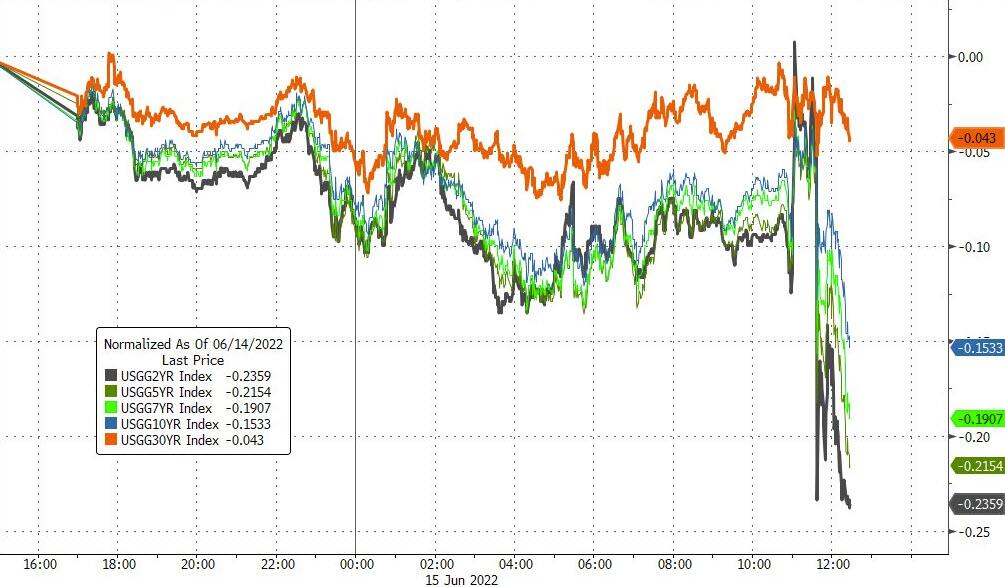
The markets took it all as a bullish sign, and after the recent drubbing managed to string together a green close. Sliding bond yields helped, with the 10-year dropping some 16 bps to close at 3.31%.

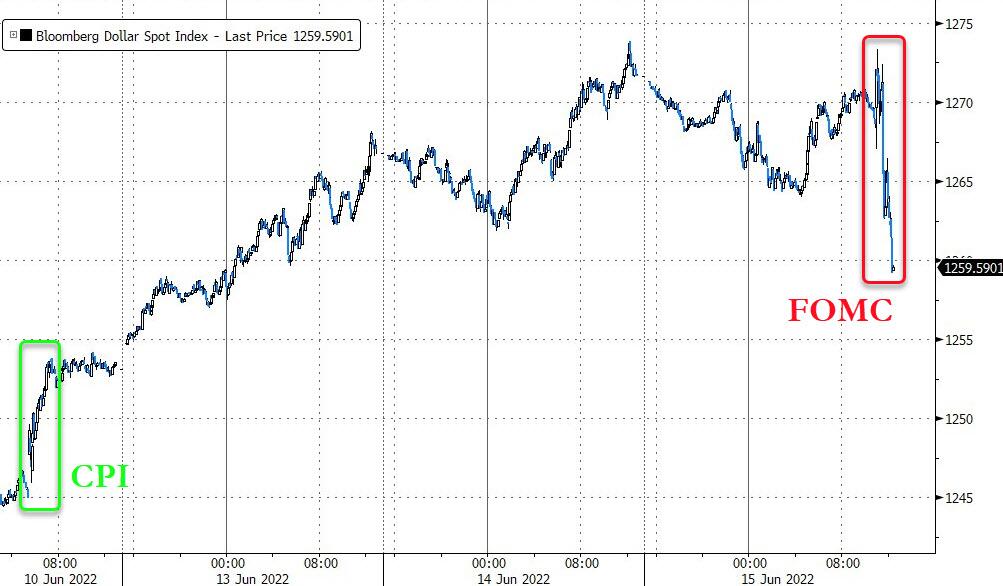
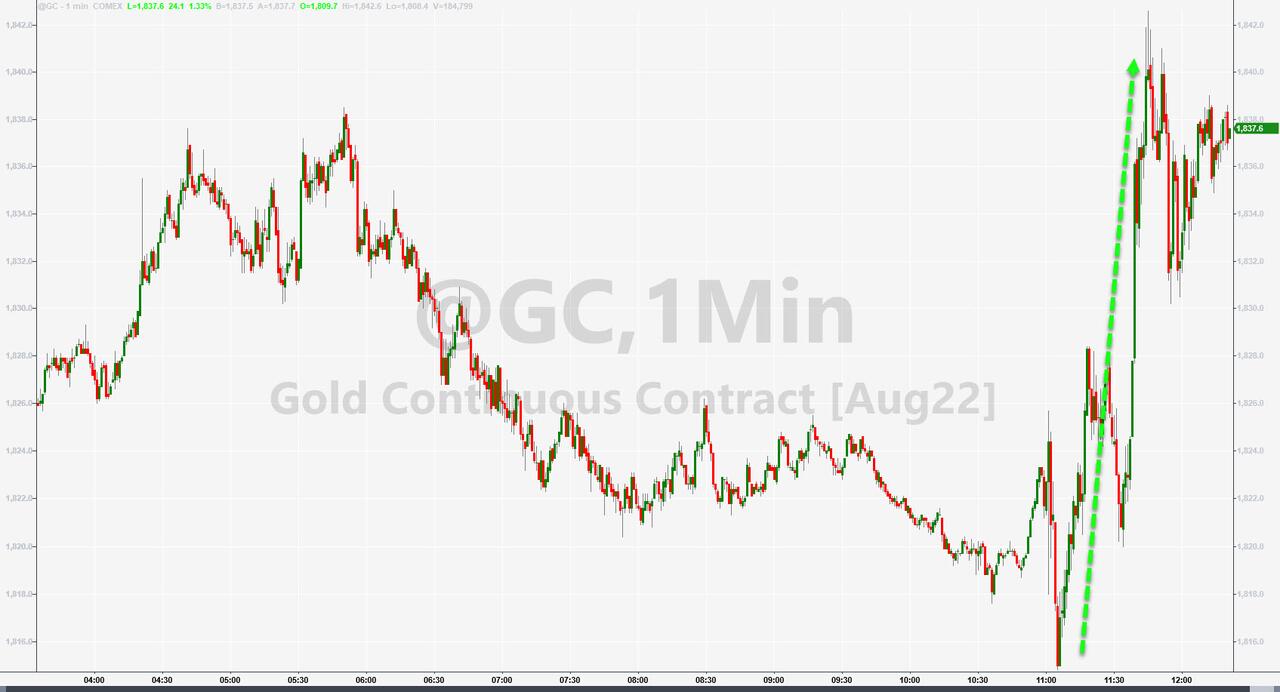
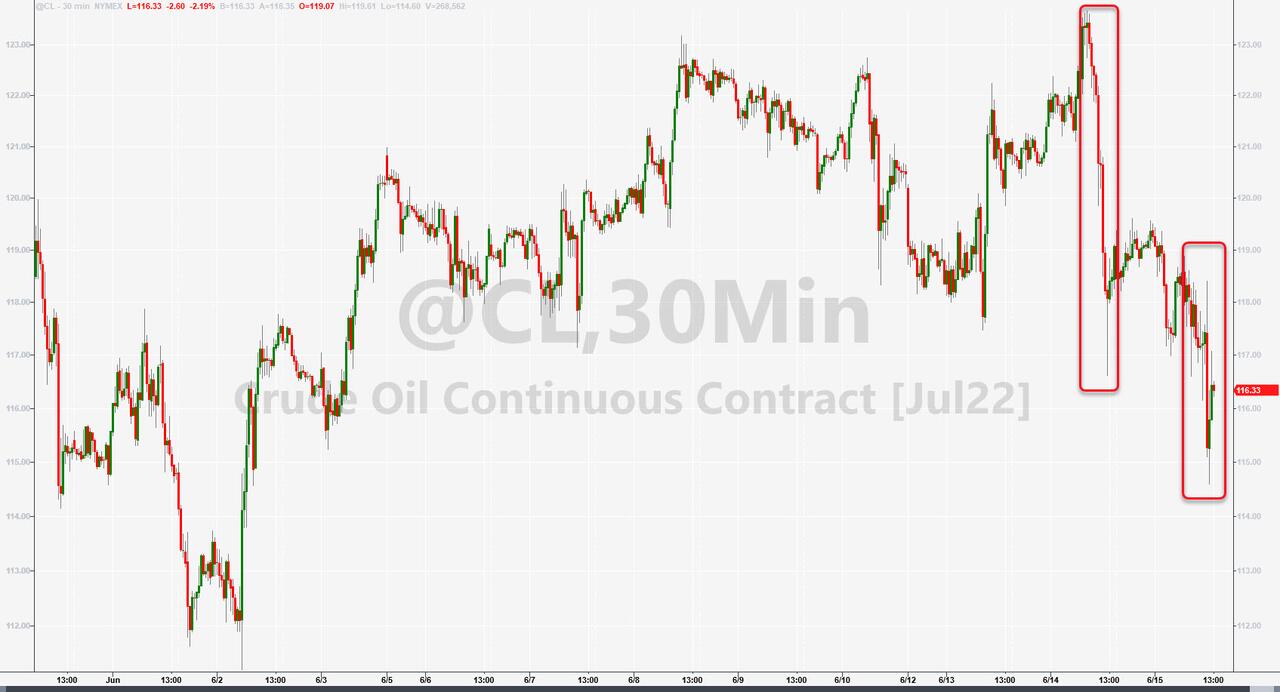
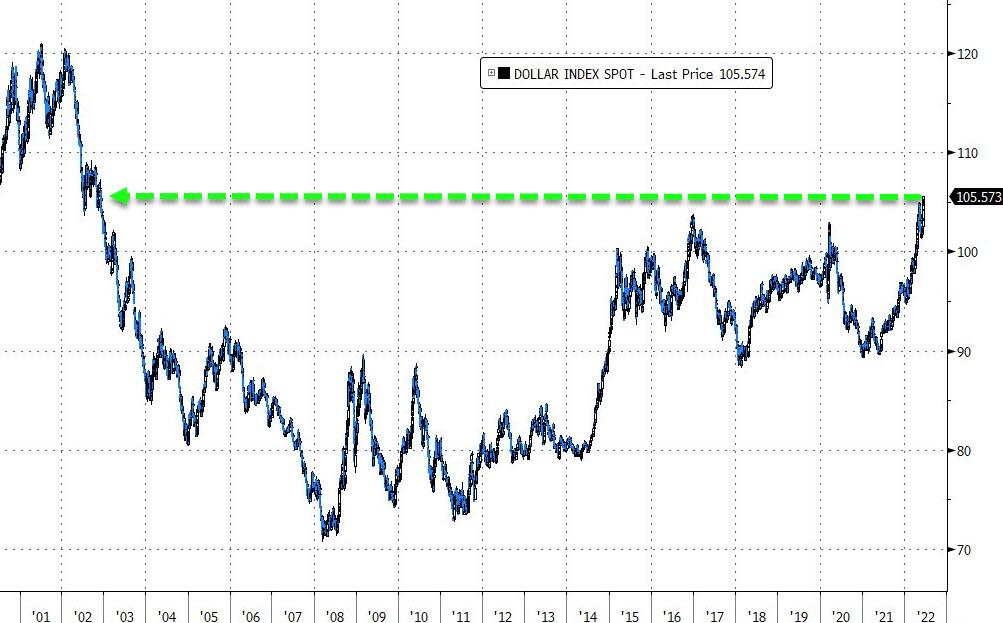
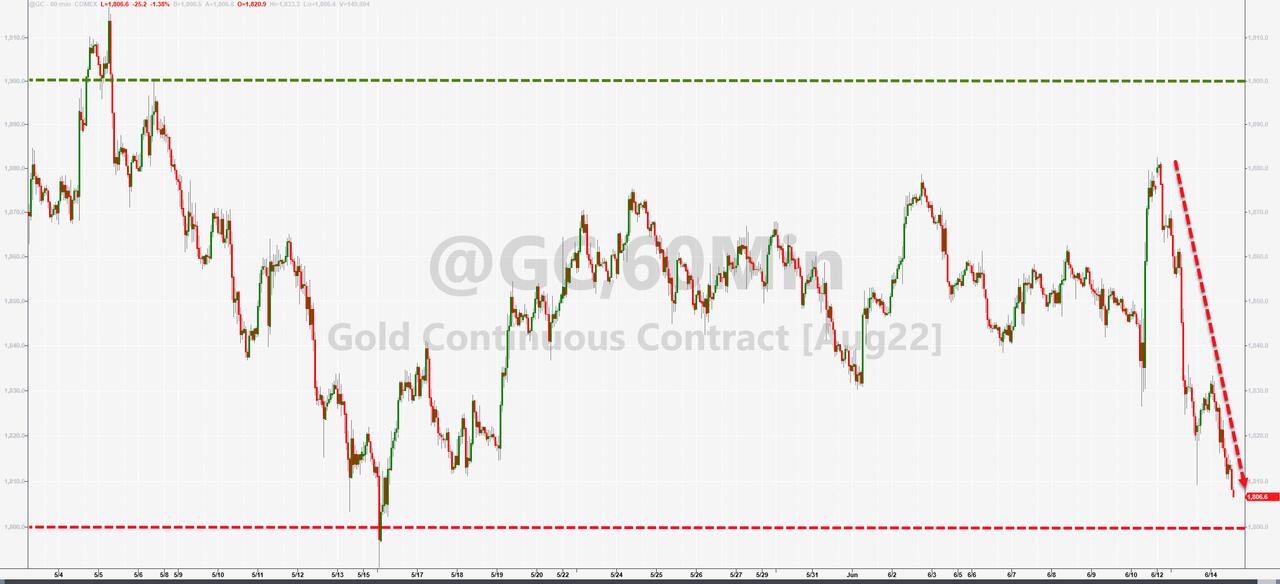
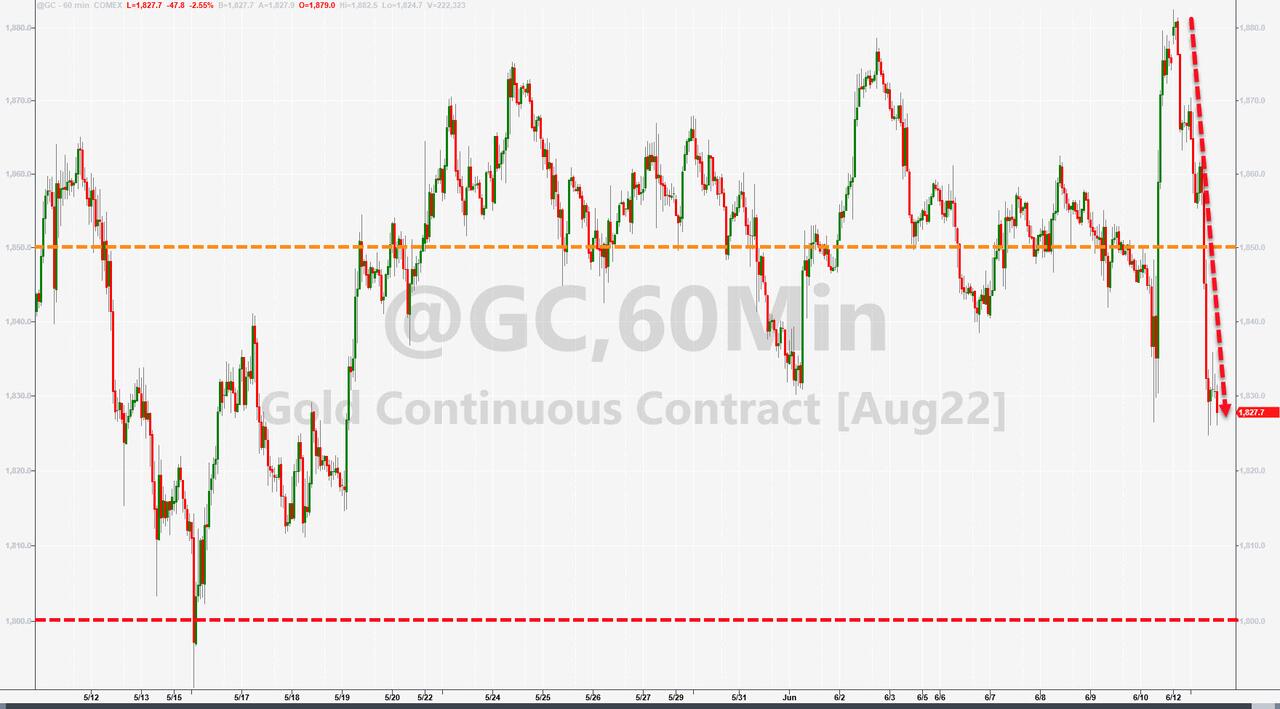
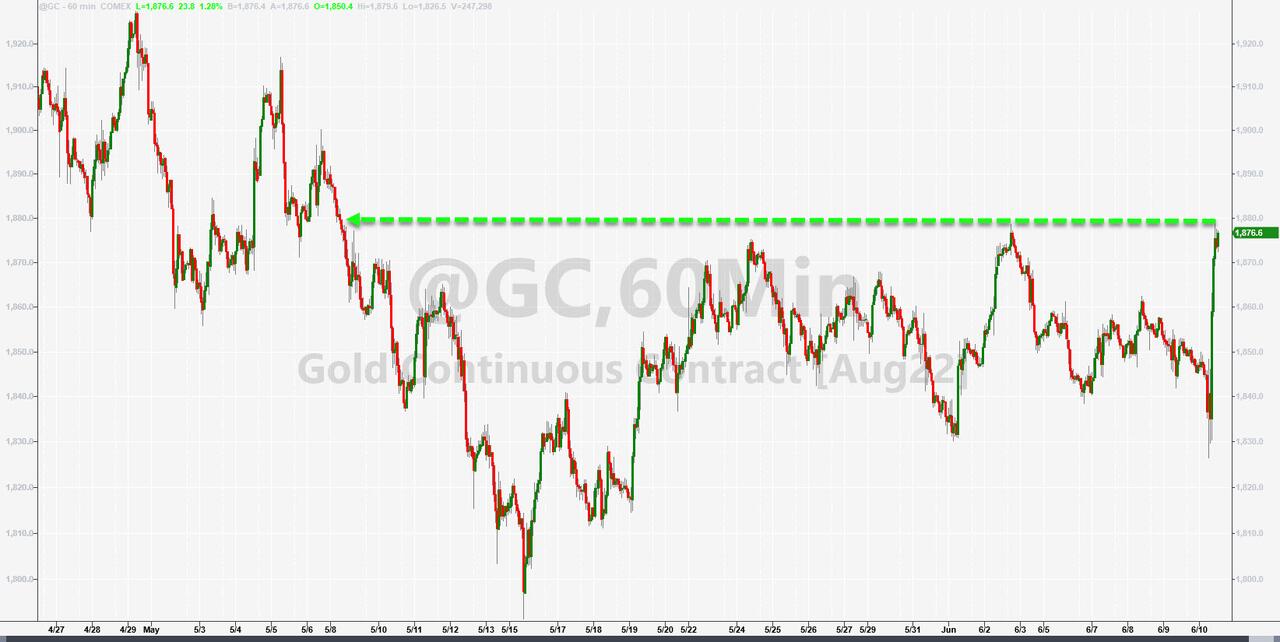
That downward action caused the US Dollar to puke and surrender some of its recent gains. The beneficiary was gold, which stormed out of the gate and ripped higher by +1.3%, while Crude Oil extended its recent losses.   

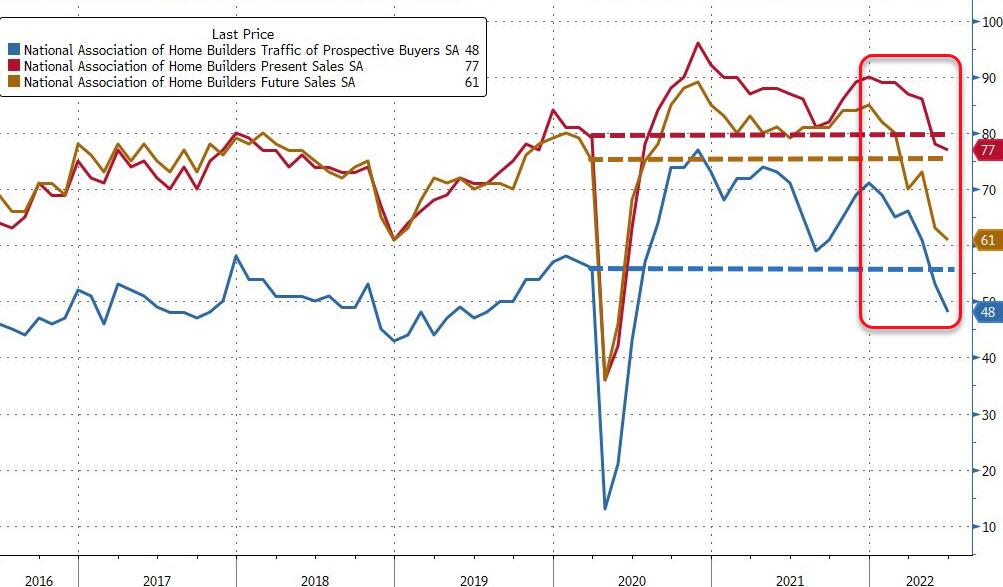
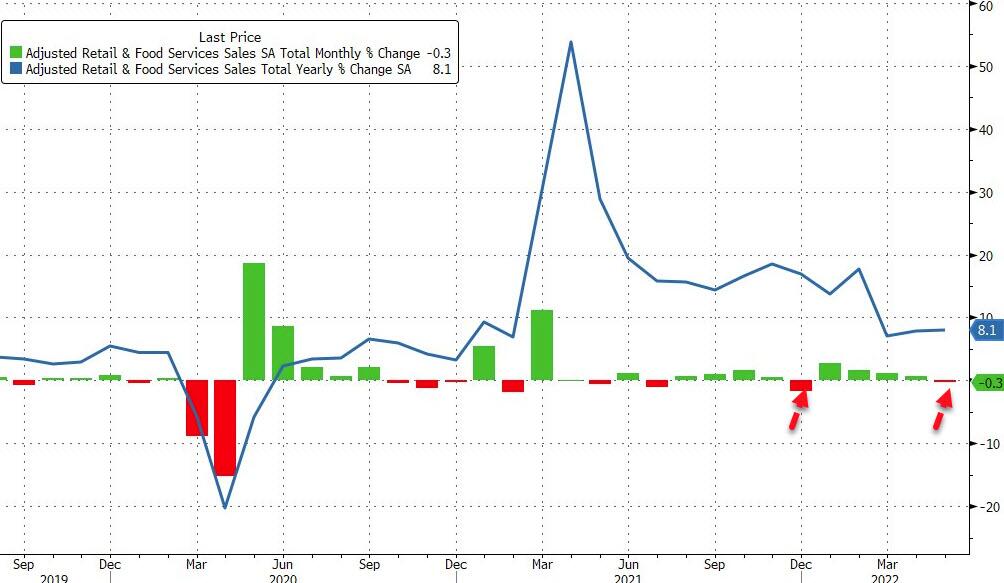
In economic news, Homebuilder Sentiment tumbled back below pre-Covid levels, as ZH pointed out, and US Retail Sales unexpectedly tumbled in May and showed its first negative print since December 2021.

All this simply shows that the likelihood of “Stagflation” being in our future seems to increase on a daily basis.

Read More
Early Bounce—Late Trounce

Ulli Market Commentary Contact

[Chart courtesy of MarketWatch.com]

  1. Moving the markets

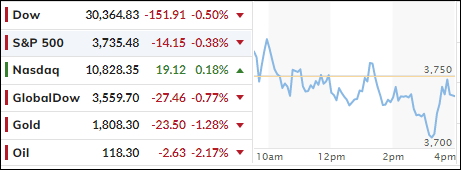
After an early pump, which faded in a hurry, the major indexes dug themselves another hole, but a late session bounce helped avoid a much worse outcome. Still, the Dow and S&P 500 scored another loss, with the Nasdaq clinging to its unchanged line and closing in the green by a tiny margin.

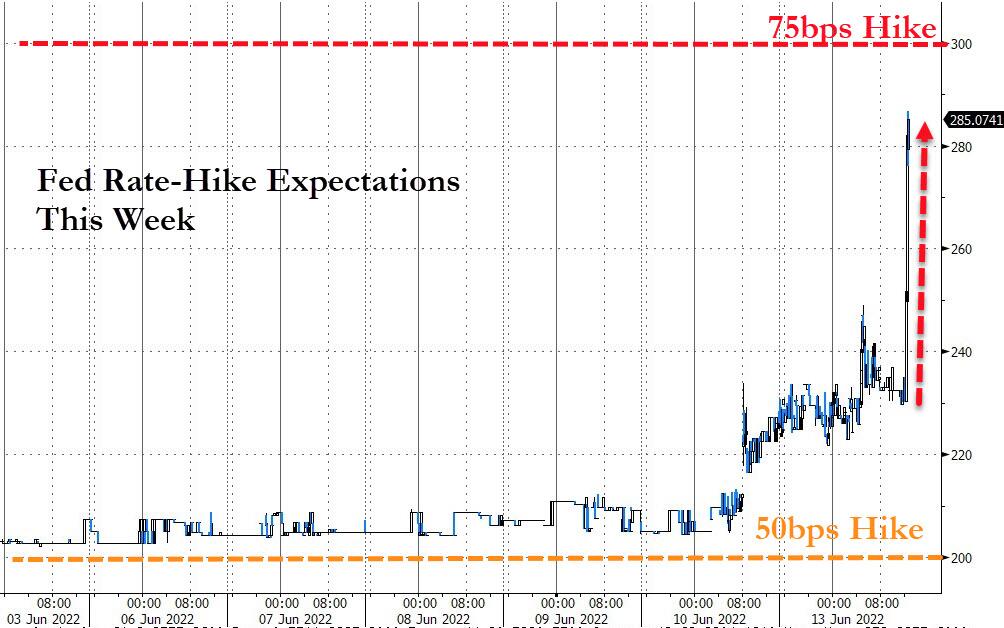
Of course, there was not much bullishness to be found anywhere due to traders’ anxiety ahead of the Fed’s announcement on interest rates tomorrow. The much anticipated 50 bps increase has now been replaced by expectations of 75 bps with an outside possibility of 100 bps. The latter would sure cause havoc with the markets.   

Much confidence in the Fed has been lost, as they wasted almost an entire year referring to inflation as being transitory and therefore letting the monster get out of control. As I always said, trying to contain inflation, once it has charted its course, is like putting the tooth paste back in the tube.

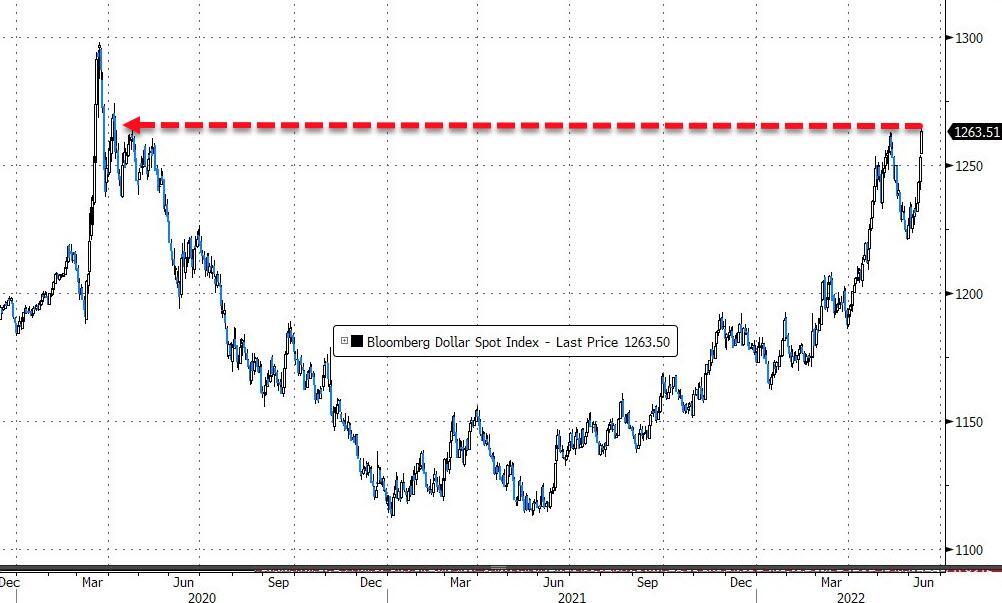
Bond yields were in rally mode with seemingly nothing being able to stop their advances. The 10-year surged above 3.47%, its highest level since 2011, according to ZH. That helped the US Dollar to add 0.37% for the day and reach a high last seen in late 2002.

As is the case when the dollar rallies, gold suffers, and today was no exception, as the precious metal headed back down towards its $1,800 level.

All eyes are now on the Fed.

Read More

Black Monday: Sell Programs Pummel Markets

Ulli Market Commentary Contact

[Chart courtesy of MarketWatch.com]

  1. Moving the markets

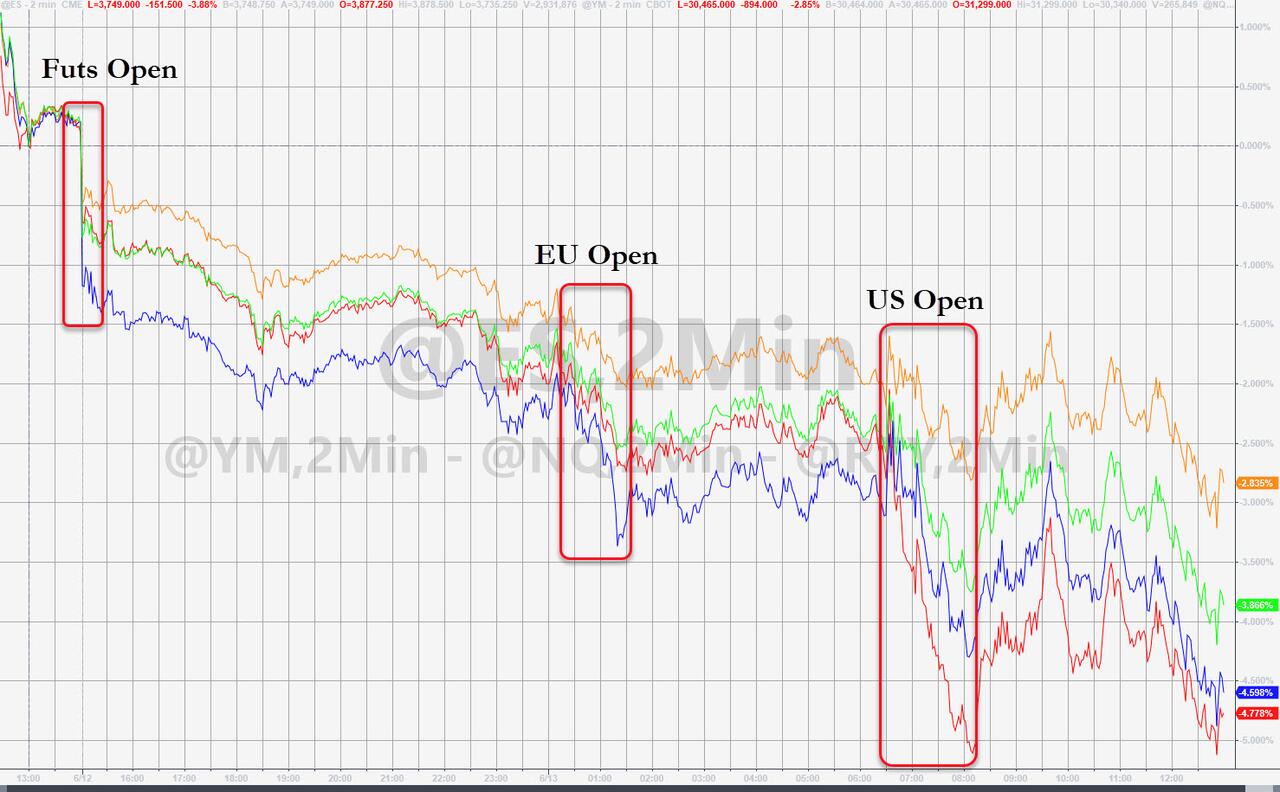
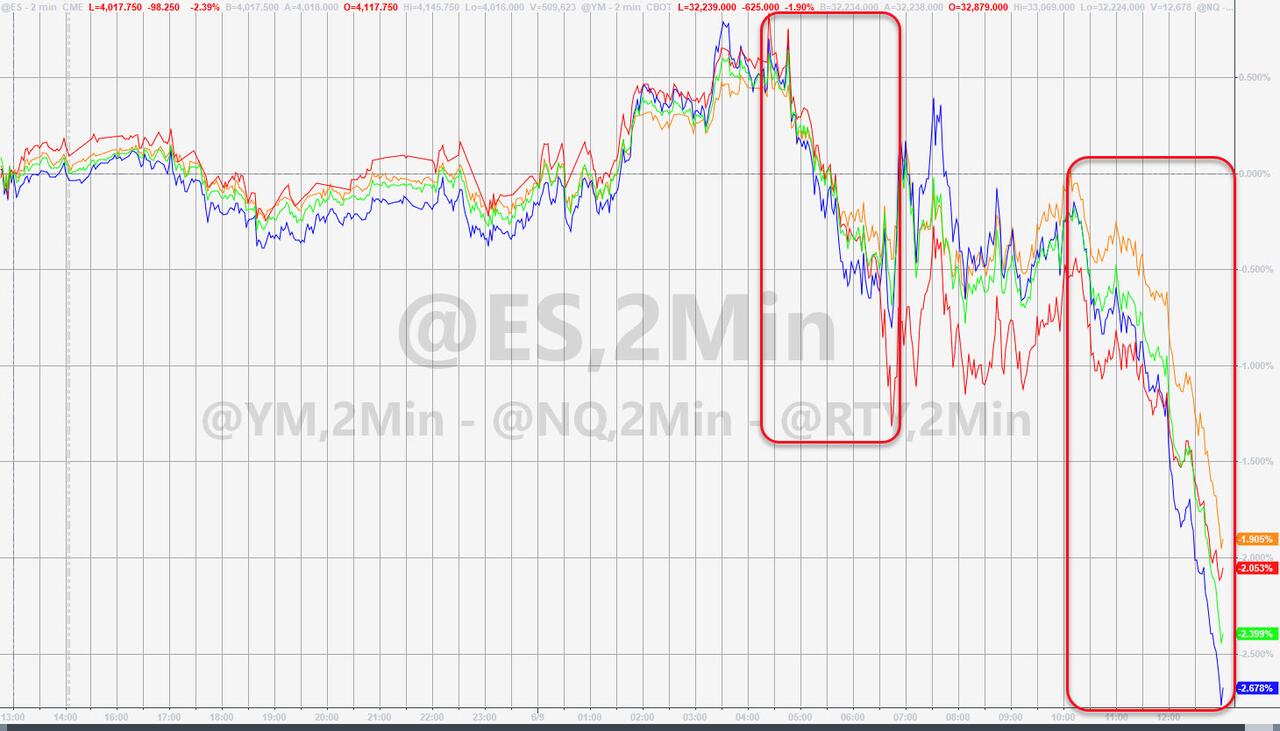
Friday’s drubbing was followed by an ugly overnight futures session, which already pointed towards another knock-down of the buy-and-hold crowd and the dip-buyers.

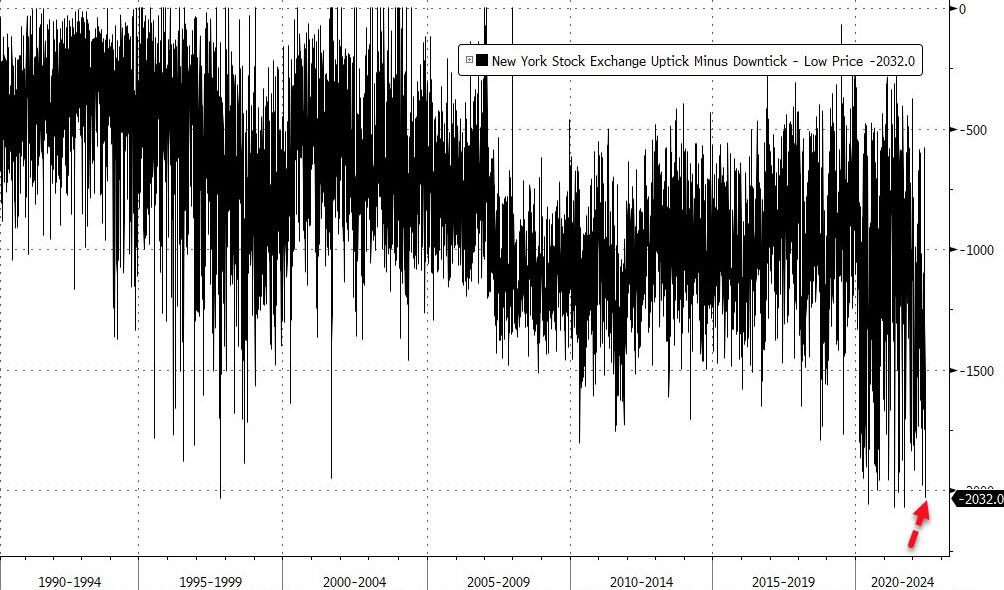
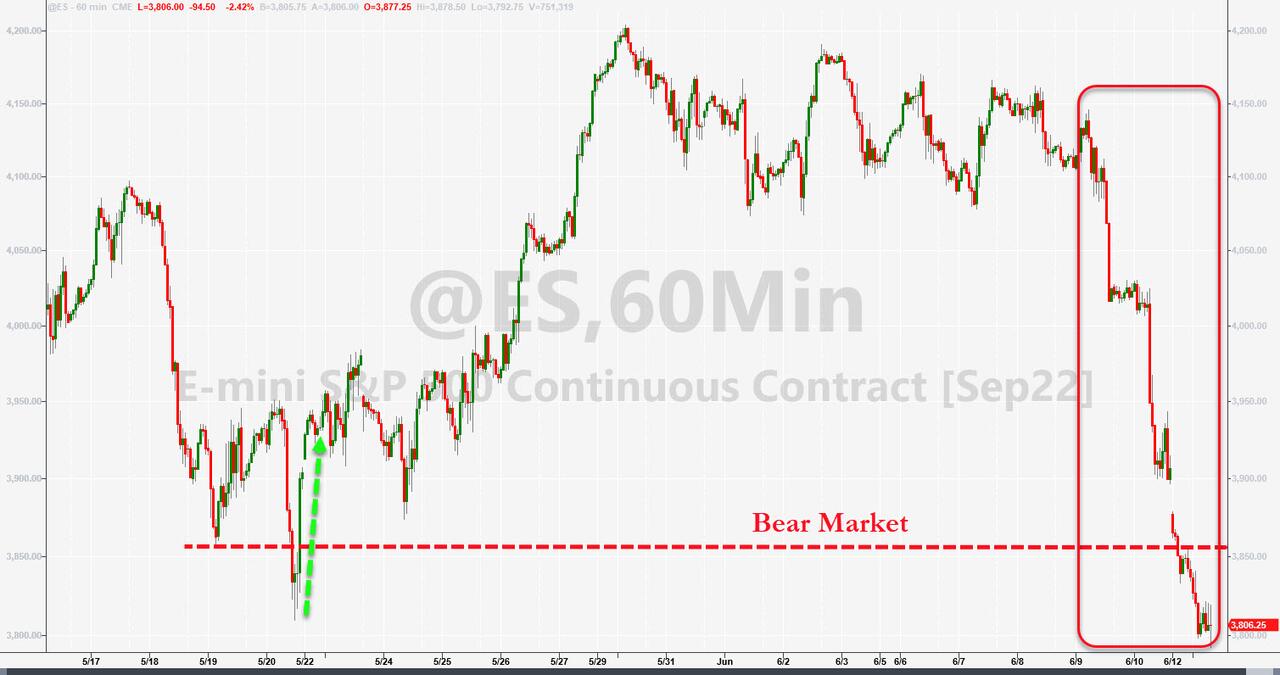
Things got worse as the fifth largest ‘sell program’ in history was launched, as ZeroHedge elaborated, and wreaked havoc with the markets, while sending the S&P 500 back into official Wall Street bear market territory, which the index had touched a few weeks ago.

It was a Puke-A-Thon at its finest with Bloomberg offering this explanation:

Sell programs of this size are typically no single events. They tend to happen in clusters, and that probably means stocks might be in store for bigger losses.

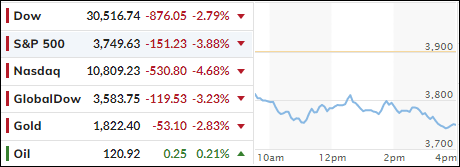
Bond yields surged, as the major indexes got clobbered with the S&P 500 losing almost 4%, but the Nasdaq fared worse by giving up 4.68%. The 10-year ripped higher by an amazing 22 basis points to close at 2.389%! For context, the 2-year has now reached its highest yield since 2008.

All asset classes were clubbed, and even gold could not escape the carnage, as a host of news combined to hand the bears a chest-pounding win. ZH noted that event risk anxiety ahead of the FOMC meeting combined with Option Expiration technicals ($3.4 trillion option expirations) and European ‘fragmentation’ fears, along with the usual political and economic worries, were simply too much for traders to handle.

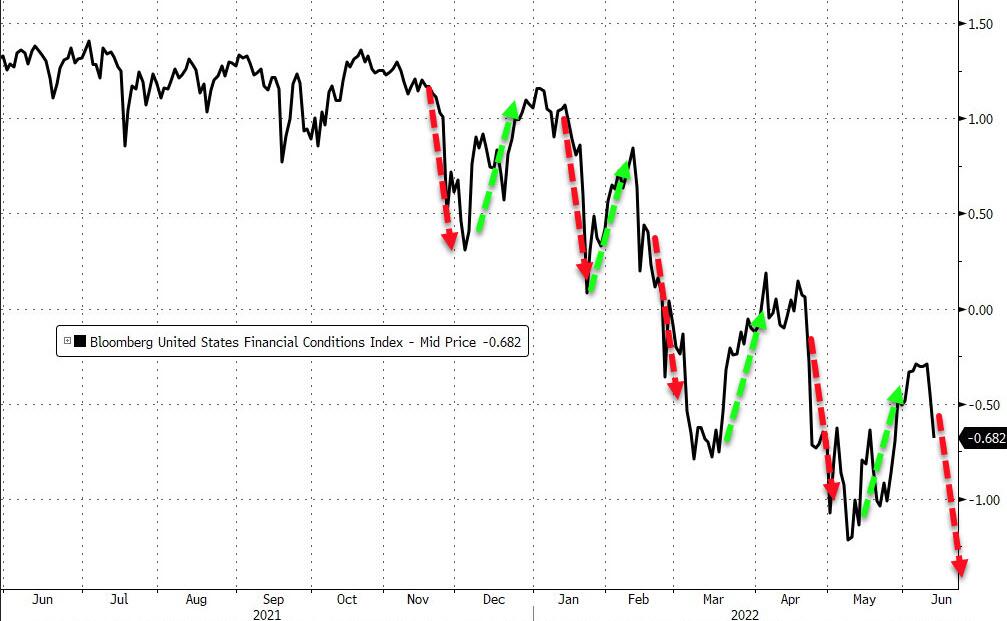
Financial conditions are tightening again and are zigzagging in tune with daily news as to the Fed’s next cause of action. This was not helped by sudden increase in expectations that the Fed might hike 75 bps instead of the assumed 50 bps when they meet this Wednesday.

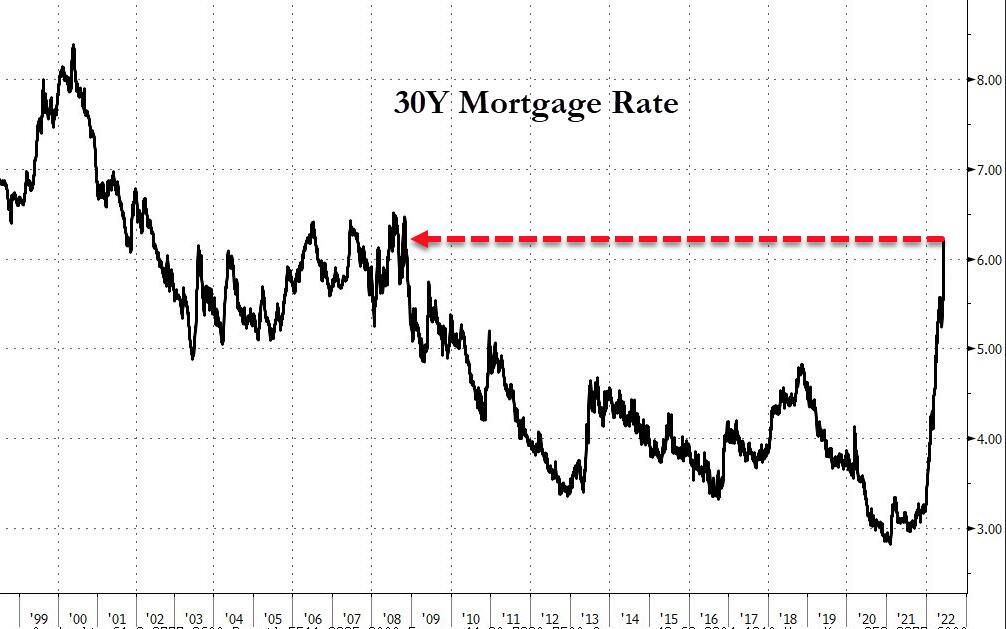
As a result of soaring bond yields, mortgage rates rose and topped 6%, the US Dollar reversed from its recent sell-off and raced higher, while gold suffered from higher rates and gave back its $1,850 level.

Even though, this bear market may present us with some bounce-backs, the major trend remains lower, and in my advisor practice, we continue to be out of equities but have some limited exposure in selected sector ETFs.

Read More
ETFs On The Cutline – Updated Through 06/10/2022

Ulli ETFs on the Cutline Contact

Below, please find the latest High-Volume ETF Cutline report, which shows how far above or below their respective long-term trend lines (39-week SMA) my currently tracked ETFs are positioned.

This report covers the HV ETF Master List from Thursday’s StatSheet and includes 312 High Volume ETFs, defined as those with an average daily volume of more than $5 million, of which currently 41 (last week 61) are hovering in bullish territory. The yellow line separates those ETFs that are positioned above their trend line (%M/A) from those that have dropped below it.

Take a look:                                                                   

The HV ETF Master Cutline Report

In case you are not familiar with some of the terminology used in the reports, please read the Glossary of Terms. If you missed the original post about the Cutline approach, you can read it here.      

ETF Tracker Newsletter For June 10, 2022

Ulli ETF Tracker Contact

ETF Tracker StatSheet          

You can view the latest version here.

LATEST CPI READING PUMMELS STOCKS

[Chart courtesy of MarketWatch.com]

  1. Moving the markets

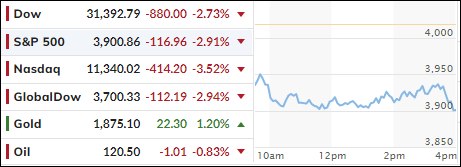
After yesterday’s spanking, which left the major indexes in the red by some +2%, with the Dow dumping over 600 points, today’s session presented another rude awakening thanks to a worse than expected CPI reading.

The Dow dove 880 points when traders realized that inflation had not peaked yet, as had been falsely assumed, and showed its worst reading in 40 years. The sell-off was broad with declining stocks outnumbering the advancing ones by a ratio of 9 to 1.

The Consumer Price Index reached its highest level since 1981, as prices were rising 8.6% YoY and 6% when excluding the food and energy components. Expectations were for 8.3% and 5.9% respectively.  

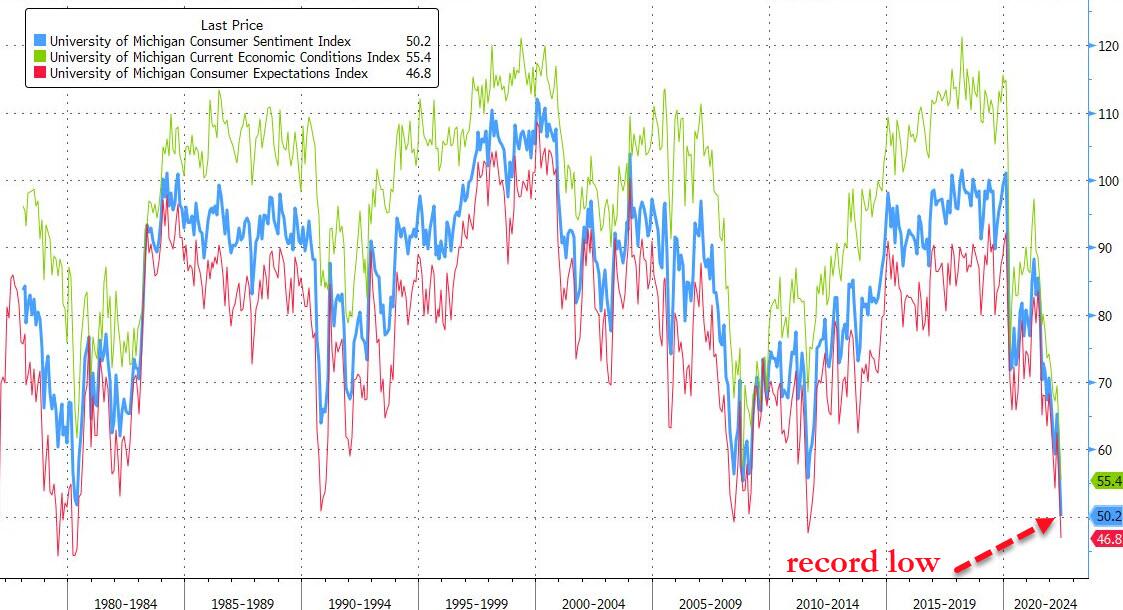
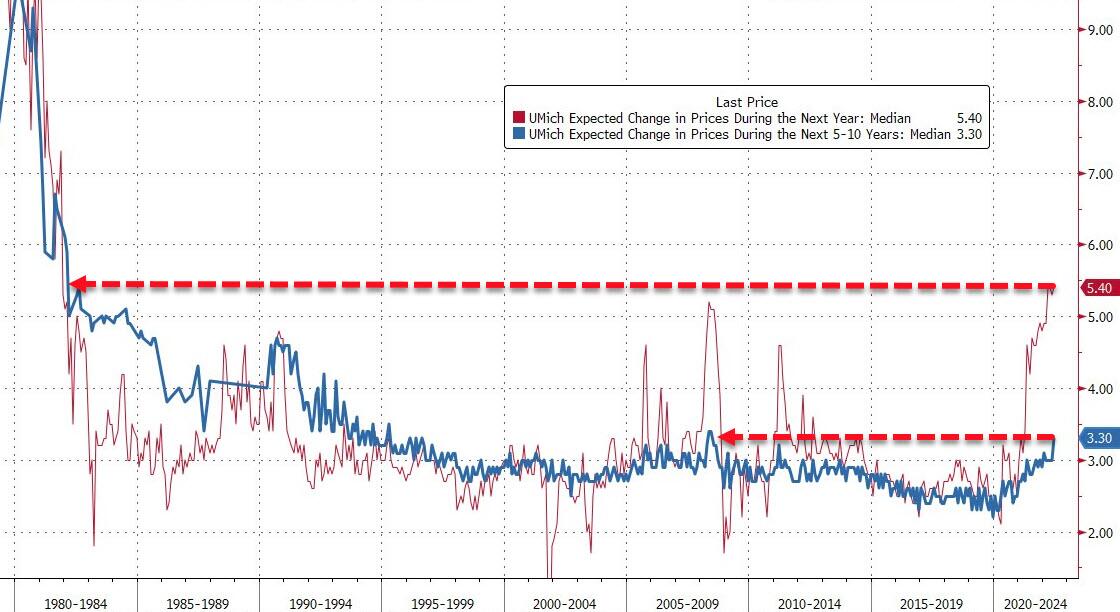
As ZeroHedge added, Consumer Sentiment collapsed to a record low by crashing from 58.4 to 50.2, which was massively below expectations of 58.1. Inflation expectations soared, while buying conditions collapsed to new lows.

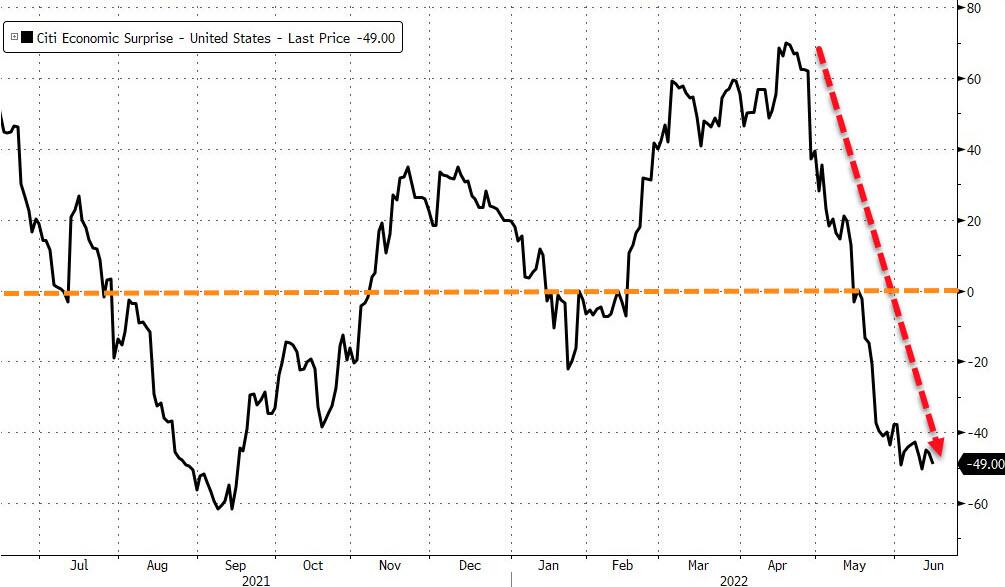
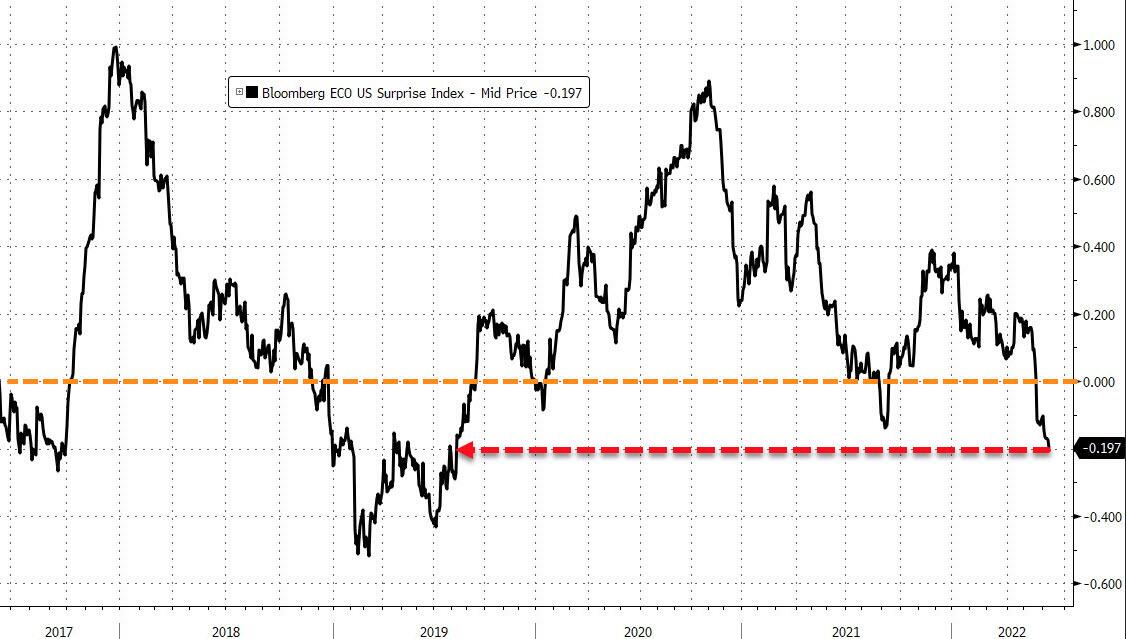
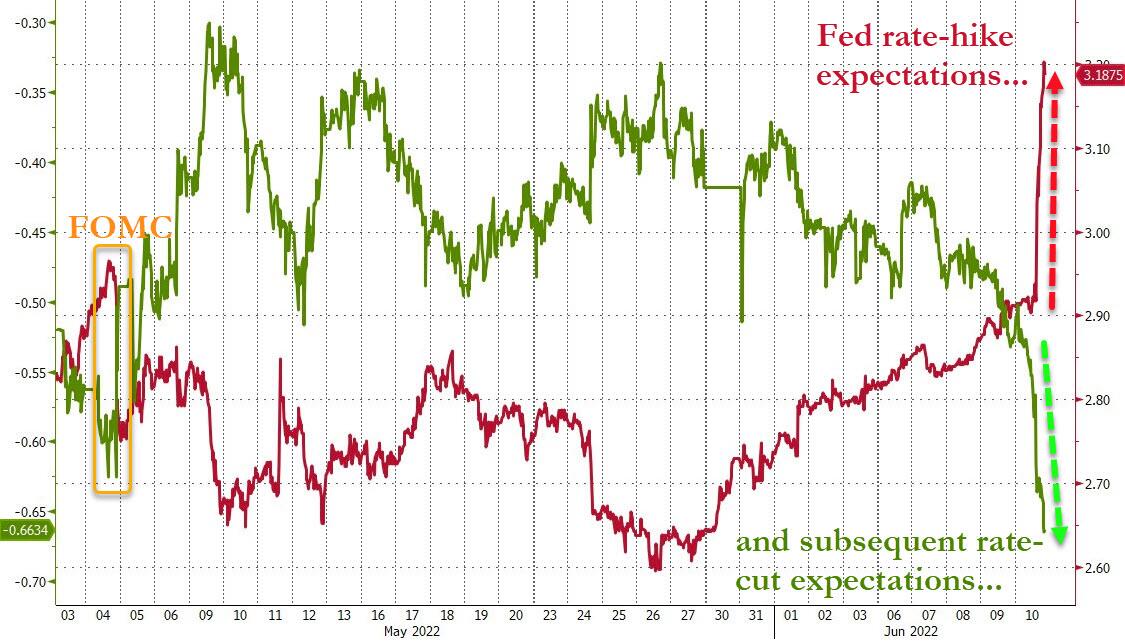
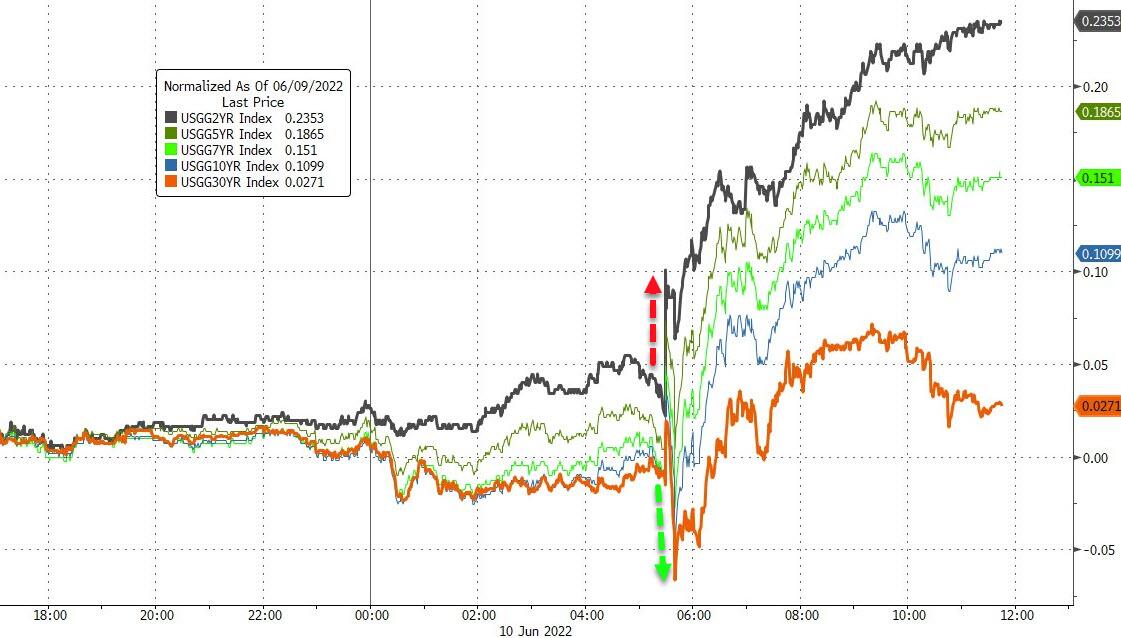
The US Macro Surprise Index followed suit and dipped to its weakest since 2019. The reactions in the markets were violent no matter where you looked, with rate-hike expectations and rate-cut expectations going opposite ways, as Bloomberg demonstrates in this chart.

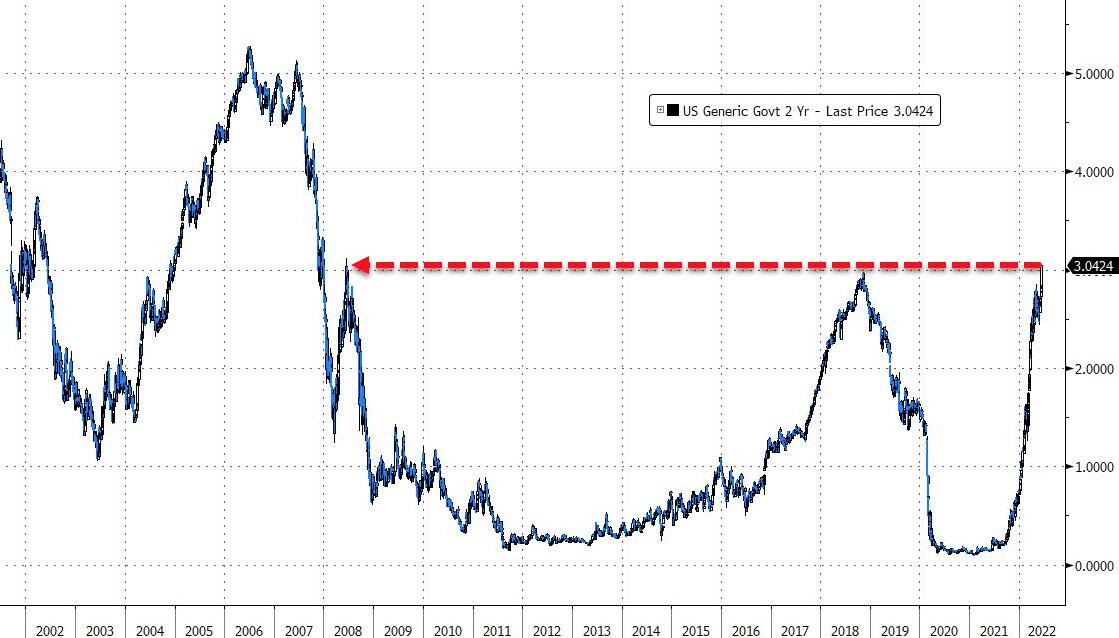
Bond markets were in turmoil due to yields spiking violently, with the 10-year adding over 11 basis points to close at 3.157%. For the week, it was simply a bloodbath, as the 2-year bond yield exploded by a stunning 40 basis points, and topping 3% for the first time since 2008, while the 30-year only gained 10 basis points.

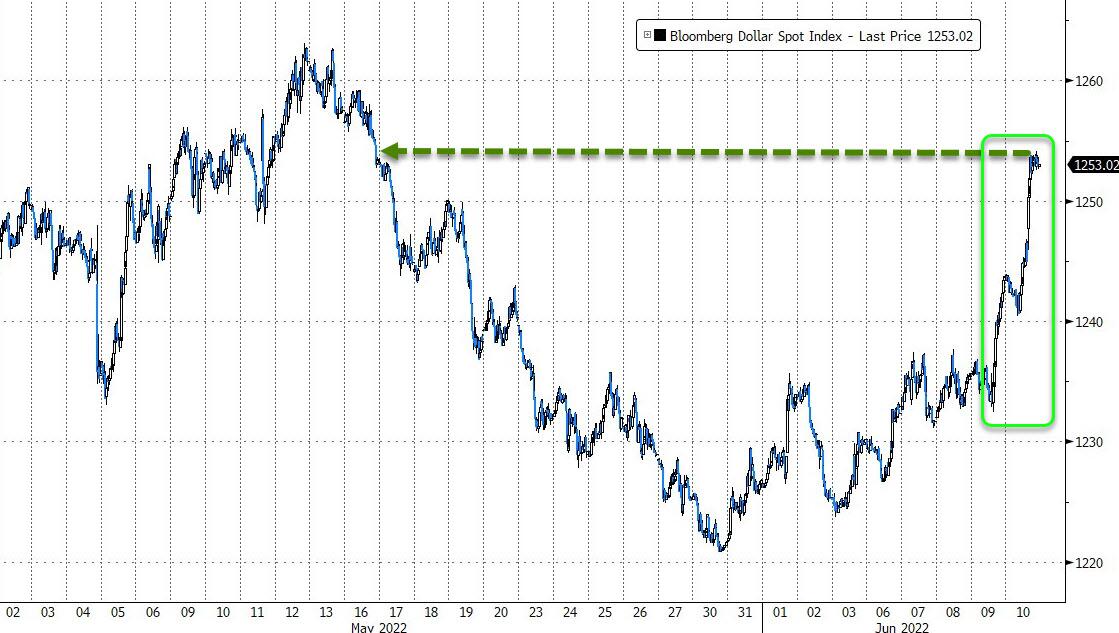
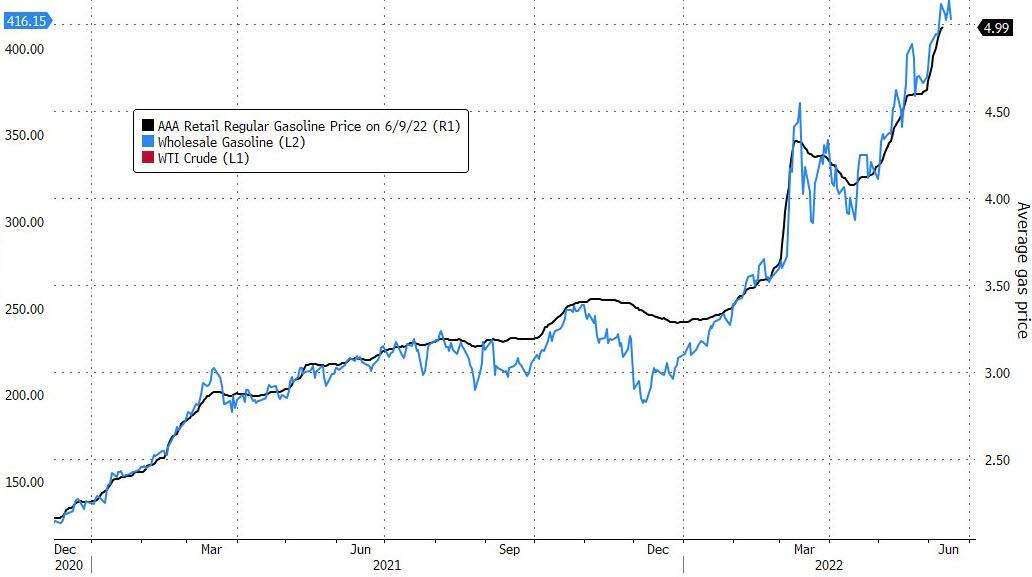
The US Dollar rallied, as did gasoline prices, while Gold was the safe place to be in the face of chaos, as the precious metal surged 1.23% on the day and easily reclaimed its $1,850 level.    

We ended the week, as ZH posted, with the S&P 500 and Nasdaq not only having their worst week since January 2021, but also witnessing the S&P 500 down 10 of the last 11 weeks—the worst stretch since the Great Depression.

Being in cash on the sidelines never felt so good.

Read More

Weekly StatSheet For The ETF Tracker Newsletter – Updated Through 06/09/2022

Ulli ETF StatSheet Contact

ETF Data updated through Thursday, June 9, 2022

Methodology/Use of this StatSheet:

1. From the universe of over 1,800 ETFs, I have selected only those with a trading volume of over $5 million per day (HV ETFs), so that liquidity and a small bid/ask spread are assured.
2. Trend Tracking Indexes (TTIs)

Buy or Sell decisions for Domestic and International ETFs (section 1 and 2), are made based on the respective TTI and its position either above or below its long-term M/A (Moving Average). A crossing of the trend line from below accompanied by some staying power above constitutes a “Buy” signal. Conversely, a clear break below the line constitutes a “Sell” signal. Additionally, I use an 12% trailing stop loss on all positions in these categories to control downside risk.

3. All other investment arenas do not have a TTI and should be traded based on the position of the individual ETF relative to its own respective trend line (%M/A). That’s why those signals are referred to as a “Selective Buy.” In other words, if an ETF crosses its own trendline to the upside, a “Buy” signal is generated. Here too, I recommend trailing sell stop of 12%, or less, depending on your risk tolerance.

If you are unfamiliar with some of the terminology, please see Glossary of Terms and new subscriber information in section 9.     

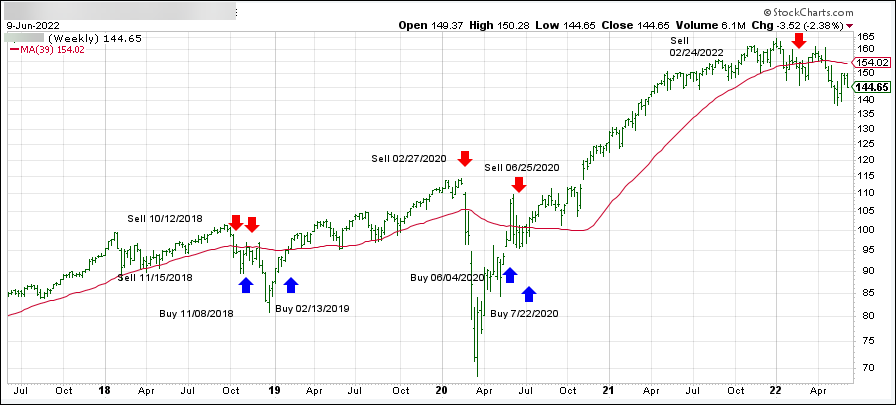
1. DOMESTIC EQUITY ETFs: SELL — since 02/24/2022

Click on chart to enlarge

Our main directional indicator, the Domestic Trend Tracking Index (TTI-green line in the above chart) has broken below its long-term trend line (red) by -6.21% and remains in “SELL” mode.  

Read More