ETF Tracker Newsletter For September 7, 2018

Ulli ETF Tracker Contact

ETF Tracker StatSheet

https://theetfbully.com/2018/09/weekly-statsheet-for-the-etf-tracker-newsletter-updated-through-09-06-2018/

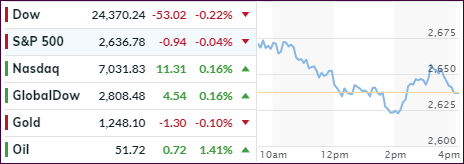
MAJOR INDEXES LIMP LOWER FOR THE WEEK

[Chart courtesy of MarketWatch.com]
  1. Moving the markets

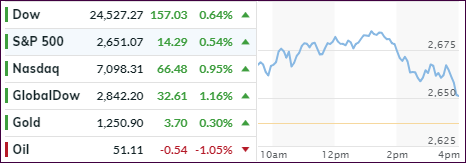
Even a decent jobs report showing that 201k jobs were added in August (vs. 200k expectations), along with a steady 3.9% unemployment rate, couldn’t stem the bearish tide. The major indexes lost for the week with Nasdaq faring the worst with -2.5%.

Bond yields jumped with the 10-year adding 6 basis points to 2.94% as inflation fears were stoked, because of the strongest growth in Average Hourly Earnings (AHE) in 9 years. This now has traders on edge with more interest hikes by the Fed now being a virtual certainty. A growing AHE, when combined with a humming economy, is interpreted as contributory to future inflation.

On the trade side of things, Trump upped the ante with China again when he announced that he is ready to not just greenlight the $200 billion in previously discussed tariffs but also impose another $267 billion that his administration is working on with the tariff rate being unknown so far.

Obviously, the fact that the July trade deficit with China reached an all-time high of $36.9 billion contributed to his decision. Even Apple Computers had to come out and admit that its products would be affected by tariffs causing the stock to drop sharply.

It’s been a rough start of the month for the markets, but after a summer of almost non-existent volatility, some changes were due to happen, and we’ll have to wait and see if this first week was simply an outlier or a harbinger of things to come.

Read More

Weekly StatSheet For The ETF Tracker Newsletter – Updated Through 09/06/2018

Ulli ETF StatSheet Contact

ETF Data updated through Thursday, September 6, 2018

Methodology/Use of this StatSheet:

  1. From the universe of over 1,800 ETFs, I have selected only those with a trading volume of over $5 million per day (HV ETFs), so that liquidity and a small bid/ask spread are assured.
  2. Trend Tracking Indexes (TTIs)

Buy or Sell decisions for Domestic and International ETFs (section 1 and 2), are made based on the respective TTI and its position either above or below its long-term M/A (Moving Average). A crossing of the trend line from below accompanied by some staying power above constitutes a “Buy” signal. Conversely, a clear break below the line constitutes a “Sell” signal. Additionally, I use a 7.5% trailing stop loss on all positions in these categories to control downside risk.

  1. All other investment arenas do not have a TTI and should be traded based on the position of the individual ETF relative to its own respective trend line (%M/A). That’s why those signals are referred to as a “Selective Buy.” In other words, if an ETF crosses its own trendline to the upside, a “Buy” signal is generated. Since these areas tend to be more volatile, I recommend a wider trailing sell stop of 7.5% -10% depending on your risk tolerance.

If you are unfamiliar with some of the terminology, please see Glossary of Terms and new subscriber information in section 9.


  1. DOMESTIC EQUITY ETFs: BUY — since 4/4/2016

Click on chart to enlarge

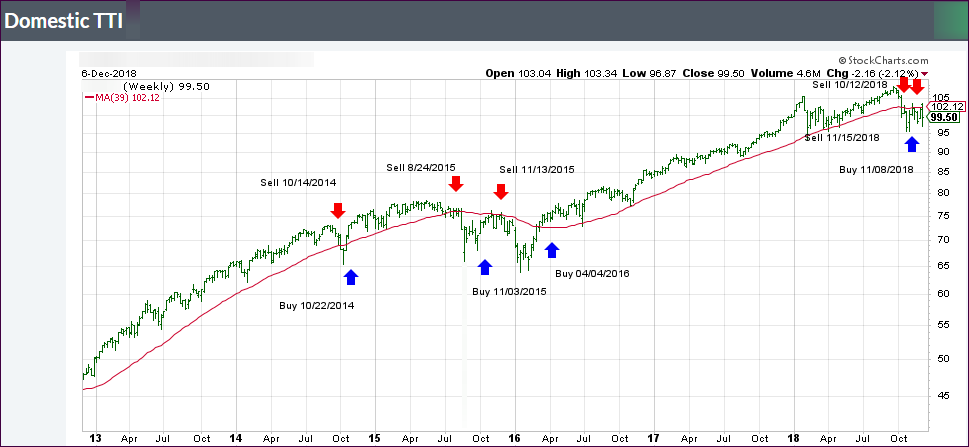
Our main directional indicator, the Domestic Trend Tracking Index (TTI-green line in the above chart) is positioned above its long-term trend line (red) by +4.83% after having generated a new Domestic Buy signal effective 4/4/2016 as posted.

Read More

Tech Rout Continues

Ulli Market Commentary Contact

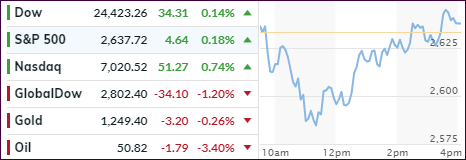
[Chart courtesy of MarketWatch.com]
  1. Moving the markets

The major indexes headed south again led by continuing weakness in the tech sector. However, the Dow managed to buck the trend by ending in the green by a small margin. The S&P’s attempts to conquer the unchanged line were rebuffed, while the Nasdaq didn’t even come close to stage any kind of lasting rally and dropped -0.91%.

Not helping matters was softness in global markets with indexes in Europe and Asia heading south over mounting concerns that some of the struggling emerging markets may affect the economies of healthier EMs as well.

In focus today were Turkey and Argentina, whose currency followed the law of gravity, as confidence waned and spillover fears worsened. As I posted before, this drag will get worse, since no viable economic solutions appear to be on the horizon.

On the trade front, the jawboning with Canada intensified a notch, as Trump threw down the gauntlet by declaring that he is ready to move forward without Canada. Then there is the issue of the $200 billion in Chinese tariffs, which could be imposed as soon as this week.

Domestically, the FANG stocks headed south again for the 4th day in a row, its longest losing streak in 7 months.

I have talked much about the disconnect of various indicators. Here’s the latest update charting the S&P vs. the 30-year bond yield. As you can see, right now it appears that both are heading towards each other, and we may see a syncing soon. To be clear, this means that yields continue their path higher, with bond investors losing out. Why?  When yields are rising, bond prices are falling.

On deck, and certainly capable of moving markets, is tomorrow’s jobs report. This promises to be an interesting event and, judging by today’s weak ADP numbers, expectations for 200k new jobs added in August, may be a little too optimistic.

Read More

Tech Sector Slides And Leads The Decline

Ulli Market Commentary Contact

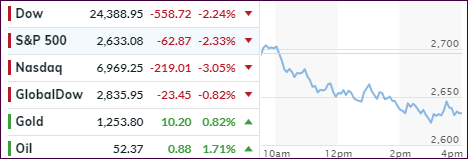
[Chart courtesy of MarketWatch.com]
  1. Moving the markets

The major indexes started the session in the red caused by a sharp decline in the tech sector (over 1%), which was its worst day since July. The downside assist came from social media executives (FB, TWTR), who testified on Capitol Hill about misinformation and the battle for truth in reporting.

Not helping were the continued trade discussions with Canada, as both parties dug in and appeared hardnosed about their views of what terms are acceptable and which ones are not. The Canadian’s reiterated their stance that “no Nafta is better than a bad Nafta deal for Canadians, and that’s what we are going to stay with.” So, that appears to be a dead-end street for the time being and another negative for the markets by undermining confidence in equities.

On the other hand, tech has been on a hot streak for most of this year, so a pullback based on profit taking, since some of the big banks and brokerage houses have suggested their clients to “lighten up on tech exposure,” may have contributed to the decline.

Looking at the big picture, global stocks in general (Asia and Europe) are having a down day, as contagion concerns from the Emerging Markets (EMs) appear to spill over into the developed markets. With the Fed being on course to continue with its rate hike program, which will affect EMs negatively, the turmoil is likely to worsen in the future. For reference, we sold our holdings in EMs back in February and currently have no exposure at all.

Read More

Bouncing Below The Unchanged Line

Ulli Market Commentary Contact

[Chart courtesy of MarketWatch.com]
  1. Moving the markets

Despite several attempts, the major indexes could not gather enough bullish momentum to break above the unchanged line and stay there. Instead, it was a see-saw session that saw the indexes ending up with minor losses.

Trade tensions with Canada contributed to the uncertainties in the market as Trump threatened to “leave Canada out of any new NAFTA pact.” The talks were halted with no tangible agreement, but at least the parties agreed to meet again. Regarding China, the tariffs of an additional $200 billion will begin on Thursday.

We may see some more sideways action until Friday when the employment report will be released. As one portfolio manager opined: “It should set the tone for the remainder of the month, from the Fed meeting to views on inflationary pressures and overall growth. The betting is more of the same, good numbers, good equity markets, and still growing economy.

Just because most MSM does not report it does not mean the Emerging Market crisis has been resolved. Far from it. While Turkey has been relatively quiet, today it was the South African Rand and the Argentine Peso, both of which were in freefall this morning causing their bond yields to jump and their stock markets to drop. This is a developing story, and I firmly believe that this contagion will go global.

Right now, however, the contagion is just starting and has not yet affected the western industrialized nations keeping us invested in the markets, until there is a clear change in long-term direction.

Read More

ETFs On The Cutline – Updated Through 08/31/2018

Ulli ETFs on the Cutline Contact

Below, please find the latest High-Volume ETF Cutline report, which shows how far above or below their respective long-term trend lines (39-week SMA) my currently tracked ETFs are positioned.

This report covers the HV ETF Master List from Thursday’s StatSheet and includes 366 High Volume ETFs ETFs, defined as those with an average daily volume of more than $5 million, of which currently 186 (last week 188) are hovering in bullish territory. The yellow line separates those ETFs that are positioned above their trend line (%M/A) from those that have dropped below it.

Take a look:

The HV ETF Master Cutline Report

In case you are not familiar with some of the terminology used in the reports, please read the Glossary of Terms.

If you missed the original post about the Cutline approach, you can read it here.