Slipping And Sliding Into The Close

Ulli Market Commentary Contact

[Chart courtesy of MarketWatch.com]

  1. Moving the markets

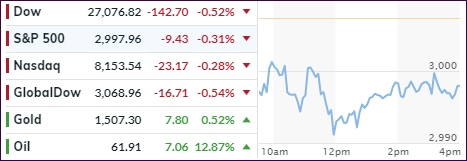
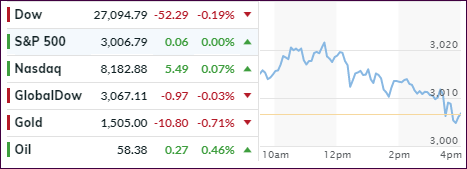
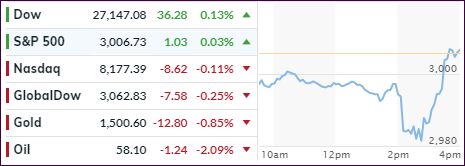
Yesterday’s “feel good” closing ramp carried over into today’s opening, as the major indexes were getting close to test new record highs. Better-than-expected housing and manufacturing data contribute to the bullish sentiment.

While the S&P 500 is within 1% of its record closing high, it may not get there until next week due to tomorrow’s quadruple witching day for the US markets. That means volatility may spike as a result of the simultaneous quarterly expiration of futures, options on indexes and stocks.

Yesterday, I mentioned the liquidity crunch in the overnight lending market. It continued today with the Fed promising billions of dollars to “support” the system from blowing out of control. The liquidity shortfall rose by almost $4 billion compared to Wednesday morning. Ouch!

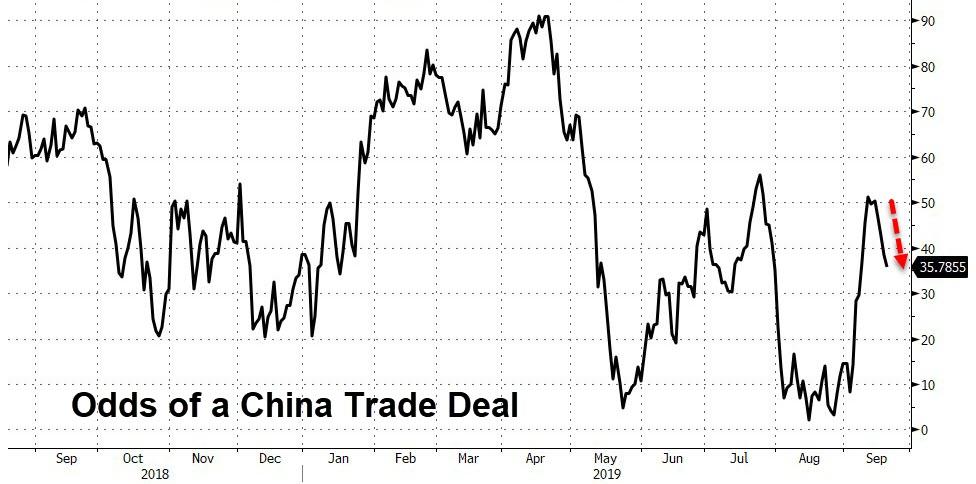
We saw some fallout of that, as the markets skidded, assisted by odds of a China trade deal slipping, with news hitting the headlines that the White House favors increasing some tariffs to possibly 50% or even 100%. That took the starch out of upward momentum, and we ended up just about unchanged.

Traders are still digesting the Fed’s rate cut, and we may not see any attempt to break through to all-time highs until next week, although that July 2019 high may very well serve as overhead resistance.

Read More
Fed Delivers Rate Cut—Stocks Fall—But Jump Into The Close

Ulli Market Commentary Contact

[Chart courtesy of MarketWatch.com]

  1. Moving the markets

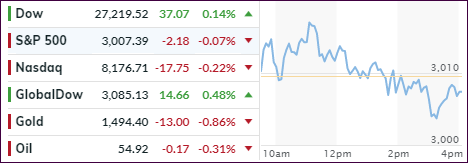
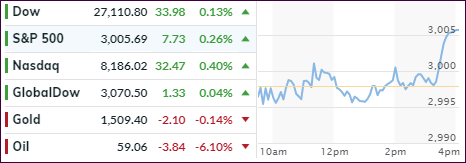
As expected, the Fed delivered the goods and cut rates by 0.25%; but stocks sold off. The reason was that the accompanying language in its statement and economic projections cast doubt not only on another rate cut this year but also in 2020. That was a disappointment for traders, who had firmly believed that at least one more reduction prior to December 11 was a sure thing.

However, the sell-off was mild, and we saw another last hour pump to get the indexes to a green close, which worked except for the Nasdaq. In the end, not much was lost or gained, as we ended up hugging the unchanged line.

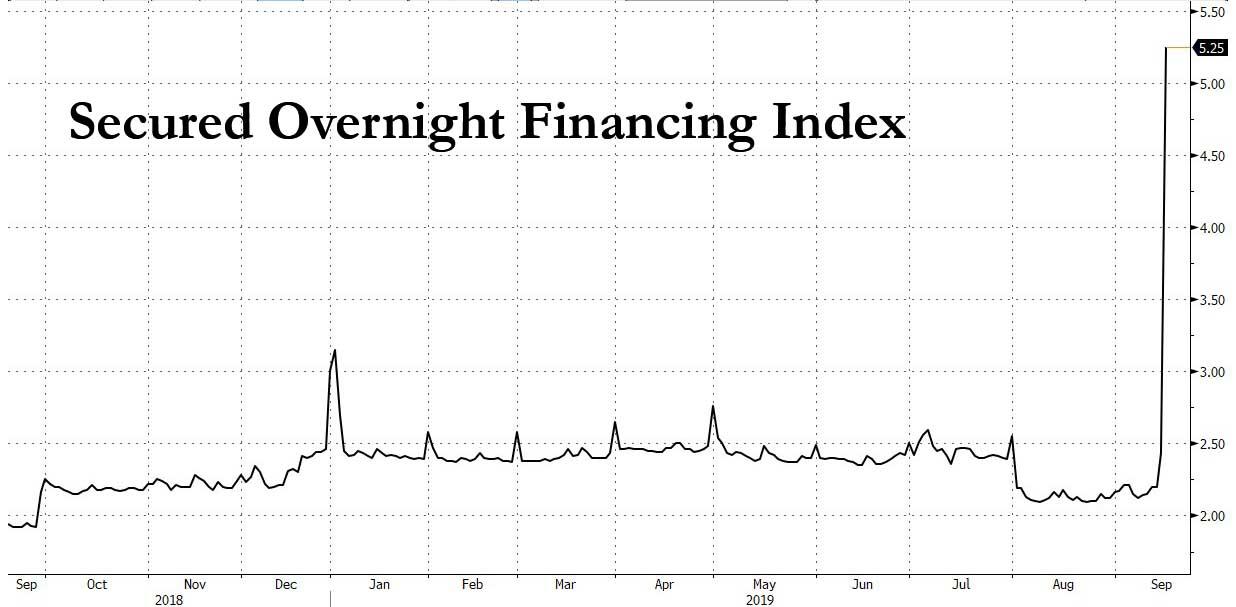
What was not addressed was the liquidity crunch in the overnight lending market, where the Fed had to step in and provide some $75 billion in liquidity as the Secured Overnight Financing Index (SOFI) spiked to 5.25% from 2.25%. This was the Fed’s first intervention in over 10 years.

These are complicated repo transactions, which can have a dire effect on equities but have not been reported by MSM. If this topic interests you, you can read more here and here. I am merely pointing this out as a fact that has been conveniently ignored by the markets but may come back to haunt them.

The last hour rebound was a function of Fed head Powell promising more Quantitative Easing (QE) by disguising his words like this:

“It is certainly a possibility that we’ll need to resume the organic growth of the balance sheet sooner than we thought.”

What that means is that QE is on its way, at some point, but stocks managed to joyfully jump into the close with the S&P 500 reclaiming its recently lost 3k milestone marker.

The Fed did exactly what was expected, but it remains to be seen if this will be enough for equities to continue climbing the mountain towards new all-time highs.

Read More

Markets Hold Steady Ahead Of The Fed’s Verdict On Interest Rates

Ulli Market Commentary Contact

[Chart courtesy of MarketWatch.com]

  1. Moving the markets

It was a matter of treading water for most of the day, with the major indexes limping around their respective unchanged lines, until a last-minute pump pushed the indices up and into a green close.

Mid-day attempts to get a rally going fell short, as weakness in the energy sector, due to reports that Saudi Arabia may recover sooner than expected, pulled oil off its lofty level. According to Reuters, Saudi Arabia will restore 70% of the 5.7 million barrels a day production lost rather quickly and the balance within the next two to three weeks.

If so, yesterday’s crude oil spike will turn out to be an outlier with no consequences to equity markets. Traders seemed to share that view and quickly focused their attention on the Fed and expectations that they would reduce interest rates when they meet tomorrow.

It is a foregone conclusion that a -0.25% ease is priced in the market, although the whisper number of -0.5% is still making the rounds. One thing is for sure, if the Fed does not deliver a rate cut, equities will sell off sharply. Remember, these markets are like a drug addict that does not function very well without a regular dose of stimulus.

ZH summed it up this way:

Tomorrow’s rate cut will come with full employment, surging inflation, record high stock prices, and near record low interest rates.

Makes me want to go “Hmmm.”

Read More

Saudi Oil Attack Pulls The Rug Out From Further Market Advances

Ulli Market Commentary Contact

[Chart courtesy of MarketWatch.com]

  1. Moving the markets

It came as no surprise that market sentiment took one on the chin, after Saturday’s drone attack on Saudi oil processing plants, which took about 5% of worldwide production offline.

While the major indexes retreated, it was a modest haircut considering the recent advances. Oil prices spiked about 13%, down from an earlier 20%, but if they keep rising and a dose of inflation sets in, we will see more of a negative effect on stocks, or specifically the broad S&P 500 index.

On one hand a hefty surge in oil prices will most likely weigh on the index due to the negative impact on consumer behavior. On the other hand, the positives, at least temporarily, could be higher profits in the energy sector, along with employment to that region. We simply need to have more time pass to see which of the possibilities will materialize.

One analyst opined that “we could start expecting a negative impact from oil on the S&P 500 in an $80-85 range for WTI,” which means we have a long way to go from the current $61 level.

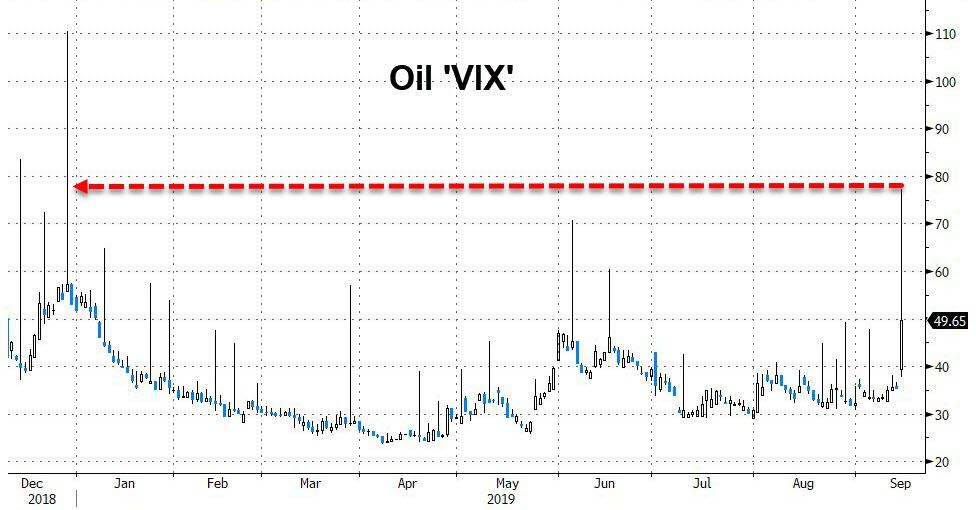
Bond yields acted as a safety haven with the 10-year dropping over 5 basis points to settle at 1.845%, while the oil volatility index surged to its highest since late 2018.

So far, the effect on equities was minor, and we’ll have to wait and see how this movie plays out.

Read More

ETFs On The Cutline – Updated Through 09/13/2019

Ulli ETFs on the Cutline Contact

Below, please find the latest High-Volume ETF Cutline report, which shows how far above or below their respective long-term trend lines (39-week SMA) my currently tracked ETFs are positioned.

This report covers the HV ETF Master List from Thursday’s StatSheet and includes 322 High Volume ETFs, defined as those with an average daily volume of more than $5 million, of which currently 270 (last week 240) are hovering in bullish territory. The yellow line separates those ETFs that are positioned above their trend line (%M/A) from those that have dropped below it.

Take a look:                                                                   

The HV ETF Master Cutline Report

In case you are not familiar with some of the terminology used in the reports, please read the Glossary of Terms. If you missed the original post about the Cutline approach, you can read it here.

ETF Tracker Newsletter For September 13, 2019

Ulli ETF Tracker Contact

ETF Tracker StatSheet          

You can view the latest version here.

HOMING IN ON ALL-TIME HIGHS

[Chart courtesy of MarketWatch.com]

  1. Moving the markets

The markets got an early lift from retail sales, despite the August report showing a mixed picture. While purchases of new autos and building supplies contributed to the rise of 0.4% last month, most other stores reported weak or declining receipts, which appears to be a sign that consumers have trimmed their spending.

Equities slipped throughout the session with only the Dow closing in the green and scoring its 8th straight gain. The Dow and S&P 500 are now within striking distance of fresh all-time highs, which may very well happen next week in anticipation of the Fed not disappointing and lowering interest rates next Wednesday.

Trade tensions with China appeared to have softened a tad, at least for the time being, in that China exempted US agricultural products from tariffs. That overture came after reports that an interim trade deal has been struck.

Still, something odd is happening in the relationship between bond yields and equity prices. The 10-year yield surged again by almost 13 basis points, a huge move, which many traders consider a bond bloodbath. That should have been headline news but was barely mentioned in the press.

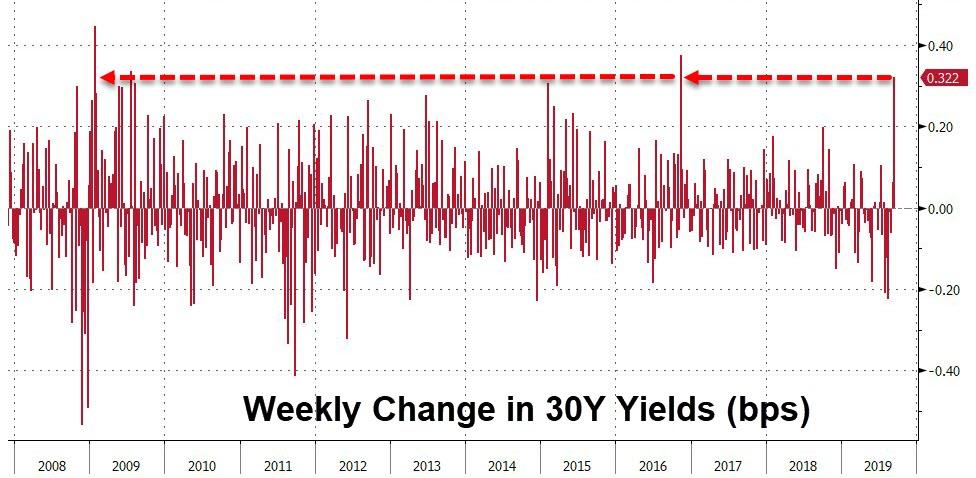
Despite all the rhetoric about lower rates, mortgage rates have shot up, and the 10-year bond yield, which a few weeks ago was at 1.47%, has spiked to 1.90% without as much as a hiccup in equities. Even the 30-year yield climbed an amazing 33 basis points this week, a surge that is the second biggest since 2009.

The rotation out of well-performing momentum stocks into the cyclical and value arena continued, as higher yields impacted low volatility ETFs, such as SPLV and USMV. While they lagged in performance, they are still holding on to their YTD lead over SPY.

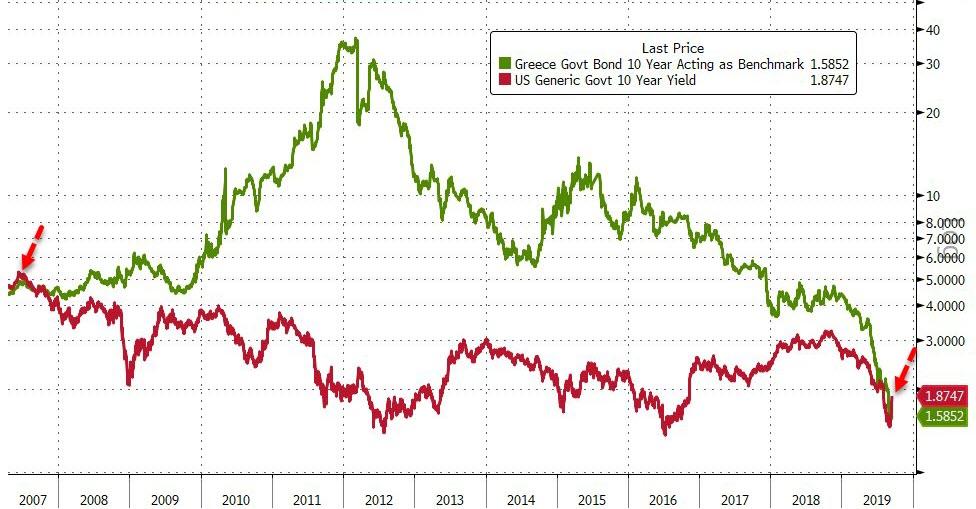
We’re living in a such a distorted system where, as of today, Greek 10-year bond yields are now below US 10-year yields for the first time since 2007. For the uninitiated, that means, at least in theory, Greece is less of a default risk than the US.  

Go figure…

Read More