A
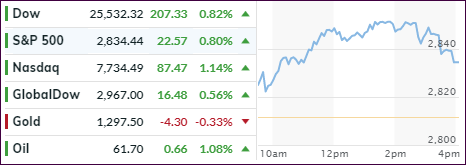
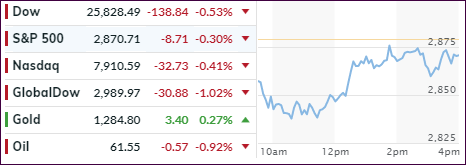
nice rebound rally, which wiped out some of yesterday’s steep losses, ran into
resistance late in the session, but the major indexes managed to close in the green
for a change. Trade anxieties remained and contributed to the indexes coming
off their best levels
Trump
stepped up to the plate again attempting to calm Wall Street traders with soothing
words like it should be clear in “3-4
weeks” if a U.S. delegation’s recent trip to China was successful. This was
followed by “I have a feeling it’s going
to be very successful.”
He
also added “when the time is right, we
will make a deal with China. My respect and friendship with President Xi is
unlimited but, as I have told him many times before, this must be a great deal
for the United States or it just doesn’t make any sense.”
For
the time being, the markets took it as a positive and pushed stocks higher. For
how long that remains to be seen and how clever the administration will be in
putting more lipstick on that trade pig. I suppose we will soon find out if today
was nothing more than a dead-cat-bounce
in an ongoing correction.
It
was clear to me on Sunday afternoon, that today would be bad day in the markets
when China’s Premier Liu He tweeted that China is planning to retaliate, and
three core concerns would have to be addressed:
China has made public
3 core concerns that must be addressed &it won’t make concessions on. From perspective
of China’s politics, there is little room for compromises. They will insist. This
political logic won’t be changed no matter how much additional tariffs the US
will impose.
Trump
did not back down and upped the ante with:
….The only problem
is that they know I am going to win (best economy & employment numbers in
U.S. history, & much more), and the deal will become far worse for them if
it has to be negotiated in my second term. Would be wise for them to act now,
but love collecting BIG TARIFFS!
That
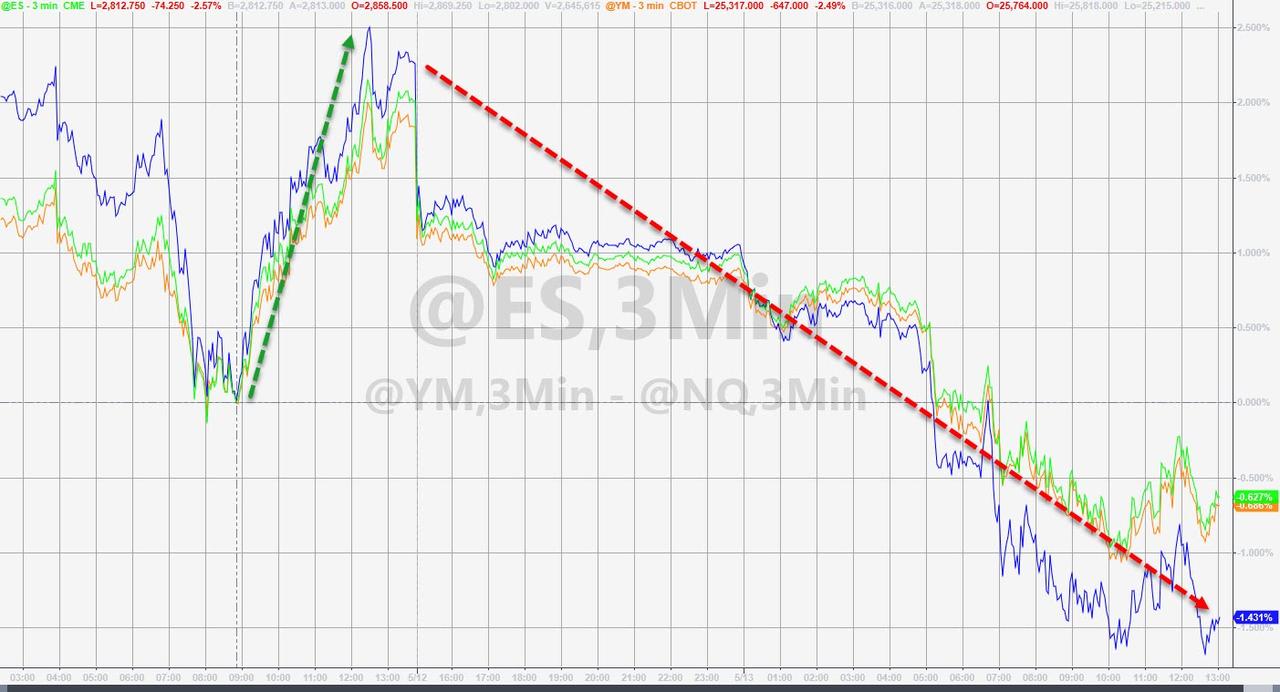
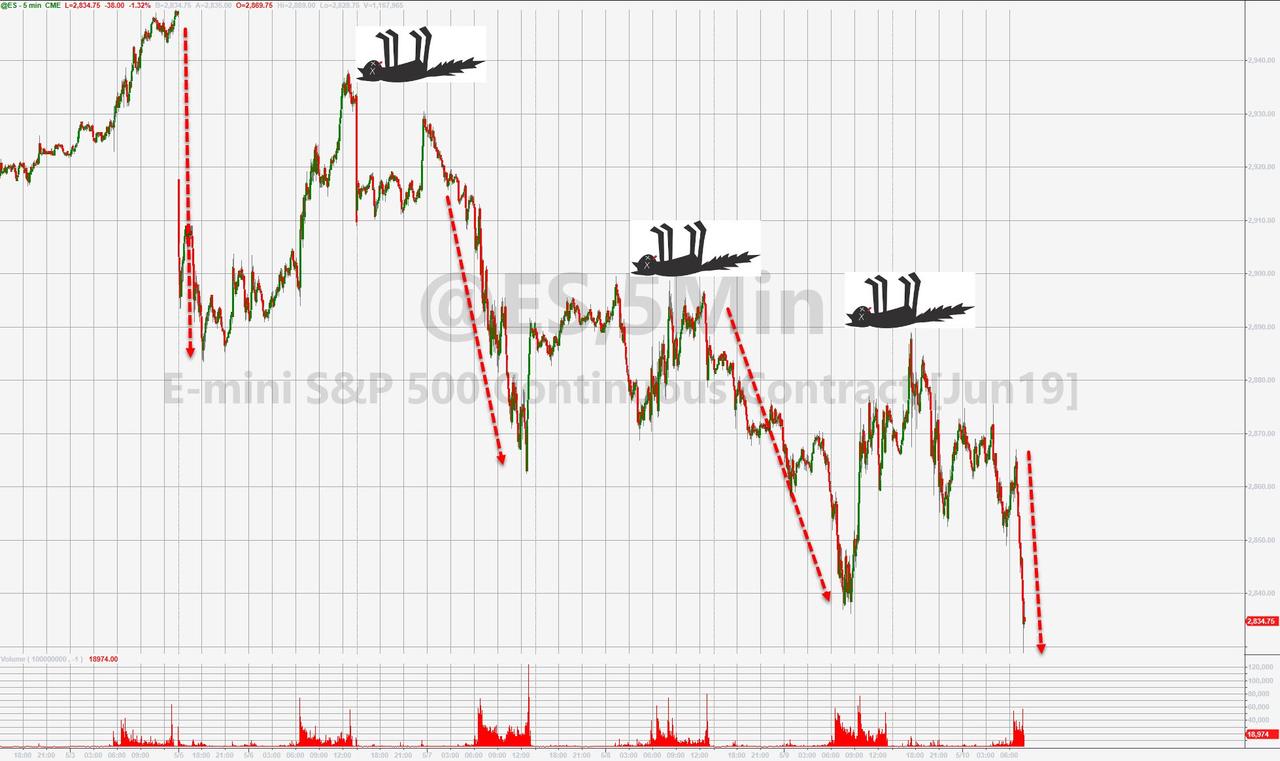
pretty much set the negative tone in the futures market, and subsequently at
the opening of the regular session this morning, with the major indexes doing
their best imitation of a swan dive.
Since
the beginning of the year, markets had priced in a best-case trade scenario,
helping the rebound rally going. That theme has now, however, shifted towards a
worst-case scenario pushing up volatility and giving the bears the upper hand.
The
shock that trade retaliation materialized, will most likely change the bullish theme
we’ve witnessing since Christmas. Unless, of course, the Fed changes its mind
again and follows the White House’s suggestion to lower interest rates by a
full 1%. Then we could see a sudden reversal in sentiment and, at least
temporarily, a resumption of the prior uptrend.
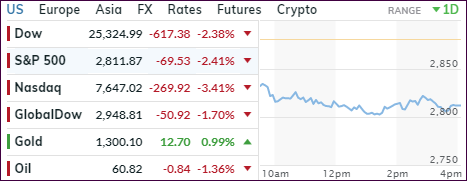
It
was an ugly
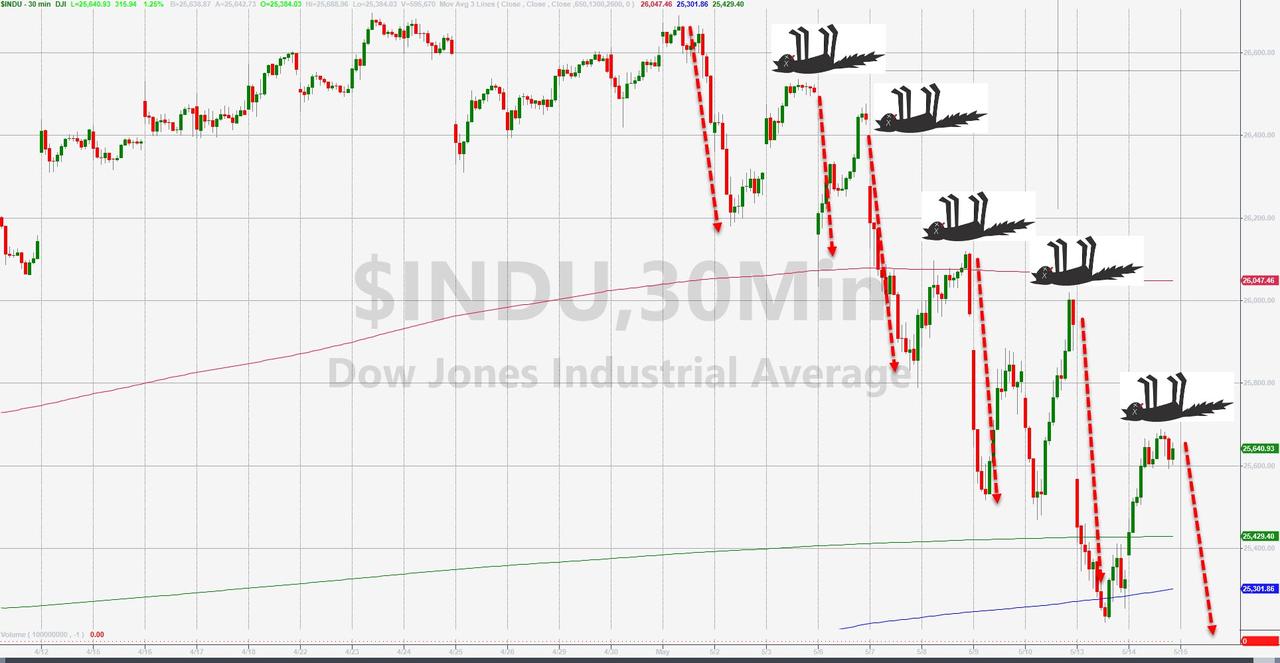
day with the Dow being down some 700 points but managed to crawl off its
lows thanks to selected jawboning by Mnuchin and Trump. ZH reports that this
was not only the worst day for stocks since January 2nd, but we’re
also marching towards the worst May in 50 years.
The
losses were broad with the FANG stocks getting hammered, while AAPL gapped down
and got smashed below its 200-day M/A.
Bond
yields dropped helping the low volatility ETFs, like SPLV, hold up far better
than the indexes. To wit, SPY lost -2.51%, while SPLV gave back a modest -0.64%.
None of our trailing sell stops were triggered, but the International TTI pierced its long-term trend line to the downside by -0.66%. I will wait and see if this drop into bearish territory will hold before issuing a ‘Sell’ signal for that arena.
Below, please find the latest High-Volume ETF Cutline
report, which shows how far above or below their respective long-term trend
lines (39-week SMA) my currently tracked ETFs are positioned.
This report covers the HV ETF Master List from Thursday’s
StatSheet and includes 322 High Volume ETFs, defined as those with an average
daily volume of more than $5 million, of which currently 245 (last week 273)
are hovering in bullish territory. The yellow line separates those ETFs that
are positioned above their trend line (%M/A) from those that have dropped below
it.
In case you are not familiar
with some of the terminology used in the reports, please read the Glossary of Terms.
If you missed the original
post about the Cutline approach, you can read it here.
Again,
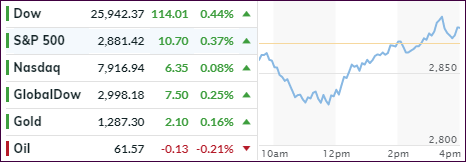
stocks opened to the downside and slid sharply lower during the early going
with the Dow sinking some 300 points at its low. The culprit was the fact that
the higher China tariffs went into effect today causing traders more anxiety,
as hope for a last-minute settlement vanished.
Things
looked pretty dicey with all major indexes ‘losing’ their 50-day M/As, while
the S&P 500 broke below the week’s
lows.
Apparently,
the powers to be did not like how this day was shaping up, so Trump stepped up
the plate by tweeting soothing comments like “talks were proceeding in a very congenial manner,” and “there was no need to rush.” This was followed
by Mnuchin muttering “constructive”
and other words designed to put some lipstick on that trade pig.
That
was sufficient to turn sentiment around, and the 4th biggest buy
program of the month, maybe it was interference by the Plunge
Protection Team, got activated and bearish momentum was replaced by an
all-out bullish
attack, which not only wiped out all the day’s losses but pushed the major indexes
to a green close.
As
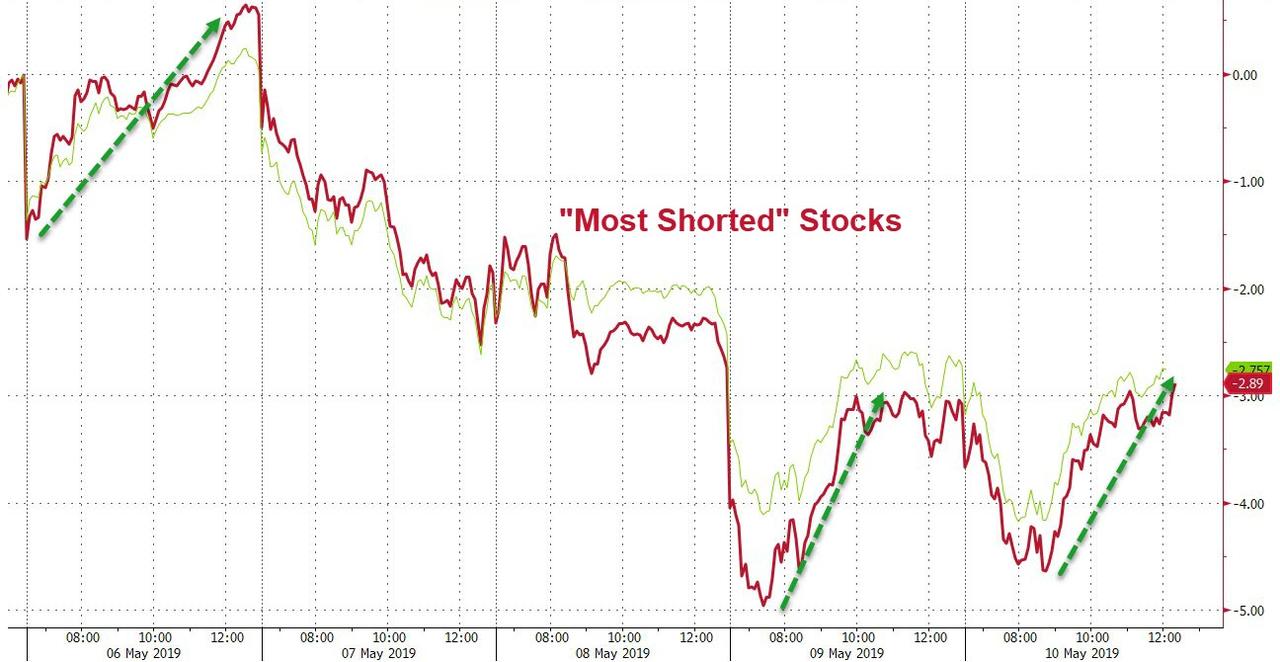
ZH posted, this is the 7th Friday in a row where a sudden buy
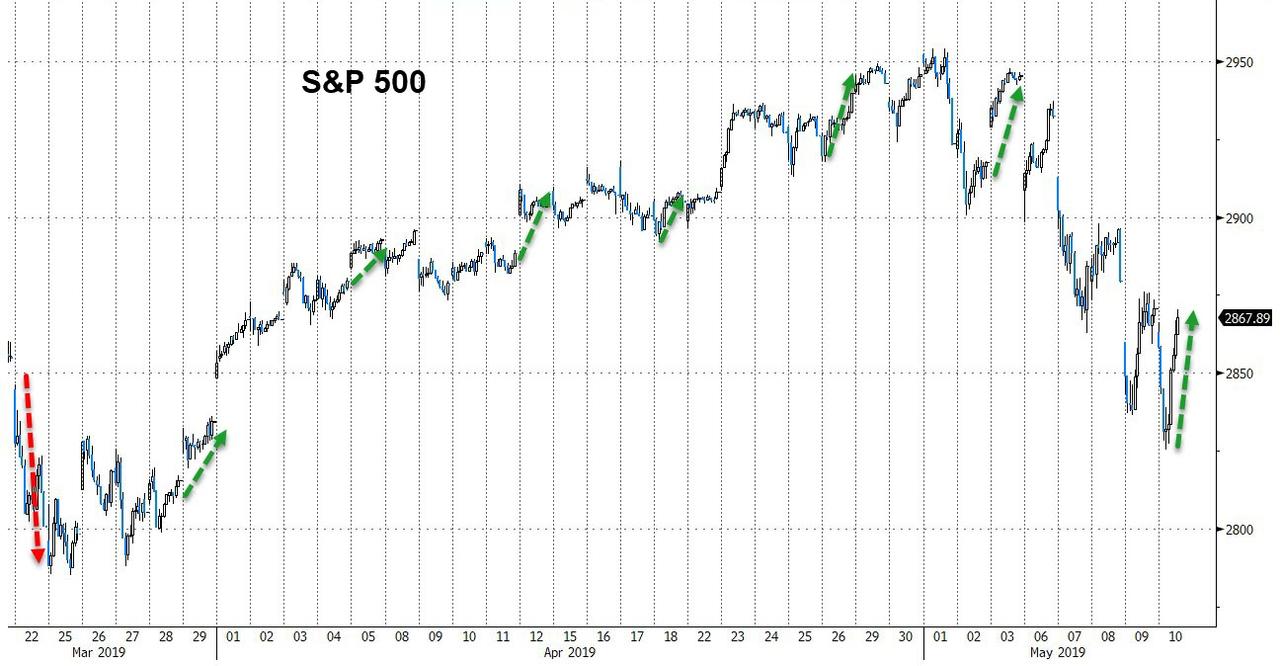
panic lifted stocks out of trouble. Still for the week, the major indexes
ended down with the S&P giving back some 2.21%.
I am sure, we have not seen the end of this trade movie, which most likely will continue with full force next week. So far, the wild swings have not affected our positions, however, the International TTI (section 3) has moved closer to a potential ‘Sell’ signal, but we will have to wait and see if it materializes.
1. From the universe of over 1,800 ETFs, I have selected only those with a
trading volume of over $5 million per day (HV ETFs), so that liquidity and a
small bid/ask spread are assured.
2. Trend Tracking Indexes (TTIs)
Buy or Sell decisions for Domestic and International ETFs (section 1 and
2), are made based on the respective TTI and its position either above or below
its long-term M/A (Moving Average). A crossing of the trend line from below
accompanied by some staying power above constitutes a “Buy” signal. Conversely,
a clear break below the line constitutes a “Sell” signal. Additionally, I use a
7.5% trailing stop loss on all positions in these categories to control
downside risk.
3. All other investment arenas do not have a TTI and should be traded
based on the position of the individual
ETF relative to its own respective trend line (%M/A). That’s why those signals
are referred to as a “Selective Buy.” In other words, if an ETF crosses its own
trendline to the upside, a “Buy” signal is generated. Since these areas tend to
be more volatile, I recommend a wider trailing sell stop of 7.5% -10% depending
on your risk tolerance.
If you are unfamiliar with some of the terminology, please see Glossary of Termsand new subscriber information in section 9.
1. DOMESTIC EQUITY ETFs: BUY — since 02/13/2019
Click on chart to enlarge
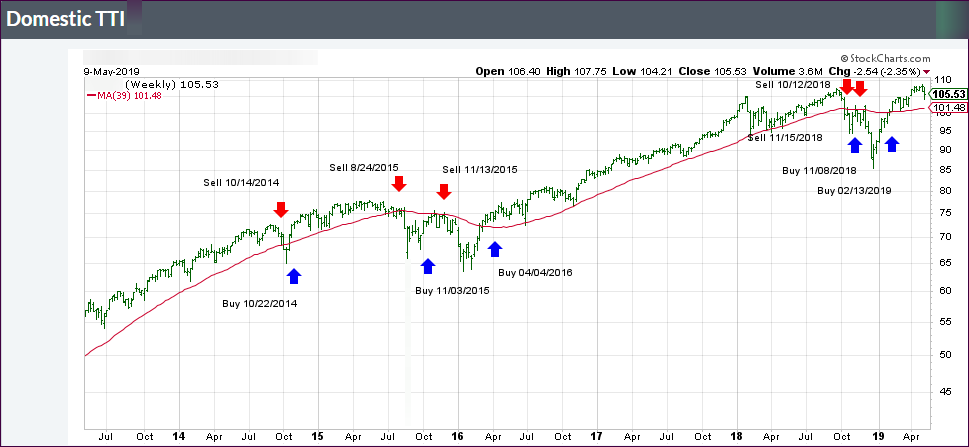
Our main directional indicator, the Domestic Trend Tracking Index (TTI-green line in the above chart) is now positioned above its long-term trend line (red) by +4.05% after having generated a new Domestic “Buy” signal effective 2/13/19 as posted.
Another
jaw dropping opening had the Dow down some 400 points early in the day, as
anxiety increased over the deepening trade dispute with China, which continued to
squash any bullish sentiment not just here in the U.S. but globally as well.
Wall
Street traders tend to operate by the well-known adage “by the rumor, sell the
fact,” but all week it has been almost impossible to figure out what is the
rumor and what is the fact in the ever worsening U.S.-China trade tug-of-war.
Today
was no exception, but to stop the markets from accelerating their plunge, Trump
came out mid-day and jawboned that “a
trade deal this week is still possible, but he has an ‘excellent alternative’ to
the China deal.”
That
pulled the markets out of their doldrums and got the rescue rebound started, causing
ZeroHedge to tweet Trump’s new strategy (tongue-in-cheek, of course):
White House new
trading strategy: deny trade deal is dead during US hours sending US stocks
higher, confirm no deal ahead of China open crashing Shanghai Composite.
Not
helping the mood of the warring trade parties was news that the FCC had barred China
Mobile from providing telecom services in the U.S. market—over espionage
concerns.
In
the end, the major indexes cut down their early losses substantially, but I must
wonder if this is just a temporary halt on the way towards a new visit in bear
market territory.
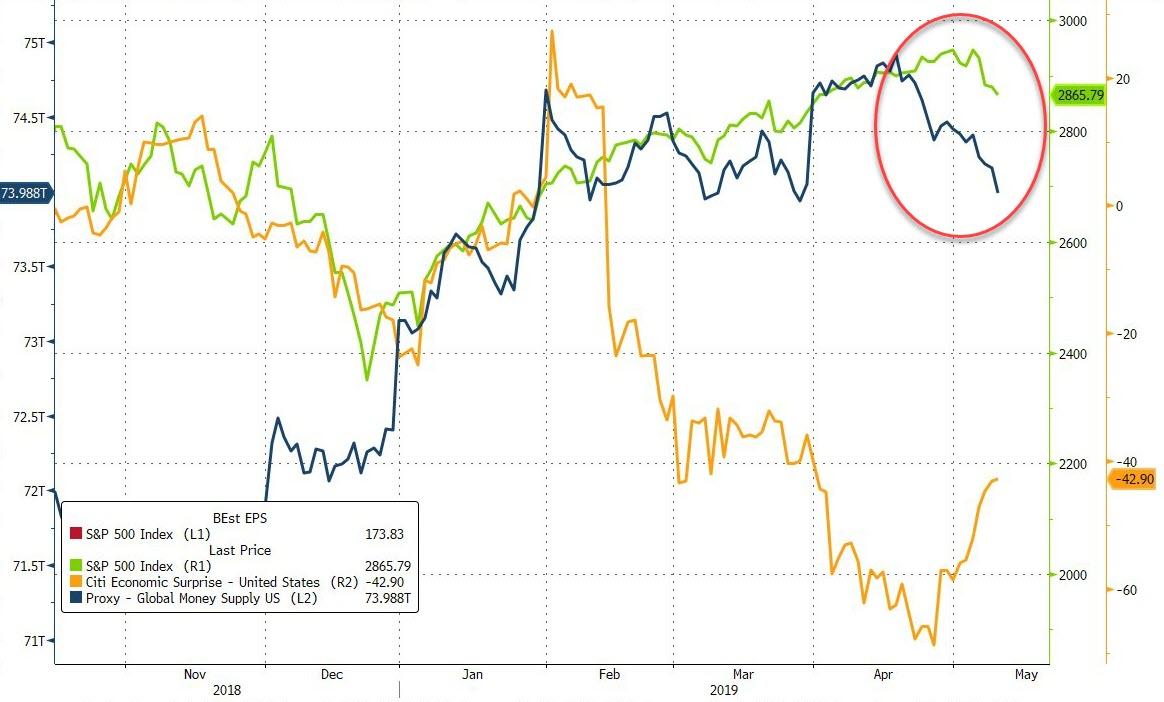
I
have on several occasions posted this
chart showing the effect global money supply (blue line) has had on the
direction of equities (S&P 500 green line).
In today’s update, the money supply has clearly rolled over begging the question “will the S&P 500 follow?”