[Chart courtesy of MarketWatch.com]
- Moving the markets
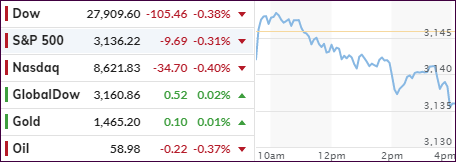
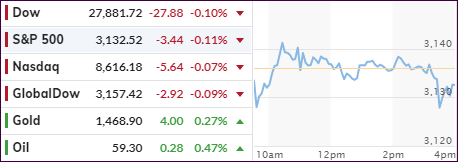
Bobbing and weaving best describes today’s session with the major indexes being stuck in a sideways pattern after rebounding from an early dip.
The latest news from the US-China trade debacle points to some progress in that trade negotiators are “laying the groundwork for a delay” of the new 15% import tariffs scheduled to be implemented this coming Sunday.
Meanwhile, the Fed started its 2-day policy meeting with the results being announced tomorrow. Expectations are that interest rates will be held steady. Of concern is Fed chief Powell’s intention of forging consensus towards a “broader revamp of the Fed rate-setting strategy.”
Translated, that means he is favor of letting inflation run above its annual 2% target. To my way of thinking, how can that end well? It’s not that the Fed has a magic wand to rein in inflation, should it suddenly burst out of control. Apparently, historic precedents as to the potentially devastating effects of inflation, such as we’ve seen during the Weimar Republic, are simply ignored.
Adding to this issue is the fact that we are living in a deficit-based spending environment where debt and deficits are soaring relentlessly higher. While these problems have been largely ignored, and are never addressed on any political platform, they represent a piper that eventually will need to get paid.
In the meantime, the markets went nowhere today with the major indexes hugging their respective unchanged lines and slipping slightly in the red.
In the underlying overnight lending market (repos), the troubles continue with liquidity being conspicuously absent. We’ll have to wait and see, if there will be a fallout by the end of this year that could affect equities.
Read More