ETF Tracker Newsletter For June 28, 2019

Ulli ETF Tracker Contact

ETF Tracker StatSheet          

You can view the latest version here.

EDGING HIGHER ON HOPE FOR U.S.-CHINA TRADE PROGRESS
[Chart courtesy of MarketWatch.com]
  1. Moving the markets

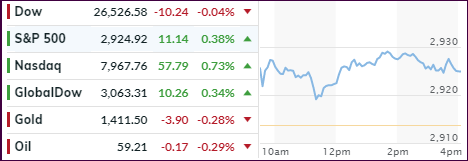
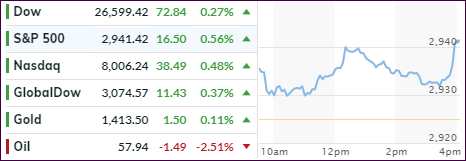
While the major indexes traded above their respective unchanged lines throughout the session, a late push higher appeared to put an exclamation mark at the end of the day, as if to imply that the U.S.-China talks better result in a positive outcome.

Still, the gains were modest, as traders are anxiously awaiting tomorrow’s meeting between Trump and Xi in Japan as part of the G-20 powwow. With threats and conditions having been thrown back and forth, I don’t see much headway being made. After all, for Trump to declare that he made the best trade deal ever, the Chinese would have to admit defeat, and that is not going to happen.

In the end, the month of June proved to be the “comeback” month of the year with the S&P 500 gaining some +6.87%, its best performance since 1955. While that sounds great on the surface, let’s not forget that the index lost -6.59% in May. In other words, we’re about back to where we were on April 30th, namely 2,946 vs. today’s close of 2,941.

Looking at a bigger time frame, like the past 17 months, we see in the following chart that the S&P 500 peaked at 2,873 in February 2018 and closed today at 2,941. That is a jaw dropping return of +2.37%:

Read More
Weekly StatSheet For The ETF Tracker Newsletter – Updated Through 06/27/2019

Ulli Uncategorized Contact

ETF Data updated through Thursday, June 27, 2019

Methodology/Use of this StatSheet:

1. From the universe of over 1,800 ETFs, I have selected only those with a trading volume of over $5 million per day (HV ETFs), so that liquidity and a small bid/ask spread are assured.

2. Trend Tracking Indexes (TTIs)

Buy or Sell decisions for Domestic and International ETFs (section 1 and 2), are made based on the respective TTI and its position either above or below its long-term M/A (Moving Average). A crossing of the trend line from below accompanied by some staying power above constitutes a “Buy” signal. Conversely, a clear break below the line constitutes a “Sell” signal. Additionally, I use a 7.5% trailing stop loss on all positions in these categories to control downside risk.

3. All other investment arenas do not have a TTI and should be traded based on  the position of the individual ETF relative to its own respective trend line (%M/A). That’s why those signals are referred to as a “Selective Buy.” In other words, if an ETF crosses its own trendline to the upside, a “Buy” signal is generated. Since these areas tend to be more volatile, I recommend a wider trailing sell stop of 7.5% -10% depending on your risk tolerance.

If you are unfamiliar with some of the terminology, please see Glossary of Terms and new subscriber information in section 9.     

1. DOMESTIC EQUITY ETFs: BUY — since 02/13/2019

Click on chart to enlarge

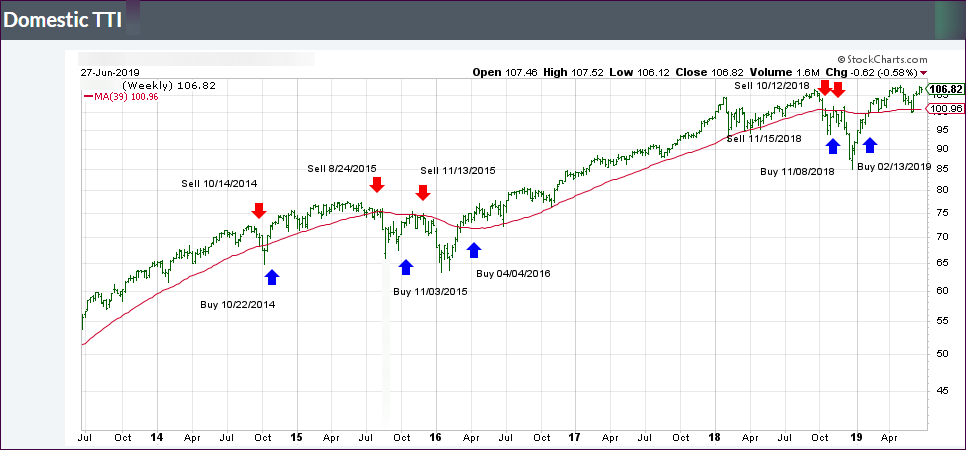
Our main directional indicator, the Domestic Trend Tracking Index (TTI-green line in the above chart) is now positioned above its long-term trend line (red) by +5.37% after having generated a new Domestic “Buy” signal effective 2/13/19 as posted.

Read More

Bad News Keep Markets Elevated—Hope Prevails Of A 0.5% July Rate Cut

Ulli Market Commentary Contact

[Chart courtesy of MarketWatch.com]
  1. Moving the markets

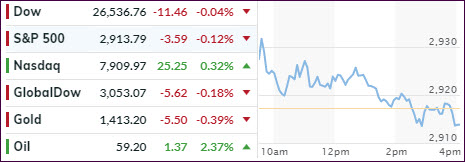
Boeing put a dent into the Dow’s performance today, which lagged as a result of news that the 737 MAX airplane has a “glitch” that could send it into an “uncontrollable” nosedive. That sent the shares tumbling early on, but they ended up stabilizing and finishing with a minor loss of some -2.5%.

The other two major indexes managed to close in the green with the S&P 500 finally rising after four days of declines. Still, the index is on track to have its best month since January, after the rout in May during which it tanked -6.6%.

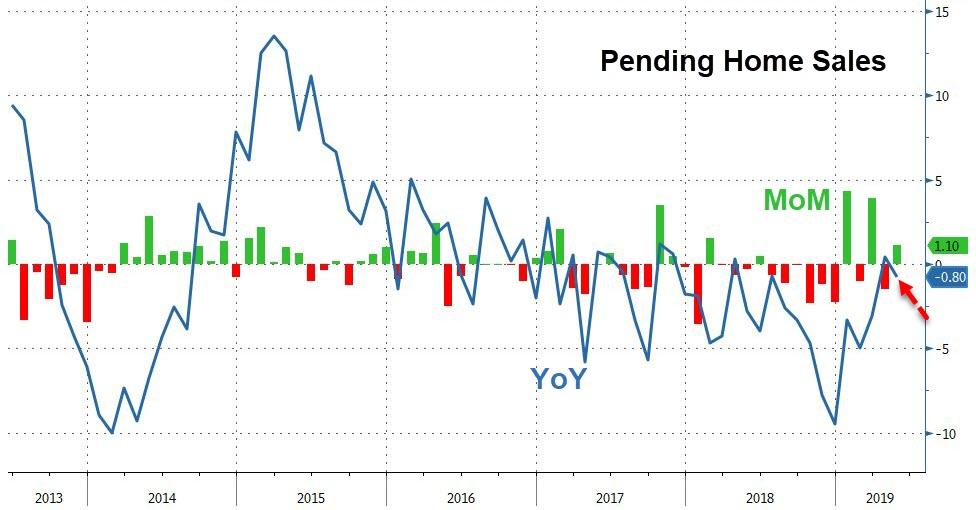
Throughout the session, the Nasdaq and S&P managed to hold steady, despite more shaky economic news. We learned that Pending Home Sales on a YoY basis contracted by -0.8% despite lower mortgage rates, but they surprised to the upside in May (+1.1%).

In the automobile sector, the ‘carmageddon’ continues with Ford announcing some 12,000 layoffs at various manufacturing plants in Europe. This is part of a massive cost cutting plan that would also shutter 6 of its 24 facilities by the end of 2000.  

Here in the US, traders are nervously awaiting the outcome of the G-20 meeting, mainly regarding a possible trade deal with China, as the jawboning between the warring parties has shifted into high gear.

It’s a different day, but the same old threats of pre-conditions and additional tariffs. We’ll find out initial market reaction on Sunday night, when the futures markets open.

Read More

China Trade Deal Optimism Turns Into A False Alarm

Ulli Market Commentary Contact

[Chart courtesy of MarketWatch.com]

1. Moving the markets

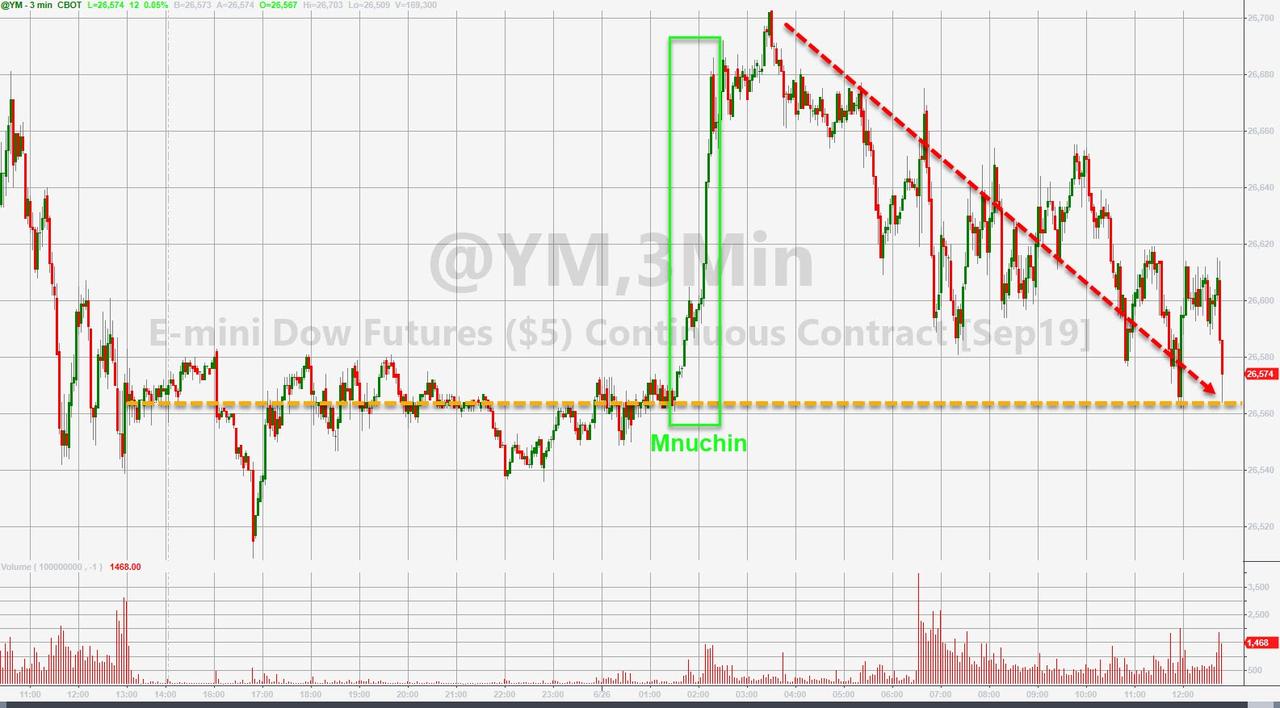
I had to laugh this morning, when I saw the early market spike explained as having been a grammatical error. According to an early CNBC headline saying that Treasury Secretary Mnuchin said a trade deal “IS” 90% complete, and repeated by Bloomberg, pushed the computer algos into buying mode.

As it turned out, CNBC made an error, because instead of saying “is,” Mnuchin was actually using the past tense and said that we “were” about 90% on the way to a China trade deal. Ouch! Therefore, the early buying spree turned into a false alarm with the algos back peddling and the market slipping and sliding into the close.

In the end, not much was gained, expect the Nasdaq closed in the green, thanks to a 14% pop in Micron stock.

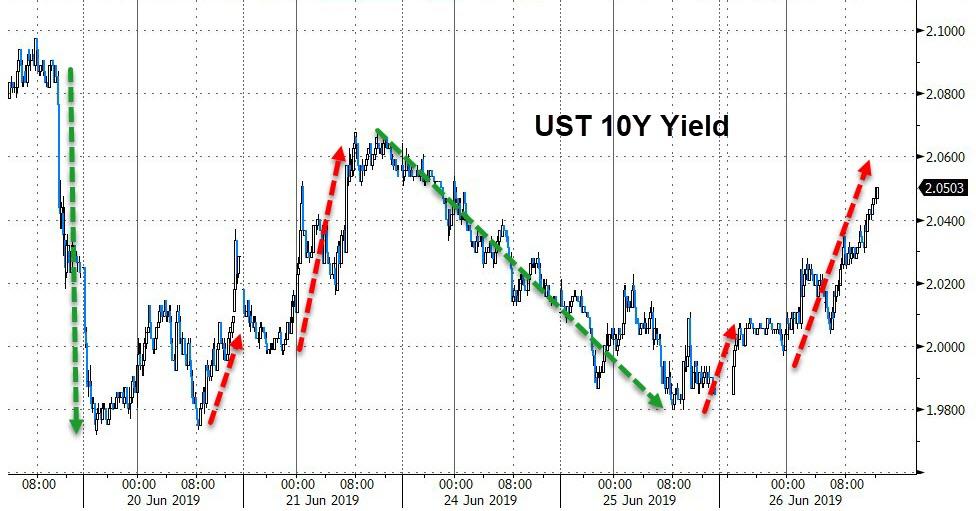
Not helping matters was a sudden jump in bond yields with the 10-year gaining 6 basis points to close back above the 2% level. As a result, the low volatility ETF SPLV, which we own, had a down day, but it remains ahead of SPY for this domestic ‘Buy’ cycle.

With the widely anticipated G-20 meeting on deck for this weekend, I expect market direction to be predominantly sideways for the next couple of days. For sure, we’re bound to see more clarity this coming Monday.

Read More

Skidding Lower As Fed Disappoints

Ulli Market Commentary Contact

[Chart courtesy of MarketWatch.com]

1. Moving the markets

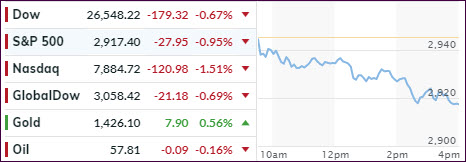
While equity markets can’t get enough dovishness from the Fed, to keep the rally going, today we saw some disappointment kick in, as traders translated the Fed’s comments as too hawkish.

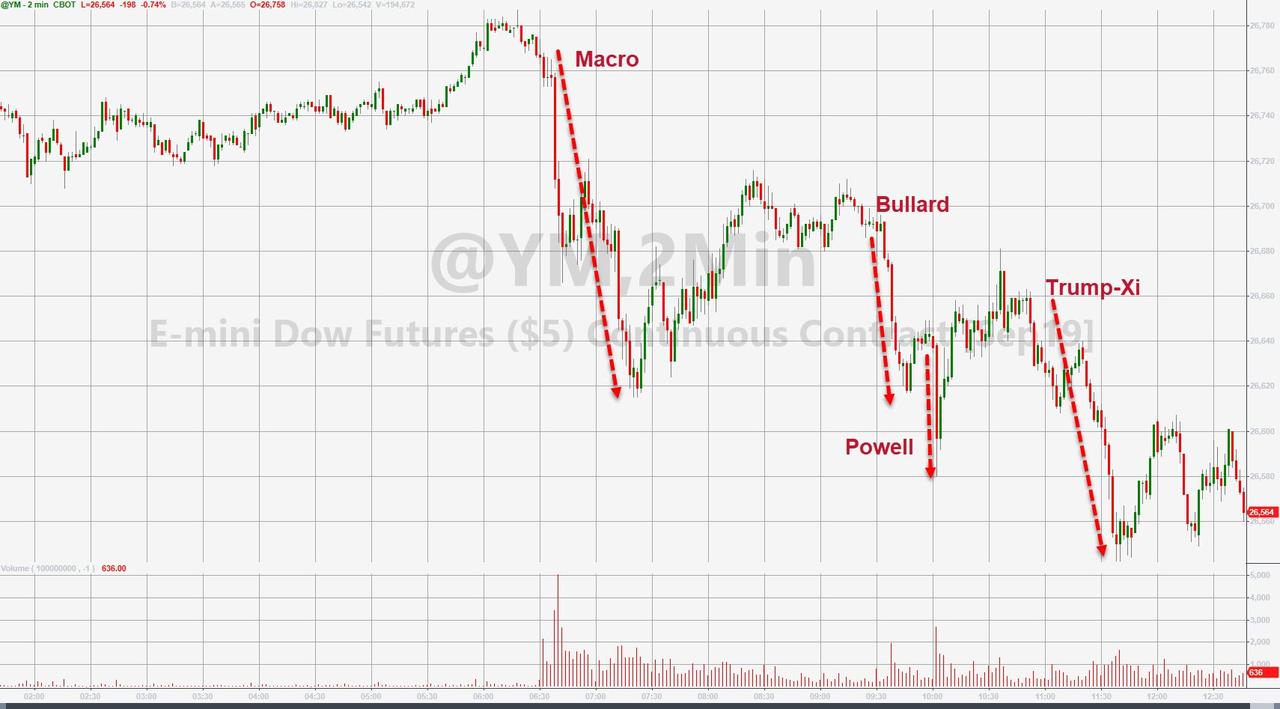
Fed chief Powell offered a “wait-and-see” posture on interest rates, which means that they prefer to continue monitoring the economy for signs of weakness, in order to avoid a knee-jerk reaction in terms of cutting interest rates. He also added that he won’t bow to political pressure.

If that wasn’t a rally killer, the St. Louis Fed head Bullard chimed in by opining that he is not in favor of a ½ point rate cut in July. Ouch! That hurt, because expectations had been 40% and subsequently collapsed to 16% before moving back up to 26%.

And the hits kept coming:

  1. Reuters reported that no broad trade deal was expected at the upcoming meeting and that talks could take months, years to complete.
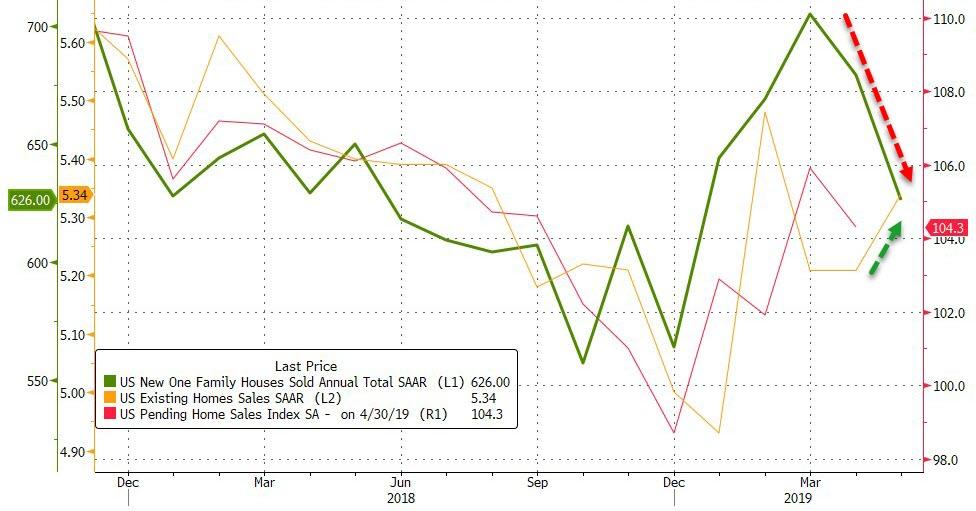
  2. Consumer Confidence dropped to 2-year lows, New Home Sales crashed -7.8% in May to the weakest since 2018, which was a surprise as expectations saw a 1.6% MoM rise.
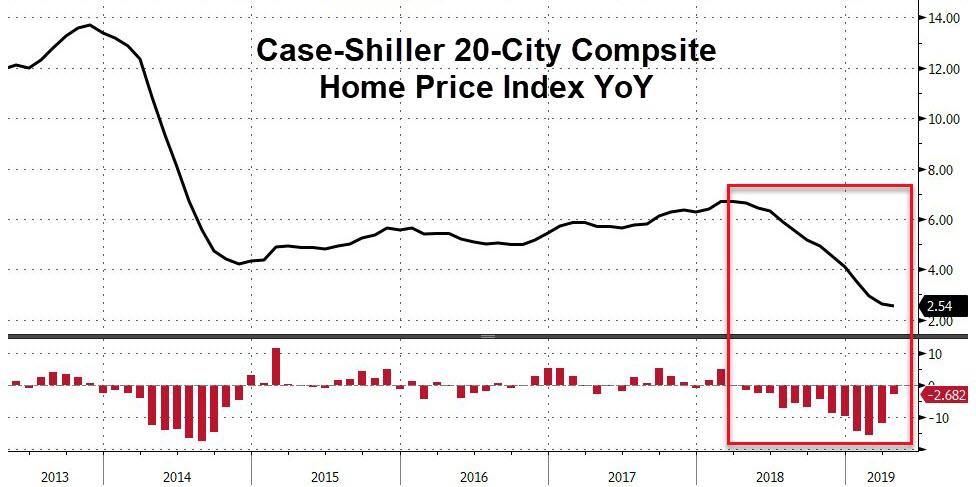
  3. The Case-Shiller Home Price Appreciation index showed a slowdown for the 13th straight month.

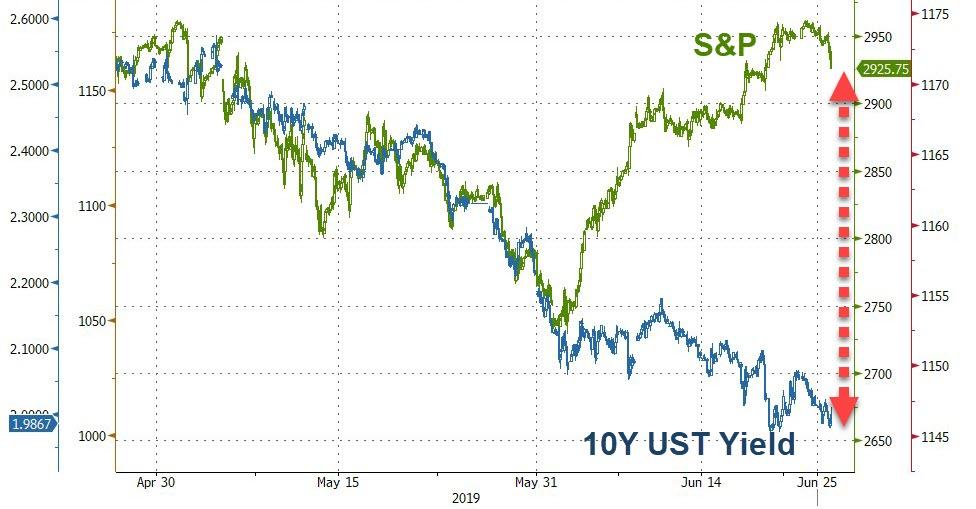
So, it was no surprise for the 10-year bond yield to tumble below the 2% level, and it closed slightly below it confirming that an economic slowdown has arrived or is in the making.

What was a surprise to me was the fact that the equity markets did not drop more than they did given that there was no positive news?

With the 0.5% expected July interest rate drop endangered at this time, ZH posted the question “if the Fed does not pay up and give in to the market’s demands, will the jaws of death snap shut?”

Read More

Losing Some Altitude

Ulli Market Commentary Contact

[Chart courtesy of MarketWatch.com]

1. Moving the markets

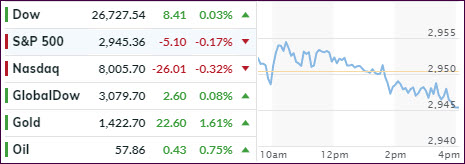
As was to be expected, the major indexes wandered aimlessly slightly above and below their respective unchanged lines with only the Dow being able to eke out a green close.

With no news from the Fed expected, and the G-20 meeting on deck next weekend in Japan, we may seem some more bobbing and weaving and a lackluster view until a new driver appears and drives equities higher.

Trump and his Chinese counterpart Xi are set to meet on Friday and Saturday with traders worldwide looking for signs of a truce, as global markets are struggling with lack of growth prospects. These already have impacted various economies negatively, even those that are considered economic export powerhouses like Germany. Their forecasted GDP is down to an anemic 0.6%.

Even worldwide negative bond yields have not done much to stem the southerly tide in economic activity, while here in the US, the White House is trying to push the Fed to implement lower rates.

Why? The state of the current economy is so poor, that only continued stimulus will be able to keep things moving and assist in keeping equities at elevated levels. We saw what happened in 2018 when stimulus was dropped, and the markets crashed.

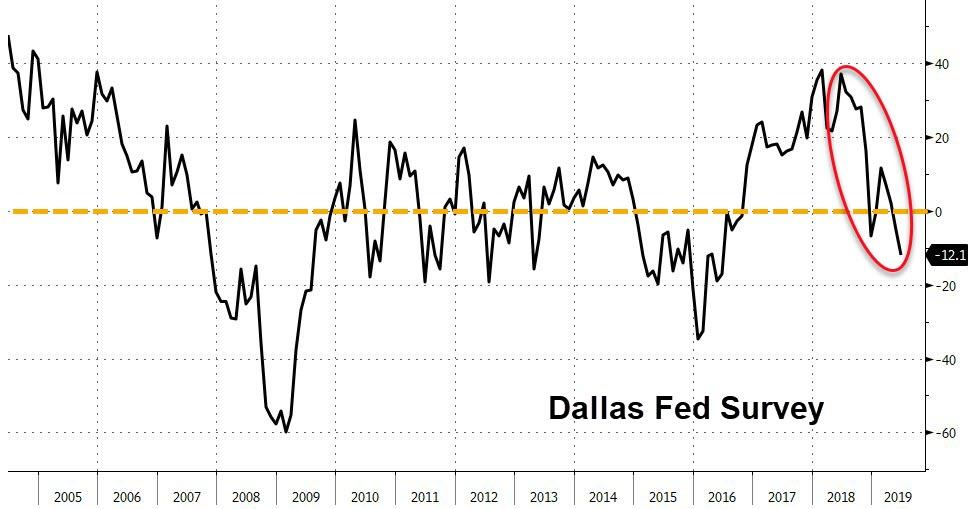
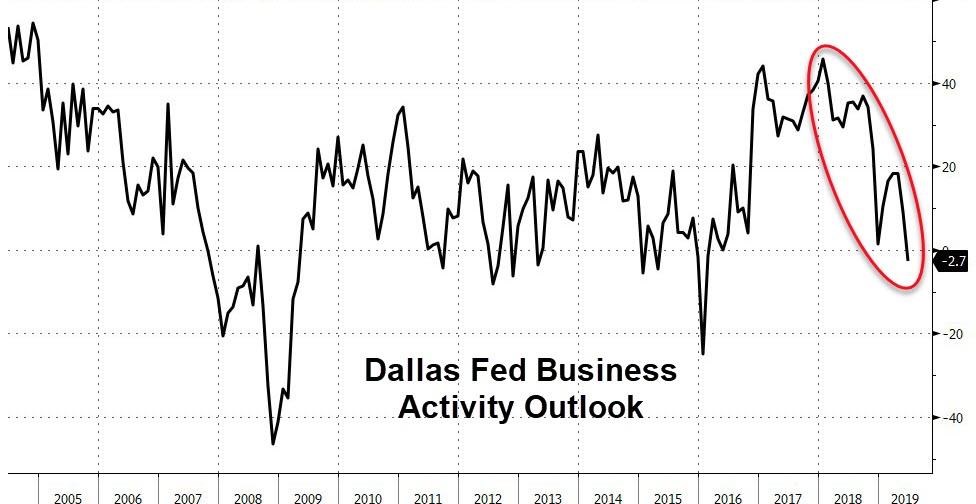
My view is confirmed by the latest data showing that the Dallas Fed Manufacturing survey collapsed from -5.3 to -12.1, while the Activity Outlook, aka ‘hope,’ has plunged into negative numbers.

In other words, things are continuing to slow down, which makes me wonder what the justification for these elevated stock prices is. But, as I said before ‘bonds’ represent the smart money, and their crashing yields are indicative of what’s coming. Equities have simply not priced in any bad news on earnings and the economy.  

Read More