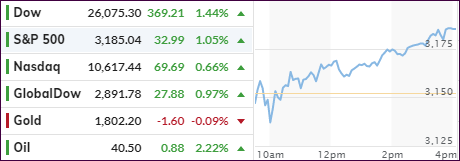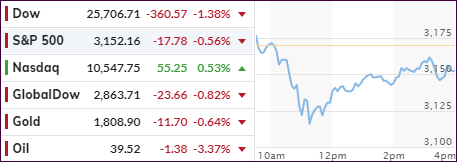
[Chart courtesy of MarketWatch.com]
- Moving the markets
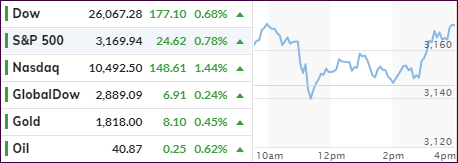
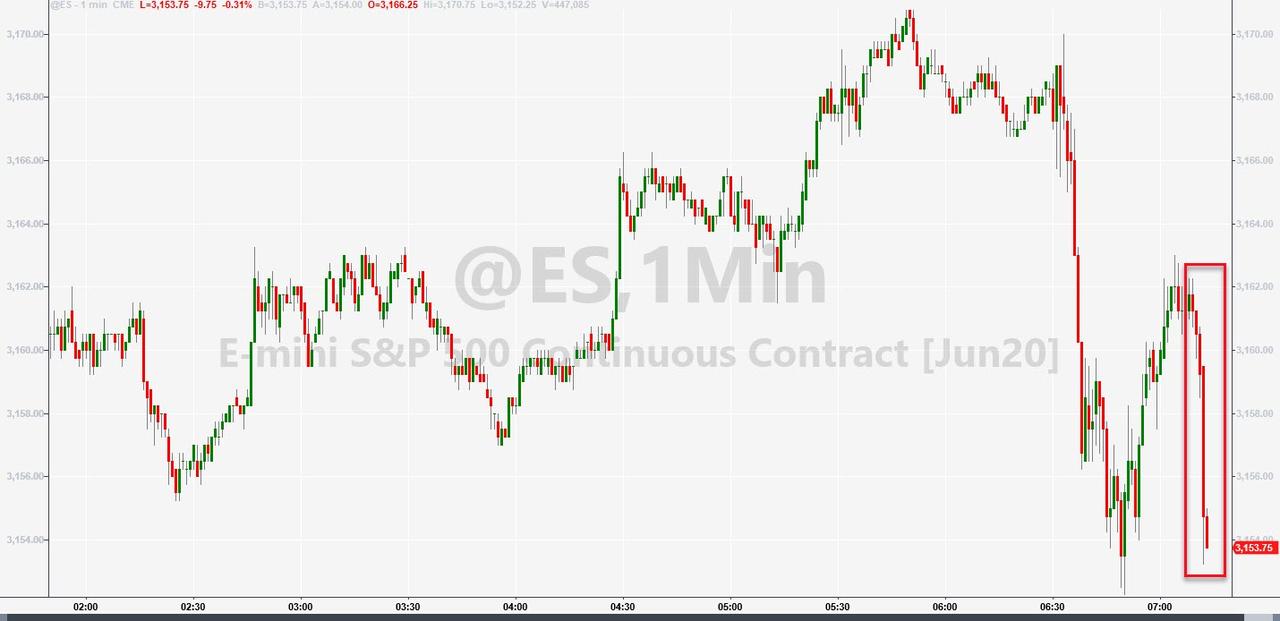
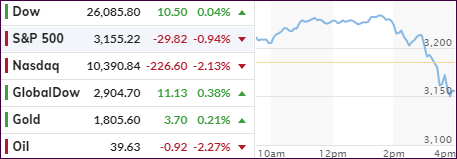
The bullish train kept on moving throughout the early part of the session, when suddenly the wheels came off, and the major indexes engaged in a swan dive, which was led in magnitude by none other than the Nasdaq.
Of course, the tech sector has been on a relentless ramp since the March lows by outperforming all other indexes. Hence, it is not surprising that it would lead on the way down as well.
The Dow held up the best by closing at its unchanged line, with the S&P surrendering -0.94% and Nasdaq being hit the hardest with -2.13%.
The initial sharp rally was fed by news from the FDA agreeing to grant “fast track” status to a couple of vaccines produced by Pfizer and a German biotech firm, which caused to the Nasdaq scoring another intraday high before hitting the skids.
Contributing to the sudden demise in sentiment was CA gov Newsom’s announcement to roll back the re-opening status to phase 1, which means closure of bars, gyms, indoor dining, movies, wineries, zoos, museums, etc.
In other words, we are going backwards, and those business barely in recovery and survival mode will have to deal with these consequences again. I am afraid, many will not survive this time.
On the other hand, the higher the number of Covid cases, and the more layoffs, the more bullish it is for stocks, commented Rabobank’s Michael Every:
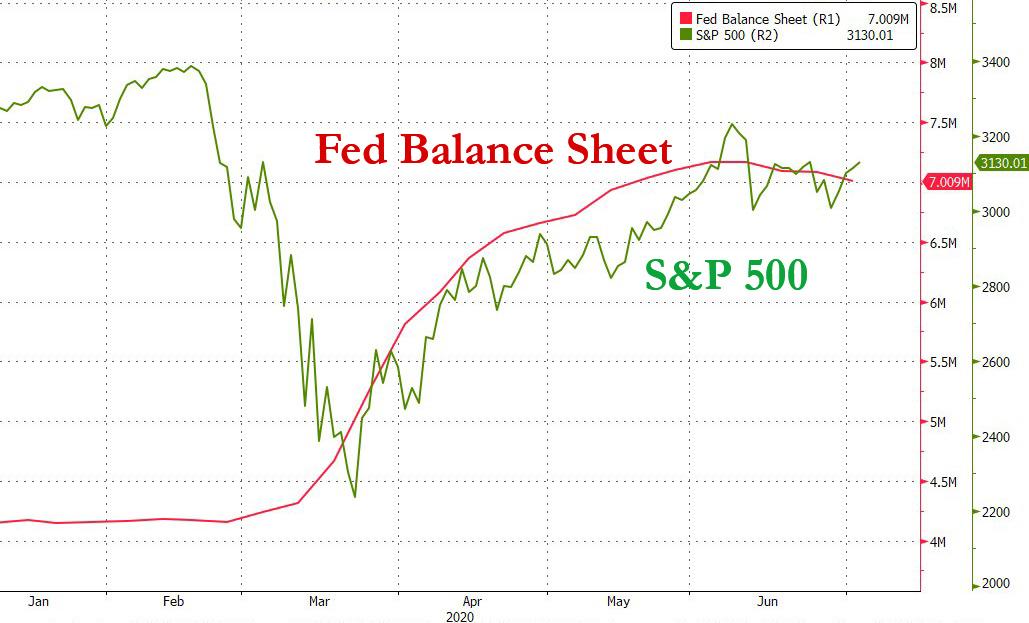
… for the stock market to move substantially from this point on – since the market is now fully disconnected from fundamentals and is simply a derivative of endogenous liquidity and fund flow – Powell will need to find another justification to expand the Fed’s QE aggressively, as discussed in “JPMorgan Spots A Big Problem For Stocks.” Something like – for example – a second wave of the coronavirus pandemic.
Added ZH:
Michael is right, of course, however now that central banks basically have full control over capital markets, his job “to understand what the market is doing” basically boils down to just one thing – as Goldman explained, all investors care about first thing in the morning is whether to fight or follow the Fed. The rest no longer matters.
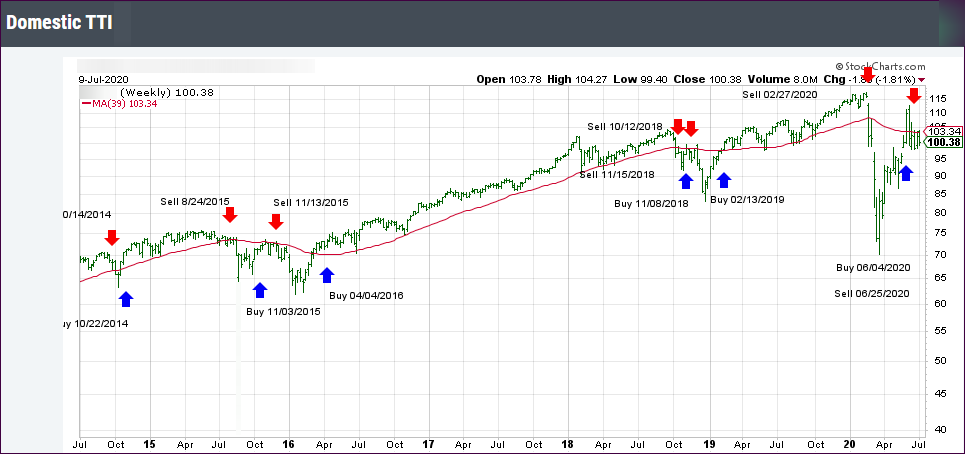
Such is the world we are living in and trying to guess what the markets will be doing is an exercise in futility. That is why we let long-term market direction determine our decision-making process, which includes heading for the sidelines, once our indicators flash the signal.
Read More