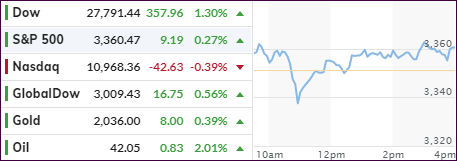
[Chart courtesy of MarketWatch.com]
- Moving the markets
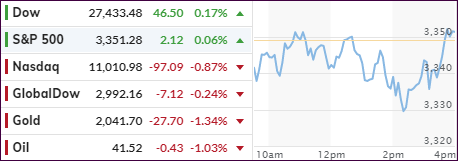
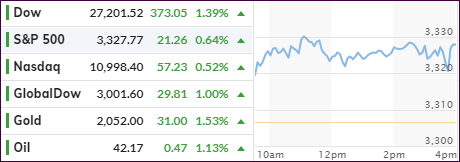
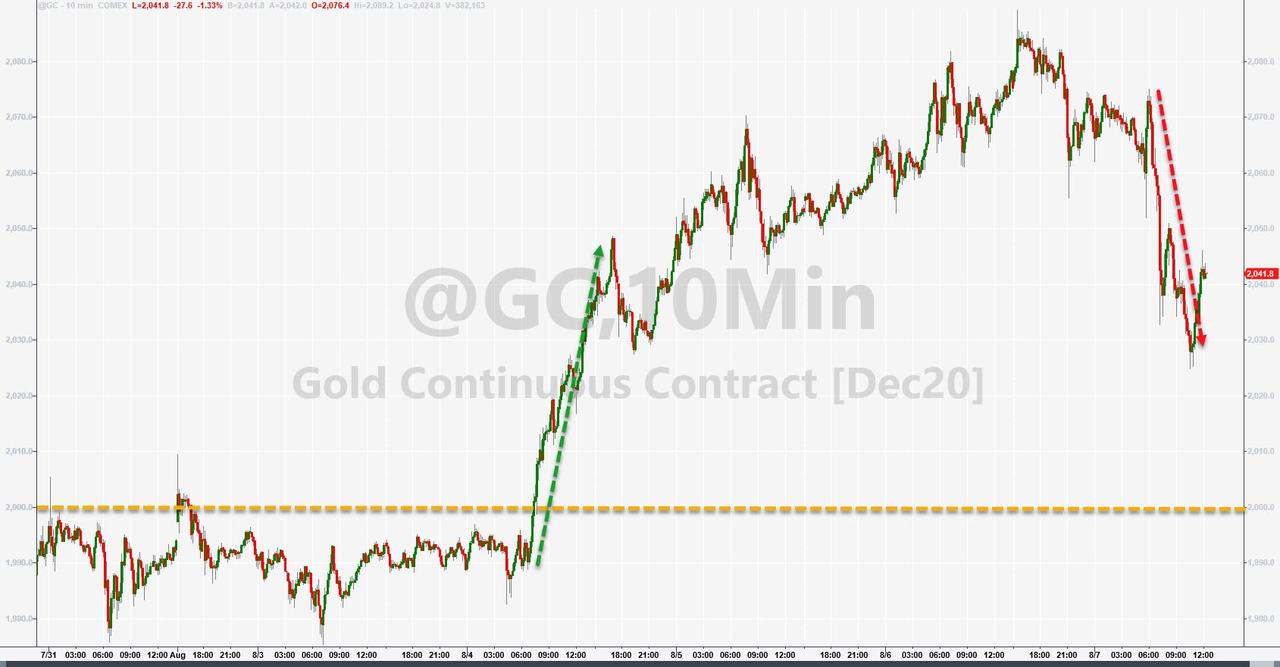
It was another sloppy and choppy session with the Dow being the leader, while the Nasdaq was unable to climb out of an early hole, but it trimmed some of its initial losses. The S&P struggled all day but closed in the green, while gold came off its early highs but hung on to some modest gains.
Commented MarketWatch:
Investors monitored signs that a long-awaited rotation on Wall Street into more economically sensitive cyclical stocks could be brewing, but at the expense of their highflying counterparts.
However, more attention was given to Trump’s signing of executive orders extending some of the coronavirus relief benefits. Maybe that will push the warring parties back to the negotiating table for a reasonable solution to the current crisis, while abandoning irrelevant pork that has nothing to do with the Covid-19 disaster.
While the torrid advances of gold and silver have slowed a bit during the past couple of trading days, the bull run is far from being over.
Analyst Graham Summers noted in his latest mailing:
The reality is that the only way the Fed could stop gold’s rise would be to begin tightening monetary policy via interest rate hikes and reducing its Quantitative Easing (QE) program.
The Fed cannot do this without triggering a market crash. As I’ve noted on these pages before, the ONLY thing that stopped the March meltdown was the Fed going nuclear with monetary easing, providing over $3 trillion in liquidity.
Indeed, today the Fed continues to spend over $125 BILLION per month in QE a full three months AFTER the crisis. And the Fed has stated it will continue to do this until there is a full recovery (the Fed believes this will come at the end of 2021).
Put another way, the Fed is trapped. It can either tighten monetary policy and crash the markets, or it can let inflation run wild and gold will go parabolic.
In the meantime, the saber rattling continued between the US and China with new sanctions against politicians and organizations being considered. Then we learned that Chinese jet fighters crossed the midline of the Taiwan Strait, just as a senior US official was visiting the island.
All these developments increase uncertainties, which to me means gold should be an important component in anyone’s portfolio.
Read More