Digging A Hole And Staying In It

Ulli Market Commentary Contact

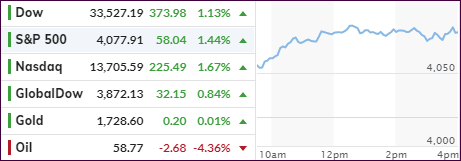
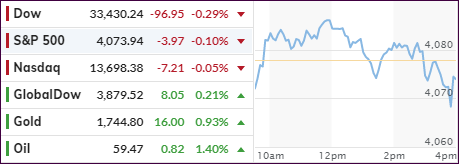
[Chart courtesy of MarketWatch.com]

  1. Moving the markets

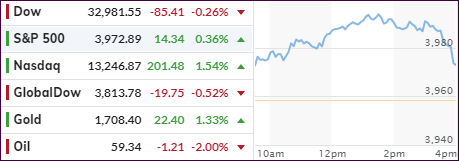
The markets dug themselves an early hole and never managed to climb out of it, despite several attempts. But, in the end downside momentum accelerated, and we closed at the lows for the day.

The futures again pointed to weakness with Germany and France set to impose new lockdowns in addition to the restrictions that tens of millions in the U.K., Italy and Spain are already experiencing. Infections are rising not only in Europe but globally thereby stoking fears that the lockdown revivals will kill off the recent nascent economic recovery.

U.S. coronavirus cases have risen by a record daily average of 71,832 over the past week, data compiled by Johns Hopkins University showed. Meanwhile, coronavirus-related hospitalizations are up 5% or more in three dozen states, according to data from the Covid Tracking Project. Cases are also rising sharply across Europe.

In the meantime, earnings season continues, which, in general is coming in better than expected but, disappointingly, a lot of companies are not providing future guidance, which impacts confidence in their ability to deliver acceptable numbers next quarter.

During this session we saw the Volatility Index (VIX) spike to 40 for the first time since June, as ZH reported. Keep in mind that the big boys on Wall Street are highly leveraged, which caused a liquidity crisis today, as everything that was not nailed down was sold to cover margin calls.

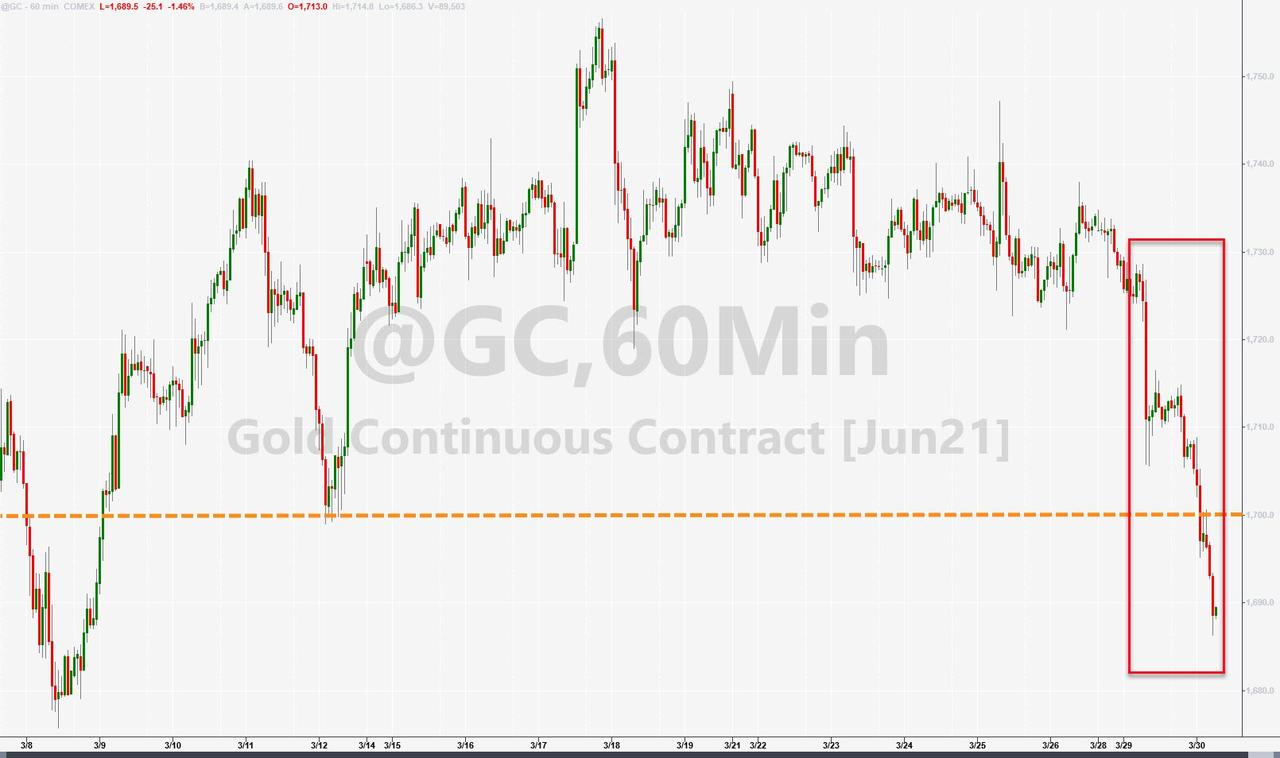
That included gold which, however, fared far better than equities, but the precious metal was also hurt by rising bond yields and a spiking US dollar.

Even the 60/40 stock/bond allocation fans saw their model not reacting as it should during sell offs, meaning that, as stocks got hammered, bond yields should have dropped but didn’t, thereby causing additional losses rather than gains, as Bloomberg’s chart shows.

Our Trend Tracking Indexes (TTIs, section 3) headed south as well yet remain in bullish territory, “but for how long?” remains the question.

If the below updated analog to 1987 continues to hold up, we may have the answer soon:

Read More

Bouncing Like A Pinball

Ulli Market Commentary Contact

[Chart courtesy of MarketWatch.com]

  1. Moving the markets

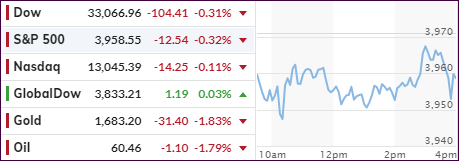
One look at the S&P 500 chart above shows the lack of direction and the aimless meandering that underscored today’s session with 2 of the 3 major indexes closing in the red by a small margin.

If I am repeating myself, it’s only because the same issues are plaguing the markets, rising coronavirus cases and the lack of any stimulus agreement, although the latter has temporarily moved out of the spotlight in favor of speculation as to how the different election outcomes would affect the direction of equities.

There are as many opinions as there are blogs to host them, but my preference is generally the sound reasoning by analyst and money manager Peter Schiff, who opined as follows:

“And of course, if all of the people who are staying at home and shopping never go back to work and never actually have a job, and the only money they have to spend is the money the Fed creates out of thin air, eventually the dollar is going to collapse and their real purchasing power is going to go down along with it. And a lot of these stocks are going to crash because they’re not going to have any real revenue because their customers are going to be broke and they’re not going to be able to sell these higher-cost products because inflation will drive up the cost of producing all these products that their consumers really can’t afford to buy.”

Which was followed by this bon mot:

The fact that we weren’t prepared at all, that’s the problem no one wants to talk about. Why is it that Americans are loaded up with debt and living paycheck to paycheck? Why is the same thing true for so many businesses? Why are the credit losses now going to be horrific? … Because the Federal Reserve kept interest rates so low for so long that people and companies were able to borrow far more money than they ever would have been able to borrow during a normal lending environment. So, it’s because of the Federal Reserve that the society, the country, is so levered up. That’s why we’re so vulnerable. That’s why everybody needs so much help. Because the government crippled everybody with its monetary policies, and also the fiscal policies, and so now, of course, we can’t walk, so we need more government crutches so we can limp around without realizing that all that is doing is exacerbating the problems that already exist. I mean, we’ve got to fess up to reality and stop trying to sober up by drinking more alcohol. But it is a very sobering understanding to have to do that – for reality to be dealt with and stop pretending there’s a government cure for what ails us.

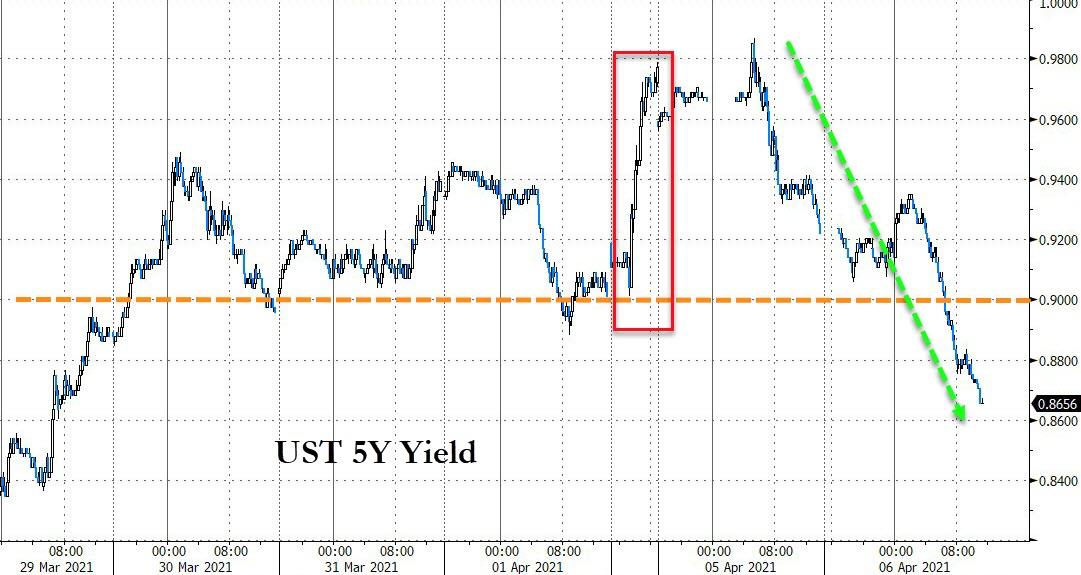
In the end, FANG stocks recovered from yesterday’s drubbing, bond yields tumbled again, the dollar slid, and gold managed to rally with the $1,900 level providing support.

I expect this aimless trading to continue for the rest of the week, possibly with a negative bias, as uncertainty will remain with us until after the elections—or even way thereafter.

Read More

Volatility Pops—Market Drops

Ulli Market Commentary Contact

[Chart courtesy of MarketWatch.com]

  1. Moving the markets

The futures markets already indicated equity weakness, which was confirmed after the opening bell rang. Stocks opened in the red and dove for most of the session until some buyers stepped in and reduced the early losses.

The storyline was the same as we heard last week, except traders have now come accept the fact that, despite hope to the opposite, “a final agreement on a new round of fiscal spending remains elusive, reflecting the lingering risks thwarting the economic recovery,” as MarketWatch described it.

Not helping the sour mood were news that new Covid-19 infections are rising in the U.S., while Europe saw Spain and Italy imposing tighter restrictions on activity, which in the case of Italy caused violent protests.

Anxiety also reigned supreme in anticipation of a huge earnings week ahead with more than 1/3 of the S&P 500 companies reporting, including the tech behemoths Facebook, Amazon, Apple, Microsoft, and Google.

ZH pointed out that reality is starting to dawn on a more than a few market participants that “Blue Wave odds are fading” amid the exposure of Biden’s corruption.

All the above combined for the major indexes to break crucial technical support levels, namely their respective 50-day M/As, as the VIX spiked to levels not seen since September.

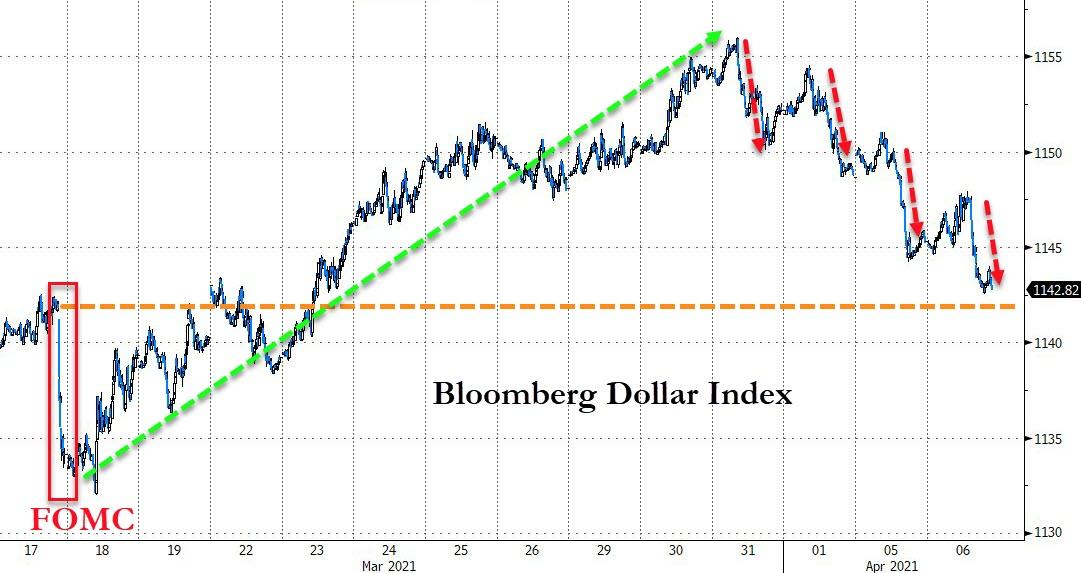
Despite the US dollar rallying, Gold held steady and closed at the unchanged line thereby justifying its value during times of turbulence.

I posted over the past few weeks that uncertainty, and with-it volatility, would rise, which is why we took some profits back then and reduced our equity exposure. These are times where it pays to be cautions rather than stubborn and overly aggressive.

Read More

ETFs On The Cutline – Updated Through 10/23/2020

Ulli ETFs on the Cutline Contact

Below, please find the latest High-Volume ETF Cutline report, which shows how far above or below their respective long-term trend lines (39-week SMA) my currently tracked ETFs are positioned.

This report covers the HV ETF Master List from Thursday’s StatSheet and includes 312 High Volume ETFs, defined as those with an average daily volume of more than $5 million, of which currently 265 (last week 264) are hovering in bullish territory. The yellow line separates those ETFs that are positioned above their trend line (%M/A) from those that have dropped below it.

Take a look:                                                                   

The HV ETF Master Cutline Report

In case you are not familiar with some of the terminology used in the reports, please read the Glossary of Terms. If you missed the original post about the Cutline approach, you can read it here.      

ETF Tracker Newsletter For October 23, 2020

Ulli ETF Tracker Contact

ETF Tracker StatSheet          

You can view the latest version here.

AIMLESS MEANDERING

[Chart courtesy of MarketWatch.com]

  1. Moving the markets

While the chart above shows a nice rebound for the S&P 500 off its mid-day lows, keep in mind that today’s activity happened within a very narrow trading range of less than 1%.

Traders were not willing to commit one way or the other and neither did the computer algos. This theme of going nowhere fast was present throughout the week with the end effect being a minor loss of some -0.5% for the index.

Of course, this lack of action was the result of the fallout from the no stimulus deal, despite both parties trying to keep the dream alive with entertaining quotes like “work hard,” “bill can be passed,” “back and forth” and “not budging one inch.”

“I think everyone is in wait-and-see mode,” said Mike Katz, partner at Seven Points Capital. “There’s a lot of back and forth on stimulus and every headline makes the market move a little bit, but there’s no follow-through because we don’t have a clear picture on that front.”

On the earnings side, Intel got hammered with its share price losing over 10% on mixed quarterly numbers. Overall, the tech sector fell over 2% on concerns that a Democratic sweep could lead to higher taxes and tougher regulations.

ZH summed up the week like this:

Stocks were down, bond (prices) were down, oil was down, the dollar was down, and economic data was down…

While the following is outside of my area of expertise, namely the Covid-19 pandemic, take a look at this chart and ask yourself “is the current panic really justified?

Read More

Weekly StatSheet For The ETF Tracker Newsletter – Updated Through 10/22/2020

Ulli ETF StatSheet Contact

ETF Data updated through Thursday, October 22, 2020

Methodology/Use of this StatSheet:

1. From the universe of over 1,800 ETFs, I have selected only those with a trading volume of over $5 million per day (HV ETFs), so that liquidity and a small bid/ask spread are assured.

2. Trend Tracking Indexes (TTIs)

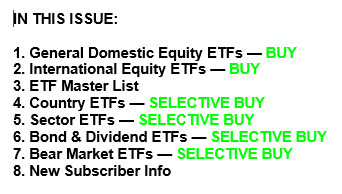
Buy or Sell decisions for Domestic and International ETFs (section 1 and 2), are made based on the respective TTI and its position either above or below its long-term M/A (Moving Average). A crossing of the trend line from below accompanied by some staying power above constitutes a “Buy” signal. Conversely, a clear break below the line constitutes a “Sell” signal. Additionally, I use a 7.5% trailing stop loss on all positions in these categories to control downside risk.

3. All other investment arenas do not have a TTI and should be traded based on  the position of the individual ETF relative to its own respective trend line (%M/A). That’s why those signals are referred to as a “Selective Buy.” In other words, if an ETF crosses its own trendline to the upside, a “Buy” signal is generated. Since these areas tend to be more volatile, I recommend a wider trailing sell stop of 7.5% -10% depending on your risk tolerance.

If you are unfamiliar with some of the terminology, please see Glossary of Terms and new subscriber information in section 9.     

1. DOMESTIC EQUITY ETFs: BUY — since 07/22/2020

Click on chart to enlarge

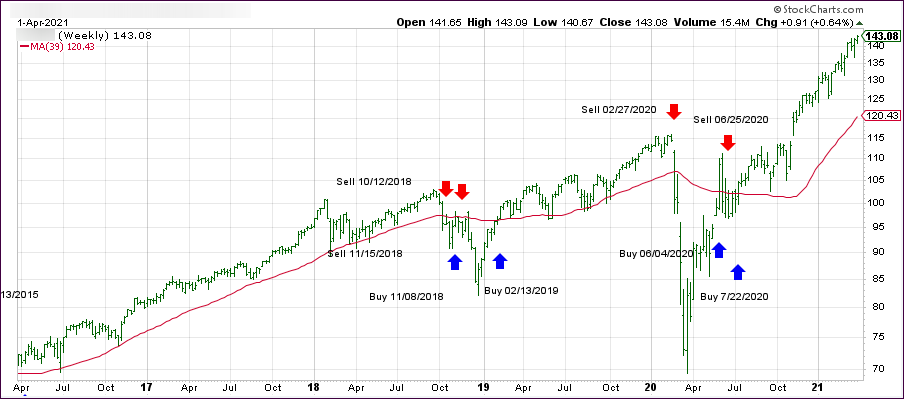
Our main directional indicator, the Domestic Trend Tracking Index (TTI-green line in the above chart) has now rallied above its long-term trend line (red) by +11.02% and remains in “BUY” mode as posted.

Read More