Banks Rally—Tech Cools Off

Ulli Market Commentary Contact

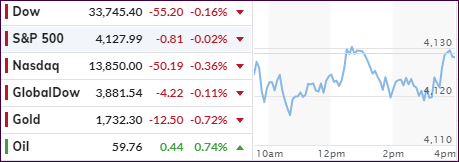
[Chart courtesy of MarketWatch.com]

  1. Moving the markets

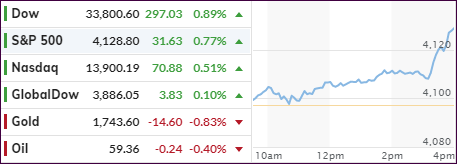
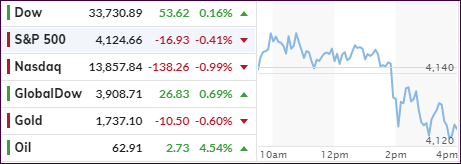
After an early pump, the major indexes lost momentum with the S&P 500 and Nasdaq ending up in the red, while the Dow managed to stay above its unchanged line.

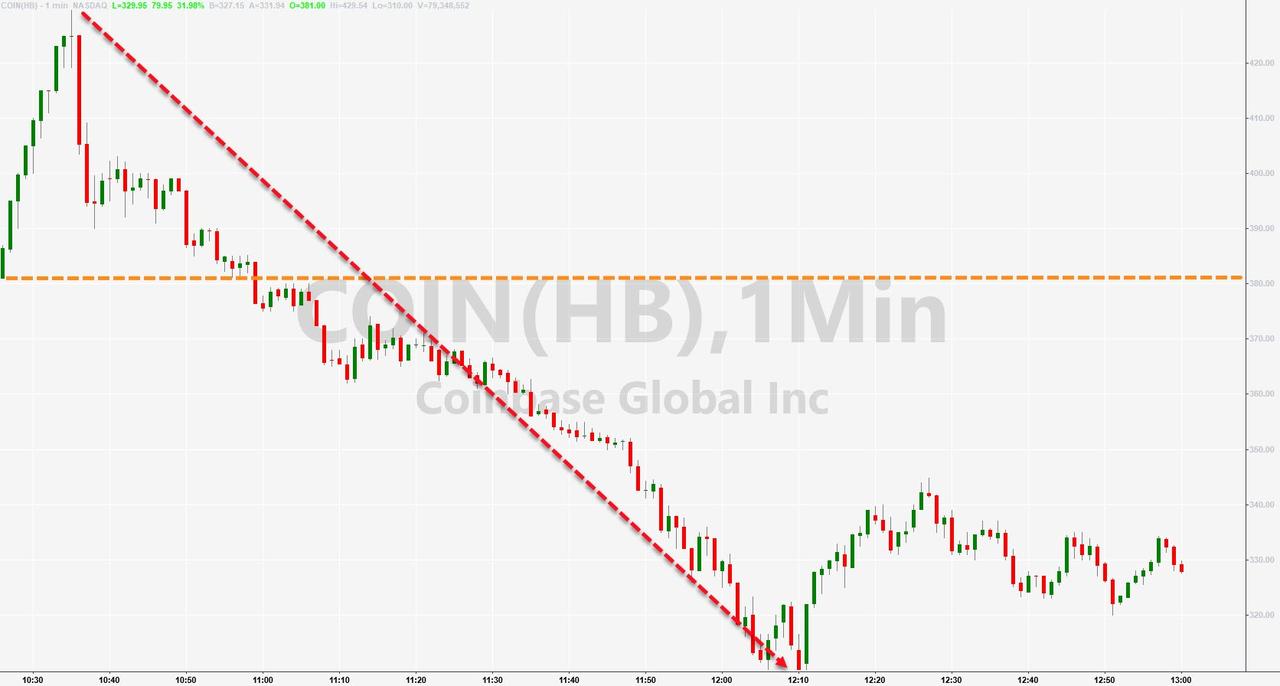
Strong bank earnings helped the financial sector with XLF gaining +0.63%, but that was offset by tech stocks tanking, despite the widely anticipated IPO of Coinbase. The stock rallied at first but then most momentum and closed below its IPO price.

Added the chief strategist of TD Ameritrade:

The first wave of Q1 big bank results look pretty much as strong as most analysts had expected – even stronger actually, it’s possible that we’re in a powerful market that’s in a forgiving mood when it comes to bad news. The path of least resistance for stocks continues to seem to be to go higher, with the market climbing a wall of worries that just doesn’t go away.

On the economic front, we learned that soaring import and export price inflation has finally been noted with the Commodity ETF DBC rocketing +2.30%. None of this was addressed by Fed head Powell speaking before the Economic Club of Washington.

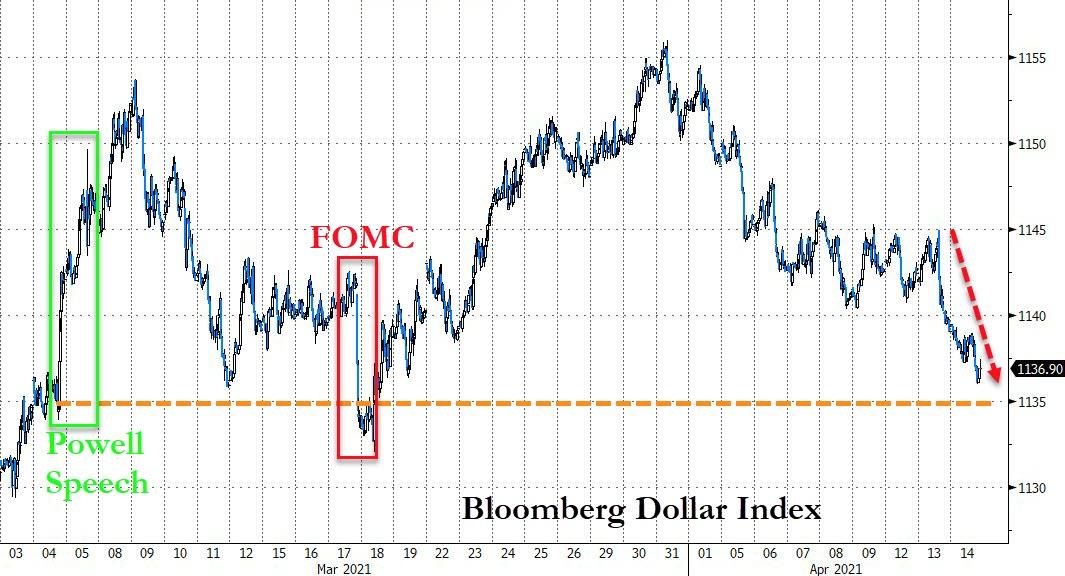
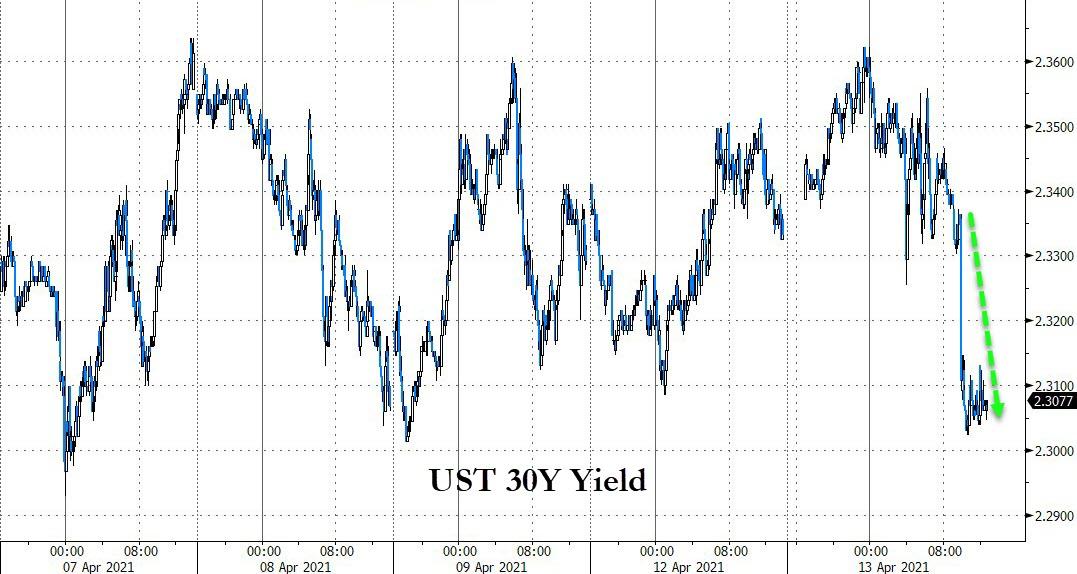
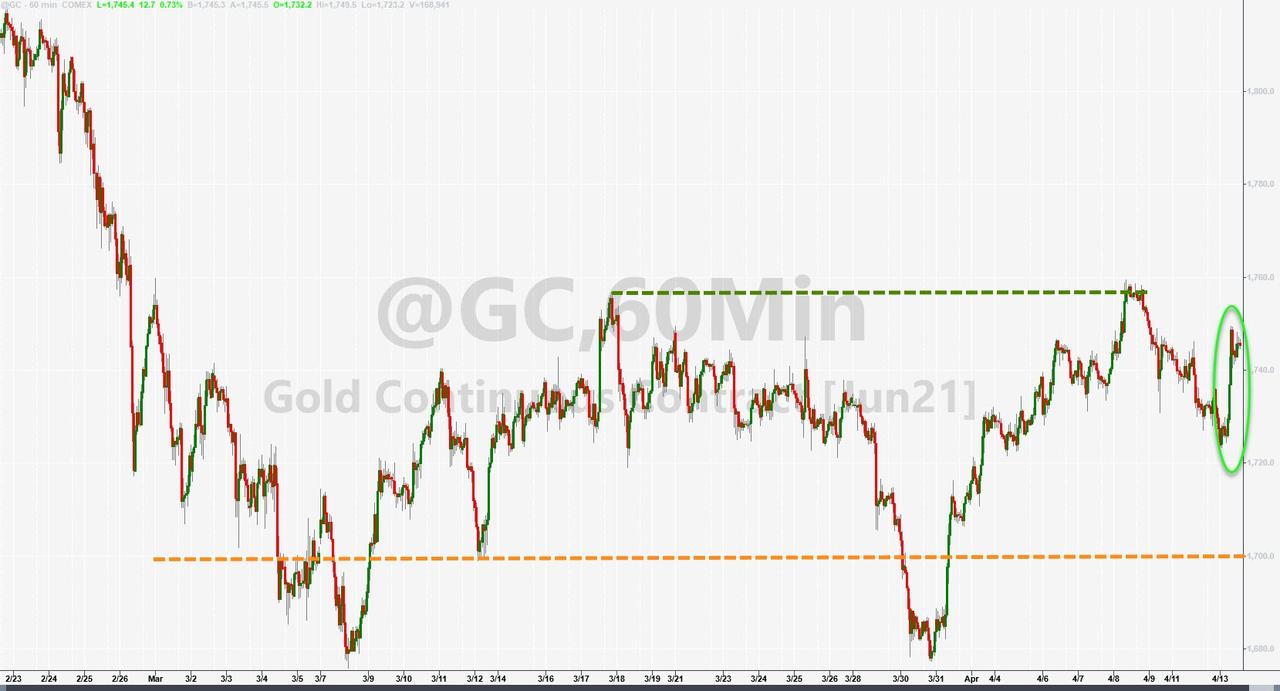
The US Dollar took a dive and approached a key support level, bond yields inched up a bit, and Gold gave back some of yesterday’s gains.

Another session where not much was gained or lost.

Read More
S&P 500 Notches Another Record High

Ulli Market Commentary Contact

[Chart courtesy of MarketWatch.com]

  1. Moving the markets

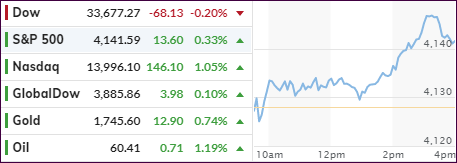
Despite a slow start, the S&P 500 and Nasdaq found some upward momentum late in the session and broke out of a sideways trend with the former scoring a new all-time high.

Anxiety about the Consumer Price Index (CPI) faded with the index rising in March by 0.6% vs. 0.5% expectations. YoY we saw a 2.6% increase, which also was a tad higher than expectations of 2.5%. Overall, traders were relieved that the outcome was not as bad as feared.

Also keeping a lid on prices early on was news that the rollout of Johnson & Johnson vaccine was halted, which kept trading activity on a subdued level. The reason for the pause were investigations of six reported cases of a rare and severe type of blood clot, the FDA stated.

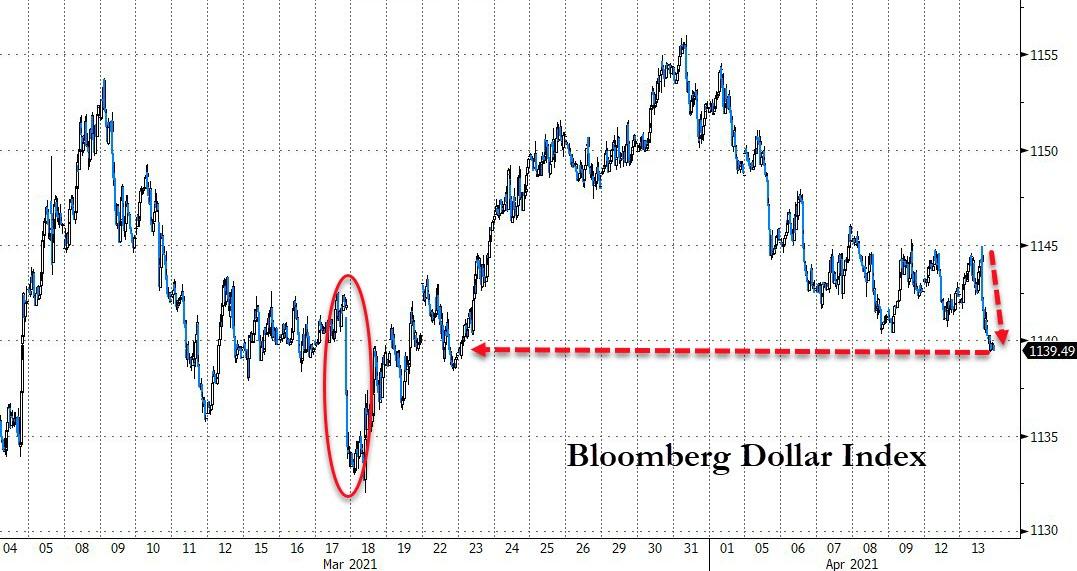
The volatility index (VIX) continued to crawl sideways and has now closed below 20 for 10 straight days, something that has not happened since February 2020, according to ZH. Bonds were bid, meaning yields drifted lower, as did the US Dollar, which allowed gold to have a day with a green close and a gain of 0.74%.

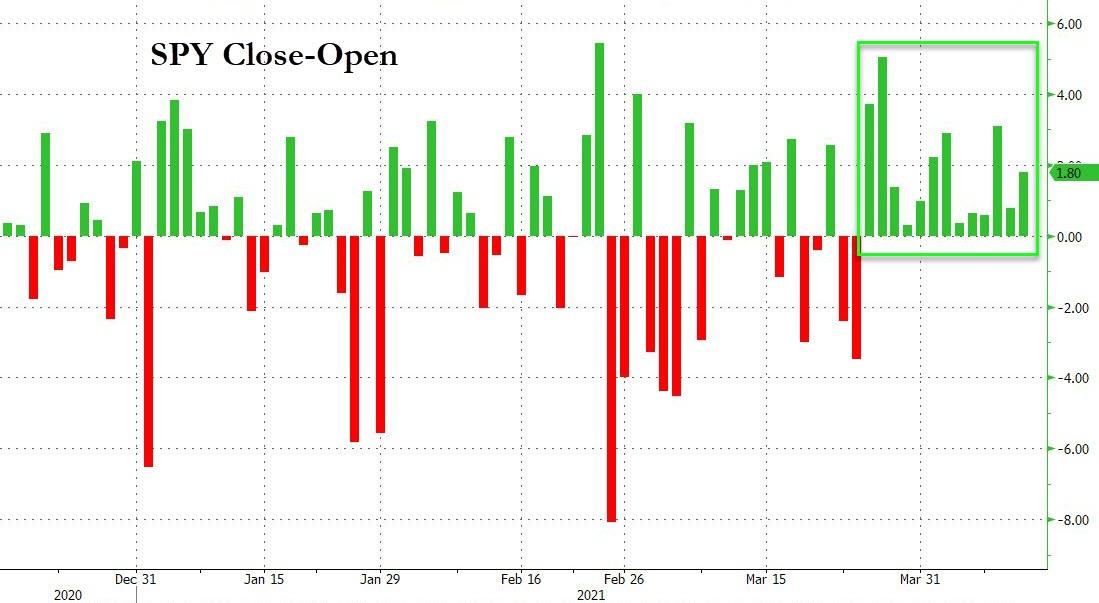
Here’s another record that ZH pointed to, namely that the S&P 500 ETF (SPY) has now closed above its opening price for the 13th day in a row. Since the SPY’s inception in 1993, this has never happened before.

This makes me go “hmm.” Could market manipulation possibly have something to do with it?

Read More

Sliding Into Earnings Season

Ulli Market Commentary Contact

[Chart courtesy of MarketWatch.com]

  1. Moving the markets

Subdued trading best describes today’s session during which the major indexes operated within a tight range. Despite a red close, the losses were minor, and the activity resembled a lack of motivation due to key inflation data and first quarter earnings awaiting on deck.

Market volatility continued to decline, as seen by the S&P 500 having now traded within a 1% range for the fifth session in a row. Reopening optimism was a major contributor with the VIX “fear” gauge trading below 18, a level last seen over a year ago.

The current focus is on tomorrow’s CPI release, which is considered the benchmark for measuring inflation, although the index is faulty in that it does not include day-to-day items that we all know have increased in price.  

Fed chair Powell made an appearance on “60 Minutes” last night and had the following to say:

We want to see inflation move up to 2% — and we mean that on a sustainable basis, we don’t mean just tap the base once, but then we’d also like to see it on track to move moderately above 2% for some time.

And then what? I disagree with his statement, because it makes you think that inflation can be controlled or simply turned off, once it exceeds or reaches a desired number. Unfortunately, history is riddled with evidence showing that once the genie, aka inflation, is out of the bottle, you can’t put it back in.

For the day, we saw 10-year bond yields treading water, the US Dollar meandering aimlessly, while gold slipped 0.72%.

Read More

ETFs On The Cutline – Updated Through 04/09/2021

Ulli ETFs on the Cutline Contact

Below, please find the latest High-Volume ETF Cutline report, which shows how far above or below their respective long-term trend lines (39-week SMA) my currently tracked ETFs are positioned.

This report covers the HV ETF Master List from Thursday’s StatSheet and includes 312 High Volume ETFs, defined as those with an average daily volume of more than $5 million, of which currently 245 (last week 246) are hovering in bullish territory. The yellow line separates those ETFs that are positioned above their trend line (%M/A) from those that have dropped below it.

Take a look:                                                                   

The HV ETF Master Cutline Report

In case you are not familiar with some of the terminology used in the reports, please read the Glossary of Terms. If you missed the original post about the Cutline approach, you can read it here.      

ETF Tracker Newsletter For April 9, 2021

Ulli ETF Tracker Contact

ETF Tracker StatSheet          

You can view the latest version here.

LEAPING INTO THE CLOSE

[Chart courtesy of MarketWatch.com]

  1. Moving the markets

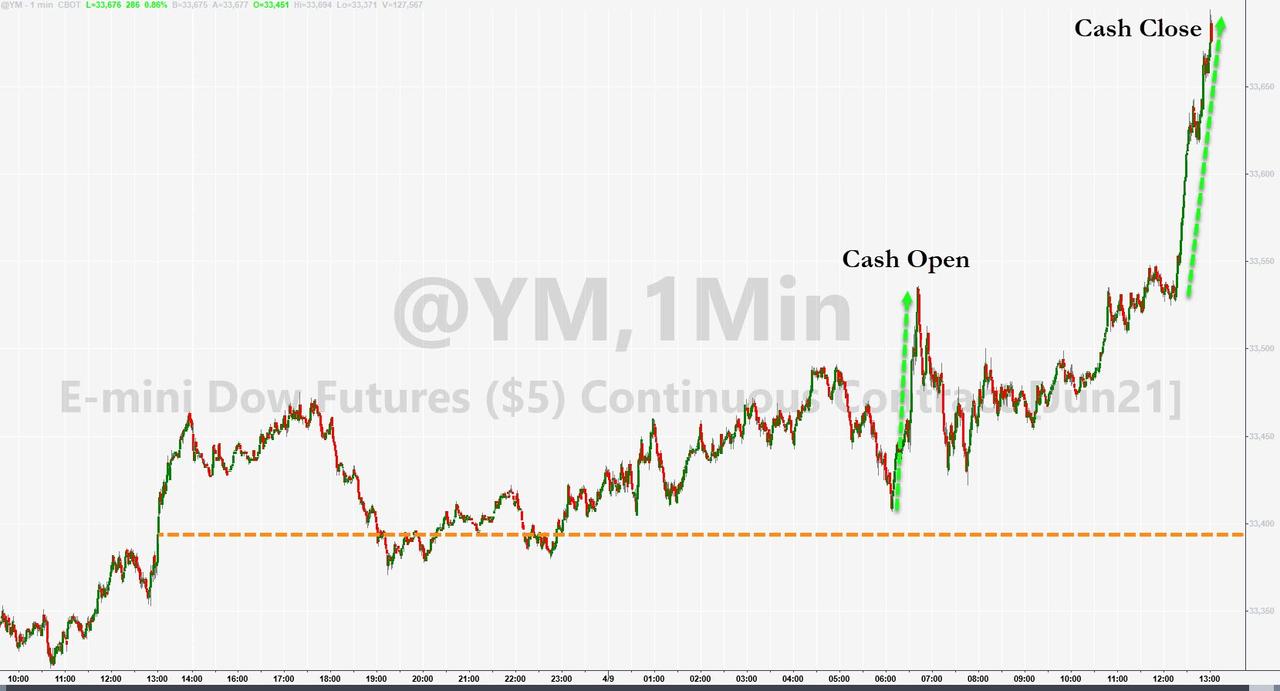
A last hour ramp pulled the major indexes out their sideways pattern and pushed them into a solid green close.

For a change, the Dow led the pack by scoring another record high with the Nasdaq only in 3rd place, while SmallCaps rose moderately.  

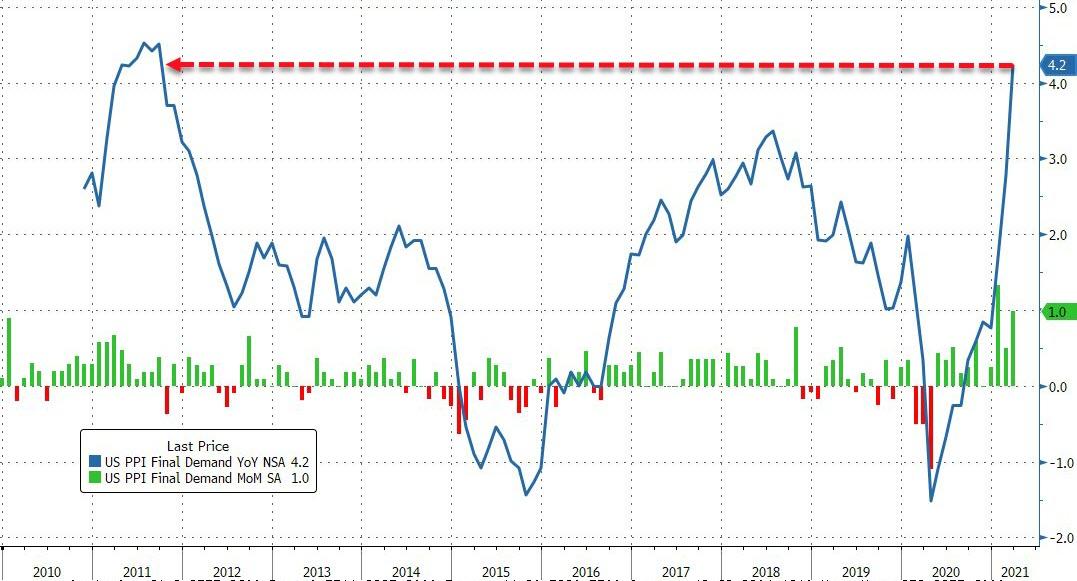
In economic data, and after an unprecedented delay, the BLS finally disclosed a huge jump in March Producer Prices, up 1% MoM vs an expected 0.5%. Far worse was the YoY number, which amounted to a stunning rise of 4.2% vs. 3.8% expected. As ZH pointed out, this is the 11th month in a row of rising PPI.

Inflation keeps heating up, and I believe it will accelerate, while the Fed has not acknowledged any of it, but they will have to once it is passed on to consumers.

We’ll need to wait till next week to see if the next CPI reading is already signaling this process. However, the CPI is a number that does not truly reflect price increases for everyday items.  

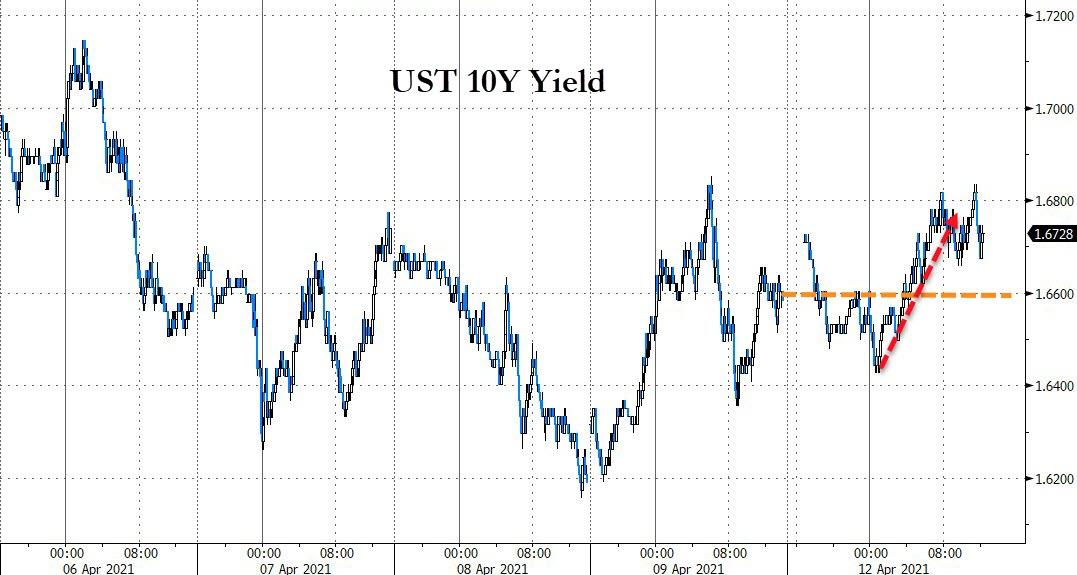
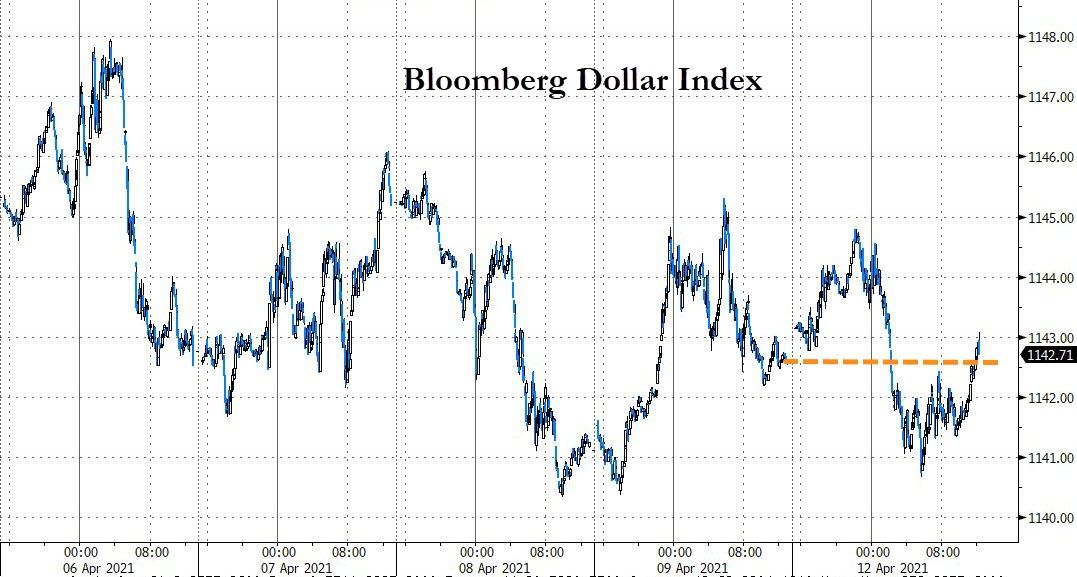
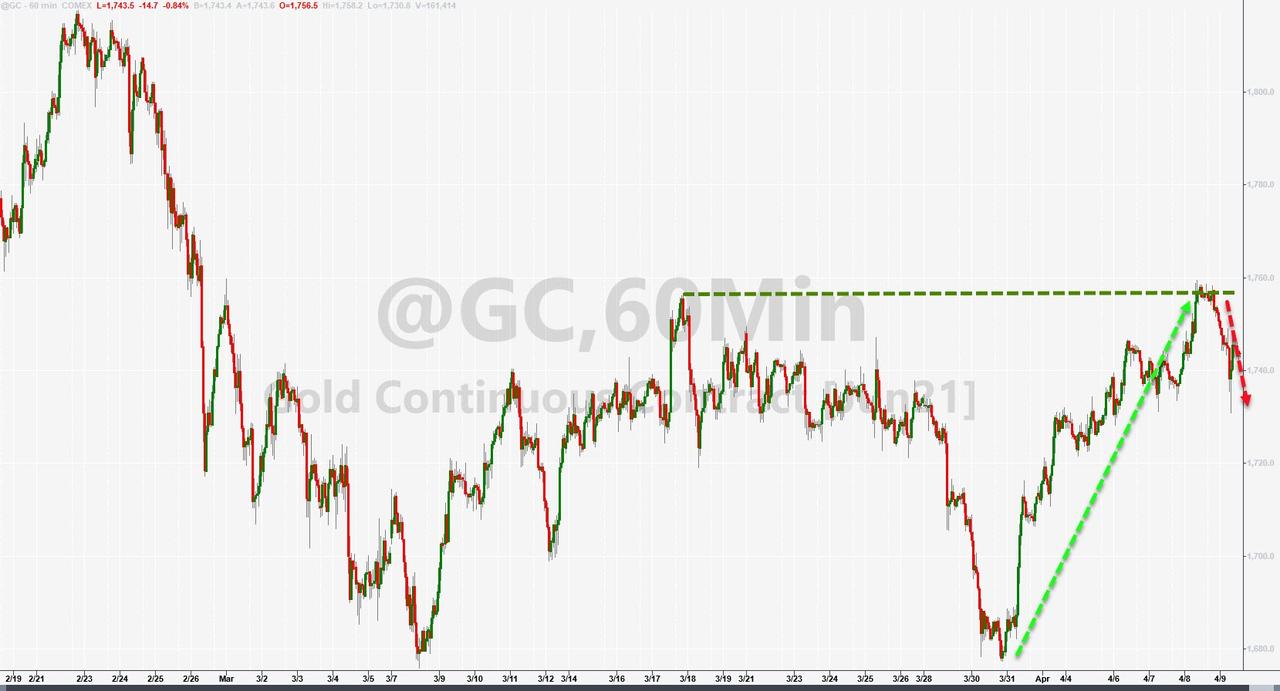
The 10-year bond yield rose slightly to the 1.65% level, while the US Dollar bounced off yesterday’s lows, keeping Gold in check with the precious metal slipping -0.84%.

Hope reigns supreme that the markets can handle inflation and rising bond yields, as the chief investment officer at Raymond James noted:

Contrary to headlines, rising interest rates, healthy levels of inflation, and an eventual Fed rate hike are not necessarily market negatives.

That is until inflation rears its ugly head, a result of reckless money printing, and the bond market starts to puke as yields roar.  

Read More

Weekly StatSheet For The ETF Tracker Newsletter – Updated Through 04/08/2021

Ulli ETF StatSheet Contact

ETF Data updated through Thursday, April 8, 2021

Methodology/Use of this StatSheet:

1. From the universe of over 1,800 ETFs, I have selected only those with a trading volume of over $5 million per day (HV ETFs), so that liquidity and a small bid/ask spread are assured.

2. Trend Tracking Indexes (TTIs)

Buy or Sell decisions for Domestic and International ETFs (section 1 and 2), are made based on the respective TTI and its position either above or below its long-term M/A (Moving Average). A crossing of the trend line from below accompanied by some staying power above constitutes a “Buy” signal. Conversely, a clear break below the line constitutes a “Sell” signal. Additionally, I use an 8% trailing stop loss on all positions in these categories to control downside risk.

3. All other investment arenas do not have a TTI and should be traded based on the position of the individual ETF relative to its own respective trend line (%M/A). That’s why those signals are referred to as a “Selective Buy.” In other words, if an ETF crosses its own trendline to the upside, a “Buy” signal is generated. Since these areas tend to be more volatile, I recommend a wider trailing sell stop of 8%-10% depending on your risk tolerance.

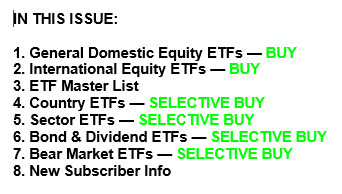
If you are unfamiliar with some of the terminology, please see Glossary of Terms and new subscriber information in section 9.     

1. DOMESTIC EQUITY ETFs: BUY — since 07/22/2020

Click on chart to enlarge

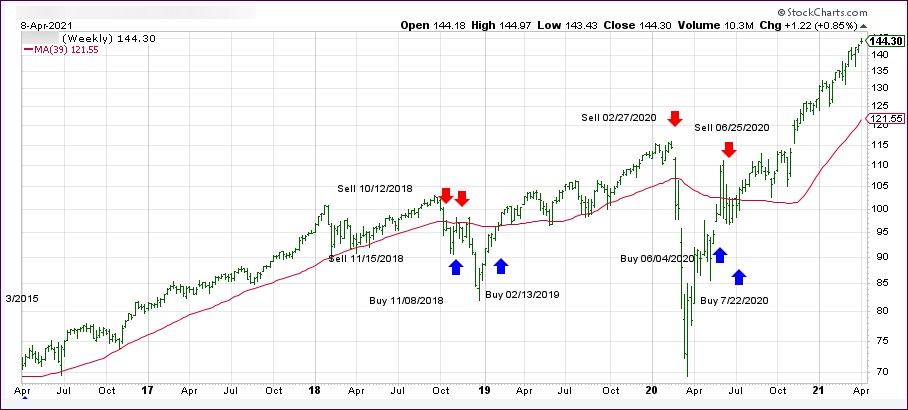
Our main directional indicator, the Domestic Trend Tracking Index (TTI-green line in the above chart) has now rallied above its long-term trend line (red) by +20.90% and remains in “BUY” mode as posted.

Read More