Conquering Friday’s Puke-A-Thon

Ulli Market Commentary Contact

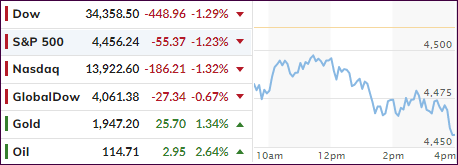
[Chart courtesy of MarketWatch.com]

  1. Moving the markets

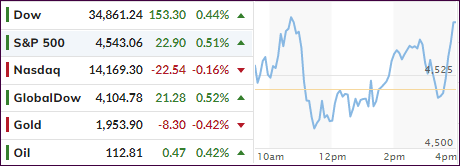
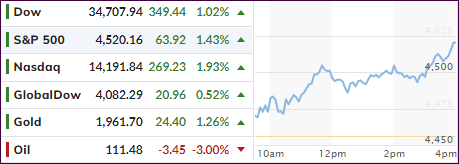
After wild rides in the markets last week, which saw early rallies wiped out later in the session, we finally witnessed an opening surge that improved throughout the day and did not peter out in the afternoon. Sure, momentum slumped a little into the close, but that can be expected.

In the process, the Dow managed to erase all last week’s losses, while the S&P 500 just fell a fraction short. MarketWatch summed up today’s influencing forces like this:

  • Shares linked to the economic reopening gained in Monday trading, including energy, industrials, and airlines.
  • Investors continued to sell tech stocks with relatively high valuations. Those shares dragged the market down to a losing week on Wall Street last week.
  • The 10-year Treasury yield rebounded after falling last week amid the omicron threat.
  • There’s a major shift underway at the Federal Reserve to bring about a faster end to its pandemic easing policies.

The Nasdaq lagged the other two major indexes as the health care and tech sectors were weighing down the indicator, with Moderna being the biggest decliner by shedding 15%.

Anxiety about the new Omicron variant remains, despite continuous reports of its symptoms being less severe, but fearmongering in the MSM seems to be always in high gear. It appears that any economic data are playing second fiddle to the latest headlines dealing with Covid 19 or its variants.

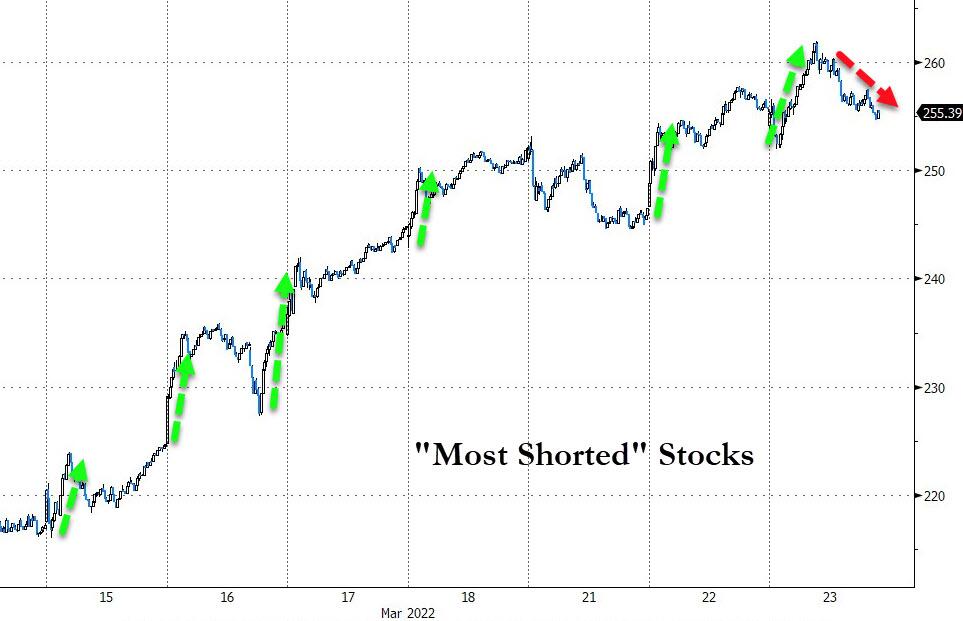
Finally, the short squeeze came back to life again, after being suspiciously absent during last week, and gave a much-needed assist to insure the rebound would not run out of steam.  

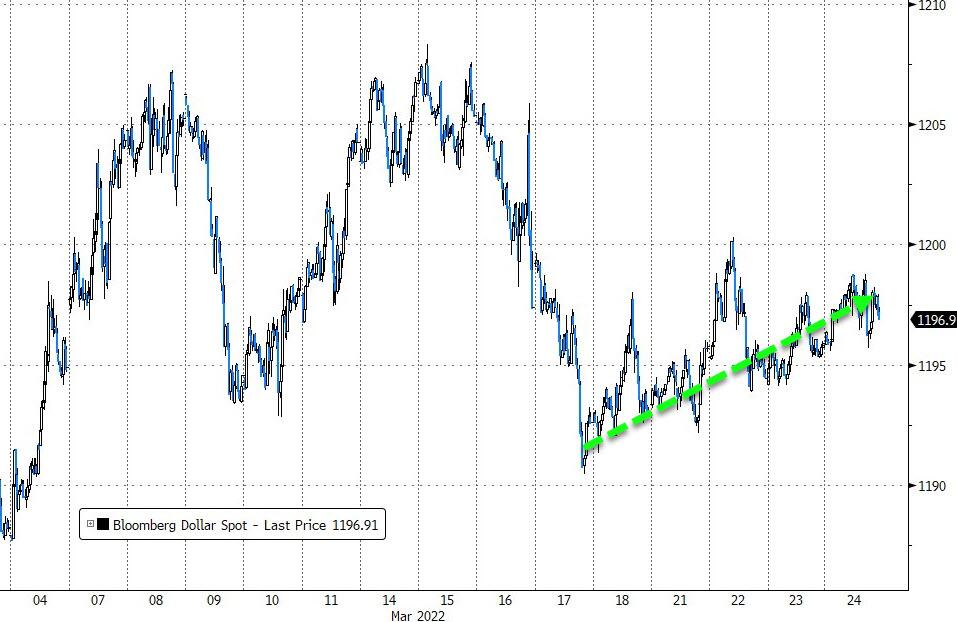
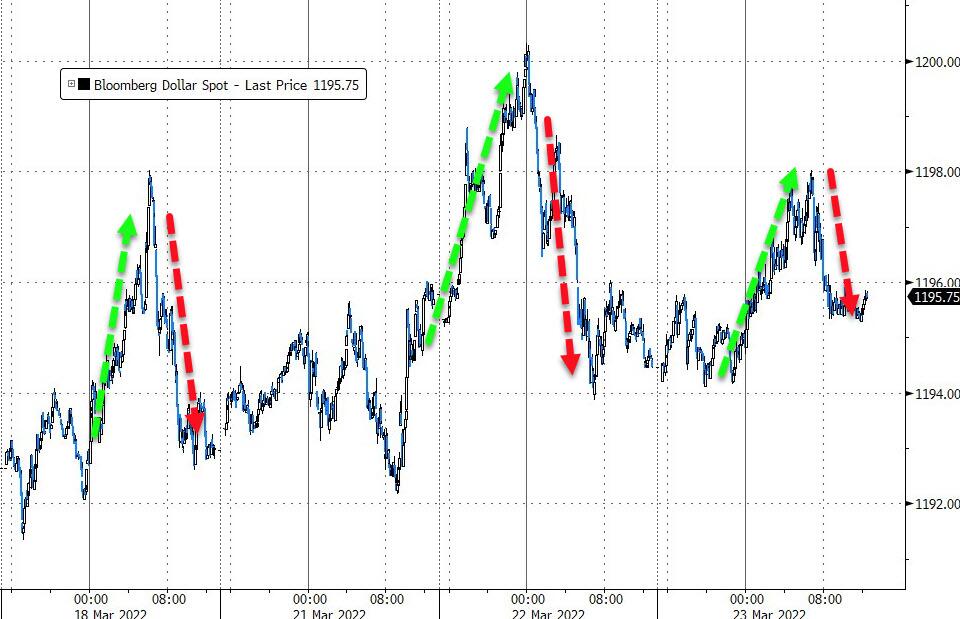
Bond yields surged after an early dump, with the 10-year eking out a small gain and closing the session at 1.48%. The US Dollar went sideways for most of the day but ended up higher by a modest 0.19%.  

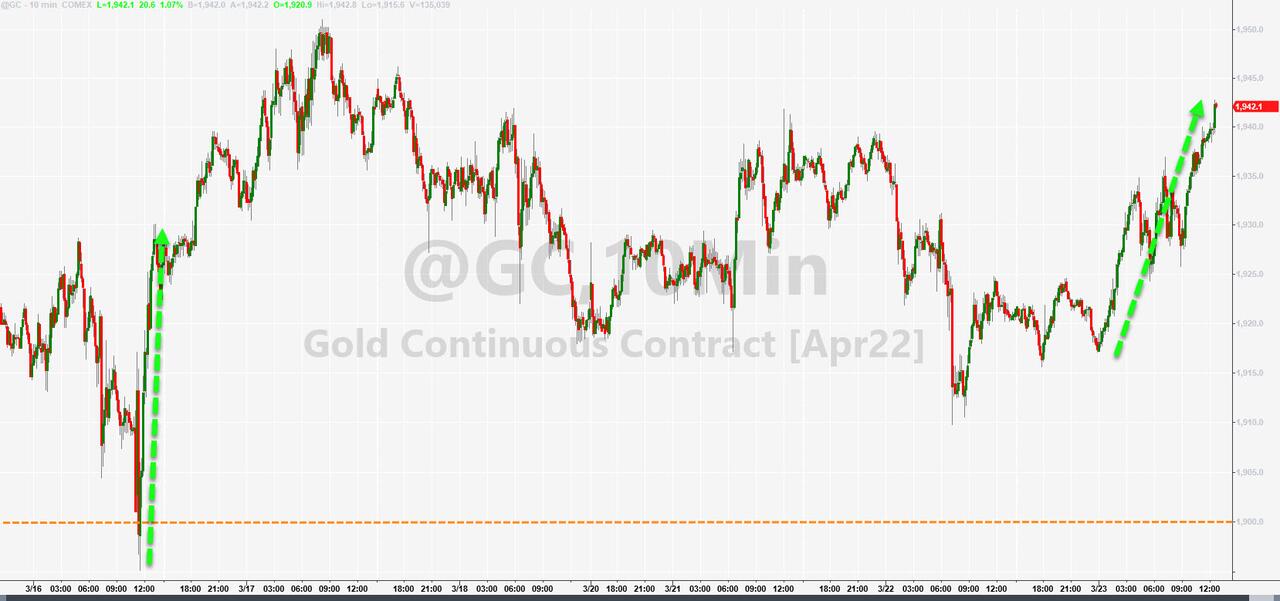
Gold drifted lower after Friday’s strong rebound with the precious metal giving back 0.24%, while still attempting to permanently conquer its much fought for $1,800 level.

I expect the recent volatility to stay with us, especially when on Friday the much-anticipated US CPI will be released.

Read More
ETFs On The Cutline – Updated Through 12/03/2021

Ulli ETFs on the Cutline Contact

Below, please find the latest High-Volume ETF Cutline report, which shows how far above or below their respective long-term trend lines (39-week SMA) my currently tracked ETFs are positioned.

This report covers the HV ETF Master List from Thursday’s StatSheet and includes 312 High Volume ETFs, defined as those with an average daily volume of more than $5 million, of which currently 140 (last week 170) are hovering in bullish territory. The yellow line separates those ETFs that are positioned above their trend line (%M/A) from those that have dropped below it.

Take a look:                                                                   

The HV ETF Master Cutline Report

In case you are not familiar with some of the terminology used in the reports, please read the Glossary of Terms. If you missed the original post about the Cutline approach, you can read it here.      

ETF Tracker Newsletter For December 3, 2021

Ulli ETF Tracker Contact

ETF Tracker StatSheet          

You can view the latest version here.

A TURBULENT DAY CLOSES OUT A TURBULENT WEEK

[Chart courtesy of MarketWatch.com]

  1. Moving the markets

After yesterday’s comeback move, the markets went back into “survival mode,” with the major indexes tanking throughout the day but being somewhat rescued by a last hour rebound attempt.

The indicators still closed in the red but off their mid-day lows. Despite that bounce back, the Nasdaq was the whipping boy du jour and lost almost 2% during today’s dump-a-thon.

Several news items contributed and capped off a turbulent week, but the broadly based S&P 500 only surrendered some 0.5%, while the other two indexes fared worse. Causing this ripple effect were continued Omicron concerns, even thought the physicians discovering this variant only reported mild effects.

Be that as it may, the more immediate downer was the disappointing November jobs report, which showed that only a meager 210k new jobs were created. That is less than half of the expected 573k that economists had forecast. Still, it shows that October’s strong report may have been an outlier.

The good news was that the unemployment rate fell sharply to 4.2%, which was quite an improvement over the estimate of 4.5%. But concerns linger that the economy is struggling due to the ongoing supply chain crisis and the battle with rising inflation, neither of which will be resolved in the short term.

Looking at the market action over the past 5 weeks, it becomes clear that weakness and rebound rallies consisting of less and less magnitude may be signaling a directional turnaround. Bloomberg demonstrated that with this chart showing fading rallies, despite traders being convinced that a Santa Claus rally still lurks on deck.

However, wishful thinking does not create a successful outcome, as our International TTI has already slipped into bear market territory, although by only a fraction.

However, the Domestic TTI is now also rapidly approaching a potential break of its trend line to the downside (section 3 below). Given the bubble territory the equity markets are in, they appear to me like a bug in search of a windshield.

If that collision happens, we need to brace for impact by following our exit strategy to the latter.

Read More
Weekly StatSheet For The ETF Tracker Newsletter – Updated Through 12/02/2021

Ulli ETF StatSheet Contact

ETF Data updated through Thursday, December 2, 2021

Methodology/Use of this StatSheet:

1. From the universe of over 1,800 ETFs, I have selected only those with a trading volume of over $5 million per day (HV ETFs), so that liquidity and a small bid/ask spread are assured.

2. Trend Tracking Indexes (TTIs)

Buy or Sell decisions for Domestic and International ETFs (section 1 and 2), are made based on the respective TTI and its position either above or below its long-term M/A (Moving Average). A crossing of the trend line from below accompanied by some staying power above constitutes a “Buy” signal. Conversely, a clear break below the line constitutes a “Sell” signal. Additionally, I use an 8% trailing stop loss on all positions in these categories to control downside risk.

3. All other investment arenas do not have a TTI and should be traded based on the position of the individual ETF relative to its own respective trend line (%M/A). That’s why those signals are referred to as a “Selective Buy.” In other words, if an ETF crosses its own trendline to the upside, a “Buy” signal is generated. Since these areas tend to be more volatile, I recommend a wider trailing sell stop of 8%-10% depending on your risk tolerance.

If you are unfamiliar with some of the terminology, please see Glossary of Terms and new subscriber information in section 9.     

1. DOMESTIC EQUITY ETFs: BUY — since 07/22/2020

Click on chart to enlarge

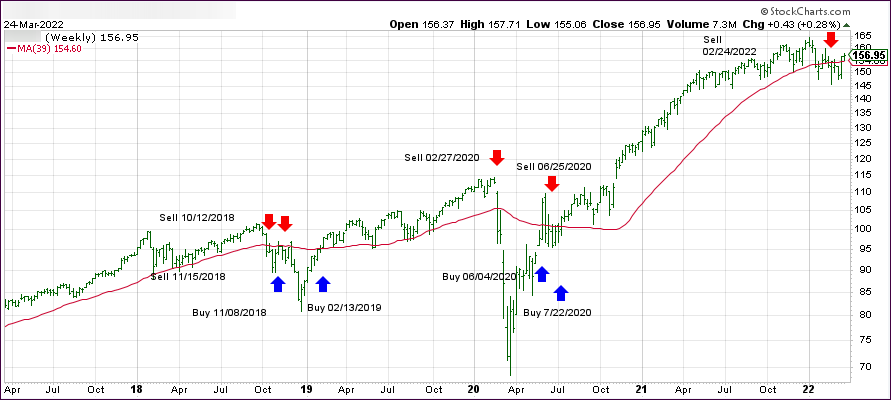
Our main directional indicator, the Domestic Trend Tracking Index (TTI-green line in the above chart) has now rallied above its long-term trend line (red) by +2.96% and remains in “BUY” mode as posted.

Read More
Demolition Derby: An Early Rally Bites The Dust

Ulli Market Commentary Contact

[Chart courtesy of MarketWatch.com]

  1. Moving the markets

The first couple of trading hours were hopeful with the Dow jumping ahead over 300 points indicating that recent volatility had subsided and traders assuming that we’d be well on our way to the much-anticipated Holiday finish.

Those hopes were dashed suddenly, when the bears took the upper hand and pounded the major indexes into oblivion with the Dow ending the session down over 460 points, which means the index covered a range of almost 800 points. The S&P 500 and Nasdaq followed suit with the latter suffering the worst loss.  

This moment of reality was caused by reports that the Omicron variant had arrived in the US. Of course, the MSM used that event for more fearmongering, but the real negative came from the Fed’s Williams:

“Clearly, it adds a lot of uncertainty to the outlook,” Mr. Williams said of the new variant. He later added that a risk with the new variant is that it “will continue that excess demand in the areas that don’t have capacity and will stall the recovery in the areas where we actually have the capacity.”

That, he said, would “mean a somewhat slower rebound overall” and “also does increase those inflationary pressures, in those areas that are in high demand.”

On other words, the dreaded “S” word, as in stagflation, has moved front and center again and sent equities on a southerly path. Bond yields reversed their recent northerly trend with the 30-year settling back below 1.79% last seen at the beginning of this year.

The US Dollar dipped and ripped but ended the session unchanged, which helped gold to stay in the green. After giving back some of its early gains, the precious metal managed to advance 0.38%.

Our Domestic Trend Tracking Index (TTI) is now rapidly approaching its trend line from above and is in clear danger of breaking it to the downside. Please see section 3 for more details.

Read More
Omicron Plus Fed Head Powell Spank Equities

Ulli Market Commentary Contact

[Chart courtesy of MarketWatch.com]

  1. Moving the markets

First, there was more fearmongering, as Moderna’s CEO raised doubts about the efficacy of the current batch of vaccines versus the omicron variant. That took the starch out of any bullish momentum and pulled the major indexes down.

Second, in a lesson to all economic hacks, Fed head Powell destroyed the long-held view that inflation is transitory by announcing the following:

“The economy is very strong and inflationary pressures are high and it is therefore appropriate, in my view, to consider wrapping up the taper of our asset purchases…perhaps a few months sooner,” Powell said, during testimony to the Senate Banking Committee.

Suddenly, the “transitory” inflation narrative, which I have countered all year long, came not only apart at the seams but as a total shock to traders and algos alike. Market reaction was fast and furious with the Dow dropping from barely being in the red to down 500 points within a minute, with the other indexes following suit.

In the end, the sell-off was broad and deep with no place to hide. Even gold, up some 1.25% early on, got hammered and closed lower by a moderate 0.48%, despite the 10-year bond yield sinking by 5.6 basis points to 1.44%.

The US Dollar resembled the chaotic activity of a penny stock by dumping, pumping and fading into the close.

We have now reached a point where the above narratives could very well continue and end this current bullish market cycle. As I posted before, the International TTI has at times been the canary in the coalmine by forecasting the fate of domestic equities. Please see the latest numbers in section 3 below.

Some trailing sell stops are close to being executed, and I believe that market action over the next few trading days will be indicative as to whether there will be a directional change or not.

Stay tuned.

Read More