Weekly StatSheet For The ETF Tracker Newsletter – Updated Through 04/28/2022

Ulli ETF StatSheet Contact

ETF Data updated through Thursday, April 28, 2022
Methodology/Use of this StatSheet:

1. From the universe of over 1,800 ETFs, I have selected only those with a trading volume of over $5 million per day (HV ETFs), so that liquidity and a small bid/ask spread are assured.

2. Trend Tracking Indexes (TTIs)

Buy or Sell decisions for Domestic and International ETFs (section 1 and 2), are made based on the respective TTI and its position either above or below its long-term M/A (Moving Average). A crossing of the trend line from below accompanied by some staying power above constitutes a “Buy” signal. Conversely, a clear break below the line constitutes a “Sell” signal. Additionally, I use an 12% trailing stop loss on all positions in these categories to control downside risk.

3. All other investment arenas do not have a TTI and should be traded based on the position of the individual ETF relative to its own respective trend line (%M/A). That’s why those signals are referred to as a “Selective Buy.” In other words, if an ETF crosses its own trendline to the upside, a “Buy” signal is generated. Here too, I recommend trailing sell stop of 12%, or less, depending on your risk tolerance.

If you are unfamiliar with some of the terminology, please see Glossary of Terms and new subscriber information in section 9.     

1. DOMESTIC EQUITY ETFs: SELL — since 02/24/2022
Click on chart to enlarge

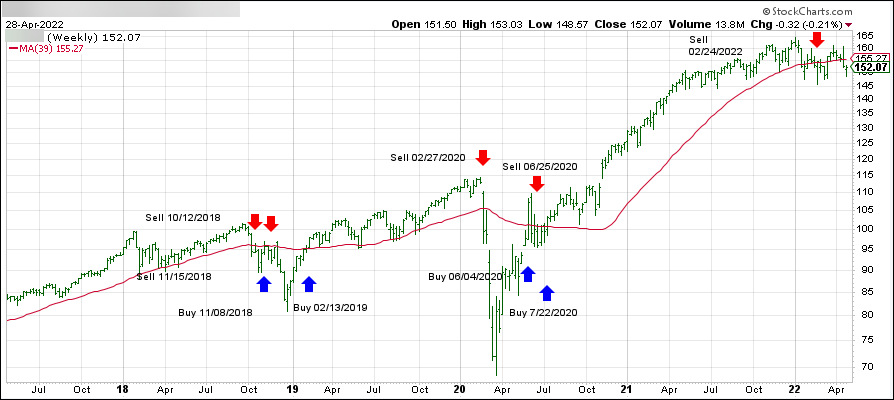
Our main directional indicator, the Domestic Trend Tracking Index (TTI-green line in the above chart) has only broken below its long-term trend line (red) by -2.05% and remains in “SELL” mode—although it is on the edge of moving back to the Buy side.  

Read More
A Dead-Cat Bounce Loses Its Bounce—Twice

Ulli Market Commentary Contact

[Chart courtesy of MarketWatch.com]

  1. Moving the markets

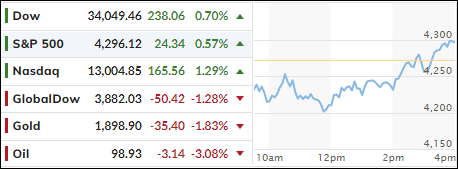
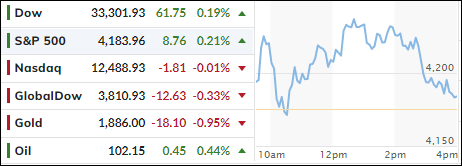
Despite dip buyers stepping in this morning, to take advantage of lower prices caused by yesterday’s drubbing, the effort peaked mid-day, after which the selling resumed with the major indexes ending up only a tad above their respective unchanged lines.

The Nasdaq has now dropped some 12% in April, which is its worst performance since October 2008, with the S&P 500 and Dow being down as well but to a lesser magnitude.

Headwinds increased for equities this month, as uncertainty reigned due a variety of uncontrollable events—like inflation, Fed tightening, the war in Ukraine, and China’s zero-covid policy lockdowns—combining forces and giving the bears the upper hand.

Since my Domestic Trend Tracking Index (TTI) signaled a sell of domestic equities on 2/24/22, we’ve seen strong rebounds at first, however, they have lately turned into a bearish rut. As of today, our TTI hovers -3.72% below its long-term trend line (section 3).

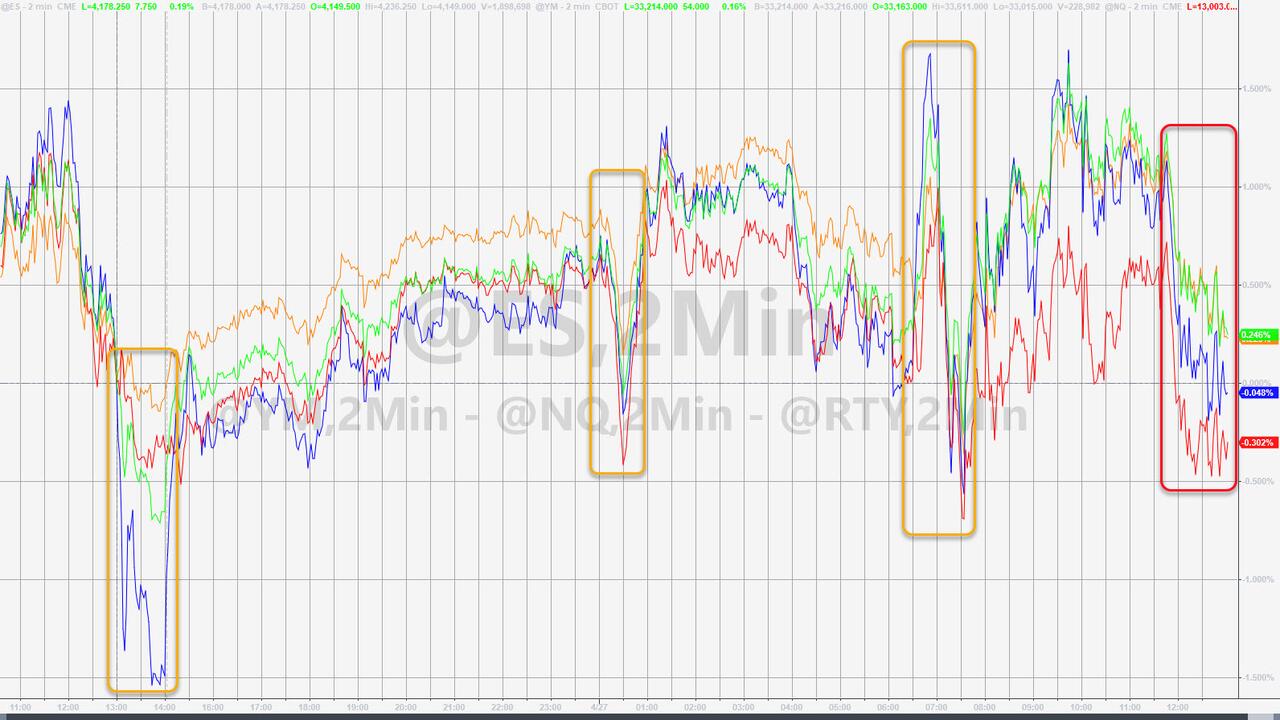
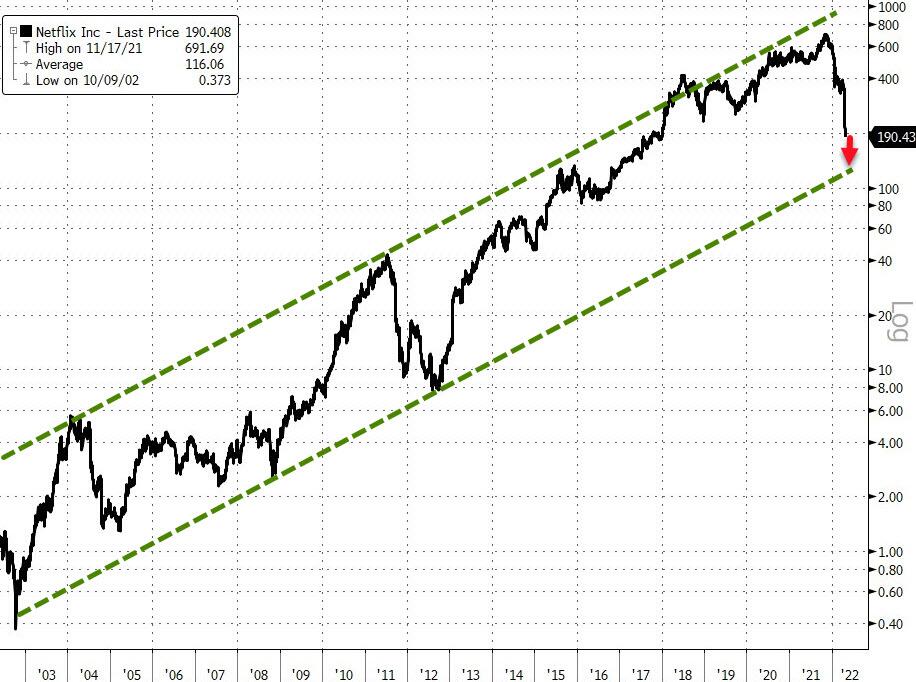
As ZH pointed out, the FANG stocks puked again and have now reached a critical support level from right before the Covid crash, while Netflix still has a long ways to go to find any technical support at all.

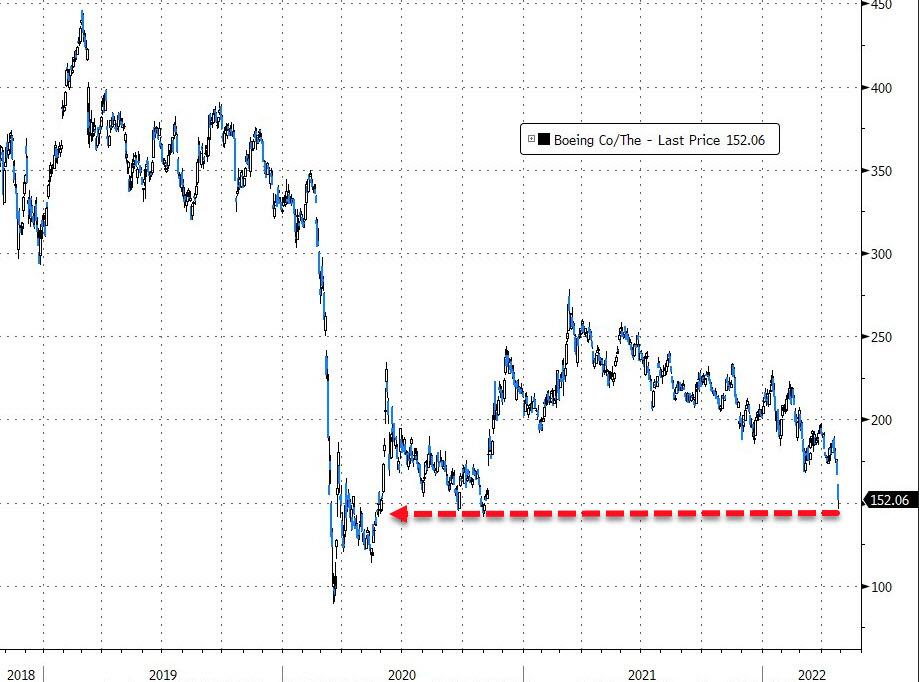
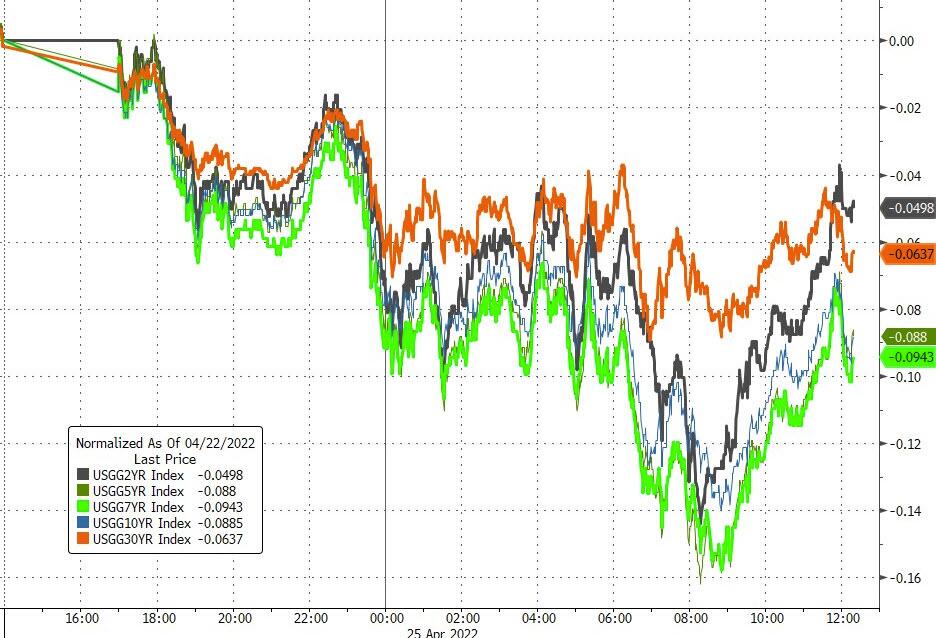
Boeing got hammered as well and has now reached a price level last seen in June 2020. Bond yields, which had weakened yesterday, came back and stormed higher with the 10-year gaining over 10 bps to close at 2.835%.

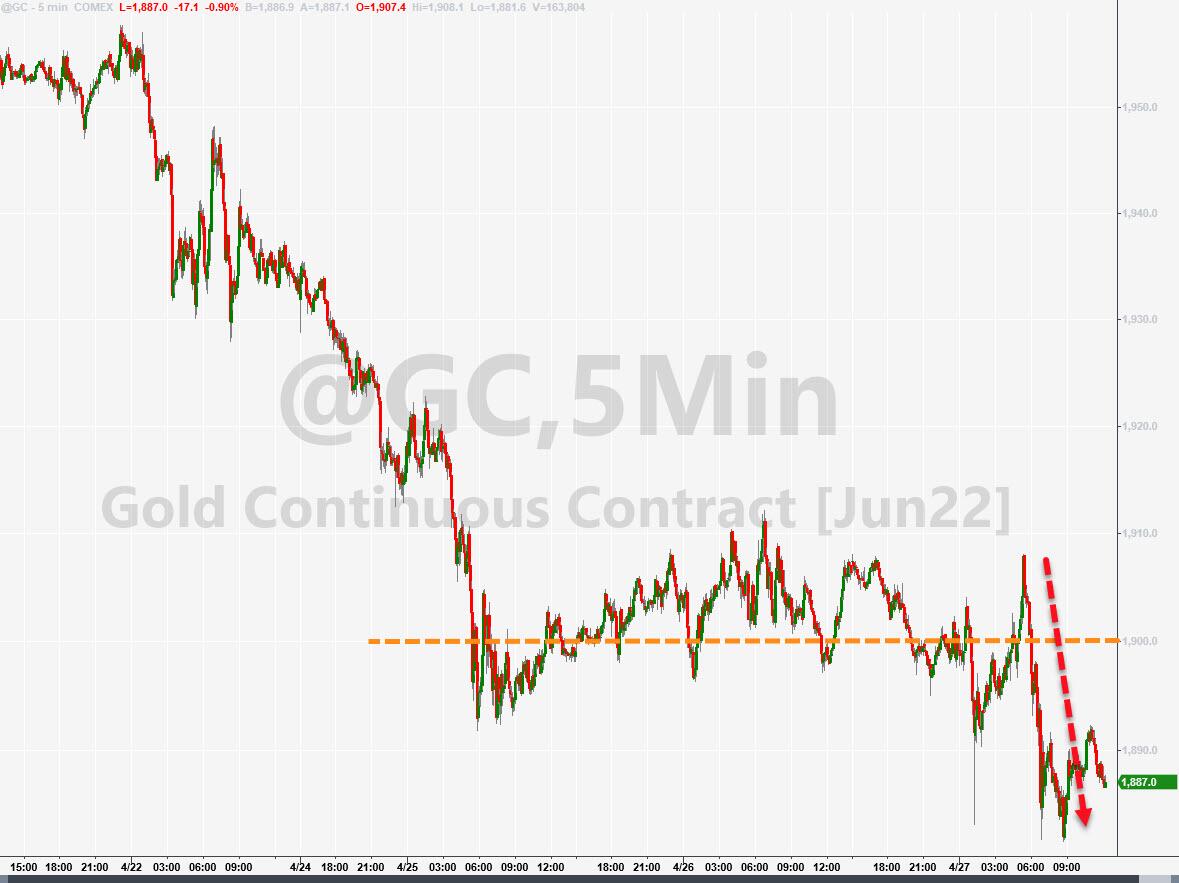
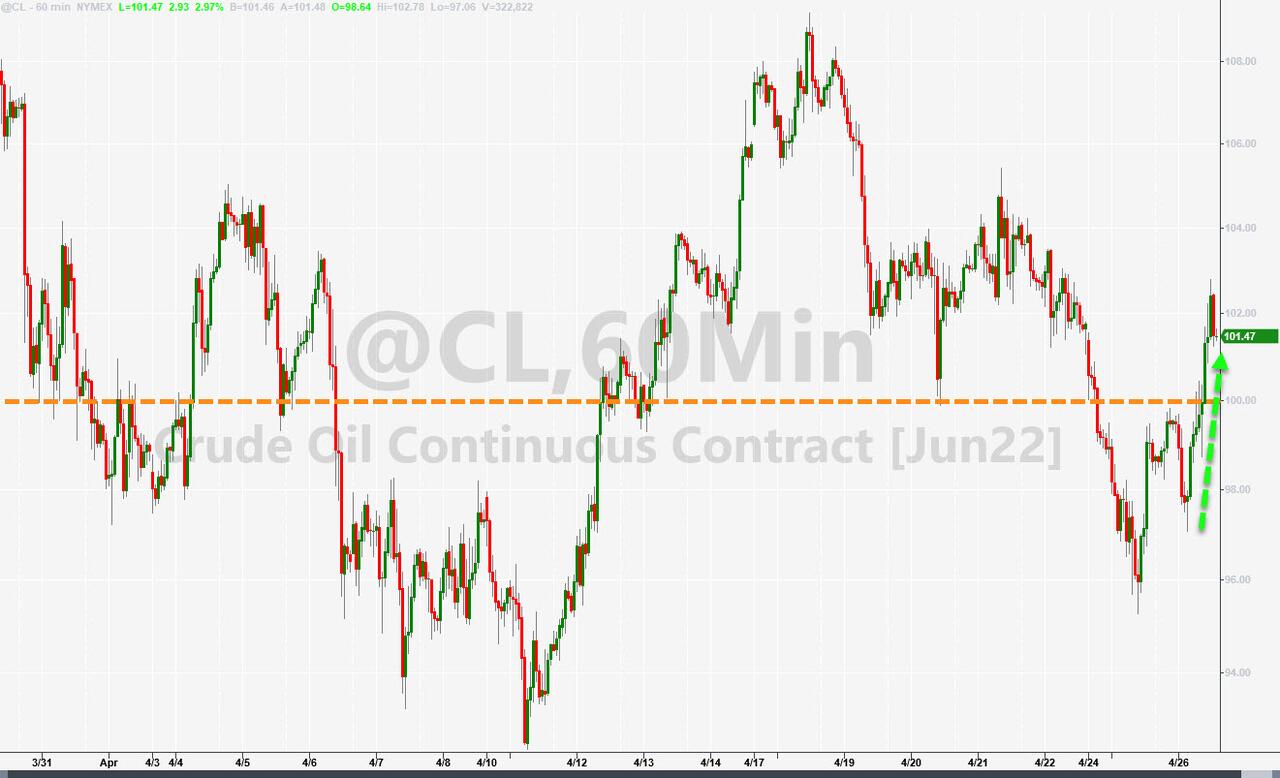
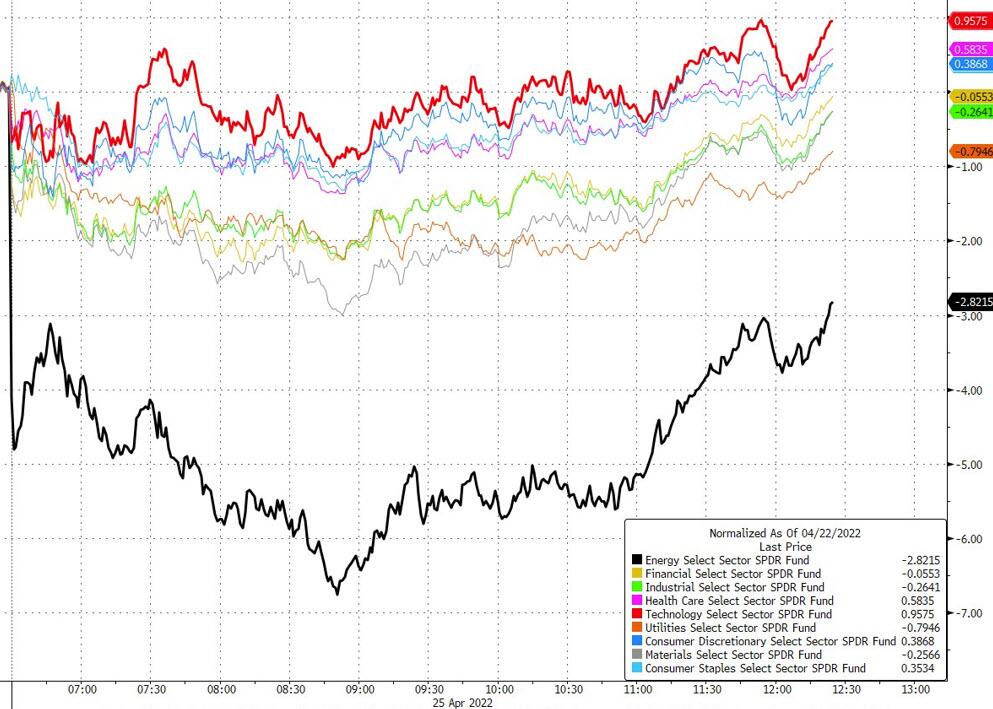
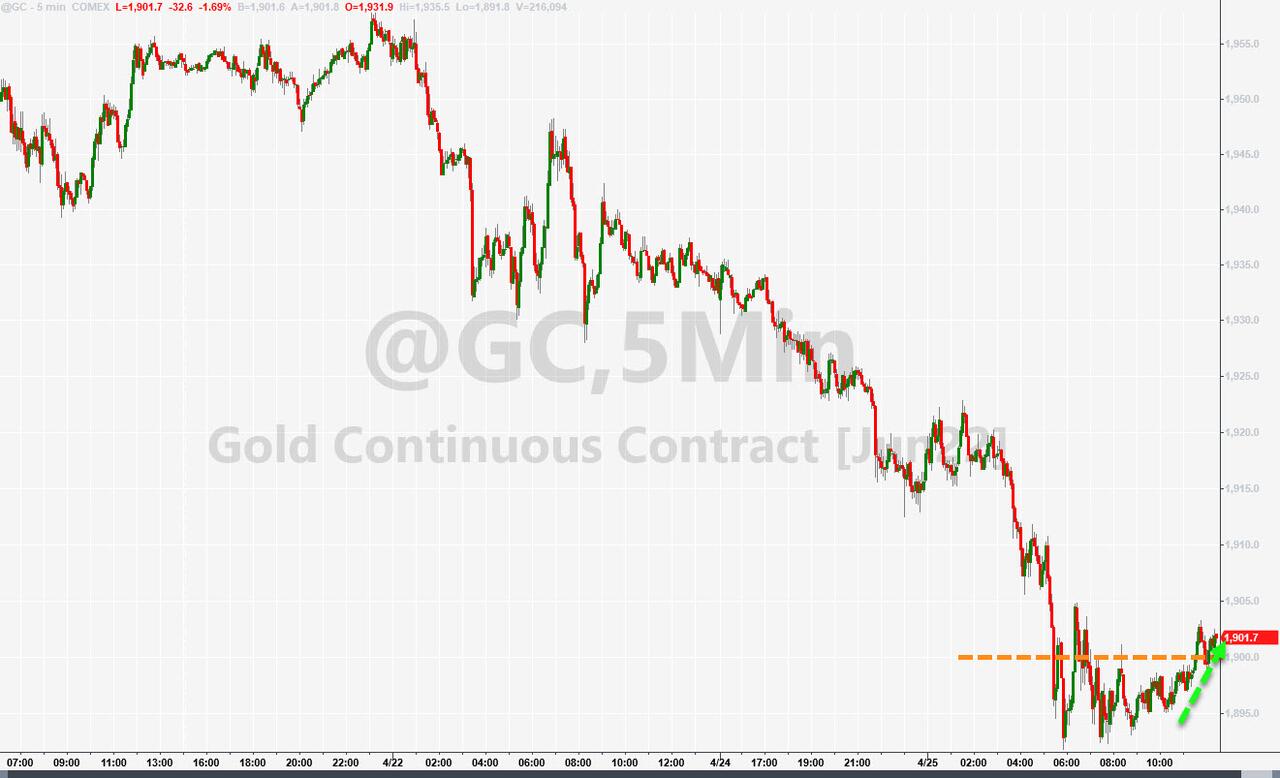
The energy and commodity sectors rose, while Gold dropped and lost its $1,900 level again.

Read More

The Puke-A-Thon Continues

Ulli Market Commentary Contact

[Chart courtesy of MarketWatch.com]

  1. Moving the markets

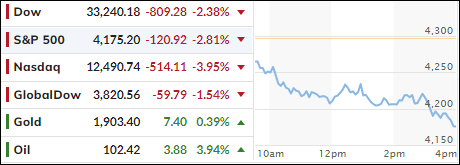
The Nasdaq sustained its recent weakness and plunged some 4% in part due to increasing anxiety ahead of the quarterly earnings reports from the big players like Microsoft and Alphabet (Google) due out this afternoon. The recent Netflix blow-up is still on every trader’s mind.

However, today’s weakness was also assisted by the usual fears, namely the global economy as whole, the Covid surge in China, the war in Ukraine, increasing inflation numbers in the U.S., and the seemingly never-ending supply chain issues.

So far, April has not been kind to domestic equities with the S&P 500 having lost -7.8%, the Nasdaq being down -12.2%, while the Dow fared the best with only a -4.2% drop. This pretty much confirms the bearish position of my Domestic TTI (since 2/24/22), now below its trend line by -3.90%, to either be totally out of domestic equities or only have limited exposure.

And if you thought bonds would have helped to offset some these losses, you would have been wrong, because the widely held 20-year T-Bond ETF TLT lost -7.3% month to date. Ouch! As I posted before, in this high interest rate environment, bonds are no longer a “safe” haven.

In the end, there were not many places to hide. Energy bounced back nicely but ended the session unchanged. Commodities showed signs of life with DBC adding +1.37%, and gold managed to rebound but only by a meager +0.45%.

When the entire equity spectrum is down considerably, owning some sector ETFs with small gains will substantially mitigate the negative effects of the domestic equity arena.

Read More

Fighting Back…And Succeeding

Ulli Market Commentary Contact

[Chart courtesy of MarketWatch.com]

  1. Moving the markets

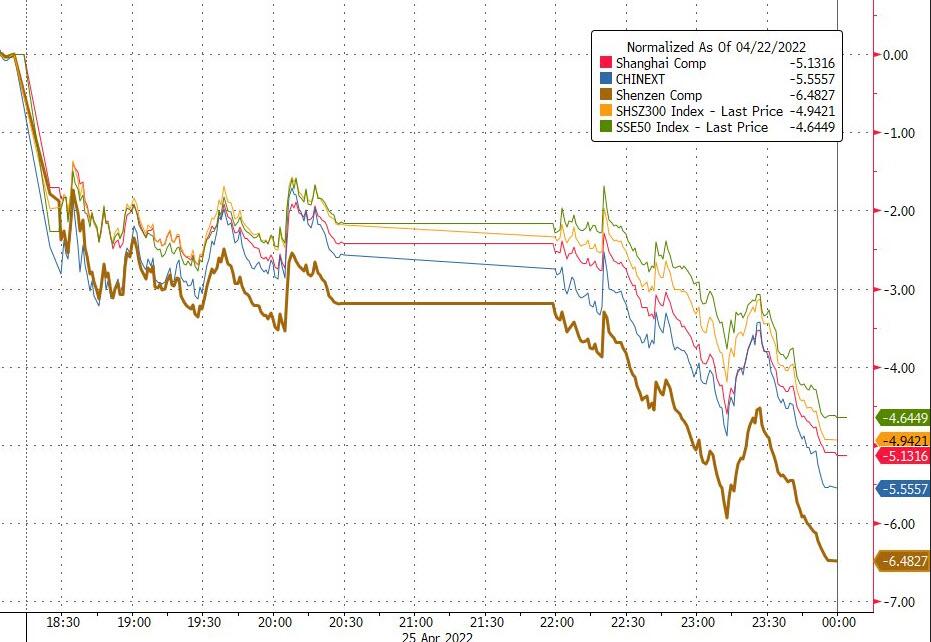
Another early sell off pulled the Dow down by some 400 points, as a one-two punch hit the US markets. Global fears about an economic slowdown loomed large, leading to a slump in Chinese stocks, which pulled energy, commodities, and precious metals off their recent highs—along with all US equities.

As a result, bond yields cratered for the first time in a while with the widely followed 10-year dropping 7 basis points to close at 2.827%. Uneasiness about this week being a big one for corporate earnings did not help, with about 160 S&P 500 companies scheduled to report and half of the Dow Jones. All eyes are on the big boys like Amazon, Apple, Microsoft, and Alphabet (Google).

Despite the early dump, the markets found some footing and the subsequent reversal sent the Dow up over 200 points into the close. The lead dog was the Nasdaq with a 1.29% gain, which could be just a temporary bounce of hope, as the index has come off its highs by some 20%.

The loser of the day award goes to SmallCaps, which have dropped to their lowest since December 2020 and are currently down 22% from their highs, as ZH pointed out.

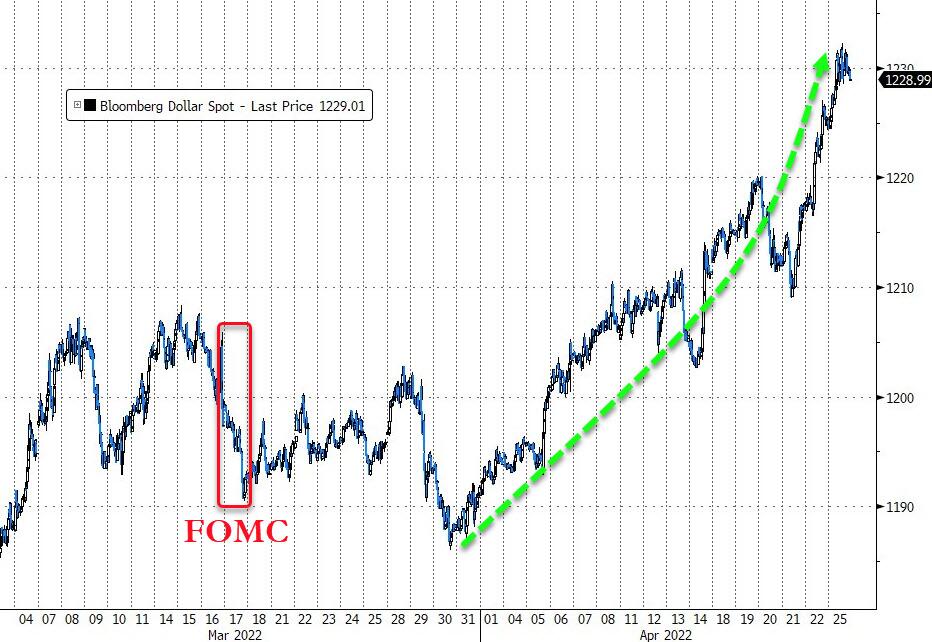
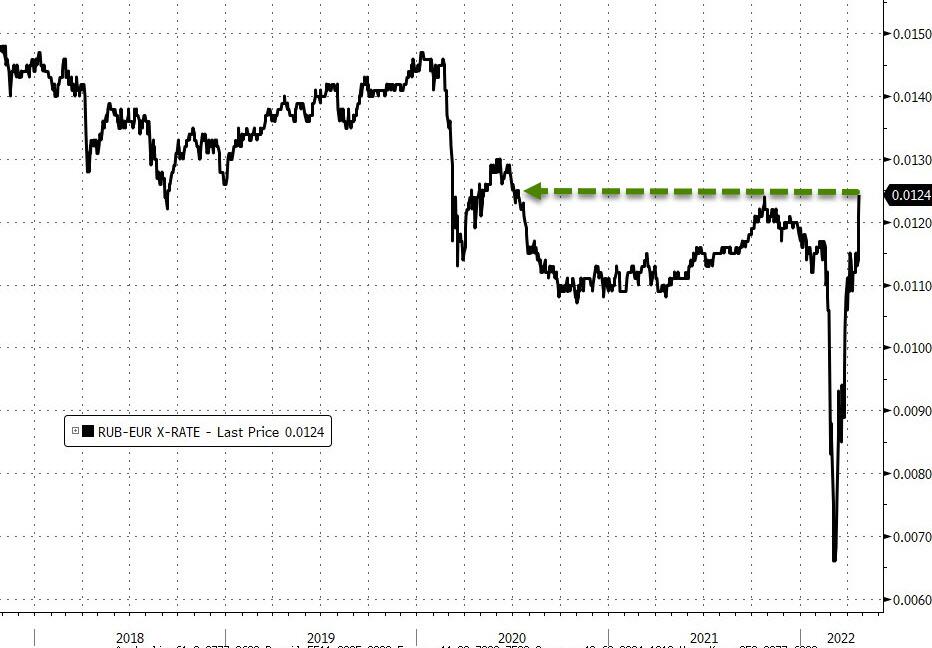
The US Dollar continued its trajectory to higher prices, the Chinese Yuan went the other way, and the Russian Ruble soared to its strongest relative to the Euro in 2 years.  

On deck later this week are the latest CPI numbers from countries around the world, which will have an impact on bond yields and equities.  

Read More

ETFs On The Cutline – Updated Through 04/22/2022

Ulli ETFs on the Cutline Contact

Below, please find the latest High-Volume ETF Cutline report, which shows how far above or below their respective long-term trend lines (39-week SMA) my currently tracked ETFs are positioned.

This report covers the HV ETF Master List from Thursday’s StatSheet and includes 312 High Volume ETFs, defined as those with an average daily volume of more than $5 million, of which currently 80 (last week 106) are hovering in bullish territory. The yellow line separates those ETFs that are positioned above their trend line (%M/A) from those that have dropped below it.

Take a look:                                                                   

The HV ETF Master Cutline Report

In case you are not familiar with some of the terminology used in the reports, please read the Glossary of Terms. If you missed the original post about the Cutline approach, you can read it here.      

ETF Tracker Newsletter For April 22, 2022

Ulli ETF Tracker Contact

ETF Tracker StatSheet          

You can view the latest version here.

PUKING INTO THE WEEKEND

[Chart courtesy of MarketWatch.com]

  1. Moving the markets

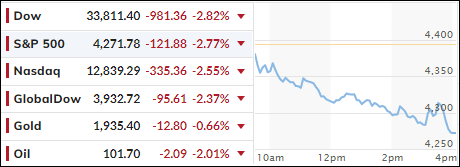
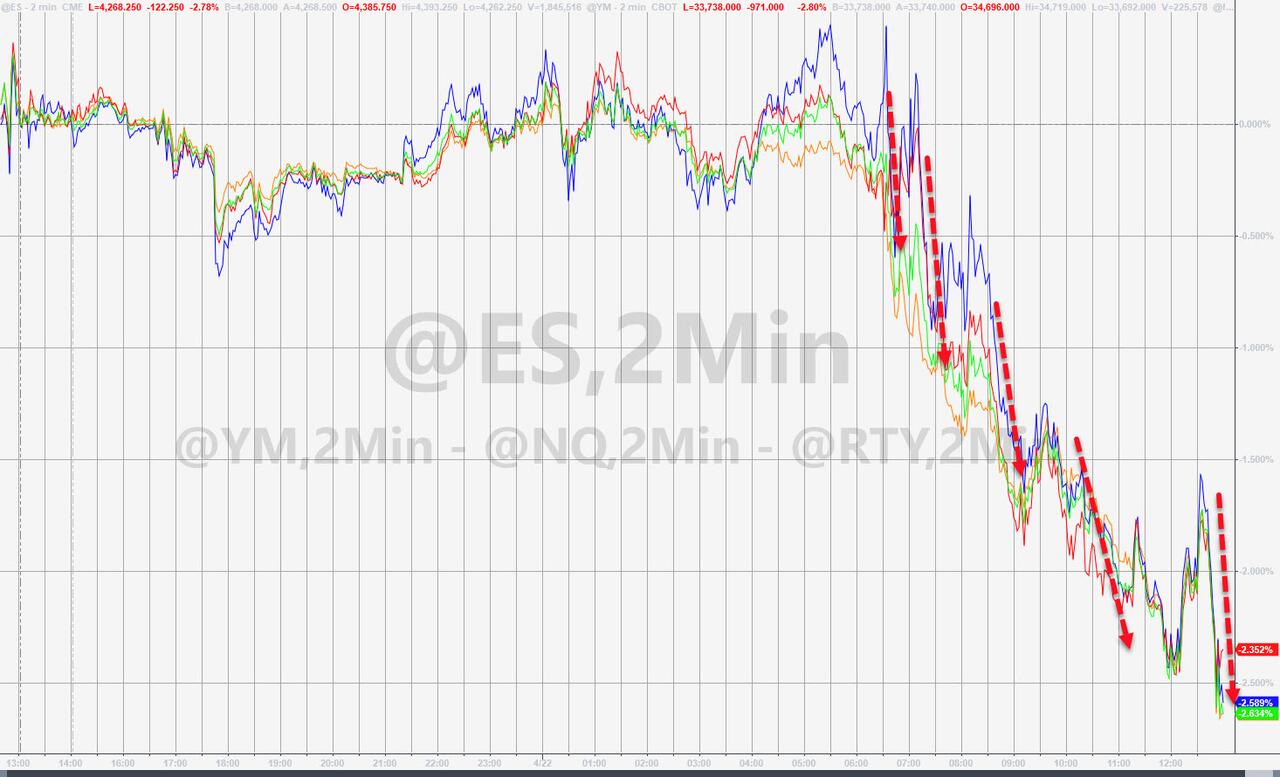
After yesterday’s pump and dump session, during which the Dow jumped to a 300-point lead early on, only to see those gains wiped out, with the index closing with a loss of almost 370 points.

That bearish momentum continued during the overnight session and worsened after today’s opening, as the puke-a-thon picked up speed during the afternoon. At this moment in time, the late March melt up in the Nasdaq has been fully reversed, which to me means that it may have been nothing more than a dead-cat-bounce.

Headline news showed no encouraging developments anywhere, as these samples from ZeroHedge show:

  • Whispers Of Yuan Devaluation After Biggest Weekly Plunge Since 2015 As Yen Craters
  • Japan Begs US For “Coordinated Currency Intervention”, Is Rejected By Yellen
  • Israel Dumps The Dollar For China’s Renminbi
  • Markets Monkey hammered As Rate-Hike Expectations Soar

Some reality finally set in, as traders now had to price in a 50-bps (basis points) hike in both May and June, while some whispered of a potential 75 bps increase, as ZH pointed out. That was far more than expected, the bullish mood soured, and the bears picked up the baton and ran with it handing the Dow an almost 1,000-point loss.

Added ZeroHedge:

Fed mouthpiece Bullard warned that “the bond market is not looking like a safe place to be”; and Powell backed a one-two of 50bp hikes, which is now priced in. His goal is also “to get inflation down without a recession”. That’s like saying you want your opponent’s boxing gloves to hit the canvas but not the actual boxer. It’s a plan. Those are words. Just stupid ones.

In the end, there was no place to hide, as all asset classes were taken out to the barn and spanked with an assist given by disappointing quarterly results. Even the well-performing sector funds proved not to be immune to today’s thrashing.  

Chief economist Jeanette Garretty summed it up like this:

This is all about Powell’s comments, but the cautionary remarks about future sales growth in so many earnings announcements are driving home the essential point: fighting inflation will inflict some pain.

No kidding.

If the Fed is serious about fighting inflation and not concerned with the effects on the markets, there is bound to be a lot more pain to come. That’s why it pays to be prepared via an exit strategy, should a full-fledged bear market develop and become reality.  

Read More