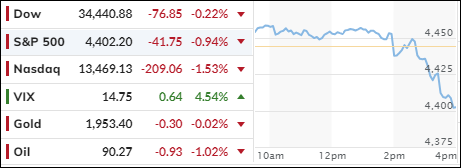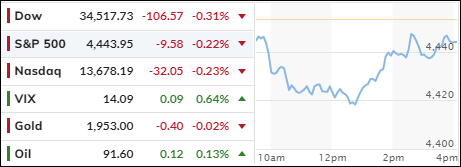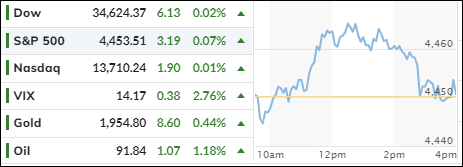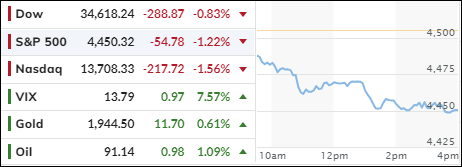
[Chart courtesy of MarketWatch.com]
- Moving the markets
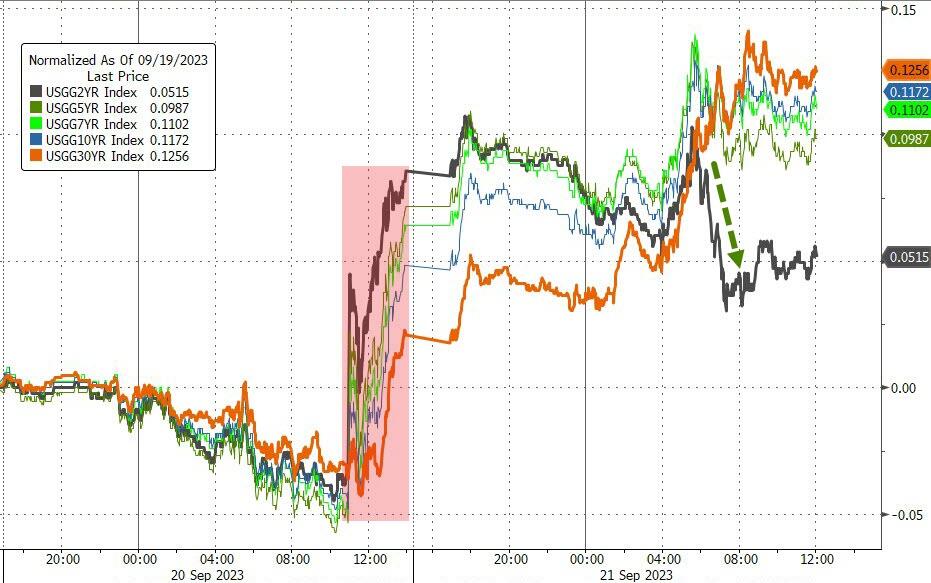
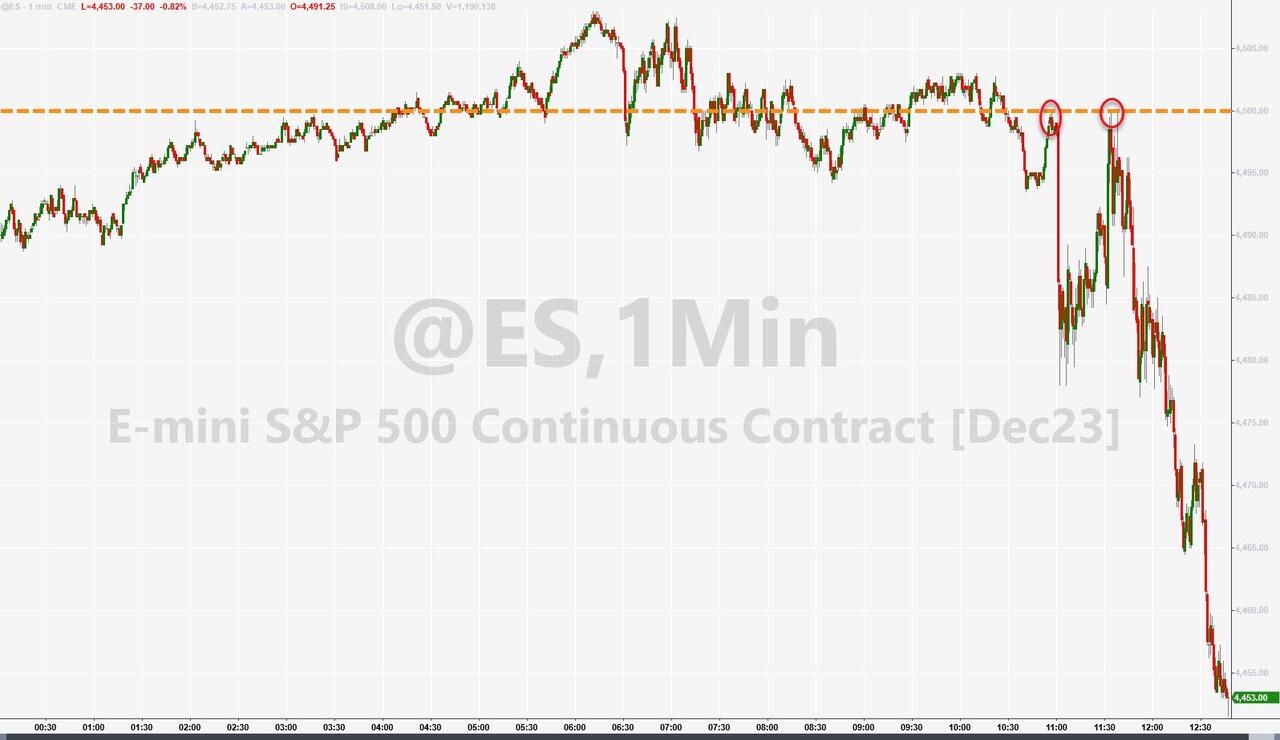
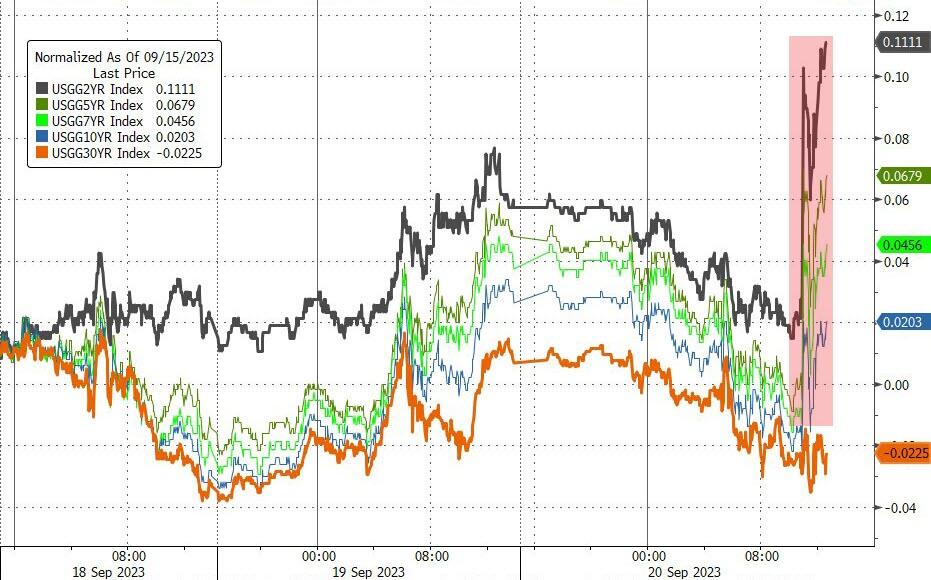
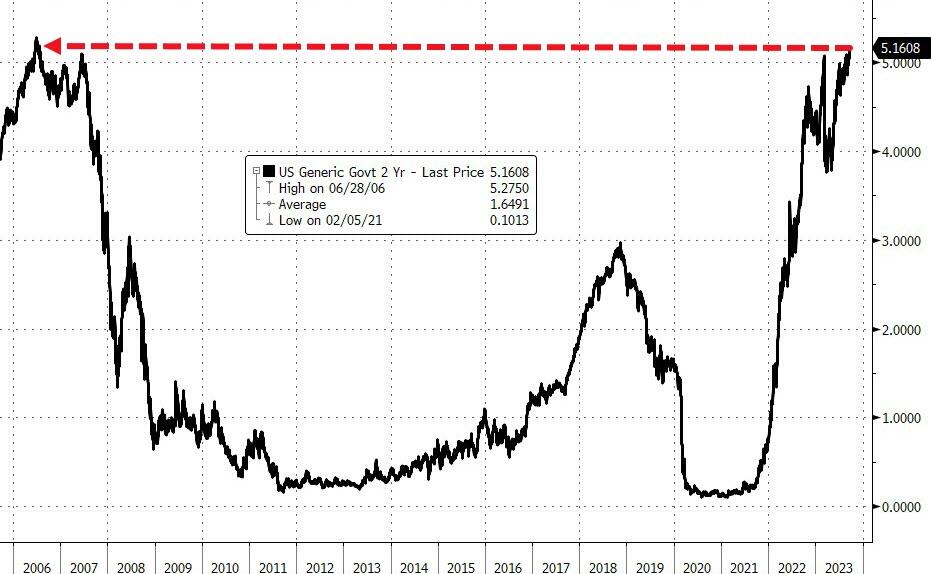
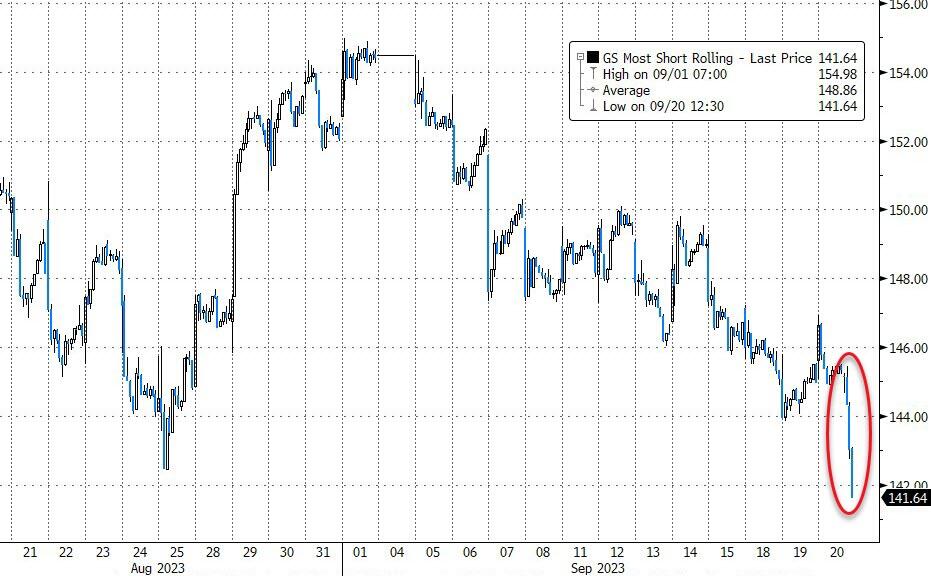
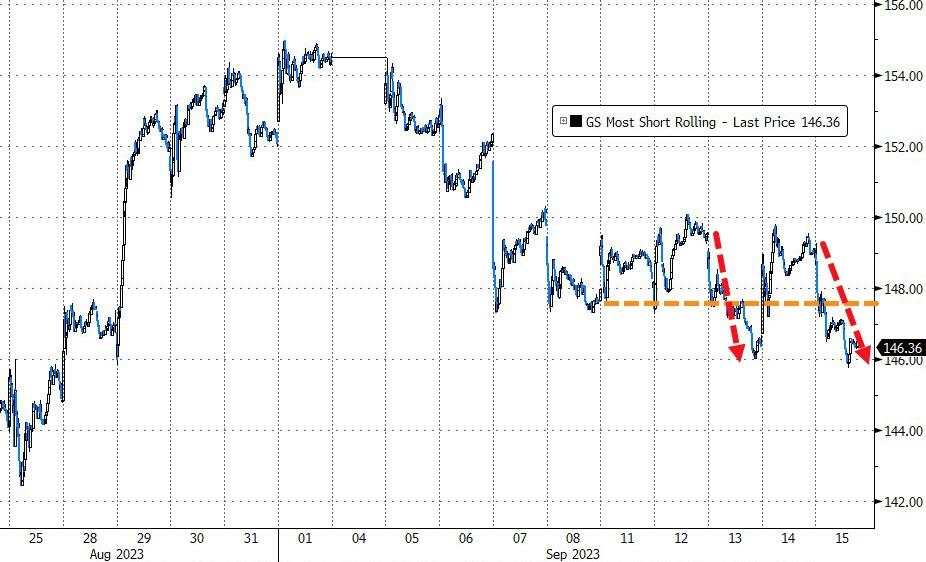
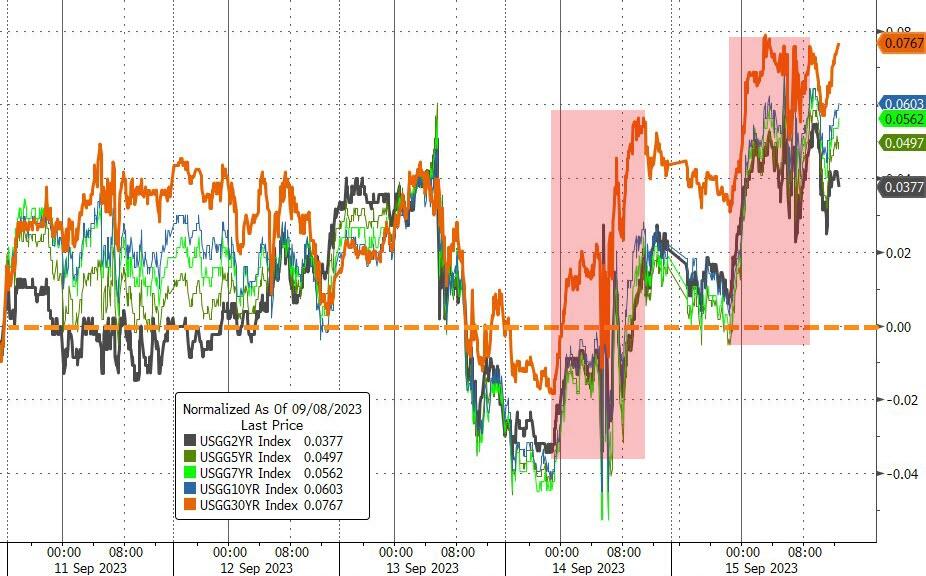
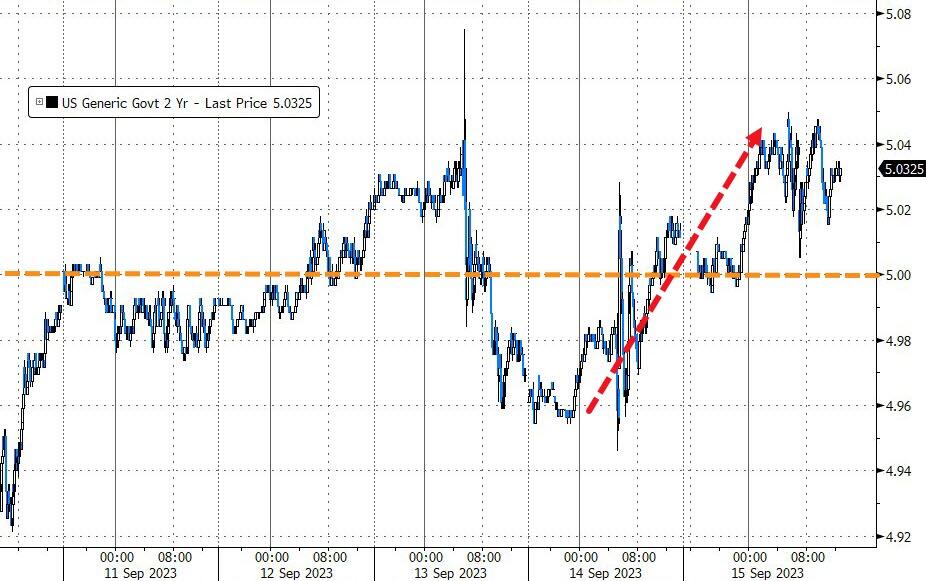
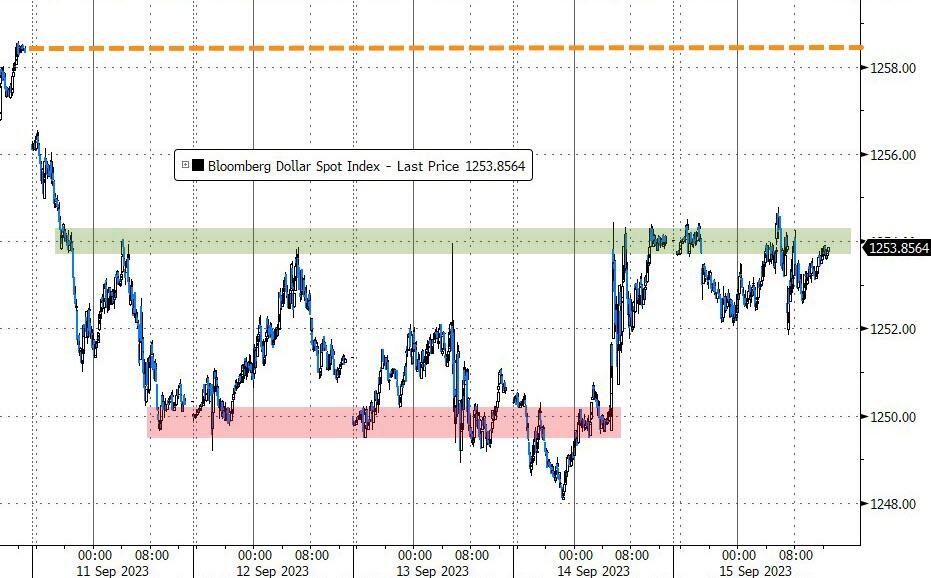
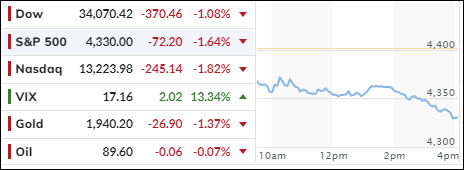
The market had a terrible day on Thursday. Stocks fell like rocks, as bond yields soared to levels not seen in years. The Fed is to blame, as it plans to keep raising interest rates and keep them high for a long time. The Fed thinks the economy is too hot and inflation is too high, so it wants to cool things down with higher rates. But the market thinks the Fed is making a mistake and risking a recession.
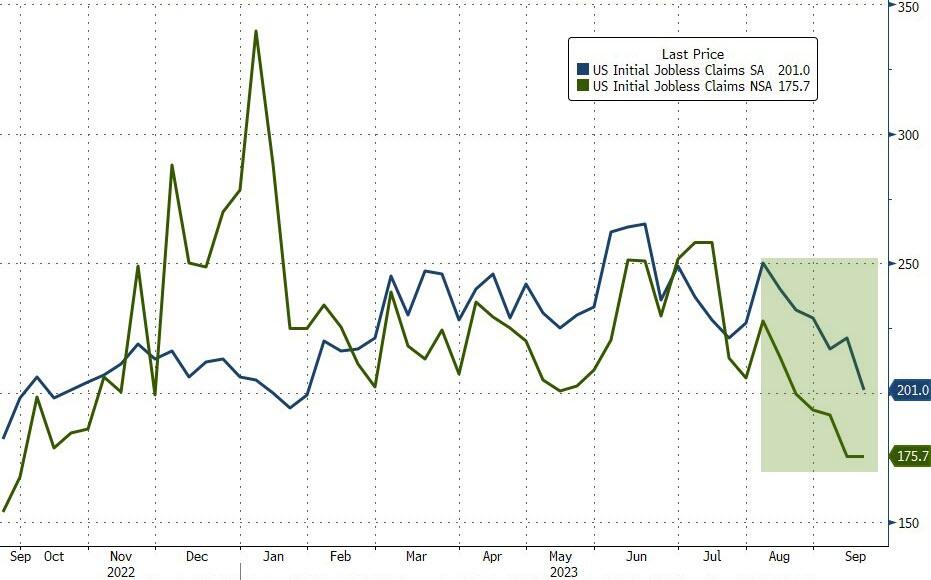
The Fed’s decision came after a report showed that the job market is still strong, with fewer people filing for unemployment benefits than expected. This means that more people have jobs and incomes, which is good for the economy. But it also means that the Fed has less reason to cut rates, which is bad for the market.
The Fed’s chair, Jerome Powell, tried to calm the market by saying that the economy could still land softly, without crashing hard. But he also said that this was not his main expectation. He sounded like he was not very confident about his own plan.
The market did not like what Powell said, or what he did not say. The market wanted him to say that he would cut rates soon, or at least stop raising them. But he did not say that. He said he would keep raising them and keep them high for longer.
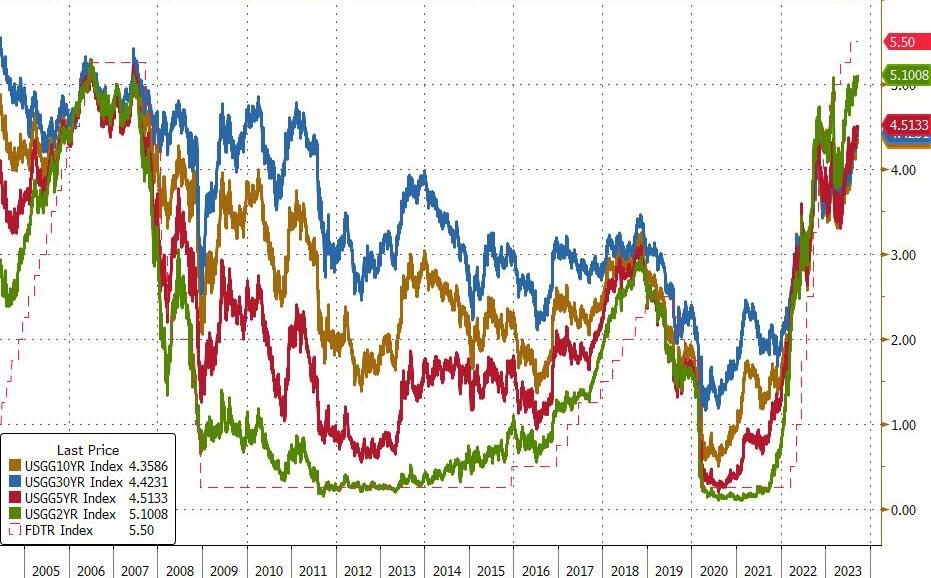
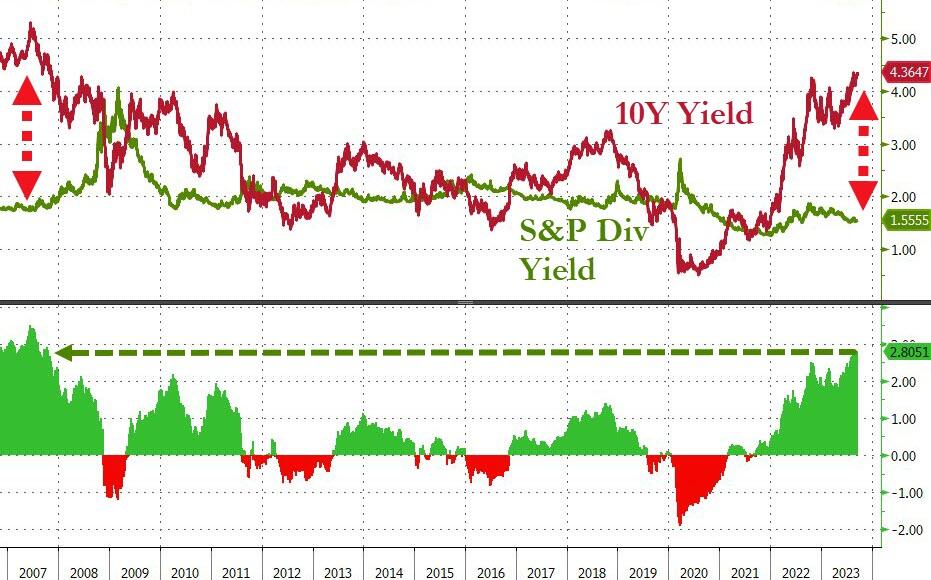
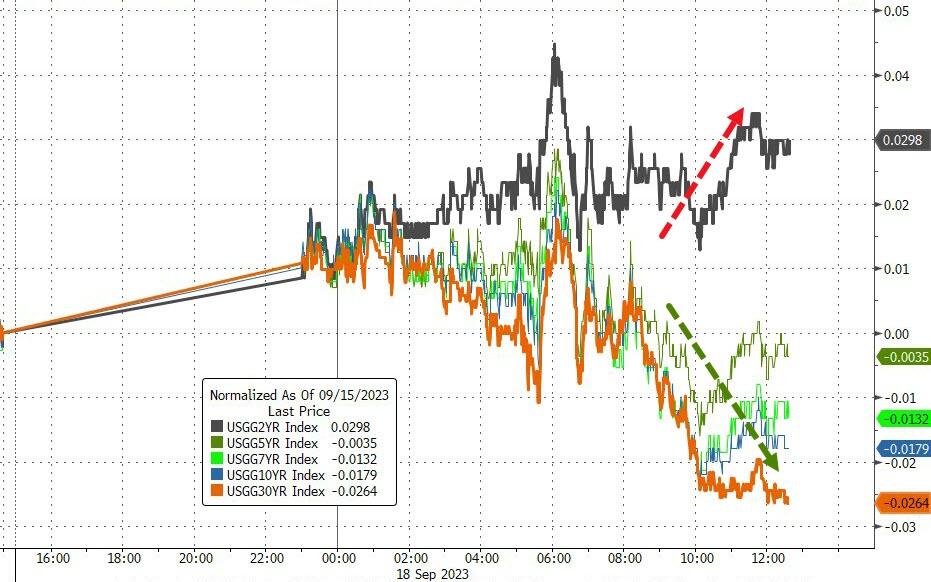
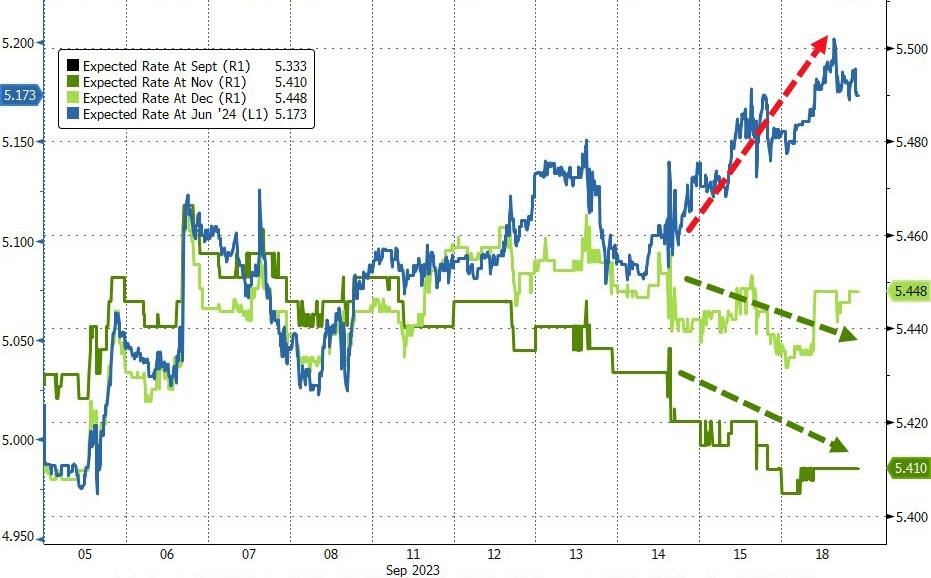
The market reacted by selling stocks and buying bonds. This pushed up bond yields, which are the interest rates that bond investors get. Higher bond yields mean lower bond prices, and lower stock prices too. Higher bond yields also mean higher borrowing costs for businesses and consumers, which can hurt the economy.
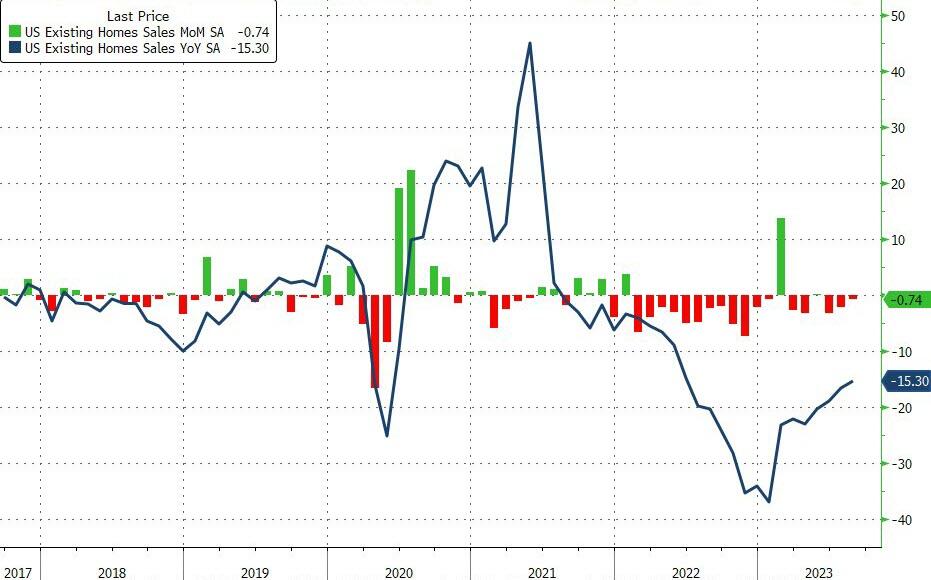
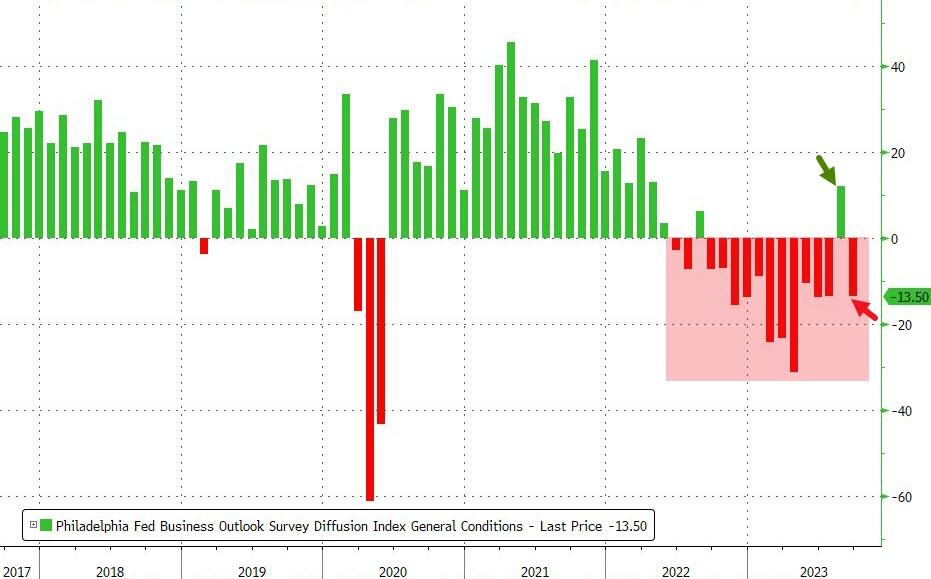
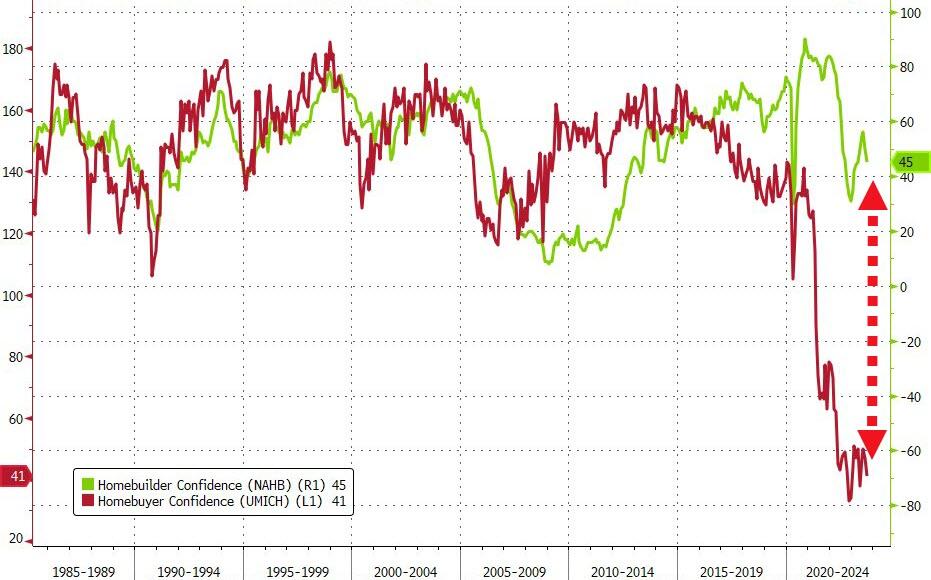
The market was already worried about other things, like the housing market slowing down, the manufacturing sector shrinking, and the government shutting down. These things can also hurt the economy and make the market nervous.
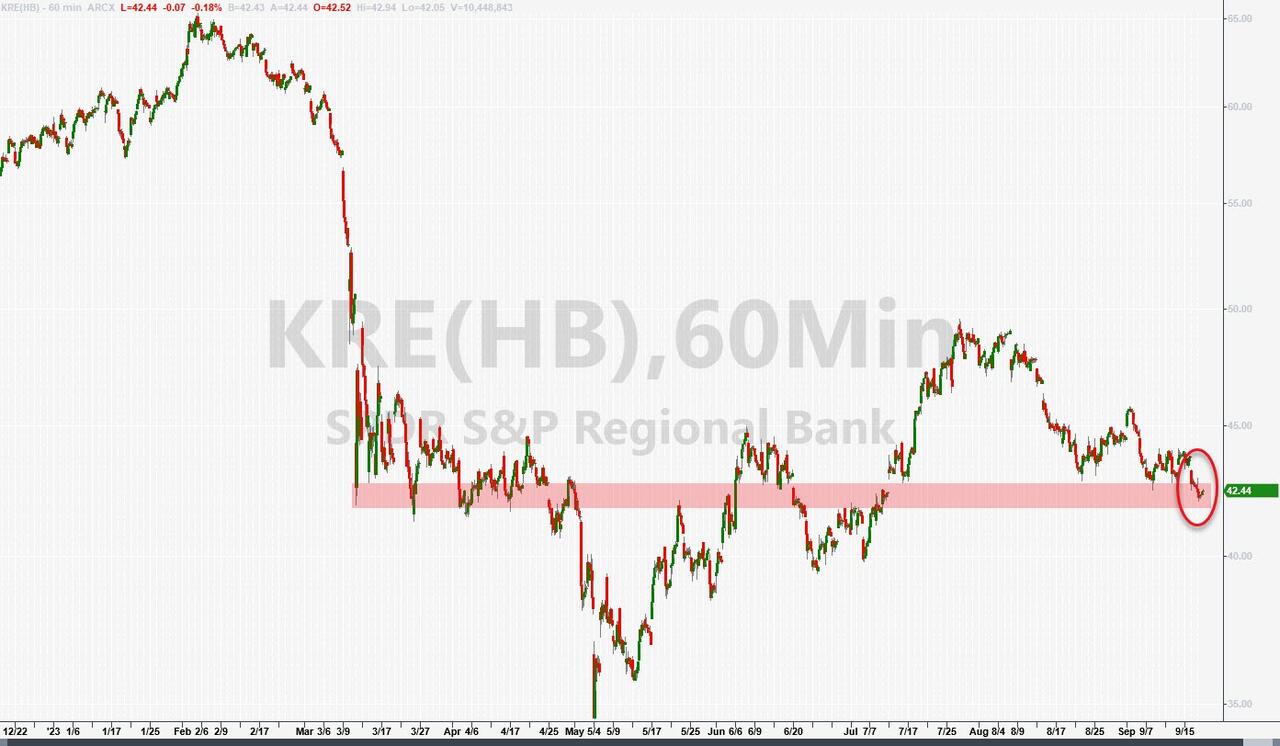
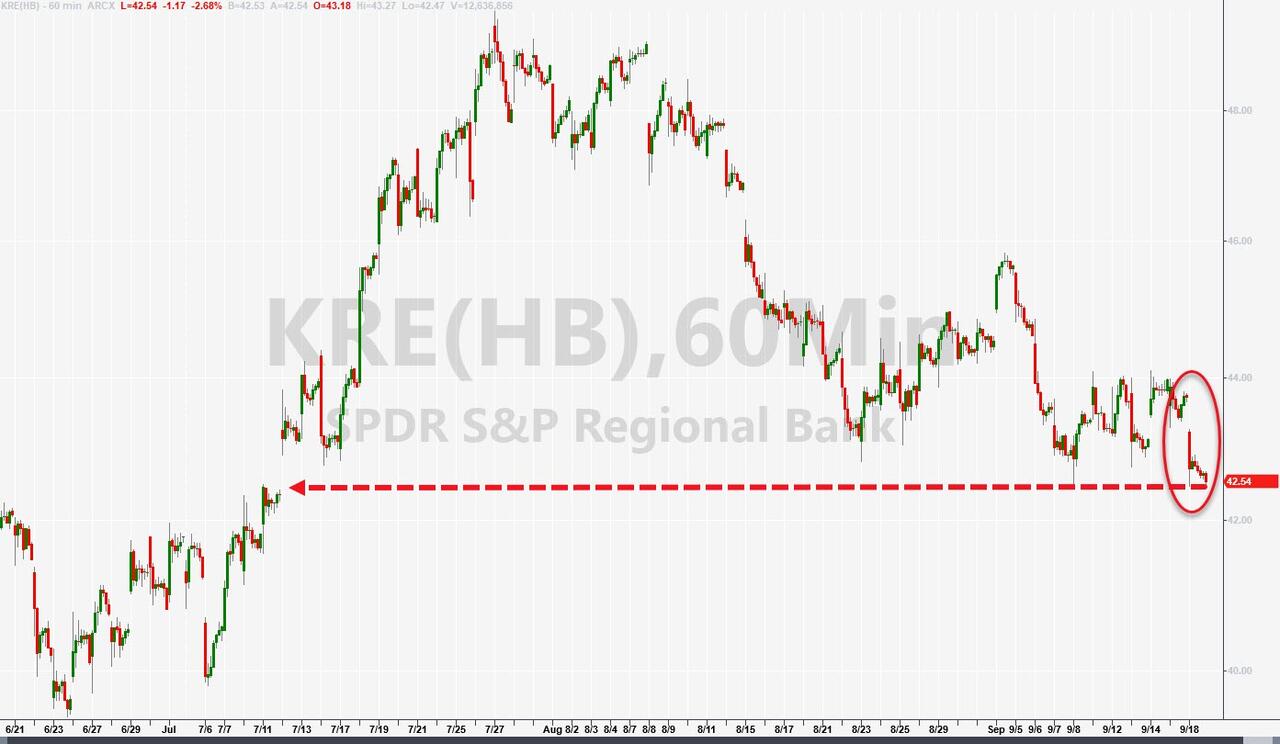
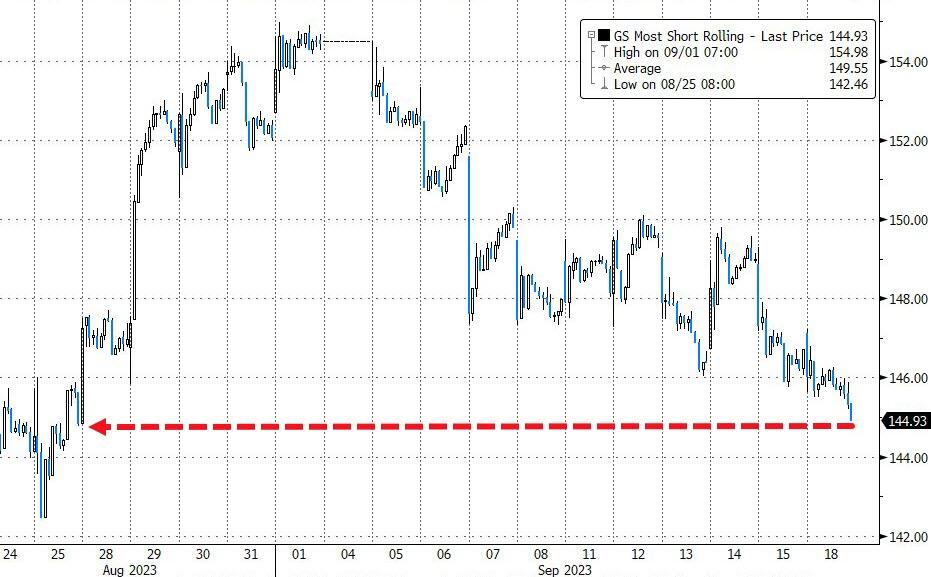
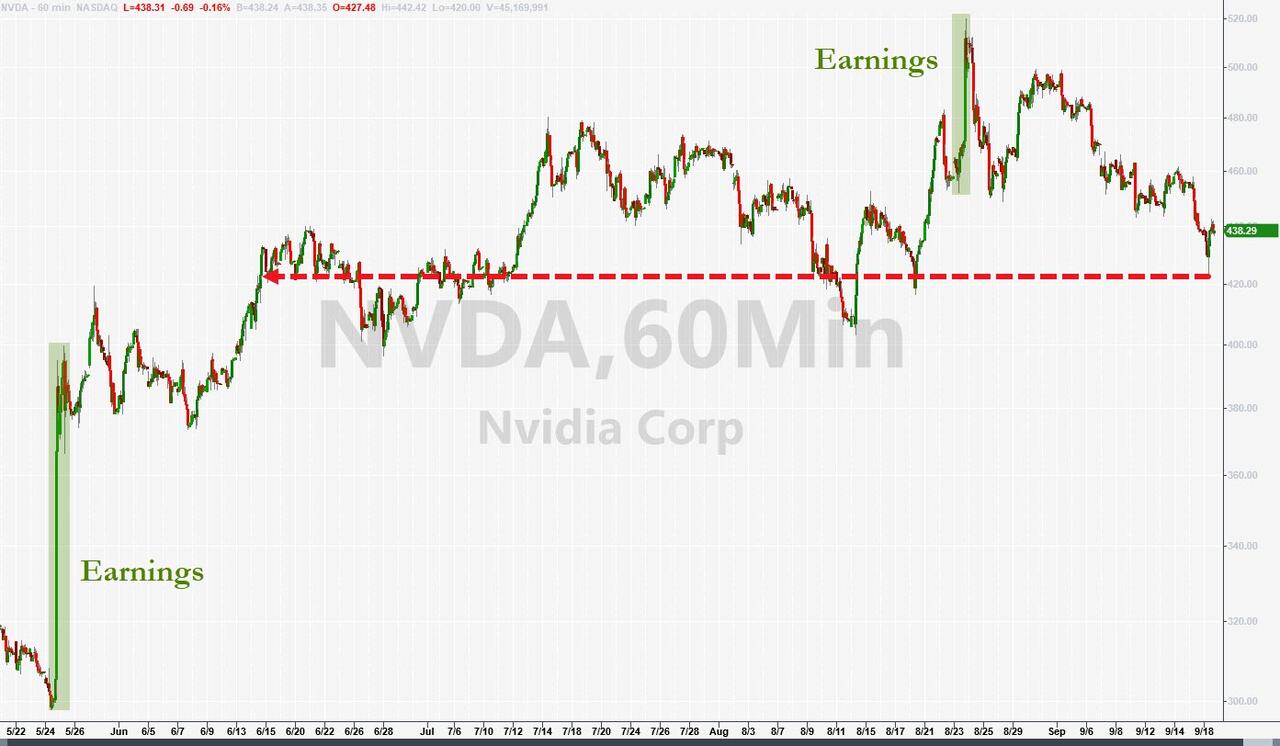
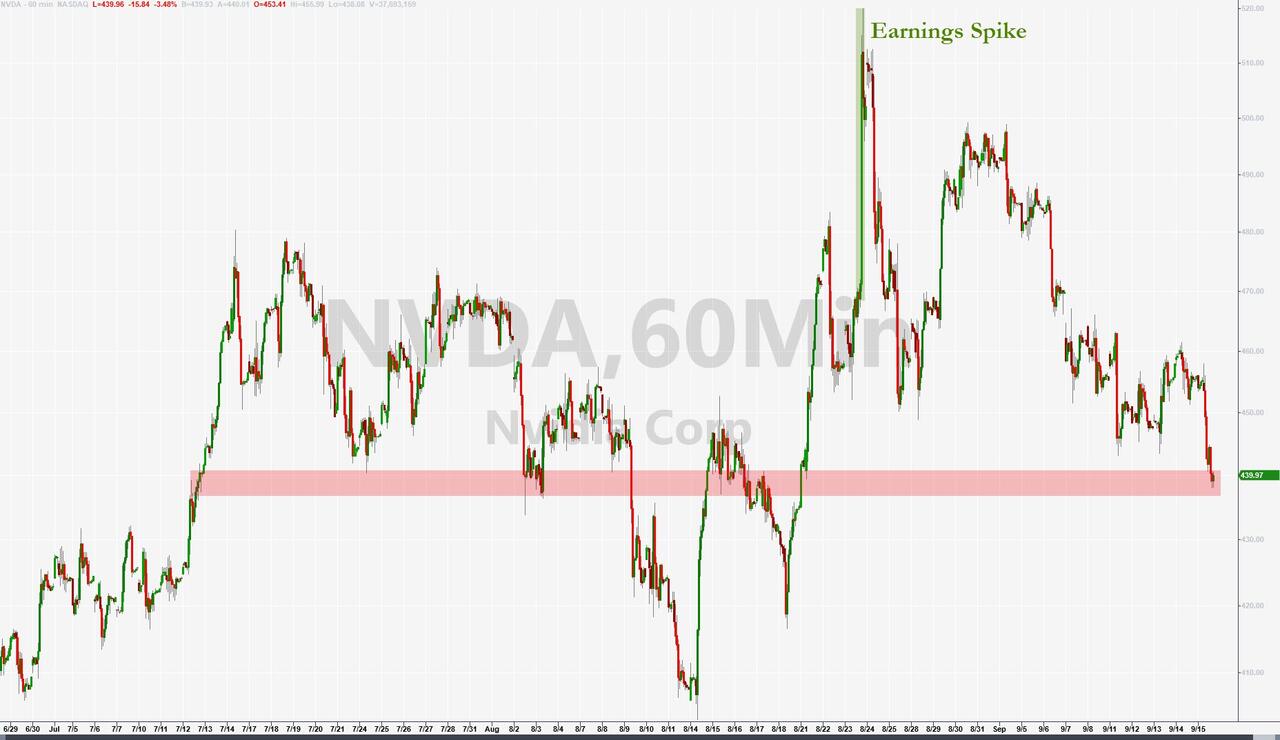
The market was so nervous that it broke some important support levels, which are the prices that usually stop the market from falling further. When these levels are broken, the market can fall even more.
Equities fell so much that our Domestic Trend Index turned more negative and gave us a “Sell” signal for domestic equity funds. This means that we should sell these funds tomorrow unless the market bounces back strongly. See section 3 below for more details.
I am doing this to protect our portfolios from losing more value if the market keeps falling. I think it is better to be cautious than reckless in these uncertain times.
Stay tuned.
Read More