Ending The Month With A Whimper

Ulli Market Commentary Contact

[Chart courtesy of MarketWatch.com]

  1. Moving the markets

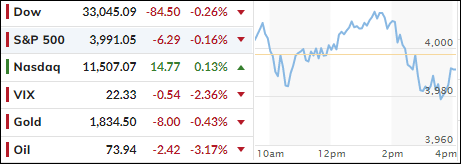
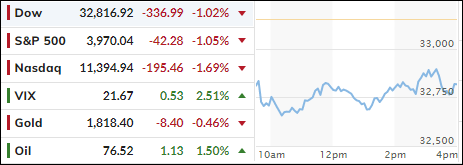
Despite a good midday effort, at which time bullish sentiment exploded to the upside, the bounce turned out to be nothing more than a head fake, with two out of the three major indexes slipping back into the red—not only for the day but for the month as well.

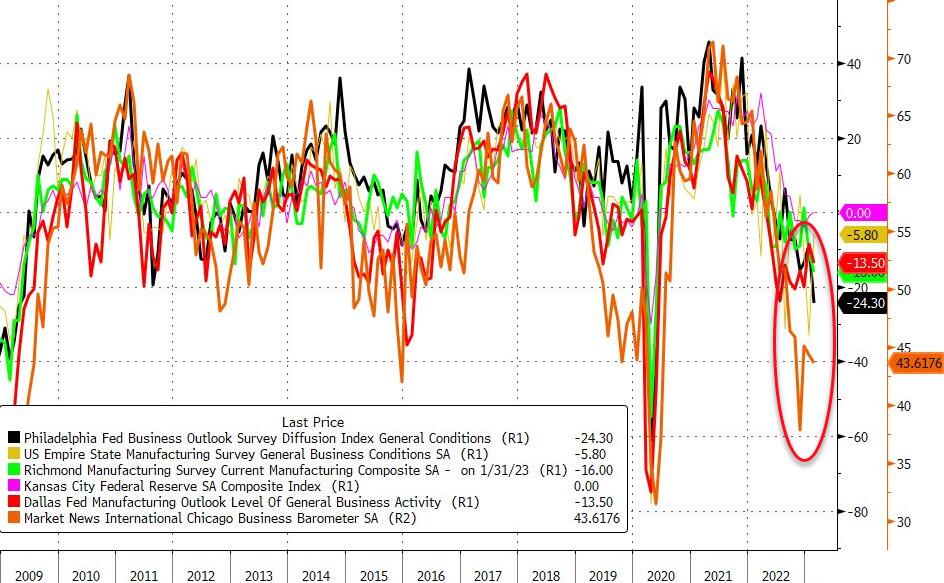
Again, economic data points were negative, with this spaghetti menu of widely followed indicators showing one thing, namely that the direction is “down” with most of them remaining in contraction mode.

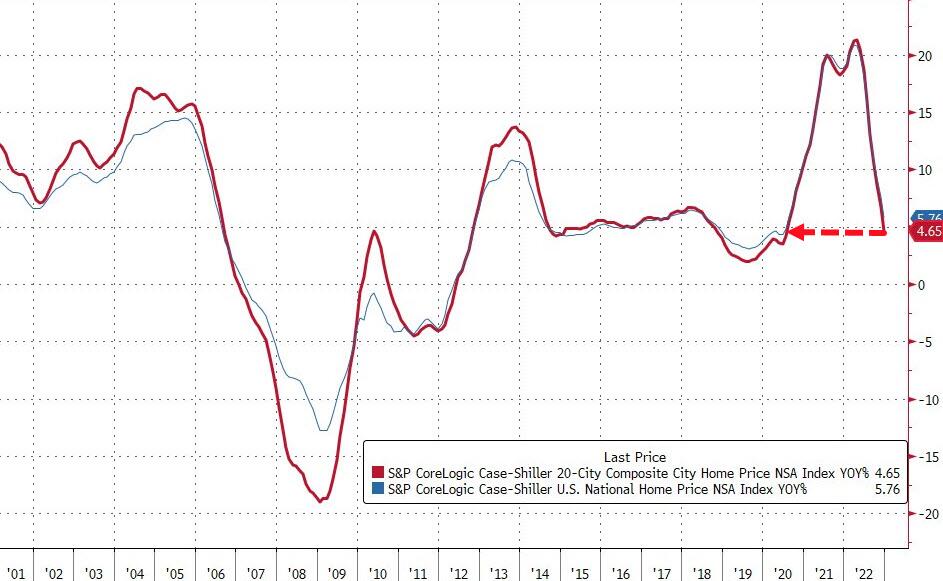
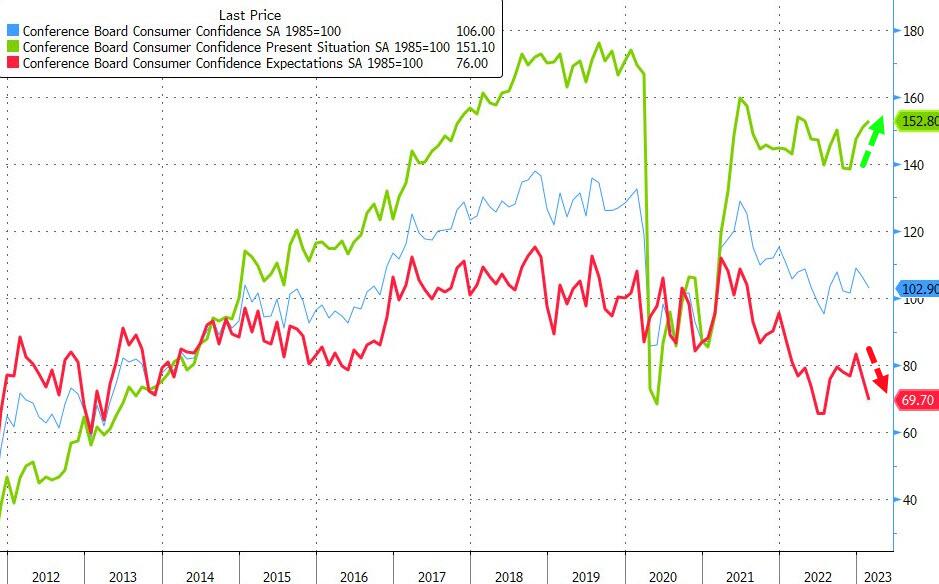
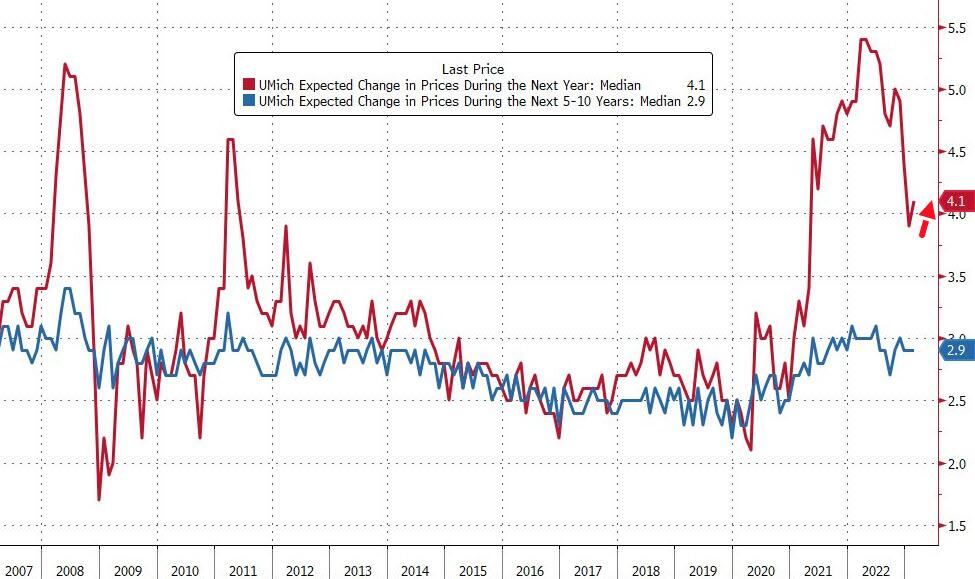
Also, US Home prices plummeted for the 6th straight month in December, which showed the annual growth to be the weakest since July 2020, as ZeroHedge pointed out. But Consumer Confidence expectations improved a tad in February, while inflation rate expectations went the other way and turned higher.

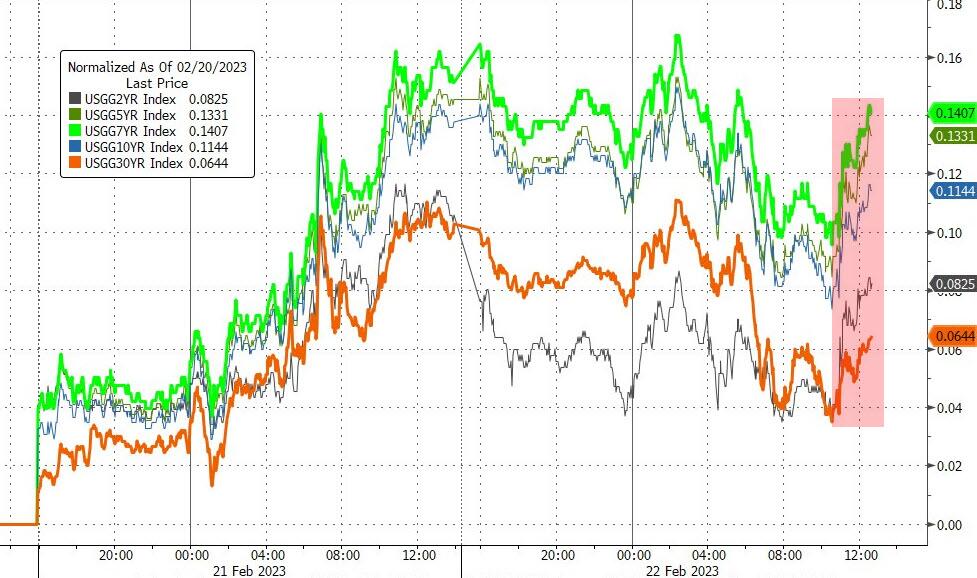
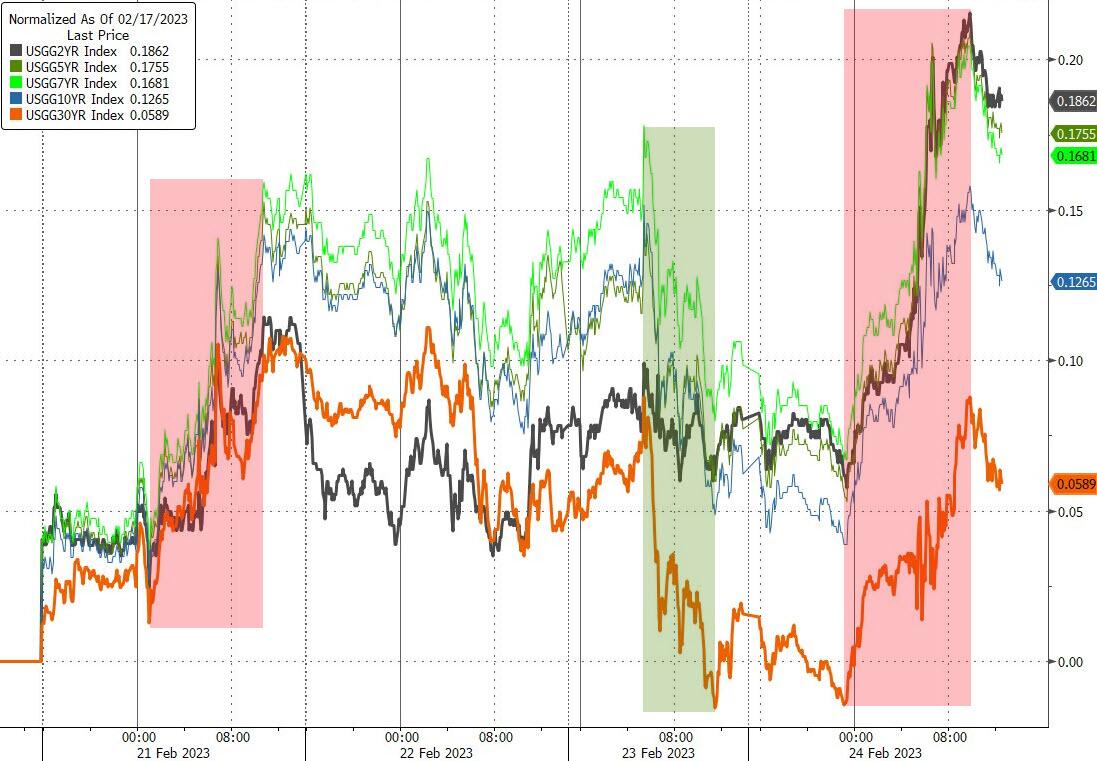
In the end, the weakness in equities can be attributed to one thing, and that is the rally in bond yields with the 2-year gaining almost 60bps, while the 30-year “only” added 30bps, both of which are huge moves and confirm that the Fed’s aggressive inflation stance continues.

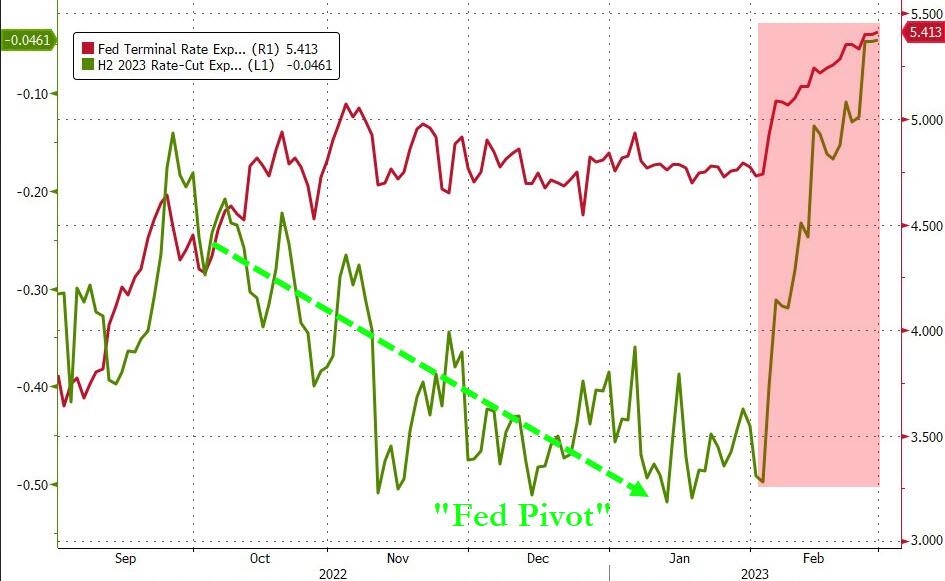
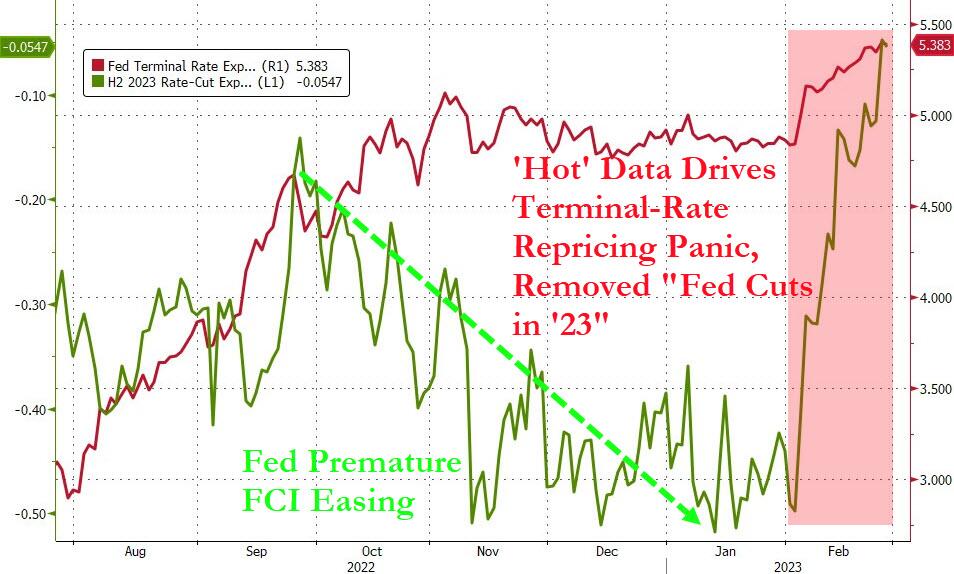
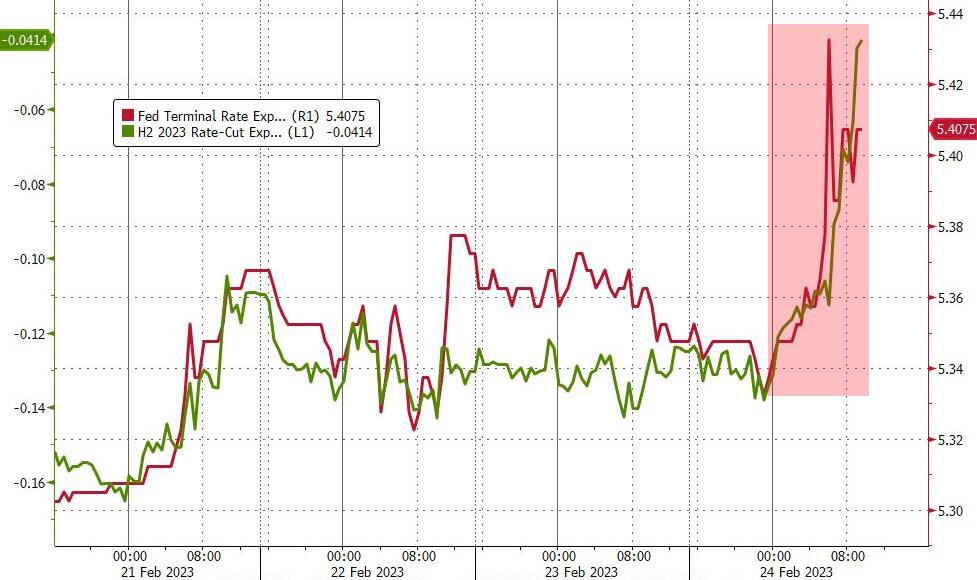
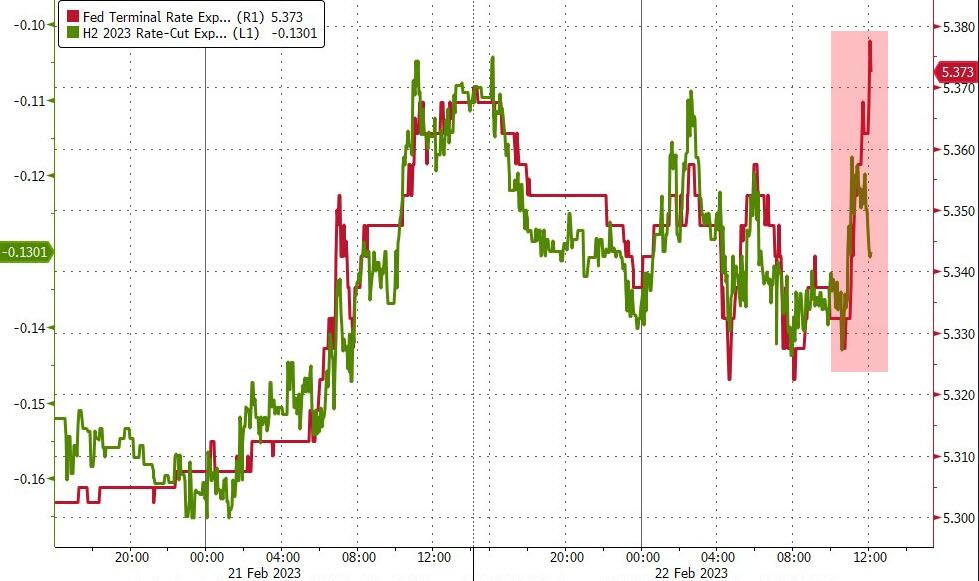
Traders had to swallow that bitter pill, which is also shown in this terminal rate expectation chart, with that number (red line) now approaching 5.5%, while rate cut expectation have simply disappeared, as the Fed pivot promoters now have joined the hawkish crowd.

While the 10-year bond yield is still struggling to break above the 4% level, all action was in the short-term 2-year yield, which broke back above its November highs to reach a point last seen in July 2007. Amazing!

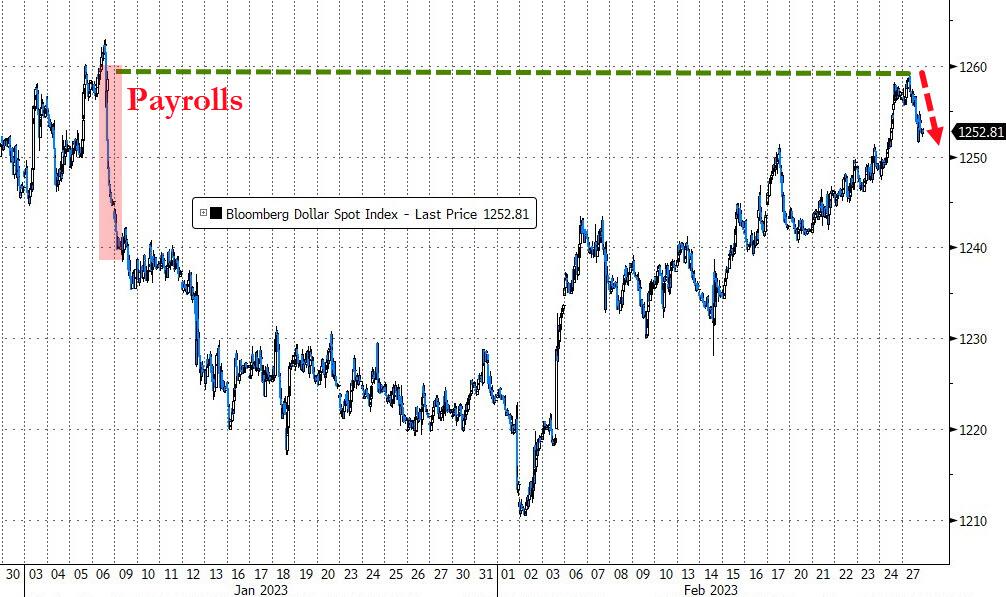
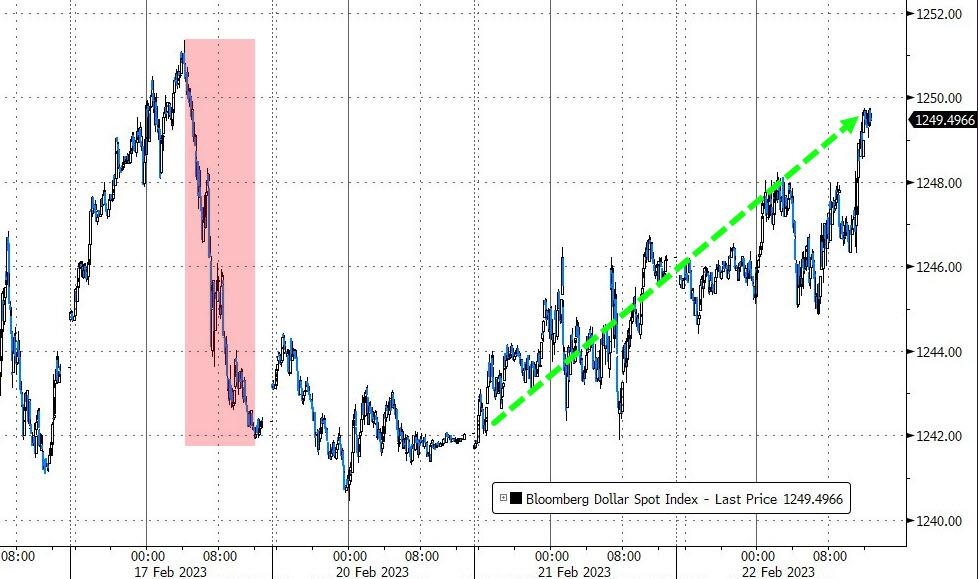
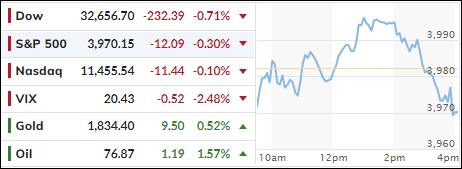
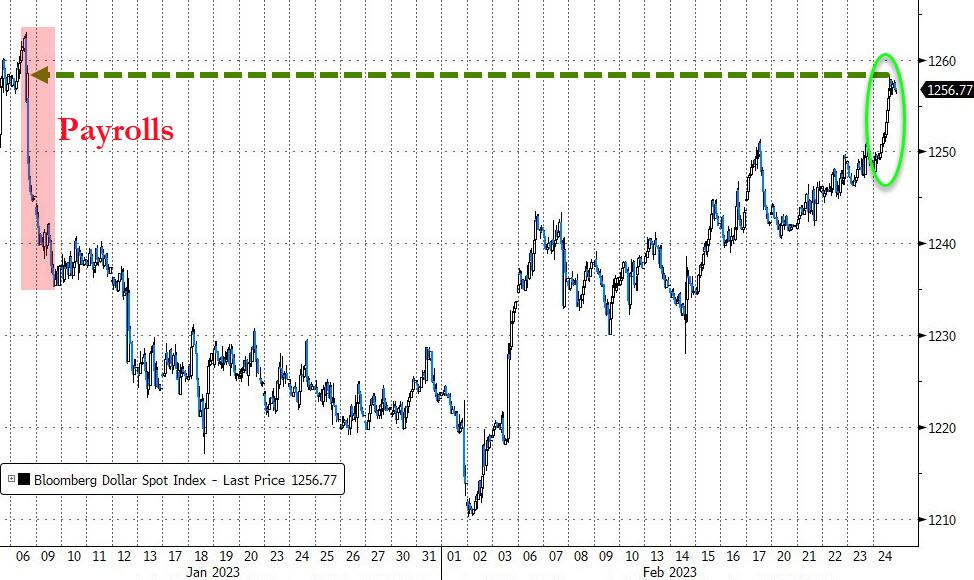
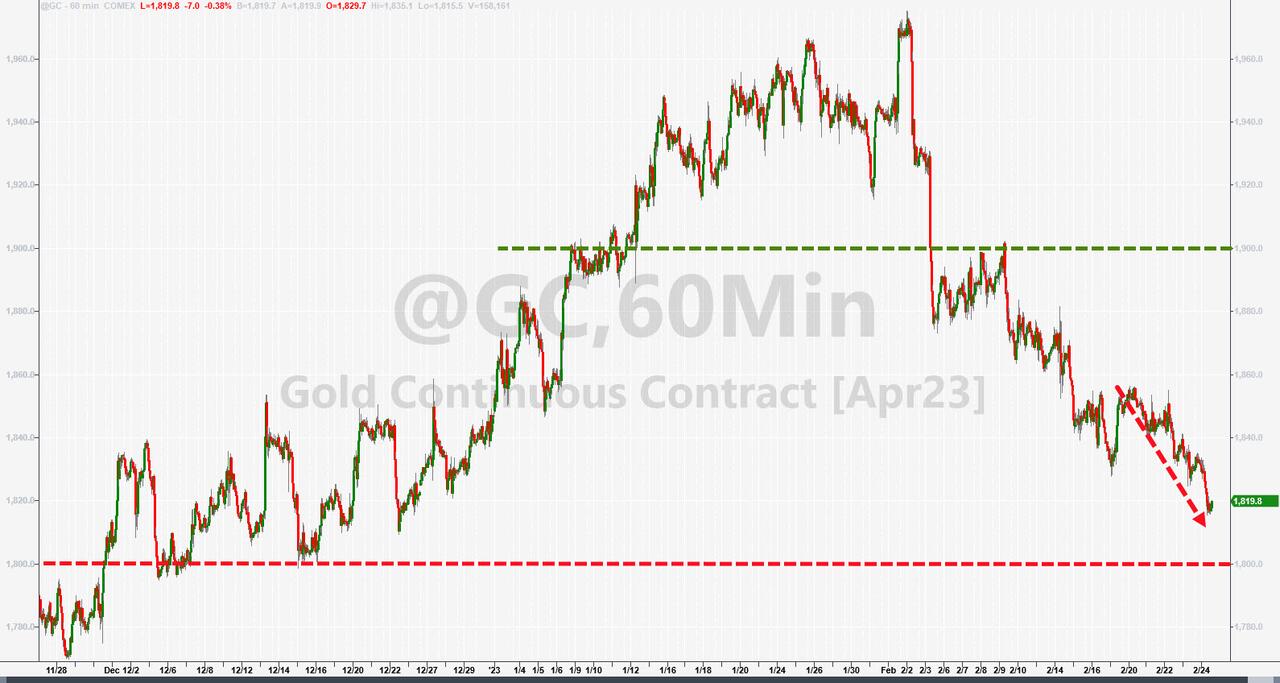
The US Dollar, after struggling in January, surged with a vengeance, thanks to higher rates, and is now back in the green YTD. As a result, Gold moved the opposite way and gave back its January gains.

As we move into March, equities will have a hard time finding a bottom, as continuously higher rates will present a formidable headwind, that is if that trend continues.

Read More
Cautiously Advancing

Ulli Market Commentary Contact

[Chart courtesy of MarketWatch.com]

  1. Moving the markets

Last week’s thrashing of the markets was the worst so far in 2023. So, it comes as no surprise that traders and algos engaged in some bottom fishing with another big week in retail earnings hopefully proving the support to give these efforts some staying power.

While the early thrust petered out, at least the major indexes were able to close out the session with moderate gains. The recent spike in bond yields, with the 10-year kissing its 4% level, created a risk-off scenario, but today’s slight pullback helped yet gave only limited support to equities.

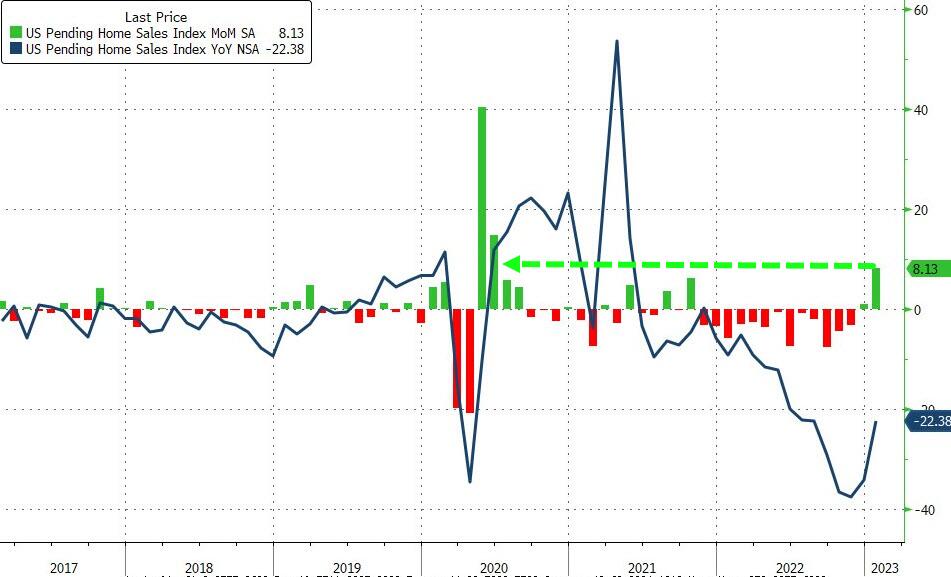
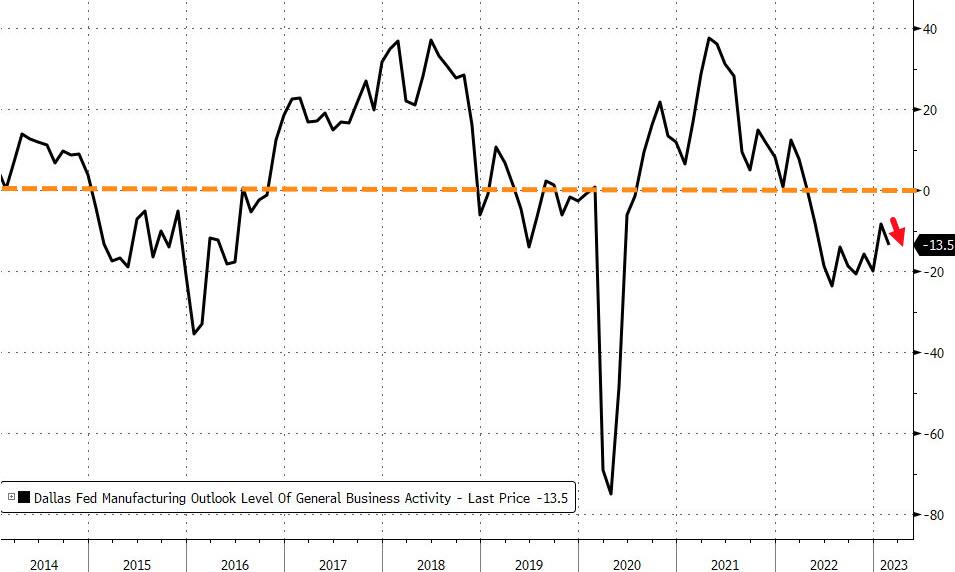
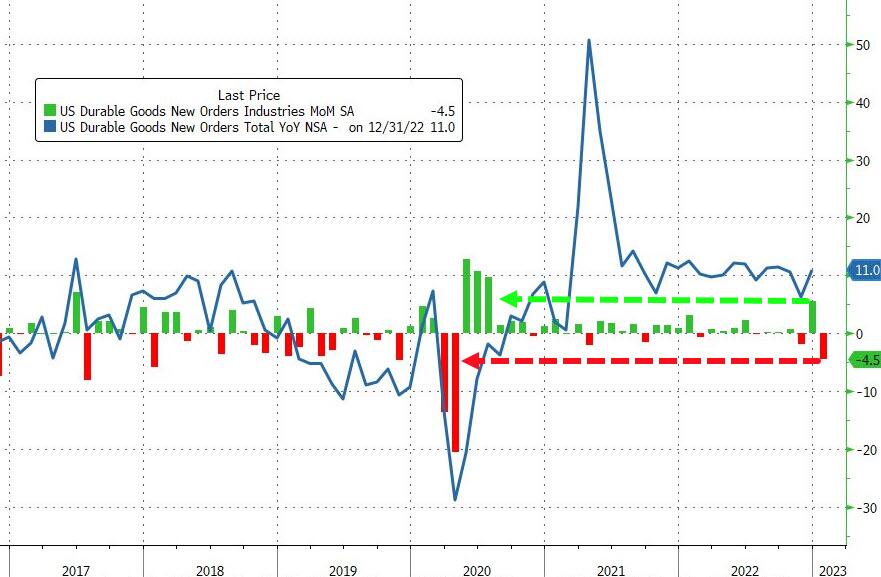
The economic data bag was mixed, and we learned that US Pending Home Sales exploded higher in January, but the Dallas Fed Manufacturing Production index plunged into contraction, dipping to -13.5 from -8.4. Following that same meme were Durable Goods Orders, which plummeted the most since April 2020. Ouch!  

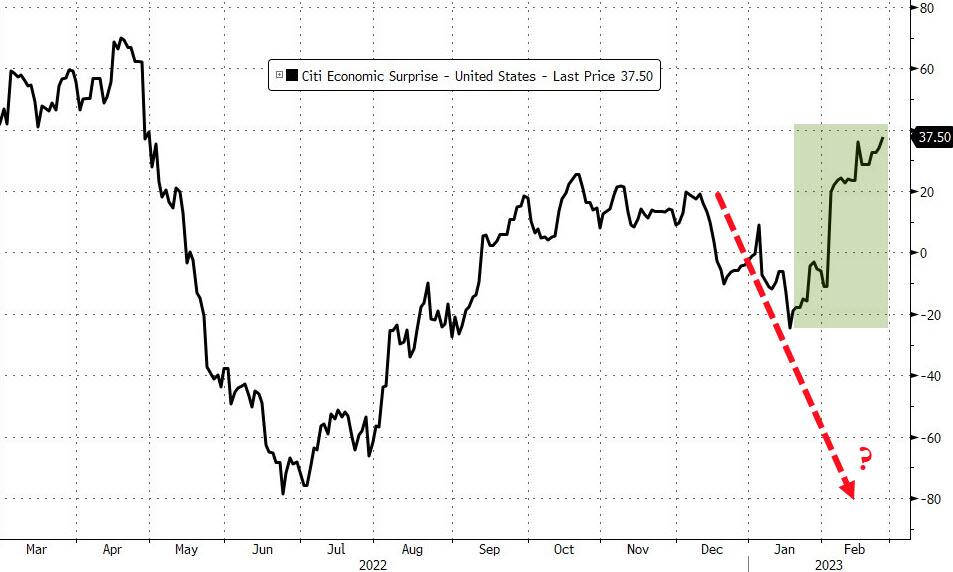
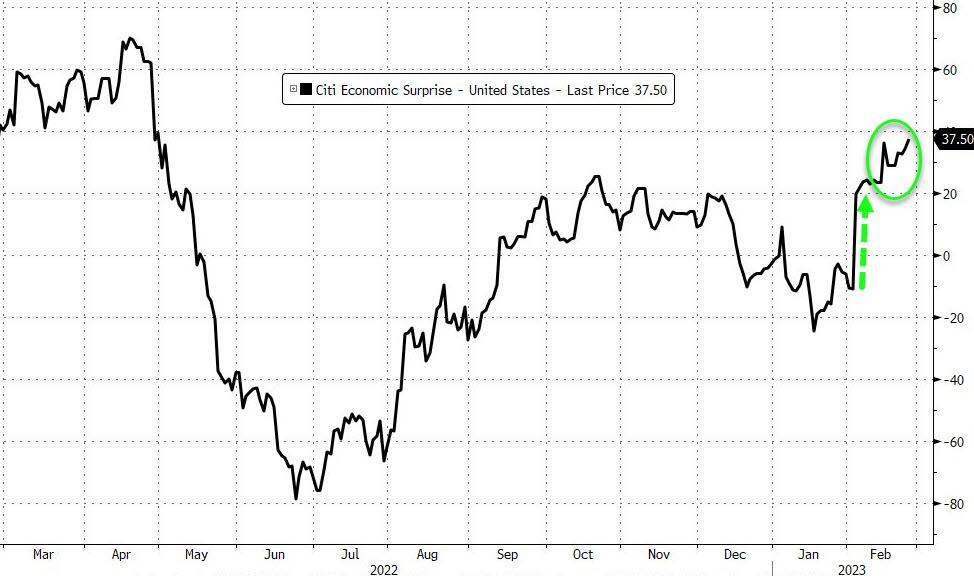
Bucking the trend, and providing more evidence that a Fed pause or pivot is nowhere near in sight, was the Citi Economic Surprise Index, which ratcheted higher—again. Consequently, the Fed’s terminal rate inched up towards the 5.5% level, while rate cut expectations were non-existent, which means hopes of a dovish Fed response have been dashed.

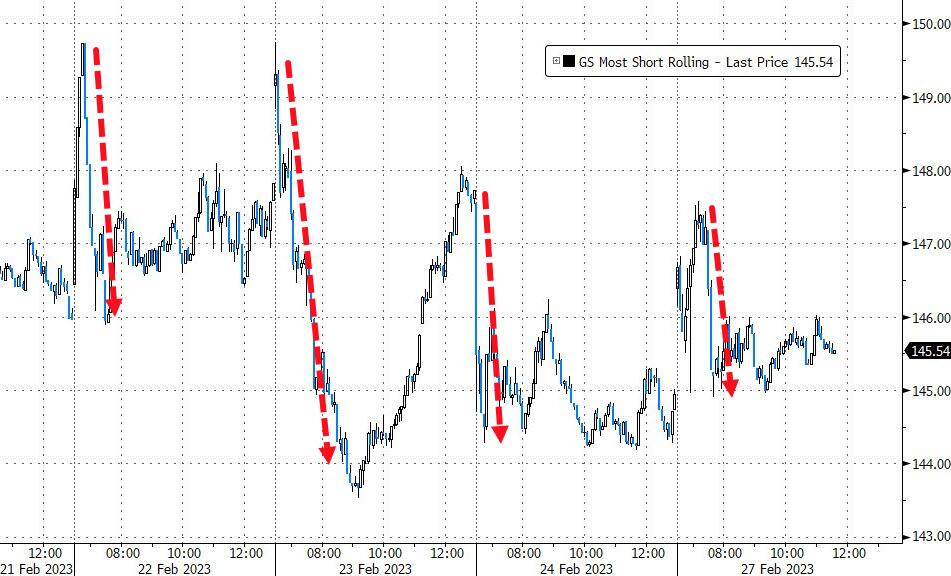
As ZeroHedge pointed out, the ever-present short squeeze has now failed for the 4th day in a row, confirming the continued tug-of-war between bulls and bears with the S&P’s 4k level being the much sought after price, along with the 200-day M/A, which currently sits at 3,940. If violated, it could trigger some $50 billion of selling by the big boys, who use that level as guiding point for getting out of long positions and establishing short ones.

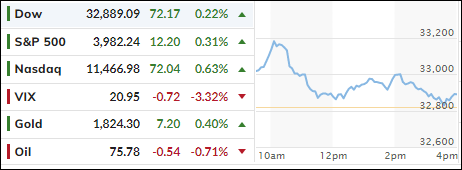
With the US Dollar weakening, Gold finally managed to rebound off its recent lows.

Read More
ETFs On The Cutline – Updated Through 02/24/2023

Ulli ETFs on the Cutline Contact

Below, please find the latest High-Volume ETF Cutline report, which shows how far above or below their respective long-term trend lines (39-week SMA) my currently tracked ETFs are positioned.

This report covers the HV ETF Master List from Thursday’s StatSheet and includes 312 High Volume ETFs, defined as those with an average daily volume of more than $5 million, of which currently 178 (last report: 238) are hovering in bullish territory. The yellow line separates those ETFs that are positioned above their trend line (%M/A) from those that have dropped below it.

Take a look:                                                                   

The HV ETF Master Cutline Report

In case you are not familiar with some of the terminology used in the reports, please read the Glossary of Terms. If you missed the original post about the Cutline approach, you can read it here.      

ETF Tracker Newsletter For February 24, 2023

Ulli ETF Tracker Contact

ETF Tracker StatSheet          

You can view the latest version here.

SURGING BOND YIELDS SPANK EQUITIES

[Chart courtesy of MarketWatch.com]

  1. Moving the markets

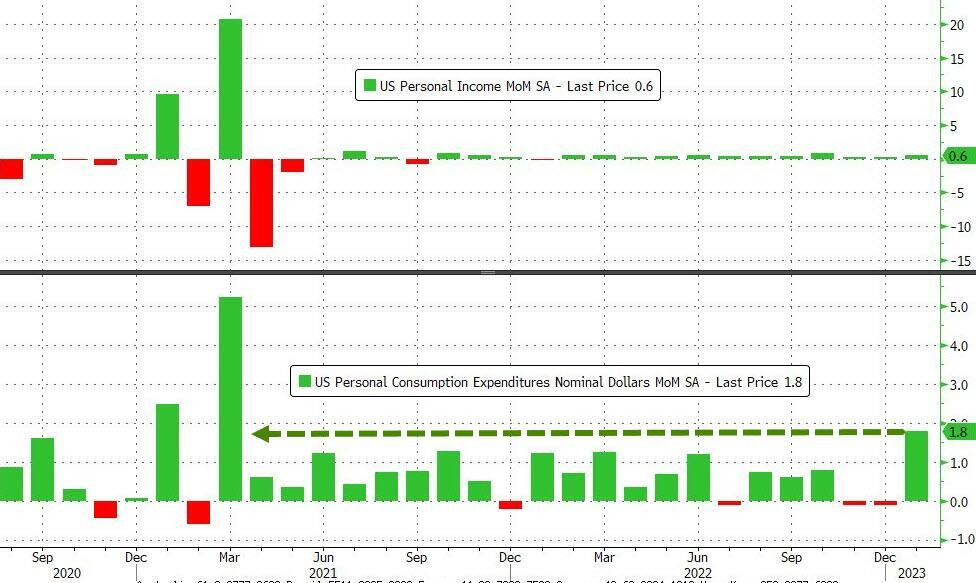
After yesterday’s modest bounce of hope, traders and algos alike were hit with another reality check, namely the fact that the Fed’s preferred measurement of inflation, the PCE (Personal Consumption Expenditures Price Index) rose 0.6% in January and 4.7% YoY.

That exceeded market expectations and, when combined with personal spending having soared by 1.8%, which was not only above hopes of 1.4%, but also the biggest leap since March 2021, you have a recipe for market chaos.

That’s exactly what we got, as the Dow dumped some 470 points early on, but that deficit was reduced a little as dip buyers could not resist and nibbled at those bottom prices. Still, to me these numbers merely represent just another nail in the “pause or pivot” agenda, as the theme, that the Fed might suddenly turn dovish, is merely a vanishing point in the rearview mirror.

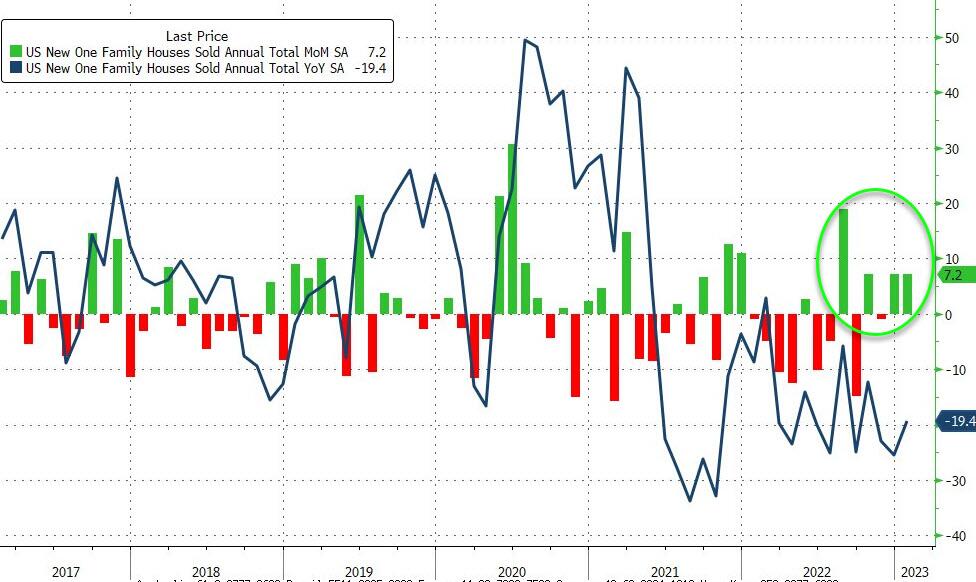
In econ news, we learned that inflation expectations rose in February, as did the Citi Economic Surprise Index. New Home Sales unexpectedly soared in January, while prices plunged.  

As a result, the Fed’s terminal rate propelled to a new high, as the hope for rate cuts disappeared, which is a sign that recent receding inflation numbers were nothing but transitory, and that we may now see again an increase in prices.

Bond yields were higher during this Holiday shortened week, with the US Dollar continuing its upswing, which now has erased all of January’s losses, a trend that was not beneficial for Gold, which, however, has managed to defend its $1,800 level.

For the month of February, the S&P 500 has surrendered 2.6% so far, with two trading days to go. While our Trend Tracking Indexes (TTIs-section 3) have weakened as well, they still remain on the bullish side of their respective trend lines.

However, should the inflation scenario worsen, and consequently bond yields surging even higher, we must be prepared to deal with a potential sell signal in equities. For sure, I am ready to pull  the trigger, if a major change in market direction necessitates such a move.

Read More
Weekly StatSheet For The ETF Tracker Newsletter – Updated Through 02/23/2023

Ulli ETF StatSheet Contact

ETF Data updated through Thursday, February 23, 2023

Methodology/Use of this StatSheet:

1. From the universe of over 1,800 ETFs, I have selected only those with a trading volume of over $5 million per day (HV ETFs), so that liquidity and a small bid/ask spread are assured.

2. Trend Tracking Indexes (TTIs)

Buy or Sell decisions for Domestic and International ETFs (section 1 and 2), are made based on the respective TTI and its position either above or below its long-term M/A (Moving Average). A crossing of the trend line from below accompanied by some staying power above constitutes a “Buy” signal. Conversely, a clear break below the line constitutes a “Sell” signal. Additionally, I use a 12% trailing stop loss on all positions in these categories to control downside risk.

3. All other investment arenas do not have a TTI and should be traded based on the position of the individual ETF relative to its own respective trend line (%M/A). That’s why those signals are referred to as a “Selective Buy.” In other words, if an ETF crosses its own trendline to the upside, a “Buy” signal is generated. Here too, I recommend trailing sell stop of 12%, or less, depending on your risk tolerance.

If you are unfamiliar with some of the terminology, please see Glossary of Terms and new subscriber information in section 9.     

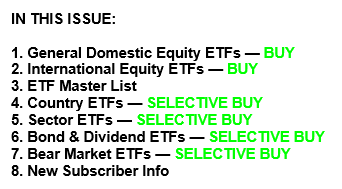
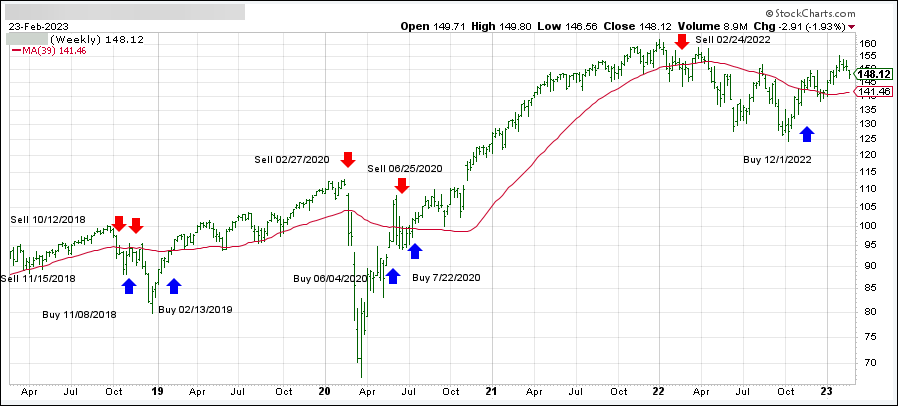
1. DOMESTIC EQUITY ETFs: BUY — since 12/01/2022

Click on chart to enlarge

Our main directional indicator, the Domestic Trend Tracking Index (TTI-green line in the above chart) has reclaimed its long-term trend line (red) by +4.70% and remains in “Buy” mode for the time being.

Read More
Popping And Dropping

Ulli Market Commentary Contact

[Chart courtesy of MarketWatch.com]

  1. Moving the markets

The release of the most recent Fed minutes was on traders’ minds, while they looked for clues as to what the next move by the Central Bank would be in terms of inflationary measures. An early bounce of hope reversed, despite a short squeeze, and the bears scored another win with the S&P 500 now having notched its 4th straight day of losses.

The Fed’s summary showed that inflation hovered well above the Fed’s 2% target, while the Labor market appears to be still very tight and thereby continues to keep upward pressure on wages and prices.

The only positive was the mention of a welcome reduction in the monthly pace of price increases, as MarketWatch reported. But, the disclaimer followed right away in that more progress would be required to confirm a sustainable downward path of inflationary trends.

In other words, no hope was given to those still thinking that the Fed might pause/pivot in the near future. As a result, the early bullish theme shifted into reverse, and two of the three major indexes closed the session with modest losses.

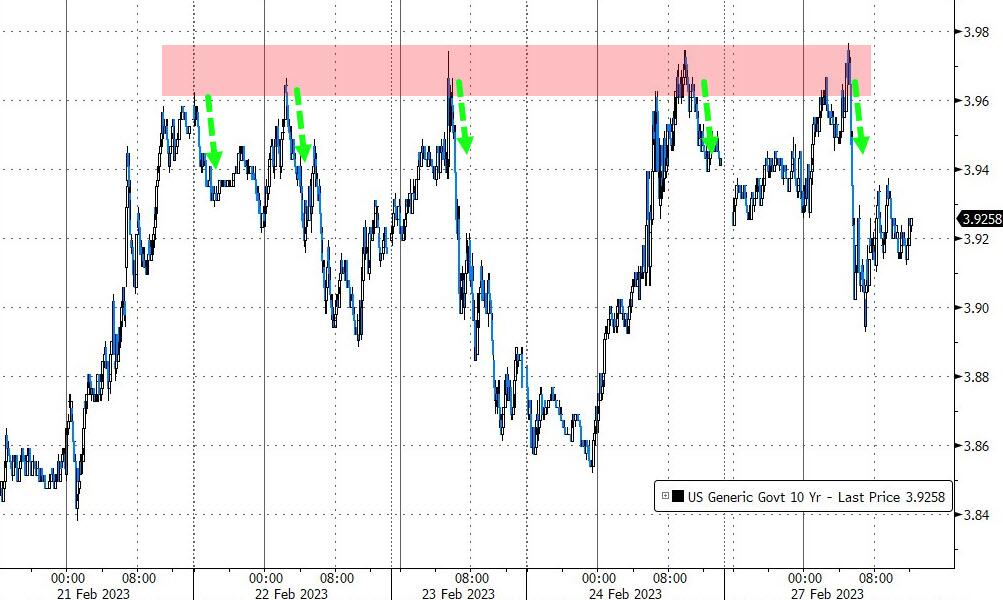
Bond yields rode the roller coaster with yields softening somewhat, as the 10-year pulled back a modest 3 bps to close at 3.925%. However, the Fed’s terminal rate moved higher from yesterday’s 5.33% indicating more hawkishness.  

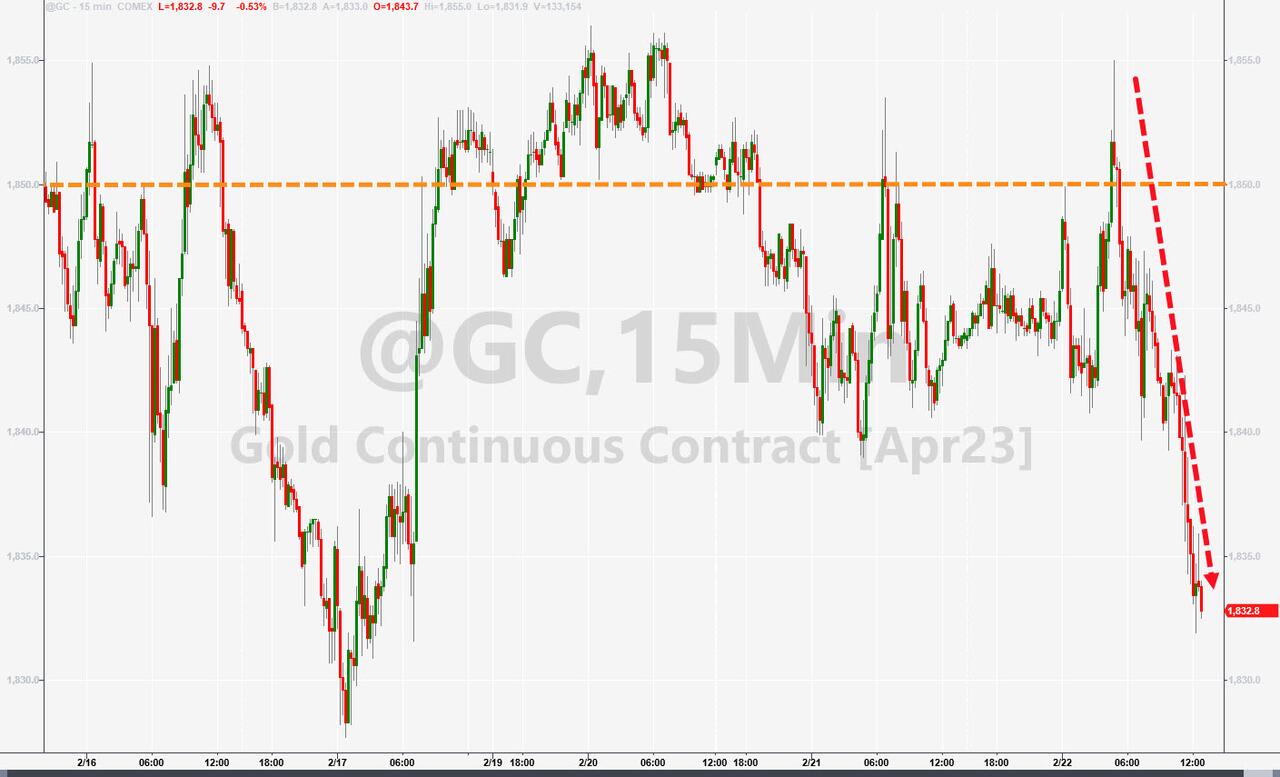
The US Dollar resumed its trajectory to higher prices and wiped out the majority of Friday’s losses. Gold slipped again and was not able to hang on to its $1,850 level.

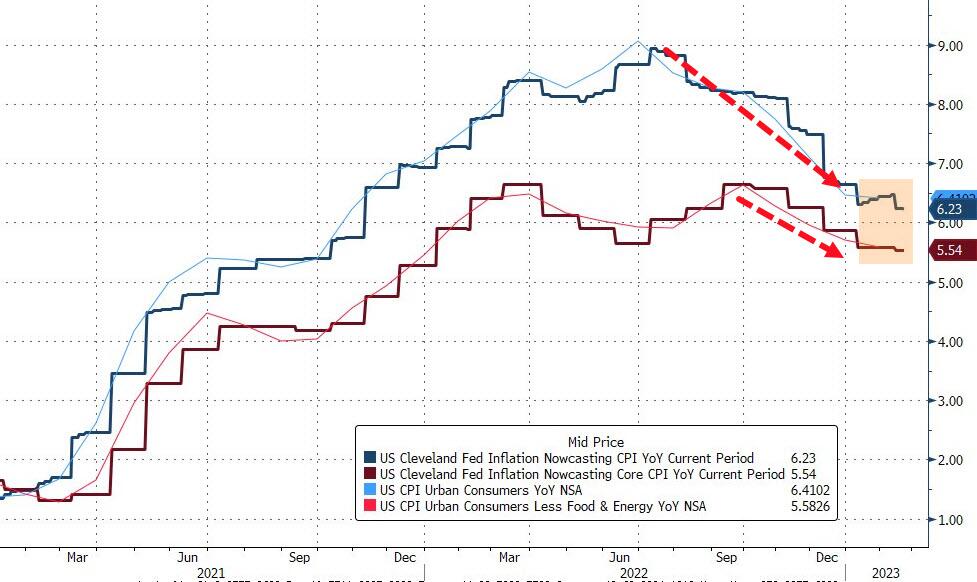
The Cleveland Fed’s own inflation forecasting model shows that the disinflation of the past few months appears to have come to an end, as ZeroHedge commented. Does that mean inflation will now rear its ugly head again?

I believe those odds are far better than 50-50.   

Read More