ETF/No Load Fund Tracker Newsletter For Friday, May 3, 2013
ETF/No Load Fund Tracker StatSheet
————————————————————-
THE LINK TO OUR CURRENT ETF/MUTUAL FUND STATSHEET IS:
https://theetfbully.com/2013/05/weekly-statsheet-for-the-etfno-load-fund-tracker-newsletter-updated-through-05022013/
————————————————————
Market Commentary
Friday, May 3, 2013
DOW HITS NEW MILESTONE; S&P GRABS RECORD HIGH
What a Friday… as the Dow Jones Industrial Average touched 15,000 for the first time in its long history, the world’s 200 richest people added $44.6 billion to their collective wealth! (According to Bloomberg).
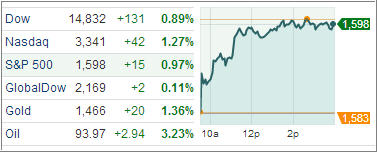
Across the board, U.S. stocks surged upward in response to a stronger-than-forecasted US nonfarm payroll report. The Dow closed higher by 142 points (or 1.0%) at 14,974, the S&P 500 Index increased 17 points (1.1%) to 1,614, raced further into record high levels, and the Nasdaq Composite ascended 38 points (1.1%) to 3,379. Volume was moderate with 716 million shares were traded on the NYSE, and 1.7 billion shares changed hands on the Nasdaq.
The biggest cause of today gains came from the employment data. Fears subsided as nonfarm payrolls increased by 165,000 in April, slightly above estimate of 148,000. The unemployment rate ticked down to 7.5%, below the consensus of 7.6%, to the lowest level since December 2008. But the big story was the upward revision to the prior two months totaling 114,000.
After revisions, Q1 payrolls averaged 206,000 jobs per month. The average workweek though was disappointing, but not surprising considering the sequester, dipping to 34.4 hours from 34.6. According to the Household Survey, the number of employment rose by nearly 300,000, while the number of unemployed fell by 83,000. Contrary to the recent trend, the number of job losers rose by 81,000, but most of these were deemed temporary. Unemployed job leavers, reentrants, and new entrants all continued to decline. These results added to the latest bit of economic news that looked merely OK but was good enough to put to rest widespread anxiety that the U.S. economic recovery was buckling.
Not everything was great, however. Factory orders fell 4.0% in March, down two of the last three months, and worse than expectations of -3.0%. Nondurable orders fell a broad-based 2.4%, the most since March 2009, led by petroleum products. The ISM Non-Manufacturing Index (NMI) fell 1.3 points in April to 53.1, the lowest level in nine months, indicating services activity expanded at a slower pace.
It was another week of a bull-run, which now includes the Standard & Poor’s 500 closing above 1,600 for the first time. Stocks ended higher yesterday as the European Central Bank cut its key interest rate and U.S. jobless-benefit claims unexpectedly fell. The Fed declared earlier in the week it would keep buying bonds at the current pace.
The benchmark U.S. equities gauge has advanced 2 percent this week. We are seeing a rally since mid-November which is among the longest ever without at least a 5% pullback. These runs often lead the market to stall out for a while, and so a sideways slide or a dip would make a lot of sense. Yet the “Sell in May” cry might have become too loud that such a tumble has been over-anticipated; at least that’s what it seems like right now.
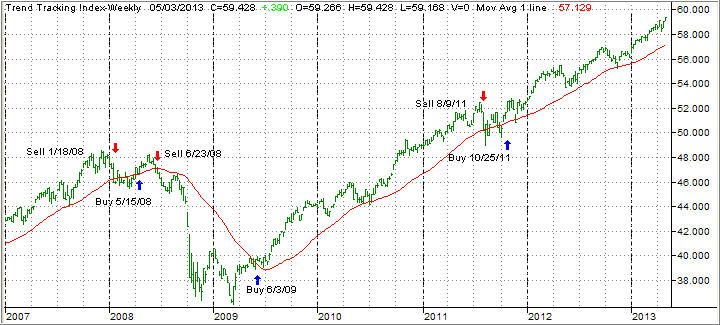
Our Trend Tracking Indexes (TTIs) confirmed the upward bias as both marched deeper into bullish territory.
Here’s how we closed the week:
Domestic TTI: +4.30% (last week +3.52%)
International TTI: +8.62% (last week +7.35%)
Have a great week.
Ulli…
————————————————————-
READER Q & A FOR THE WEEK
All Reader Q & A’s are listed at our web site!
Check it out at:
http://www.successful-investment.com/q&a.php
A note from reader Ed:
Q: Ulli: What are your thoughts on the PRPFX Fund with gold having dropped so fast??
A: Ed: I don’t own it, since it is hovering below its long-term trend line. There are far better opportunities in low volatility ETFs.
———————————————————-
WOULD YOU LIKE TO HAVE YOUR INVESTMENTS PROFESSIONALLY MANAGED?
Do you have the time to follow our investment plans yourself? If you are a busy professional who would like to have his portfolio managed using our methodology, please contact me directly or get more details at:
https://theetfbully.com/personal-investment-management/
———————————————————
Back issues of the ETF/No Load Fund Tracker are available on the web at:
https://theetfbully.com/newsletter-archives/

 First Trust Advisors, the Wheaton, Il-based money manager known for its niche strategies, has launched its fourth actively managed ETF. The First Trust Senior Loan ETF (FTSL) is expected to compete with the recently launched SPDR Blackstone/GSO Senior Loan ETF (SRLN). Debuted last month, SRLN is also actively managed and has already accumulated assets of more than $160 million.