[Chart courtesy of MarketWatch.com]
- Moving the markets
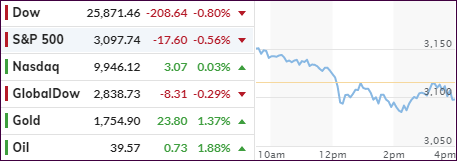
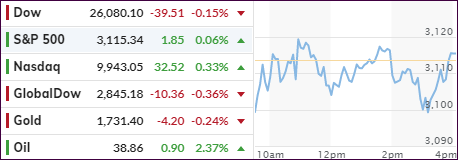
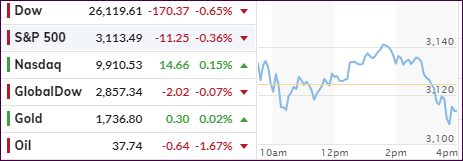
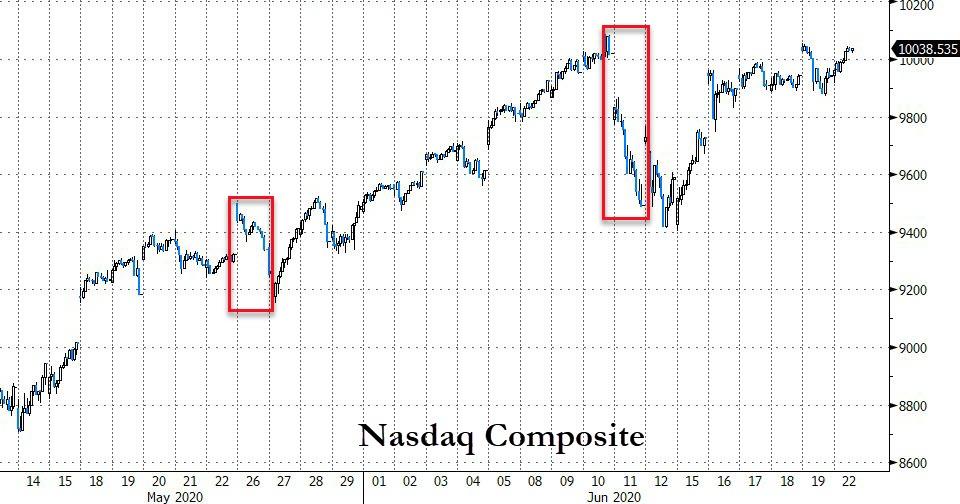
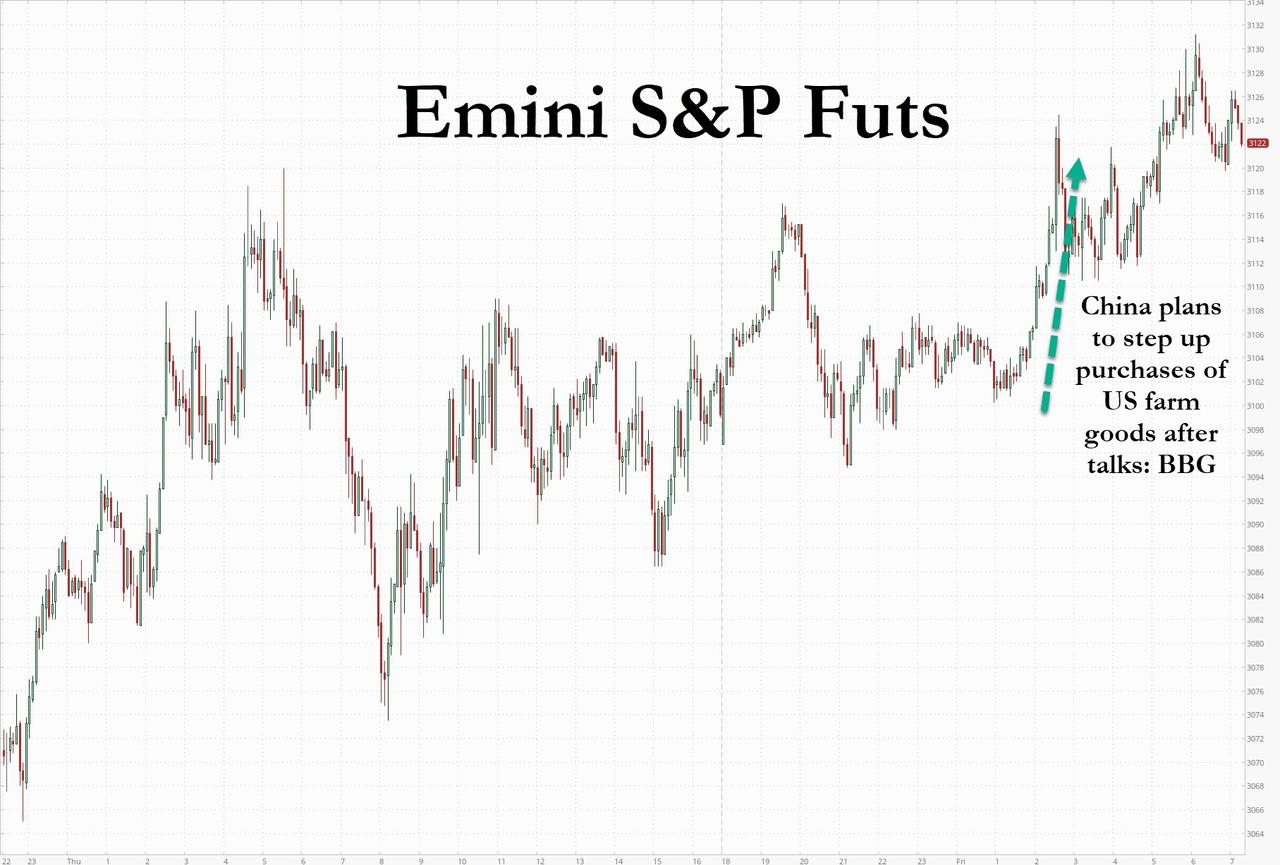
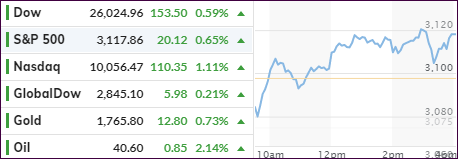
An early choppy ride turned out better than expected, as the bullish theme increased momentum and pushed the major indexes to a green close, with especially the Nasdaq showing a solid gain and scoring a new all-time high.
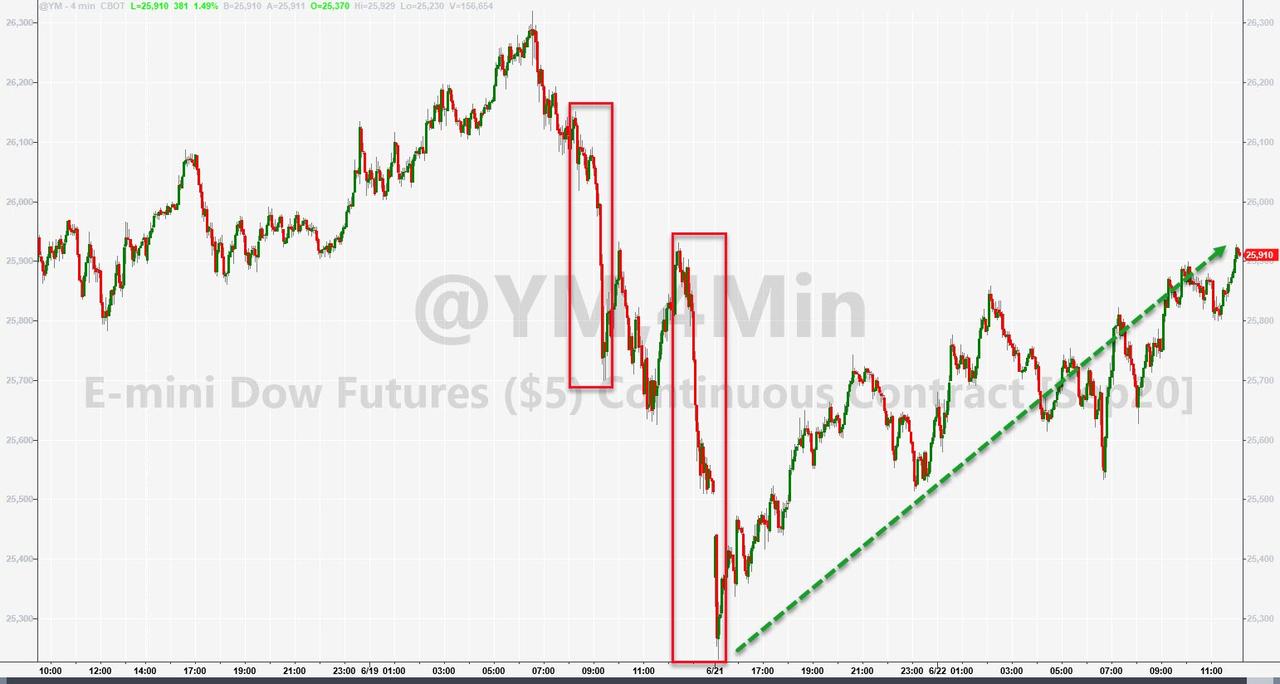
The Dow added a more modest +0.59% but was able to recapture its 26k milestone marker.
The advance was a mixed bag, however, with relentless optimism over a quick recovery for the economy colliding with an increase of Covid-19 infections in about half of the states and in many other parts of the world. This may turn into an ongoing tug-of-war, but at least for today, dreams of a fast recovery prevailed.
As we know, the actual referee deciding this revival will be the Fed and its supporting policies which, however, are limited in scope as financial author Charles Hugh Smith pointed out:
1. It can’t reverse the unprecedented wealth inequality its policies have pushed to the point of social disintegration and breakdown.
2. It can’t make people take on the risks and heartaches of starting new businesses.
3. It can’t force employers to hire more employees.
4. It can’t make unprofitable businesses profitable.
5. It can’t force people to buy assets at prices that no longer make financial sense.
6. It can’t make insolvent businesses and local governments solvent.
7. It can’t force people who now realize their priority is to save money to spend their cash, even if the Fed forces negative interest rates.
8. It can’t lower the unaffordable cost structure of the entire economy.
9. It can’t de-link all the financial dependencies in the financial system that make it so vulnerable to the first domino falling.
10. It can’t stop people from selling their assets.
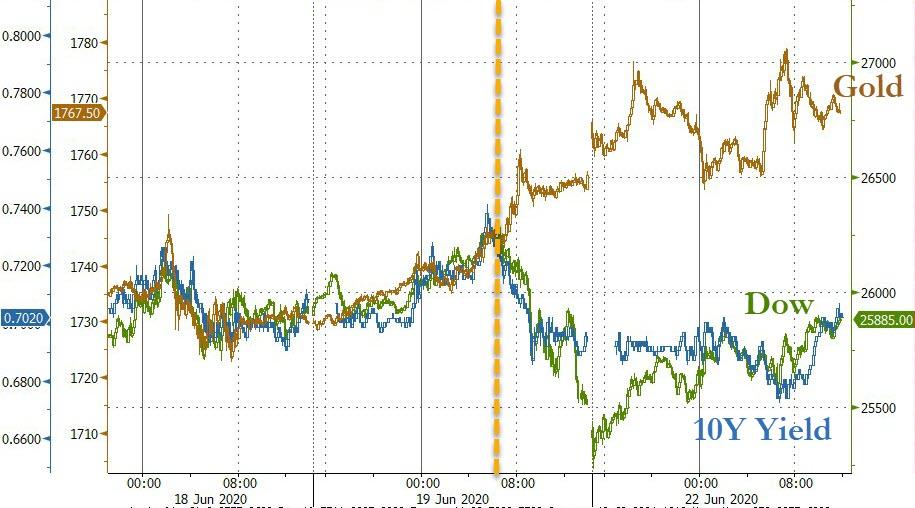
After the opening last Friday, we saw a different type of decoupling, as ZH points to in this chart from Bloomberg in that Gold and stocks seem to have gone separate ways.
We’ll have to wait and see if this is just an outlier or a realization that reckless money printing will assist the precious metal, the price of which is now within striking distance of taking out Mays’ multiyear highs.
Read More