Limping Lower

Ulli Market Commentary Contact

[Chart courtesy of MarketWatch.com]
  1. Moving the markets

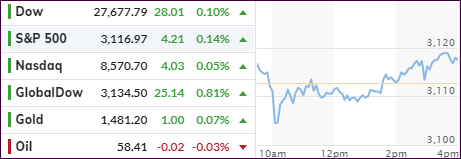
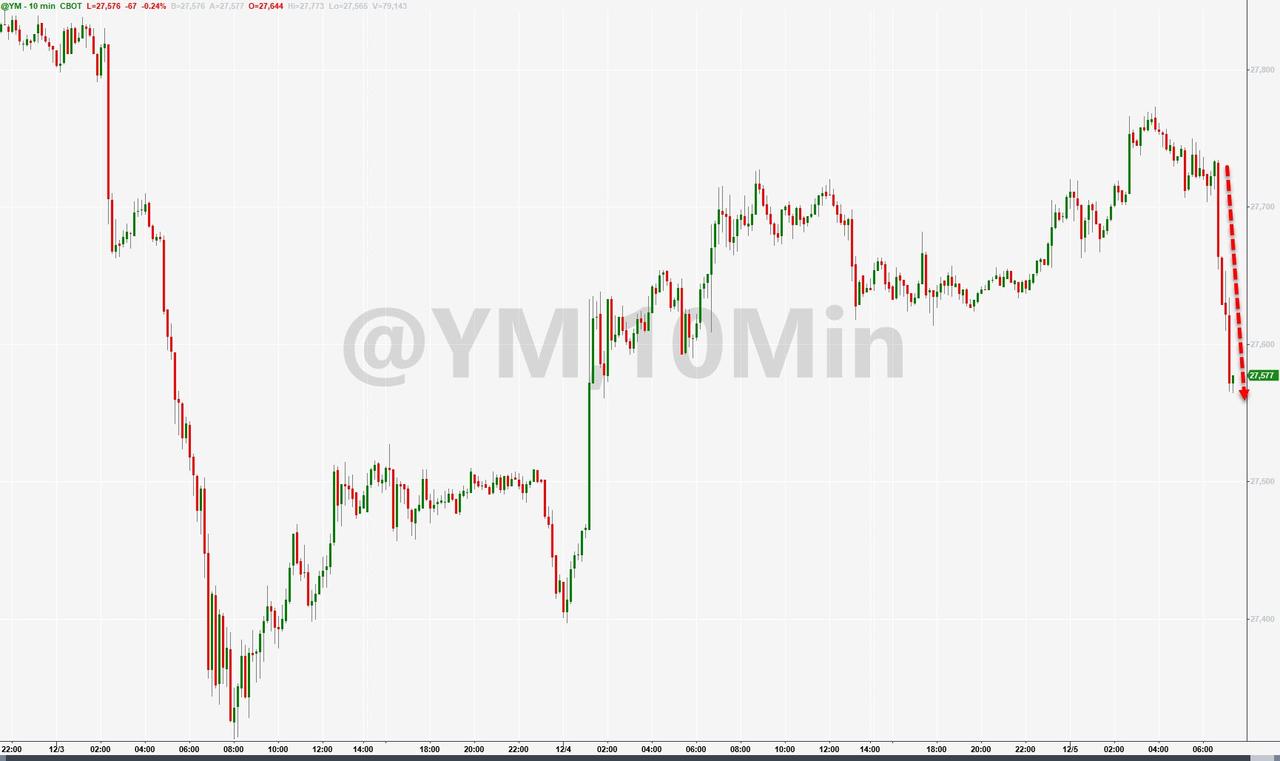
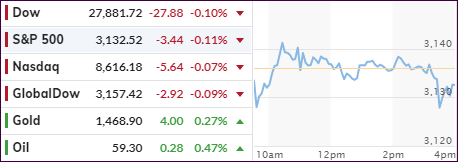
Bobbing and weaving best describes today’s session with the major indexes being stuck in a sideways pattern after rebounding from an early dip.

The latest news from the US-China trade debacle points to some progress in that trade negotiators are “laying the groundwork for a delay” of the new 15% import tariffs scheduled to be implemented this coming Sunday.

Meanwhile, the Fed started its 2-day policy meeting with the results being announced tomorrow. Expectations are that interest rates will be held steady. Of concern is Fed chief Powell’s intention of forging consensus towards a “broader revamp of the Fed rate-setting strategy.”

Translated, that means he is favor of letting inflation run above its annual 2% target. To my way of thinking, how can that end well? It’s not that the Fed has a magic wand to rein in inflation, should it suddenly burst out of control. Apparently, historic precedents as to the potentially devastating effects of inflation, such as we’ve seen during the Weimar Republic, are simply ignored.

Adding to this issue is the fact that we are living in a deficit-based spending environment where debt and deficits are soaring relentlessly higher. While these problems have been largely ignored, and are never addressed on any political platform, they represent a piper that eventually will need to get paid.

In the meantime, the markets went nowhere today with the major indexes hugging their respective unchanged lines and slipping slightly in the red.

In the underlying overnight lending market (repos), the troubles continue with liquidity being conspicuously absent. We’ll have to wait and see, if there will be a fallout by the end of this year that could affect equities.

Read More
Taking A Breather

Ulli Market Commentary Contact

[Chart courtesy of MarketWatch.com]
  1. Moving the markets

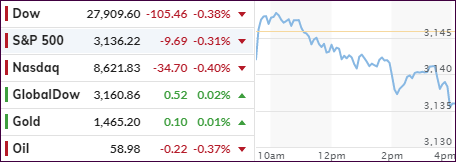
Despite several attempts, the bulls were not able to sustain Friday’s upward momentum, and the major indexes pulled back to close moderately in the red, but the dive into the close could be cause for concern.  

Trade negotiations were in focus again ahead of the looming deadline on US-China tariffs, along with a variety of updates from global central banks.

First, the Fed is set to do its 2-day meeting starting Tuesday, while the ECB, under the new leadership of Christine Lagarde, is scheduled to hold its convention on Thursday.

Of course, traders are cautious never being 100% certain as to the outlook for interest rates and what some commentary on the state of the global economy might contain. That uncertainty will continue into the weekend when on December 15, Trump will decide whether to implement $156 billion in Chinese tariffs or grant an extension.

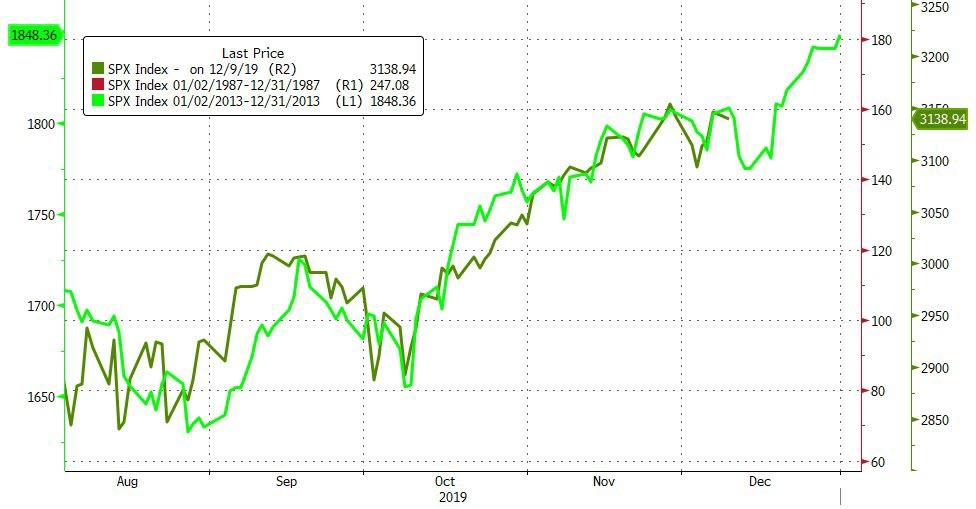
For now, according to Bloomberg, the S&P 500 in 1919 is tracking its performance from the year 2013 with amazing accuracy, as this chart shows. We’ll find out soon if that performance will deviate in the last few weeks of 2019, or not.

Read More

ETFs On The Cutline – Updated Through 12/06/2019

Ulli ETFs on the Cutline Contact

ETFs On The Cutline – Updated Through 12/06/2019

Below, please find the latest High-Volume ETF Cutline report, which shows how far above or below their respective long-term trend lines (39-week SMA) my currently tracked ETFs are positioned.

This report covers the HV ETF Master List from Thursday’s StatSheet and includes 322 High Volume ETFs, defined as those with an average daily volume of more than $5 million, of which currently 277 (last week 276) are hovering in bullish territory. The yellow line separates those ETFs that are positioned above their trend line (%M/A) from those that have dropped below it.

Take a look:                                                                   

The HV ETF Master Cutline Report

In case you are not familiar with some of the terminology used in the reports, please read the Glossary of Terms.

If you missed the original post about the Cutline approach, you can read it here.               

ETF Tracker Newsletter For December 6, 2019

Ulli ETF Tracker Contact

ETF Tracker StatSheet          

You can view the latest version here.

JOBS REPORT POWERS MARKETS—THE WEEK ENDS UP UNCHANGED

[Chart courtesy of MarketWatch.com]
  1. Moving the markets

The headline jobs report did not disappoint and showed that 266k new jobs were created vs. 180k expected, while the unemployment rate dipped to 3.5%.

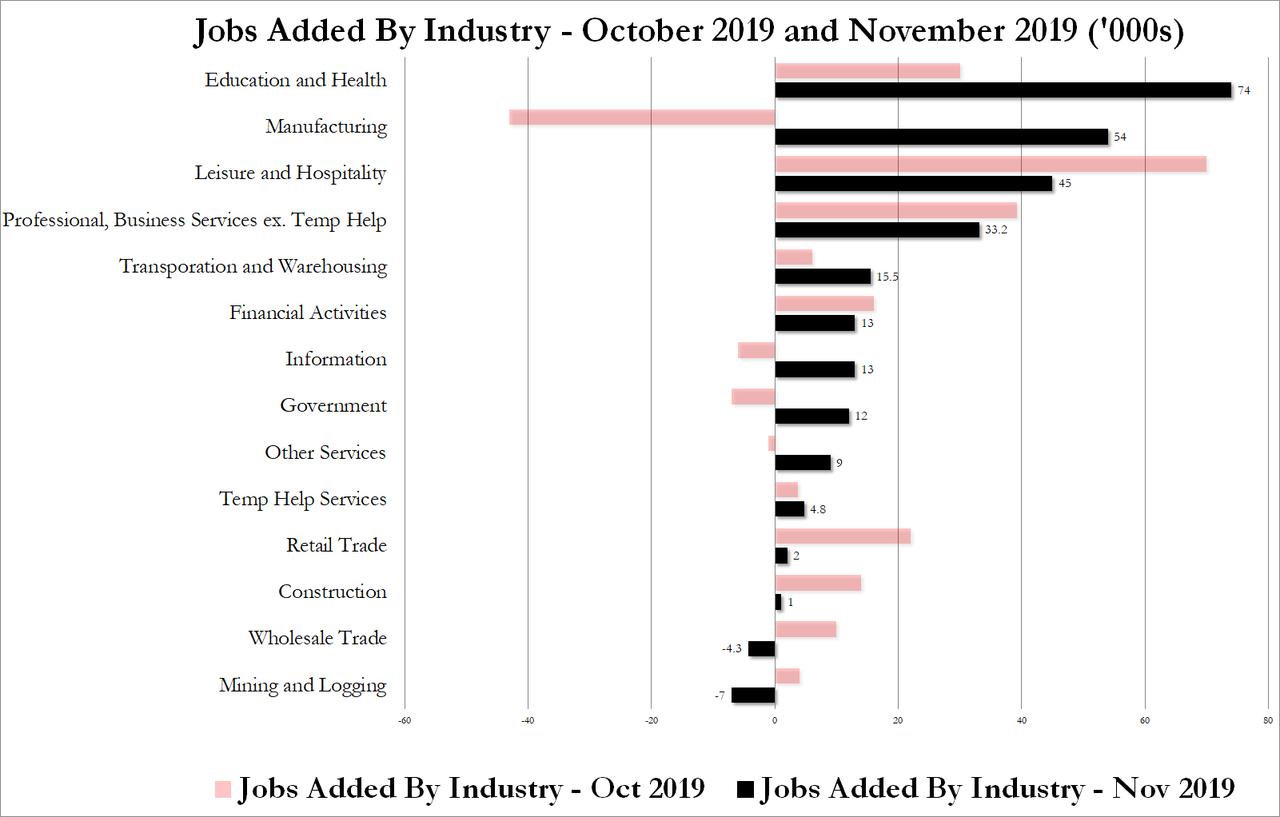
As I keep mentioning, it’s only the headline number that matters, because it forms the basis for the computer algos to ‘buy’ or ‘sell.’ When looking under the hood, we saw a one-time surge in manufacturing workers, with 54k being added in November, which was the most in over two decades. However, nearly all of those were the result of 41k striking GM workers returning to their jobs.

In other words, the November surge was simply an offset to the 43k slide in October. But those details don’t matter in today’s environment, since only headlines are the driver of markets.

Still, healthcare along with leisure and hospitality were on top of the list showing solid gains. With the latest jobs report also came the revisions for the prior two months, which showed an increase in jobs from what was originally reported.

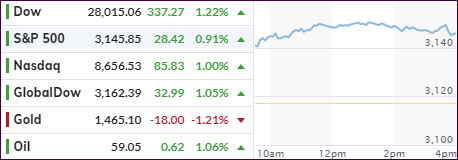
It was wild rollercoaster of a week, which started ugly with two days of selloffs, as the S&P experienced its worst December start since 2008. Optimistic trade news was chased by pessimistic ones leaving the markets in limbo until today’s jobs report restored bullish upward momentum. The S&P 500 only gained a meager 5 points since last Friday, but it was a remarkable recovery given where the index was at.

ZH added this for color:

There was another reason for the return of the stock rally: this week the Fed’s balance sheet rose once again, and as we have shown, in the past 9 weeks ever since the Fed resumed repos and eventually POMO, the stock market is up every single week when the Fed’s balance sheet is higher; the only week the S&P was lower was when the Fed’s balance sheet also shrank. Surely, it’s just a coincidence…

And then this:

So, after this week’s fireworks is it now safe to assume that stocks won’t deliver any more major surprises for the balance of 2019? Keep an eye on the Dec 15 tariff deadline: because today’s super strong job number merely assured that Trump now thinks he has even more leverage to demand concessions from China, while the Fed’s fears that trade war is hurting the economy and thus has to be vigilant to the downside, were blown away. Finally, this was and remains a market where one Trump tweet can mean the difference between a successful and catastrophic year for countless traders, and something tells us the coming three weeks, which see both the culmination of trade discussions and Trump’s impeachment, will be anything but quiet.

Based on the above, I believe that volatility is bound to pick up again, something the bears will be excited to see. However, when looking at the longer term, the fact that the Fed, along with the other global banks, is set to continue with its money printing efforts to monetize the debt, and solve the ever growing issues with the overnight repo operations, the resulting liquidity is bound to flow into the stock market thereby supporting the bullish scenario.  

Read More

Weekly StatSheet For The ETF Tracker Newsletter – Updated Through 12/05/2019

Ulli ETF StatSheet Contact

ETF Data updated through Thursday, December 5, 2019

Methodology/Use of this StatSheet:

1. From the universe of over 1,800 ETFs, I have selected only those with a trading volume of over $5 million per day (HV ETFs), so that liquidity and a small bid/ask spread are assured.

2. Trend Tracking Indexes (TTIs)

Buy or Sell decisions for Domestic and International ETFs (section 1 and 2), are made based on the respective TTI and its position either above or below its long-term M/A (Moving Average). A crossing of the trend line from below accompanied by some staying power above constitutes a “Buy” signal. Conversely, a clear break below the line constitutes a “Sell” signal. Additionally, I use a 7.5% trailing stop loss on all positions in these categories to control downside risk.

3. All other investment arenas do not have a TTI and should be traded based on  the position of the individual ETF relative to its own respective trend line (%M/A). That’s why those signals are referred to as a “Selective Buy.” In other words, if an ETF crosses its own trendline to the upside, a “Buy” signal is generated. Since these areas tend to be more volatile, I recommend a wider trailing sell stop of 7.5% -10% depending on your risk tolerance.

If you are unfamiliar with some of the terminology, please see Glossary of Terms and new subscriber information in section 9.     

1. DOMESTIC EQUITY ETFs: BUY — since 02/13/2019

Click on chart to enlarge

Our main directional indicator, the Domestic Trend Tracking Index (TTI-green line in the above chart) is now positioned above its long-term trend line (red) by +5.35% after having generated a new Domestic “Buy” signal effective 2/13/19 as posted.

Read More

Shrugging Off Trade Dispute Concerns

Ulli Market Commentary Contact

[Chart courtesy of MarketWatch.com]
  1. Moving the markets

An early morning pop gave way to a drop, which gave way to a slow but steady recovery with the major indexes managing to reclaim their respective unchanged lines by a small margin.

What caused the comeback? Nothing noteworthy, other than a China trade spokesperson uttering the words that computer algos thrive on, namely that the so-called phase 1 negotiations designed to cease tariff hostilities, are “progressing.”

But the spokesman emphasized China’s desire to make existing tariff rollbacks a part of any resolution, which may not sit well with the White House. As a result, the tug-of-war to save face is bound to continue.

On deck tomorrow will be the always eagerly anticipated jobs report with the consensus forecast calling for a gain of 180k new jobs. Anything close to that number will likely give the markets a boost, unless bad trade news provides the bears with something to cheer about.

Read More