Digging A Hole And Climbing Out Of It

Ulli Market Commentary Contact

[Chart courtesy of MarketWatch.com]

  1. Moving the markets

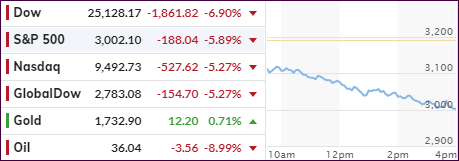
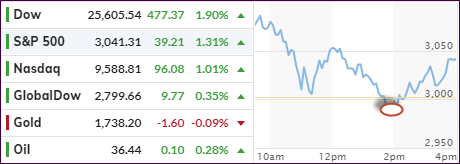
The markets took a dive this morning with the Dow skidding some 500 points, as fears about a resurgence of Covid-19 spooked traders around the world.

Analyst Graham Summers saw it this way:

Stocks have fallen hard over the weekend again. The media is pinning this drop on the potential for another COVID-19 pandemic, but the facts don’t support that theory.

My point with all of this is that today the market is literally a crap shoot. The easy money from the rally has been made, and the next trend is not clear yet. So now is NOT the time to be putting a load of capital to work.

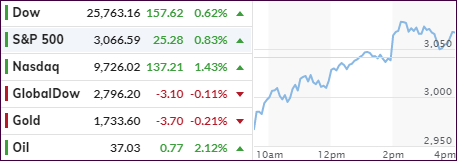
Uncertainty in the markets needs to be eradicated with pointed action. That came in form of a 2nd press release by the Fed that it will now finally start buying corporate bonds, which was announced some three months ago but not yet executed.

However, since they were already buying between $1-2 trillion in corporate ETFs each weak, according to ZH, today’s confirmation provided enough ammo to propel the markets not only out of a deep hole but also to a solid green close.

The Fed made it clear that it is expanding the scope of its $750 billion emergency corporate loan facility to include individual corporate bonds, while at the same time reducing the restrictions for potential borrowers. Huh? In other words, even companies with inferior credit are encouraged to apply.

In the end, the markets were saved for another day with all eyes now being on Fed chair’s upcoming testimony about the state of the economy before Congress this week.

Our Domestic Trend Tracking Index (TTI) improved and is now in striking distance of breaking back above its trend line again (section 3), which means we are holding on to our current positions for the time being.

Read More
ETFs On The Cutline – Updated Through 06/12/2020

Ulli ETFs on the Cutline Contact

Below, please find the latest High-Volume ETF Cutline report, which shows how far above or below their respective long-term trend lines (39-week SMA) my currently tracked ETFs are positioned.

This report covers the HV ETF Master List from Thursday’s StatSheet and includes 322 High Volume ETFs, defined as those with an average daily volume of more than $5 million, of which currently 114 (last week 179) are hovering in bullish territory. The yellow line separates those ETFs that are positioned above their trend line (%M/A) from those that have dropped below it.

Take a look:                                                                   

The HV ETF Master Cutline Report

In case you are not familiar with some of the terminology used in the reports, please read the Glossary of Terms. If you missed the original post about the Cutline approach, you can read it here.      

ETF Tracker Newsletter For June 12, 2020

Ulli ETF Tracker Contact

ETF Tracker StatSheet          

You can view the latest version here.

RIDING A ROLLERCOASTER INTO THE WEEKED

[Chart courtesy of MarketWatch.com]

  1. Moving the markets

After yesterday’s drubbing, some sort of rebound was expected, and this is exactly what we got. However, an early 600-point gain in the Dow evaporated by mid-day with the major indexes briefly dipping into the red, before rebounding and closing the session with solid gains.

For sure, it was not enough to recoup yesterday’s losses, but at least we made a dent. Things looked shaky as the morning slide got underway, and I took the opportunity to lighten up on some of our more volatile holdings.

After all, we are still hovering slightly in bear market territory with our Domestic TTI having improved, but it is still stuck -2.04% below its long-term trend line.

That means we’re still in what I call the “neutral zone,” which is another way of saying that yesterday’s sharp drop could be an outlier, and the bullish trend might resume again. On the other hand, a new bearish scenario is not out of the question, so we must be prepared for either outcome. I have done that by reducing some of our exposure and am prepared to go to all “cash” if the need arises.

Traders were still trying to digest the details from Fed chief Powell’s news conference, with ZH providing this succinct summary:

Despite aggressive fiscal and monetary policy actions, risks abroad are skewed to the downside.

The future progression of the pandemic remains highly uncertain, with resurgence of the outbreak a substantial risk. In addition, the economic damage of the recession may be quite persistent.

The collapse in demand may ultimately bankrupt many businesses, thereby reducing business dynamism and innovation. Unlike past recessions, services activity has dropped more sharply than manufacturing – with restrictions on movement severely curtailing expenditures on travel, tourism, restaurants, and recreation – and social-distancing requirements and attitudes may further weigh on the recovery in these sectors. Disruptions to global trade may also result in a costly reconfiguration of global supply chains. Persistently weak consumer and firm demand may push medium- and longer-term inflation expectations well below central bank targets, particularly in regions with already low inflation at the onset of the recession.

Finally, additional expansionary fiscal policies – possibly in response to future large-scale outbreaks of COVID-19 – could significantly increase government debt and add to sovereign risk, especially for countries with already limited fiscal space.

These are not exactly market friendly observations, so we will have to see if more fallout will happen next week, or if the indexes follow the well-known but worn-out path of least resistance, namely dismissing negative news.

Read More

Weekly StatSheet For The ETF Tracker Newsletter – Updated Through 06/11/2020

Ulli ETF StatSheet Contact

ETF Data updated through Thursday, June 11, 2020

Methodology/Use of this StatSheet:

1. From the universe of over 1,800 ETFs, I have selected only those with a trading volume of over $5 million per day (HV ETFs), so that liquidity and a small bid/ask spread are assured.

2. Trend Tracking Indexes (TTIs)

Buy or Sell decisions for Domestic and International ETFs (section 1 and 2), are made based on the respective TTI and its position either above or below its long-term M/A (Moving Average). A crossing of the trend line from below accompanied by some staying power above constitutes a “Buy” signal. Conversely, a clear break below the line constitutes a “Sell” signal. Additionally, I use a 7.5% trailing stop loss on all positions in these categories to control downside risk.

3. All other investment arenas do not have a TTI and should be traded based on  the position of the individual ETF relative to its own respective trend line (%M/A). That’s why those signals are referred to as a “Selective Buy.” In other words, if an ETF crosses its own trendline to the upside, a “Buy” signal is generated. Since these areas tend to be more volatile, I recommend a wider trailing sell stop of 7.5% -10% depending on your risk tolerance.

If you are unfamiliar with some of the terminology, please see Glossary of Terms and new subscriber information in section 9.     

1. DOMESTIC EQUITY ETFs: BUY — since 04/06/2020


Click on chart to enlarge

Our main directional indicator, the Domestic Trend Tracking Index (TTI-green line in the above chart) has now dropped below its long-term trend line (red) by -4.15% after having generated a new Domestic “Buy” signal effective 06/04/20 as posted.

Read More

Economic Reality Punishes Markets—Did The Bubble Burst?

Ulli Market Commentary Contact

[Chart courtesy of MarketWatch.com]
  1. Moving the markets

The futures already had pointed to a weak opening, as traders, after digesting Fed head Powell’s news conference, despite being dovish in nature, saw more negatives than positives. Despite the recent bullish theme in the indexes, Powell admitted that not all is well under then hood of the economy.

Additionally, reports covering some 21 states that Covid 2.0 may have arrived was enough to bring out the bears in full force.

With the stock market being Trump’s report card, Treasury Secretary Mnuchin emerged and tried to calm down the nervous nellies on Wall Street by promising more money to be pumped into the economy. ZH summed up his appearance:

  • MNUCHIN SAYS OVER NEXT MONTH ANOTHER $1 TRILLION WILL BE PUMPED INTO U.S. ECONOMY
  • MNUCHIN SAID ‘WE CAN’T SHUT DOWN THE ECONOMY AGAIN’
  • MNUCHIN ‘QUITE OPTIMISTIC’ IN MEDICAL PROGRESS THAT HAS BEEN MADE ON COVID-19
  • MNUCHIN SAYS FURTHER AID TO STATES WILL BE SUBJECT TO DISCUSSION WITH CONGRESS

Unfortunately for him, the markets were oblivious to his announcements and proceeded to plunge lower.

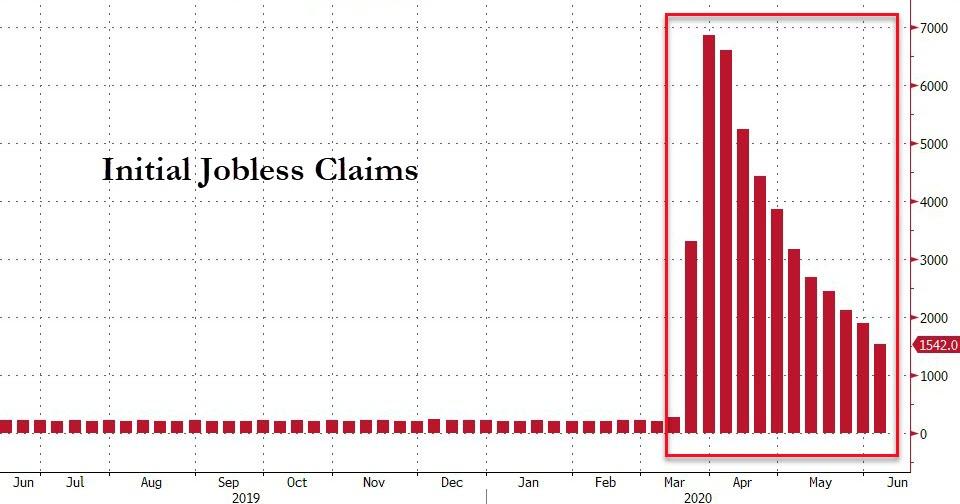
Economic data points supported the downward theme with jobless claims continuing to surge as 1.542 million more Americans filed for unemployment benefits for the first time vs. expectations of 1.55 million.

Just as poorly received, and clearly demonstrating the aftereffects of Covid-19, was data showing that one third of renters are worried about making the next payment, while 17% did not pay their last month’s rent.

The survey showed 11% of households with a mortgage skipped servicing payments last month, and 16% said they wouldn’t be able to make payments in the future.

These are the true facts of what is happening in the underlying economy, none of which have been given consideration by the markets, where the relentless addition of liquidity paints a picture totally disengaged from underlying conditions. The open-ended question remains:

“Has recognition finally set in that the economy will not see a V-shape recovery this year as reflected by market levels?”

Author Michael Snyder sees it this way:

Sadly, the truth is that economic conditions will not be returning to normal.  Yes, some of the jobs that were lost will be recovered as states start to “reopen” their economies.  But more than 100,000 businesses have already permanently closed during this new economic downturn, and all of those jobs are lost forever.

And yes, the level of economic activity will rise as states end their lockdowns, but it will still be much lower than it was before COVID-19 started spreading like wildfire in the United States.

In the end, the markets got thrashed pulling our Domestic Trend Tracking Index (TTI) back below its long-term trendline. A one-day sharp drop could be an outlier and does not necessarily indicate a change in the major trend, but it could.

Only time will tell, but today’s action could very well spell the end of the March 15 rebound and the final bursting of the stock market bubble. Or, it could prompt the Fed to finally “japanify” the US markets via outright purchases of stocks and stock ETFs to keep the bullish dream alive.

Tomorrow will be crucial. I will watch market activity and, should the downward draft continue, I will start liquidating our more volatile holdings and/or those that are triggering their trailing sell stops. As of today, none were prompted.

Read More

Dow Dumps And Nasdaq Pumps

Ulli Market Commentary Contact

[Chart courtesy of MarketWatch.com]

  1. Moving the markets

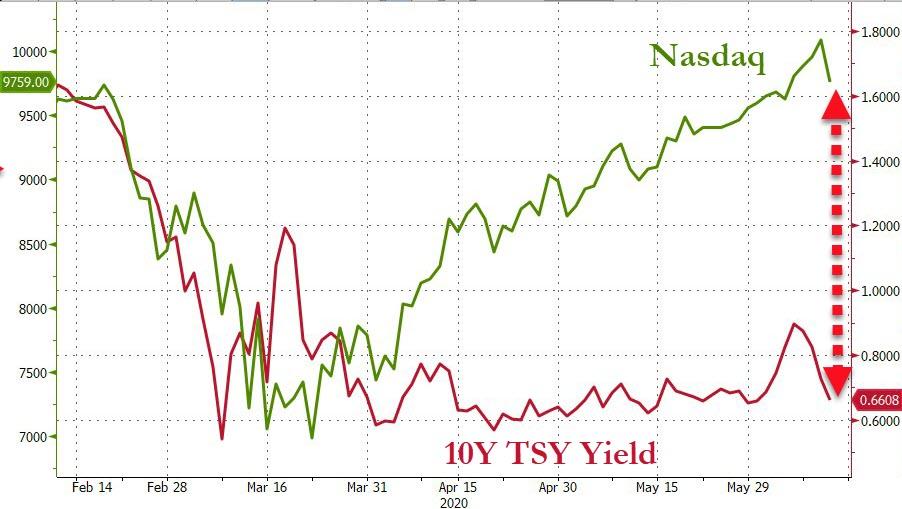
It seemed like a tale of two markets with the Dow fluctuating wildly and ending at its lows of the day, while the Nasdaq never touched its unchanged line and powered back above its psychologically important 10k level, where it closed.

That was an important milestone to reach, and it took some 50 years to get there. It also shows some divergence, as technology more clearly has entered a bullish phase compared to the rest of the market.

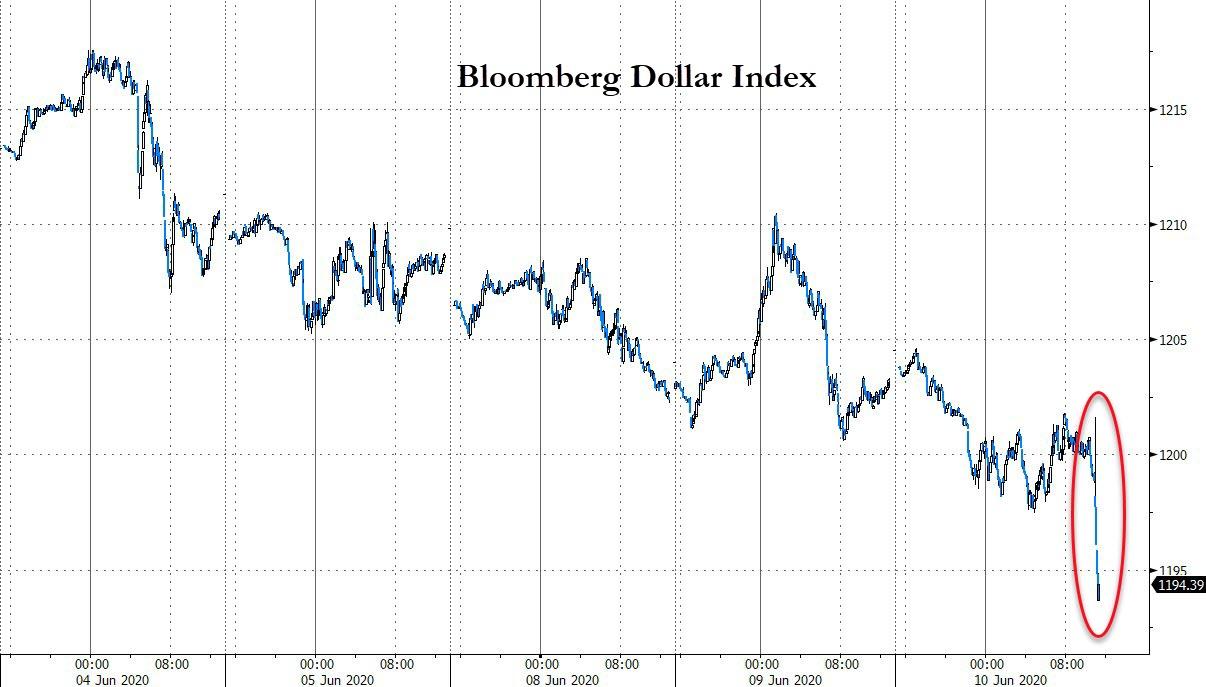
The Fed’s meeting came and went, and I consider its commitment of buying some $80 billion a month of Treasuries nothing but outright debt monetization, which is sure to create some concerns about the future of the dollar.

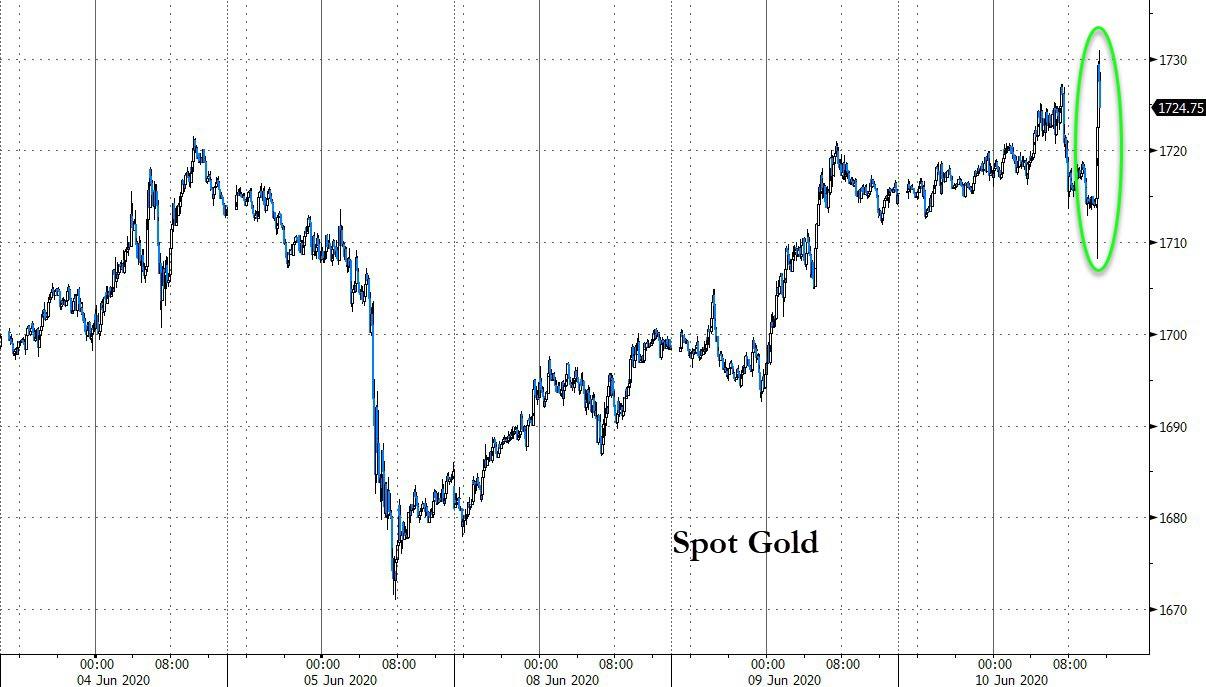
The fallout was instant, as the Dollar Index got hammered to its lowest since March while, as was to be expected, Gold surged.

Fed chief’s message was somewhat ambiguous, as ZH posted:

*POWELL: WE WANT INVESTORS TO PRICE IN RISK LIKE MARKETS SHOULD

*POWELL: POPPING ASSET BUBBLE WOULD HURT JOB-SEEKERS

While the major trend in the markets remains bullish, despite our Domestic Trend Tracking Index (TTI) coming off its high, there could be trouble ahead.

I repeat my warning: Do not be invested in this market unless you have a clearly defined exit strategy and are willing to execute it when it is triggered.

Read More