Below, please find the latest High-Volume ETF Cutline report, which shows how far above or below their respective long-term trend lines (39-week SMA) my currently tracked ETFs are positioned.
This report covers the HV ETF Master List from Thursday’s StatSheet and includes 312 High Volume ETFs, defined as those with an average daily volume of more than $5 million, of which currently 249 (last week 254) are hovering in bullish territory. The yellow line separates those ETFs that are positioned above their trend line (%M/A) from those that have dropped below it.
In case you are not familiar with some of the terminology used in the reports, please read the Glossary of Terms. If you missed the original post about the Cutline approach, you can read it here.
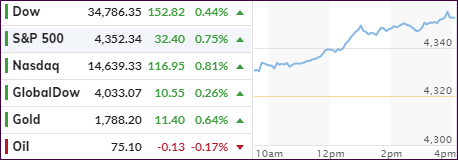
After the month of June successfully did not validate the adage held my many investors “sell in May and go away,” the major indexes gathered steam and stormed into July setting more records in the process.
On deck today was the jobs report with the headline number showing that 850k of new positions were added during last month. That was better than the expected 706k and ousted the disappointing 559k number from May.
Looking under the hood, it turns out that more than 50% of all job gains were bartenders and teachers, which collectively added 463k seasonally adjusted jobs, as ZeroHedge pointed out.
Traders did not care but simply interpreted this number as an accelerating recovery for the labor market and pushed the S&P 500 to a new all-time high. The tech sector contributed with Apple and Salesforce adding over 1%.
A strategist at Edward Jones saw it this way:
I think it was one of these goldilocks-type of reports, because hiring accelerated — which is a positive sign for the second half and the recovery — but not so much that it would trigger a reaction of an accelerated timeline for the Federal Reserve to start tapering.
In the end, the markets liked today’s numbers, and the bulls were clearly in charge assuming this “not too hot and not too cold” report will not create an environment that could cause the Fed to take away the liquidity punch bowl, as ZH called it.
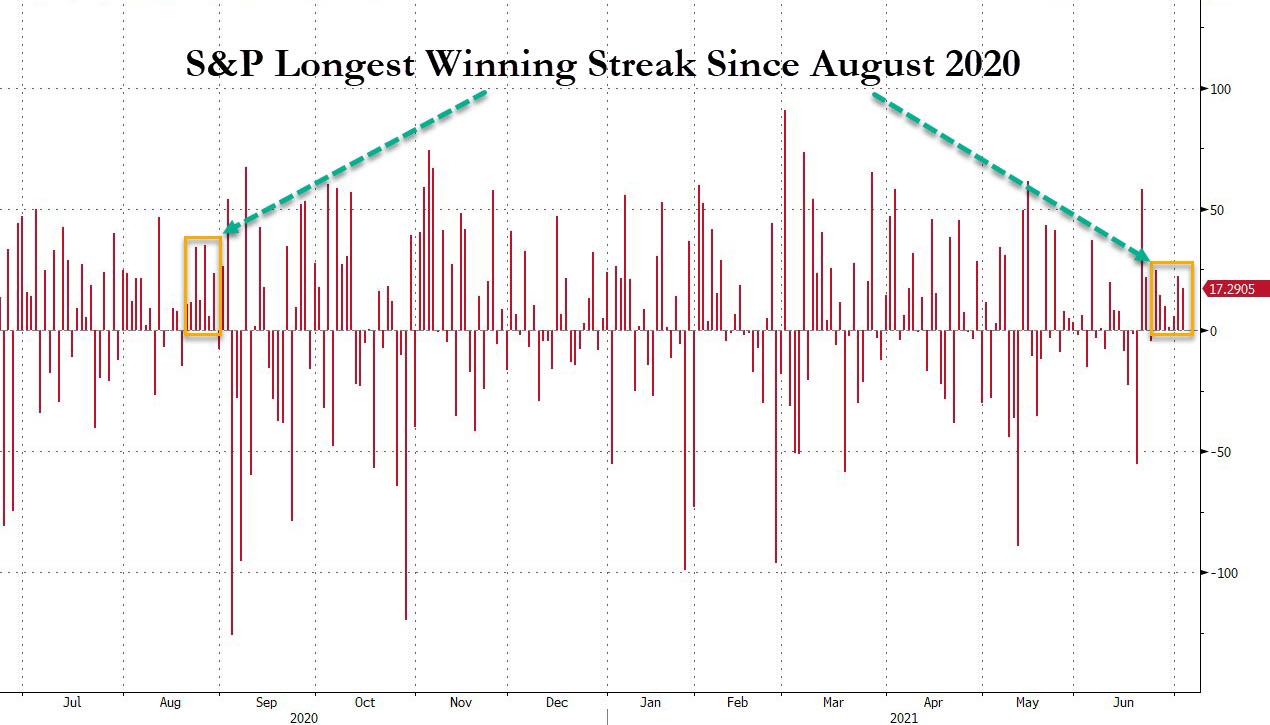
As a result, the S&P 500 rose for a seventh consecutive day, which was its longest winning streak since last August.
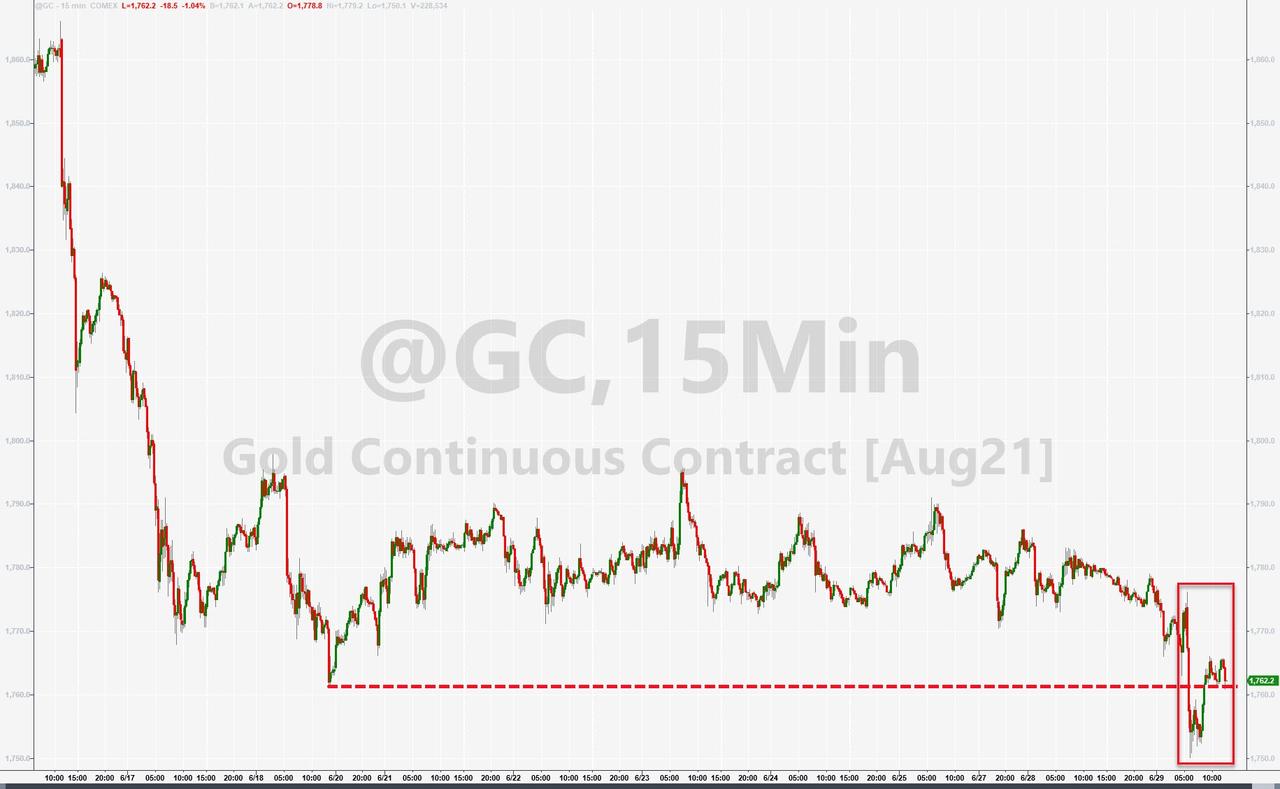
Bond yields continued to drift with the 10-year bouncing off its lows and ending up at 1.437%. The US Dollar Index took a dive, thereby giving Gold a much overdue assist with the precious metal gaining +0.65% but not being able to recover its $1,800 level.
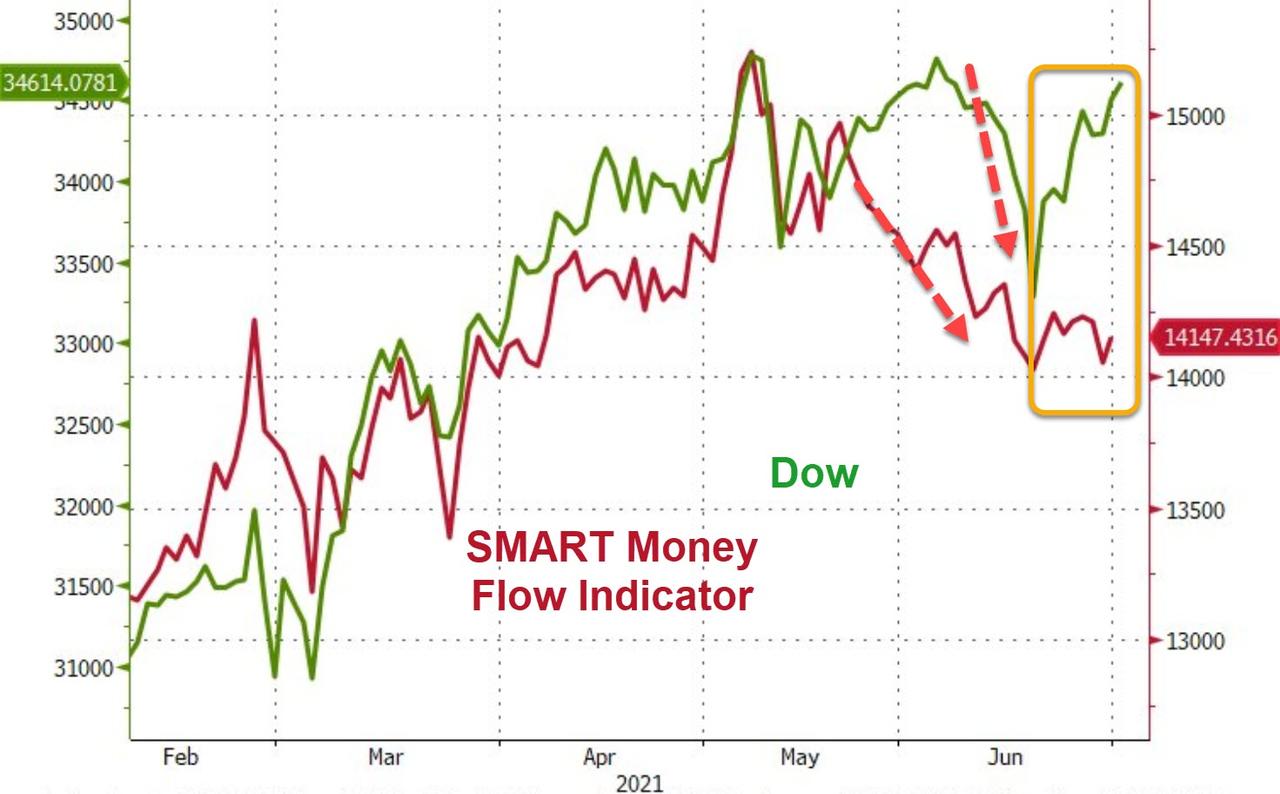
Right now, the bulls are dominating, but for some reason the “smart money” is not participating.
1. From the universe of over 1,800 ETFs, I have selected only those with a trading volume of over $5 million per day (HV ETFs), so that liquidity and a small bid/ask spread are assured.
2. Trend Tracking Indexes (TTIs)
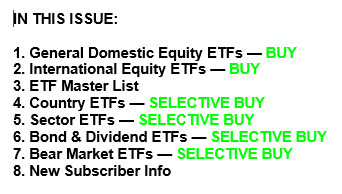
Buy or Sell decisions for Domestic and International ETFs (section 1 and 2), are made based on the respective TTI and its position either above or below its long-term M/A (Moving Average). A crossing of the trend line from below accompanied by some staying power above constitutes a “Buy” signal. Conversely, a clear break below the line constitutes a “Sell” signal. Additionally, I use an 8% trailing stop loss on all positions in these categories to control downside risk.
3. All other investment arenas do not have a TTI and should be traded based on the position of the individual ETF relative to its own respective trend line (%M/A). That’s why those signals are referred to as a “Selective Buy.” In other words, if an ETF crosses its own trendline to the upside, a “Buy” signal is generated. Since these areas tend to be more volatile, I recommend a wider trailing sell stop of 8%-10% depending on your risk tolerance.
If you are unfamiliar with some of the terminology, please see Glossary of Termsand new subscriber information in section 9.
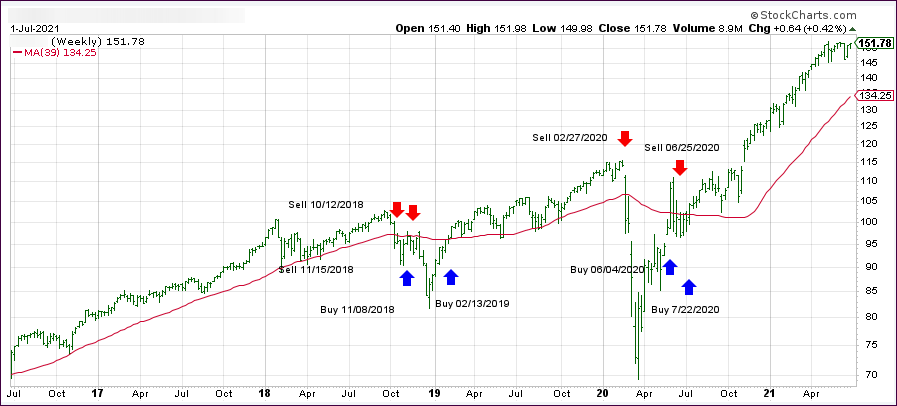
1. DOMESTIC EQUITY ETFs: BUY— since 07/22/2020
Click on chart to enlarge
Our main directional indicator, the Domestic Trend Tracking Index (TTI-green line in the above chart) has now rallied above its long-term trend line (red) by +14.01% and remains in “BUY” mode as posted.
The major indexes continued to vacillate around record territory, as the last day of the month and quarter ended. The Dow took the lead with the S&P 500 lagging and the Nasdaq sinking slightly into the red.
For June, the S&P 500 managed to eke out again of some 2.2%, despite having dropped into the red during mid-month, yet in the end, the index closed the quarter at a new high. At the same time, it recorded its fifth positive month in a row.
It’s been interesting to observe how traders and investors have simply shrugged off the ever-present and seemingly worsening inflation numbers. All based on the assumption that the economic comeback will proceed as hoped, while the Fed is assumed to continue throwing assists via its loose monetary policies.
So, what usually happens after the markets close out a good first half of the year? CNBC added this comment:
Good first halves for the market usually bode well for the rest of the year. Whenever there has been a double-digit gain in the first half, the Dow and S&P 500 have never ended that year with an annual decline, according to Refinitiv data going back to 1950.
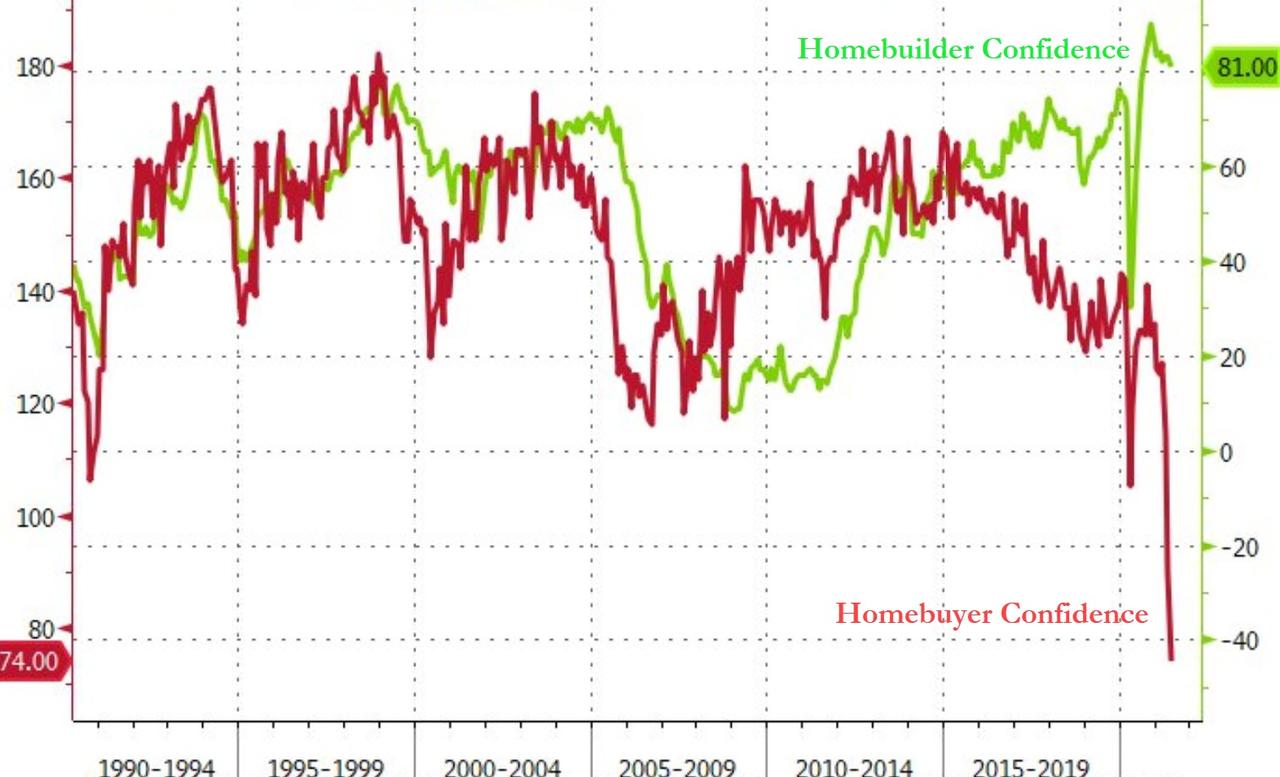
On the economic front, Pending Home Sales picked up some pace and surged in May. However, Mortgage Applications crashed, as we witnessed two opposing forces at work, namely rising Homebuilder Confidence and collapsing Homebuyer Confidence, a battle that most likely will be won by the Homebuyers.
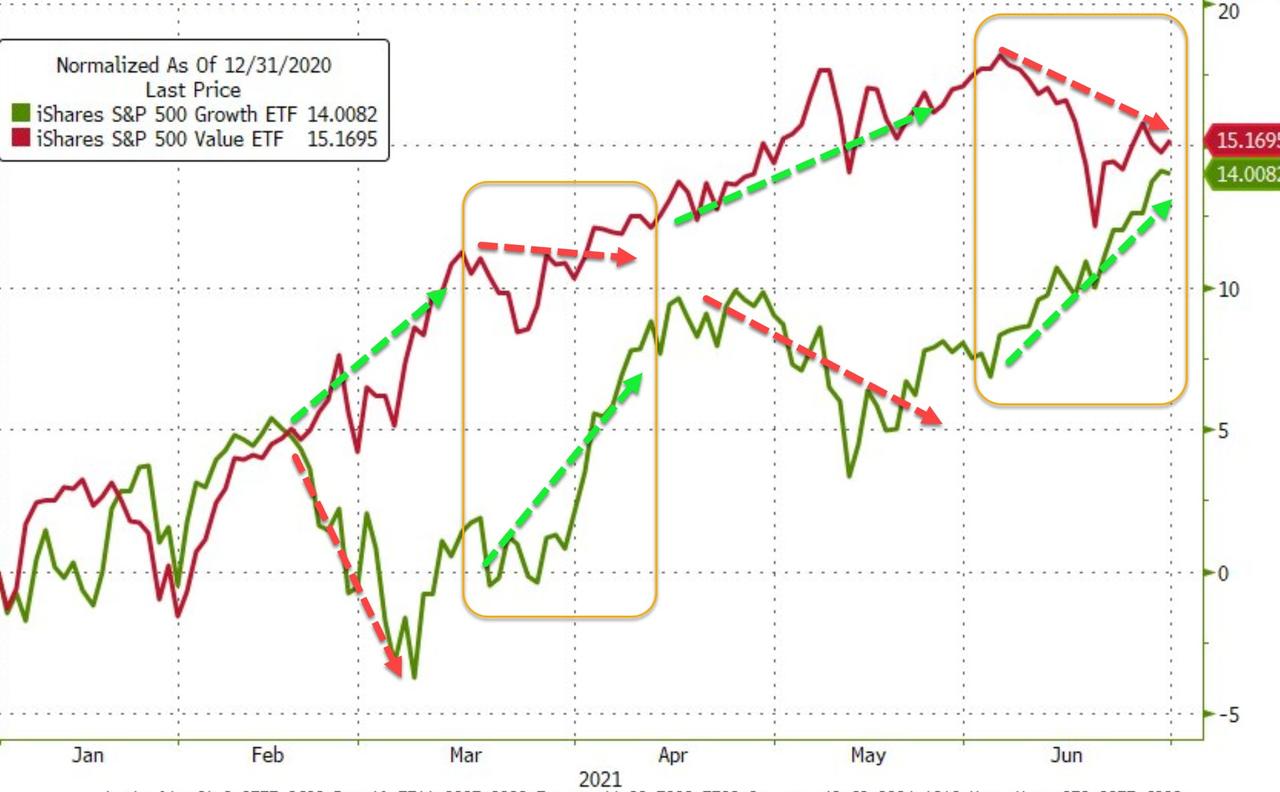
“Growth” and “Value” have been in a skirmish all year with “Value” leading but “Growth” catching up, as Bloomberg’s chart shows.
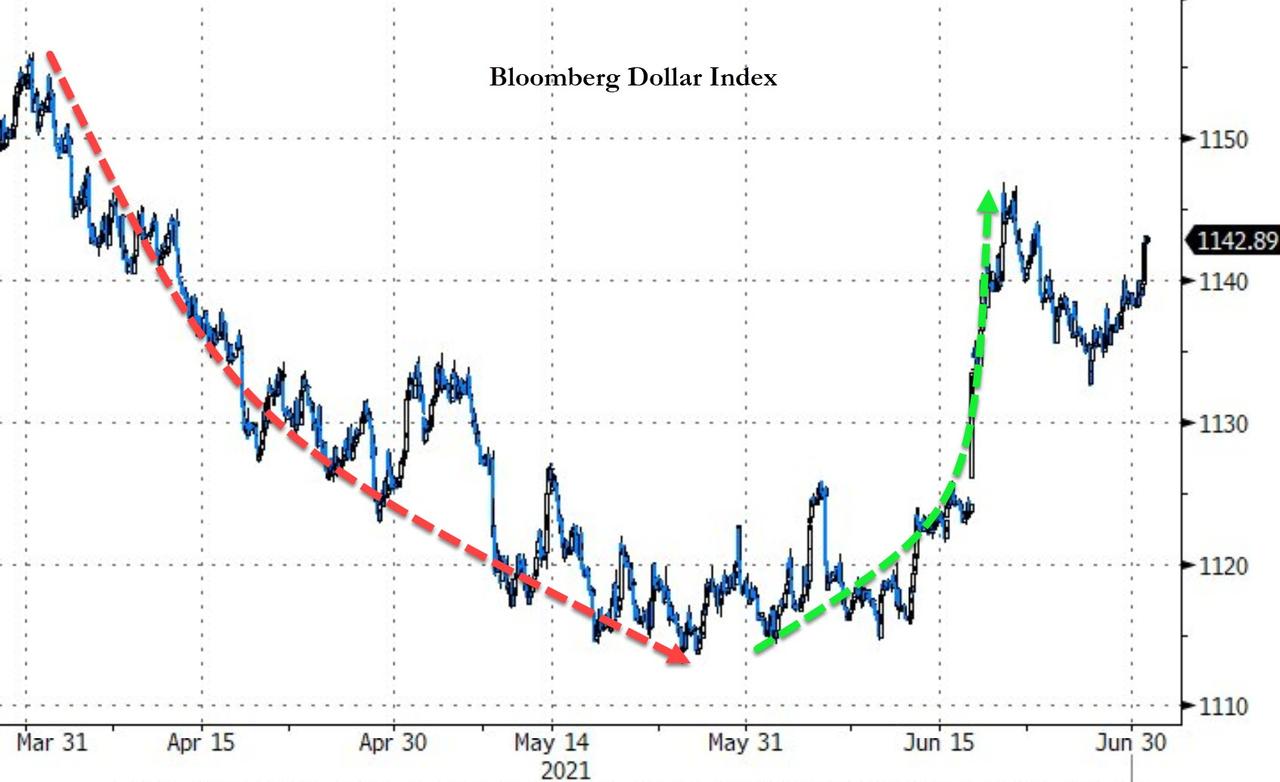
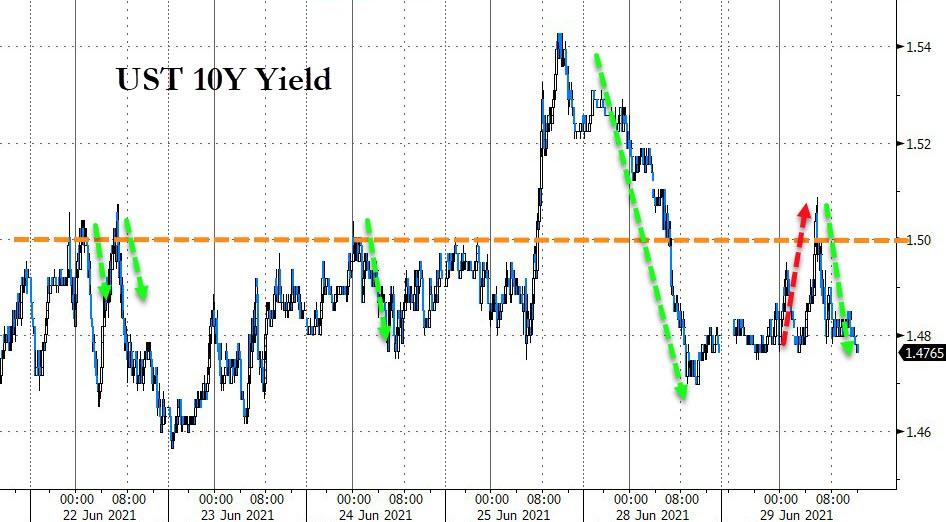
Bond yields offered a mixed picture for this quarter, as the 30-year yield took a dive while the 2-year yield spiked. The US Dollar ended lower for the quarter, despite showing a strong rebound in June.
The question in my mind when looking to the upcoming 3rd quarter is this one: “Will worsening inflation finally force the Fed’s hand to raise interest rates?
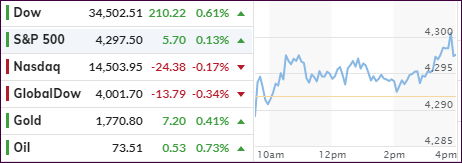
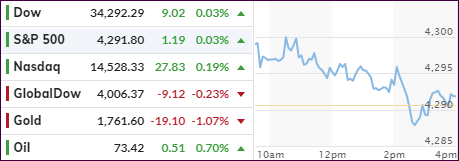
Despite an early morning bounce, the Dow and the S&P 500 succumbed to weakness and gave back most of their initial gains and ended essentially unchanged. The Nasdaq went the other way but managed to climb out of a hole to score a modest gain, after swinging wildly late in the session.
It appeared to be a day of rest for the indexes with low volatility keeping markets in check, despite strong readings form home prices and consumer confidence.
Added CNBC:
The market has churned out a series of record highs in recent weeks, but the gains have been relatively modest, and some strategists have pointed to weak market breadth, measured by the performance of average stocks and the number of individual names making new highs, as a potential area of concern.
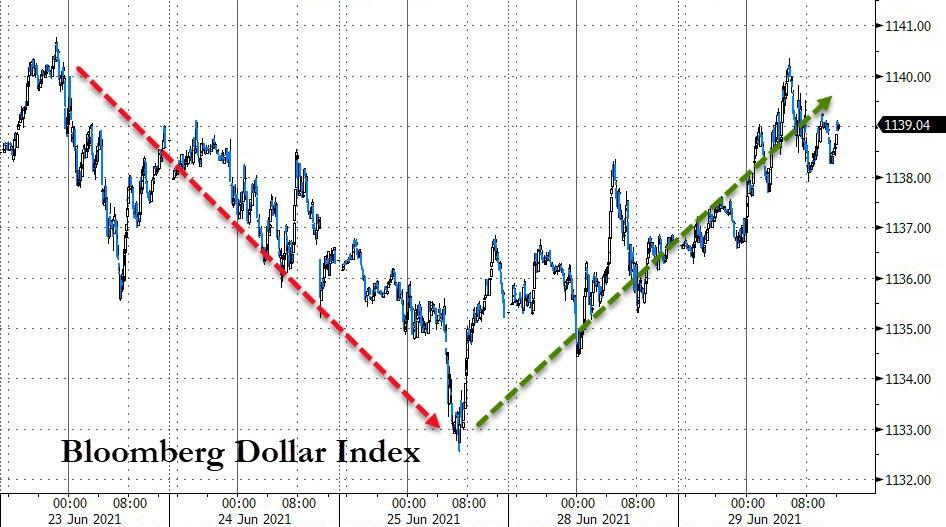
Bond yields rode the rollercoaster and ended slightly down, while the US Dollar Index continued its rebound but failed to take out last week’s highs. None of this action assisted Gold, with the precious metal breaking beneath recent lows but bouncing into the close.
It was another session during which not much was gained and not much was lost.