ETFs On The Cutline – Updated Through 09/10/2021

Ulli ETFs on the Cutline Contact

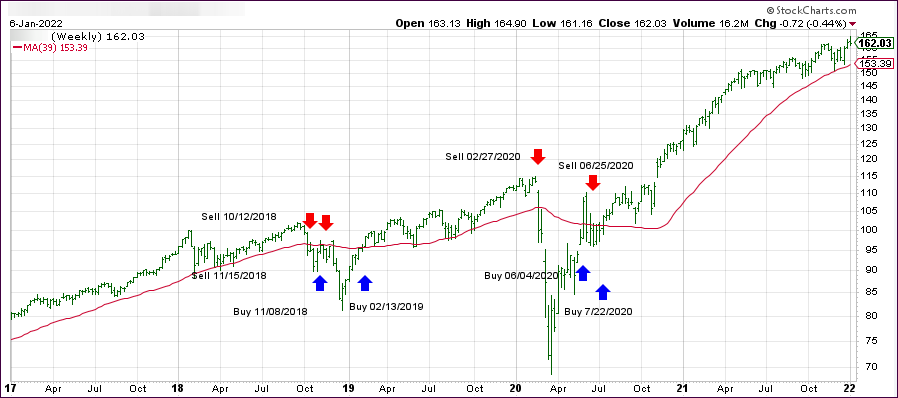
Below, please find the latest High-Volume ETF Cutline report, which shows how far above or below their respective long-term trend lines (39-week SMA) my currently tracked ETFs are positioned.

This report covers the HV ETF Master List from Thursday’s StatSheet and includes 312 High Volume ETFs, defined as those with an average daily volume of more than $5 million, of which currently 249 (last week 264) are hovering in bullish territory. The yellow line separates those ETFs that are positioned above their trend line (%M/A) from those that have dropped below it.

Take a look:                                                                   

The HV ETF Master Cutline Report

In case you are not familiar with some of the terminology used in the reports, please read the Glossary of Terms. If you missed the original post about the Cutline approach, you can read it here.      

ETF Tracker Newsletter For September 10, 2021

Ulli ETF Tracker Contact

ETF Tracker StatSheet          

You can view the latest version here.

PUKING INTO THE WEEKEND

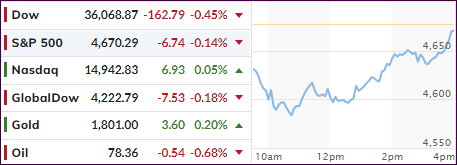
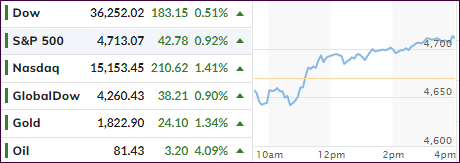
[Chart courtesy of MarketWatch.com]

  1. Moving the markets

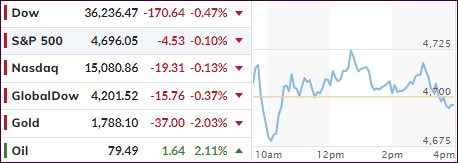
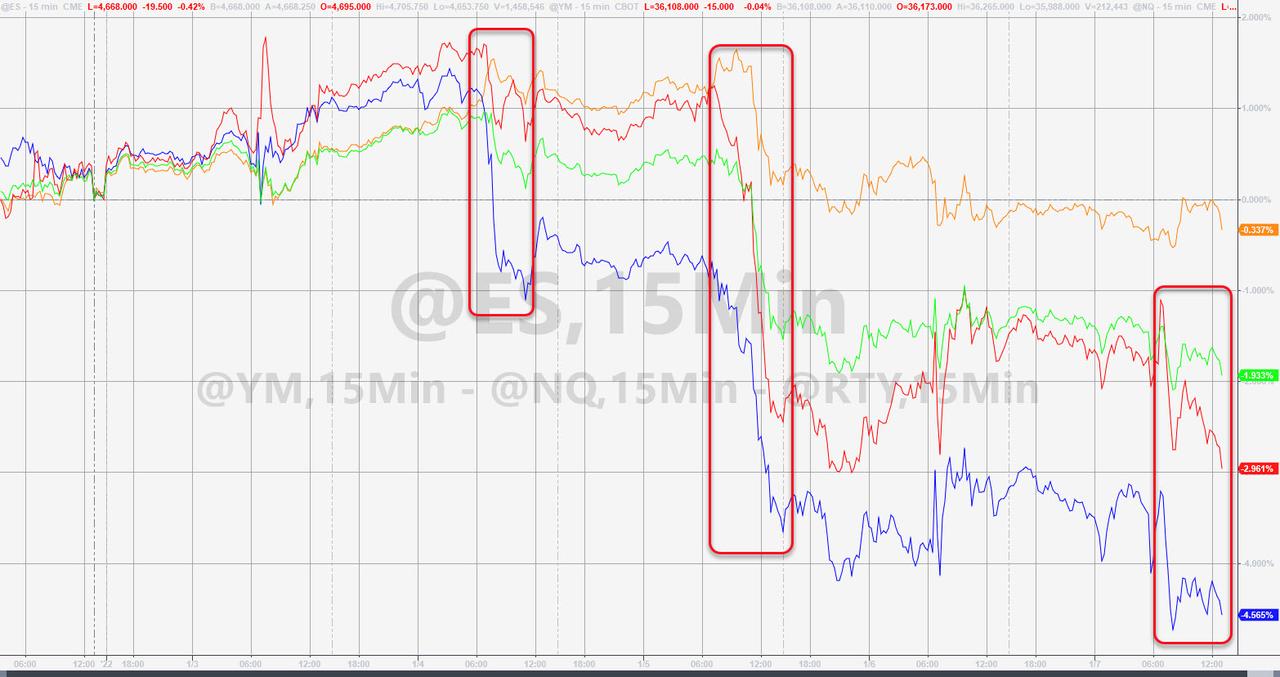
Another opening bounce in the markets turned out to be fake with the major indexes hitting the skids and not only diving into the weekend but also closing at the lows of the session with breadth worsening.

This marks the 5th day in a row of losses although, for this Holiday shortened week, the S&P 500 dipped only 1.67%, which is modest given the strong advances we have seen. Nevertheless, it’s the index’s worst week since about the middle of June.


Added ZeroHedge:

Every dip that was bought this week was met with more selling… that is NOT what the doctor ordered!! Everything looked great overnight but the cash equity open saw the selling begin and barely stop and the close was really ugly…

Apple didn’t help matters with the stock sliding some 3% due to a ruling that the tech giant no longer can force developers to use in app purchasing, which means, simply stated, they must give up some of their monopoly position.

What really hurt the markets and took a huge bite out of the Fed’s credibility stating that inflation is transitory, was the August Producer Price Index (PPI), which reflects a more realistic state of inflationary forces. The PPI showed wholesale costs for businesses rising 8.3% per annum, which was the biggest advance since 2010. For the month, the index raced ahead by 0.7%.

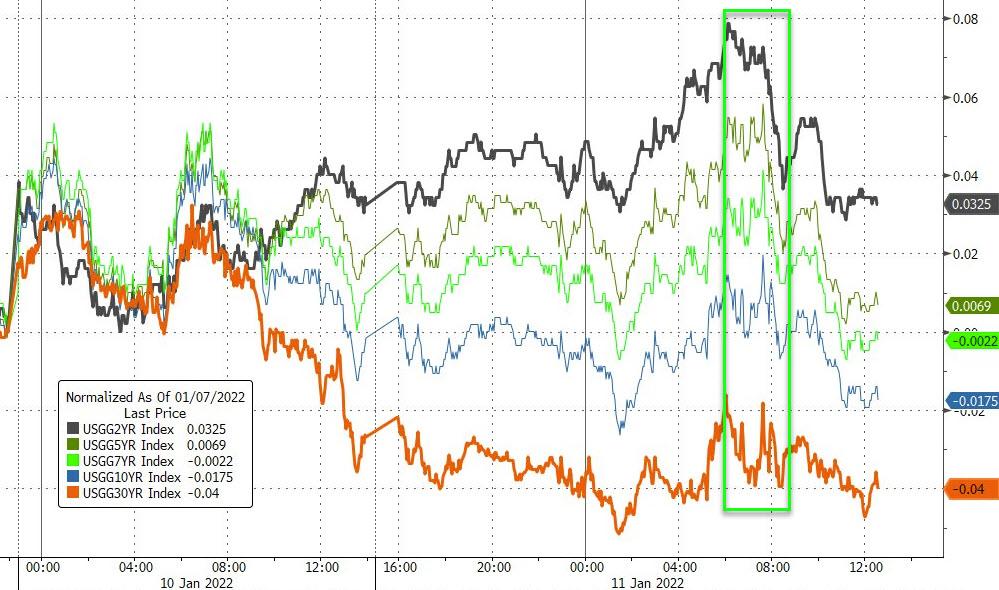
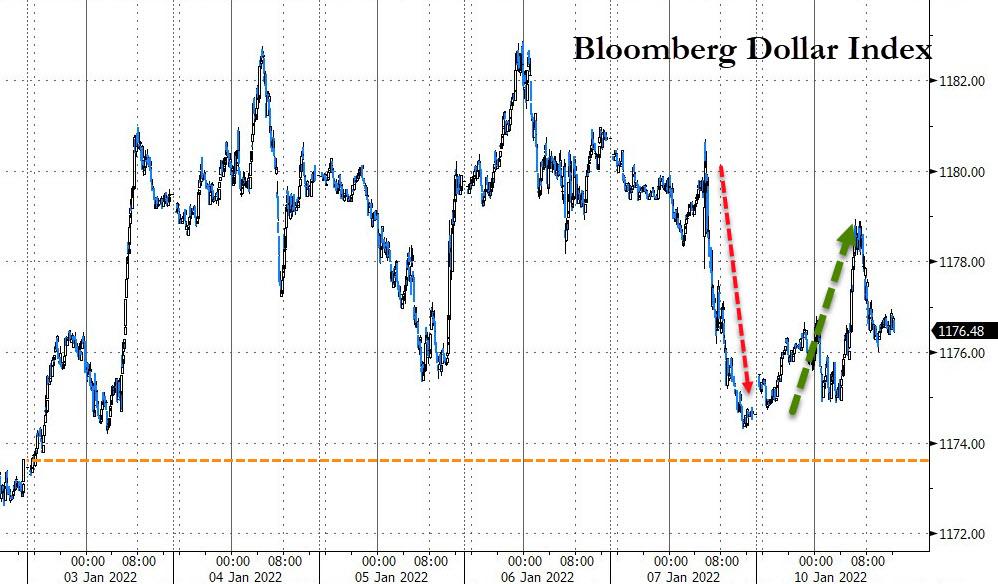
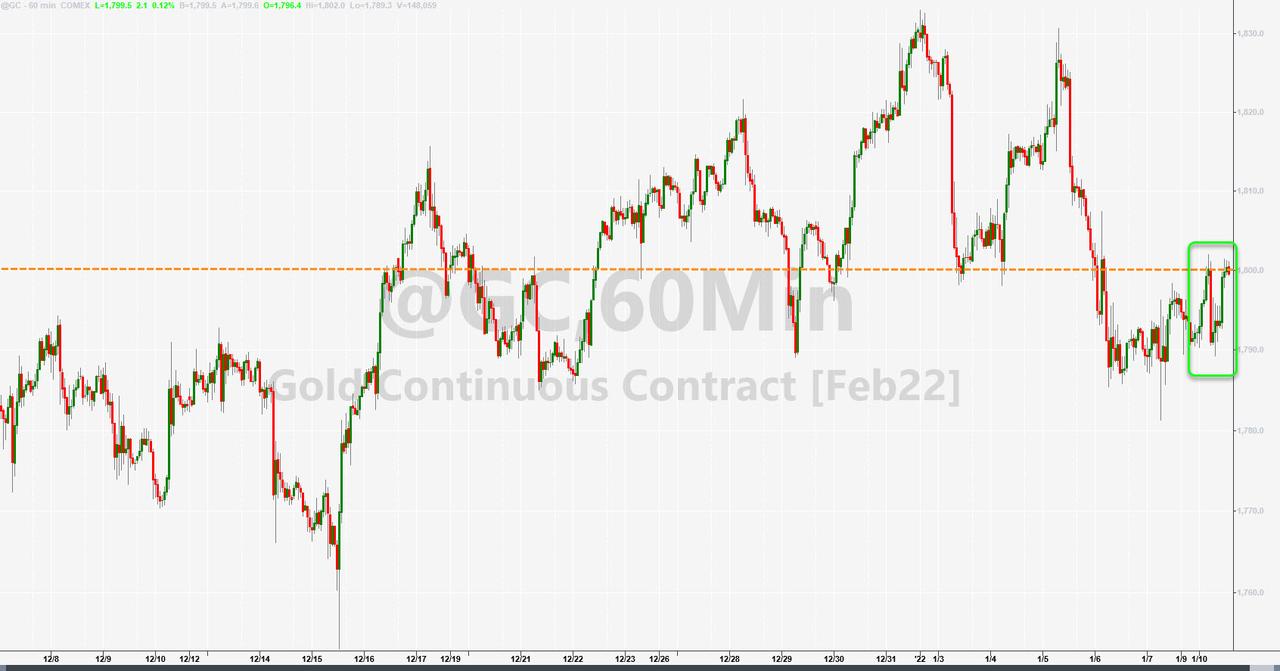
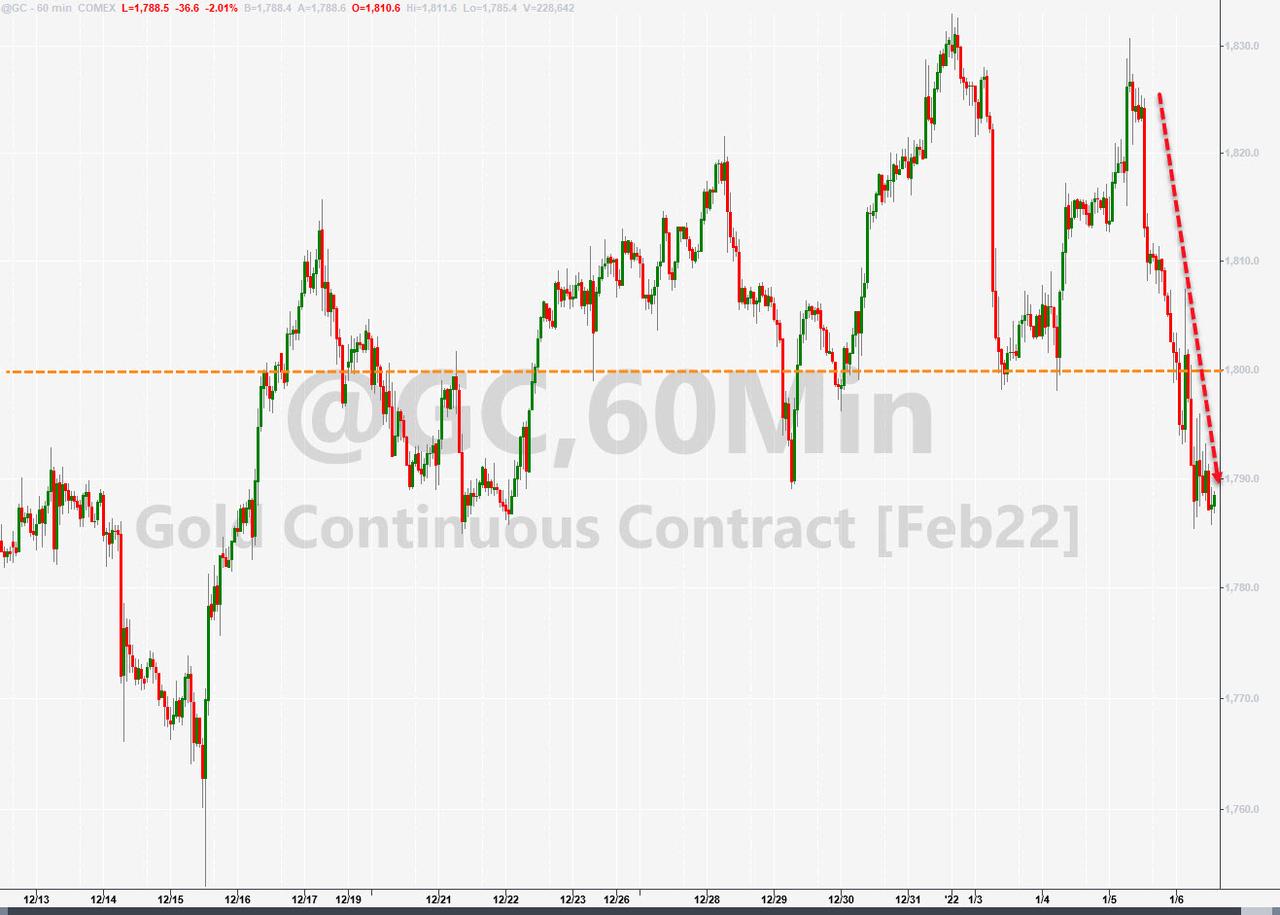
Bond yields rose, the US Dollar rallied, and Gold again was pulled below its $1,800 level. There was no place to hide with “SmallCaps” and “Value” all showing red numbers.

The question now remains whether there is more downside to come, and if so, will it be enough to trigger our trailing sell stops and subsequently our Trend Tracking Indexes (TTIs)?

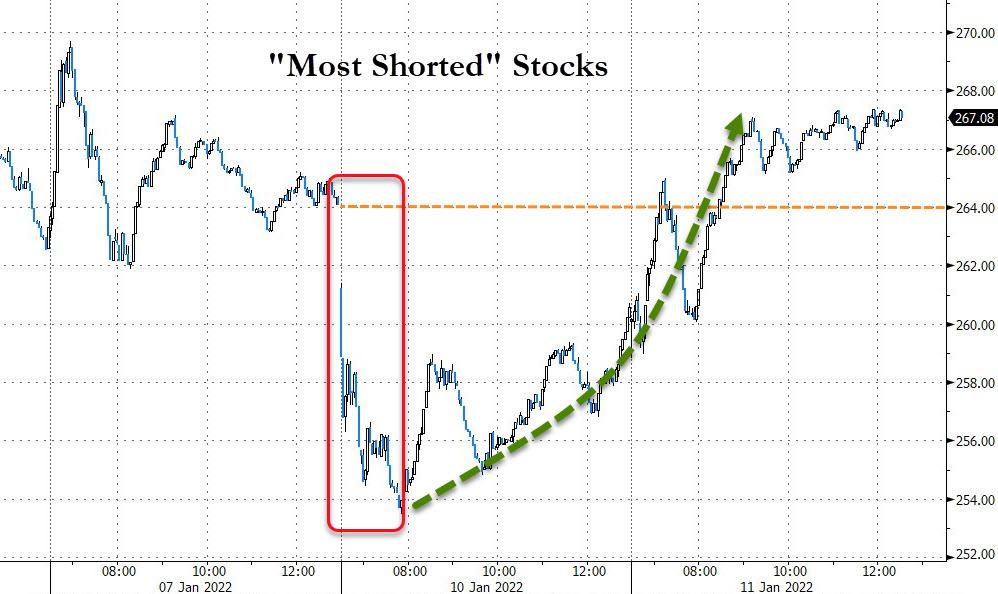
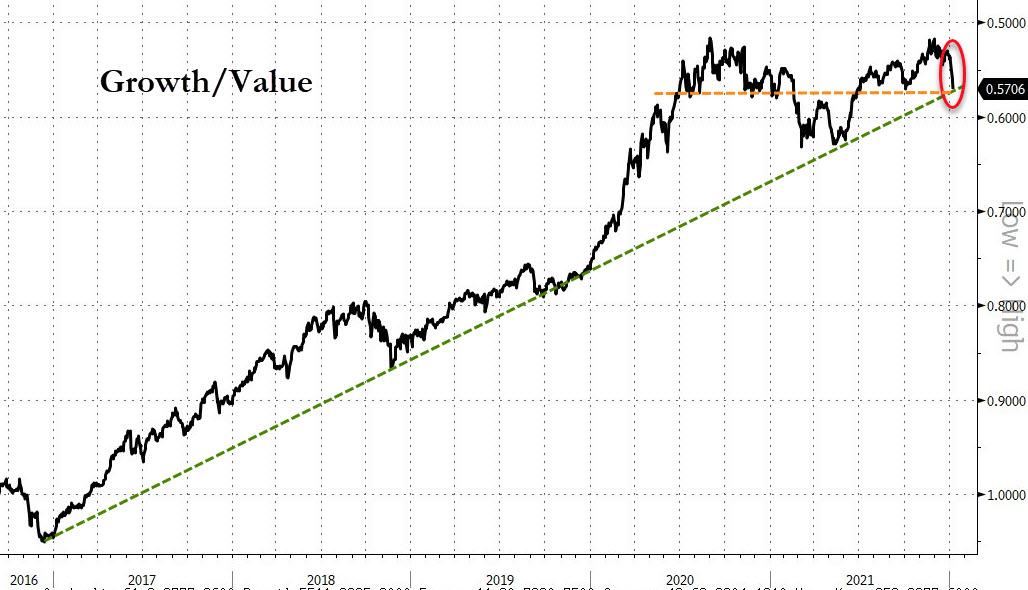
No one has that answer, and we will have to wait and see how things play out, but this chart by Bloomberg indicates the ever-widening alligator gap, which eventually will snap shut.

Read More

Weekly StatSheet For The ETF Tracker Newsletter – Updated Through 09/09/2021

Ulli ETF StatSheet Contact

ETF Data updated through Thursday, September 9, 2021

Methodology/Use of this StatSheet:

1. From the universe of over 1,800 ETFs, I have selected only those with a trading volume of over $5 million per day (HV ETFs), so that liquidity and a small bid/ask spread are assured.

2. Trend Tracking Indexes (TTIs)

Buy or Sell decisions for Domestic and International ETFs (section 1 and 2), are made based on the respective TTI and its position either above or below its long-term M/A (Moving Average). A crossing of the trend line from below accompanied by some staying power above constitutes a “Buy” signal. Conversely, a clear break below the line constitutes a “Sell” signal. Additionally, I use an 8% trailing stop loss on all positions in these categories to control downside risk.

3. All other investment arenas do not have a TTI and should be traded based on the position of the individual ETF relative to its own respective trend line (%M/A). That’s why those signals are referred to as a “Selective Buy.” In other words, if an ETF crosses its own trendline to the upside, a “Buy” signal is generated. Since these areas tend to be more volatile, I recommend a wider trailing sell stop of 8%-10% depending on your risk tolerance.

If you are unfamiliar with some of the terminology, please see Glossary of Terms and new subscriber information in section 9.     

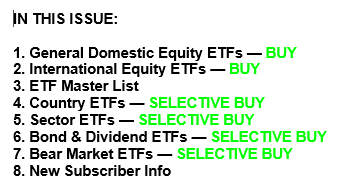
1. DOMESTIC EQUITY ETFs: BUY — since 07/22/2020

Click on chart to enlarge

Our main directional indicator, the Domestic Trend Tracking Index (TTI-green line in the above chart) has now rallied above its long-term trend line (red) by +8.45% and remains in “BUY” mode as posted.

Read More

Hunting For Clarity

Ulli Market Commentary Contact

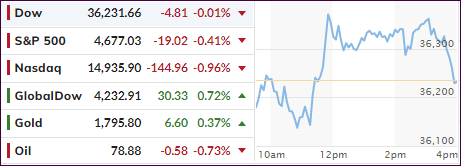
[Chart courtesy of MarketWatch.com]

  1. Moving the markets

It was a third day in a row of red numbers for the Dow and S&P 500 with the indicators meandering and looking for a base to support the bullish theme. While the three major indexes bounced off the lows for the day, it was not enough to instill confidence in the bears returning the baton back to the bulls.

The economic outlook was foremost on traders’ minds, but since we are in September, known to be one of the most volatile months of the year, more bumpiness may be in the cards. Questionable growth prospects combined with Fed policy, as well as the legislative agendas (cough debt ceiling, cough), may keep buyers in check.

Adding to that the insanity, as ZeroHege called it, that there are now a record 2.2 million more job openings than unemployed workers, makes you scratch your head wondering what kind of an upside-down world we are living in.

Bonds did well, with yields dropping, as the 10-year auction went better than expected with their yield moving back to unchanged for the week.

That should have given Gold an assist, but it was prevented by the US Dollar continuing to surge mid-session but giving up some of its gains at the close.

In the end, the losses for the major indexes were minor, but it remains unclear whether there is more downside to come. Your guess is as good as mine.

Read More

Slipping And Sliding

Ulli Market Commentary Contact

[Chart courtesy of MarketWatch.com]

  1. Moving the markets

The same old anxieties were moved to the front burner again, namely what the delta variant’s impact might be on the economic reopening. At least that’s the headline news, but looking under the hood for the real reason, it appears to me the fact that 7 million people lost their extra unemployment benefits over the weekend might be closer to the truth.

Not helping the markets, and putting traders in a sour mood, was Goldman Sachs’ (GS) economic outlook downgrade, in which they reduced their annual growth estimate for 2021 to 5.7% from 6.5% and below the consensus of 6.2%. As a side note, GS mentioned that fading fiscal stimulus might be a headwind as well.

As a result, red numbers prevailed across the board with bonds dropping as yields rose, and the major indexes slumping, except for the Nasdaq, which eked out a small gain. The US Dollar ripped and had its best day in 3 weeks, as the rest of the markets dipped.

The dollars surge proved to be a problem for gold, which got hammered and lost its $1,800 level again.  

I agree with ZeroHedge’s comment that “for over a year, US financial conditions have done nothing but get easier and easier and actual US economic data has done nothing but get worse and worse than expectations.”

That’s why I believe that the real economy will now show up and must prove itself, unless “stimmy checks” of gigantic proportions are enacted again.

Just food for thought.

Read More

ETFs On The Cutline – Updated Through 09/03/2021

Ulli ETFs on the Cutline Contact

Below, please find the latest High-Volume ETF Cutline report, which shows how far above or below their respective long-term trend lines (39-week SMA) my currently tracked ETFs are positioned.

This report covers the HV ETF Master List from Thursday’s StatSheet and includes 312 High Volume ETFs, defined as those with an average daily volume of more than $5 million, of which currently 264 (last week 260) are hovering in bullish territory. The yellow line separates those ETFs that are positioned above their trend line (%M/A) from those that have dropped below it.

Take a look:                                                                   

The HV ETF Master Cutline Report

In case you are not familiar with some of the terminology used in the reports, please read the Glossary of Terms. If you missed the original post about the Cutline approach, you can read it here.