Weekly StatSheet For The ETF Tracker Newsletter – Updated Through 12/16/2021

Ulli ETF StatSheet Contact

ETF Data updated through Thursday, December 16, 2021
Methodology/Use of this StatSheet:

1. From the universe of over 1,800 ETFs, I have selected only those with a trading volume of over $5 million per day (HV ETFs), so that liquidity and a small bid/ask spread are assured.

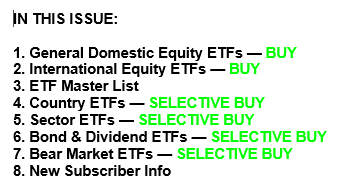
2. Trend Tracking Indexes (TTIs)

Buy or Sell decisions for Domestic and International ETFs (section 1 and 2), are made based on the respective TTI and its position either above or below its long-term M/A (Moving Average). A crossing of the trend line from below accompanied by some staying power above constitutes a “Buy” signal. Conversely, a clear break below the line constitutes a “Sell” signal. Additionally, I use an 8% trailing stop loss on all positions in these categories to control downside risk.

3. All other investment arenas do not have a TTI and should be traded based on the position of the individual ETF relative to its own respective trend line (%M/A). That’s why those signals are referred to as a “Selective Buy.” In other words, if an ETF crosses its own trendline to the upside, a “Buy” signal is generated. Since these areas tend to be more volatile, I recommend a wider trailing sell stop of 8%-10% depending on your risk tolerance.

If you are unfamiliar with some of the terminology, please see Glossary of Terms and new subscriber information in section 9.     

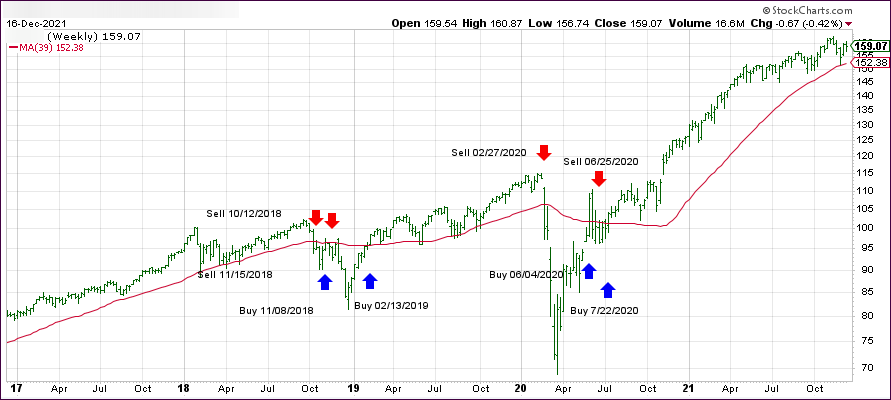
1. DOMESTIC EQUITY ETFs: BUY — since 07/22/2020
Click on chart to enlarge

Our main directional indicator, the Domestic Trend Tracking Index (TTI-green line in the above chart) has now rallied above its long-term trend line (red) by +4.74% and remains in “BUY” mode as posted.

Read More
Fed Stokes Markets

Ulli Market Commentary Contact

[Chart courtesy of MarketWatch.com]

  1. Moving the markets

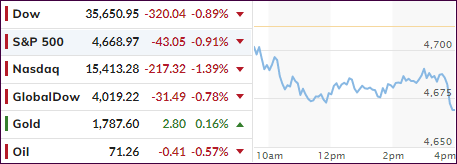
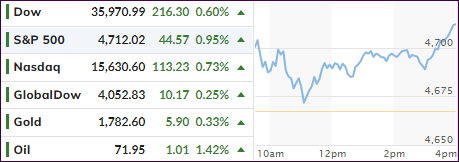
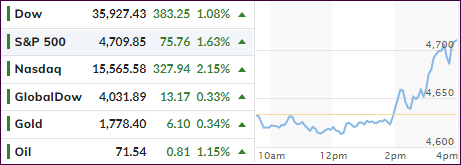
The much-anticipated Fed announcement came and went. What mattered most to Wall Street traders was that Powell’s announcement was in line with expectations and contained no surprises.

ZeroHedge clarified it this way:

  • The Fed statement and economic projections saw the central bank double the pace of its asset purchase tapering to USD 30bln per month (consisting of USD 20bln Treasuries, USD 10bln MBS – this will be doubled again in January, with similar reductions likely be appropriate each month thereafter), which puts it on course to conclude asset purchases by March, from the prior landing zone of around June, although this could be adjusted if warranted.
  • Its updated projections now see three rate hikes in 2022, revising up its view from one hike penciled in at the September FOMC (recall that September, the Committee was essentially split on the potential need for a second 2022 rate hike); longer-term, it has left its terminal rate view unchanged, however.
  • Inflation forecasts were revised up to 2.6% for headline PCE by the end of next year (prev. 2.2%), while the core measure is seen at 2.7% by end 2022 (prev. 2.3%).
  • On the labor market, the Fed sees the jobless rate return to the 3.5%-mark next year (prev. saw 3.8%), where it is likely to stay over its forecast horizon.

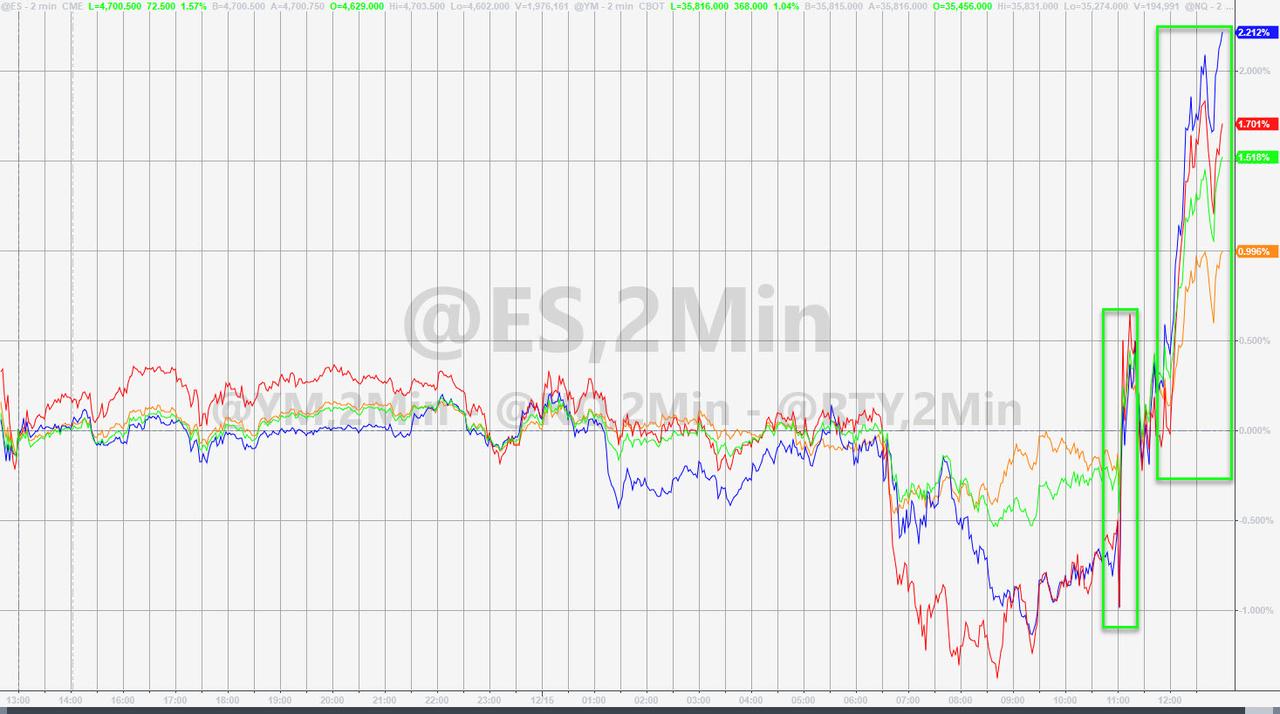
The early slump turned into a giant pump propelling the major indexes out of the doldrums, for sure part of a relief rally, as some analysts had expected a much more aggressive Fed announcement.

Personally, I think that this will still be forthcoming next year when inflation will not be contained as hoped and will be surging much higher.

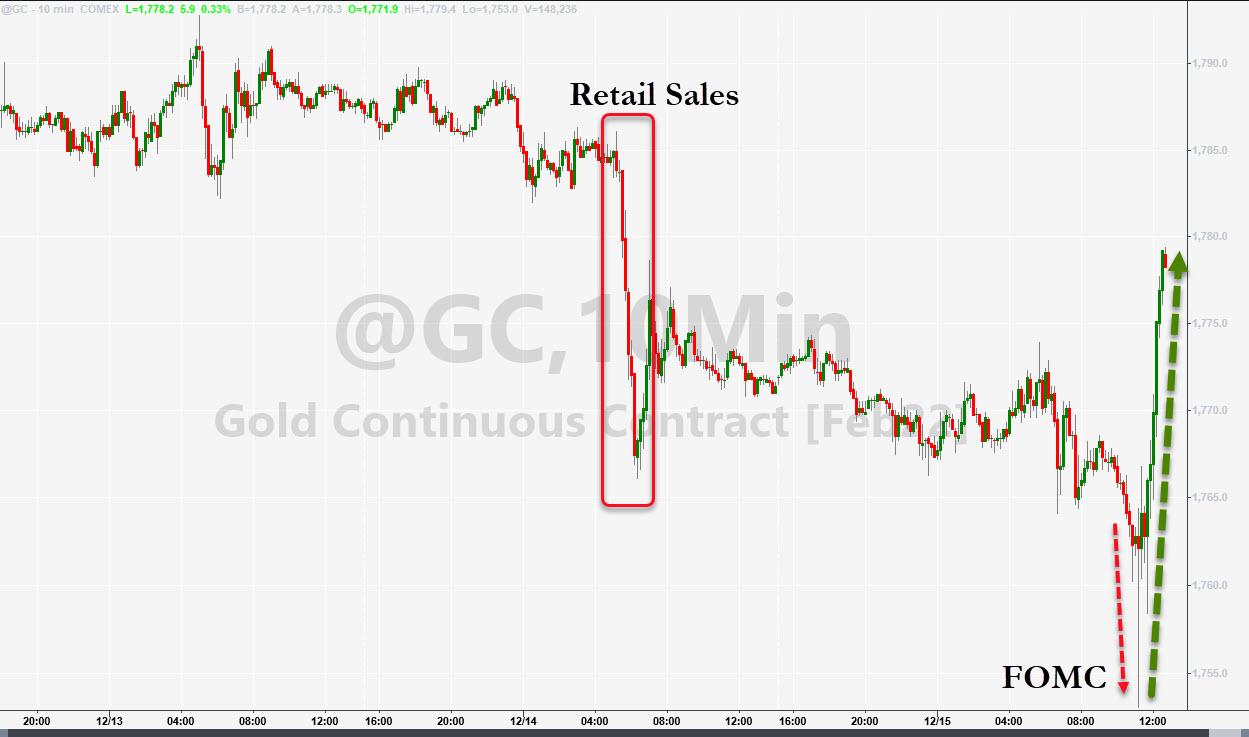
The rebound was broad-based with 9 out of 10 S&P sectors participating, but the US Dollar reversed an early rally and dumped into the close. Gold went the other way by losing momentum early on, after a poor retail sales report, but the precious metal found some footing and ramped higher by 0.38%.

I’ll be out tomorrow but will be writing Friday’s week-ending commentary, with the $4.3 trillion in options expirations surely having an impact on that day’s volatility.

Read More

Stalling And Falling

Ulli Market Commentary Contact

[Chart courtesy of MarketWatch.com]

  1. Moving the markets

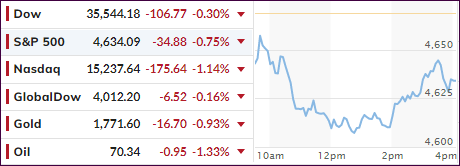
There was simply too much uncertainty swirling around Wall Street to give the bulls any encouragement to pull the major indexes out of yesterday’s doldrums, so the bears dominated the session again.

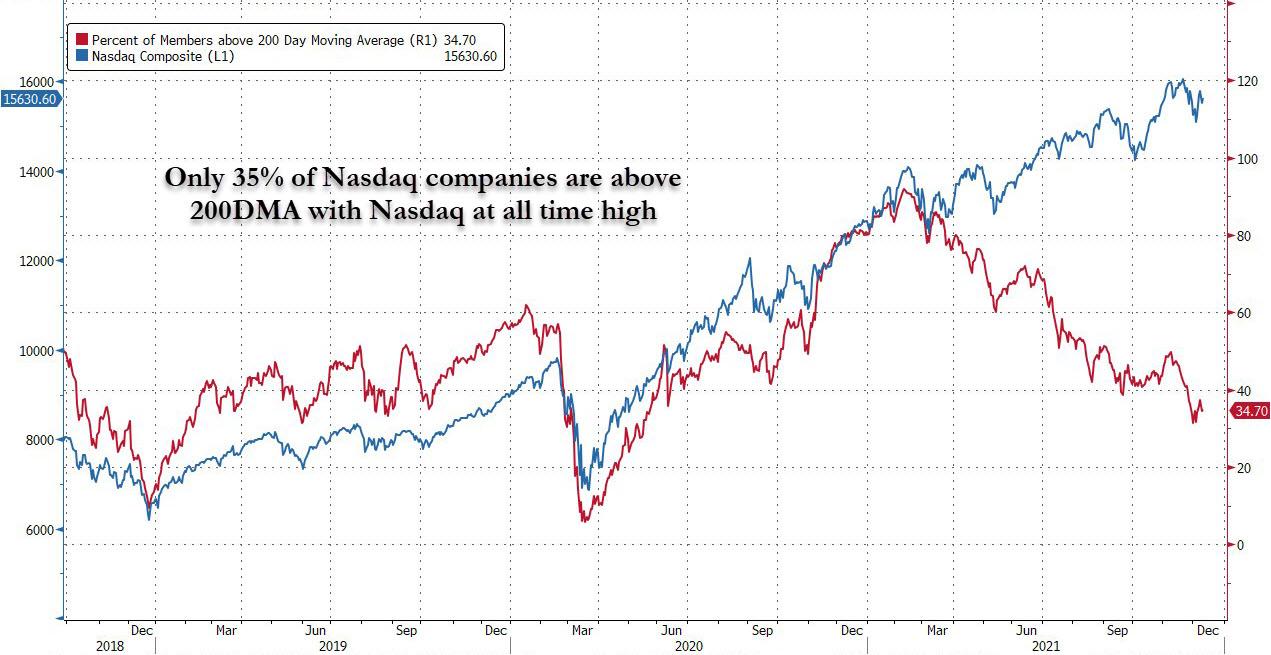
First, there was Goldman Sachs ringing the alarm bell by stating their worry about market breadth. Zero Hedge noted that it means 51% of all market gains since April have come from just 5 stocks, and only 35% of Nasdaq companies are above their 200-day M/A, with the Nasdaq at all-time highs. Ouch!

Second, traders are nervous about Friday’s quad options expirations, the volume of which is pegged to $4.3 trillion in estimated value. This will certainly add to volatility, as will some other factors.

We will face the outcome of the Fed meeting tomorrow regarding the much-announced acceleration of the tapering of bond purchases, as well as any potential rate hikes. This will be followed by Thursday’s jobless numbers and the above-mentioned options expirations on Friday, all of which could combine to create a tumultuous week.

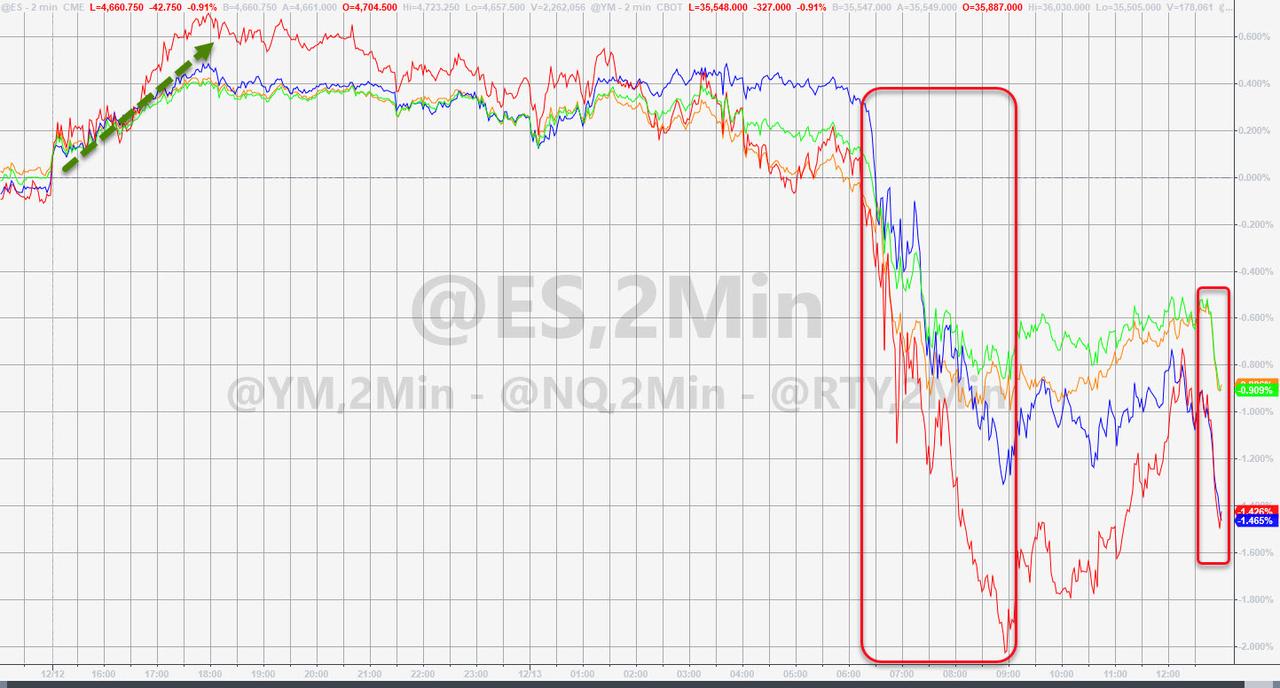
Given the above, and the fact that bond yields edged higher today, it’s no surprise that equities gave back some of last week’s gains with the Nasdaq and SmallCaps getting hit the hardest.

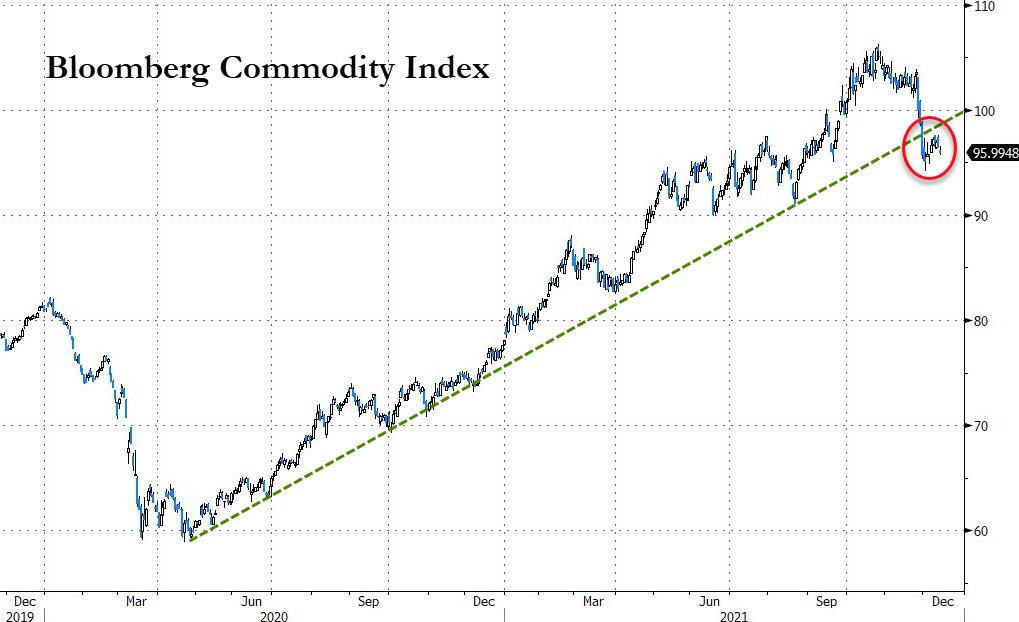
The US Dollar continued its stairstep rebound and added 0.26% for the session, while the Commodity Index, which had been on a tear since April 2020, showed signs of weakening by breaking below its major uptrend line.  

Even gold, a place to hide during times of uncertainty, offered no refuge, and the precious metal was slammed at the tune of 0.93%.

Read More

S&P 500 Tumbles From Its Record High

Ulli Market Commentary Contact

[Chart courtesy of MarketWatch.com]

  1. Moving the markets

Despite the futures markets showing solid gains across the board last night, a sense of reality returned this morning, with all indexes opening to the downside.

A mid-day rebound ended in disappointment, as the bears asserted some strength and pushed the major indexes towards their lows of the session. However, this really comes as no surprise considering that the S&P 500 merely retreated from its record high set on Friday.

Adding to the uncertainty were continued jitters about the omicron variant and its potential economic impact, despite a host of scientists and physicians playing down its severity, but MSM is staunchly focused on fearmongering.

Also on traders’ minds is the outcome of the Fed’s two-day meeting to be released on Wednesday, with the main topics being the possible acceleration to end the bond-buying program, along with any thoughts of interest rate hikes. The Fed must handle both events with kid gloves and tread lightly, otherwise investors might be spooked and hand the baton to the bearish crowd.

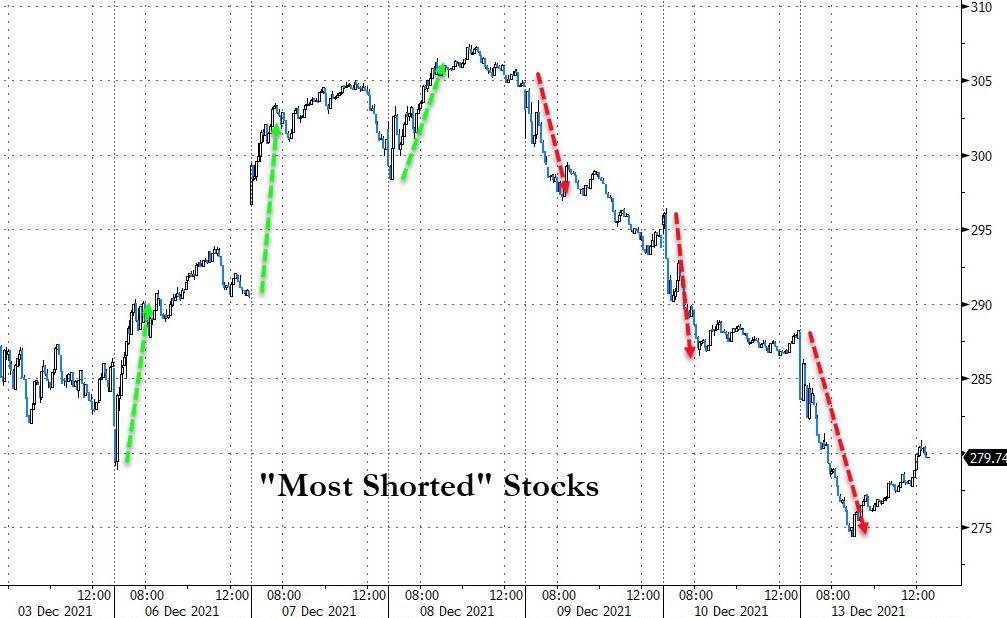
Last week’s massive short-squeeze, which peaked on Wednesday, ran into a brick wall and gave up all gains, with the underlying shorted stocks now doing what they are supposed to, namely drop.   

Bonds rallied as yields dropped, and the US Dollar recaptured Friday’s losses in one swoop. Gold mainly bounced above its trendline yet only managed to score a meager gain of 0.17%.

All eyes are now on Wednesday’s Federal Reserve policy decision.  

Read More

ETFs On The Cutline – Updated Through 12/03/2021

Ulli ETFs on the Cutline Contact

Below, please find the latest High-Volume ETF Cutline report, which shows how far above or below their respective long-term trend lines (39-week SMA) my currently tracked ETFs are positioned.

This report covers the HV ETF Master List from Thursday’s StatSheet and includes 312 High Volume ETFs, defined as those with an average daily volume of more than $5 million, of which currently 175 (last week 140) are hovering in bullish territory. The yellow line separates those ETFs that are positioned above their trend line (%M/A) from those that have dropped below it.

Take a look:                                                                   

The HV ETF Master Cutline Report

In case you are not familiar with some of the terminology used in the reports, please read the Glossary of Terms. If you missed the original post about the Cutline approach, you can read it here.      

ETF Tracker Newsletter For December 10, 2021

Ulli ETF Tracker Contact

ETF Tracker StatSheet          

You can view the latest version here.

PUMPING INTO THE WEEKEND

[Chart courtesy of MarketWatch.com]

  1. Moving the markets

Aimless meandering, even though above the unchanged line, turned into a late session ramp with the major indexes pushing higher, led by the S&P 500, with all three of them ending the day with solid gains.

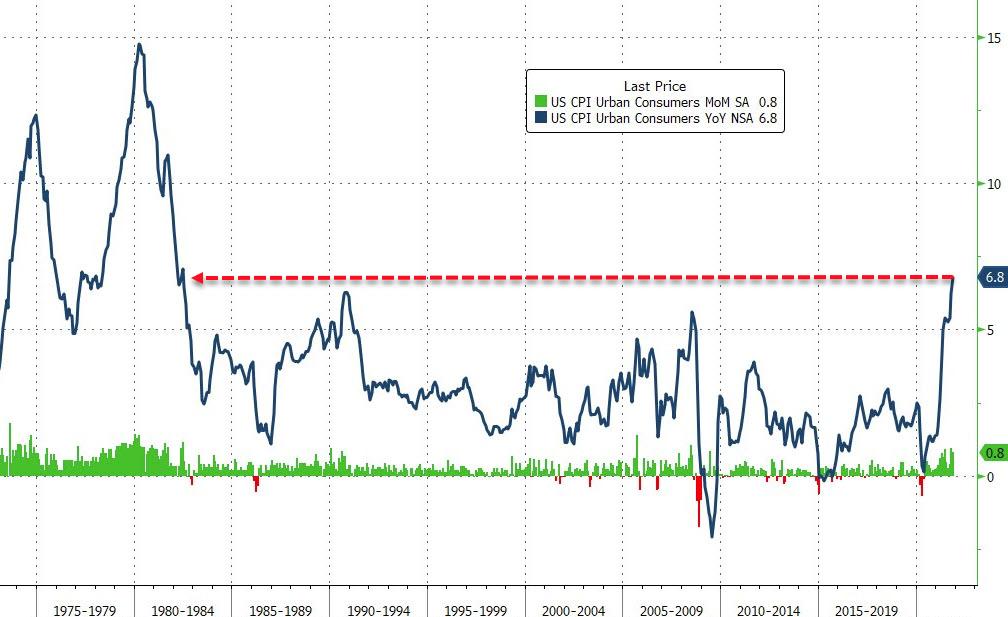
Despite a terrible CPI report, the S&P 500 managed to score another record high and posted its best week since February. Yes, inflation hit a 39-year high, as prices climbed at their fastest pace since 1982.

As ZeroHedge noted, this morning’s CPI, after having surged faster than expected in 7 of the last 8 months, is the last big release ahead of next Wednesday’s Fed decision on interest rates and possibly an increase in tapering.

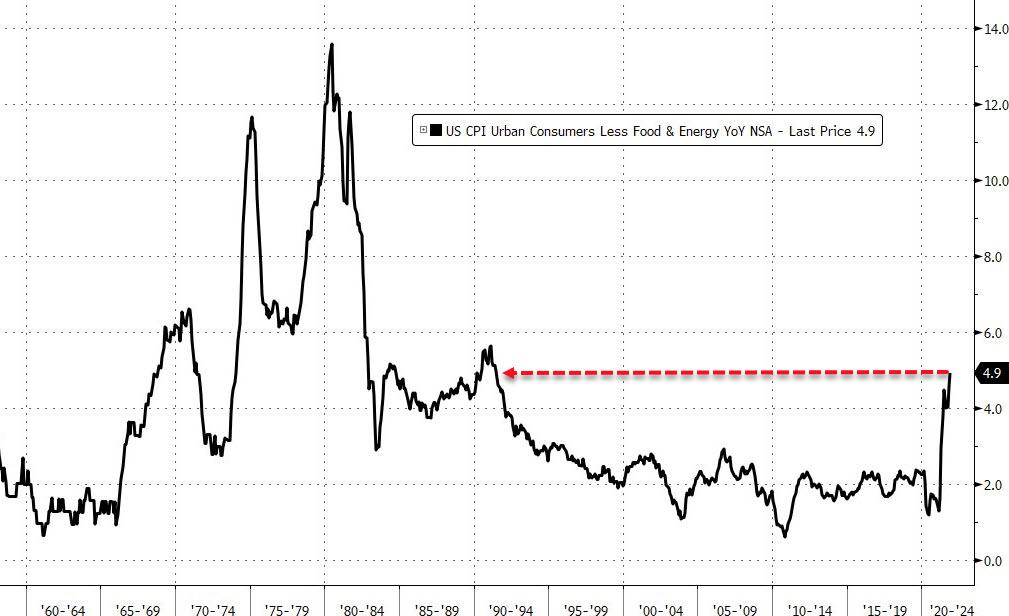
The Consumer Price Index printed at +6.8% YoY, which was a tad better than expectations of 6.9%. The Core CPI, without food and energy, still rose at a 4.9% clip, its highest since 1991.

Bond yields swung wildly with the 10-year almost touching 1.45% at the low end and 1.52% at the high end, but it settled at 1.485%, just about below the unchanged line.

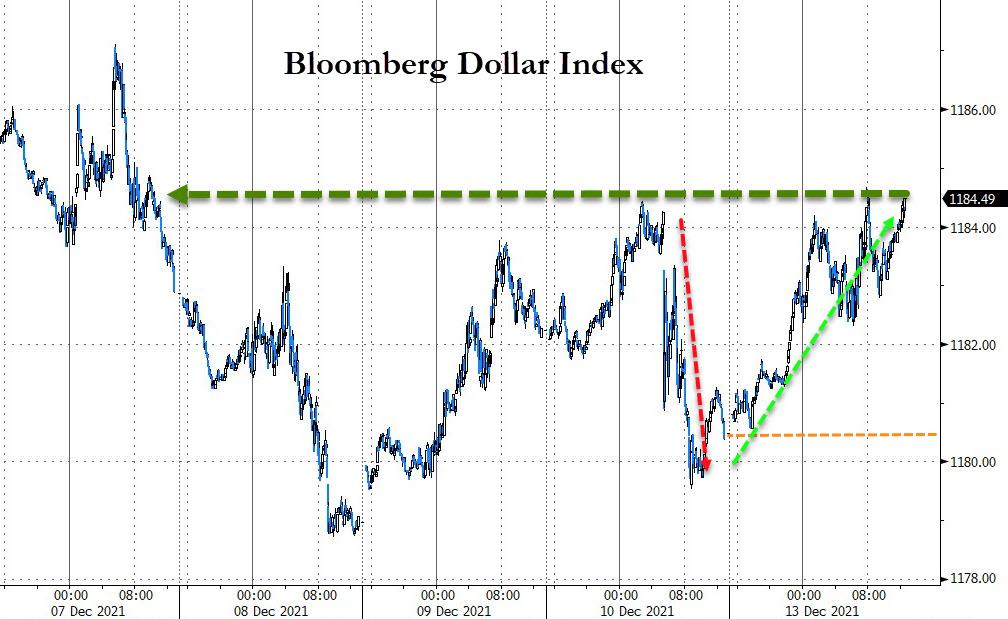
The US Dollar followed a similar pattern but ended close to its lowest level of the session and gave back 0.22%.

Gold, after some early weakness, suddenly dashed higher mid-day and gained 0.34%. However, the move was not enough for the precious metal to recapture its $1,800 level.

As I posted before, during early periods of rising inflation, stock markets will benefit but, once this process accelerates causing bond yields to spike out of control, markets will collapse.

That’s why we must be prepared to execute our exit strategy, whenever our Trend Tracking Index (TTI) signals that critical moment in time.

Read More