Upheaval: Dumping Into The Close

Ulli Market Commentary Contact

[Chart courtesy of MarketWatch.com]

  1. Moving the markets

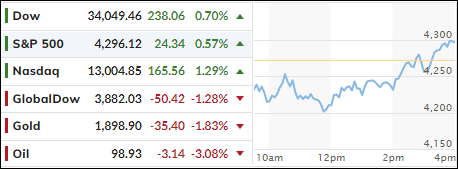
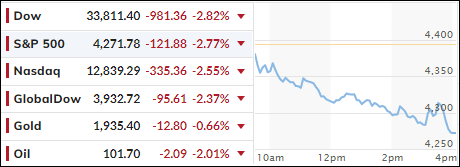
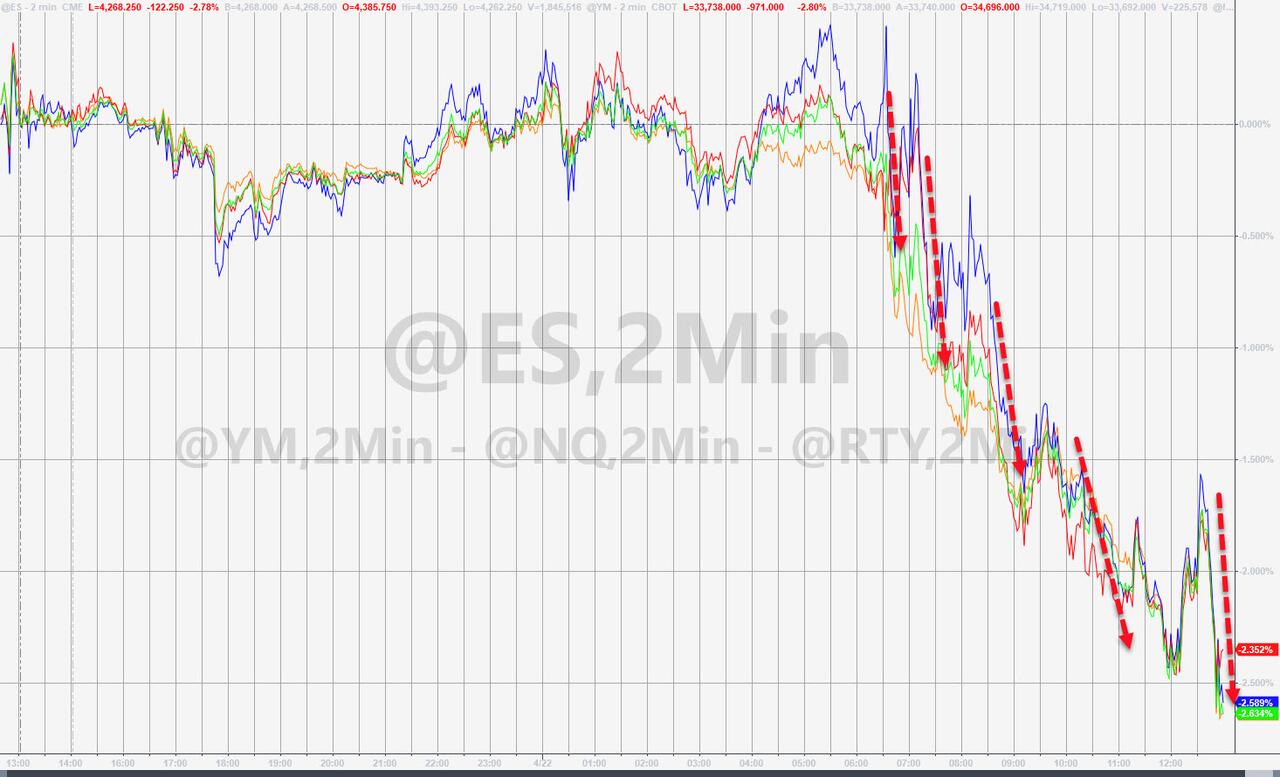
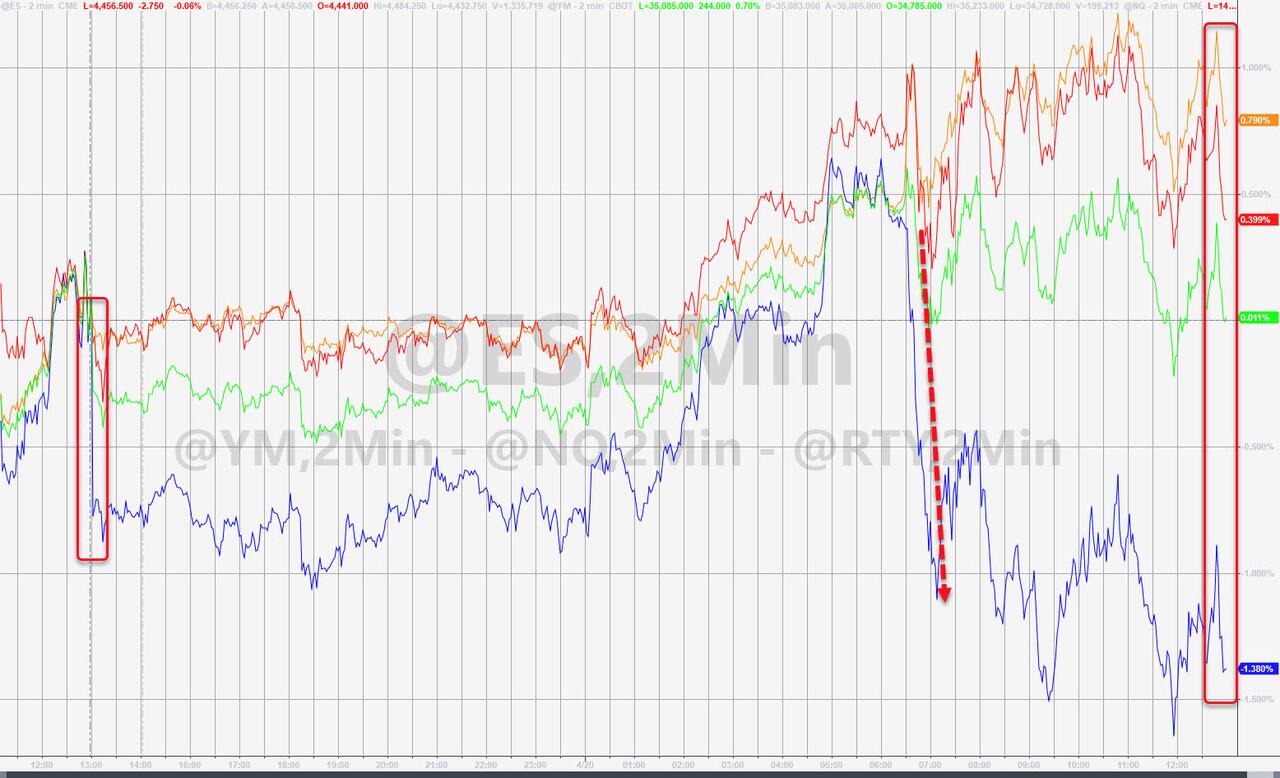
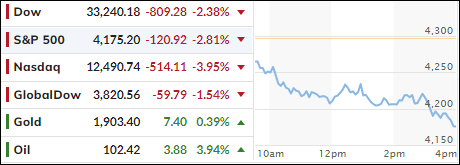
Though the Dow staged a solid rally early in the session, the S&P 500 was barely hanging on to its unchanged line, but the Nasdaq never saw any green numbers. All of this changed mid-day with the major indexes simply losing steam and dumping into the close led by the Nasdaq with a loss of -3.34%.

At the center of this turnaround were the minutes of the Fed’s most recent meeting, which showed members discussing a reduction of their balance sheet right after their intended rate hikes later in 2022.

MarketWatch added some color:

The Fed is tapering its bond purchases now and has already indicated to the market that it will raise rates soon after it finishes that taper in March. But the market is awaiting indications from the Fed on what it will do with its nearly $9 trillion balance sheet once it’s done increasing it. The minutes show officials to be considering shrinking the balance sheet along with raising rates as another way to remove policy accommodation.

Ouch! That was more of a hawkish view than traders had expected and down we went. Remember, the increase of the Fed’s balance sheet is and has been directly correlated with market advances, so a reversal of their policy might have an adverse effect due to a reduction in liquidity.

Adding insult to injury, then this:

“Participants generally noted that, given their individual outlooks for the economy, the labor market, and inflation, it may become warranted to increase the federal funds rate sooner or at a faster pace than participants had earlier anticipated,” the minutes stated.

In other words, higher rates and bond yields will be on deck much sooner than expected and may exact their pound of flesh from the markets. As ZeroHedge commented, as of this moment, the entire Santa Claus rally has been erased.

SmallCaps (-4.18%) and Growth (RPG, -3.81%) were hit the hardest, while value (RPV) held up the best by giving back only a modest -0.55%

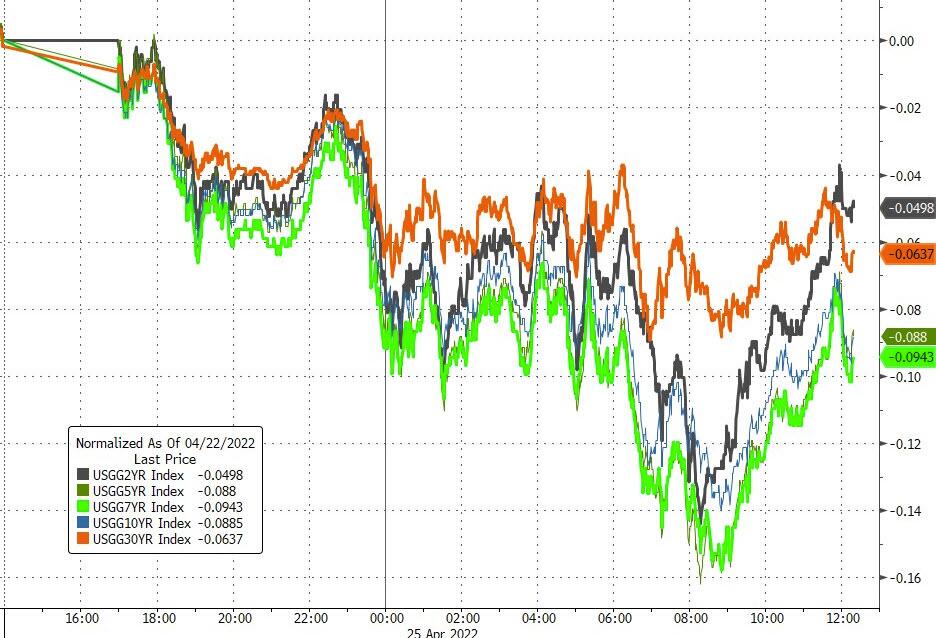
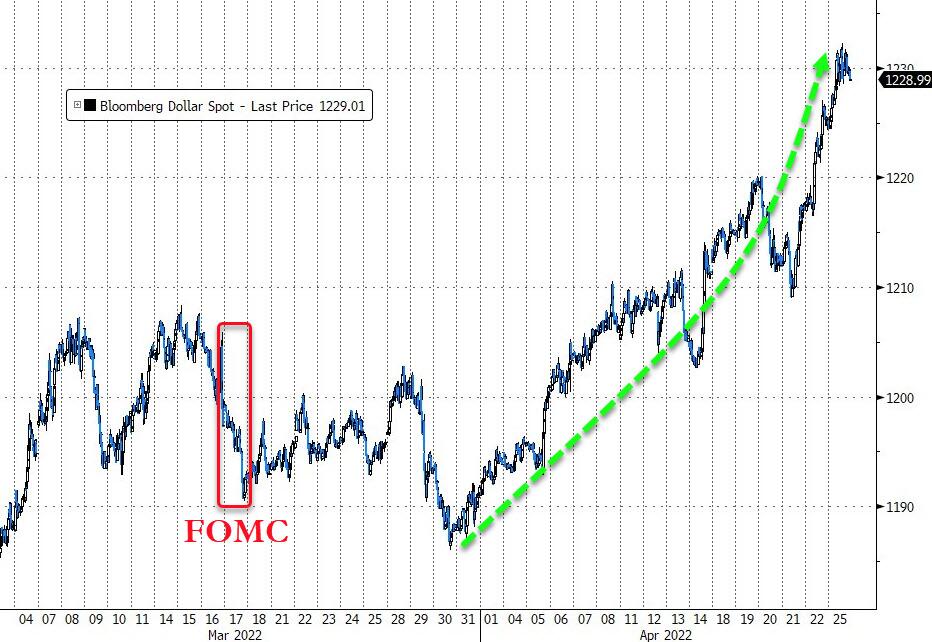
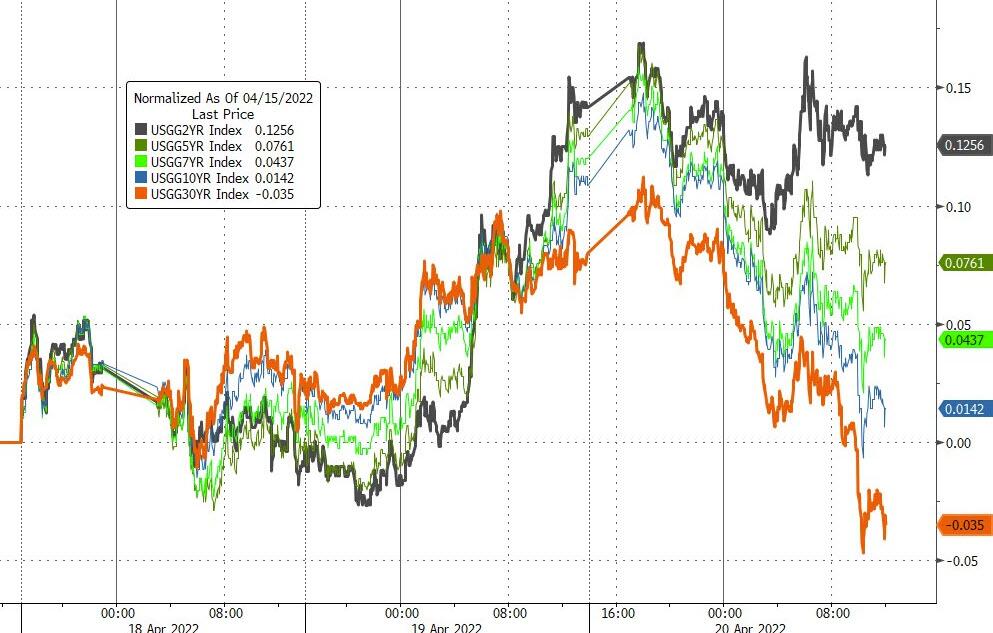
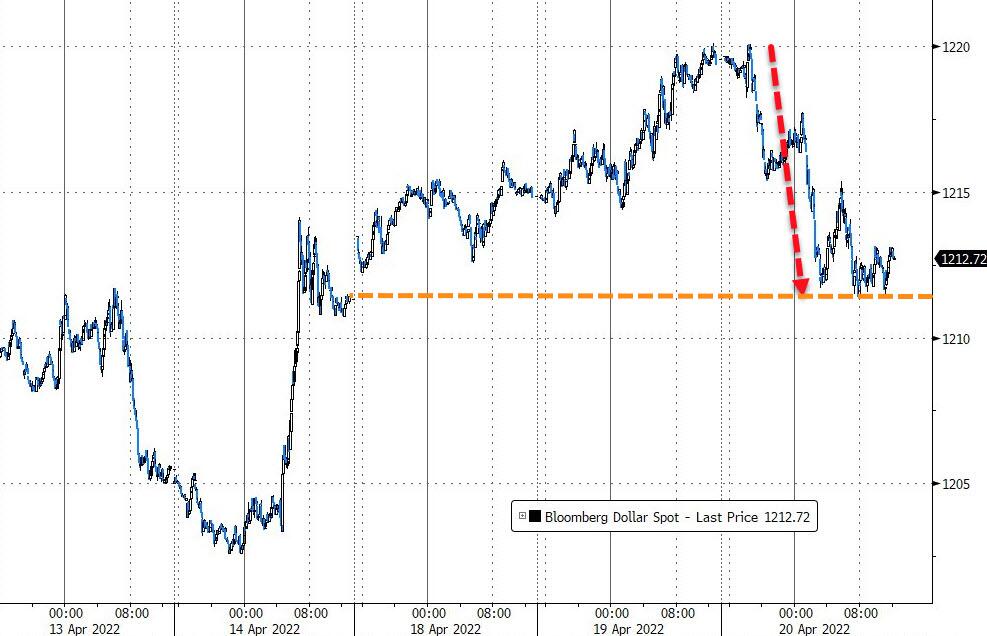
Bond yields rose with the 10-year touching the 1.7% level but closing just a tad below. The US Dollar index rallied and, even though gold held steady above its $1,800 level, it gave back a scant -0.26%.

The question in my mind is this one: How much will the markets have to drop before the Fed reverses policy again and comes to its rescue?

Read More

Starting 2022 With A Bang

Ulli Market Commentary Contact

[Chart courtesy of MarketWatch.com]

  1. Moving the markets

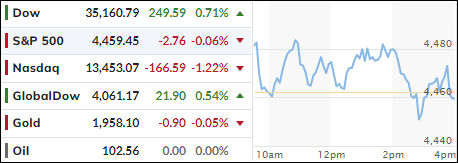
We’re still in the last two days of the peculiar Santa Claus rally, with the major indexes overcoming early weakness and then welcoming the new year with a rally, as the Dow scored another record close. None of this would have been possible without the usual short squeeze, which helped the bullish cause.

The value ETF RPV won the battle against the growth ETF RPG with a gain of 1.27% thereby continuing its domination from last year.

Traders are now betting on the idea that the economy is strong enough to overcome the latest surge in Covid cases, which pushed Apple into nosebleed territory by becoming the first company ever with a $3 trillion market cap. Not wanting to be left behind was Tesla, which stormed ahead by an amazing 13.5%.

Furthermore, optimism currently prevails that that both, the economy and corporate profits, are providing the necessary assistance to justify the ever-rising equity prices. That is until Fed policy changes and stronger anti-inflationary measures will have to be implemented.

Bonds got clobbered as yields surged with the 10-year jumping above the 1.60% level, while the 30-year spiked above 2% and way above the Omicron level. With interest rates on the move, the US Dollar joined the party by rising sharply.

And, as is usually the case, this combination of rising yields and US Dollar delivered a punch to gold, which dropped 1.45% but successfully defended its $1,800 level.

Read More

ETFs On The Cutline – Updated Through 12/31/2021

Ulli ETFs on the Cutline Contact

Below, please find the latest High-Volume ETF Cutline report, which shows how far above or below their respective long-term trend lines (39-week SMA) my currently tracked ETFs are positioned.

This report covers the HV ETF Master List from Thursday’s StatSheet and includes 312 High Volume ETFs, defined as those with an average daily volume of more than $5 million, of which currently 181 (last week 175) are hovering in bullish territory. The yellow line separates those ETFs that are positioned above their trend line (%M/A) from those that have dropped below it.

Take a look:                                                                   

The HV ETF Master Cutline Report

In case you are not familiar with some of the terminology used in the reports, please read the Glossary of Terms. If you missed the original post about the Cutline approach, you can read it here.      

ETF Tracker Newsletter For December 31, 2021

Ulli ETF Tracker Contact

ETF Tracker StatSheet          

You can view the latest version here.

LOSING STEAM

[Chart courtesy of MarketWatch.com]

  1. Moving the markets

The last couple of trading days were marked by low volume and some lack of buying interest, which caused the major indexes to glide into the end of 2021.

Still, the markets closed out a very bullish year thanks only to the largesse of the Fed and its supportive dovish policies, without which we would not have seen some of the double digit the gains that materialized.

Yes, words like “highly accommodative fiscal and monetary policies” best describe the assist the Central Banks gave as the global economies attempted to recover from the 2020 Covid lockdowns. Corporate earnings also helped with FactSet estimating the YoY earnings growth rate for 2021 to be 45.1%, its highest annual growth since the company began tracking the metric in 2008.

Looking under the hood, the advances were not always broad based with some index’s performance being supported by only a handful of stocks. Some ETFs, like value and growth, rode a wild roller coaster causing our sell stops to kick in and exit those positions.

As ZeroHedge pointed out, the Dow and S&P 500 managed to close around 1-2% higher since the Omicron’s unleashing. The Nasdaq faded in the red today, and SmallCaps are down almost 4% since the new variant headlines hit, as this chart demonstrates.

Bond yields were higher on the year with long-term issues rallying while the short term ones slipped in the last quarter. The US Dollar index ended higher but faded into the close.

Despite surging inflation, gold disappointed by not keeping up, but at least it managed to recover its $1,800 level.

Looking ahead, we can expect more difficult market conditions in 2022, as the Fed tapers its easy monetary policy and will likely address the now not so “transitory” inflation story via higher interest rates.

This chart always makes a lot of sense to me by simply showing stock market direction vs. the real economy, both of which should be in sync but are nowhere near it.  

Happy New Year!

Read More

Weekly StatSheet For The ETF Tracker Newsletter – Updated Through 12/30/2021

Ulli ETF StatSheet Contact

ETF Data updated through Thursday, December 30, 2021

Methodology/Use of this StatSheet:

1. From the universe of over 1,800 ETFs, I have selected only those with a trading volume of over $5 million per day (HV ETFs), so that liquidity and a small bid/ask spread are assured.

2. Trend Tracking Indexes (TTIs)

Buy or Sell decisions for Domestic and International ETFs (section 1 and 2), are made based on the respective TTI and its position either above or below its long-term M/A (Moving Average). A crossing of the trend line from below accompanied by some staying power above constitutes a “Buy” signal. Conversely, a clear break below the line constitutes a “Sell” signal. Additionally, I use an 8% trailing stop loss on all positions in these categories to control downside risk.

3. All other investment arenas do not have a TTI and should be traded based on the position of the individual ETF relative to its own respective trend line (%M/A). That’s why those signals are referred to as a “Selective Buy.” In other words, if an ETF crosses its own trendline to the upside, a “Buy” signal is generated. Since these areas tend to be more volatile, I recommend a wider trailing sell stop of 8%-10% depending on your risk tolerance.

If you are unfamiliar with some of the terminology, please see Glossary of Terms and new subscriber information in section 9.     

1. DOMESTIC EQUITY ETFs: BUY — since 07/22/2020

Click on chart to enlarge

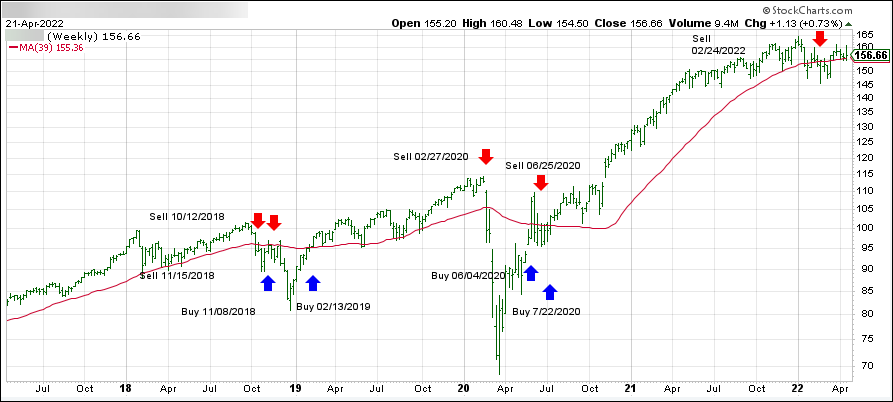
Our main directional indicator, the Domestic Trend Tracking Index (TTI-green line in the above chart) has now rallied above its long-term trend line (red) by +6.84% and remains in “BUY” mode as posted.

Read More