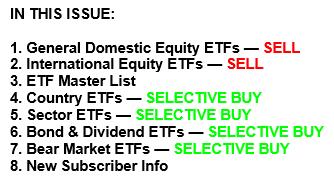
Weekly StatSheet For The ETF Tracker Newsletter – Updated Through 03/03/2022

Ulli ETF StatSheet Contact

ETF Data updated through Thursday, March 3, 2022

Methodology/Use of this StatSheet:

1. From the universe of over 1,800 ETFs, I have selected only those with a trading volume of over $5 million per day (HV ETFs), so that liquidity and a small bid/ask spread are assured.

2. Trend Tracking Indexes (TTIs)

Buy or Sell decisions for Domestic and International ETFs (section 1 and 2), are made based on the respective TTI and its position either above or below its long-term M/A (Moving Average). A crossing of the trend line from below accompanied by some staying power above constitutes a “Buy” signal. Conversely, a clear break below the line constitutes a “Sell” signal. Additionally, I use an 12% trailing stop loss on all positions in these categories to control downside risk.

3. All other investment arenas do not have a TTI and should be traded based on the position of the individual ETF relative to its own respective trend line (%M/A). That’s why those signals are referred to as a “Selective Buy.” In other words, if an ETF crosses its own trendline to the upside, a “Buy” signal is generated. Here too, I recommend trailing sell stop of 12%, or less, depending on your risk tolerance.

If you are unfamiliar with some of the terminology, please see Glossary of Terms and new subscriber information in section 9.     

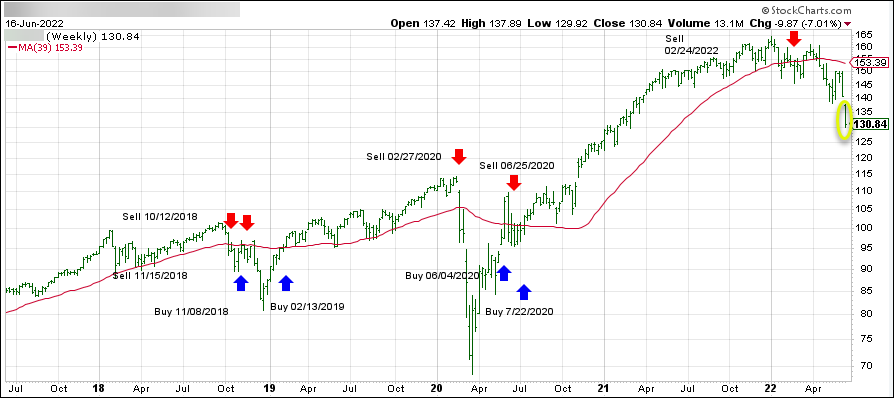
1. DOMESTIC EQUITY ETFs: SELL — since 02/24/2020

Click on chart to enlarge

Our main directional indicator, the Domestic Trend Tracking Index (TTI-green line in the above chart) has broken below its long-term trend line (red) by -0.13% and is now in the “Sell” mode.

Read More
Popping And Dropping

Ulli Market Commentary Contact

[Chart courtesy of MarketWatch.com]

  1. Moving the markets

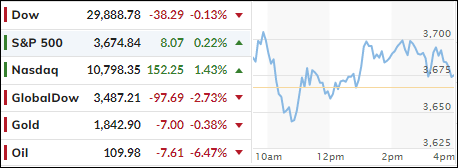
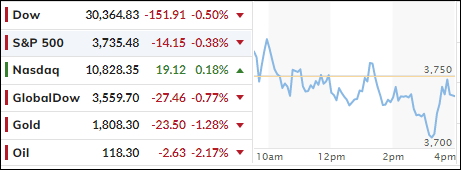
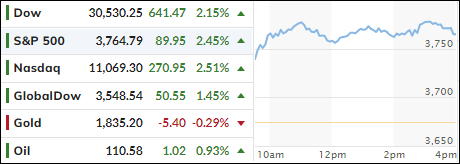
Chopping around their respective unchanged lines appeared to be the mantra for the major indexes, after an early pop ran out of steam and gave way to weakness, as bullish sentiment fell by the wayside.

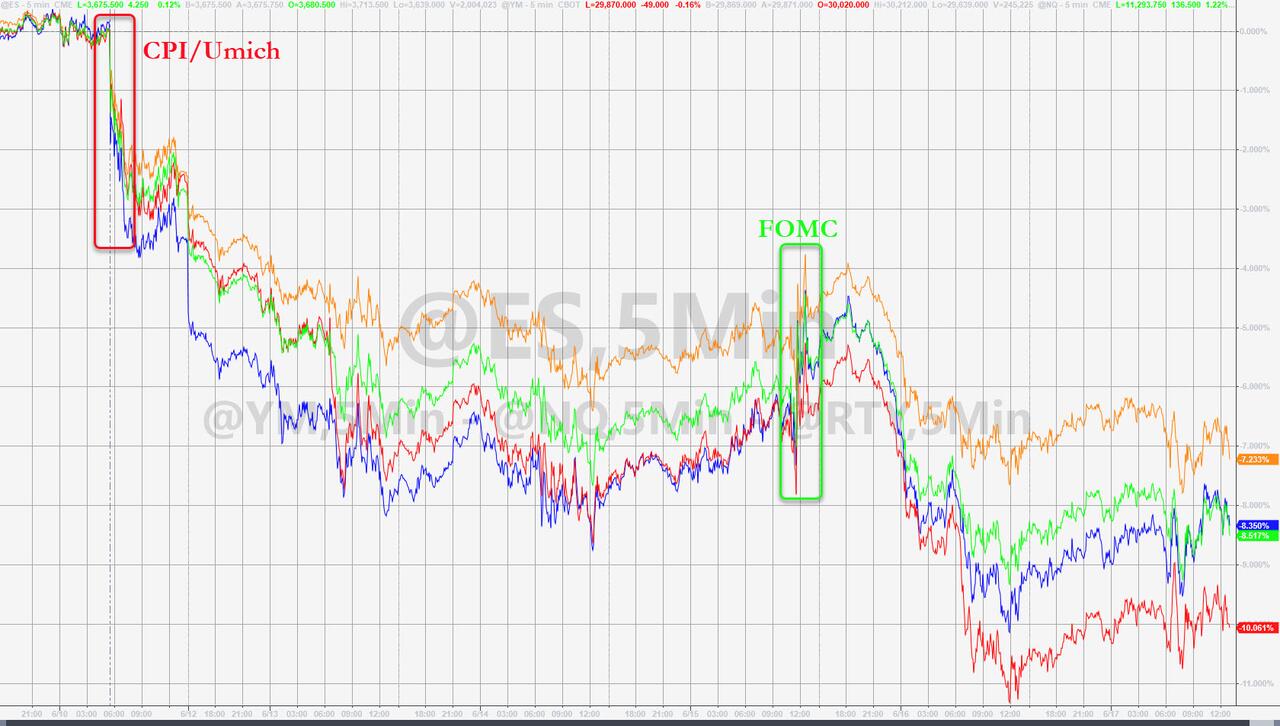
The Nasdaq fared the worst with a 1.56% loss, though the Dow and S&P 500 retreated only moderately. The Ukraine situation remains unstable, but some Wall Street optimists are arguing that “the market is close or has already found its bottom for the year.” Yeah right.

My view aligns more with the realistic assessment from economic advisor Mohamed El-Erian, who sees it this way:

“Markets have been resilient. How long will that last? It’s getting weaker and it’s getting weaker because the Fed is not injecting liquidity starting from this month. So, I expect the strong technicals that have seen us through one shock after the other will get a lot weaker this year, and that means more volatile markets and that also means there’s going to be more pressure on markets.”

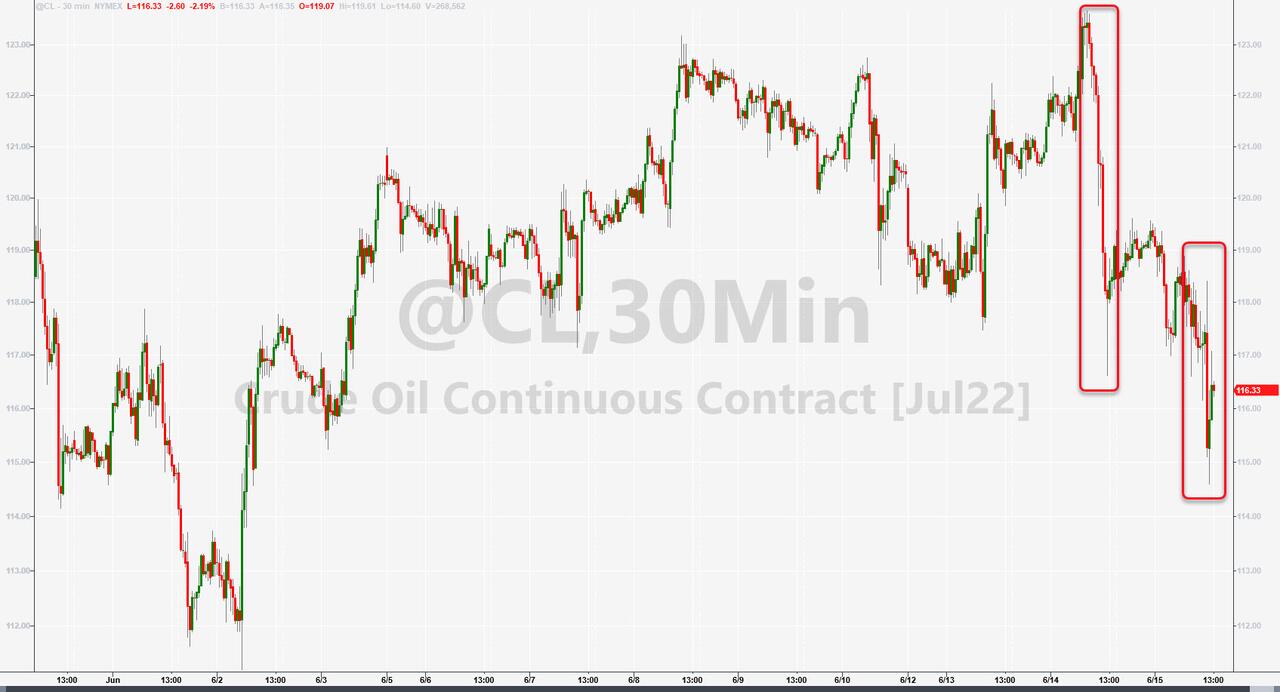
Despite ongoing geopolitical tensions oil prices pulled back some 2%, as rumors of an imminent Iran deal made the rounds, but that could turn on a dime.

I have brought up the “Stagflation” scenario on several occasions and today, analyst Jim Bianco pointed towards the dreaded “R” word:

Not every recession is led by a 50% rise in crude.

But every 50% rise in crude has led a recession.

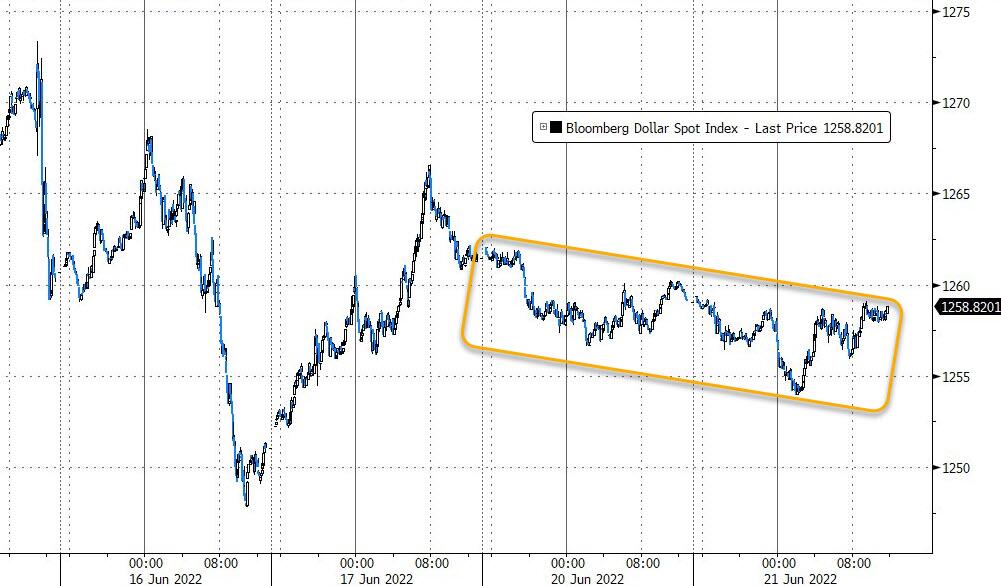
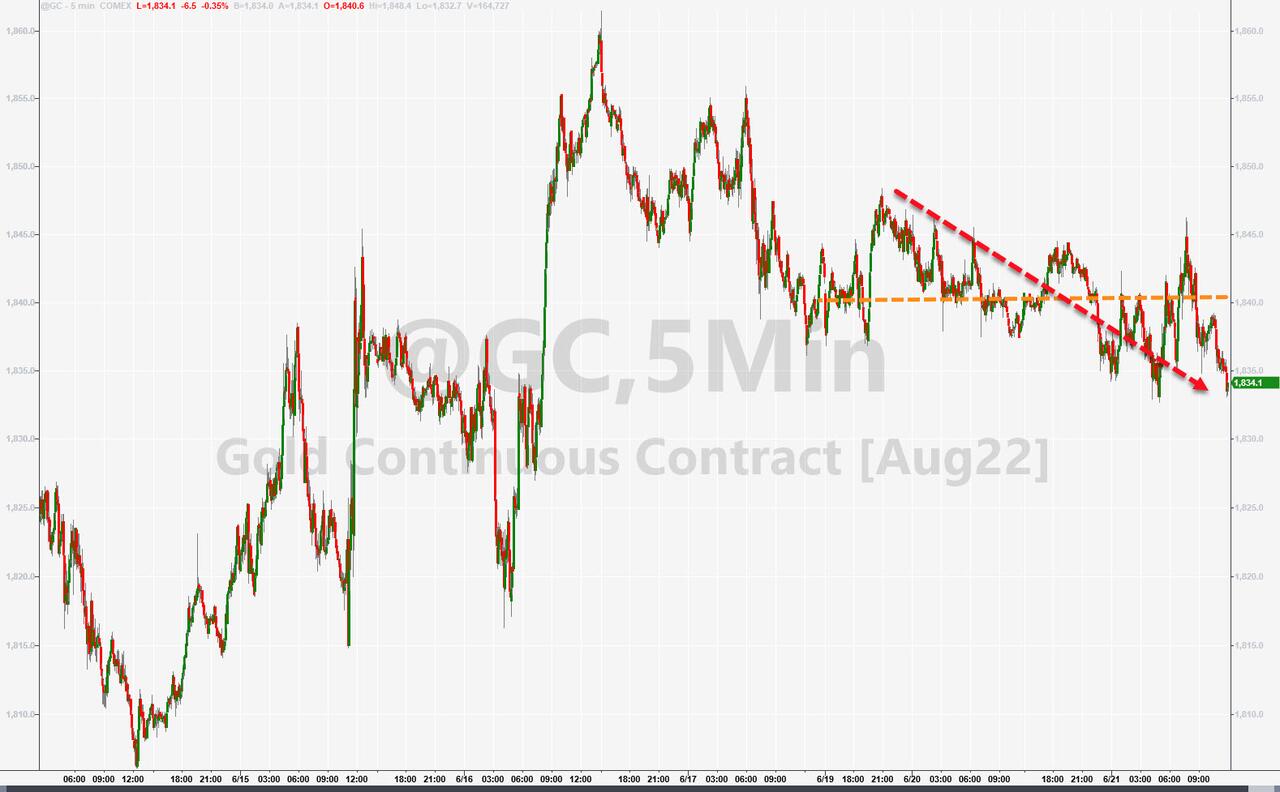
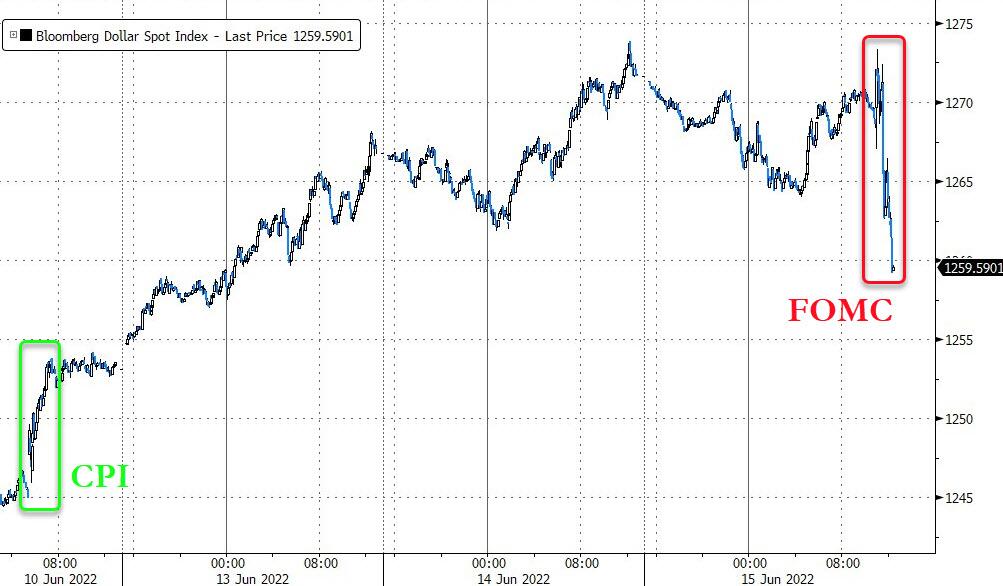
Bond yields were mixed, the US Dollar rallied moderately, while gold acted as a safe haven by rising +0.86% and settling at $1,939. The commodity index DBC continued to pump and added +1.09% for the session.      

Read More

Bounce-Back Wednesday

Ulli Market Commentary Contact

[Chart courtesy of MarketWatch.com]

  1. Moving the markets

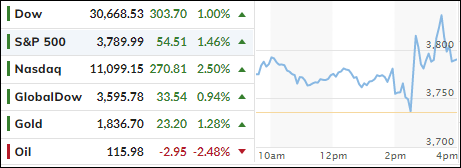
The bulls tried to shake off the effects of the Ukraine-Russia confrontation and managed to squeeze out a rebound, despite surging oil and commodity prices. While the major indexes recovered yesterday’s losses, today’s action had the smell of a dead cat bounce.

Sure, there were several verbal assists helping market sentiment starting with Biden’s request last night for the Fed to address inflation. This morning, as if on cue, Fed head Powell said that he is “inclined to support a 25-basis point rate hike,” which will do nothing to fight inflation but helped the bulls to drive up equities, because the much-feared 50-basis point hike had now been moved to the back burner.

While headline news about the Eastern European war were conflicting, positive remarks from both sides of a possible reduction of hostilities and scheduled talks also added confidence to the bullish meme. Today was all about relief and that’s what provided the impetus for the rally.

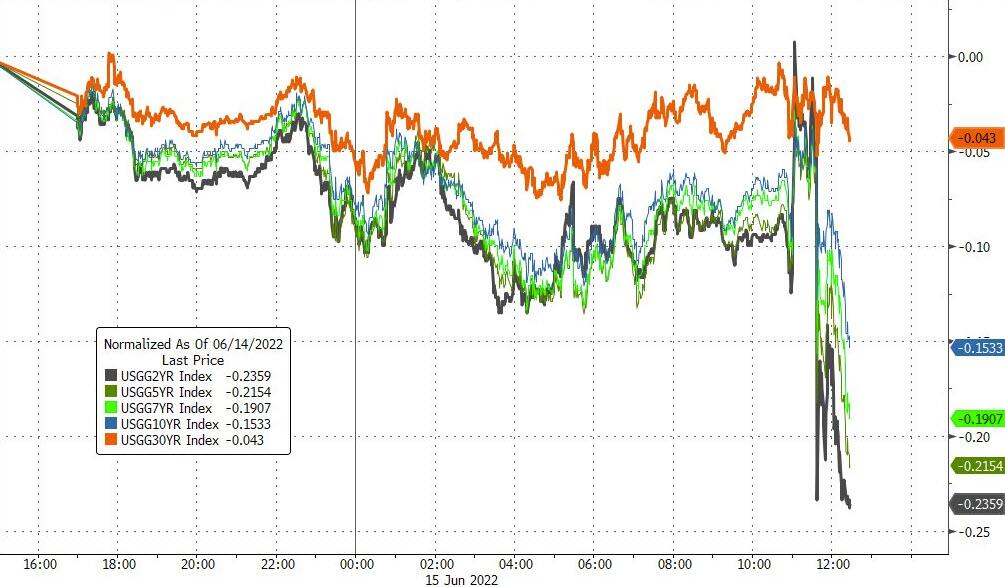
A huge spike in bond yields should have kept any equity advances at bay, but it did not. The 10-year surged over 16 bps to 1.886%, a huge move by any standards, but it goes to show the insanity in the market place and the “mad world” we are living in.

The US Dollar dipped and so did gold, with the precious taking a breather from its recent runup. But crude oil kept soaring and closed at $111, solidly above the $100 glass ceiling.

As I pointed out many times, during the initial inflationary stages, and higher rates, stocks will benefit temporarily, but later that sentiment will change.

Former bond king Bill Gross seems to have a similar view:

Stocks and even bonds can thrive with low-to-mild future inflation,” the billionaire wrote. “But anything beyond 3% and higher” is market-threatening. “Don’t get too excited.”    

Read More

A Puke-A-Thon For Equities

Ulli Market Commentary Contact

[Chart courtesy of MarketWatch.com]

  1. Moving the markets

As the Russia-Ukraine conflict spreads and intensifies, it should come as no surprise that equities eventually would be affected negatively. We have seen some late session comeback attempts, but current geopolitical conditions may make it very difficult to continue these efforts.

The reality, that sanctioning others may have a boomerang effect came into play today, when crude oil surged over to $100, making future gasoline price hikes at the pump a virtual certainty. Commodities rallied in sync, with my favorite index (DBC), which we own, spiking 4% on the day.  

With our domestic Trend Tracking Index (TTI-section 3 below) diving deeper into bear market territory, equities seem to be stuck in a fog of uncertainty and lack incentive to stabilize—at least for the time being.

Bond yields around the world crashed, with some having their biggest drops since 1992 (UK-10-year). While US banks were the worst performers today, their European cousins were in much worse shape, down some 25% in the last few days, as Bloomberg shows here.

Here at home, the 10-year yield tumbled to below 1.7%, a level last seen at the beginning of January. All other maturities showed similar performances. With the flight to safety on traders’ minds, the US Dollar rebounded and closed higher.

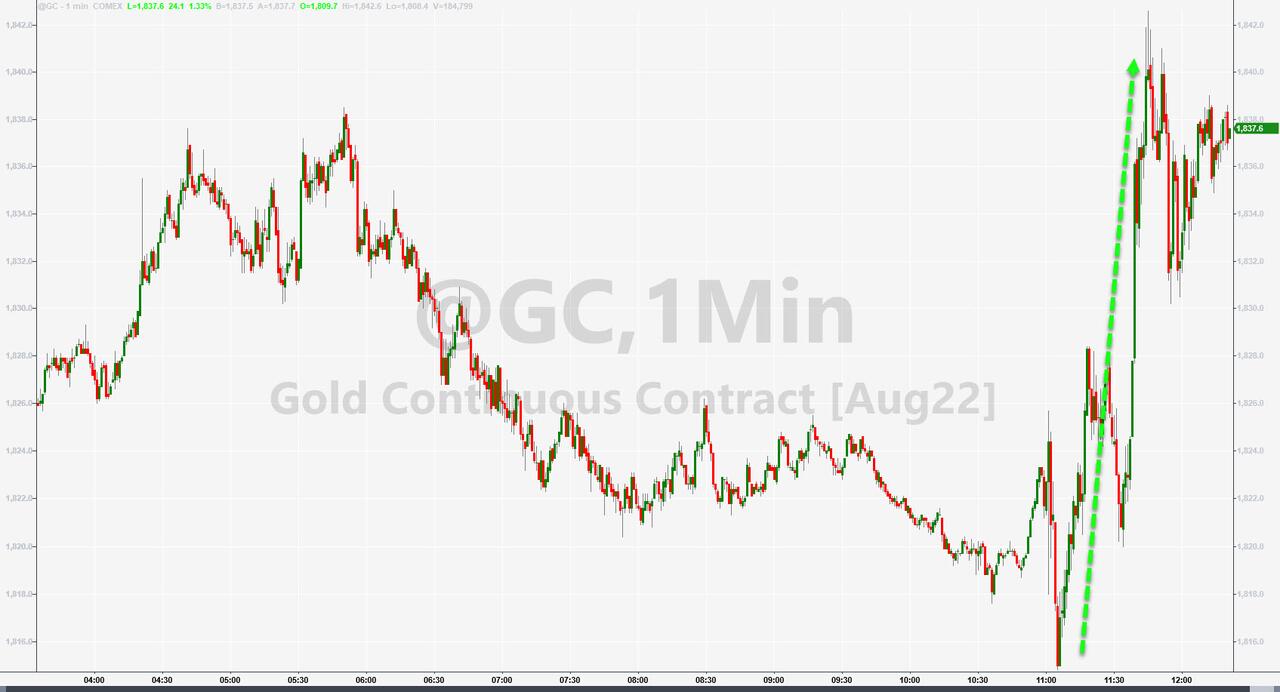
Gold did what it’s supposed to, namely rally during times of uncertainty, and the precious metal did not disappoint, as it surged +2.57% for the session.

Among all this upheaval, the Atlanta Fed announced their GDP estimate for Q1 2022. I hate to be the bearer of bad news, but the number they spewed out was a big fat ZERO. In other words, no growth, and when coupling this with the inflationary trends we’re seeing, it appears to me that “Stagflation” is now firmly baked into the cake.

Read More

Fighting Uncertainty

Ulli Market Commentary Contact

[Chart courtesy of MarketWatch.com]

  1. Moving the markets

Volatility reigned supreme in the markets, but in the end, this session did not turn out as bad as had been feared over the weekend. With the Russia-Ukraine war heating up and sanctions being announced around the world, there will be more fallout ahead for all parties involved.

After being down some 500 points early on, the Dow, along with the other two major indexes, roundtripped yet managed to find a bottom late in the session, which turned into catalyst for digging themselves out of a deep hole.

As a result, we only closed moderately in the red with the Nasdaq eking out a 0.41% gain, after having been down over 3% in the overnight session. February, however, was a rough one for stocks with all indexes posting sharp monthly losses.

ZH summed up February like this:

It’s almost difficult to remember now, but February started with a lingering focus on the Omicron wave of the virus and the expected business interruptions that COVID was again causing. The virus has since faded in the US although it still has a very real presence in Asia.

The realization that inflation does not appear to be temporary and may be more persistent than recent past bouts of higher prices has also caused markets to increase expectations for the number of rate hikes that the Fed is likely to initiate in the imminent hiking cycle.

And as we exit February, Goldman’s Chris Hussey notes that attention is now divided between what the Fed will say (and do) on March 16th and how the situation between Russia and Ukraine will evolve. Against this backdrop of rising inflation, rates, and geopolitical risk, Energy and Materials outperformed again in February.

As could be expected, during times of turbulence, bonds benefited today as yields retreated with the 10-year pulling back to 1.82%, but for the month, all yields were higher. The US Dollar dropped today and ended the month moderately lower, while gold successfully defended its $1,900 level.  

Any kind of “war” presents a “risk off” environment, during which reduced exposure and/or flight into those sectors benefitting from the current situation, is a sensible way to go.

Everything we are currently witnessing is simply unprecedented and predictions are merely wild guesses likely influenced by wishful thinking.

We are facing many unknowns, and a more conservative approach to investing with less exposure will better protect our portfolios, should the unknowns increase in magnitude and pull equities deeper into bear market territory.

Read More

ETFs On The Cutline – Updated Through 02/25/2022

Ulli ETFs on the Cutline Contact

Below, please find the latest High-Volume ETF Cutline report, which shows how far above or below their respective long-term trend lines (39-week SMA) my currently tracked ETFs are positioned.

This report covers the HV ETF Master List from Thursday’s StatSheet and includes 312 High Volume ETFs, defined as those with an average daily volume of more than $5 million, of which currently 88 (last week 75) are hovering in bullish territory. The yellow line separates those ETFs that are positioned above their trend line (%M/A) from those that have dropped below it.

Take a look:                                                                   

The HV ETF Master Cutline Report

In case you are not familiar with some of the terminology used in the reports, please read the Glossary of Terms. If you missed the original post about the Cutline approach, you can read it here.