Soaring Bond Yields Slam Equities

Ulli Market Commentary Contact

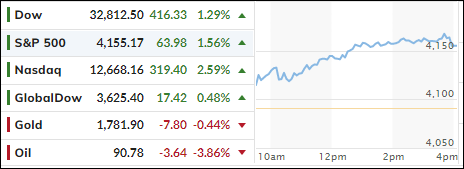
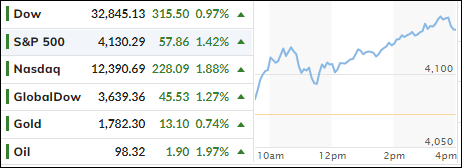
[Chart courtesy of MarketWatch.com]

  1. Moving the markets

There was no question as to who oversaw market direction today. With bond yields soaring, and the 10-year spiking to 2.78%, its highest level since January 2019 when it topped out at 2.799%, the bears clearly had the upper hand.

The major indexes got smacked with the Nasdaq leading the downturn by surrendering 2.18%, hotly pursued by the S&P 500 with a -1.69% drop. Other than gold, there was no place to hide, as bond holders were taking behind the barn for another spanking, as the most widely held TLT slumped another -1.73% bringing its YTD loss to a stunning -15.57%.

I have cautioned about bond investments for a long time. After all, when yields are at all-time lows, and inflation is raging, the most logical outcome are rising yields, which destroy bond prices. Mortgage rates were also affected with the 30-year reaching 5.25% today, it’s highest since 2009.

As a result, risk assets, especially in the tech area have been shed by traders, as the reality that we may be at the end of the bond super cycle slowly sinks in. If the Fed is serious about fighting inflation, and follows through with their accelerated hiking schedule, there will be much more downside equity pain on deck, which is why it’s critical to limit risk via an exit strategy.

One analyst summed it up like this:

And right now, the Fed has an urgent and fateful decision to make.

It can keep printing trillions of dollars, let inflation skyrocket, or tighten monetary policy, and watch the stock market crash.

In other words, it can sacrifice the stock market or the dollar.

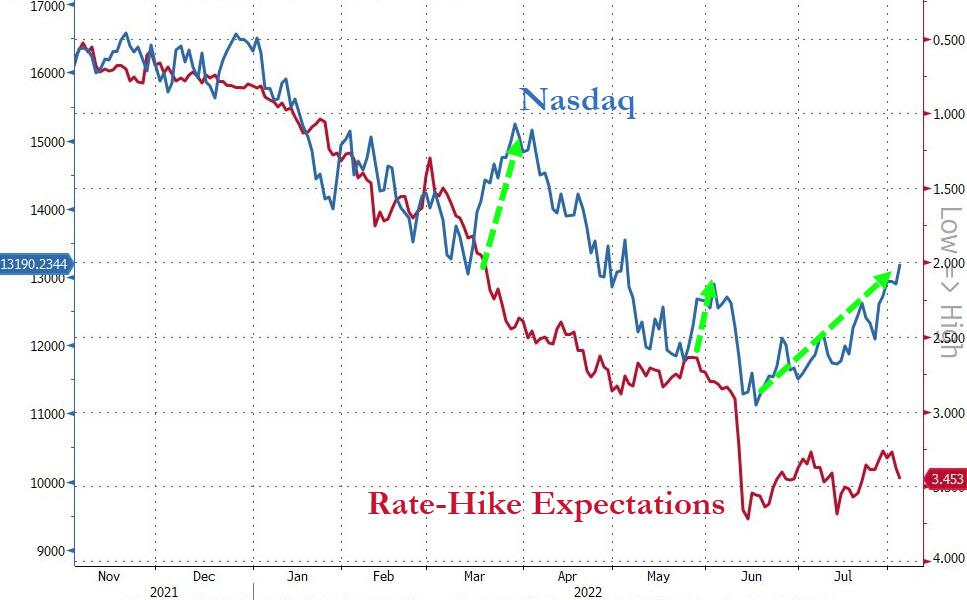
Despite “value” ending up moderately in the red, “growth” got slapped, as Bloomberg demonstrates in this chart.

Crude oil pulled back again and currently sits a tad below $95, with the Energy sector slipping as well, but Gold was the savior of the day by gaining +0.64%.

The most anticipated number will be tomorrow’s CPI with consensus estimates being in the 8.4% range. Ouch.

A tip of the hat goes to ZeroHedge for this quote by Chicago Fed President Charles Evans, who said today:

“We will know a lot more about persistent inflation the end of the year” and (here’s the best line), he is “hopeful it’s receding…”

Ah yes, I feel much better now…

Read More

ETFs On The Cutline – Updated Through 04/08/2022

Ulli ETFs on the Cutline Contact

Below, please find the latest High-Volume ETF Cutline report, which shows how far above or below their respective long-term trend lines (39-week SMA) my currently tracked ETFs are positioned.

This report covers the HV ETF Master List from Thursday’s StatSheet and includes 312 High Volume ETFs, defined as those with an average daily volume of more than $5 million, of which currently 106 (last week 117) are hovering in bullish territory. The yellow line separates those ETFs that are positioned above their trend line (%M/A) from those that have dropped below it.

Take a look:                                                                   

The HV ETF Master Cutline Report

In case you are not familiar with some of the terminology used in the reports, please read the Glossary of Terms. If you missed the original post about the Cutline approach, you can read it here.      

ETF Tracker Newsletter For April 8, 2022

Ulli ETF Tracker Contact

ETF Tracker StatSheet          

You can view the latest version here.

TRYING TO OVERCOME FED ANGST

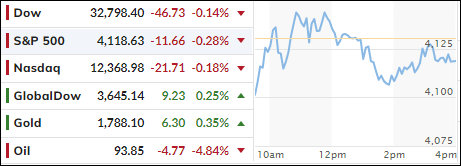
[Chart courtesy of MarketWatch.com]

  1. Moving the markets

A former Fed president said what he was not allowed to when he was in office, namely that the Fed needs to push down equities to get inflation under control. This was followed by a current Fed member uttering that he wants the Fund Funds rate at 3.5% by the end of this year.

Both comments should have been enough to send the bulls packing, but instead, after an early drop, an algo driven rebound pushed the major indexes in the green, with the Dow at one point sporting a 230-point gain.

However, in the end, only the Dow eked out a meager advance during another whip-saw session that merely represented the continued tug-of-war between bulls and bears with the latter scoring a win for the week.

Even the most optimistic Wall Street bulls can no longer ignore the changing tone of the Fed, which continues to signal a more aggressive stance towards fighting inflation. Even the Fed’s Bill Dudley explained that, after watching stocks rise, this simply means “The Fed will just have an even bigger bubble to crash in order to get inflation under control.”

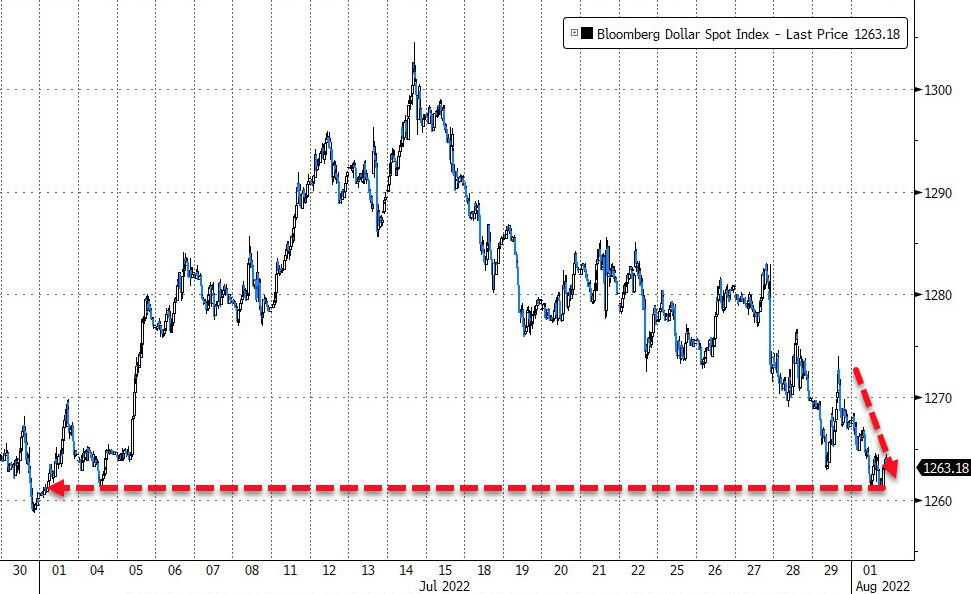
This was very apparent in bond land with the 10-year jumping sharply by 9 bps to close the day at 2.707%. The US Dollar followed suit and reached its highest level since July 2020, as ZH pointed out.  

Despite the strong dollar, gold and silver inched higher this week with gold adding another 0.54% during today’s session. My favorite energy ETF for this environment had another great showing with a day’s gain of +2.68%.

Looking at the World GDP forecast and the World weighted inflation index, it’s clear that the dreaded “S” word, as in Stagflation, which I have repeatedly commented on, seems to be on deck, as Bloomberg demonstrates in this chart.

That translates to “equities beware.

Read More

Weekly StatSheet For The ETF Tracker Newsletter – Updated Through 04/07/2022

Ulli ETF StatSheet Contact

ETF Data updated through Thursday, April 7, 2022

Methodology/Use of this StatSheet:

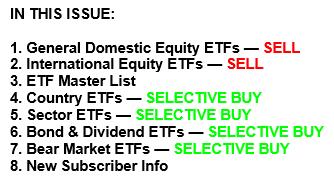
1. From the universe of over 1,800 ETFs, I have selected only those with a trading volume of over $5 million per day (HV ETFs), so that liquidity and a small bid/ask spread are assured.

2. Trend Tracking Indexes (TTIs)

Buy or Sell decisions for Domestic and International ETFs (section 1 and 2), are made based on the respective TTI and its position either above or below its long-term M/A (Moving Average). A crossing of the trend line from below accompanied by some staying power above constitutes a “Buy” signal. Conversely, a clear break below the line constitutes a “Sell” signal. Additionally, I use an 12% trailing stop loss on all positions in these categories to control downside risk.

3. All other investment arenas do not have a TTI and should be traded based on the position of the individual ETF relative to its own respective trend line (%M/A). That’s why those signals are referred to as a “Selective Buy.” In other words, if an ETF crosses its own trendline to the upside, a “Buy” signal is generated. Here too, I recommend trailing sell stop of 12%, or less, depending on your risk tolerance.

If you are unfamiliar with some of the terminology, please see Glossary of Terms and new subscriber information in section 9.     

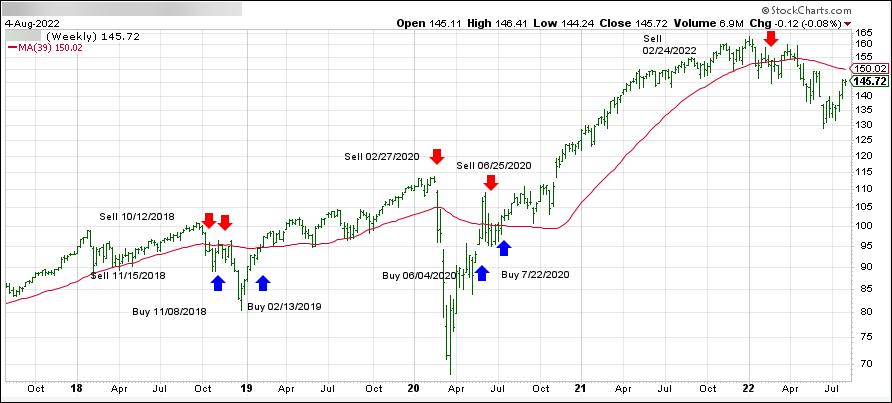
1. DOMESTIC EQUITY ETFs: SELL — since 02/24/2022
Click on chart to enlarge

Our main directional indicator, the Domestic Trend Tracking Index (TTI-green line in the above chart) has just broken above its long-term trend line (red) by +1.65% and remains in “SELL” mode—although it is on the edge of moving back to the Buy side.  

Read More
Fed’s Hawkish Intentions Hamper Markets

Ulli Market Commentary Contact

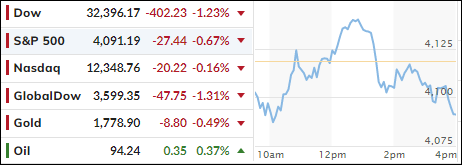
[Chart courtesy of MarketWatch.com]

  1. Moving the markets

The highly anticipated Fed minutes turned out to be more hawkish than expected in terms of QT (Quantitative Tightening) and future rate hikes, which ZH summed up like this:

  • As much as $95 billion in asset runoff per month ($60-90 bn expected)
  • Many Fed officials say half-point hikes may be warranted
  • Fed sees need to get to neutral posture ‘expeditiously’
  • Fed fears public loss of confidence in is resolve over inflation

That pushed the Dow down some 250 points right after the opening with the other 2 major indexes following suit. While an afternoon comeback cut losses, the Nasdaq still took the brunt of the beating by losing 2.2% on the day.

All majors plunged below critical support with the S&P 500 dipping below its 200-day M/A and the Nasdaq heading towards its 50-day M/A.

None of the Fed’s mouthpieces helped matters, especially with NY Fed President Dudley posting this warning:

It’s hard to know how much the U.S. Federal Reserve will need to do to get inflation under control. But one thing is certain: To be effective, it’ll have to inflict more losses on stock and bond investors than it has so far.

That goes along with what Fed head Powell has said (Hat tip ZH for this bon mot):

Financial conditions need to tighten. If this doesn’t happen on its own (which seems unlikely), the Fed will have to shock markets to achieve the desired response. This would mean hiking the federal funds rate considerably higher than currently anticipated. One way or another, to get inflation under control, the Fed will need to push bond yields higher and stock prices lower.

The Fed can’t get clearer on its intentions than the above. However, should markets dump, the question remains whether they will override their desire of seriously fighting inflation, or will they succumb to bailing out equities like they did the end of 2018?

Bond yields jumped with the 10-year touching 2.65% intra-day, a high from which they backed off to close at 2.601%. The US Dollar gained a tad, and so did gold.

Once the actual rate hikes and QT implementations take place in May and June, it should become clear, even to those with blinders on, that these events will not be a positive for stocks.

Read More

Fears Of Econ Slowdown Trouble Markets

Ulli Market Commentary Contact

[Chart courtesy of MarketWatch.com]

  1. Moving the markets

While we saw a benign opening, things went south for the broad markets, as Monday’s theme of climbing a wall of worry was short lived with the major indexes giving back more than they gained yesterday. It brought back of thoughts as to whether this chart indeed is showing a topping formation.

Downward momentum accelerated in the last hour when Fed mouthpiece Brainard, a more dovish Fed member, opined that a more aggressive approach to the Central Bank’s policies might be in order.

Mark Zandi, chief economist at Moody’s Analytics, assessed the situation with much realism:

“Ultimately, the way this is going to work, the economy is going to slow, the stock market has to reflect that. So, I do expect the stock market to have a tough few months here as it ultimately adjusts to what the Fed is doing and will do going forward.”

That view went right along with Deutsche Bank’s statement forecasting a recession ahead, the first major Wall Street bank to do so.

Bond yields exploded to the upside with the 10-year adding 15 bps to end the session at 2.555%. Ouch! That crushed bond holders again with the widely held TLT getting clobbered at the tune of -2.26% bringing its YTD loss to -11.29%. We have now reached the highest yields since 2018.

Value” outperformed “growth” and yesterday’s market savior, namely the seemingly ever-present short squeeze, was absent today giving the “most shorted stocks” an opportunity to do what they do best: go lower.

The US Dollar headed higher, causing Gold to dip moderately.

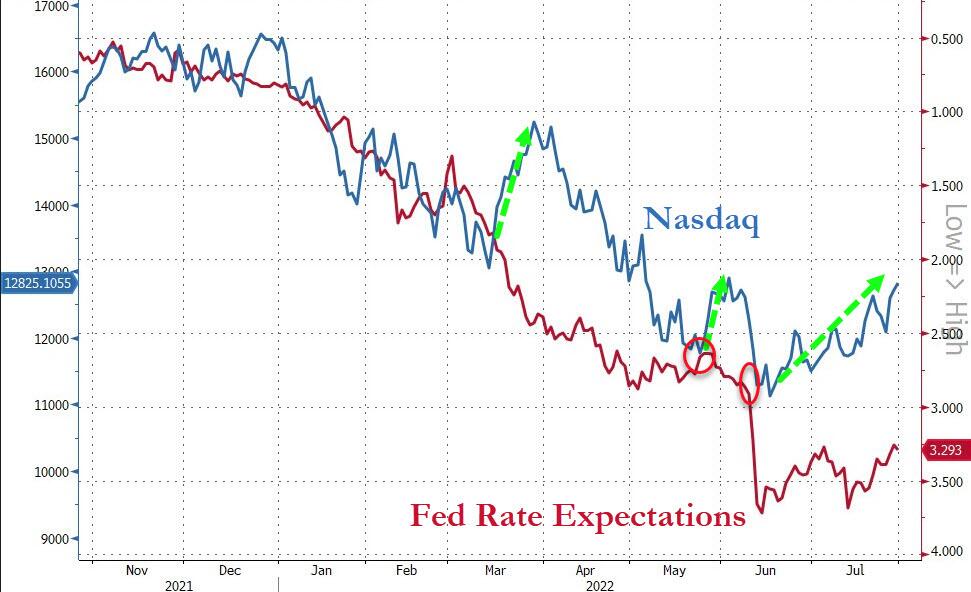
In the end, ZH summed it up well by questioning the validity of this recent rally in the face of 9 more rate hikes this year. Graphically, it looks like this.

Hmm…

Read More