Waiting For The Fed

Ulli Market Commentary Contact

[Chart courtesy of MarketWatch.com]

  1. Moving the markets

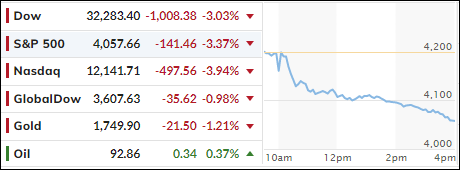
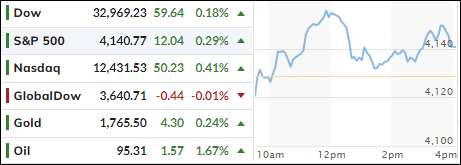
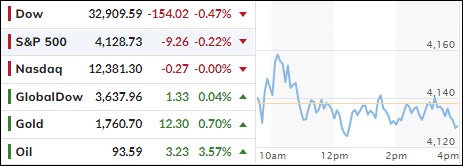
Aimless meandering best describes today’s session during which rally attempts were rebuffed with the major indexes dropping, bouncing off their respective unchanged lines and ending up moderately in the green.

Ahead of the Fed’s decision on interest rates tomorrow, the market environment was one of nervousness with the tug-of-war continuing between those traders who believe “the bottom” is in vs. the bears who are anxious about the potential of a sharp rebound rally.

With opposite forces at play, namely a slowing economy and a tightening Fed, hedge fund manager Paul Tudor Jones took time out from his busy schedule to utter these words of wisdom that “capital preservation should be the main goal for investors.

No kidding. This is the purpose of engaging in Trend Tracking and the use of trailing sell stops to begin with, because there will always be periods where risk and uncertainty have risen to an all-time high, such as we are experiencing now.

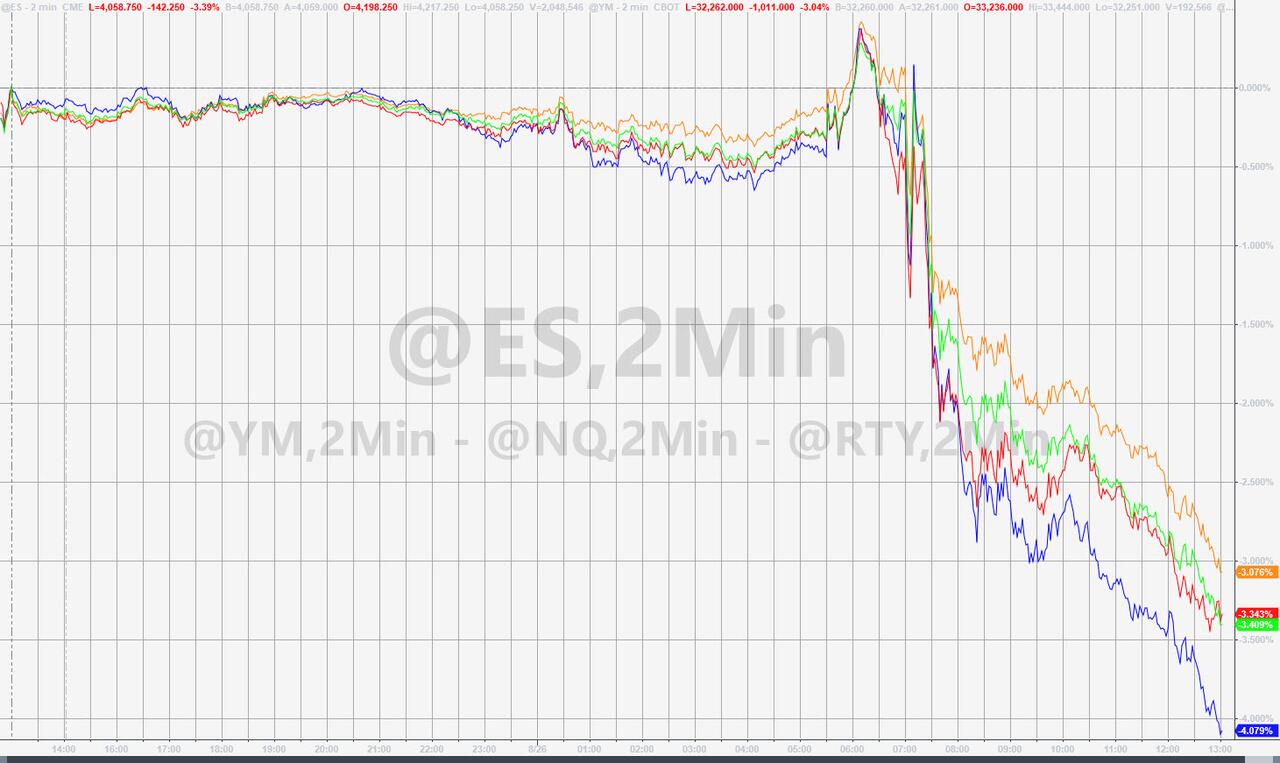
Of course, not everyone understands the prudence of riding out bearish periods on the sidelines, which prompted ZeroHedge to tweet this keen and spot-on observation:

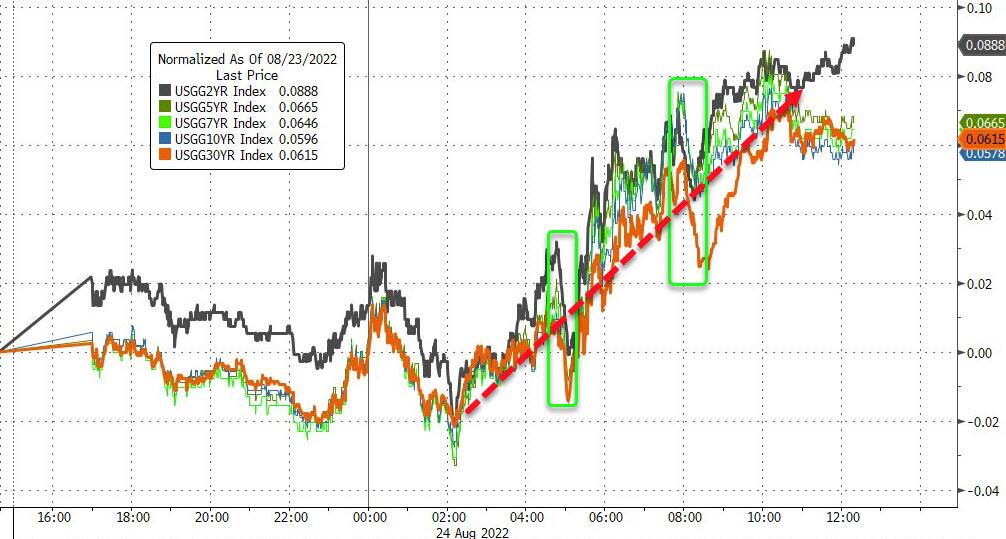
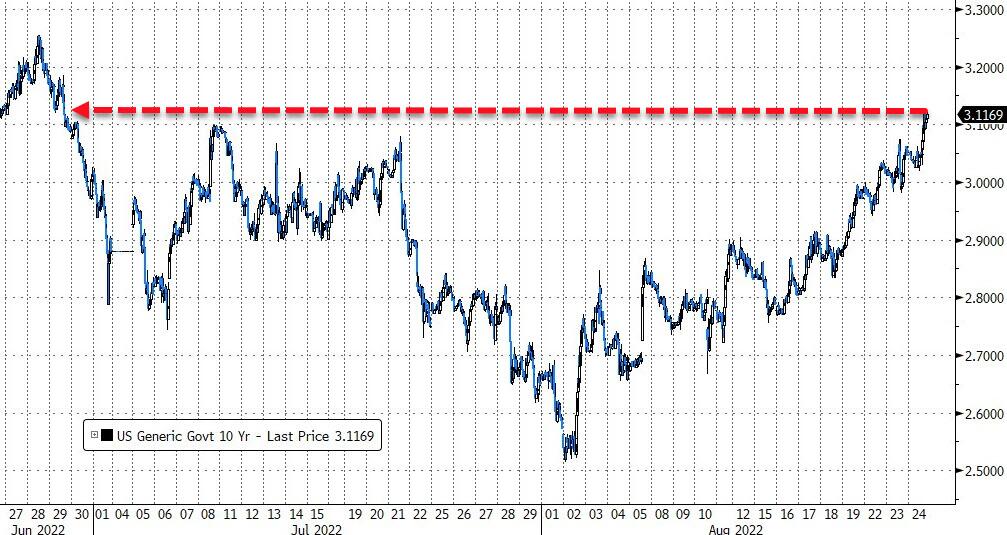
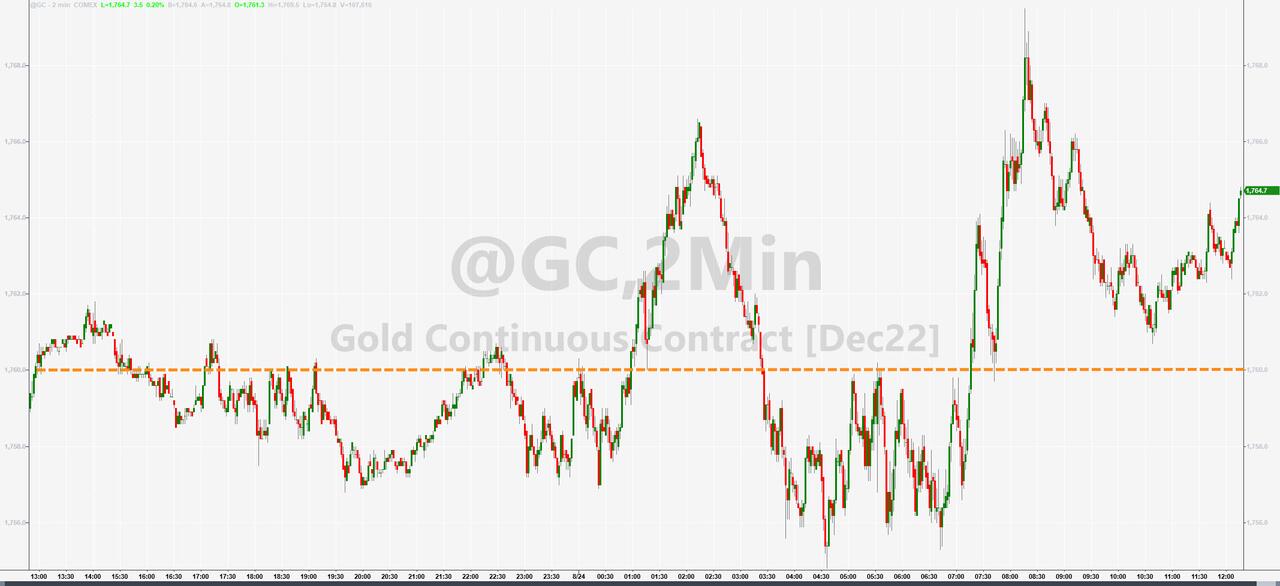
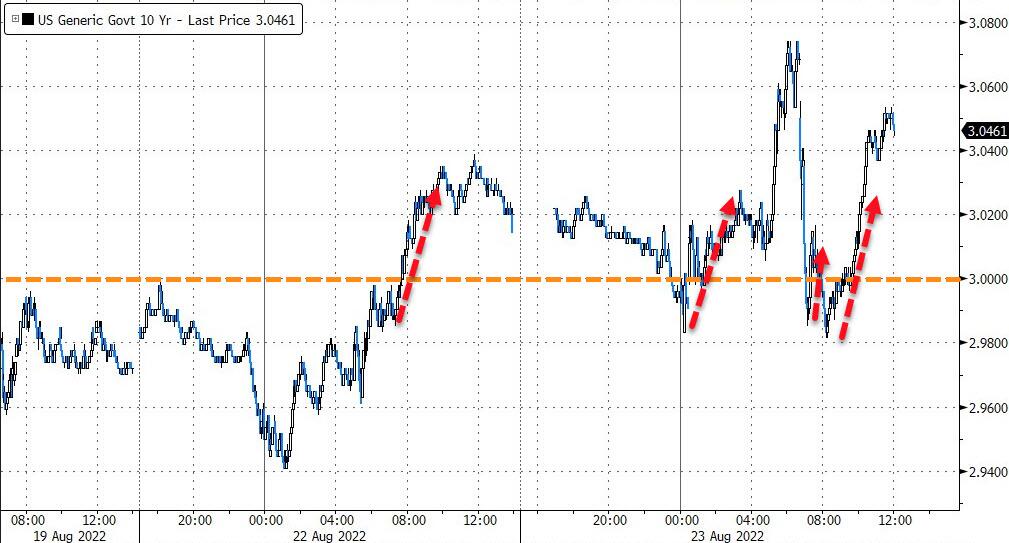
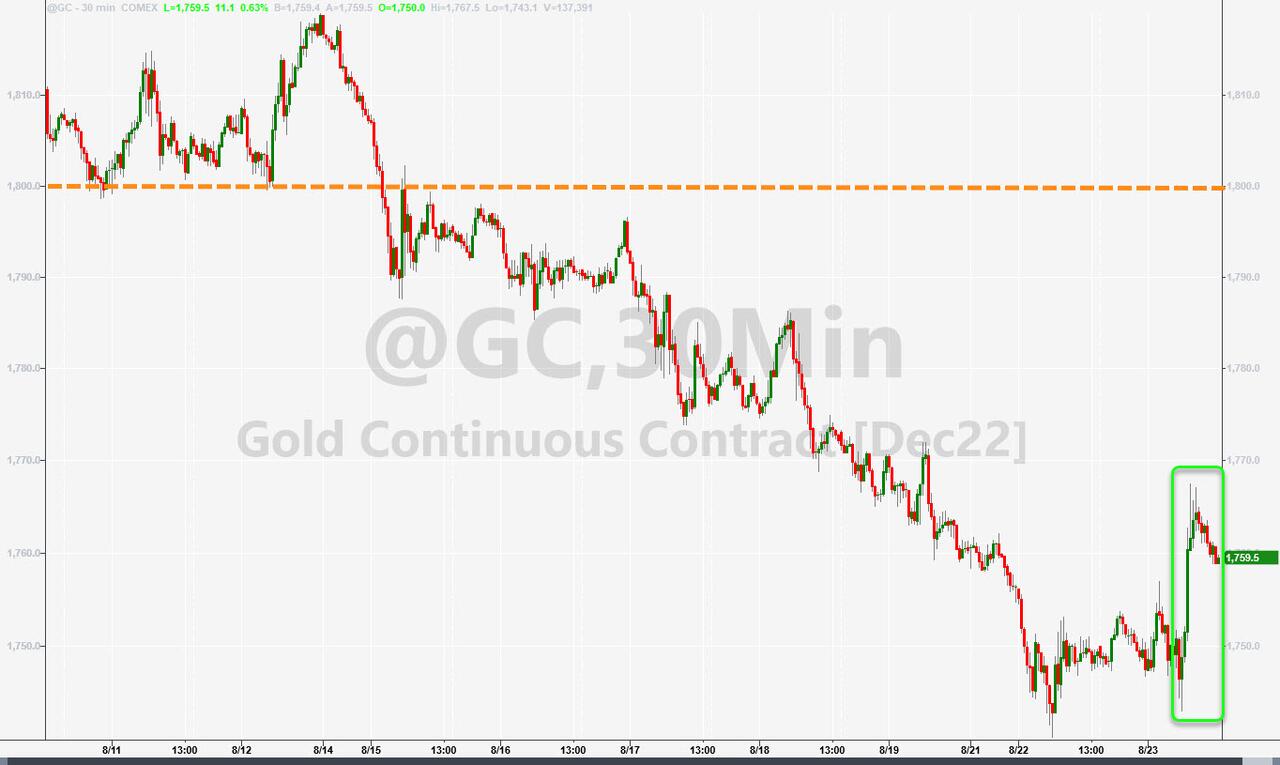
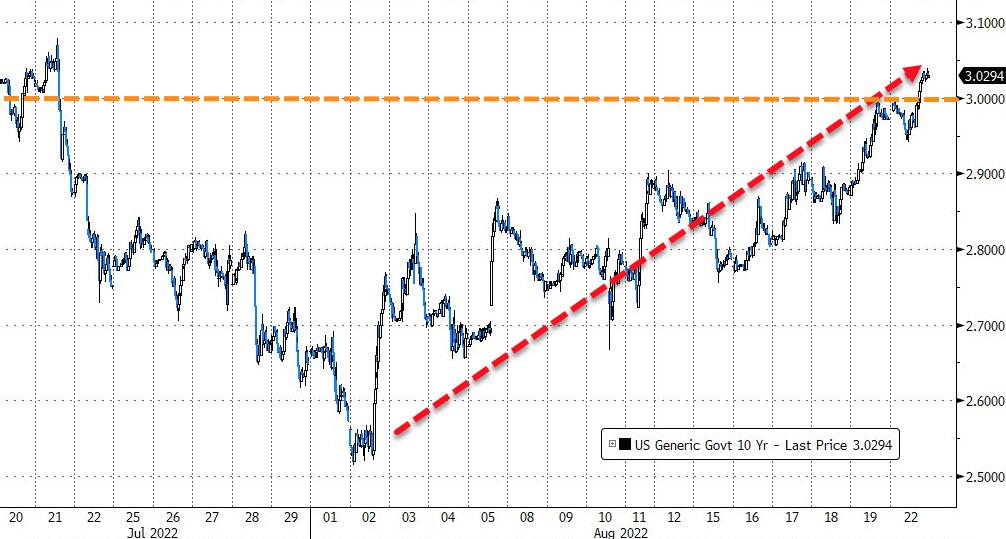
Bond yields dropped and popped, but the 10-year stopped short of reaching its 3% level again. Energy took top billing with VDE adding a solid +3.05%. Gold found some stability as well but only gained a tad and remains short of reaching its $1,900 level.

On the economic side, ZH reported that a record number of Americans just quit their job, as Job Openings surpassed unemployed workers by a record 5.6 million causing hedge fund manager Jeff Gundlach to quip:

Now it’s up to the Fed to determine future market direction, which will be based on the aggressiveness with which it will battle the inflation monster.

Read More
Dropping And Popping

Ulli Market Commentary Contact

[Chart courtesy of MarketWatch.com]

  1. Moving the markets

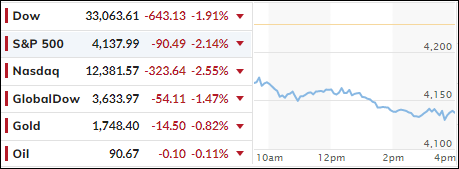
Last week’s downtrend continued during the first trading session of May, as the Dow stumbled some 400 points early on, but a last hour rebound pulled the major indexes out of the doldrums and back into the green.

The S&P 500 fell to new lows for the year, which is viewed as a sign of more weakness to come, before being saved by the afternoon bounce. This index and its compatriot, the Dow, recorded April as being their worst month since March of 2020, which marked the beginning of the pandemic.

The tug-of-war continues between those that see the current setback as an opportunity to buy the dip vs. their opponents, who believe that stocks have further to fall.

Europe’s markets got hammered after a flash-crash in Stockholm gave an assist to the bears, who carried the torch through the regular session with all European indexes ending in the red.

Bonds were the story of the day with yields surging, as the 10-year topped 3% for the first time since December of 2018, after which equities tanked, and the Fed folded like a cheap suit by lowering rates again to prop up the stock market.  

All eyes are on this Wednesday’s Fed meeting on rate increases. Expectations are for a 50-bps hike this week and priced in odds are 25% of a 75-bps hike in June.

Read More
ETFs On The Cutline – Updated Through 04/29/2022

Ulli ETFs on the Cutline Contact

Below, please find the latest High-Volume ETF Cutline report, which shows how far above or below their respective long-term trend lines (39-week SMA) my currently tracked ETFs are positioned.

This report covers the HV ETF Master List from Thursday’s StatSheet and includes 312 High Volume ETFs, defined as those with an average daily volume of more than $5 million, of which currently 54 (last week 80) are hovering in bullish territory. The yellow line separates those ETFs that are positioned above their trend line (%M/A) from those that have dropped below it.

Take a look:                                                                   

The HV ETF Master Cutline Report

In case you are not familiar with some of the terminology used in the reports, please read the Glossary of Terms. If you missed the original post about the Cutline approach, you can read it here.      

ETF Tracker Newsletter For April 29, 2022

Ulli ETF Tracker Contact

ETF Tracker StatSheet          

You can view the latest version here.

RED APRIL

[Chart courtesy of MarketWatch.com]

  1. Moving the markets

Despite the shocking negative first quarter GDP reading of -1.4% (annually), the markets managed to string together a MegaLiftathon on Thursday, but today’s reality check pulled the indexes back down below where they started yesterday. So much for buying the dips.

More than yesterday’s gains were given back today, and we’re now staring into the abyss of a bear market for domestic equities, the signal of which was initially generated by our Domestic Trend Tracking Index (TTI) back on 2/24/22. We’ve seen a lot of bounce backs since but, as of this moment, the bears are clearly having the upper hand.

After yesterday’s close, tech powerhouse Amazon shocked the investing community via a dismal outlook and a rise in operating costs, which pulled its stock down some -12%, a performance that was outdone today, as the company stock dropped another -14%. Ouch!

How bad was this month? MarketWatch summed it up like this:

The Nasdaq is down around 12%, on pace for its worst monthly performance since October 2008 in the throngs of the financial crisis. The S&P 500 is down more than 7%, its worst month since March 2020 at the onset of the Covid pandemic. The Dow is off by nearly 4% for the month.

The Nasdaq Composite sits in bear market territory, roughly 24% below its intraday high. The S&P 500 is off its record by more than 14% and the Dow is nearly 11% lower.

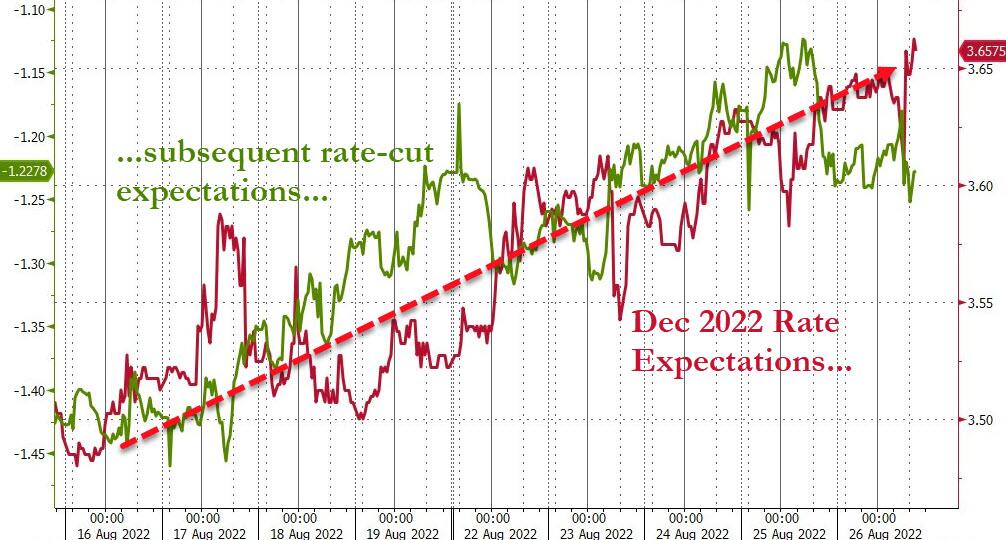
Rate hike expectations went vertical, with ZH pointing out that a 50-bps hike next week appears to be a done deal with odds of a potential 75-bps hike now being 50%. If that materializes, it would be the first 75-bps hike since 1994.

Hmm, I wonder if the markets are prepared for that?

Bonds got clobbered during April as well with yields spiking across the board, as the widely-held 20-year bond ETF TLT lost -7.43%, which pretty much matched the S&P 500 “performance.” So much for the perceived security of bonds during a stock market meltdown. As a result, April turned out to be the worst month for a stock/bond portfolio since February 2009.

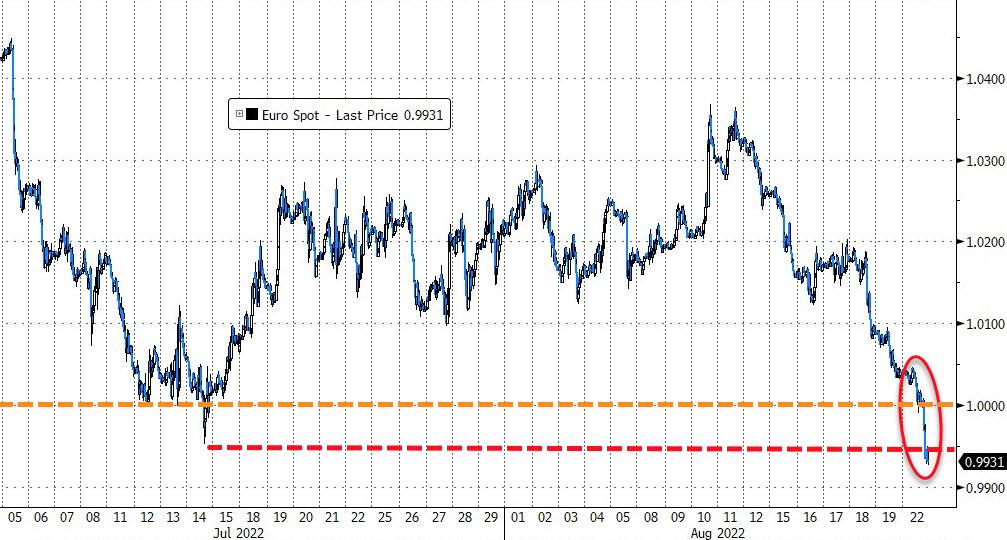
The beneficiary of all this turmoil was the US Dollar when measured vs. its fiat peers, as it jumped 5% and traded at its highest in 20 years, as ZH remarked. The same can’t be said for the Chinese Yuan, which saw its biggest monthly drop against the dollar since 1994.

Gold was pretty much flat, which is better than down, and it ended the month just around its $1,900 level.

All this leaves me pondering: “Will Fed head Powell step up to “save” the markets again, or will he seriously fight potential hyper-inflation and save humanity?”

Read More

Weekly StatSheet For The ETF Tracker Newsletter – Updated Through 04/28/2022

Ulli ETF StatSheet Contact

ETF Data updated through Thursday, April 28, 2022

Methodology/Use of this StatSheet:

1. From the universe of over 1,800 ETFs, I have selected only those with a trading volume of over $5 million per day (HV ETFs), so that liquidity and a small bid/ask spread are assured.

2. Trend Tracking Indexes (TTIs)

Buy or Sell decisions for Domestic and International ETFs (section 1 and 2), are made based on the respective TTI and its position either above or below its long-term M/A (Moving Average). A crossing of the trend line from below accompanied by some staying power above constitutes a “Buy” signal. Conversely, a clear break below the line constitutes a “Sell” signal. Additionally, I use an 12% trailing stop loss on all positions in these categories to control downside risk.

3. All other investment arenas do not have a TTI and should be traded based on the position of the individual ETF relative to its own respective trend line (%M/A). That’s why those signals are referred to as a “Selective Buy.” In other words, if an ETF crosses its own trendline to the upside, a “Buy” signal is generated. Here too, I recommend trailing sell stop of 12%, or less, depending on your risk tolerance.

If you are unfamiliar with some of the terminology, please see Glossary of Terms and new subscriber information in section 9.     

1. DOMESTIC EQUITY ETFs: SELL — since 02/24/2022

Click on chart to enlarge

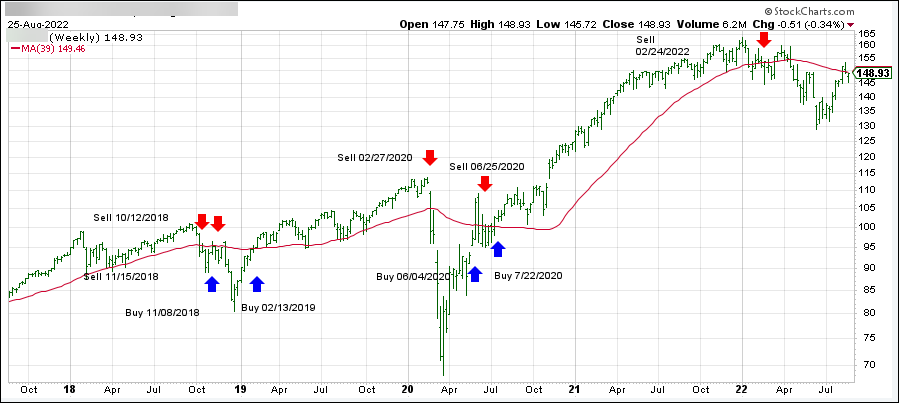
Our main directional indicator, the Domestic Trend Tracking Index (TTI-green line in the above chart) has only broken below its long-term trend line (red) by -2.05% and remains in “SELL” mode—although it is on the edge of moving back to the Buy side.  

Read More
A Dead-Cat Bounce Loses Its Bounce—Twice

Ulli Market Commentary Contact

[Chart courtesy of MarketWatch.com]

  1. Moving the markets

Despite dip buyers stepping in this morning, to take advantage of lower prices caused by yesterday’s drubbing, the effort peaked mid-day, after which the selling resumed with the major indexes ending up only a tad above their respective unchanged lines.

The Nasdaq has now dropped some 12% in April, which is its worst performance since October 2008, with the S&P 500 and Dow being down as well but to a lesser magnitude.

Headwinds increased for equities this month, as uncertainty reigned due a variety of uncontrollable events—like inflation, Fed tightening, the war in Ukraine, and China’s zero-covid policy lockdowns—combining forces and giving the bears the upper hand.

Since my Domestic Trend Tracking Index (TTI) signaled a sell of domestic equities on 2/24/22, we’ve seen strong rebounds at first, however, they have lately turned into a bearish rut. As of today, our TTI hovers -3.72% below its long-term trend line (section 3).

As ZH pointed out, the FANG stocks puked again and have now reached a critical support level from right before the Covid crash, while Netflix still has a long ways to go to find any technical support at all.

Boeing got hammered as well and has now reached a price level last seen in June 2020. Bond yields, which had weakened yesterday, came back and stormed higher with the 10-year gaining over 10 bps to close at 2.835%.

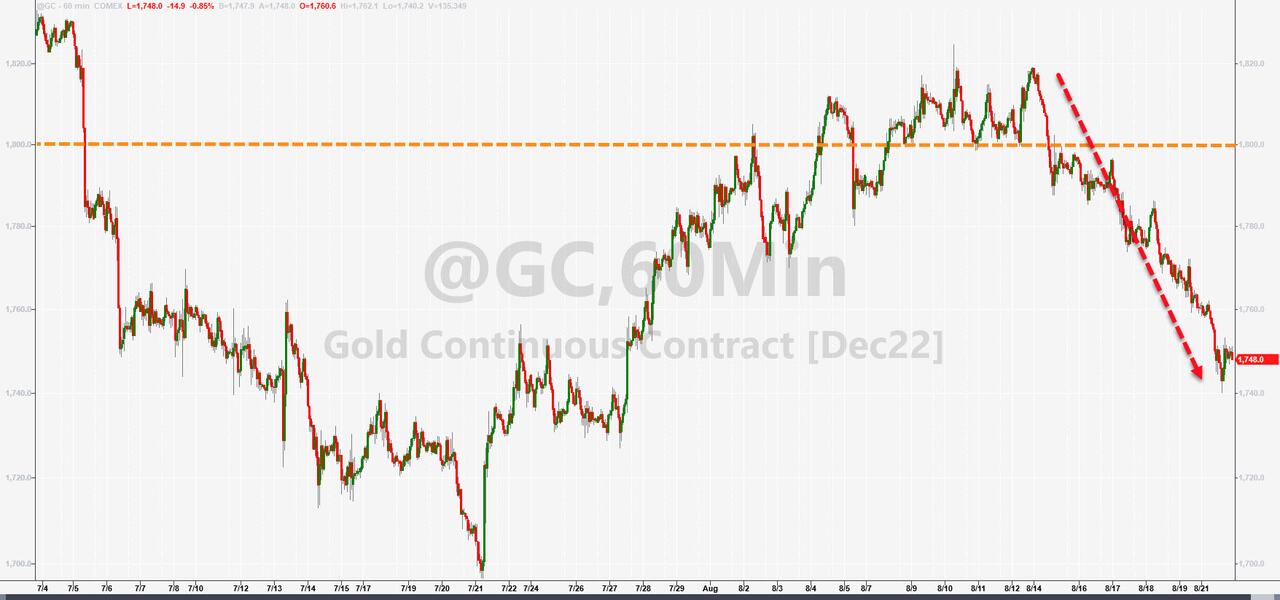
The energy and commodity sectors rose, while Gold dropped and lost its $1,900 level again.

Read More