ETFs On The Cutline – Updated Through 9/02/2022

Ulli ETFs on the Cutline Contact

Below, please find the latest High-Volume ETF Cutline report, which shows how far above or below their respective long-term trend lines (39-week SMA) my currently tracked ETFs are positioned.

This report covers the HV ETF Master List from Thursday’s StatSheet and includes 312 High Volume ETFs, defined as those with an average daily volume of more than $5 million, of which currently 27 (last week 41) are hovering in bullish territory. The yellow line separates those ETFs that are positioned above their trend line (%M/A) from those that have dropped below it.

Take a look:                                                                   

The HV ETF Master Cutline Report

In case you are not familiar with some of the terminology used in the reports, please read the Glossary of Terms. If you missed the original post about the Cutline approach, you can read it here.      

ETF Tracker Newsletter For September 2, 2022

Ulli Market Commentary Contact

ETF Tracker StatSheet          

You can view the latest version here.

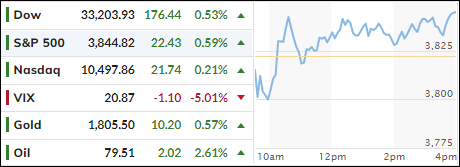
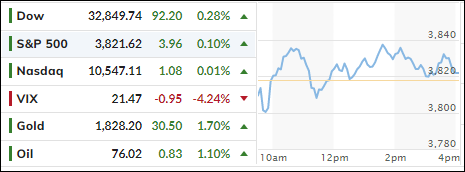
CRANKING AND TANKING AHEAD OF LABOR DAY

[Chart courtesy of MarketWatch.com]

  1. Moving the markets

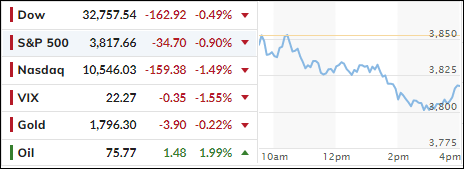
An early bounce, supported by an alleged “Goldilocks” jobs report, hit a brick wall, reversed, wiped out all gains, and pulled the major indexes into the red by over 1% with the Nasdaq posting a six-day losing streak, somethings it has not done since August of 2019.

August jobs came in with a gain of 315k, slightly above expectations of 298k, but lower than July’s downward revised number of 528k. As ZeroHedge reported, that was the lowest monthly increase since April 2021:

In other words, solid headline payrolls number, but weakness in the unemployment rate and another much needed tapering in wage growth. Still, it’s hard to see this report taking a 75-basis-point Fed hike off the table for Sept. 21. As such, the CPI report out on Sept. 13 will likely be the decider when it comes to 50 vs 75.

Then suddenly stocks got slammed on news that NO Russian gas will flow to Europe through Nordstream 1, after an oil leak was detected thereby keeping the crucial pipeline closed for an unspecified time to allow for repairs.

Ever since Powell’s Jackson Hole speech, the bulls have simply been pummeled with the Nasdaq taking an 8% hit—in only a week. All 10 S&P sectors ended the week in the red, which continues to support my view that during these tumultuous times, it’s best to stay on the sidelines and watch one disaster after another develop.

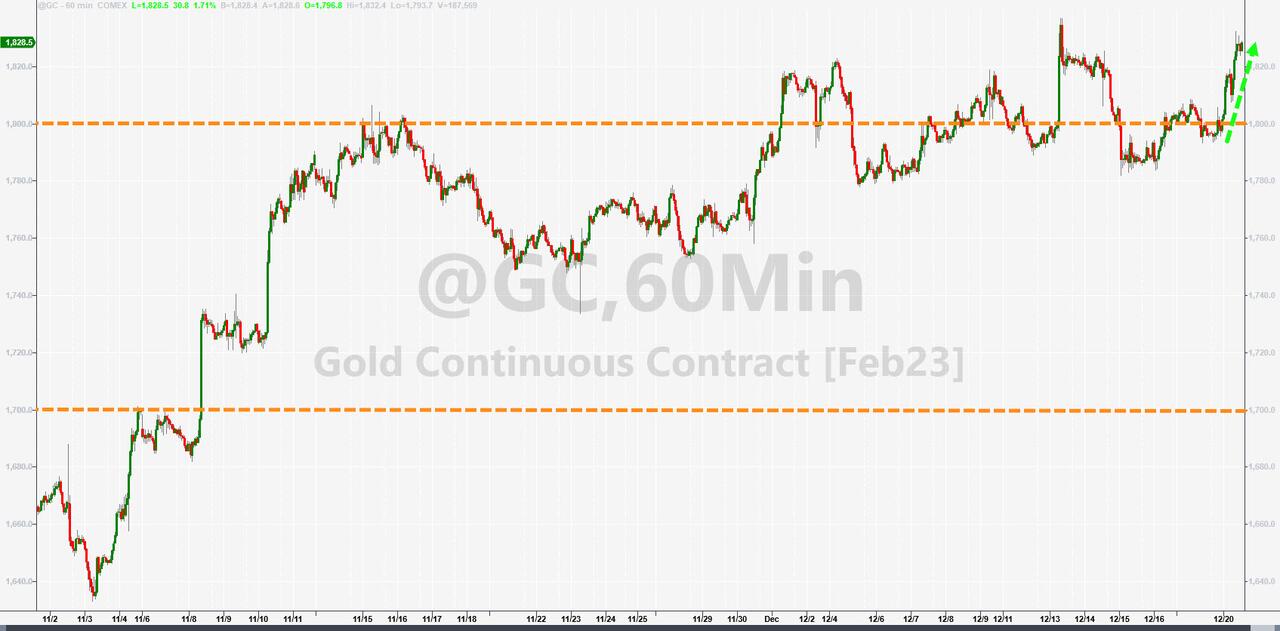
Bond yields ended about unchanged for the week, the US Dollar headed higher, and Gold managed a nice bounce off the $1,700 level.   

With this week’s volatility, the analog to the events of 2008-2009 is still valid, as ZeroHedge posted. Again, if you are in the market without an exit strategy, you are asking for trouble.

Happy Labor Day weekend!

Read More

Weekly StatSheet For The ETF Tracker Newsletter – Updated Through 09/01/2022

Ulli ETF StatSheet Contact

ETF Data updated through Thursday, September 1, 2022

Methodology/Use of this StatSheet:

1. From the universe of over 1,800 ETFs, I have selected only those with a trading volume of over $5 million per day (HV ETFs), so that liquidity and a small bid/ask spread are assured.

2. Trend Tracking Indexes (TTIs)

Buy or Sell decisions for Domestic and International ETFs (section 1 and 2), are made based on the respective TTI and its position either above or below its long-term M/A (Moving Average). A crossing of the trend line from below accompanied by some staying power above constitutes a “Buy” signal. Conversely, a clear break below the line constitutes a “Sell” signal. Additionally, I use an 12% trailing stop loss on all positions in these categories to control downside risk.

3. All other investment arenas do not have a TTI and should be traded based on the position of the individual ETF relative to its own respective trend line (%M/A). That’s why those signals are referred to as a “Selective Buy.” In other words, if an ETF crosses its own trendline to the upside, a “Buy” signal is generated. Here too, I recommend trailing sell stop of 12%, or less, depending on your risk tolerance.

If you are unfamiliar with some of the terminology, please see Glossary of Terms and new subscriber information in section 9.     

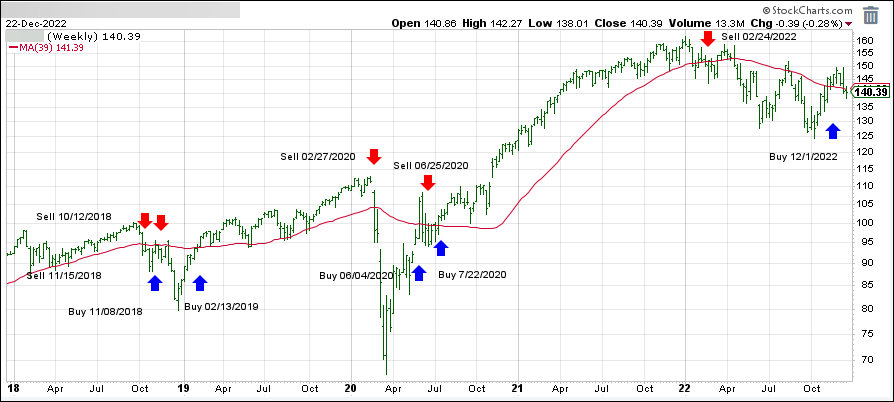
1. DOMESTIC EQUITY ETFs: SELL — since 02/24/2022

Click on chart to enlarge

Our main directional indicator, the Domestic Trend Tracking Index (TTI-green line in the above chart) has broken below its long-term trend line (red) by -5.66% but remains in “SELL” mode.  

Read More

Stair Stepping Deeper Into Bear Market Territory

Ulli Market Commentary Contact

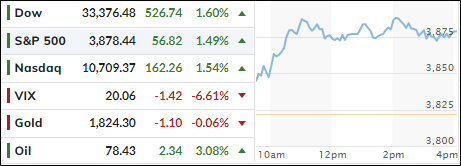
[Chart courtesy of MarketWatch.com]

  1. Moving the markets

Despite an early bounce, the major indexes did not find any lasting bullish support and chopped around during this last trading day of August without much conviction. As a result, the indexes notched their 4th straight losing session casting further doubt on a much hoped for extension of the June rebound.

That wishful thinking appears to have been dashed for the time being, as much of the gains have evaporated—and that in only 4 trading days, since last Friday, when Fed head Powell asserted his intention of fighting inflation.

For the month, all 3 major indexes lost, with the Dow down -4.1%, while the S&P 500 and Nasdaq gave back -4.2% and -4.6% respectively.

It’s finally beginning to sink in that Wall Street traders and algos alike had counted on, and front ran, limited rate increases and subsequent quick rate cuts, a bet that has now backfired. They had to learn the hard way that increases will be larger and of longer duration with cuts not being visible on the horizon. In other words, a restrictive Fed policy stance will be with us for some time.

Looking at the big picture, financial conditions eased dramatically from the start of July to mid-August but have tightened since, as ZeroHedge pointed out. That goes along with Rate Hike Expectations and subsequent rate cuts, both of which are painting a hawkish outcome.

Bond holders got spanked in August as yields soared, thereby negatively affecting bond prices. The widely held 20-year ETF ‘TLT’ dropped -5.9% for the month and is still down -23.77% YTD. Equities did not perform much better with SPY having lost -16.16% YTD. That’s a big “ouch” for the buy-and-hold crowd and things are likely to get worse—before they get much worse.

After all, we are now facing the notoriously volatile September.

Read More

And The Bearish Beat Goes On

Ulli Market Commentary Contact

[Chart courtesy of MarketWatch.com]

  1. Moving the markets

Bullishness during the overnight session vanished in a hurry, with the bears gaining the upper hand again and throwing doubt on a continuation of the summer comeback. The Fed and other global bankers have made it clear that their number one priority is to hike rates to crush inflation, no matter what the negative economic fallout might be.

Seems like traders and algos alike finally got the hint that, given that kind of resolve, corporate profits will be affected, which will then be a downer for stock prices. Sure, eventually the interest rate pendulum will swing the other way again, but we are far away from that moment in time.   

NY Fed President John Williams reiterated their position:

I do think with demand far exceeding supply, we do need to get real interest rates … above zero. We need to have somewhat restrictive policy to slow demand, and we’re not there yet.

That statement makes it abundantly clear that the much hoped for “dovish pivot” is not in play and, therefore, the markets will experience more volatility, AKA agony, throughout Q4 of 2022.

A variety of econ headlines, like hotter than expected German inflation, sliding European economic confidence, an unexpected surge in job openings, and better than expected consumer sentiment added up to a mixed menu of good news and bad news, which was not enough to sway the Fed’s path.

Rate hike expectations shot up and added more discomfort to the fast-fading bullish theme, with ZeroHedge adding that US equities have plenty of downside left before this ‘pain’ is over, as this chart demonstrates.  

So far, equities have given up more than half of their gains off the mid-June lows, as the Nasdaq has plunged 10% from its mid-August highs. And, as ZH pointed out, the index is down over 6% from the start of Powell’s speech last Friday.

Bond yields were mixed, but the 10-year surged 8bps to close at 3.12%, while the 2-year jumped to its highest since November 2007. The US Dollar flipflopped but ended the day with slight gains, but Gold could not handle the combination of higher yields and a rising dollar and surrendered yesterday’s advances.  

From my vantage point, I see more downside pain to come, so it’s satisfying to watch this debacle from the sidelines.

Read More

Failing To Climb Out Of A Hole

Ulli Market Commentary Contact

[Chart courtesy of MarketWatch.com]

  1. Moving the markets


After Friday’s spanking, the major indexes continued their path lower and managed to scramble back far enough to kiss their respective unchanged lines twice. However, upward momentum vanished during the last hour, and we closed in the red again led by the Nasdaq with a 1% loss.

Obviously, rising rates in conjunction with tighter monetary policy gave the bears the upper hand, because Powell’s speech from Jackson Hole still loomed large, as traders finally had to come to terms with the fact that they had misread his resolve to fight inflation.  

At least for the time being, the much-counted on “Powell-Pivot” remains absent with financial conditions continuing to tighten, as the odds of a 75bps hike in September have risen to 75%.

This was also reflected in bond yields, which rose across the board, with the 10-year ramping higher by almost 8 bps to close at 3.11%. The US Dollar pumped and dumped but managed to hold on to Friday’s gains. Gold followed suit and closed a tad above its unchanged line.  

Added ZeroHedge:

Bear in mind that this drop in risk assets is what Powell needs – an actual tightening of financial conditions – and should dip-buyer step back in again on hopes that Powell’s “pain” will only last a brief moment, he will re-appear in his most hawkish suit and unleash reality once again until inflation (and speculative longs’ bankrolls) are good and dead.

In other words, higher rates are here to stay, which will not bode well for stock prices.

Read More