Stocks Start 2024 On A Negative Note, As Rates Rise And Data Disappoint

Ulli Market Commentary Contact

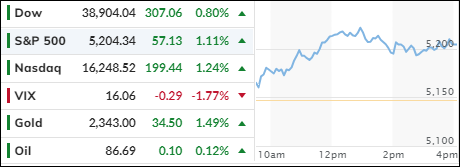
[Chart courtesy of MarketWatch.com]

  1. Moving the markets 

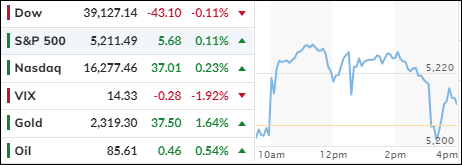
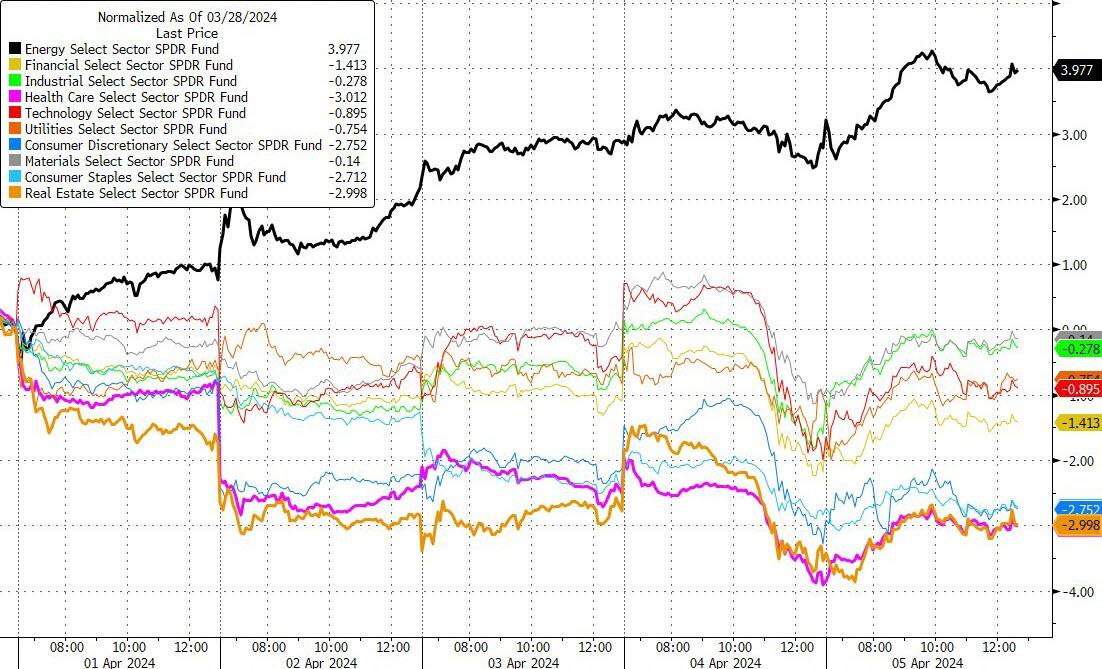
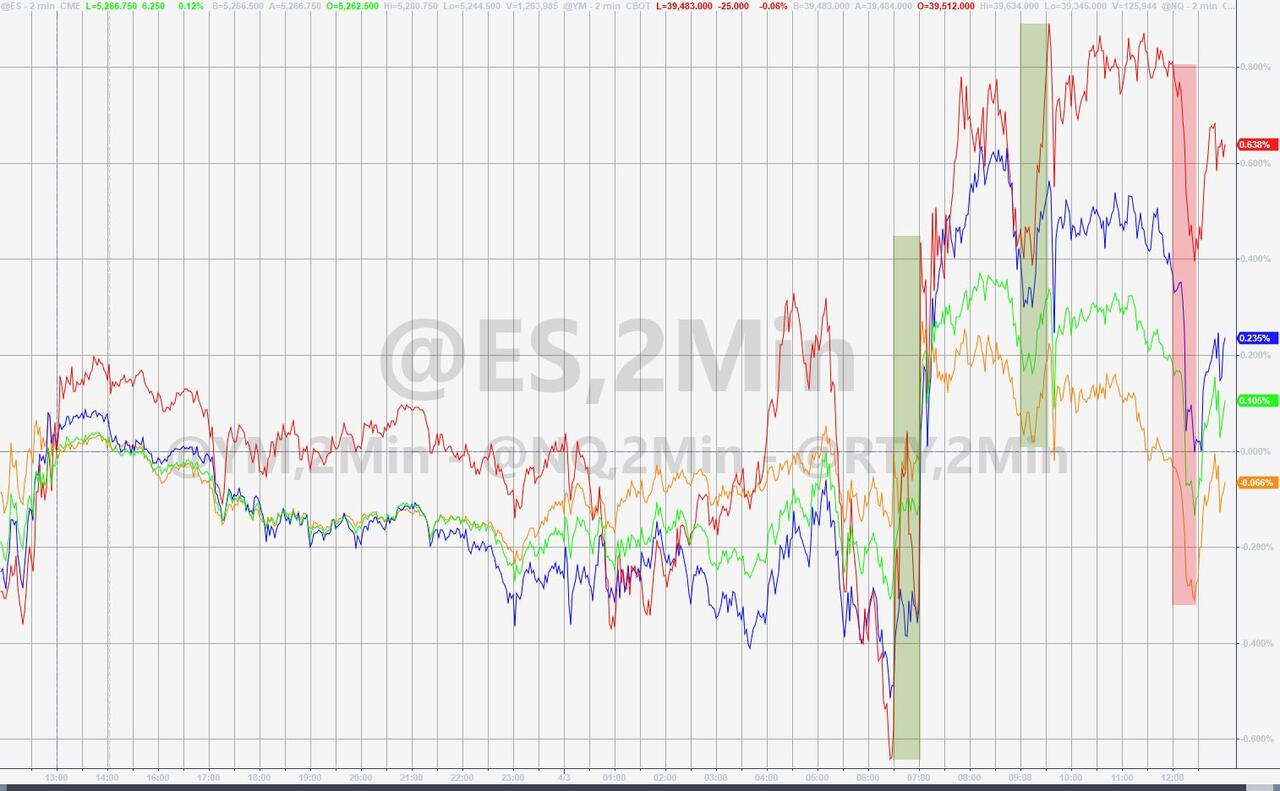
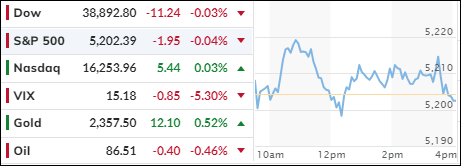
The new year started with a sour note for stocks, as they continued their downward slide from the end of 2023.

Rising interest rates and profit-taking after a stellar 2023 weighed on the market, especially the Nasdaq, which suffered its worst drop in more than two months. Apple was among the biggest losers, as Barclays cut its rating on the tech giant to underweight, citing slowing growth and rising competition.

The Dow fared better, thanks to some defensive stocks like Johnson & Johnson and Merck that held up well.

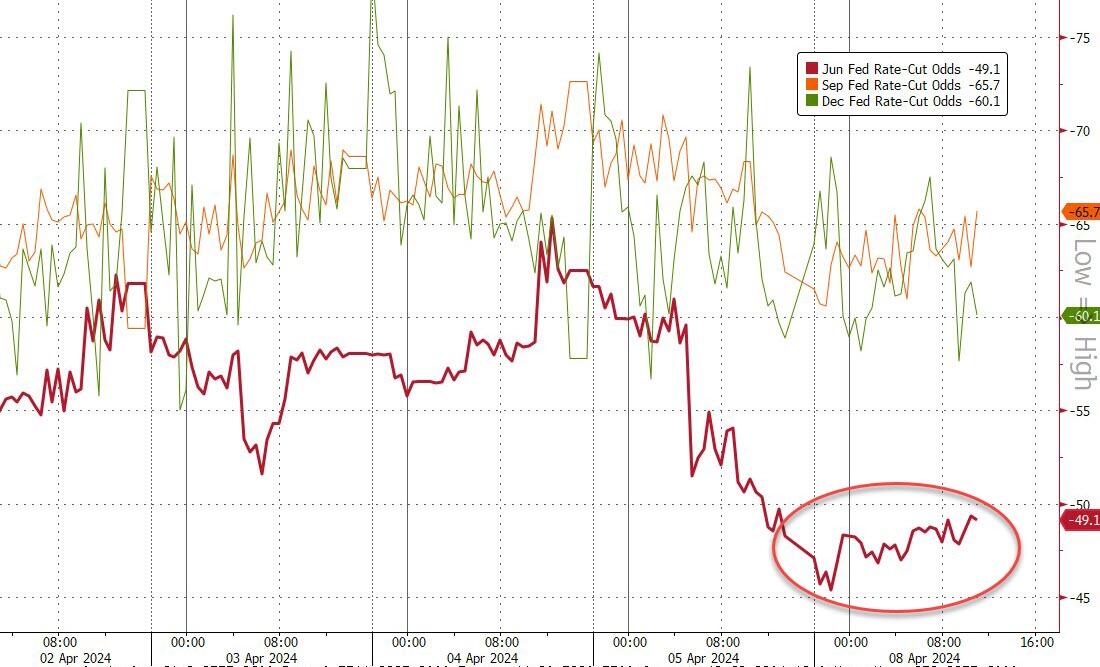
The market had a strong rally in 2023, as the economy proved resilient and inflation eased, while the Fed signaled a pause in rate hikes and hinted at possible rate cuts later this year. But don’t hold your breath for that, as the economic outlook is still uncertain.

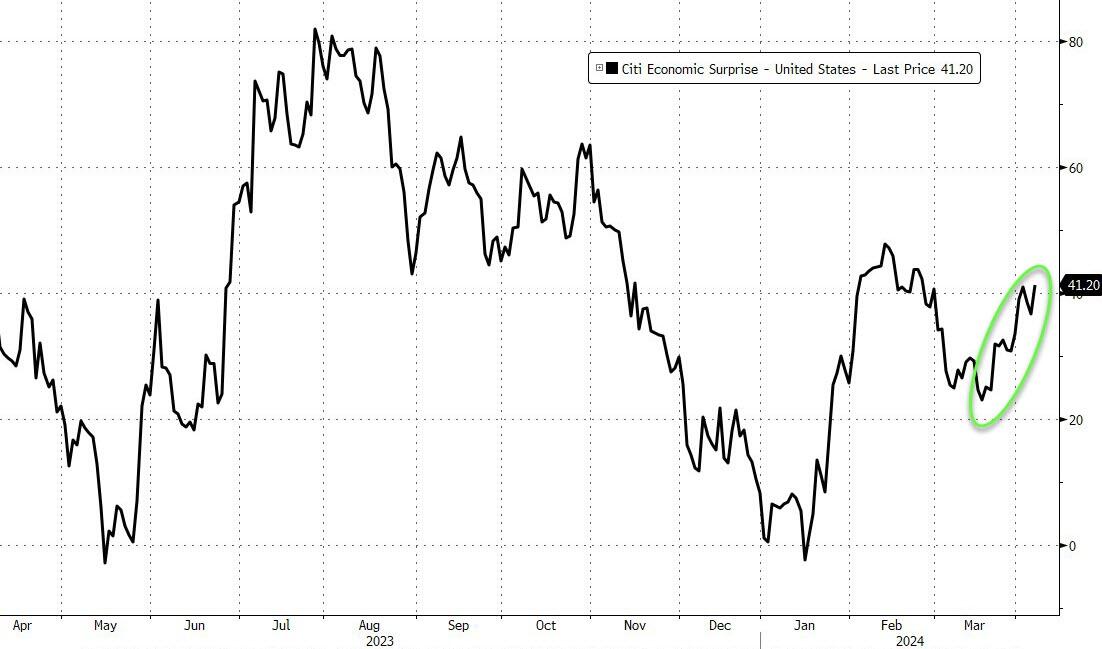
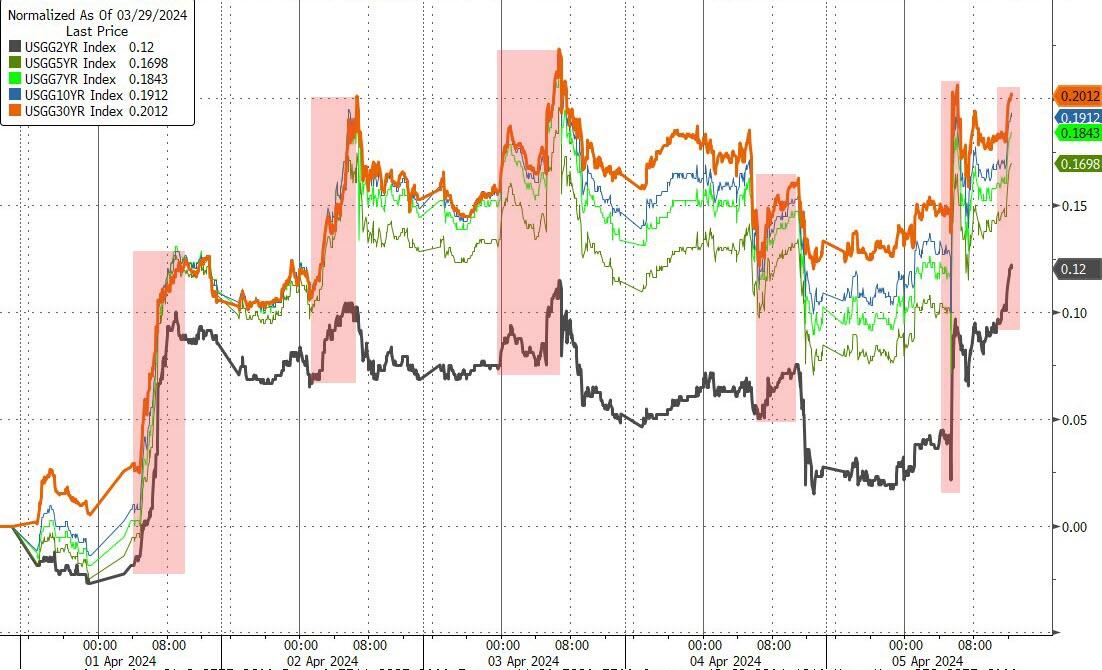
The latest data showed that US manufacturing activity contracted in December, with orders falling and prices rising, while construction spending also missed expectations. These signs of weakness were reflected in the Economic Surprise Index, which measures how the data compares to forecasts.

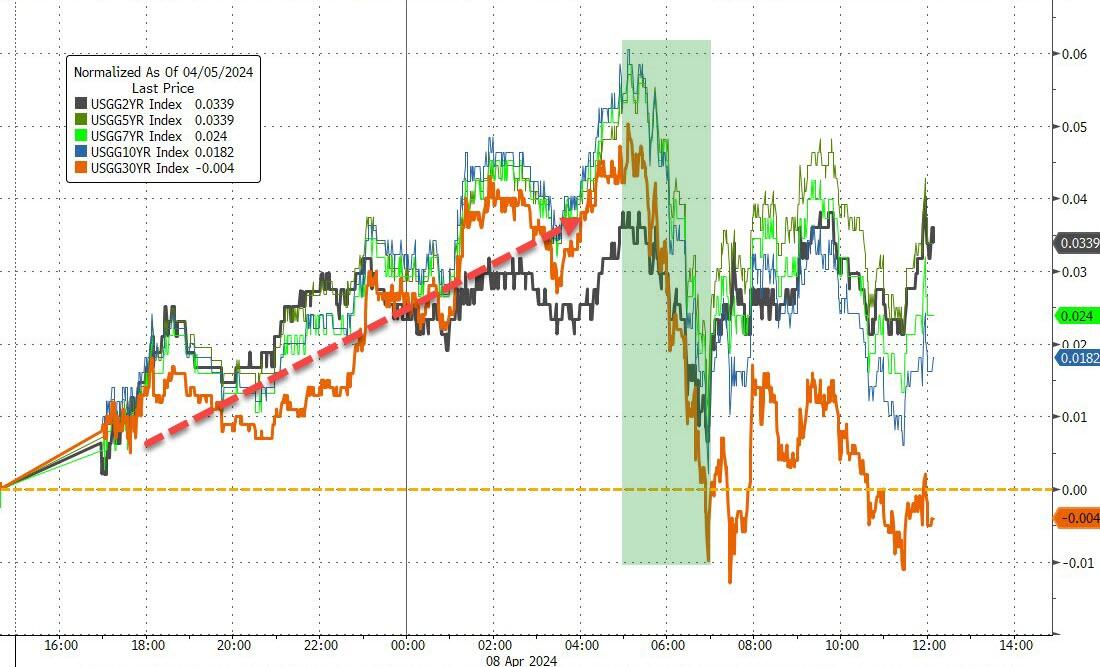
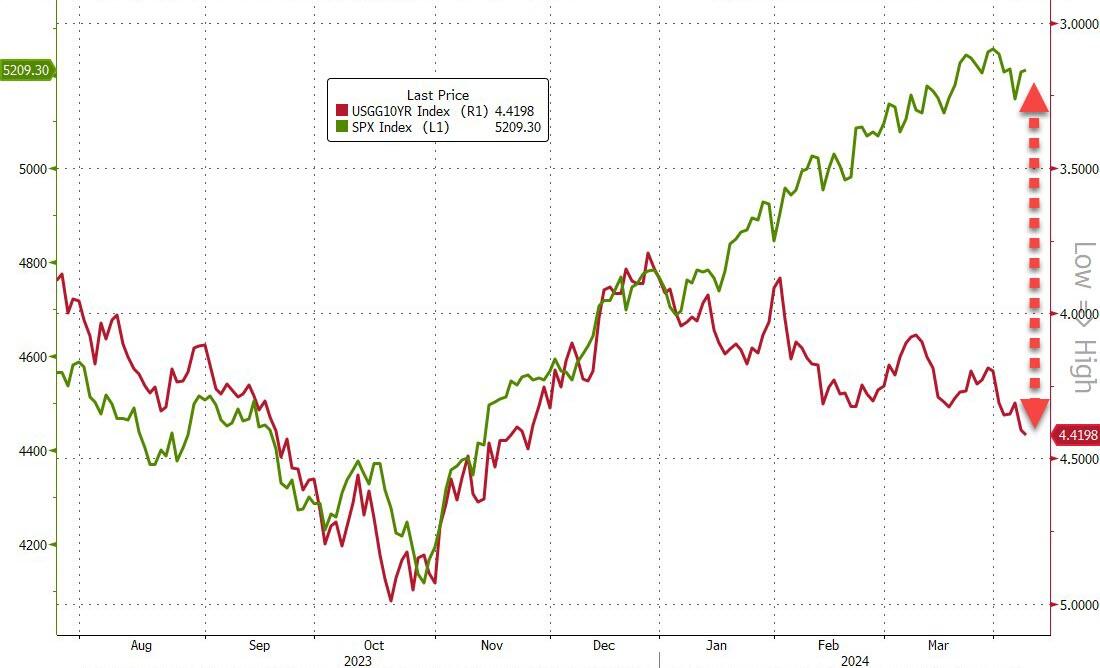
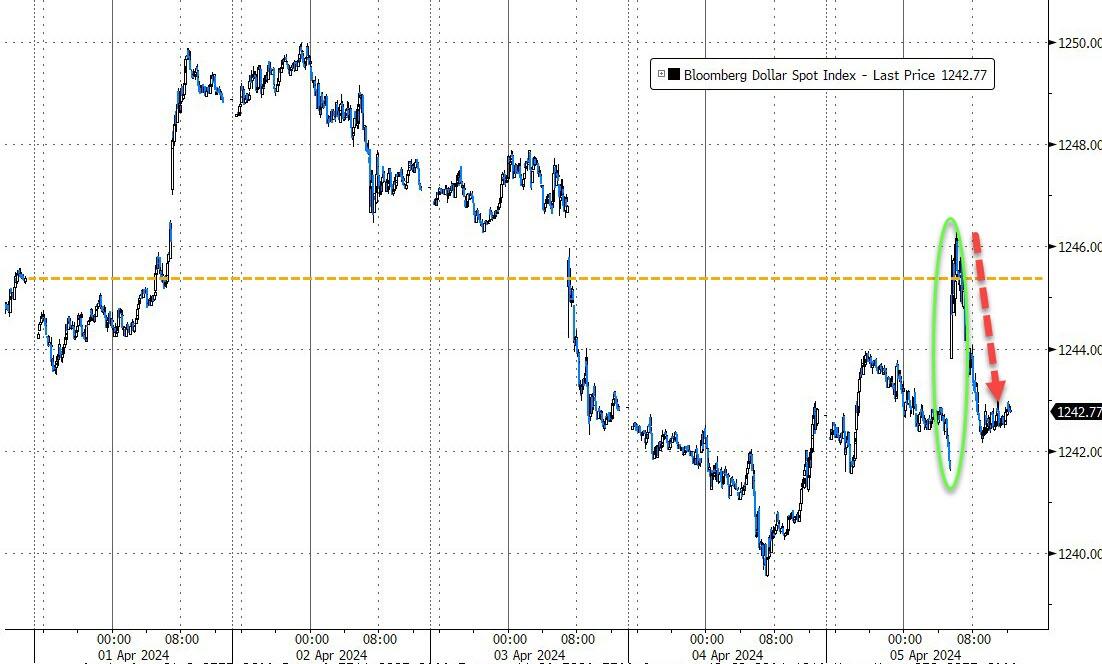
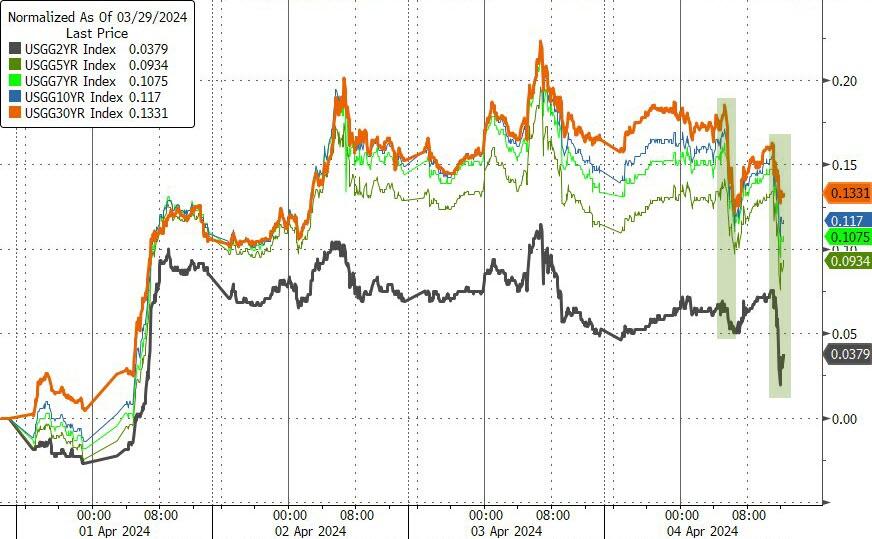
You would think that weak data would push bond yields lower, but the opposite happened. Yields jumped and the dollar strengthened, as the 10-year Treasury yield broke above 3-week highs.

The most shorted stocks had a wild ride, as they plunged, soared, and plunged again, all in one day. Who can make sense of that?

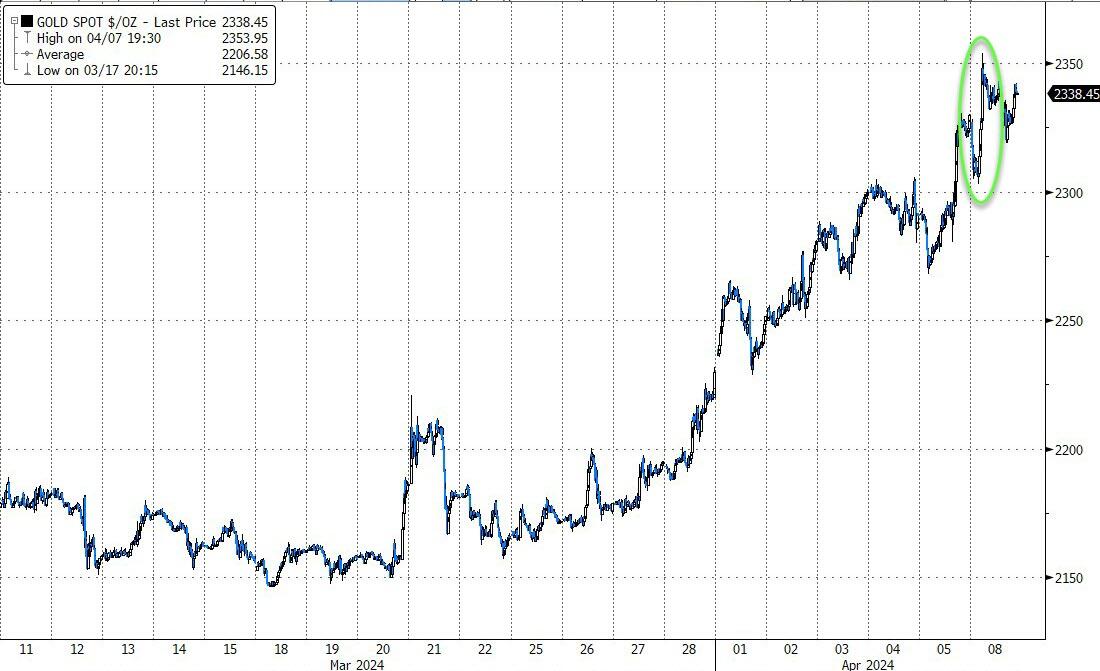
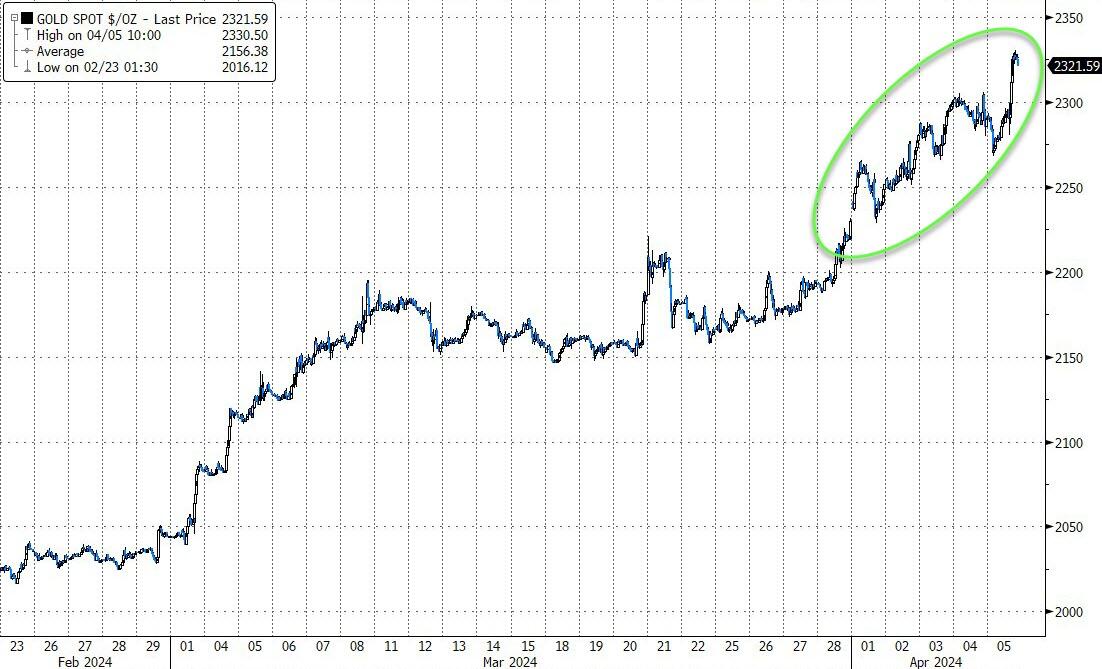
The dollar’s strength was bad news for gold, but the precious metal managed to limit its losses for the day.

Traders are keen to see how the first five trading days of the year play out. Historically, they have been a good indicator of how the year will end. A positive start means a positive finish, and vice versa.

This chart shows the correlation. So, will the market turn around or keep falling?

Read More
ETFs On The Cutline – Updated Through 12/29/2023

Ulli ETFs on the Cutline Contact

Do you want to know which ETFs are hot and which ones are not? Then you need my High-Volume ETF Cutline report. It tells you how close or far each of the 311 ETFs I follow is from its long-term trend line (39-week SMA). These are the ETFs that trade more than $5 million a day, so they are not some obscure funds that nobody cares about.

The report is split into two parts: The winners that are above their trend line (%M/A), and the losers that are below it. The yellow line is the line of shame that separates them. You can see how many ETFs are in each group and how they have changed since the last report (270 vs. 273 current).

Take a peek:

The HV ETF Master Cutline Report

If you are confused by some of the terms we use, don’t panic. I have a helpful Glossary of Terms for you.

If you want to learn more about the Cutline method and how it can make you rich (or at least less poor), read my original post here.

ETF Tracker Newsletter For December 29, 2023

Ulli ETF Tracker Contact

ETF Tracker StatSheet          

You can view the latest version here.

WALL STREET’S WILD RIDE: HOW AI, THE FED, AND GOLD SHAPED THE MARKETS IN 2023

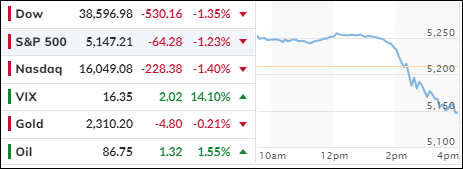
[Chart courtesy of MarketWatch.com]

  1. Moving the markets 

The year 2023 failed to end with a bang for Wall Street, with the S&P 500 not soaring to new heights. However, it had a remarkable comeback from a dismal third quarter, while the Nasdaq outshone the rest with its tech-savvy portfolio. The “Magnificent 7” stocks, led by Nvidia and Microsoft, were the stars of the show, as they rode the wave of AI hype and innovation.

But not everyone was happy. The average stock lagged the indexes, as rising interest rates squeezed their profits and prospects. The bond market also had a roller-coaster ride, as the 10-year Treasury yield plunged from over 5% in October to below 3.9% in December. What caused this dramatic shift? The Fed, of course.

The Fed, which had been raising rates steadily for the past few years, suddenly changed its tune and signaled that it was done with tightening and might even start cutting rates multiple times in 2024.

This was music to the ears of traders, who hoped for a “soft landing” for the U.S. economy, avoiding a recession. But I think they are dreaming. The Fed is playing with fire, and we might get burned.

The Fed’s flip-flop also sparked a frenzy of buying in the global markets, which added a whopping $20 trillion in value in the last two months of the year, according to ZeroHedge. Most of that money went into stocks, especially in the emerging markets, while bonds also got a boost. The dollar, on the other hand, took a dive, as the Fed’s easing stance weakened its appeal.

The dollar’s decline was good news for gold, which had its best year since 2020, rising almost 14% to a new record high. Gold is the ultimate hedge against inflation, uncertainty, and chaos, and we had plenty of those in 2023. With the Fed’s loose policy, the global turmoil, and the AI revolution, gold might shine even brighter in 2024.

But will the stock market keep its momentum, or will it crash and burn like it did in 2000, after a similar buying panic?

That’s the million-dollar question, or should I say, the trillion-dollar question?

Read More
Weekly StatSheet For The ETF Tracker Newsletter – Updated Through 12/28/2023

Ulli ETF StatSheet Contact

ETF Data updated through Thursday, December 28, 2023

How to use this StatSheet:

  1. Out of the 1,800+ ETFs out there, I only pick the ones that trade over $5 million per day (HV ETFs), so you don’t get stuck with a lemon that nobody wants to buy or sell.
  1. Trend Tracking Indexes (TTIs)

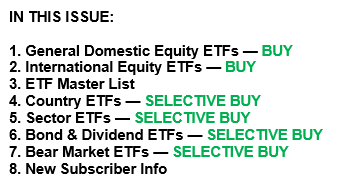
These are the main indicators that tell you when to buy or sell Domestic and International ETFs (section 1 and 2). They do that by comparing their position to their long-term M/A (Moving Average). If they cross above, and stay there, it’s a green light to buy. If they fall below, and keep going, it’s a red light to sell. And to make sure you don’t lose your shirt if things go south, I also use a 12% trailing stop loss on all positions in these categories.

  1. All other investment areas don’t have a TTI and should be traded based on the position of each ETF relative to its own trend line (%M/A). That’s why I call them “Selective Buy.” In other words, if an ETF goes above its own trend line, you can buy it. But don’t forget to use a trailing sell stop of 12%, or less if you’re feeling nervous.

If some of these words sound like Greek to you, please check out the Glossary of Terms and new subscriber information in section 9.

  1. DOMESTIC EQUITY ETFs: BUY— since 11/21/2023

Click on chart to enlarge

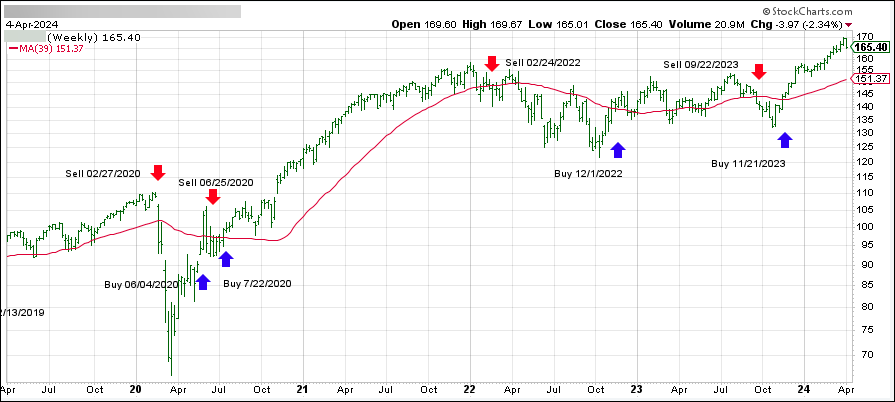
This is our main compass, the Domestic Trend Tracking Index (TTI-green line in the above chart). It has broken above its long-term trend line (red) by +9.25% and is in “Buy” mode as posted.

Read More
S&P 500 Inches Closer To New Peak, But Correction Fears Grow

Ulli Market Commentary Contact

[Chart courtesy of MarketWatch.com]

  1. Moving the markets 

The S&P 500 barely budged today, but it was enough to inch closer to a new record high. Wall Street is hoping to end 2023 with a bang, after a stellar fourth quarter that erased the losses of the previous one.

The S&P is up 11.7% for the quarter, its best performance in three years, and the three major indexes are on track to post their ninth consecutive weekly gains.

But not everything is rosy in the market. Traders are betting on rate cuts and lower inflation in 2024, which may turn out to be wishful thinking. Today’s economic data was disappointing, with lower inventories, higher jobless claims, and weaker home sales.

The market was mixed, with small caps, cryptos, and oil losing ground, while the dollar, the Dow, and bonds yields rose. The Mag7 stocks managed to squeeze out a positive close, but junk bonds diverged from the S&P 500. Gold briefly hit $2,088 overnight, but couldn’t keep the momentum, as oil dropped below $72 and closed at its lowest in a week.

Some analysts are warning of a possible correction, especially if the S&P reaches $4,900. How deep and how long is anyone’s guess, but one thing is certain: volatility is waiting in the wings, ready to pounce. Will the market end the year with a whimper or a bang? Tune in tomorrow to find out.

Read More
Stocks Flat, Dollar Sinks, Gold Shines: A Tale Of Two Markets

Ulli Market Commentary Contact

[Chart courtesy of MarketWatch.com]

  1. Moving the markets 

The major indexes barely budged from their flat lines, as the S&P 500 flirted with its all-time high and missed it by a hair.

Traders were itching to see a new record, but they knew it could be followed by a cold shower or a retreat. Stocks were enjoying the “Santa Claus rally,” a festive period that spans the last five trading days of the old year and the first two of the new one. The S&P 500 has averaged a 1.3% gain over this time, based on data from the Stock Trader’s Almanac dating back to 1950.

But not everyone was feeling jolly. Some Wall Street skeptics feared that the market was too giddy, and that the Federal Reserve might spoil the party by delaying rate cuts. The market was betting on a more than 70% chance of a cut at the Fed’s March meeting, but it didn’t help that 90% of stocks in the S&P 500 were trading above their 50-day moving average, indicating a frothy market.
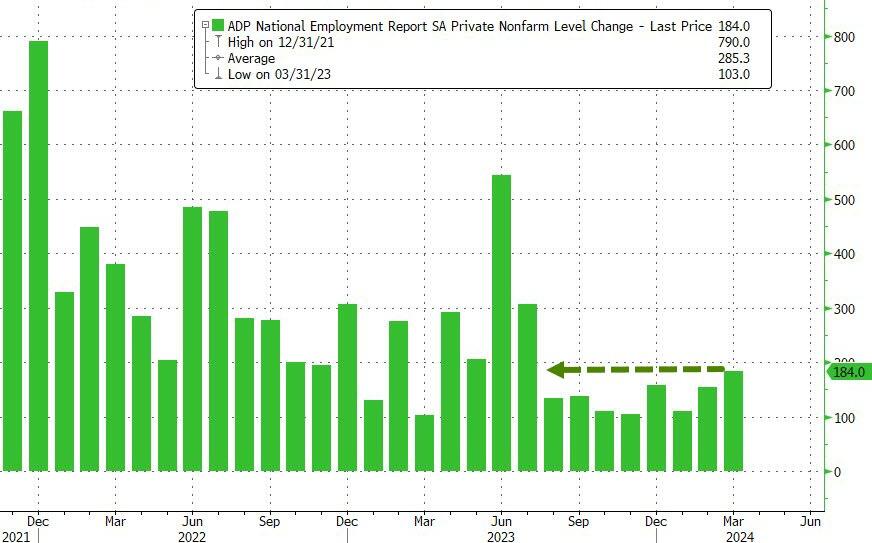
Recent bullish sentiment data also showed signs of euphoria, which could expose investors to nasty surprises. Stocks may have been snoozing, but the session was far from dull.

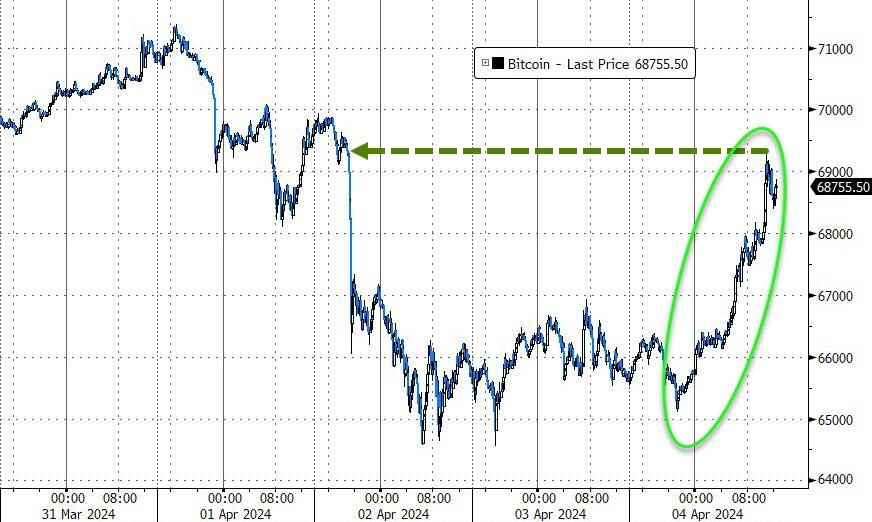
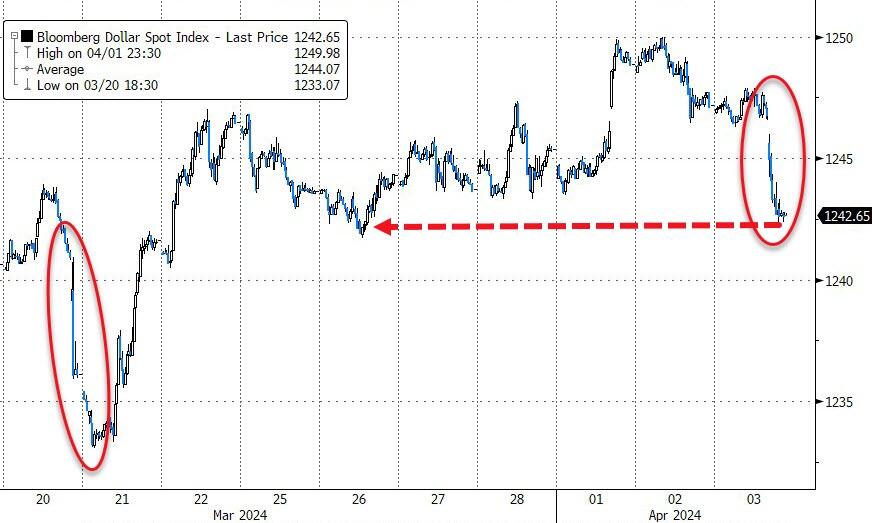
The dollar plunged to its lowest level since July, while bonds, Swiss franc and cryptos soared, and the “Magnificent 7 stocks” got hammered in the morning. The 2-year yield dropped, as money fled to safer assets.

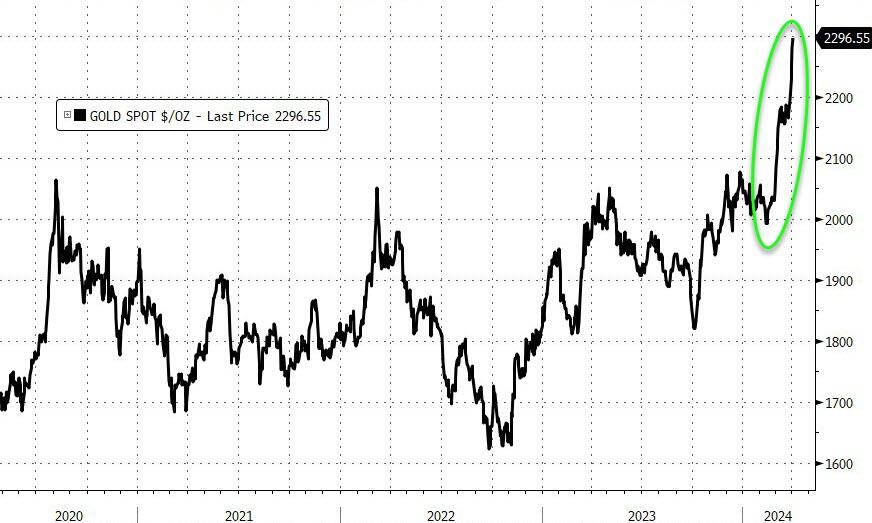
The dollar’s downfall was gold’s glory, with the shiny metal closing at a new record high, signaling more uncertainty and inflation ahead in 2024.

While the Fed’s policy can sway the market, as we’ve seen before, it’s the global liquidity that fuels the fire, even when the fundamentals are weak, as this chart shows.

Will the market keep the festive spirit, or will it face a hangover?

Read More