ETF/No Load Fund Tracker StatSheet
————————————————————-
THE LINK TO OUR CURRENT ETF/MUTUAL FUND STATSHEET IS:
————————————————————
Market Commentary
Friday, March 1, 2013
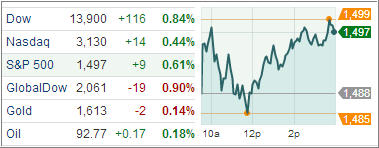
US INDEXES RISE AS DATA OFFSETS SEQUESTER; EUROPE FALLS ON ECONOMIC DATA, CHINA
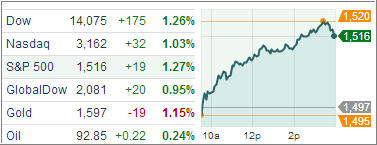
US indexes advanced Friday, wiping out earlier losses as upbeat manufacturing and consumer confidence data offset concern about government spending cuts.
The Institute for Supply Management’s manufacturing index rose to 54.2, the highest reading since June 2011 and a surprise improvement from January’s 53.1.
The University of Michigan/Thomson Reuters consumer sentiment index rose to a final February reading of 77.6, the highest since November.
Separately, government data showed consumer spending in the US rose in January even as incomes dropped the most in 20 years, showing households are so far weathering the hike in payroll taxes. Ahead of the US open, data showed China’s manufacturing slowed for a second month while factory-output in the 17-member euro area shrank for the 19th straight month.