A Late-Day Comeback

Ulli Market Commentary Contact

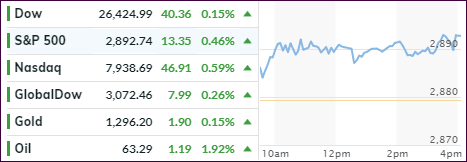
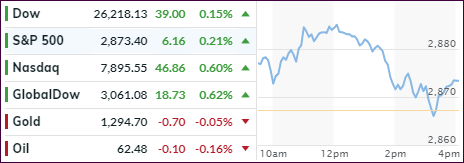
[Chart courtesy of MarketWatch.com]
  1. Moving the markets

One market technician called yesterday’s massive rebound a sucker’s rally and for most of today, with the major indexes trading way down, his view seemed to be correct except, it was not over yet.

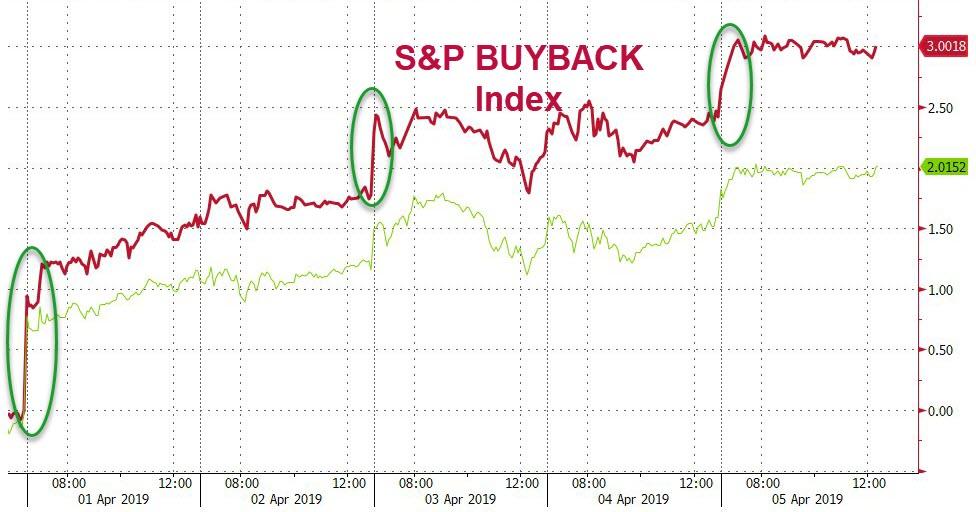
A powerful reversal during the last hour appeared to be a continuation of the quarter ending re-balancing by pensions plans (and a giant short squeeze) I mentioned yesterday. It pulled equities out of the doldrums, which ended in the green for the second day in a row, as the Dow staged a nearly 900-point turnaround.

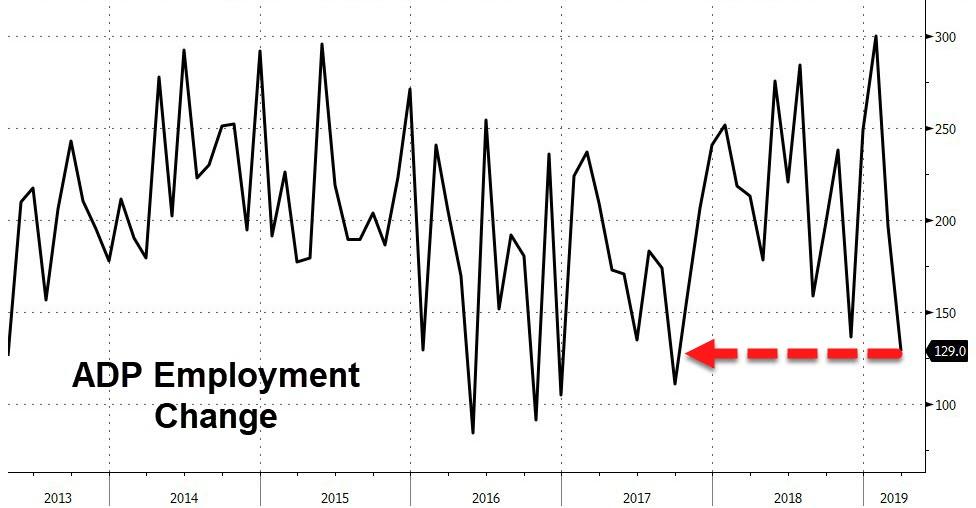
The early plunge did not come as a surprise after economic confidence figures got smashed and the US jobs outlook crashed the most on record. December’s number dropped from 136.4 to 128.1 vs. expectations of 133.7 and slipped to its lowest level since July.

I expect this type of see-saw action to continue throughout the final trading days of this year, but I am pondering the question “what bullish forces might be left after the pension funds are done with their adjustments?

We’ll have to wait and see but, right now, no matter how much lipstick you put on December, it is still a pig as this chart (courtesy of ZH) shows.

Read More

Wiping Out The Christmas Meltdown Via A $64 Billion Buy Order

Ulli Market Commentary Contact

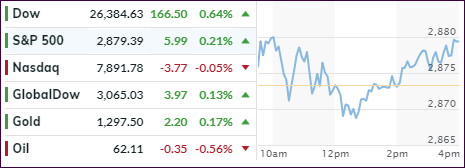
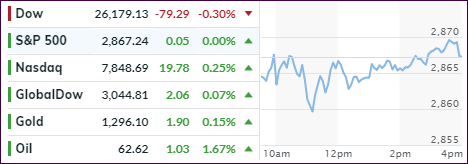
[Chart courtesy of MarketWatch.com]
  1. Moving the markets

Equities finally managed to stage a long-overdue rebound from extremely oversold conditions but still leaving the major indexes far short of returning to bullish territory.

Getting things started were comments by President Trump yesterday attempting to calm the investing crowd after the pre-Christmas disaster. Words like “buy the dip,” “I have great confidence in our companies, they’re the greatest in the world and are doing well,” got an early rebound going, but that was not the main driver behind today’s surge.

The real firepower came from the U.S. Defined Benefit Pensions fund that needed to implement a “giant rebalancing out of bonds into stocks,” assumed to be the largest in history. Wells Fargo estimated about $64 billion in equity purchases were necessary during the last trading days of the quarter and year to accomplish that mission.

Here are some details:

For those who missed our Friday post on the topic, Wells explained where this massive rebalancing comes from: the huge, end-of-quarter buy order was precipitated by the jarring divergence between equity and bond performances both in Q4 and the month of December. The stocks in the bank’s pro forma pension asset blend had suffered a 14% loss this quarter, including about an 8.5% drop in December. Contrast this with a roughly +1.6% quarterly total return for the domestic aggregate bond index.

As a result of this need for massive quarter-end rebalancing, corporate pensions would need to boost their equity portfolios by as much as $64 billion into year-end.

With a lot of CTAs (Commodity Trading Advisors) and hedge funds having turned short, this was not a good day for them, as the short squeeze turned out to be the biggest since the Brexit. Ouch!

My view has always been that a bear market will allow for short positions, but only once it has been established. Right now, we are in the beginning stages, where increased volatility in both directions can wreak havoc with even the most thought out plans.

That’s why portfolio safety is rule number one. Being out of equities and in money market is the safest and most sensible place to be at this time.

Read More

A Historical Day: The Longest Manipulated Bull Market Is Over

Ulli Market Commentary Contact

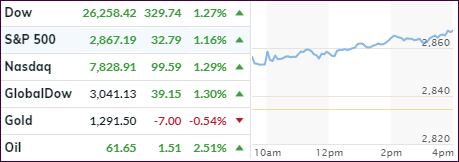
[Chart courtesy of MarketWatch.com]
  1. Moving the markets

Even a Holiday shortened session wasn’t enough to give the bullish crowd some hope, as the major indexes plunged again with the S&P 500 finally dropping into bear market territory, a level defined as a 20% drop from recent highs.

Starting this mess was Treasury Secretary Mnuchin who, while on vacation, decided to call the heads of the six largest US banks on Sunday to assure them that there was plenty of liquidity in the system. He then proceeded set up a meeting with Plunge Protection Team (PPT) – on Christmas eve! Unfortunately, he also decided to tweet about it, which was akin to someone yelling “FIRE” in a crowed theater.

The fallout was immediate with the markets retreating, when a sudden rebound (PPT?) pushed the Nasdaq back above the unchanged line, before heavy selling set in, which sent the Dow down some 650 points. Good thing we had an abbreviated session, or the consequences could have been a lot worse.

As I pointed out before, this is now the worst December for the S&P 500 since the Great Depression (1931), and there are still 4 trading days left, which might create some problems for those who have not moved to the sidelines yet, as exit doors are getting increasingly crowded. You could consider this session to be a bloodbath, since volume was just about double of the recent average.

ZH noted that even the traditional safe-haven stocks were pummeled with the S&P 500 utilities index dropping as much as 4.6% intra-day, the most since August 2011, because of the continued threat of higher interest rates. That’s why cash on the sidelines never looked so good.

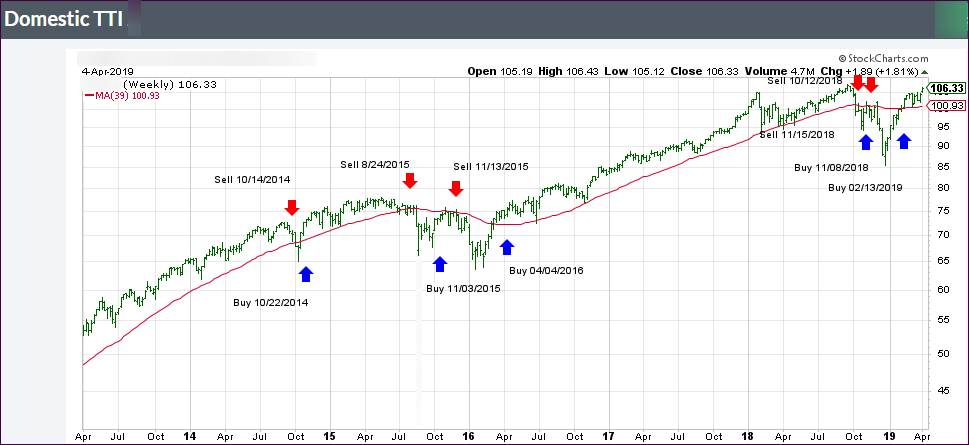
No one saw this market disaster coming except for our Domestic Trend Tracking Index (TTI), which generated a “Sell” effective 11/15/18. Since that moment in time, the S&P 500 has now lost -14.16% allowing all clients in my advisor practice to sidestep this financial tragedy, while the Buy-and-Hold crowd seems to end up with the short end of the stick again—for the third time this century.

Although I expect some sort of rebound make its presence felt, it will most likely only be a bounce in an ongoing bear market, which I believe has a long way to go.

I wish you a Merry Christmas!

Read More

ETFs On The Cutline – Updated Through 12/21/2018

Ulli ETFs on the Cutline Contact

Below, please find the latest High-Volume ETF Cutline report, which shows how far above or below their respective long-term trend lines (39-week SMA) my currently tracked ETFs are positioned.

This report covers the HV ETF Master List from Thursday’s StatSheet and includes 322 High Volume ETFs, defined as those with an average daily volume of more than $5 million, of which currently 43 (last week 48) are hovering in bullish territory. The yellow line separates those ETFs that are positioned above their trend line (%M/A) from those that have dropped below it.

Take a look:

The HV ETF Master Cutline Report

In case you are not familiar with some of the terminology used in the reports, please read the Glossary of Terms.

If you missed the original post about the Cutline approach, you can read it here.

ETF Tracker Newsletter For December 21, 2018

Ulli ETF Tracker Contact

ETF Tracker StatSheet

https://theetfbully.com/2018/12/weekly-statsheet-for-the-etf-tracker-newsletter-updated-through-12-20-2018/

MARKETS END A MISERABLE WEEK IN A SEA OF RED

[Chart courtesy of MarketWatch.com]
  1. Moving the markets

Here we go again. An early bounce ran into resistance, as bears upheld their dominance and sent the major indexes into a tailspin with the Dow registering another 400-point loss leaving some traders stunned and speechless. That’s no surprise to me, as most participants haven’t been around long enough to know what causes bear markets, how to identify one and how to stay out of harms way.

It was an ugly week with the Dow and S&P 500 down around -7% (yes, that is for the week!) while the Nasdaq (and SmallCaps) tumbled a more dramatic -8.4%. The tech index has now officially slipped into a bear market, which is defined as a drop of at least 20% from its recent high.

ZH adds that this was the worst week for the Dow and Nasdaq since October 2008 and the worst week for the S&P 500 since August 2011. All three indexes have now closed lower the last 5 out of 6 weeks:

From the 52-week highs:

  1. Dow -16%
  2. S&P -17%
  3. Nasdaq 100 -21% – BEAR
  4. Nasdaq Composite -22% – BEAR
  5. Trannies -23.6% – BEAR
  6. Small Caps -26% – BEAR

The culprits taking the starch out of the early rebound were the same with fears of a partial government shutdown, slowing global growth and rising interest rates taking top billing.

Then Fed governor Williams came out to try to jawbone the markets higher, which worked for a while until his comment “the balance sheet runoff is on auto-pilot,” reversed the modest rally.

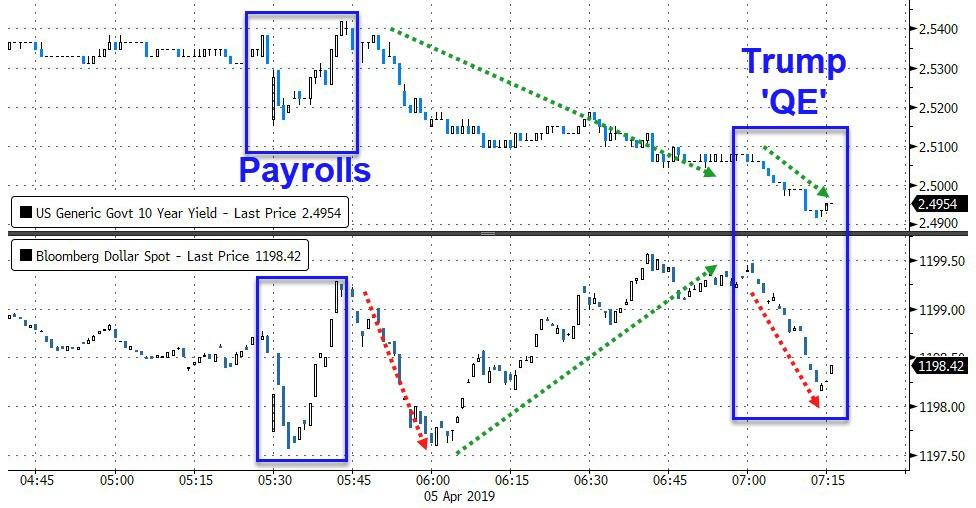
Not to be outdone, Trump’s trade advisor Peter Navarro chimed in that a “trade pact with China within 90 days may prove to be difficult.” That appeared to be the final nail in the bullish coffin and down we went. This graph depicts precisely the market reaction to Williams and Navarro.

At this time it seems that the Smart Money indicator is spot on meaning things could get really ugly from here. Sure, we’re bound to see a rebound with legs that holds short-term, but the major trend remains bearish until my TTIs prove otherwise.

As of today, the S&P 500 has tumbled -11.84% since the effective date of our Domestic “Sell” signal on 11/15/2018.

Read More

Weekly StatSheet For The ETF Tracker Newsletter – Updated Through 12/20/2018

Ulli ETF StatSheet Contact

ETF Data updated through Thursday, December 20, 2018

Methodology/Use of this StatSheet:

  1. From the universe of over 1,800 ETFs, I have selected only those with a trading volume of over $5 million per day (HV ETFs), so that liquidity and a small bid/ask spread are assured.
  2. Trend Tracking Indexes (TTIs)

Buy or Sell decisions for Domestic and International ETFs (section 1 and 2), are made based on the respective TTI and its position either above or below its long-term M/A (Moving Average). A crossing of the trend line from below accompanied by some staying power above constitutes a “Buy” signal. Conversely, a clear break below the line constitutes a “Sell” signal. Additionally, I use a 7.5% trailing stop loss on all positions in these categories to control downside risk.

  1. All other investment arenas do not have a TTI and should be traded based on the position of the individual ETF relative to its own respective trend line (%M/A). That’s why those signals are referred to as a “Selective Buy.” In other words, if an ETF crosses its own trendline to the upside, a “Buy” signal is generated. Since these areas tend to be more volatile, I recommend a wider trailing sell stop of 7.5% -10% depending on your risk tolerance.

If you are unfamiliar with some of the terminology, please see Glossary of Terms and new subscriber information in section 9.


  1. DOMESTIC EQUITY ETFs: SELL — since 11/15/2018

Click on chart to enlarge

Our main directional indicator, the Domestic Trend Tracking Index (TTI-green line in the above chart) is now positioned below its long-term trend line (red) by -11.08% after having generated a new Domestic “Sell” signal effective 11/15/18 as posted.

Read More