Spooked By The Banks

Ulli Market Commentary Contact

[Chart courtesy of MarketWatch.com]

  1. Moving the markets

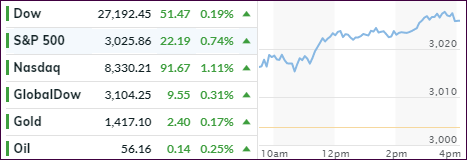
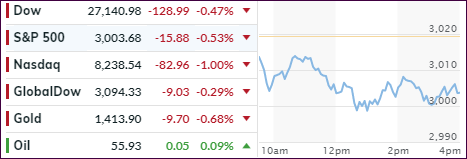
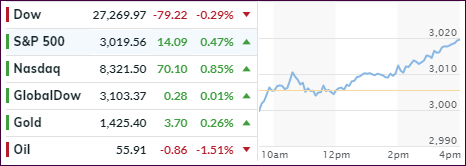
An early drop below the unchanged lines had the major indexes on the defensive right after the opening bell. After Friday’s decent start to the earning season, Goldman Sachs and Citi Group underwhelmed with their report cards.

With these two institutions being banking powerhouses, investors were disappointed as those two were expected to provide some clarity and guidance not only for the state of the banking sector but also for the economy in general.

That did not happen as both banks reported sharp earnings declines compared to Q1 last year, but at least they managed to exceed analysts’ low profit expectations. Now the experts are afraid that Q1 2019 earnings for the S&P 500 complex may suffer “the first YoY decline in nearly three years,” due to economic headwinds appearing to accelerate.

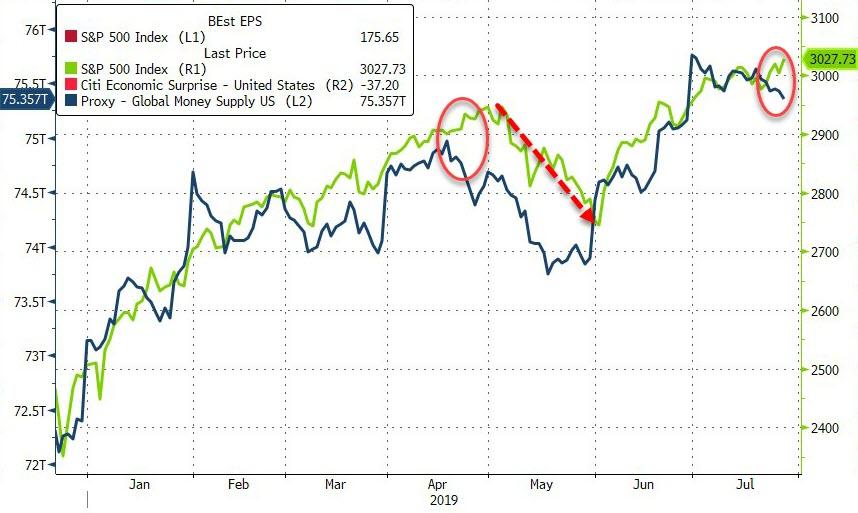
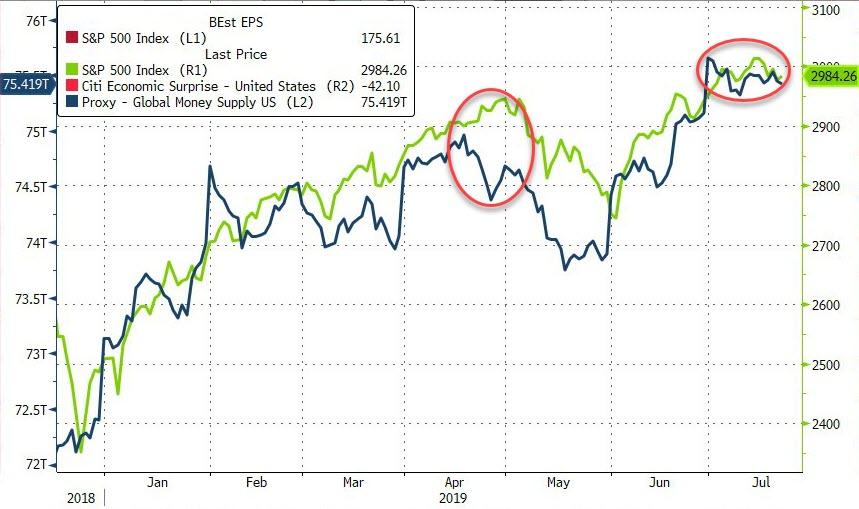
In the end, this turned out to be a “nothing” session with nothing gained and not much lost. Looking at the big picture, we can see that it’s not the global economy that is levitating the markets, it’s the ever-accelerating money supply, as this chart clearly demonstrates.

There is a good chance that this trend will continue, thereby throwing a much-needed assist to make sure that major indexes will take out their all-time highs made in 2018.

Read More

ETFs On The Cutline – Updated Through 04/12/2019

Ulli ETFs on the Cutline Contact

Below, please find the latest High-Volume ETF Cutline report, which shows how far above or below their respective long-term trend lines (39-week SMA) my currently tracked ETFs are positioned.

This report covers the HV ETF Master List from Thursday’s StatSheet and includes 322 High Volume ETFs, defined as those with an average daily volume of more than $5 million, of which currently 276 (last week 280) are hovering in bullish territory. The yellow line separates those ETFs that are positioned above their trend line (%M/A) from those that have dropped below it.

Take a look:

The HV ETF Master Cutline Report

In case you are not familiar with some of the terminology used in the reports, please read the Glossary of Terms.

If you missed the original post about the Cutline approach, you can read it here.

ETF Tracker Newsletter For April 12, 2019

Ulli ETF Tracker Contact

ETF Tracker StatSheet

https://theetfbully.com/2019/04/weekly-statsheet-for-the-etf-tracker-newsletter-updated-through-04-11-2019/

Bank Earnigns Stoke Markets

[Chart courtesy of MarketWatch.com]
  1. Moving the markets

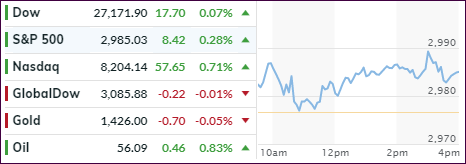
Yesterday’s uneasiness about the upcoming earnings season vanished this morning, as healthy results by JP Morgan boosted confidence in the economy in general, at least that’s how the computer algos reacted.

On the other side, Wells Fargo’s results were in line, but the mortgage side of their business continued to suffer with those numbers being the worst since the Financial Crisis.

Keep in mind, however, that it’s still too early to make any judgment as to how this earnings season will unfold. Expectations have been lowered, so it’s much easier for companies to beat them, which does not mean that the economy is on the mend.

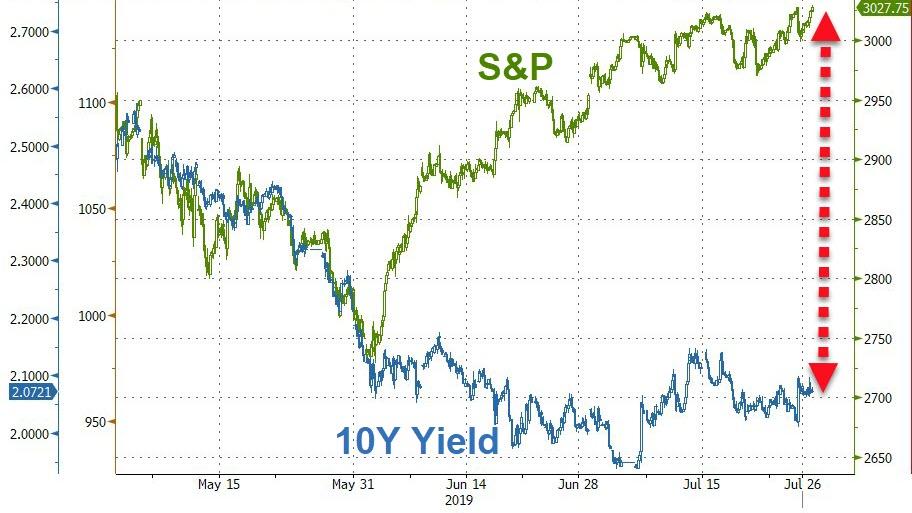
Remember, markets do not represent the economy, as this chart clearly demonstrates.

Disney’s announcement about a new streaming service helped the Dow, and the markets overall, but sent competitor Netflix south. Interestingly, heading further north were bond yields with the 10-year closing up 6 basis points to end the session at 2.56%. They have now reached the level they had before the last dovish FOMC meeting, which was the main contributor to the recent rally.

Be that as it may, the major indexes rallied across the board with the S&P 500 managing to regain its 2,900 level. Any more decent earnings news and odds are increasing that the index will take out its 2018 highs (2,941).

Read More

Weekly StatSheet For The ETF Tracker Newsletter – Updated Through 04/11/2019

Ulli ETF StatSheet Contact

ETF Data updated through Thursday, April 11, 2019

Methodology/Use of this StatSheet:

  1. From the universe of over 1,800 ETFs, I have selected only those with a trading volume of over $5 million per day (HV ETFs), so that liquidity and a small bid/ask spread are assured.
  2. Trend Tracking Indexes (TTIs)

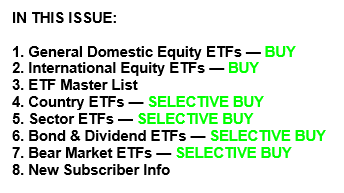
Buy or Sell decisions for Domestic and International ETFs (section 1 and 2), are made based on the respective TTI and its position either above or below its long-term M/A (Moving Average). A crossing of the trend line from below accompanied by some staying power above constitutes a “Buy” signal. Conversely, a clear break below the line constitutes a “Sell” signal. Additionally, I use a 7.5% trailing stop loss on all positions in these categories to control downside risk.

  1. All other investment arenas do not have a TTI and should be traded based on the position of the individual ETF relative to its own respective trend line (%M/A). That’s why those signals are referred to as a “Selective Buy.” In other words, if an ETF crosses its own trendline to the upside, a “Buy” signal is generated. Since these areas tend to be more volatile, I recommend a wider trailing sell stop of 7.5% -10% depending on your risk tolerance.

If you are unfamiliar with some of the terminology, please see Glossary of Terms and new subscriber information in section 9.


  1. DOMESTIC EQUITY ETFs: BUY — since 02/13/2019

Click on chart to enlarge

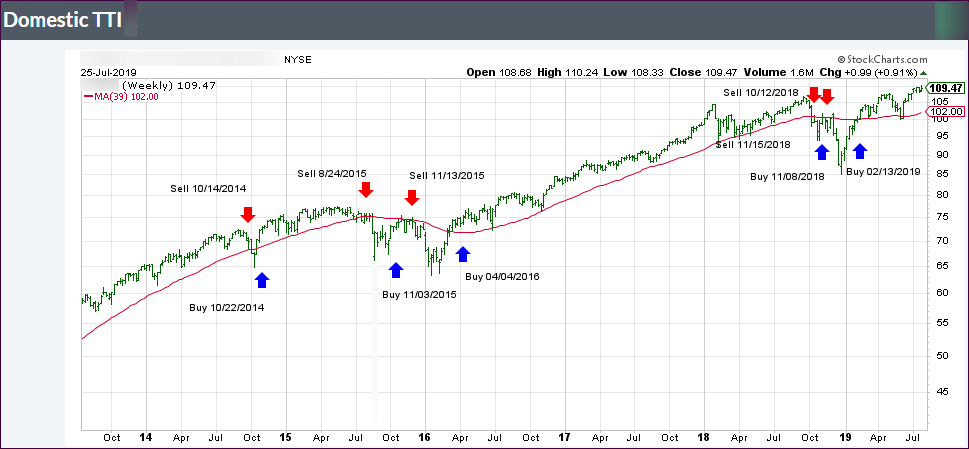
Our main directional indicator, the Domestic Trend Tracking Index (TTI-green line in the above chart) is now positioned above its long-term trend line (red) by +5.90% after having generated a new Domestic “Buy” signal effective 2/13/19 as posted.

Read More

S&P 500 Flirts With 2,900 Level

Ulli Market Commentary Contact

[Chart courtesy of MarketWatch.com]
  1. Moving the markets

The S&P 500 came within a few points of touching its 2,900 level, but lack of follow through momentum pulled the major indexes off the highs and below the unchanged lines before a rebound limited the damage. The retreat occurred as uneasiness prevailed amongst traders in view of the upcoming earnings season, which kicks off unofficially on Friday.

Analysts have projected S&P 500 earnings to drop -4.2% YoY leaving the big boys on Wall Street a little wary before reviewing not only the latest results but also managements’ outlook for the next 12 months. Until those facts become known, we may see more of the directionless meandering of the indexes, as we witnessed today.

Another fly in the ointment could be the signs of lackluster growth throughout world economies, which may deflate the bullish craving despite the indexes hovering near all-time highs. I think, the markets need a solid driver to push through overhead resistance levels, and meager earnings may simply not be enough.

On the other hand, focused jawboning about the latest and greatest U.S.-China trade talks, along with the Fed uttering more dovish comments might be enough to take out the old highs.

Seems like economic adviser Kudlow took the lead by proclaiming that “I don’t see rates rising again in my lifetime,” which to me indicates that a recession is built in the cake and will have to be dealt with sooner or later. After all, rising interest rates are a sign of a strong economy and not a weak one, while low rates indicate the reverse.

Speaking of reverse, today interest rates rose with the 10-year bond yield having now recaptured the 2.50% level, which helped the dollar index to break its 3-day losing streak.

Read More

Drifting Higher

Ulli Market Commentary Contact

[Chart courtesy of MarketWatch.com]
  1. Moving the markets

Investors were all over the released March Fed minutes trying to gain some insight as to why the Fed decided to give up on normalizing their monetary policy. Recall that last month the Fed abandoned plans for further rate increases in 2019 due to uncertainty over the lack of growth not just in the U.S. but global economies as well.

Other worries listed were the U.K.’s struggle to leave the EU, ongoing trade tensions between the U.S. and China and allegedly unexpected tame inflation data. In the end, there appeared to be too many unknowns causing the committee to leave interest rates unchanged.

But today, we learned that consumer prices rose at the fastest pace in 14 months in March but, with the following line always used as the saving grace, gains were small when excluding volatile food and energy prices.

The European Central Bank (ECB) seemed to use the same playbook, as they announced no changes to monetary policy and confirmed its intention of leaving rates at current levels till the end of 2019.

The markets took it all in stride with the major indexes remaining mostly above their unchanged lines with the S&P 500 and Nasdaq seeing more buying at the end of the session than the Dow, which barely slipped into the green.

Helping the last hour push was a short squeeze, the biggest since February 27th, while interest rates fell with the 10-year yield now back below the 2.5% level causing the U.S. Dollar index to drop to its lows of the session.

Our Trend Tracking Indexes (TTIs) benefited from the last hour ramp keeping our “Buy” signals intact.

Read More