- Moving the markets
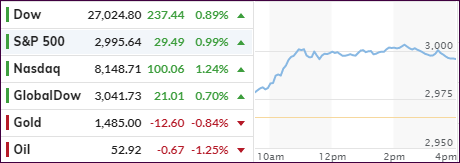
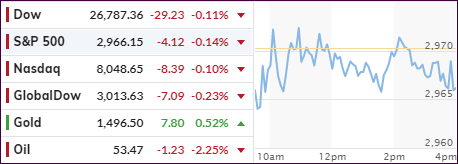
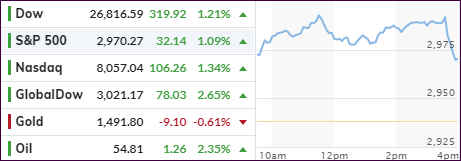
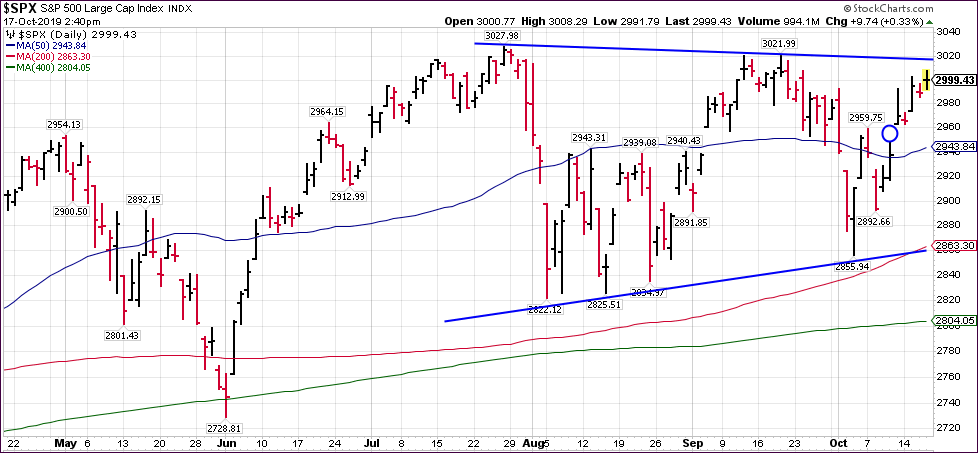
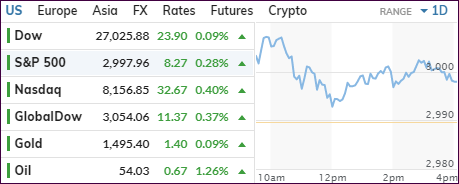
The major indexes edged higher early on, as the S&P500 fought hard to reclaim its 3,000-milestone marker. The index fluctuated all day slightly around that level but ended up slightly below it.
Helping the bullish enthusiasm were news of a potential Brexit deal, which turned out to be more of a rumor than a fact. Keep in mind that any new agreement still would need to be ratified by the British PM and the U.K. Parliament.
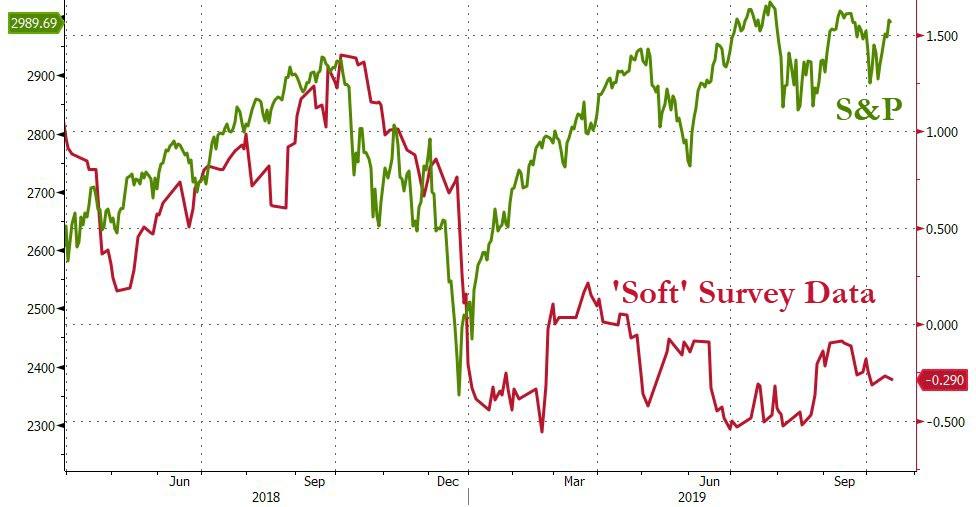
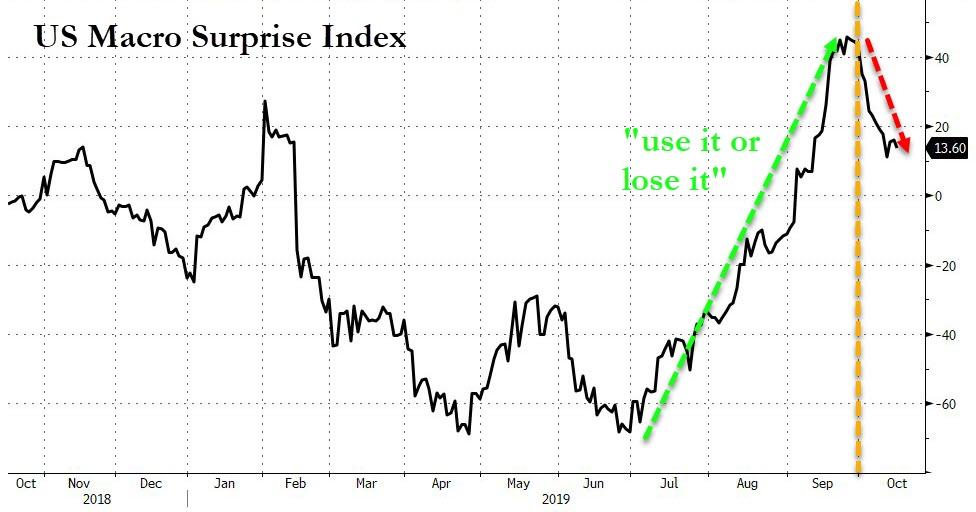
Economically speaking, the news provided a continued mixed picture, as Soft Survey data have completely decoupled from stock market levels, while the US Macro Surprise Index did an about face, causing ZH to quip “use it or lose it.”
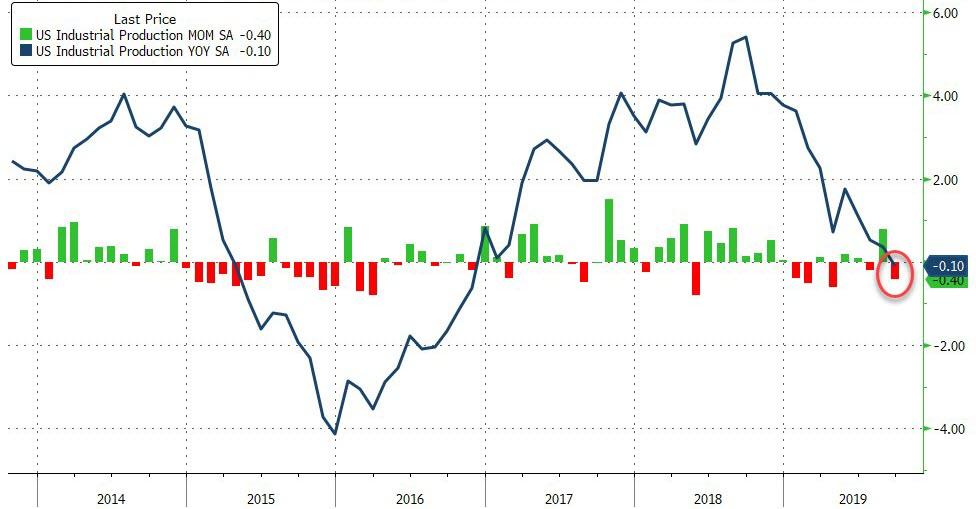
Industrial Production hit the skids and, on a YoY basis, shrunk for the first time since Trump’s election in November of 2016.
As I pointed out before, the US is not an island and, unless there is progress in global trade disputes, domestic econ data will hit the skids even more, which eventually will affect the direction of equities. Same trade disputes may impinge on earnings as well, just as last month, when bellwether FedEx cut its profit outlook in part due to trade and economic circumstances.
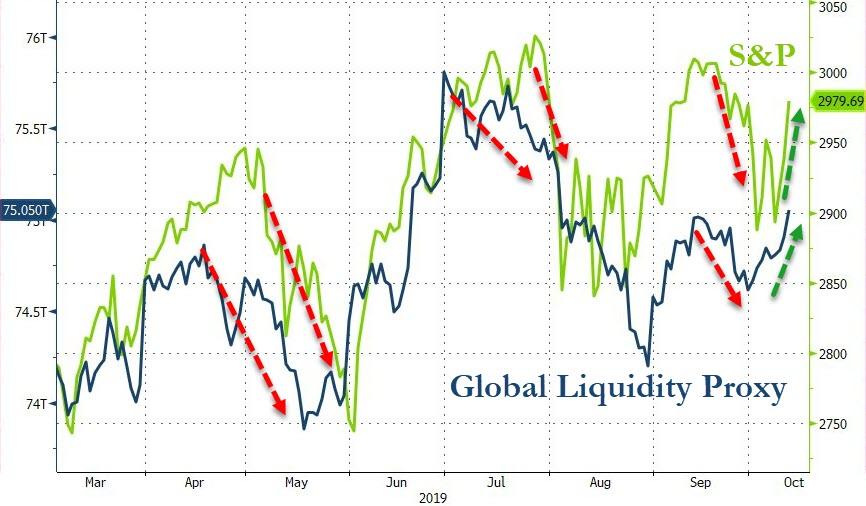
Given that, it’s almost a certainty that not only the Fed, but also other Central Banks (CBs) as well, will endorse more rate cuts in coming months to combat economic weakness. And that is exactly the fly in the ointment: Rates are already so low that CBs don’t have much room to act and put a bottom under equities. That means, eventually, bad economic news will be bad news for stocks.
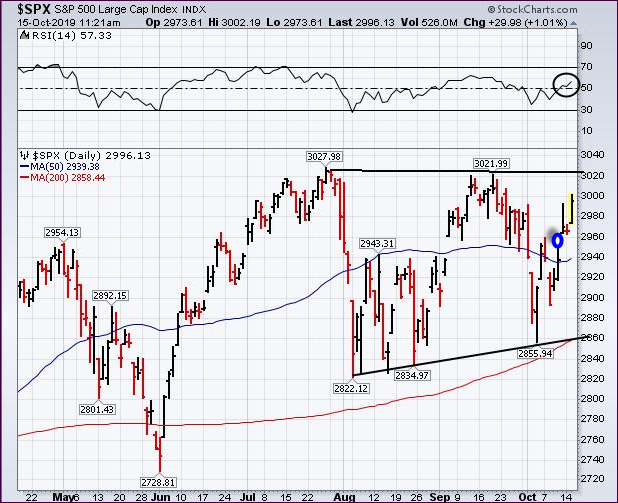
From a technical point of view, a breakout above the September highs and then above the July all-time highs could, against all fundamental odds, bring a resumption of the bull market back into play. These days, anything is possible, meaning that we need to be prepared to deal with the unexpected.
Read More