Continued Trade Optimism Stimulates Markets

Ulli Market Commentary Contact

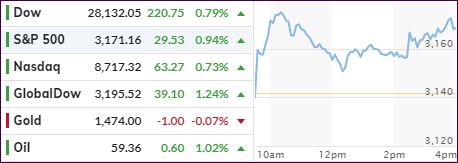
[Chart courtesy of MarketWatch.com]
  1. Moving the markets

The markets continued their bullish ways into a new week with the supporting actor being the upbeat mood caused by last week’s preliminary trade deal between the US and China.

Despite of all the hysteria, many questions remain over the details of the much-hyped “phase one” accord. The Chinese were pleased, because it included a partial rollback of some tariffs and the ditching of further duties on imports.

If we can believe US trade representative Lighthizer, then the phase one deal is “totally done” and goes beyond agriculture and addresses intellectual property issues, financial services and their respective enforcement provisions.

Still, come contentious issues will need to be resolved, but that would be done in the “phase two” talks, which still must be scheduled. The “phase one” deal is supposed to be signed in January.  

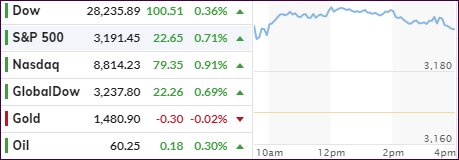
Bond yields continued their roller coaster ride by jumping 5.3 basis points to end the day at 1.88%, but equities were in a world of their own but, while coming off their early highs, still managed to score solid gains.

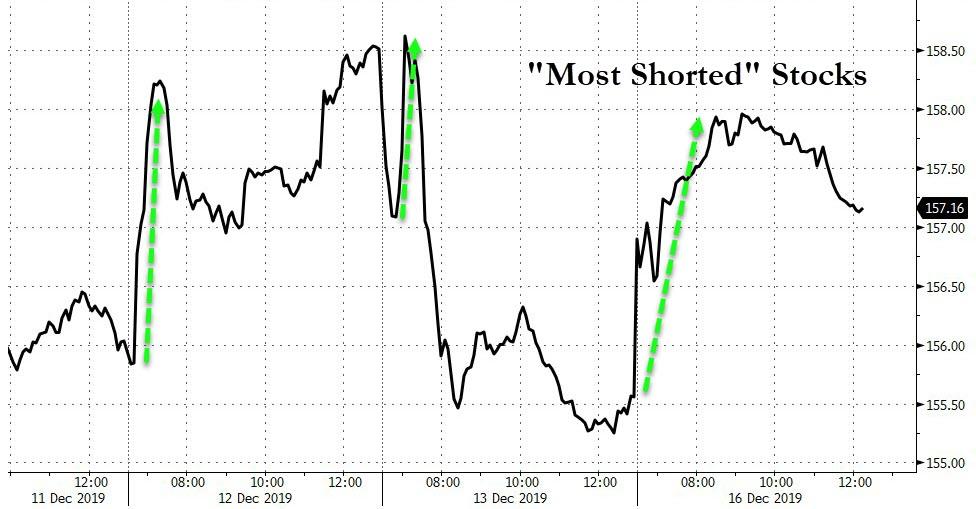
Supporting the bullish trend was another giant short squeeze, which crushed any remaining bearish sentiment that may have been waiting in the wings. Short squeezes have been a major support tool designed to keep the upbeat mood alive.

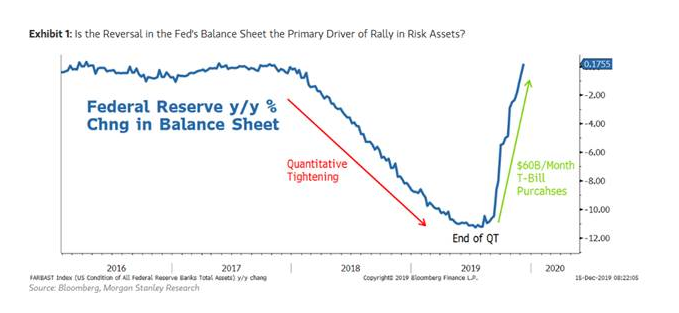
But in the end, the powerbroker to drive this market has been central bank liquidity, as this chart demonstrates. Without it, we would be celebrating the upcoming holiday with considerably lower index levels.

Read More
ETFs On The Cutline – Updated Through 12/13/2019

Ulli ETFs on the Cutline Contact

Below, please find the latest High-Volume ETF Cutline report, which shows how far above or below their respective long-term trend lines (39-week SMA) my currently tracked ETFs are positioned.

This report covers the HV ETF Master List from Thursday’s StatSheet and includes 322 High Volume ETFs, defined as those with an average daily volume of more than $5 million, of which currently 284 (last week 277) are hovering in bullish territory. The yellow line separates those ETFs that are positioned above their trend line (%M/A) from those that have dropped below it.

Take a look:                                                                   

The HV ETF Master Cutline Report

In case you are not familiar with some of the terminology used in the reports, please read the Glossary of Terms. If you missed the original post about the Cutline approach, you can read it here.      

ETF Tracker Newsletter For December 13, 2019

Ulli ETF Tracker Contact

ETF Tracker StatSheet          

You can view the latest version here.

SEE-SAWING BUT EKING OUT SOME TINY GAINS

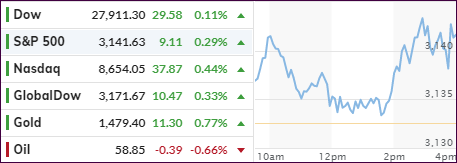
[Chart courtesy of MarketWatch.com]
  1. Moving the markets

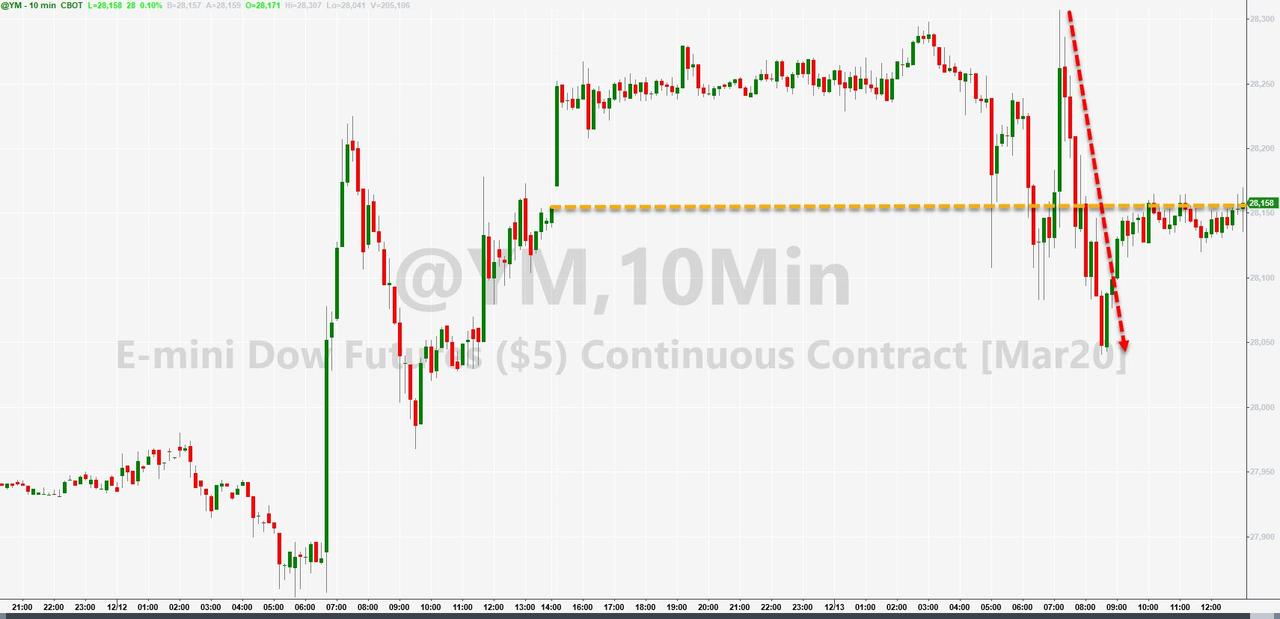
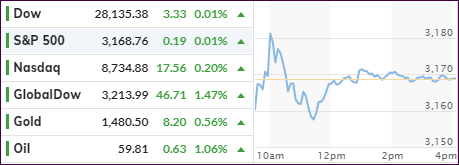
An early spike hit a brick wall with the S&P 500 backing off its highs and fading below the unchanged line. That came as no surprise, as the US-China trade deal saga affected market direction due to a variety of headlines spreading some confusion.

We learned that the warring parties had reached an agreement on text on a phase 1 deal and will now move towards signing as quickly as possible. Trump tweeted these details:

  • “We have agreed to a very large Phase One Deal with China.
  • They have agreed to many structural changes and massive purchases of Agricultural Product, Energy, and Manufactured Goods, plus much more.
  • The 25% Tariffs will remain as is, with 7 1/2% put on much of the remainder.
  • The Penalty Tariffs set for December 15th will not be charged because of the fact that we made the deal.
  • We will begin negotiations on the Phase Two Deal immediately, rather than waiting until after the 2020 Election. This is an amazing deal for all. Thank you!”

The fly in the ointment is what the US will get in exchange. One analyst pointed out that this remains unclear—China has promised to buy “more” agri products, but without providing actual details, while saying it plans to import US wheat, rice, and corn within quotas.

The market took it as a mixed bag and, in the absence of more substance, simply sold off. After all, this constant “crying wolf” will get ignored eventually—and by mid-day it did.

However, dip buyers stepped in and a slow recovery brought the indexes back to their respective unchanged lines where they vacillated into the close.

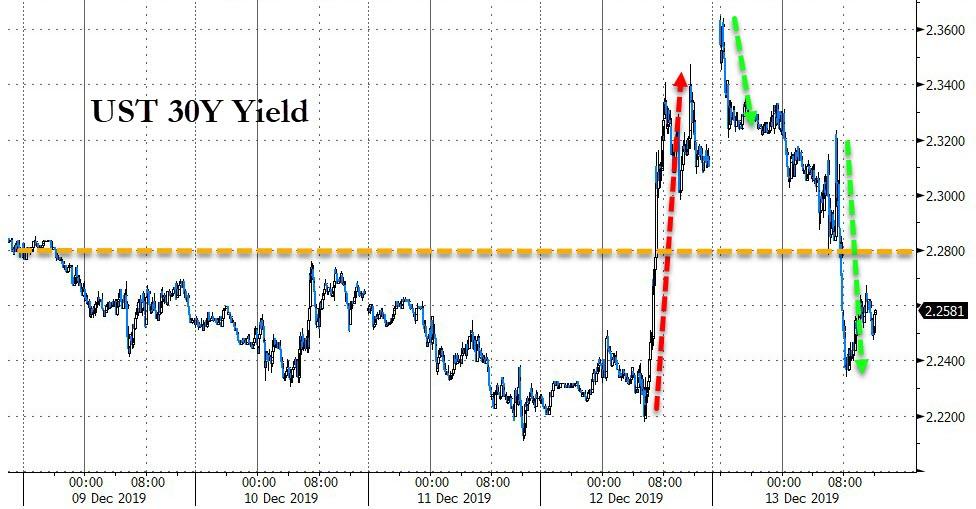
Not much was gained today, but for the week the S&P 500 added +0.7%. In bond land, Thursday’s crazy spike in yields, reversed and erased almost all losses sustained yesterday.

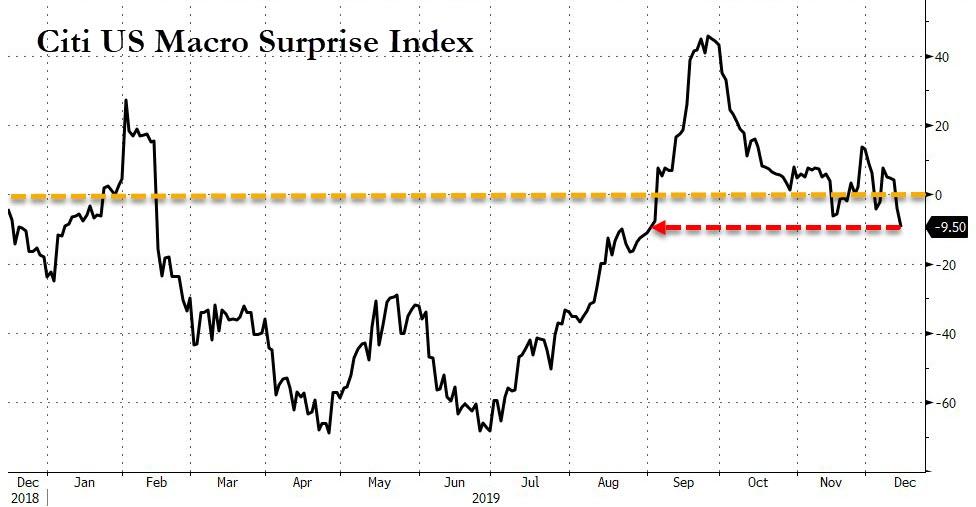
In the end, it was all about the Fed and the alleged trade deal with China. Economic data points did not weigh on equities, despite Bloomberg’s US Macro Surprise Index dropping to a level last seen 3 months ago.

Read More

Weekly StatSheet For The ETF Tracker Newsletter – Updated Through 12/12/2019

Ulli ETF StatSheet Contact

ETF Data updated through Thursday, December 12, 2019

Methodology/Use of this StatSheet:

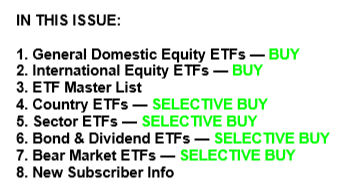
1. From the universe of over 1,800 ETFs, I have selected only those with a trading volume of over $5 million per day (HV ETFs), so that liquidity and a small bid/ask spread are assured.

2. Trend Tracking Indexes (TTIs)

Buy or Sell decisions for Domestic and International ETFs (section 1 and 2), are made based on the respective TTI and its position either above or below its long-term M/A (Moving Average). A crossing of the trend line from below accompanied by some staying power above constitutes a “Buy” signal. Conversely, a clear break below the line constitutes a “Sell” signal. Additionally, I use a 7.5% trailing stop loss on all positions in these categories to control downside risk.

3. All other investment arenas do not have a TTI and should be traded based on  the position of the individual ETF relative to its own respective trend line (%M/A). That’s why those signals are referred to as a “Selective Buy.” In other words, if an ETF crosses its own trendline to the upside, a “Buy” signal is generated. Since these areas tend to be more volatile, I recommend a wider trailing sell stop of 7.5% -10% depending on your risk tolerance.

If you are unfamiliar with some of the terminology, please see Glossary of Terms and new subscriber information in section 9.     

1. DOMESTIC EQUITY ETFs: BUY — since 02/13/2019

Click on chart to enlarge

Our main directional indicator, the Domestic Trend Tracking Index (TTI-green line in the above chart) is now positioned above its long-term trend line (red) by +6.98% after having generated a new Domestic “Buy” signal effective 2/13/19 as posted.

Read More

Positive Trade News Propels Equities

Ulli Market Commentary Contact

[Chart courtesy of MarketWatch.com]
  1. Moving the markets

It’s amazing what little it takes to send the computer algos on a bullish run and in the process pushing the major indexes into record territory.

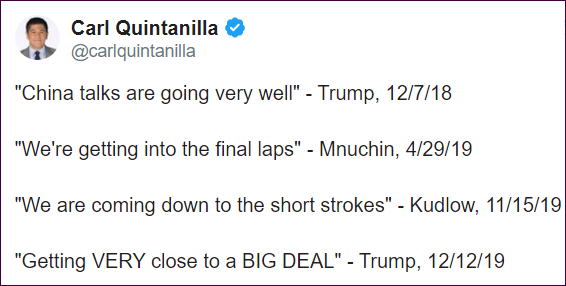
Trump’s announcement that “a big deal” with China is “getting very close” and “they want it, and so do we” were the magic words that ramped equities into uncharted territory. Traders assumed that also meant that the fresh tariffs scheduled to go in effect on Sunday may be avoided.

Then another report confirmed that the US team is indeed offering to cancel the new tariffs and reduce existing levies on Chinese goods by up to 50% on $360 billion worth of imports.

One analyst did not see any meat on that bone for the U.S. and summed it up like this:

So, what does Trump get in return for folding like a cheap chair? Why pledges to buy more agricultural products, pledges which apparently are not even enforceable as they are merely “firm commitments”, in other words taking China for its word.

Of course, we’ve heard all of this before, as one analyst succinctly tweeted. There is no doubt that eventually a deal be struck, but will it be this time or is this simply another attempt to positively influence the markets?

Mid-day, some questionable news from the Chinese took the starch out of upward momentum, but the major indexes recovered from the pullback, as words that “a trade deal in principle” had been reached, seemed to calm things down, and we closed solidly in the green.

Bondholders got punished today, as yields rocketed higher with the 30-year soaring the most in 3 months, while the 10-year rose 9.3 basis points to close at 1.89%.

Looking at the big picture in the markets and considering the worsening repo issues (overnight lending), the possibility of QE4 from the Fed and the ever entertaining and ongoing trade saga with China, it promises to be an interesting last 2 weeks of 2019.

Read More

Fed Pleases Markets—Sentiment Remains Cautious

Ulli Market Commentary Contact

[Chart courtesy of MarketWatch.com]
  1. Moving the markets

As expected, the Fed left interest rates on hold but indicated that they have no plans for any changes through the end of 2020. In fact, the assessment of the economy was more upbeat, which caused market sentiment to remain cautious.

Powell reiterated that the “current stance of monetary policy is appropriate” to sustain an economic expansion, strong labor markets and inflation near its 2% target. In other words, he considers the “policy somewhat accommodative,” which gave markets a boost that assured a green close.

During his speech, Powell was pressed on the issues in the overnight funding markets, to which he admitted that “if its does become appropriate to buy something other than T-Bills, the Fed will do so.

The reference was to the Fed’s current monthly $60 billion in purchase of T-Bills, which had been called “non-QE.” He has now opened the spigot to purchase other assets as well, such as longer-term bonds. At that point the objective is clear in that this will be for sure QE4, or an outright monetization of debt.

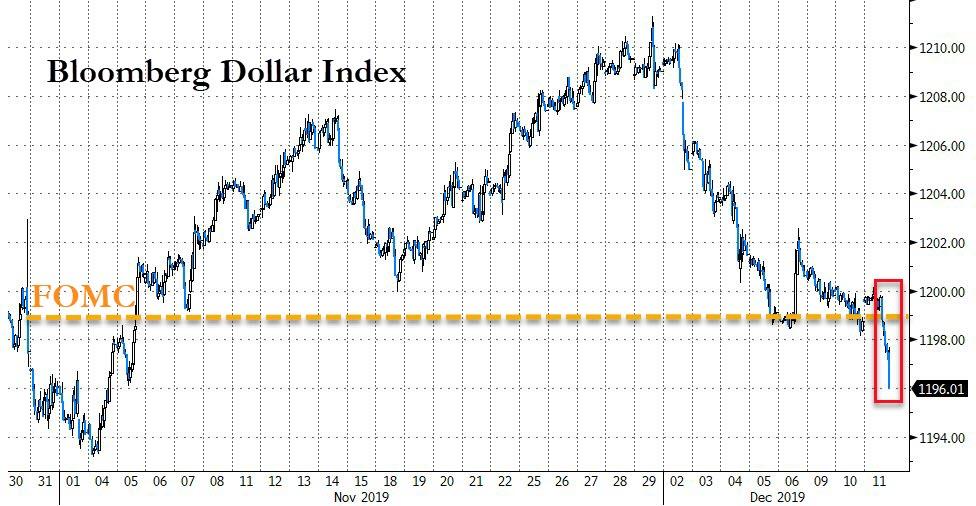
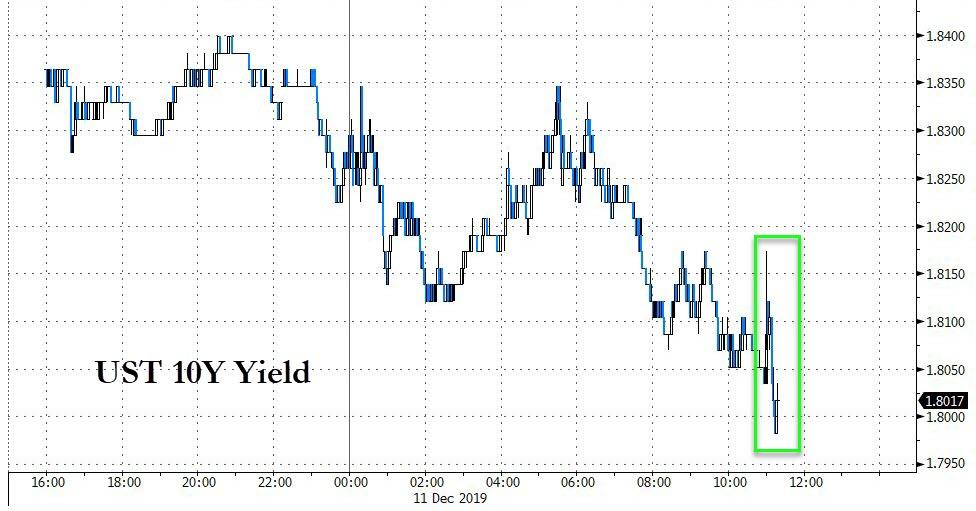
The US dollar sold off sharply and slumped to 5-month lows, while the 10-year bond yield dropped to close a tad below the 1.80% level.  

All eyes are now on the Fed and when it will enact the new QE4, which can easily be caused by accelerating year-end problems in the overnight lending markets, where the underlying financial plumbing issues continue to deteriorate. From my understanding, some of these must be addressed and fixed prior to year-end.

I will be watching closely for any fallout that might occur.

Read More