The Bull Dies Of Morbid Obesity—The Bear Roars—The Crash Fest Continues

Ulli Market Commentary Contact

[Chart courtesy of MarketWatch.com]
  1. Moving the markets

In a few decades, historians will look back at the past 10 years and shake their heads in disbelieve at the insane Fed monetary policies that have kept markets artificially propped up, while “disallowing” any downside moves beyond a certain “acceptable” percentage.

Though many erroneously attribute the current market disaster to the coronavirus, that is incorrect. The virus was merely the pin that pricked the ever-growing bubbles, which would have burst anyway, but we might have pushed the can down the road a little longer.

ZH and others posted these relevant commentaries:

  1. This bull market will go down in history as the one that nobody believed would last this long. A lot of people have been hurt because their retirement money disappeared…. What brought us to where we are in 2020 is too much hope, sky-high valuations.
  2. Did I see it coming this far? No. Throughout the past 11 years, the market has had a lot of dips, and always the Federal Reserve came to the rescue…. Right now, the Fed is not enough, central bank action is not enough. There is a pyramid of uncertainty right now.
  3. Does the Fed really want to have a put every time the market gets nervous? …Coming off all-time highs, does it make sense for The Fed to bail the markets out every single time… creating a trap?
  4. The Fed has created this dependency and there’s an entire generation of money-managers who … have only seen a one-way street… of course they’re nervous.
  5. The question is – do you want to feed that hunger? Keep applying that opioid of cheap and abundant money?
  6. The market is dependent on Fed largesse… and we made it that way…

At this moment, the crash fest goes on with utter abandon causing one analyst to ask:

“Is the market now like an “Oriental Rug Factory” where “Everything Must Go?”

It certainly feels that way now, as many leveraged traders are forced to unwind and sell everything, including safe-haven assets like precious metals, in order to meet margin calls.

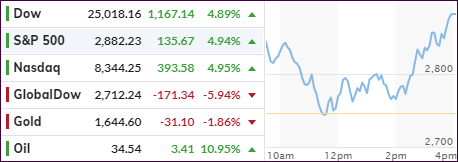
Of course, in bear markets we can witness and sharp rebounds of great magnitude, but that does not mean a new bull market is imminent. Case in point was today, when the Fed fired a bazooka by unleashing a $1.5 trillion Rep bailout, which means up to $3 trillion in cumulative repos by the end of the month.

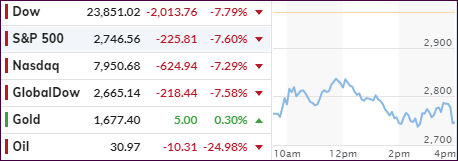
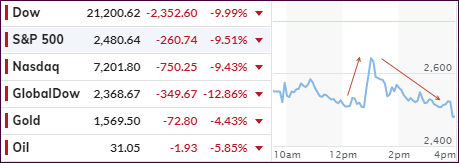
The effect was immediate, as the above chart shows, with the Dow regaining some 1,500 points within minutes. Unfortunately, this was merely a dead cat bounce, and the markets resumed their downward trajectory with utter abandon leaving me pondering as to whether the Fed has finally run out of ammunition.

However, I expect them to drop rates to zero, or below, and directly intervene in the markets, just like the Japanese Central Bank does, by openly buying stocks, bonds and ETFs. We will find out soon.

Yes, the thing that may have been unthinkable 3 weeks ago is upon us. The bear market has arrived with full force and may be hanging around for a while.

Being out of the market and on the sidelines never felt so right.

Read More
Plunging Deeper Into Bear Market Territory

Ulli Market Commentary Contact

[Chart courtesy of MarketWatch.com]
  1. Moving the markets

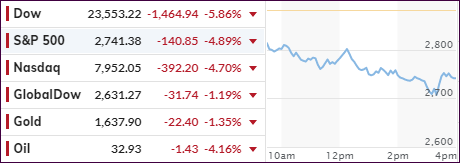
With the benefit of hindsight, yesterday’s hope-based snap-back rally has now assumed the smell of a dead-cat bounce, with the major indexes getting hammered, as the Dow touched the commonly recognized bear market territory, which is a 20% drop from recent highs.

A few headlines combined to eradicate any remaining bullish sentiment:

  • Core CPI jumps the highest in 12 years with services costs soaring
  • The WHO finally declares the coronavirus a Pandemic
  • Mnuchin says that broad economic response will have to wait

Globally, the urge to “do something” accelerated with the Bank of England delivering an emergency 0.25% interest rate cut while pledging more fiscal stimulus. Germany’s Merkel promised to do “whatever is necessary,” while at the same time the ECB President warned of an economic shock like the 2008 financial crisis.

Sure, markets are pricing in an easing of Central Banks, but the question remains how much firepower is really left, after having been in easing mode for the past 10 years.

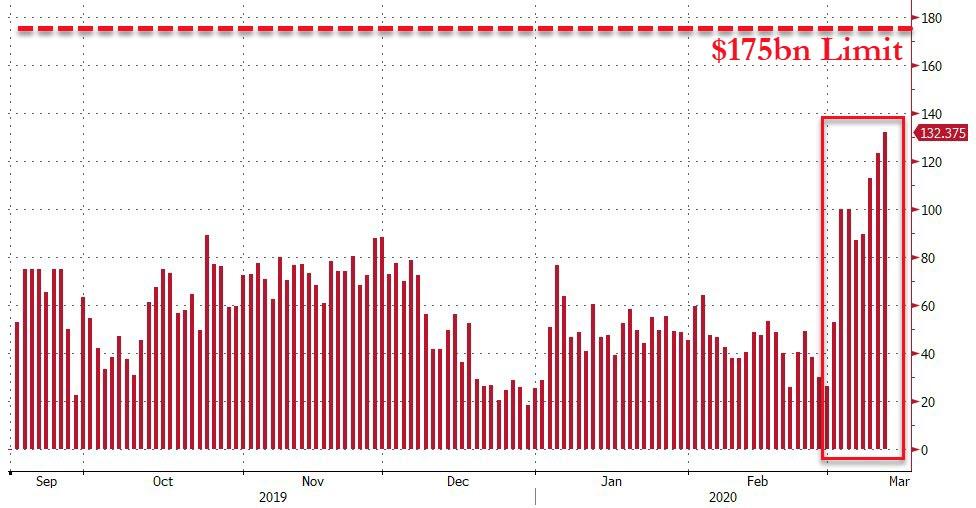
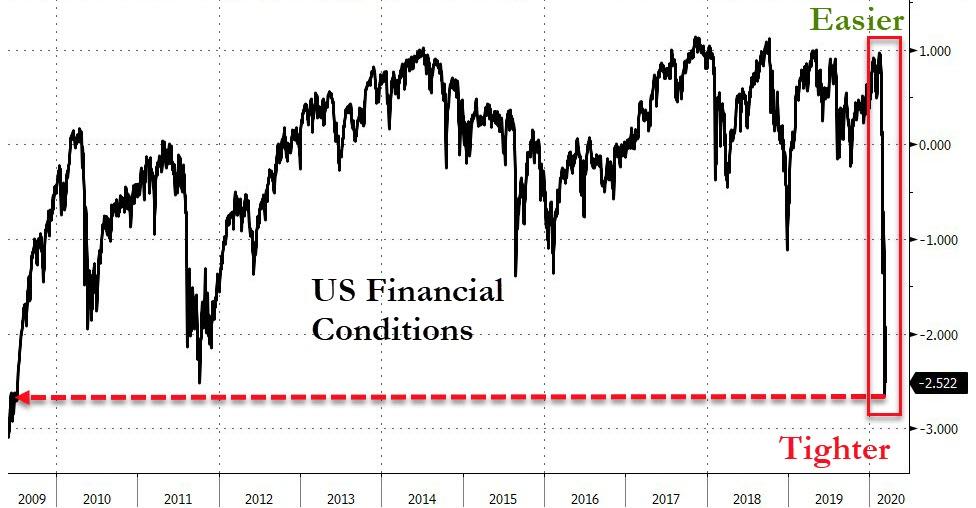
In the meantime, the non-reported crisis in the overnight repo lending market continues unabated with the Fed having to increase the liquidity bailout to a stunning $175 billion per day, and the market still keeps collapsing (hat tip to ZH/Bloomberg for this data). Something is seriously broken, which the Financial Conditions Index clearly shows.

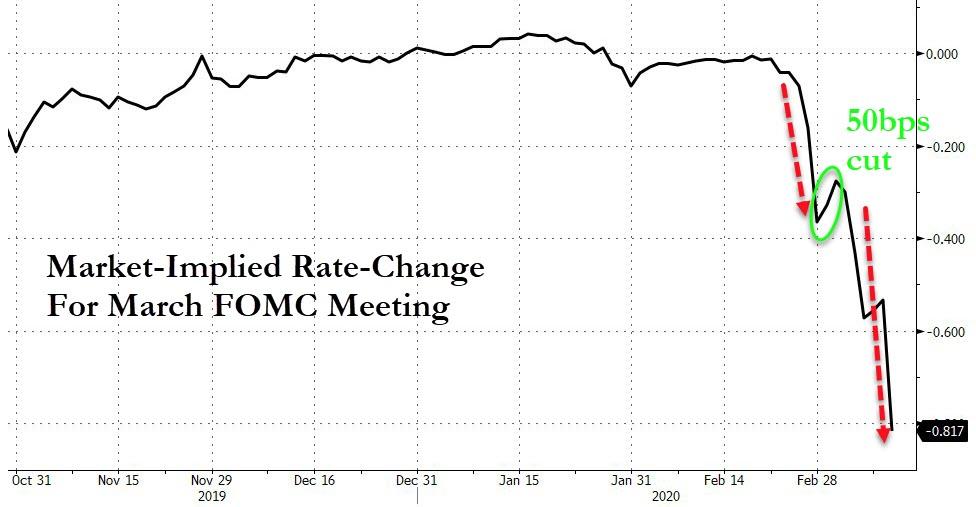
With the Fed summit next week, the implied rate-change for the March FOMC meeting is about 82 basis point, as Bloomberg’s chart demonstrates. That means interest rates are heading to the zero level.

And here’s something I have been commenting on over the years, namely that during times of extreme market stress, such as we are witnessing right now, the bond portion in a portfolio will not be able to “save” the equity portion.

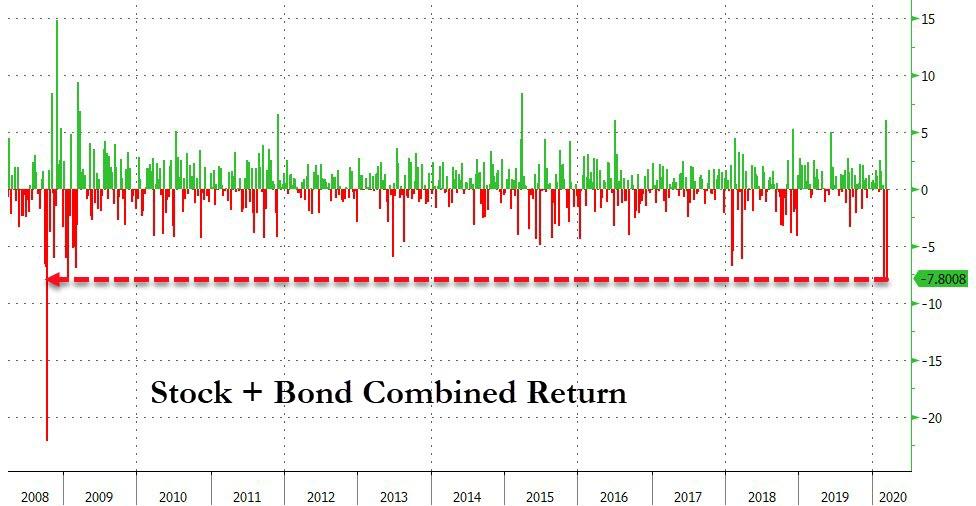
Bloomberg’s chart shows that the weekly stock and bond combined return was the worst in 11 years (-7.80%), or more specifically since Leman went bankrupt. That supports my belief that only 100% cash on the sidelines will prevent serious portfolio damage.

Read More

A Snap-Back Rally Tanks And Then Recovers

Ulli Market Commentary Contact

[Chart courtesy of MarketWatch.com]
  1. Moving the markets

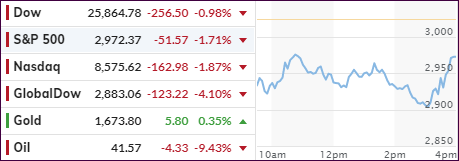
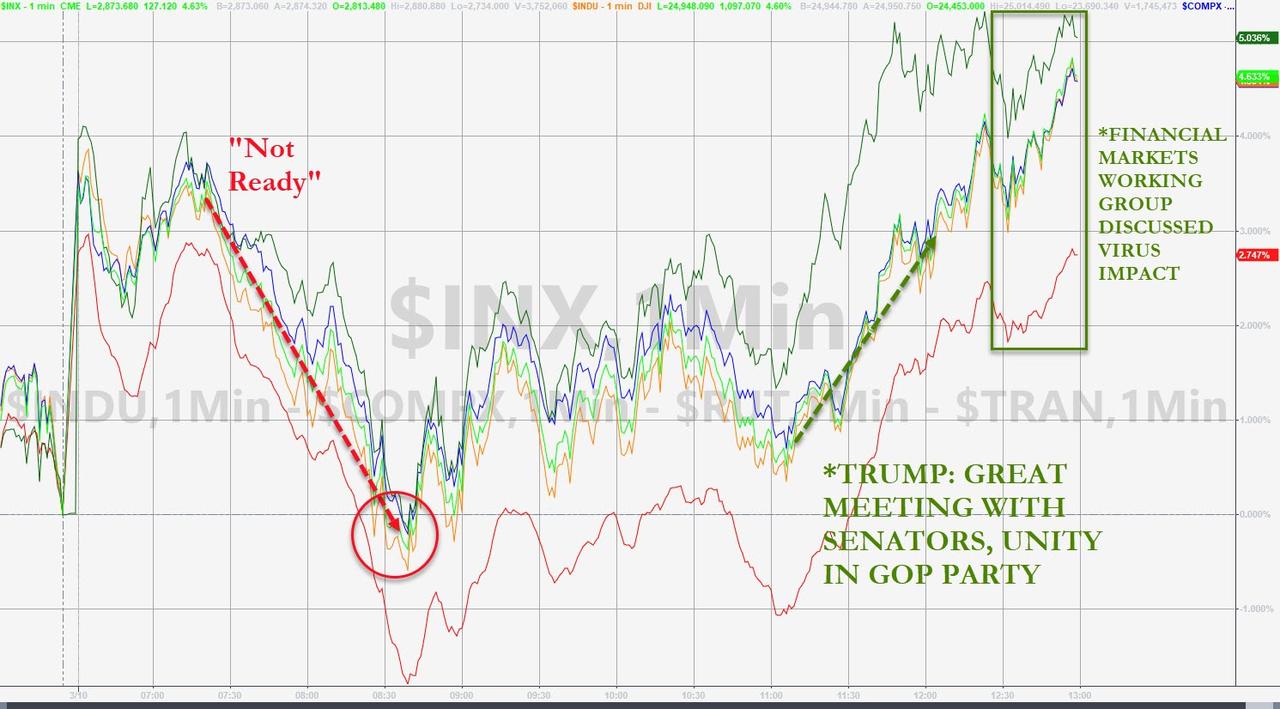
Another wild roller-coaster day in the markets had the Dow up 900 points early on, after which it tanked and dipped into negative territory but then went on to rebound and reached new highs for the day, after a last hour pump, as this chart demonstrates.

Not that any current issues were resolved but hope for a fiscal response to the coronavirus scare lifted overall spirits with an assist by Trump’s proposal for a payroll tax cut.

Historically, today’s rebound is not unusual, as Bespoke Investment Group strategists found that in the 10 previous times since 1952, that the S&P 500 fell 5% or more on a Monday, the index has gained the following day by an average of 4.2%.

While that is noteworthy, it does not imply that the bear market is over, and all is well again. As officialdom scrambles to come up with solutions, Trump’s overture to seek payroll tax relief and other measure to help businesses deal with the virus problem, may be a step in the right direction and had at least a momentary calming effect on the markets.

Right now, to me this is nothing more than a one-day bounce, and we will need a lot more to see this move as sustainable and leading to a new bull run. Technically speaking, the damage lingers with all major indexes remaining below their 200-day averages.

Fundamentally speaking, the Dow has a long way to catch down to earnings, as Bloomberg posted here.

While bond yields managed to surge back to the breakeven point of last Friday’s close, with the 10-year gaining 22 basis points to close at 0.792%, the untold story lies in the overnight lending market, where the financial plumbing continues to break and the funding freeze is getting worse.

As I posted before, this is a very complex subject, so suffice it to say that dealers demanded a record $216 billion in liquidity from the Fed repo—for one day! ZH summed it up like this:

As we pointed out last week, this continuing liquidity crunch is not only bizarre, but increasingly concerning, as it means that not only did the rate cut not unlock additional funding, it actually made the problem worse, and now banks and dealers are telegraphing that they need not only more repo buffer but likely an expansion of QE… which will come soon enough, once the Fed funds hits 0% in a few days and is forced to restart bond buying to prevent the next crash.

If these issues are not resolved, the next disaster is bound to start in the bond market, and if it does, it will certainly affect the equity markets in a big way to the downside.

This is not the time to be a hero by engaging in the fine art of bottom fishing.  

Read More

Panic Selling Strikes Wall Street; The Bloodbath Continues

Ulli Market Commentary Contact

[Chart courtesy of MarketWatch.com]
  1. Moving the markets

Watching the oil and market destructions in the future’s last night, I had a pretty good idea as to what was in store for today. The Dow plunged 2,000 points, while other indexes were down over 6% with the S&P 500 locked limit down at -5% and tumbling to -7.60% after the regular session ended.

Here are the circuit breaker rules:

  • If the S&P 500 declines 7%, (208 points), trading will pause for 15 min
  • If declines 13%, (386 pts) trading will again pause for 15 mins
  • If falls 20%, (594 pts) the markets would close for the day.

While updated coronavirus news contributed to this plunge, rising fears of an oil war between OPEC and Russia triggered the massive futures sell-off with Brent Crude being down some 30%. To be specific, Russia and Saudi Arabia ended their peaceful negotiations regarding oil production cuts.

As analyst Graham Summers elaborated:

The U.S. shale industry requires oil to be around $60 per barrel or higher. Russia is sensing the U.S. is weak right now and has decided to attempt to bankrupt our shale industry. Saudi Arabia, which has a much lower production cost than Russia is moving to call Russia’s bluff by threatening to flood the world with oil.

All of this resulted in oil prices collapsing 30% over the weekend.

This came as a surprise to the markets, and the bears simply took over. As I have always cautioned, when investing in ETFs, you must be only exposed to those with High Volumes and deploy an exit strategy that gets you out before the masses crowd the exit doors, such as happened today.

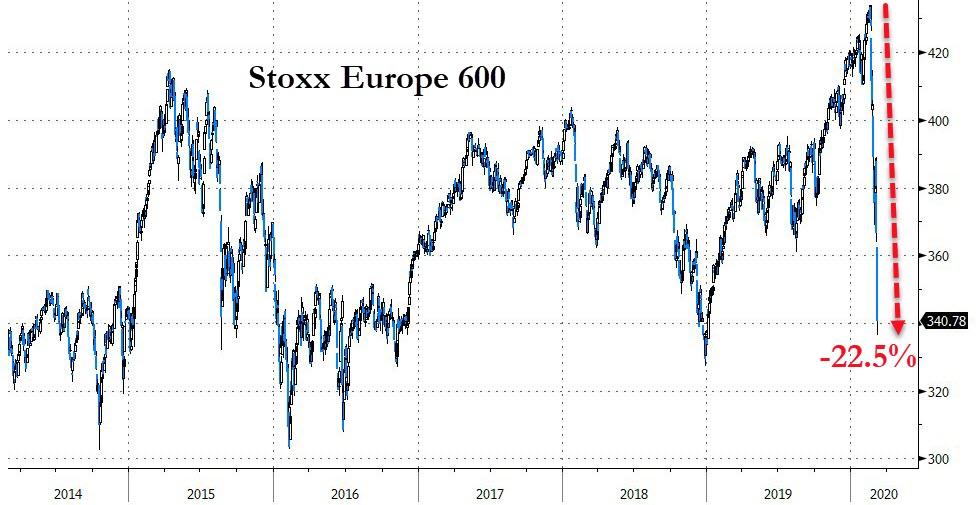
Europe stocks got even hit harder than U.S. domestic ones with the Europe Stoxx 600 now down over 22.5% from its highs just 3 weeks ago. This is what happens when bubbles burst, while it clearly confirms that Central Bankers are not omnipotent.

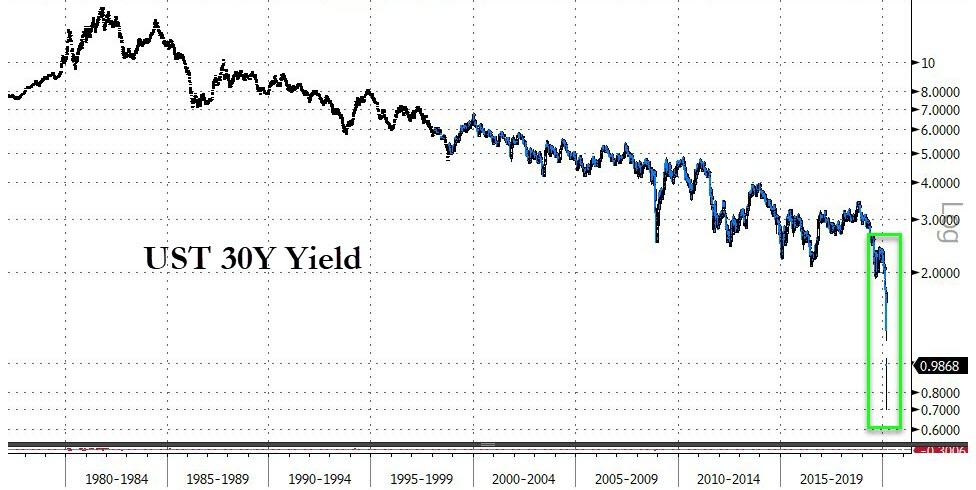
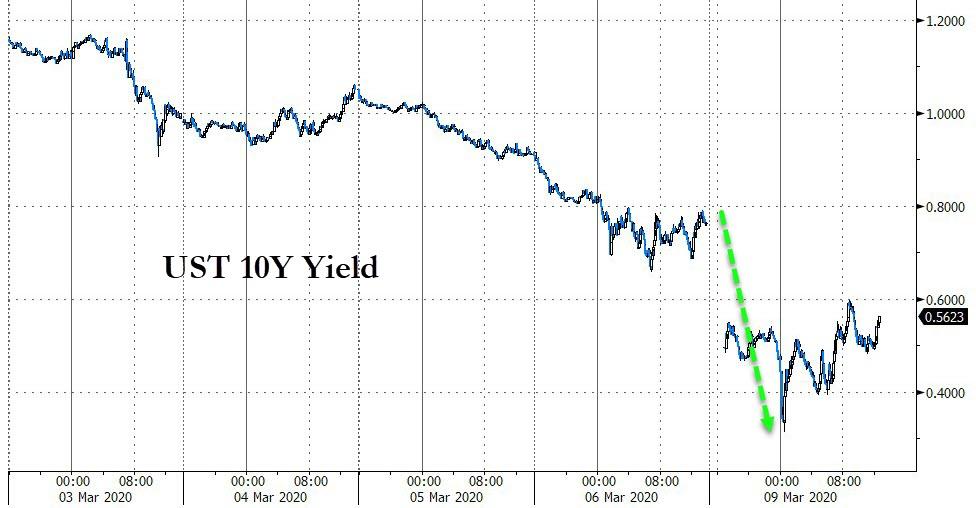
Bond yields got crushed again with the 30-year tumbling to under 1%, while the widely followed 10-year lost 21 basis points to end the session at 0.559%, that is after being down to 0.313% intraday. As a result, the big banks are down 30-40% in the last 3 weeks. Ouch!

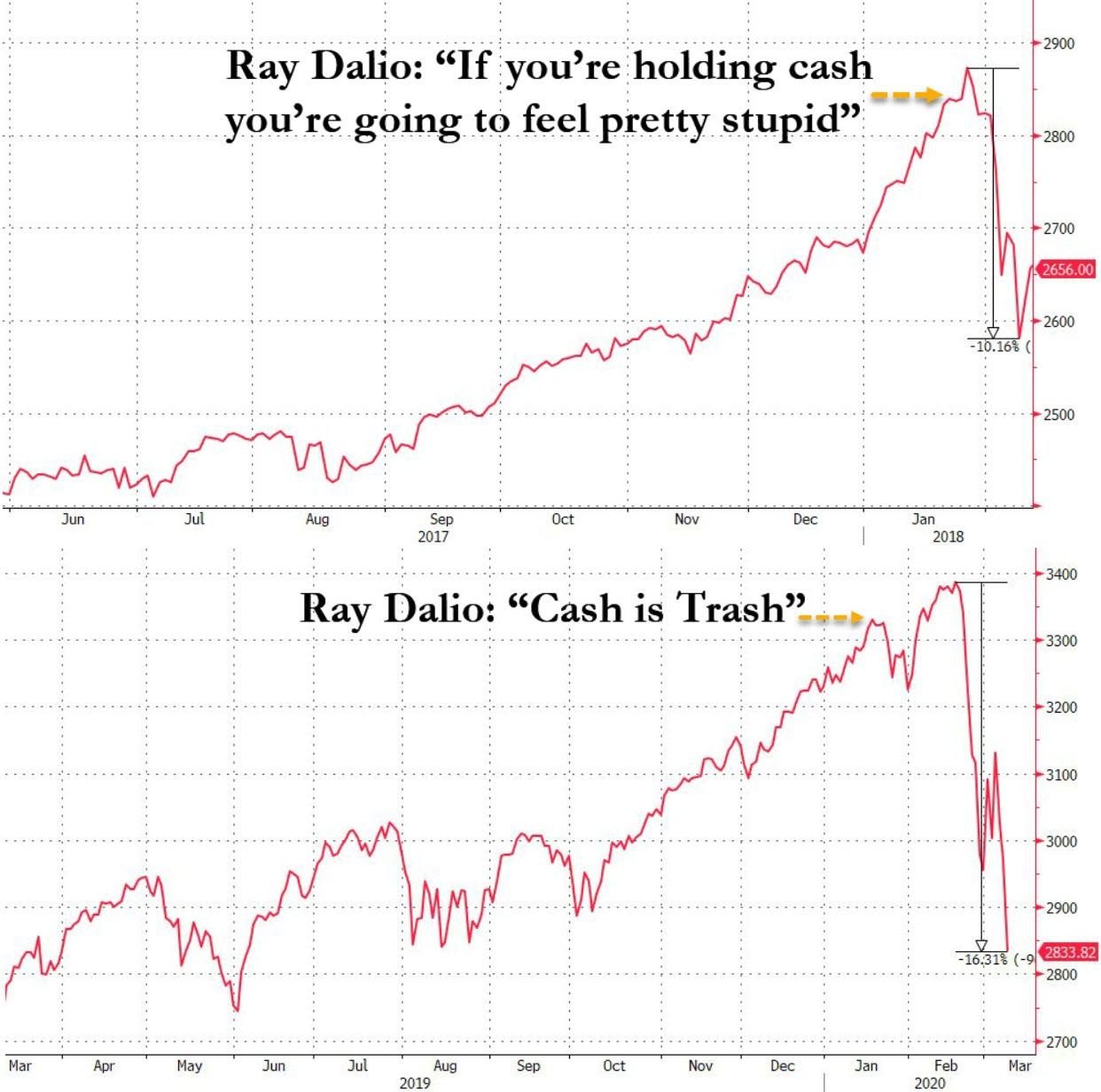
Even the big boys, like hedge fund guru Ray Dalio, got caught uttering the wrong words at the wrong time, as this chart by Bloomberg shows.

It’s good to be watching this debacle unfold from the safety of the sidelines.

Read More

ETFs On The Cutline – Updated Through 03/06/2020

Ulli ETFs on the Cutline Contact

Below, please find the latest High-Volume ETF Cutline report, which shows how far above or below their respective long-term trend lines (39-week SMA) my currently tracked ETFs are positioned.

This report covers the HV ETF Master List from Thursday’s StatSheet and includes 322 High Volume ETFs, defined as those with an average daily volume of more than $5 million, of which currently 91 (last week 73) are hovering in bullish territory. The yellow line separates those ETFs that are positioned above their trend line (%M/A) from those that have dropped below it.

Take a look:                                                                   

The HV ETF Master Cutline Report

In case you are not familiar with some of the terminology used in the reports, please read the Glossary of Terms. If you missed the original post about the Cutline approach, you can read it here.      

ETF Tracker Newsletter For March 6, 2020

Ulli ETF Tracker Contact

ETF Tracker StatSheet          

You can view the latest version here.

STUCK IN BEAR MARKET TERRITORY

[Chart courtesy of MarketWatch.com]
  1. Moving the markets

Despite a concerted effort to pump the major indexes back up, after sharp declines, the result still produced red closes, but at least some of the losses were reduced. It did not prevent the Dow from having put together its second longest run of Friday losses, namely 7 straight, since the string of 8 Friday losses came to an end in July 2006.

The uncertain environment about the corona virus has been a concern for traders and investors alike, especially when heading in the weekend with long positions. Therefore, Friday’s have become one of the scariest days, because it’s pretty much guaranteed that more bad news can/will affect equities come Monday morning.

Even today’s blockbuster jobs report merely elicited a shoulder shrug, as if to say, “who cares, there are more important concerns.” Nevertheless, 273k jobs were added in February vs. expectations of 175k. In more good news, December’s report was revised upward from 147k to 184k, while the same happened in January: 225k to 273k. These are numbers that under normal conditions would have produced some fireworks in equities—but no such luck today.

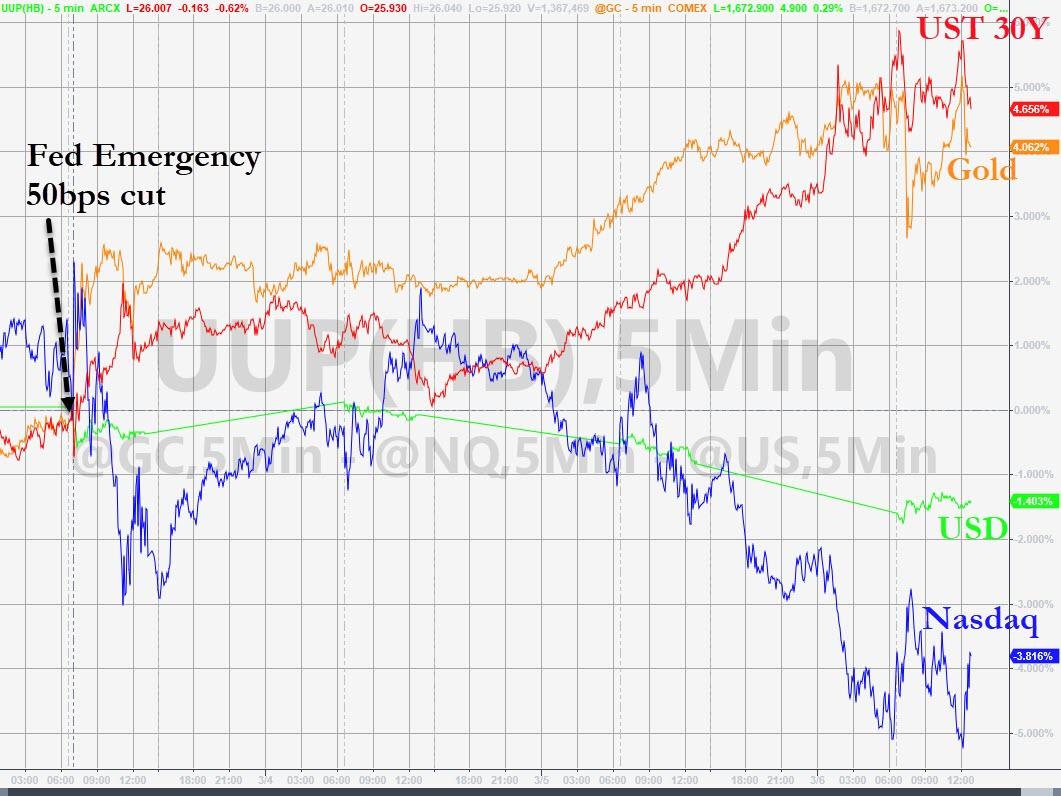
This Bloomberg chart summarizes the market action after the Fed’s emergency rate cut showing that equities and bonds/gold went their separate ways. But what about the resurgence of the Fed’s balance sheet, which has been the guiding light for stocks? As this chart points out, despite the Fed’s efforts, it did not work out as planned.

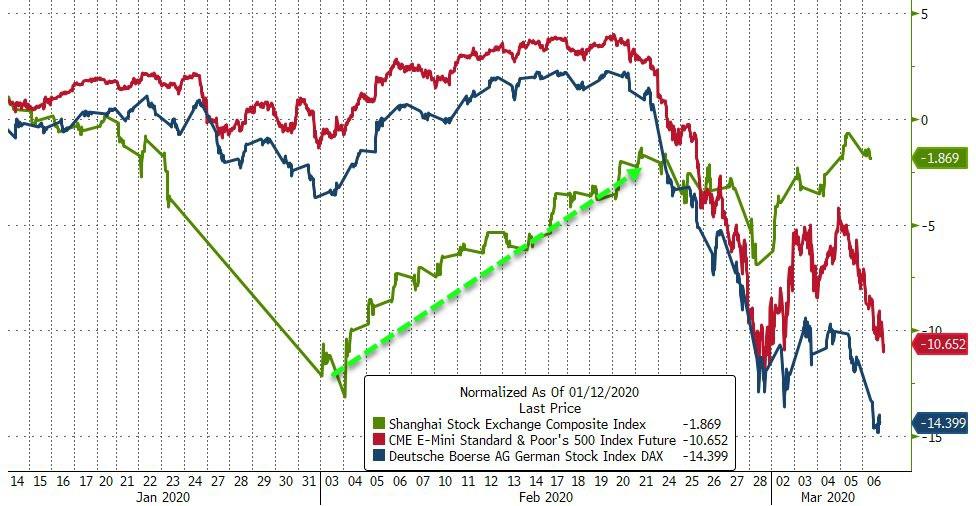
Things are topsy-turvy with the biggest irony being displayed in this chart, which shows that China, the very country in which the coronavirus originated, has had a better stock market performance than the U.S. and Germany. Go figure…

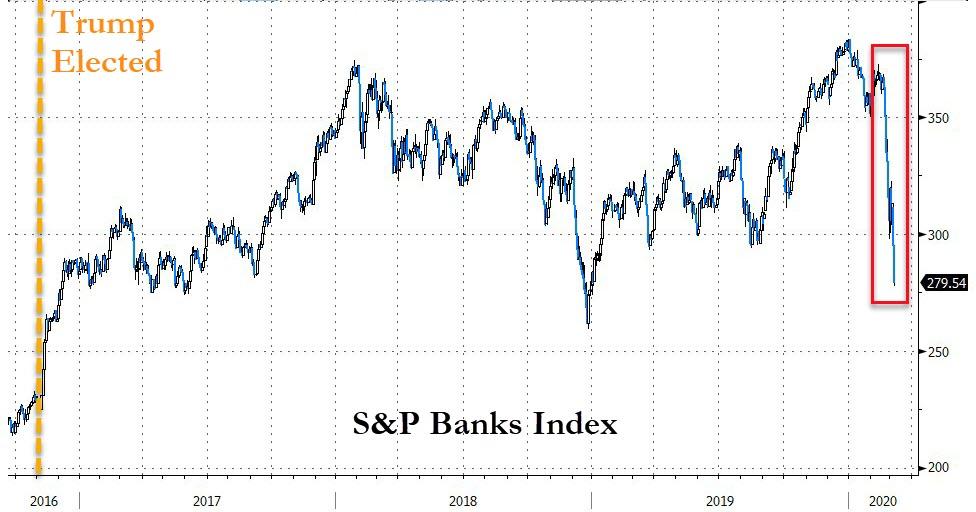
In this debacle, the banks have been hit the hardest, with their Bank Index having come down some 27% from their early January highs. Ouch!

It’s good to be on the sidelines.

Read More