Stocks Face A Triple Whammy: Oil, Yields And Recession Fears

Ulli Market Commentary Contact

[Chart courtesy of MarketWatch.com]

  1. Moving the markets

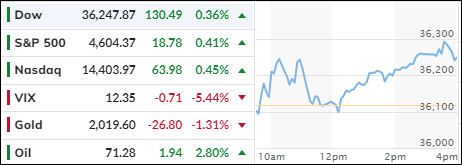
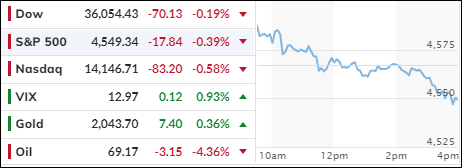
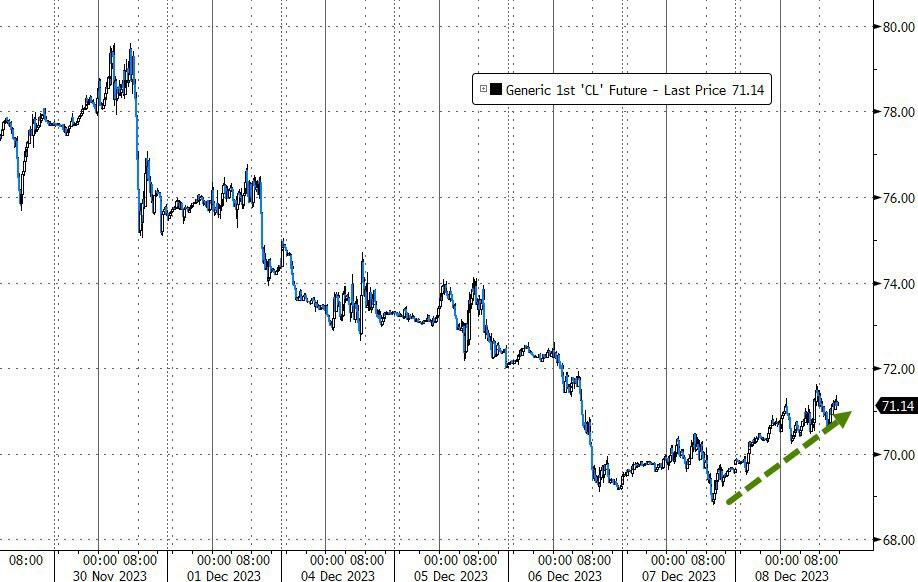
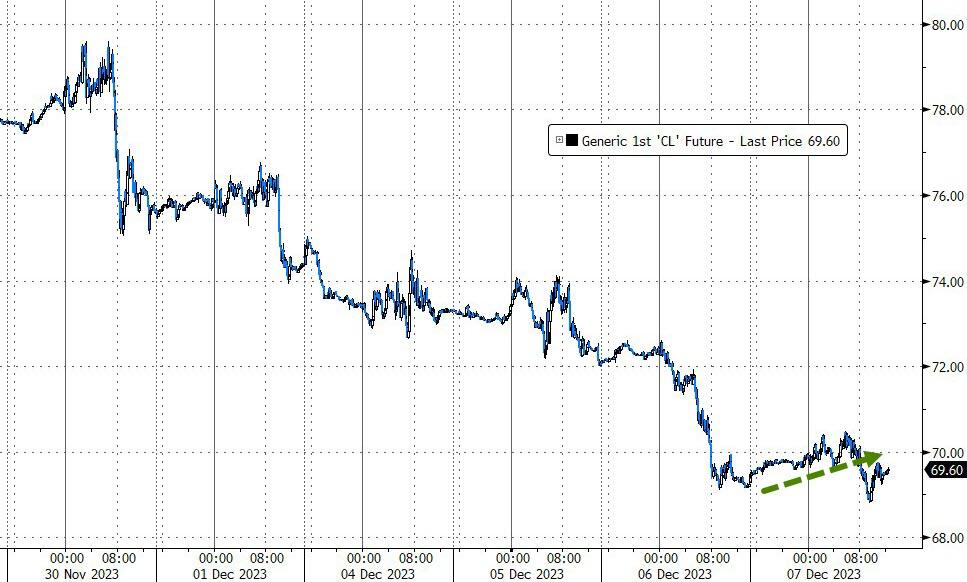
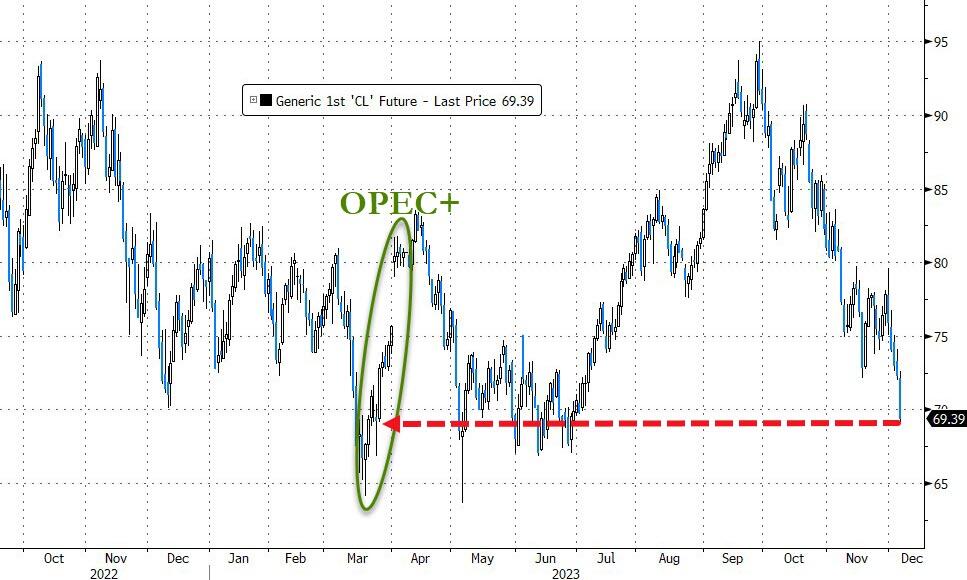
It was a tough Tuesday for stocks as they started the week with a drop, dragged down by rising oil prices. Saudi Arabia decided to keep cutting its oil production by 1 million barrels per day, pushing the West Texas Intermediate futures above $87 per barrel, the highest since November. That’s gotta hurt!

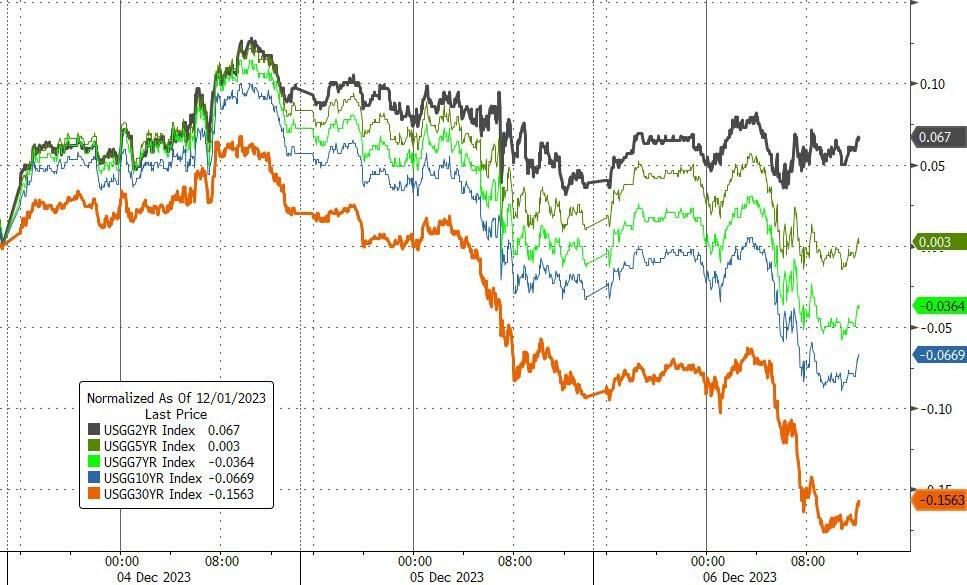
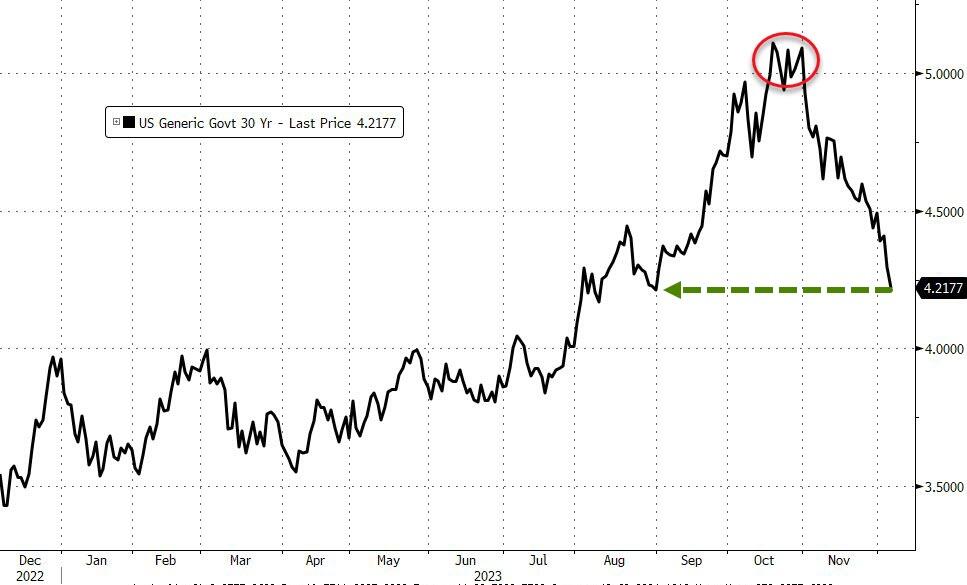
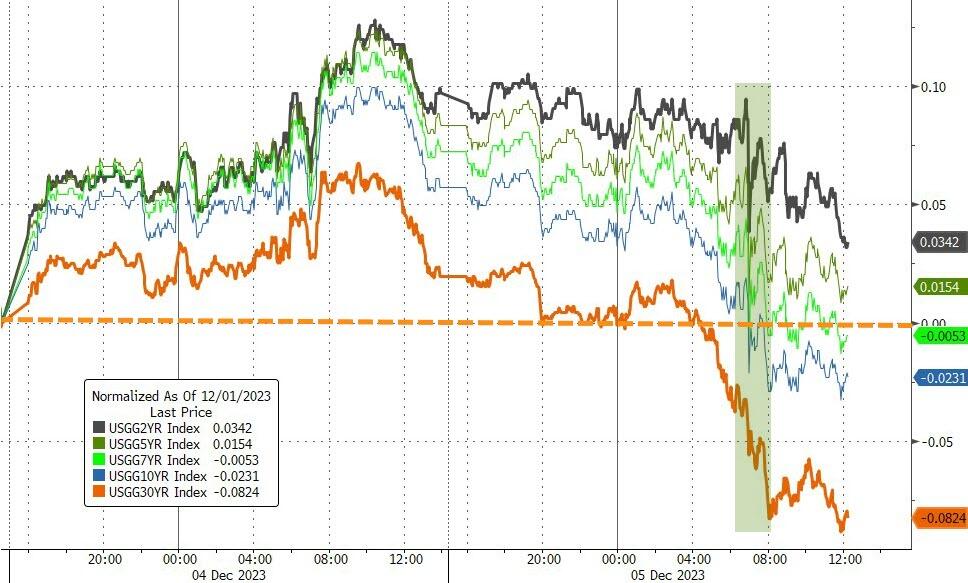
Meanwhile, Treasury yields also jumped, putting pressure on risk assets. The 10-year yield soared by more than 8 basis points to 4.258%.

Goldman Sachs tried to cheer up the market by lowering its recession odds to 15% and predicting that the Fed will skip a rate hike this month. But who are they kidding? September is usually a bad month for stocks, and investors know it.

Some traders are still hopeful that this year will be different, thanks to the bullish momentum. But history is not on their side.

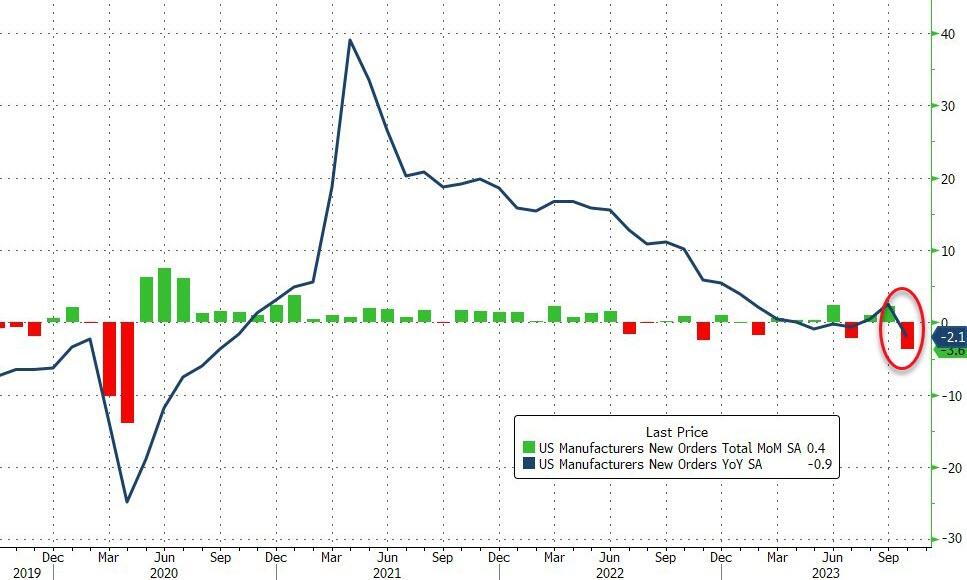
Factory orders fell less than expected in July, down 2.1% versus a forecast of 2.3%. That’s not much of a consolation, though. The Fed still must balance inflation and growth, and rising oil prices won’t make it any easier.

The Fed wants a soft landing, but it could end up crashing. Small and midcap stocks took a big hit, with the S&P SmallCap 600, the S&P MidCap and the Russell 2000 all losing more than 1.8%. Value stocks also suffered their second worst day relative to growth since May.

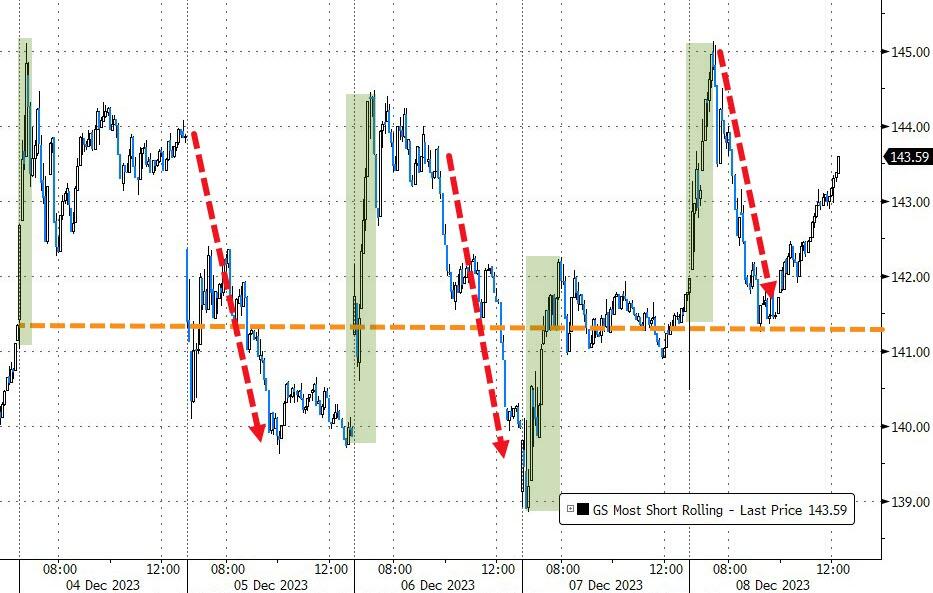
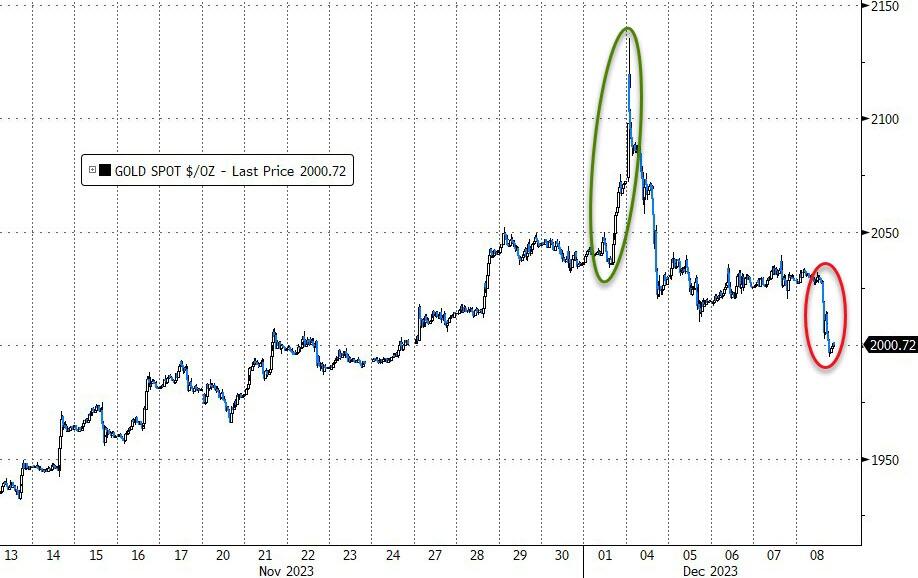
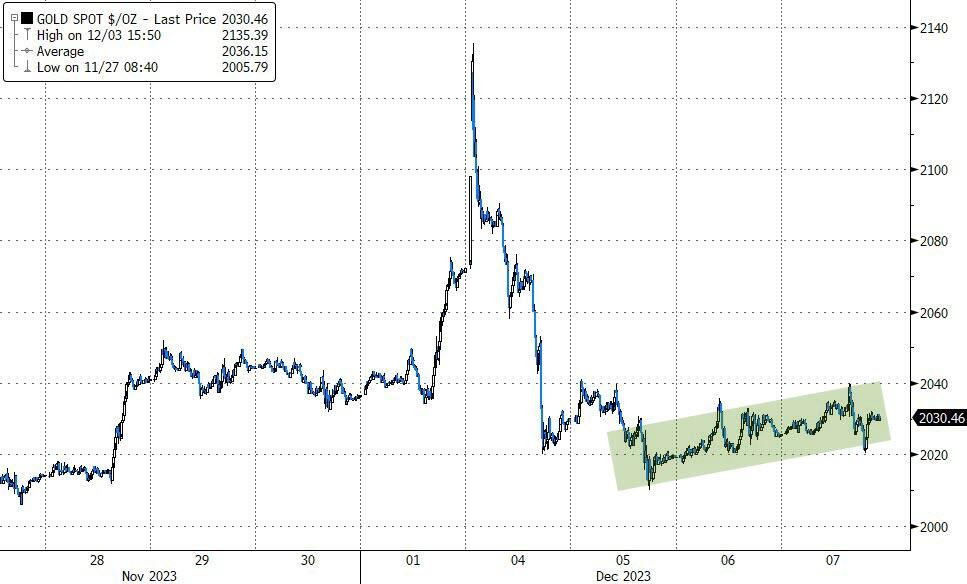
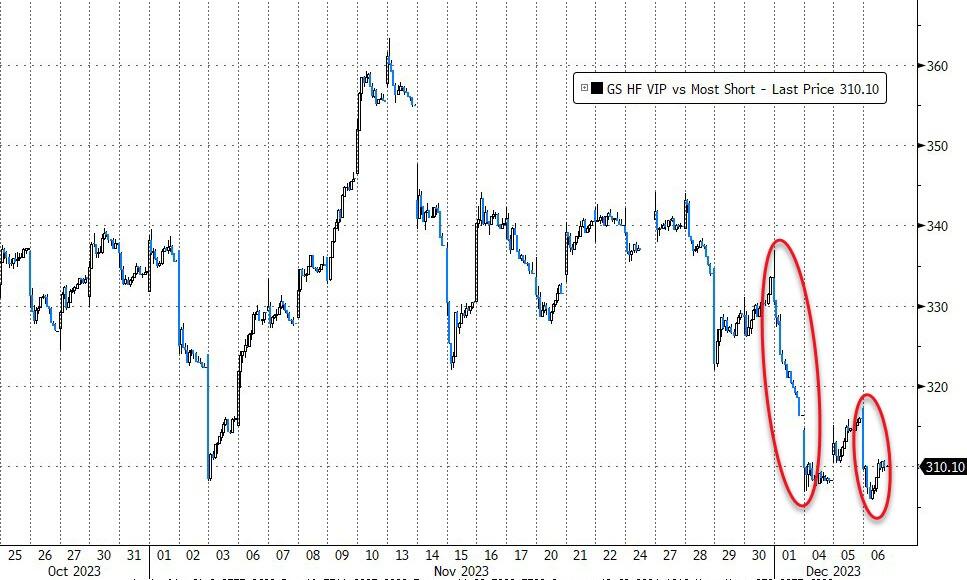
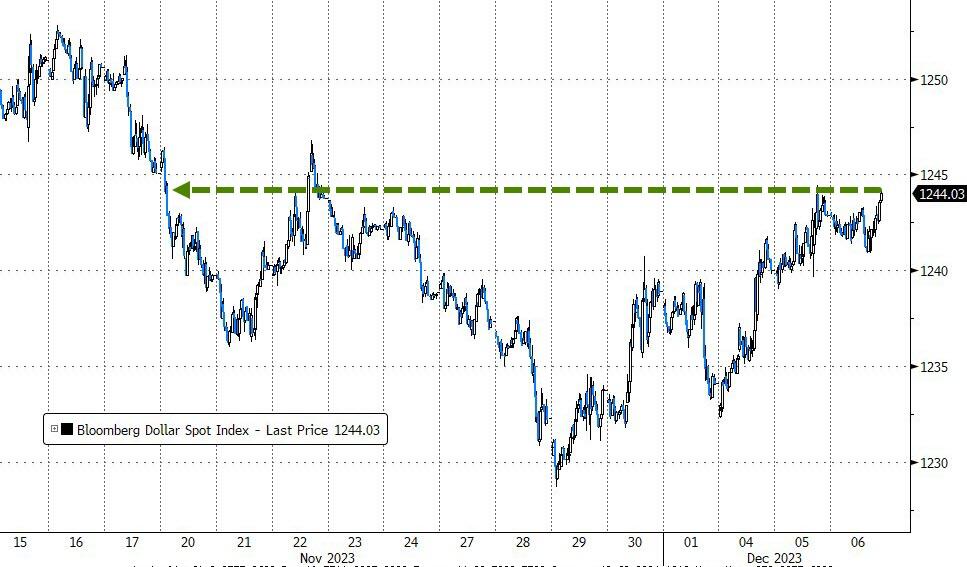
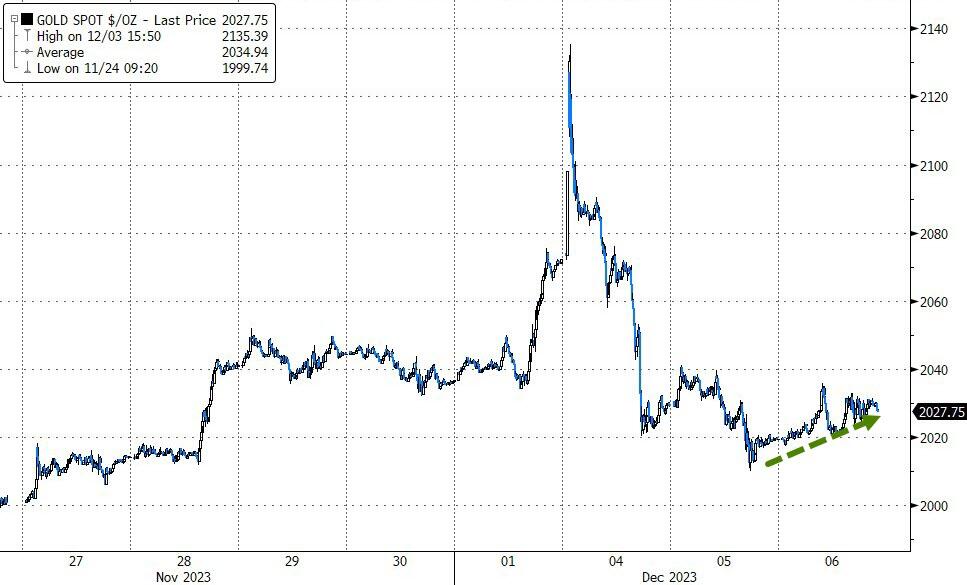
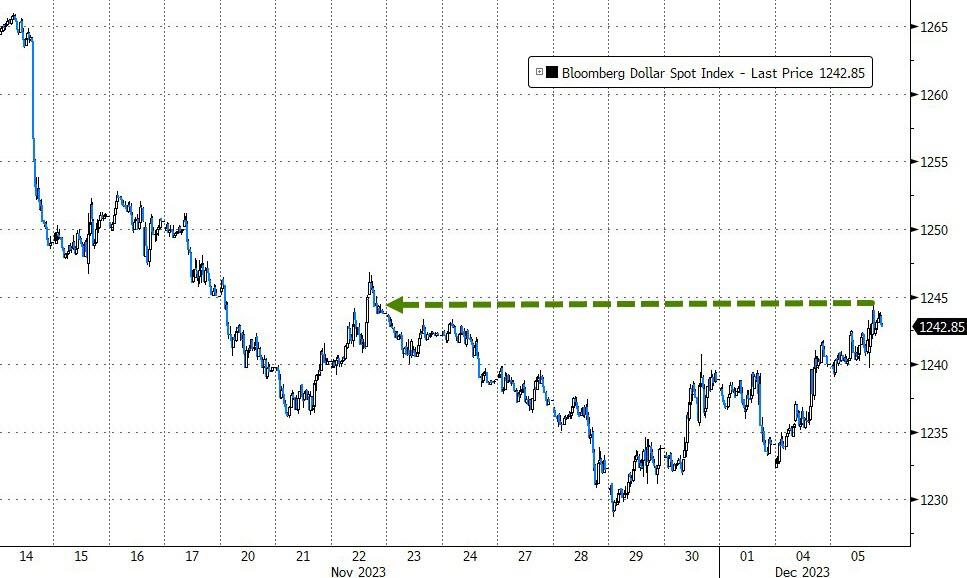
Homebuilders and short sellers were not spared either, as bond yields spiked and hurt their portfolios. The gap between the 10-year yield and the Nasdaq keeps widening. Higher yields boosted the dollar, which weighed on gold. But don’t forget that gold usually beats stocks in recessions, as this chart shows.

So, what’s next for the market? Will it bounce back or continue to slide? Stay tuned for more updates.

Read More
ETFs On The Cutline – Updated Through 09/01/2023

Ulli ETFs on the Cutline Contact

Do you want to know which ETFs are hot and which ones are not? Then you need my High-Volume ETF Cutline report. It tells you how close or far each of the 311 ETFs I follow is from its long-term trend line (39-week SMA). These are the ETFs that trade more than $5 million a day, so they are not some obscure funds that nobody cares about.

The report is split into two parts: The winners that are above their trend line (%M/A), and the losers that are below it. The yellow line is the line of shame that separates them. You can see how many ETFs are in each group and how they have changed since the last report (134 vs. 191 current).

Take a peek:

The HV ETF Master Cutline Report

If you are confused by some of the terms we use, don’t panic. I have a helpful Glossary of Terms for you.

If you want to learn more about the Cutline method and how it can make you rich (or at least less poor), read my original post here.

ETF Tracker Newsletter For September 1, 2023

Ulli ETF Tracker Contact

ETF Tracker StatSheet          

You can view the latest version here.

US JOBS REPORT: MORE QUESTIONS THAN ANSWERS

[Chart courtesy of MarketWatch.com]

  1. Moving the markets

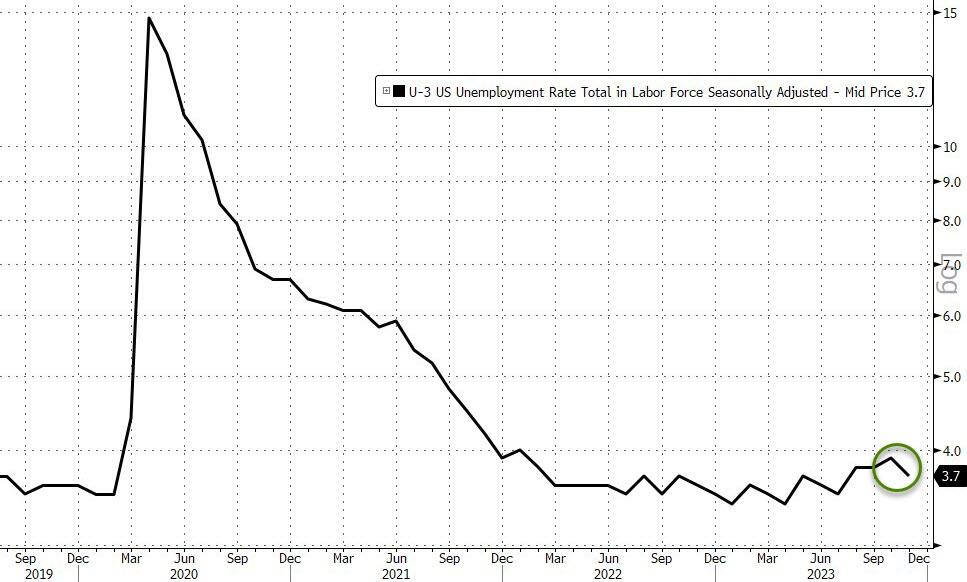
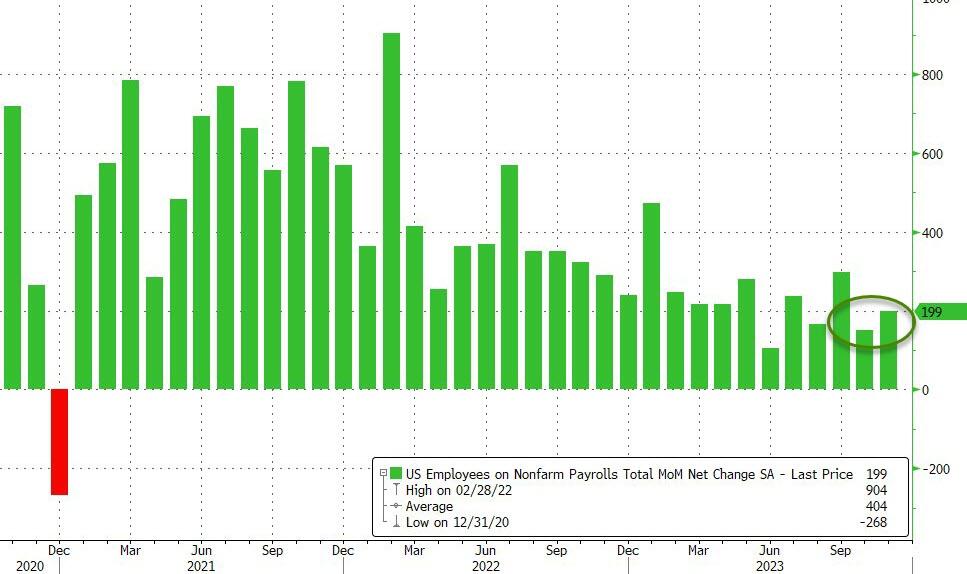
The US jobs report for August was a mixed bag that left investors scratching their heads. On one hand, the unemployment rate jumped to 3.8%, the highest since January, suggesting a slowdown in the labor market. On the other hand, the economy added 187k jobs, beating the forecast of 170k, indicating some resilience in hiring.

Some market bulls saw this as a sign that the Fed might pause its rate hikes, which initially boosted stock prices. But a closer look at the data revealed some worrying trends. According to ZeroHedge, every monthly payroll report in 2023 has been revised down, raising doubts about the reliability of the numbers. Moreover, 670k full-time jobs were lost in two months, while 1 million part-time jobs were added. That’s not a healthy picture for workers.

The manufacturing sector also showed signs of weakness, as the July data was worse than June’s. This revived the fears of stagflation, a situation where inflation rises while growth slows down. The ‘hard’ data, such as industrial production and retail sales, fell to four-month lows, while the ‘soft’ data, such as consumer confidence and business sentiment, rose to near-record highs. This suggests a disconnect between reality and expectations.

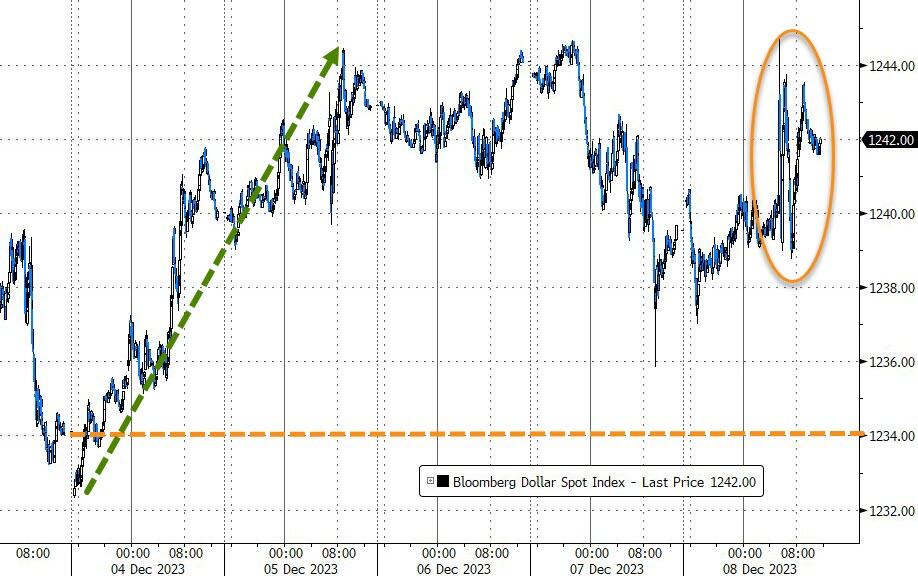
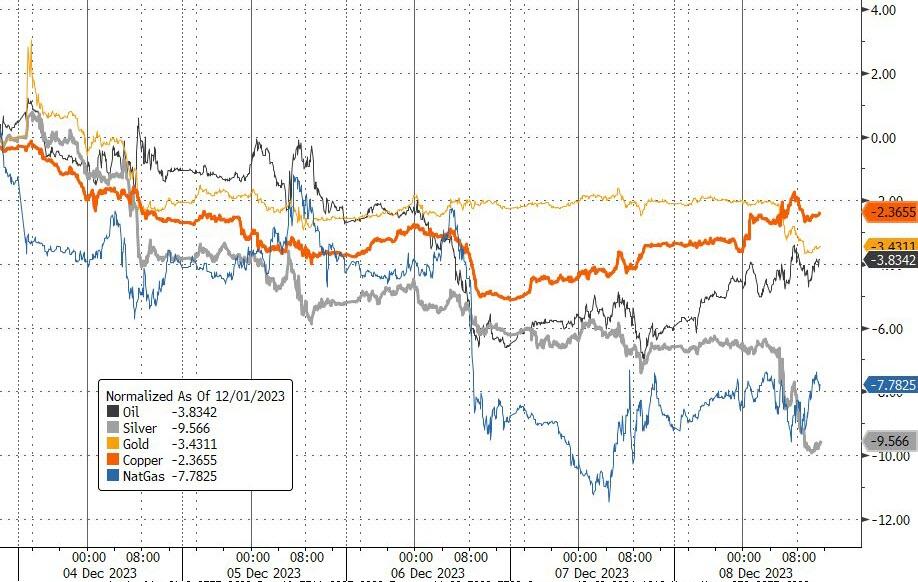
The stock market rally was also short-lived, as a sudden spike in bond yields dampened the mood. The 10-year Treasury yield jumped to 4.2%, the highest since March, making bonds more attractive than stocks. The dollar edged up slightly against other currencies, while gold continued its upward trend and reached one-month highs.

The August jobs report showed that the US economy is facing some headwinds and uncertainties. Stagflation could be looming on the horizon, and equities could face more volatility.

How will equities cope with this challenging environment?

Read More
Weekly StatSheet For The ETF Tracker Newsletter – Updated Through 08/31/2023

Ulli ETF StatSheet Contact

ETF Data updated through Thursday, August 31, 2023

How to use this StatSheet:

  1. Out of the 1,800+ ETFs out there, I only pick the ones that trade over $5 million per day (HV ETFs), so you don’t get stuck with a lemon that nobody wants to buy or sell.
  1. Trend Tracking Indexes (TTIs)

These are the main indicators that tell you when to buy or sell Domestic and International ETFs (section 1 and 2). They do that by comparing their position to their long-term M/A (Moving Average). If they cross above, and stay there, it’s a green light to buy. If they fall below, and keep going, it’s a red light to sell. And to make sure you don’t lose your shirt if things go south, I also use a 12% trailing stop loss on all positions in these categories.

  1. All other investment areas don’t have a TTI and should be traded based on the position of each ETF relative to its own trend line (%M/A). That’s why I call them “Selective Buy.” In other words, if an ETF goes above its own trend line, you can buy it. But don’t forget to use a trailing sell stop of 12%, or less if you’re feeling nervous.

If some of these words sound like Greek to you, please check out the Glossary of Terms and new subscriber information in section 9.

  1. DOMESTIC EQUITY ETFs: BUY— since 12/01/2022

Click on chart to enlarge

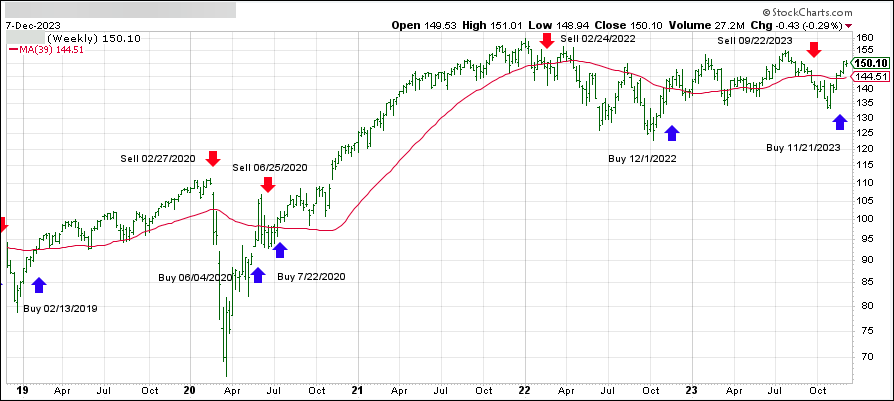
This is our main compass, the Domestic Trend Tracking Index (TTI-green line in the above chart). It has now broken above its long-term trend line (red) by +3.02% and remains in “Buy” mode.

Read More
Stocks End August On A Sour Note As Inflation And Bond Yields Weigh

Ulli Market Commentary Contact

[Chart courtesy of MarketWatch.com]

  1. Moving the markets

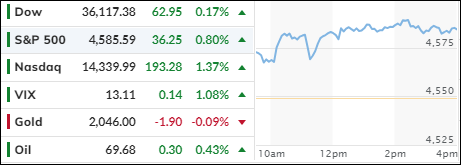
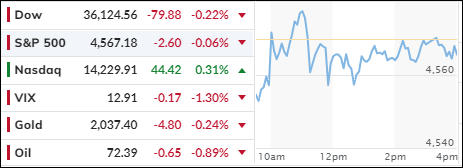
The stock market had a roller-coaster ride on Thursday, as an early rally fizzled out and left only the Nasdaq in the green. The other two major indexes closed slightly lower, snapping a 4-day winning streak. The month of August was a bumpy one for stocks, as the S&P 500 trimmed its losses from nearly 5% to less than 2%. Small caps suffered the most, as they usually do in turbulent times.

Inflation remained a hot topic, as the Fed’s preferred measure, the Core PCE Deflator, rose to 4.2% year-over-year in July, matching expectations but higher than June’s 4.1%. The headline PCE also jumped to 3.3%, the highest since June 2022. But if you take out the housing component, which accounts for a large chunk of consumer spending, inflation is still stuck at elevated levels, as this chart shows.

Bond yields were initially falling, which boosted stocks, but then reversed course and started to climb, which dragged stocks down. It seems that stocks are following bonds closely these days, so lower yields could mean higher stock prices in the near term.

The labor market showed mixed signals, as initial jobless claims dropped to 2023 lows despite a surge in layoffs, but continuing claims rose above 1.7 million last week. The economic recovery seems to have hit a speed bump in August, as various indicators showed the biggest monthly decline since May 2022. The data was also inconsistent, with some measures showing strength and others showing weakness.

The dollar had a strong month, rising the most since February, but has been trading sideways for the last two weeks. The Fed has been talking tough about tapering and hiking rates, but the market is not buying it. The market is pricing in 1.1% of rate cuts by the end of next year, which could be a big mistake if the Fed follows through on its hawkish rhetoric.

The bottom line is that the market is facing a lot of uncertainty and volatility, and we need to be prepared for more swings ahead.

Read More
Bad News Boosts Stocks, But For How Long?

Ulli Market Commentary Contact

[Chart courtesy of MarketWatch.com]

  1. Moving the markets

The stock market seems to be living in a paradox these days. Weak economic data, which usually spells trouble for equities, has been boosting them instead. Why? Because investors are hoping that the Fed will ease its monetary policy in response to the slowdown.

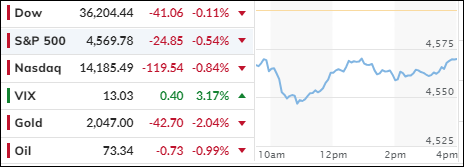
On Wednesday, traders got another dose of bad news. ADP reported that private employers added only 177k jobs in August, much lower than the revised 371k in July. This signaled a cooling off in the labor market and lowered the expectations of a rate hike.

Meanwhile, the annual GDP growth rate was also revised down to 2.1% from 2.4%, adding to the gloomy picture of the economy.

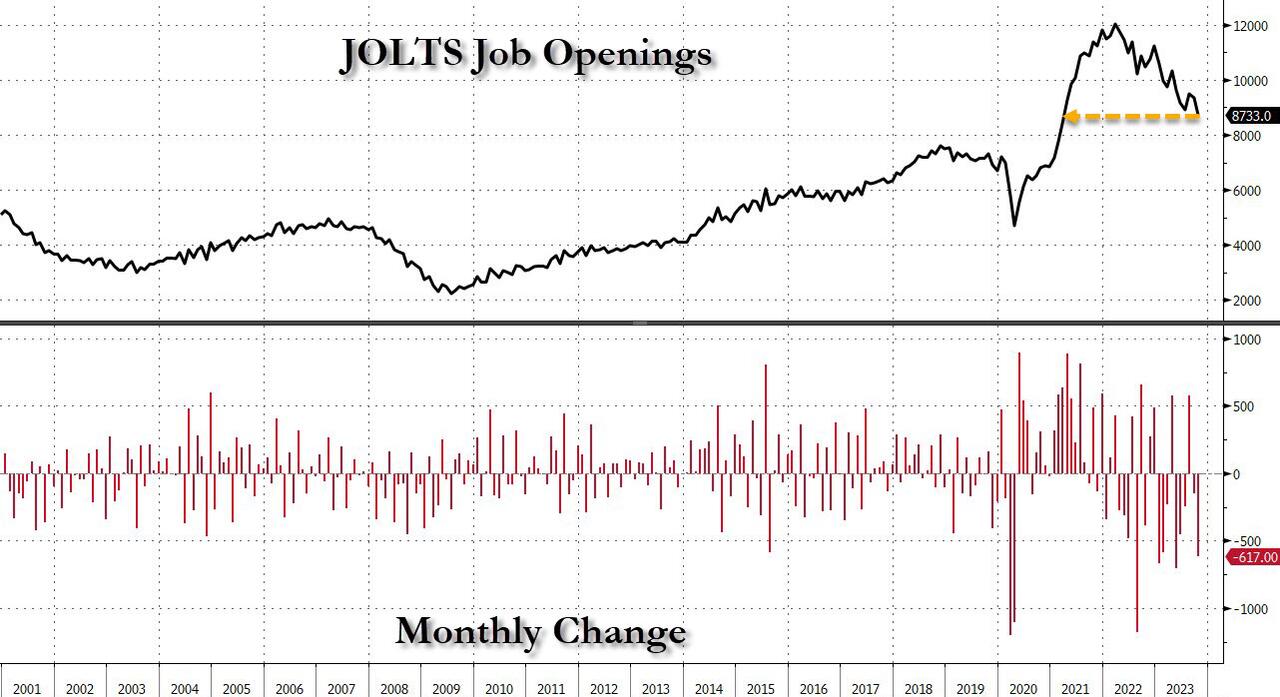
This was the second day in a row that investors shrugged off poor economic data and pushed stocks higher. On Tuesday, the major U.S. indexes rallied after disappointing consumer confidence figures and a sharp drop in job openings for July. This sparked hope that the Fed could be more dovish in its upcoming meetings.
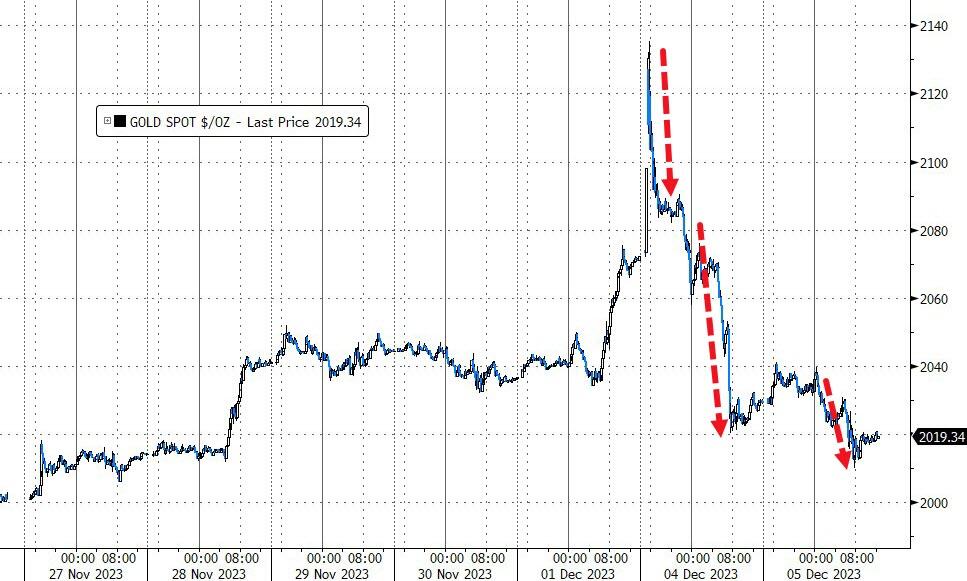
Some analysts call this a ‘bad news is good news’ environment, which tends to happen when investors are worried about rates and Fed policy. Any softness in economic data reduces the upward pressure on yields, and that helps equities.
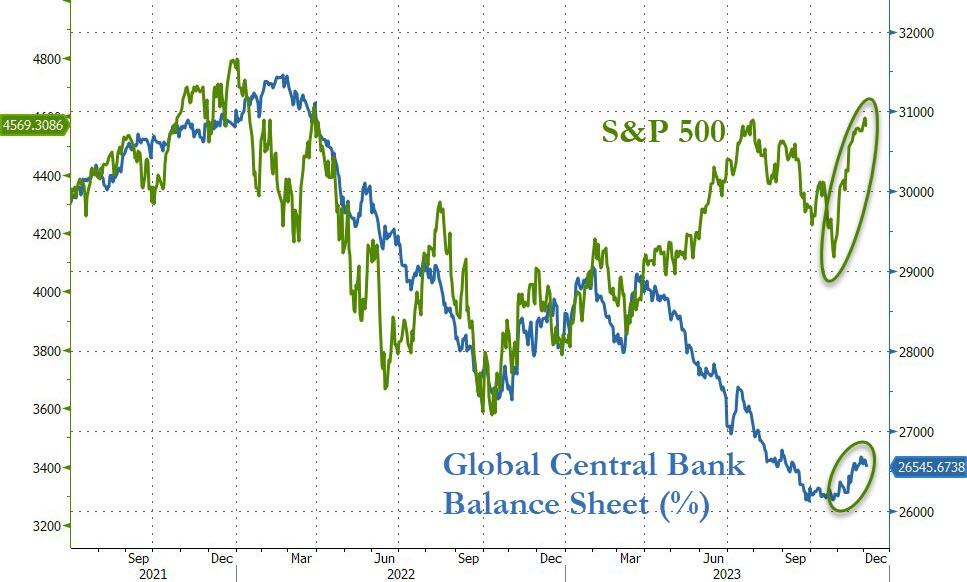
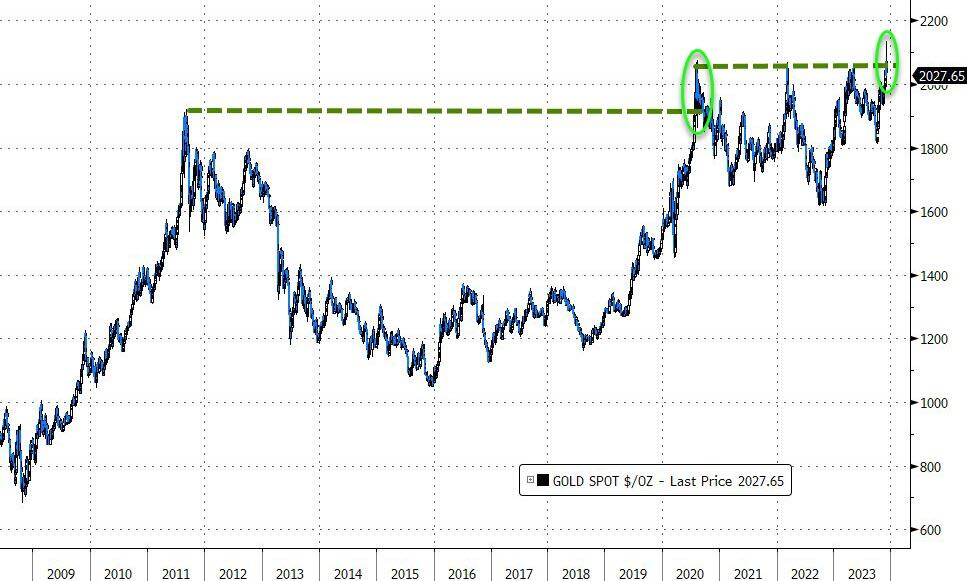
But this paradoxical situation may not last long, as Bloomberg’s Simon White noted. He pointed out the divergence between the S&P 500 index and the Leading Economic Index, which measures future economic activity. The S&P 500 has been rising while the LEI has been falling, suggesting that stocks are out of sync with the recession risks.

The bond market also showed signs of volatility, as yields swung wildly but closed lower on Wednesday. The dollar weakened again, giving a boost to gold prices.

So, what does this all mean for us trend followers?

It means that we need to be cautious and prepared for any surprises. The market may be enjoying the bad news for now, but it may not be able to ignore reality for long.

Read More