1. Moving the Markets
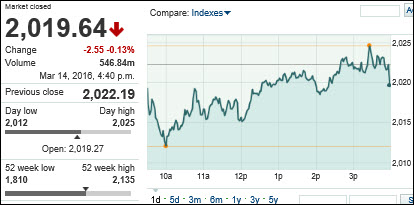
The Dow, which is looking to extend its weekly winning streak to five, traded slightly higher as investors looked ahead to a key Fed meeting on interest rates later this week.
We have a big week ahead of us. The Federal Reserve meets Tuesday and Wednesday and Wall Street will be closely monitoring its policy statement on Wednesday to see if they raise interest rates or if they plan to in the near future.
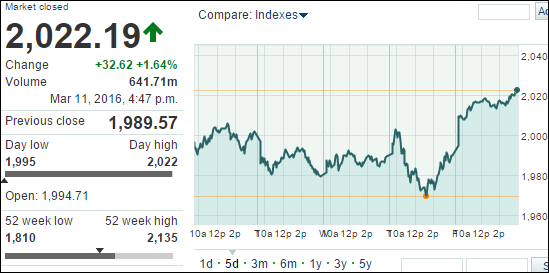
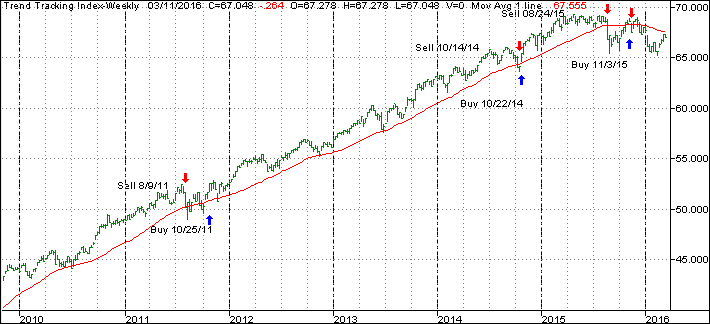
It was a strange day in that crude oil got clobbered and lost over 3.5% while equities decoupled and held firm. The S&P 500 is now bouncing around its 200-day moving average and it remains to be seen whether this level can be conquered or act as glass ceiling. If the S&P 500 breaks through to the upside, major resistance will come in around the 2,045 mark, a level which might coincide with a new potential Domestic Buy signal.
So far, this rally is still considered a bear market rebound, and it’s questionable whether it will have enough legs to push back into bull market territory. But, as we’ve seen in the recent past, all it takes is some headline hockey to cause the computer driven algos to push the indexes higher regardless of underlying fundamental realities.
One well-known hedge fund manager put it this way: The upside is maybe 2% while the downside is 20%. We’ll have to wait and see if he’s right.
 Central banks around the world, especially the European Central Bank (ECB), have done a pretty good job of preventing the downside, but they really have not kicked up the upside with respect to economic growth, said John Silvia, chief economist at Wells Fargo Securities.
 Actively managed exchange-traded funds have failed to capture investors’ imagination in the US despite the overall ETF industry growing apace with assets under management crossing $2 trillion in 2015. Actively managed fixed income funds, however, have fared better by cornering two-thirds of the $24 billion overall active niche.