ETFs On The Cutline – Updated Through 11/23/2018

Ulli ETFs on the Cutline Contact

Below, please find the latest High-Volume ETF Cutline report, which shows how far above or below their respective long-term trend lines (39-week SMA) my currently tracked ETFs are positioned.

This report covers the HV ETF Master List from Thursday’s StatSheet and includes 322 High Volume ETFs, defined as those with an average daily volume of more than $5 million, of which currently 42 (last week 56) are hovering in bullish territory. The yellow line separates those ETFs that are positioned above their trend line (%M/A) from those that have dropped below it.

Take a look:

The HV ETF Master Cutline Report

In case you are not familiar with some of the terminology used in the reports, please read the Glossary of Terms.

If you missed the original post about the Cutline approach, you can read it here.

ETF Tracker Newsletter For November 23, 2018

Ulli ETF Tracker Contact

ETF Tracker StatSheet

https://theetfbully.com/2018/11/weekly-statsheet-for-the-etf-tracker-newsletter-updated-through-11-21-2018/

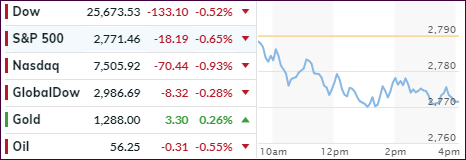
THE WORST THANKSGIVING WEEK IN 7 YEARS

[Chart courtesy of MarketWatch.com]
  1. Moving the markets

Despite an early rally attempt based on hope that “black Friday” would do wonders for the retail sector, the gains could not be sustained, and the major indexes plunged into the close during this Holiday shortened session.

In the end, things continued to look bleak for the bulls with the indexes scoring their worst Thanksgiving week since 2011. How bad was it? The Nasdaq tumbled -4.3%, the Dow slipped -4.4% and the S&P 500 turned out to be the “winner” by “only” losing -3.8%. That is down 10% from its record closing high and confirms that is now in correction territory.

Crude oil (WTI) took top billing again by crashing almost -8% to a 10-year low and is barely hanging on to a $50 handle. Sure, much of the headlines talk about supply worries ahead of an upcoming OPEC meeting, but to me the real reason is simply a slowdown in global growth activity. That is why our International Trend Tracking Index (TTI) has been in bear market territory since 10/11/2018. Bear markets are a result of economic slowdowns.

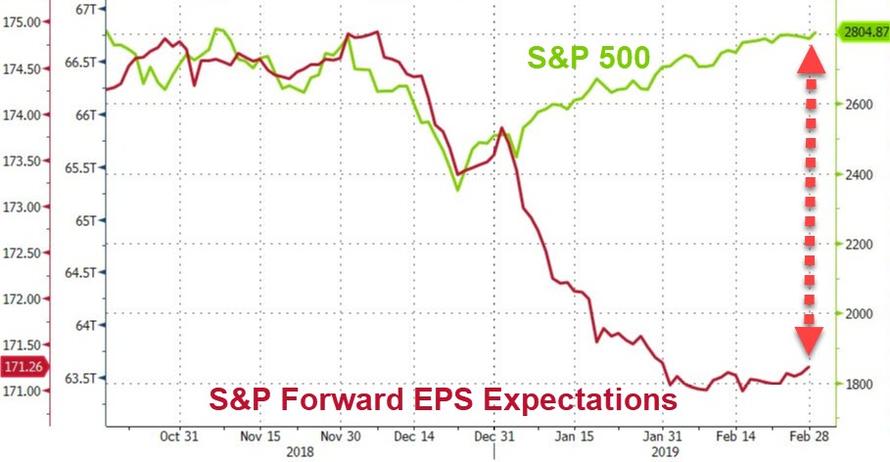
This chart, hat tip goes to ZH, demonstrates that “soft” survey data is starting to catch down to the “hard” reality of economic data. If this continues, we’ll sure be welcoming the S&P 500 to bear market territory soon (another 10% drop).

It’s good to be on the sidelines.

Read More

Weekly StatSheet For The ETF Tracker Newsletter – Updated Through 11/21/2018

Ulli ETF StatSheet Contact

ETF Data updated through Wednesday, November 21, 2018

Methodology/Use of this StatSheet:

  1. From the universe of over 1,800 ETFs, I have selected only those with a trading volume of over $5 million per day (HV ETFs), so that liquidity and a small bid/ask spread are assured.
  2. Trend Tracking Indexes (TTIs)

Buy or Sell decisions for Domestic and International ETFs (section 1 and 2), are made based on the respective TTI and its position either above or below its long-term M/A (Moving Average). A crossing of the trend line from below accompanied by some staying power above constitutes a “Buy” signal. Conversely, a clear break below the line constitutes a “Sell” signal. Additionally, I use a 7.5% trailing stop loss on all positions in these categories to control downside risk.

  1. All other investment arenas do not have a TTI and should be traded based on the position of the individual ETF relative to its own respective trend line (%M/A). That’s why those signals are referred to as a “Selective Buy.” In other words, if an ETF crosses its own trendline to the upside, a “Buy” signal is generated. Since these areas tend to be more volatile, I recommend a wider trailing sell stop of 7.5% -10% depending on your risk tolerance.

If you are unfamiliar with some of the terminology, please see Glossary of Terms and new subscriber information in section 9.


  1. DOMESTIC EQUITY ETFs: SELL — since 11/15/2018

Click on chart to enlarge

Our main directional indicator, the Domestic Trend Tracking Index (TTI-green line in the above chart) is now positioned below its long-term trend line (red) by -3.46% after having generated a new Domestic “Sell” signal effective 11/15/18 as posted.

Read More

A Hopeful Bounce Bites The Dust

Ulli Market Commentary Contact

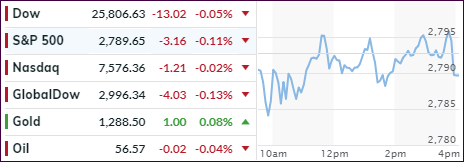
[Chart courtesy of MarketWatch.com]
  1. Moving the markets

With the Dow having lost about 950 points over the past 2 days, it was time for the major indexes to bounce back, at least for one session, in order to recapture some of the ugly losses. That attempt turned into a head fake as, late in the day, momentum reversed with the Dow giving back all its early gains.

But, the S&P 500 managed to recoup +0.30%, while the beaten down Nasdaq fared the best by adding +0.92%. Obviously, pre-Thanksgiving volume was low, so we should not put too much value into today’s action. Historically, however, this week went down as the worst start to Thanksgiving week in 45 years.

Yesterday’s decline erased YTD gains for the Dow and S&P 500, but the Nasdaq is hanging on to a 1.1% advance. For the month of November, things look bleak with the 3 major indexes being down led by the Nasdaq with -3.9%. Ouch.

As I have repeatedly said, equity risk has increased and the bear market, as I define it with my Trend Tracking Indexes (TTIs), is upon us, which makes this the perfect time to be out of the markets and on the sidelines.

Happy Thanksgiving!

Read More

Ugly Losses Continue With Apple Getting Spanked

Ulli Market Commentary Contact

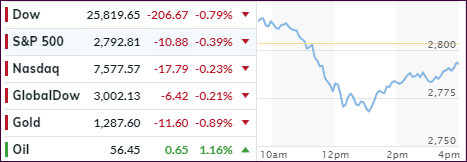
[Chart courtesy of MarketWatch.com]
  1. Moving the markets

If you had expected a bounce after yesterday’s drubbing, you would have been wrong. This morning’s opening happened deeply in the red with the Dow being down some 600 points, a level from which it rebounded only to visit the -640 level later in the session. While the major indexes managed to crawl off their worst levels of the day, it did not matter, since the bears were in charge and ruled over the inevitable outcome.

Tech heavyweight Apple, which was down at one point around 10%, also managed a comeback to close the session with “only” a -4.78% loss. In part, the punishment came in view of Apple’s disappointing Holiday season guidance. The FANGs in general are not only stuck in a bear market but haven given back just about all of this year’s gains after having collapsed to January’s levels.

The red numbers were not limited to just domestic equities. Global markets, including all of Europe and Asia, demonstrated that the current bearish tendencies may be here to stay—or even get worse. Europe’s main index, the STOXX 600, dropped to its lowest close in 2 years.

Technically speaking, many support levels have been or about to be violated giving more credence to the fact that the bear market may only be in its beginning stages. Obviously, there will rebounds as dip-buyers step in to drive the markets back up, but the major trend is down as our Trend Tracking Indexes (section 3) show.

This is not the time to be a hero by trying to catch a falling knife; this is the time to be in cash and waiting patiently on the sidelines for a resumption of the bull market, whenever our indexes generate the signal to move back in.

Read More

Bearish Thoughts

Ulli Market Commentary Contact

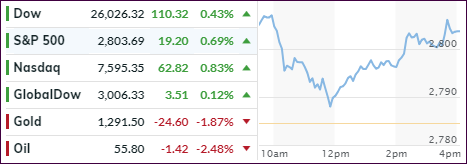
[Chart courtesy of MarketWatch.com]
  1. Moving the markets

Over the weekend, I read a couple of articles outlining the ongoing progress, or rather lack thereof, with the China trade talks, which took on a new dimension during the Asia-Pacific Economic Cooperation (APEC) summit.

We’ve witnessed Trump and Xi go at it for several months now, but VP Pence decided more was needed and jumped in the fray by trading sharply worded barbs with Xi, which crushed any hope of trade war de-escalation. Not only did relationships worsen but the APEC summit ended without an agreement for the first time in its history.

With trade headlines being able to move markets up or down, it came as no surprise to me that the major indexes opened sharply to the downside and stayed there throughout the session. An afternoon bounce was quickly wiped out and we ended deeply in the red, with especially the Nasdaq getting hit the hardest, which was its worst daily loss since “red” October.

Apple did its contribution to overall weakness, as the tech darling surrendered almost 4% and also slipped into bear market territory (-20.2%) to join other fallen heavyweights (FANG stocks) that had contributed to drive the markets to previous records. The FANGs are now down -26.5% from their highs and hovering deeply in bear market terrain.

Home builder confidence tumbled the most since 2014, as housing appears to have caught a cold. Being one of the economically most sensitive sectors, home builders (XHB) can often be the canary in the coal mine as far as future equity direction is concerned. This chart makes it clear that this arena is not showing any strength, especially due the fact that XHB is down -22.71% YTD.

One of the directional leaders are High Yield Bonds, which can signal a shift in sentiment. If history repeats itself, this chart would indicate that there is a lot more pain to come for equities, which would not surprise me, since our Trend Tracking Indexes (TTIs in section 3) have already shown that, for the time being, the bears haven taken charge.

Read More