Is The 5th Time A Charm?

Ulli Market Commentary Contact

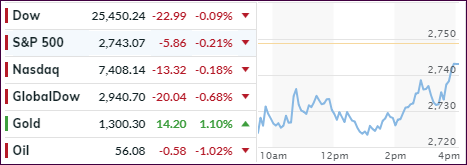
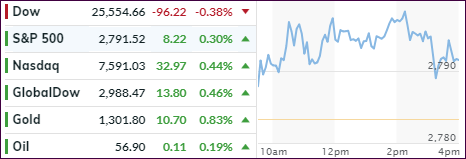
[Chart courtesy of MarketWatch.com]
  1. Moving the markets

The S&P 500 made another assault at the 2,800 marker and succeeded, at least for the time being. The last time, we saw this level being conquered was on March 1st, but bullish enthusiasm waned as negative news about a possible final China-Trade deal turned out to be nothing but hot air.

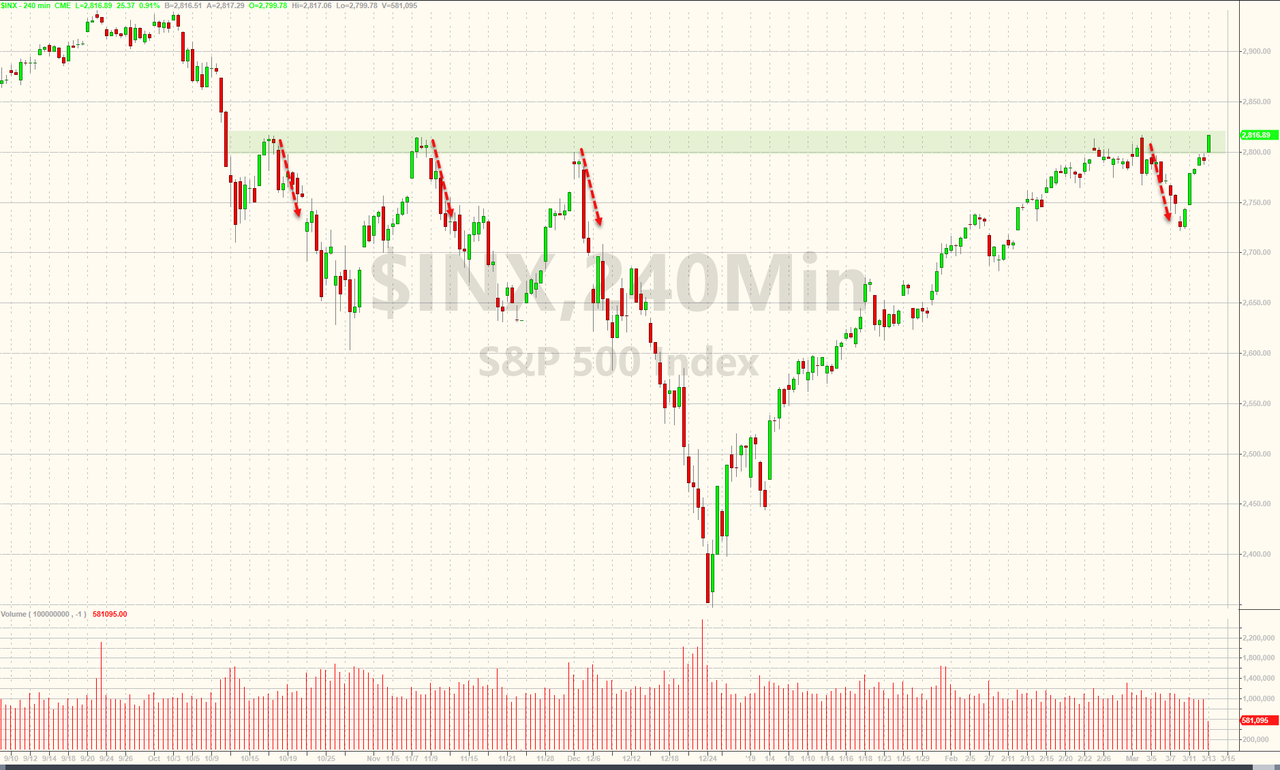
Today, the climb above had more legs, as the index also touched the 2,820 level, which is above a major resistance marker (2,817), as analyzed here. However, we later faded in the session but at least managed to hold on to the magical 2,800 line in the sand.

Assisting that fade was Trump’s removal of the dangling carrot, namely the trade talks with the Chinese, by announcing that he is in “no rush” to proceed. Surprisingly, market reaction was tranquil.

This is now the 5th test of the S&P’s 2,815/17 range since last year, as this chart shows. The prior four attempts were rebuffed, with especially the third one in October being the “nasty” one, which required engagement of the heavy artillery in form of the Fed’s policy reversal (no more rate hikes) late December.

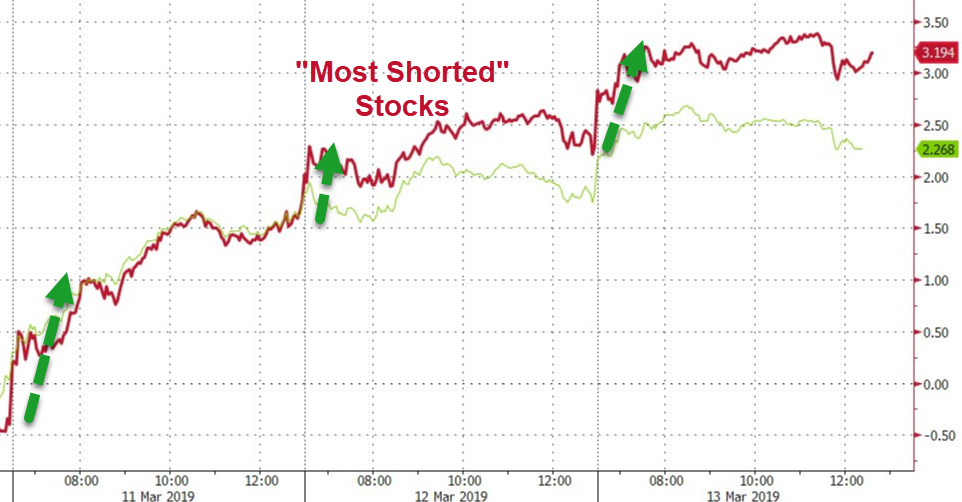
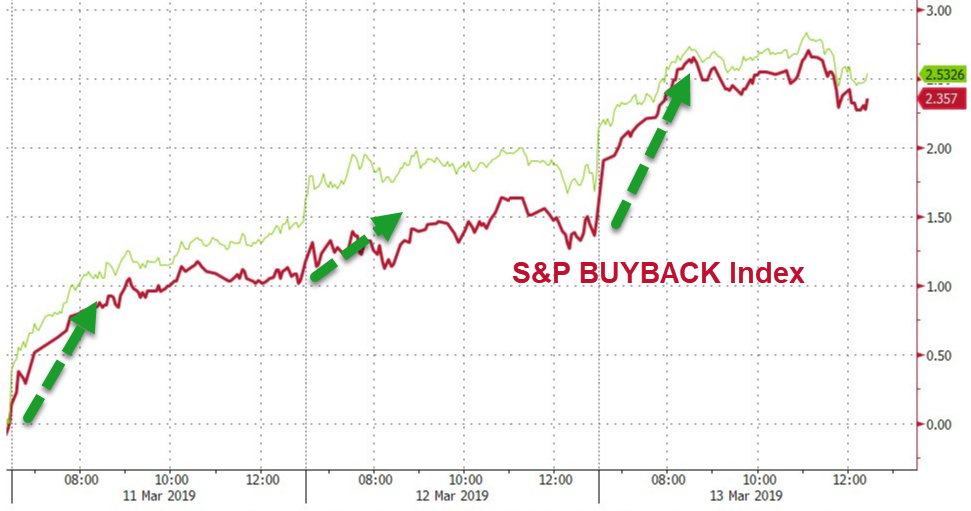
Another short squeeze and surging buyback related stocks made sure that the continued Boeing fallout did not filter down to the broad market. For right now, the bullish theme remains intact.
Read More

Divergence Alert: 10-Year Bond Yield Drops, While Nasdaq Pops

Ulli Market Commentary Contact

[Chart courtesy of MarketWatch.com]
  1. Moving the markets

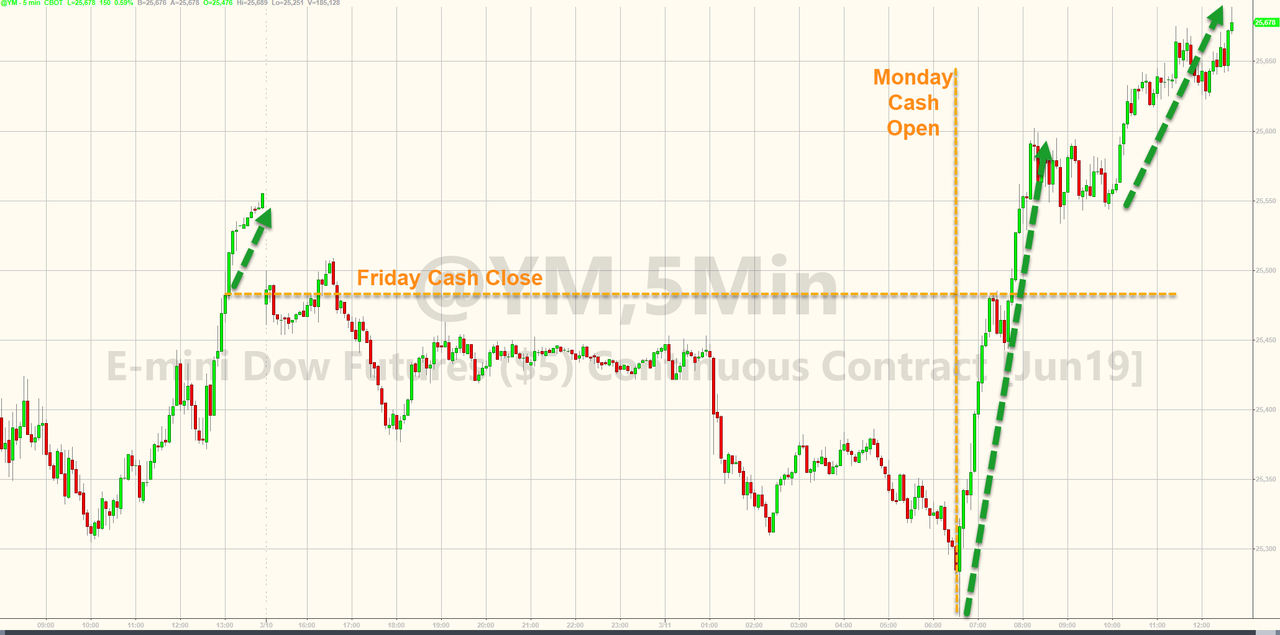
The Dow proved to be the laggard of the day again, as more fallout from Boeing’s recent aircraft crashes continued with many countries now having grounded the 737 Max jets. With Boeing (-6.22%) being a large component of the Dow, it’s no surprise that the index is suffering.

In the meantime, the S&P 500 and the Nasdaq added to yesterday’s gains with the supporting cast including health and technology sectors. The S&P appeared to be making another charge at breaking the 2,800 level to the upside but fell short of reaching that resistance level.

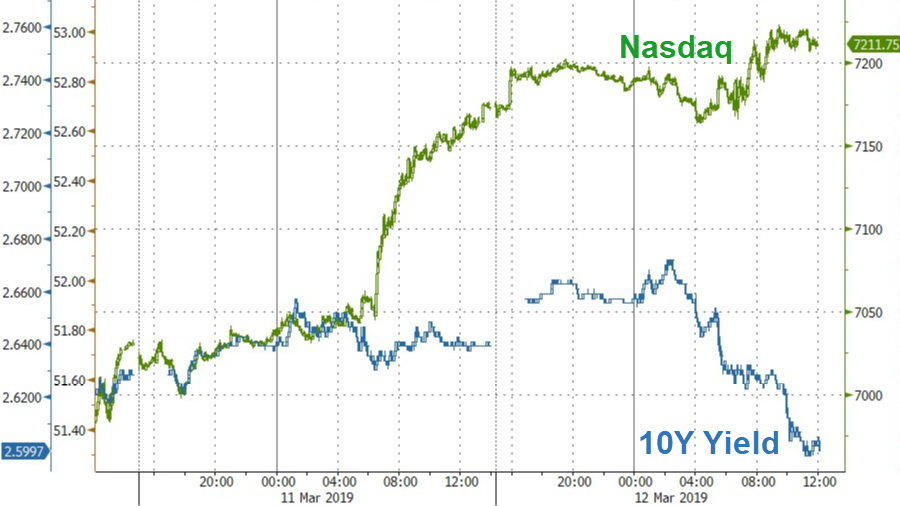
The 10-year bond yield dropped to 2.60% while the Nasdaq popped creating a divergence, which sooner or later will have to adjust. Usually, bond yields pave the way and, if history repeats itself, we will eventually see the Nasdaq attempting to head south to get back in sync with the yield.

However, right now the bulls are in control, and we will enjoy the ride for as long as it lasts.

Read More

A Steady Climb

Ulli Market Commentary Contact

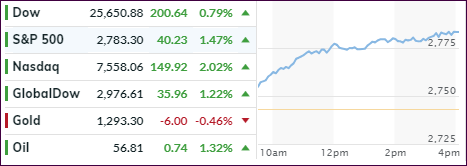
[Chart courtesy of MarketWatch.com]
  1. Moving the markets

Despite early weakness, the Dow managed a nice turnaround by coming back from a 240 point deficit to a 200-point gain. Boeing was the company that kept the Dow in check, after it fell some -6.5% caused by the second deadly airline crash in six months involving the 737 Max 8 planes.

The S&P 500 and the Nasdaq raced ahead with the latter being the clear winner for the day. Both managed to regain their respective 200-day M/As, but the S&P fell short of breaking through its overhead 2,800 glass ceiling.

Still, today was a solid rebound, after last week’s sell-off, propelled by today’s retail sales number, which was decent considering December’s disaster. Assisting the bullish mood was Fed chief Powell’s appearance on 60 minutes last night, which was generally perceived as “reassuringly” dovish.

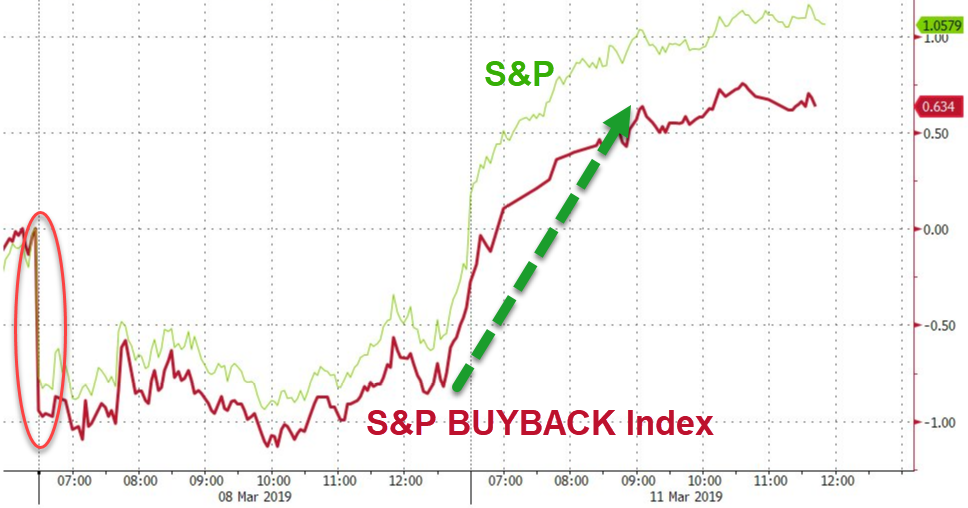
Also lending a helping hand to the bullish cause was a soaring S&P Buyback index and a short squeeze that catapulted the Russell 2000 out of the doldrums.

Our International Trend Tracking Index (TTI), which had slipped below its trend line the past 2 days, recovered and moved back into bull market territory for the time being. It was a good start to a new week, and we’ll have to wait and see if there is more follow through momentum to the upside, or if this was simply an outlier in a continuing correction.

Read More

ETFs On The Cutline – Updated Through 03/08/2019

Ulli ETFs on the Cutline Contact

Below, please find the latest High-Volume ETF Cutline report, which shows how far above or below their respective long-term trend lines (39-week SMA) my currently tracked ETFs are positioned.

This report covers the HV ETF Master List from Thursday’s StatSheet and includes 322 High Volume ETFs, defined as those with an average daily volume of more than $5 million, of which currently 150 (last week 227) are hovering in bullish territory. The yellow line separates those ETFs that are positioned above their trend line (%M/A) from those that have dropped below it.

Take a look:

The HV ETF Master Cutline Report

In case you are not familiar with some of the terminology used in the reports, please read the Glossary of Terms.

If you missed the original post about the Cutline approach, you can read it here.

ETF Tracker Newsletter For March 8, 2019

Ulli ETF Tracker Contact

ETF Tracker StatSheet

https://theetfbully.com/2019/03/weekly-statsheet-for-the-etf-tracker-newsletter-updated-through-03-07-2019/

ABYSMAL JOBS REPORT SENDS EQUITIES LOWER

[Chart courtesy of MarketWatch.com]
  1. Moving the markets

Today, it was a dismal jobs number that put equity markets on the defensive, as an ‘ugly’ payroll report showed that only 20k jobs were generated during February. It was filed in the “just bad enough” category that even computer algos did not register it as good news for stocks, which otherwise would have sent markets surging.

Why?

Because this was for sure another nail in the coffin of any future rate hikes. And not just that, it may very well be pointing in the direction of potential rate decreases and possibly the implementation of more QE (Quantitative Easing). In other words, it confirms what I have been posting about, namely that a continued global slowdown is a real possibility, and the U.S. will not be isolated from it.

Even President Trump’s attempt to ‘juice’ the markets by declaring that, as soon as the China deal is done, “we will see a very big spike” fell on deaf ears and had no effect. Wiping out the mid-day rebound were news that China’s Xi had cancelled his future meeting with Trump at the Mar-A-Lago estate, where allegedly the trade deal was supposed to be signed.

The major indexes bobbed and weaved below their respective unchanged lines, until a late rally wiped out most of the earlier losses and pushed the Dow almost into positive territory. However, we fell short of that goal but recovered nicely.

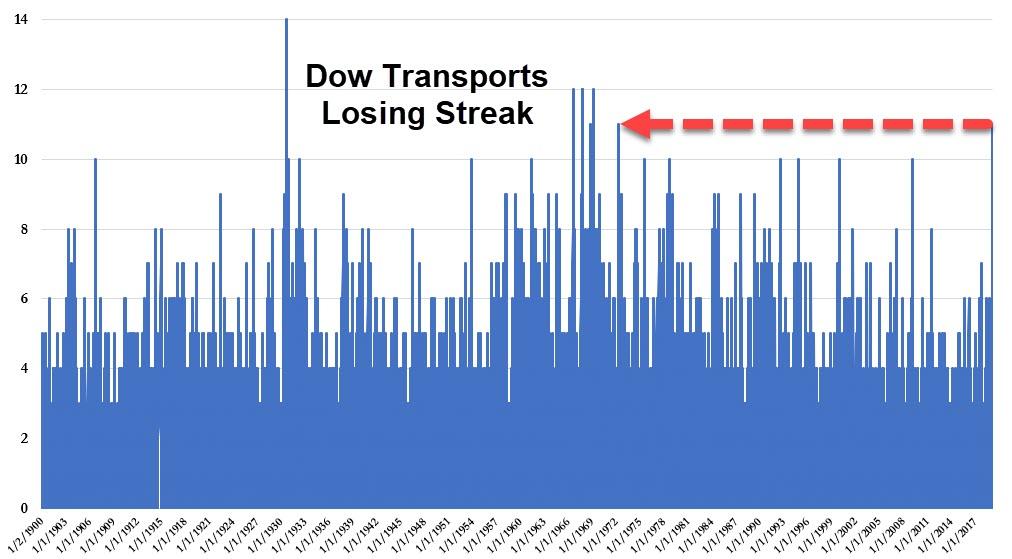
The exception was the Transportation Index (IYT), which has been down for 11 straight days, it’s worst losing streak since Nixon reigned in 1972. This is significant only in the sense that this gauge is closely watched due to it representing the health of the overall economy.

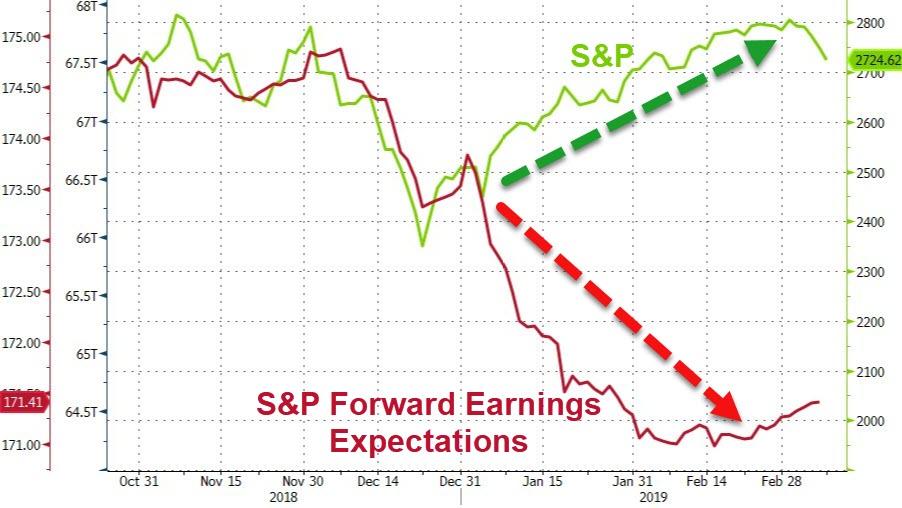
The gap between reality and stock prices is far too wide, as this chart shows, leaving me pondering: Will earnings move up to justify current prices or will the S&P move down to meet earnings levels?

Read More

Weekly StatSheet For The ETF Tracker Newsletter – Updated Through 03/07/2019

Ulli ETF StatSheet Contact

ETF Data updated through Thursday, March 7, 2019

Methodology/Use of this StatSheet:

  1. From the universe of over 1,800 ETFs, I have selected only those with a trading volume of over $5 million per day (HV ETFs), so that liquidity and a small bid/ask spread are assured.
  2. Trend Tracking Indexes (TTIs)

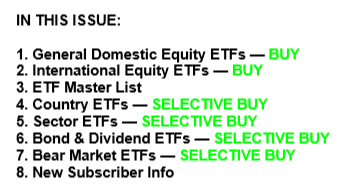
Buy or Sell decisions for Domestic and International ETFs (section 1 and 2), are made based on the respective TTI and its position either above or below its long-term M/A (Moving Average). A crossing of the trend line from below accompanied by some staying power above constitutes a “Buy” signal. Conversely, a clear break below the line constitutes a “Sell” signal. Additionally, I use a 7.5% trailing stop loss on all positions in these categories to control downside risk.

  1. All other investment arenas do not have a TTI and should be traded based on the position of the individual ETF relative to its own respective trend line (%M/A). That’s why those signals are referred to as a “Selective Buy.” In other words, if an ETF crosses its own trendline to the upside, a “Buy” signal is generated. Since these areas tend to be more volatile, I recommend a wider trailing sell stop of 7.5% -10% depending on your risk tolerance.

If you are unfamiliar with some of the terminology, please see Glossary of Terms and new subscriber information in section 9.


  1. DOMESTIC EQUITY ETFs: BUY — since 02/13/2019

Click on chart to enlarge

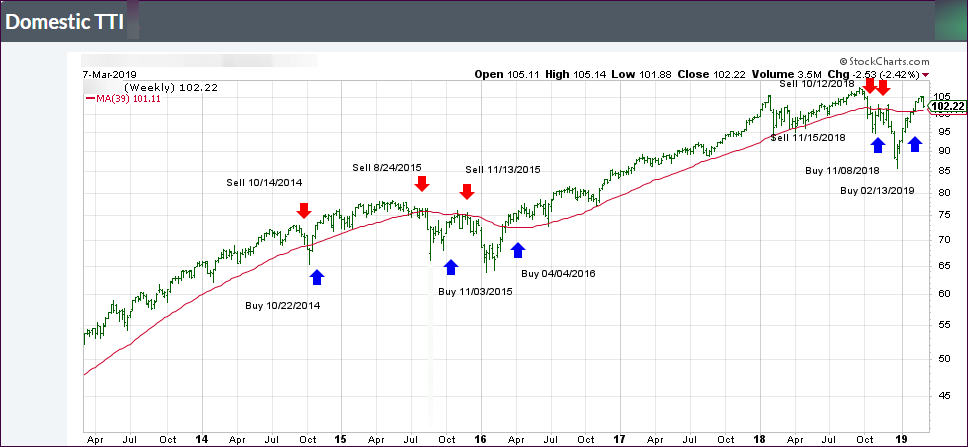
Our main directional indicator, the Domestic Trend Tracking Index (TTI-green line in the above chart) is now positioned above its long-term trend line (red) by +1.09% after having generated a new Domestic “Buy” signal effective 2/13/19 as posted.

Read More