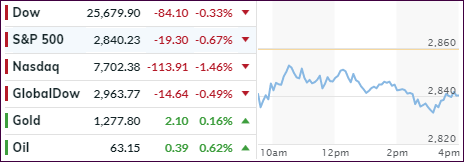
The
trade war rhetoric between the U.S. and China heated up over the weekend, with
both sides threatening a variety of consequences. The major indexes headed south
with the Nasdaq
taking the brunt of the losses.
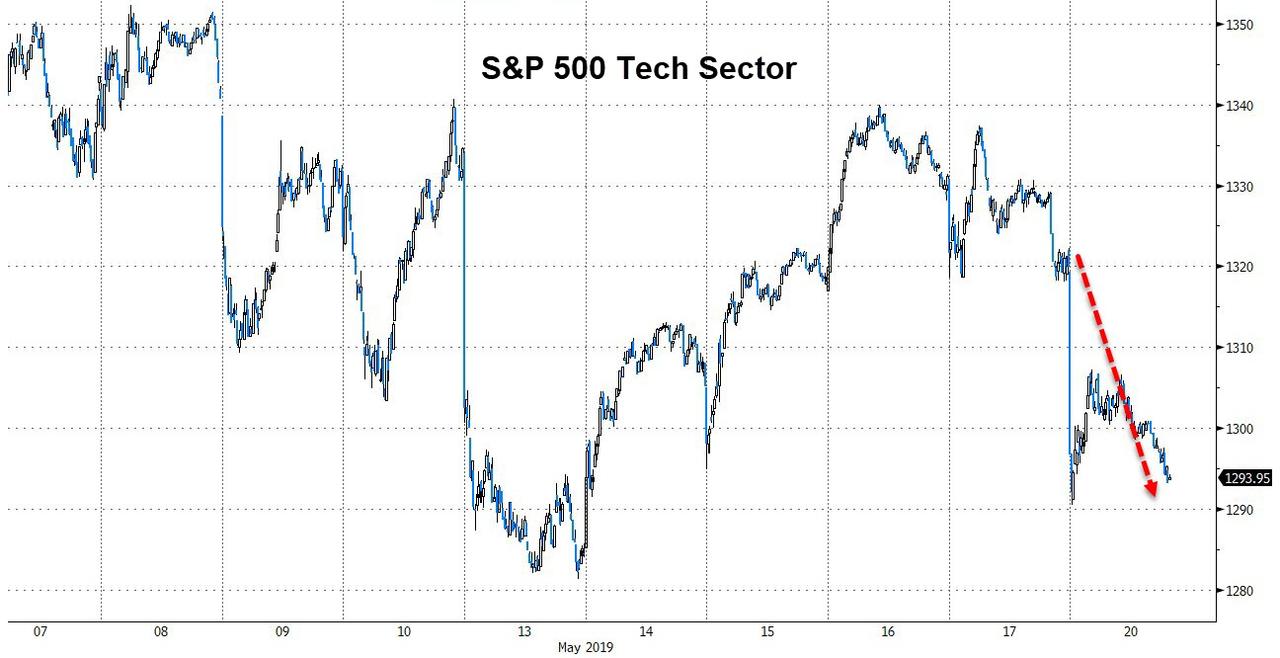
Chipmakers
took it on the chin, as U.S. tech companies, in compliance with White House
requests, have begun to implement the ban on Huawei Technology products. The
company will be cut off from receiving Android updates and will be restricted
to use only public open-source versions of the software program.
AAPL
stock fell after warnings of retaliatory action from China, which plays a big
role in how Chinese consumers perceive U.S. products, and “acceleration” to adopt local iPhone substitutes could be damaging
to say the least.
To
further put the heat on the U.S., China’s Xi threatened to use one of their nuclear
options, namely banning Rare-Earth mineral exports, which for sure would
cripple supply chains of these rare commodities necessary in all tech products
and military applications.
In
other words, the tit-for-tat continues with no end in sight, and it appears
that trade differences are about to morph into an all-out trade war. That will
not be a positive for equity markets, unless the bizarre theme of the past that
“bad news is good news” still makes its
presents felt.
Below, please find the latest High-Volume ETF Cutline
report, which shows how far above or below their respective long-term trend
lines (39-week SMA) my currently tracked ETFs are positioned.
This report covers the HV ETF Master List from Thursday’s
StatSheet and includes 322 High Volume ETFs, defined as those with an average
daily volume of more than $5 million, of which currently 221 (last week 245)
are hovering in bullish territory. The yellow line separates those ETFs that
are positioned above their trend line (%M/A) from those that have dropped below
it.
In case you are not familiar
with some of the terminology used in the reports, please read the Glossary of Terms.
If you missed the original
post about the Cutline approach, you can read it here.
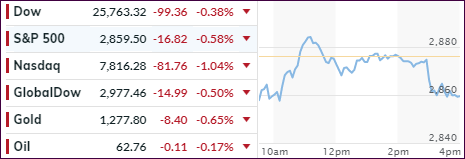
The
struggle for direction shifted into high gear when, after a weak opening, the algos
pushed the indexes back into the green, only to see the gains disappear in a sudden
late session sell off. In between, the S&P 500 vacillated tightly around
its unchanged line.
ZH
described the cause of the early dump and the late slump very concisely:
…the reason why
futures slumped overnight is because Chinese officials turned up the trade war
rhetoric, warning that there are no plans for another round of talks.
Additionally, front page commentary in the Communist Party’s People’s Daily
evoked the patriotic spirit of past wars, saying the trade war would never
bring China down, while commentary on the blog Taoran Notes, which was carried
by state-run Xinhua, accused the U.S. of “playing tricks to disrupt the
atmosphere.”
The message was
clear: no talks are scheduled, and more importantly, China has no urge to
schedule talks in the immediate future or to engage the “barbarian”
Trump.
And so, with exactly
one hour in trading left, CNBC doubled down, reporting what traders already
knew thanks to the latest round of belligerent Chinese rhetoric, namely that
“negotiations between the US and China appear to have stalled as both
sides dig in after disagreement earlier this month.” Additionally, CNBC
also echoed what Chinese officials had already said, and citing two sources
briefed on the status of the talks, said that scheduling for the next round of
negotiations is “in flux” because it is unclear what the two sides would
negotiate.
Finally, pointing out
the obvious, CNBC notes that “China has not signaled it is willing to
revisit past promises on which it reneged earlier this month, despite showing
up for talks in Washington last week.”
The market reaction
was instantaneous and negative, sending the S&P sharply lower… and yet
prompting questions: why is the market sharply lower on “news” which
everyone already knew? Perhaps the biggest question is just what idiot is the
marginal price setter in a market, in which nearly day-old news can hammer
stocks not once but twice, and linked to that, just how dumb are the algos?
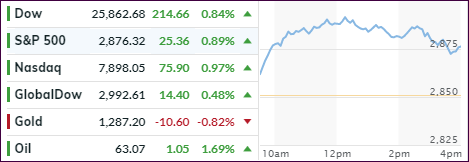
As
a result, the Dow is down four weeks in a row, something we have not seen since
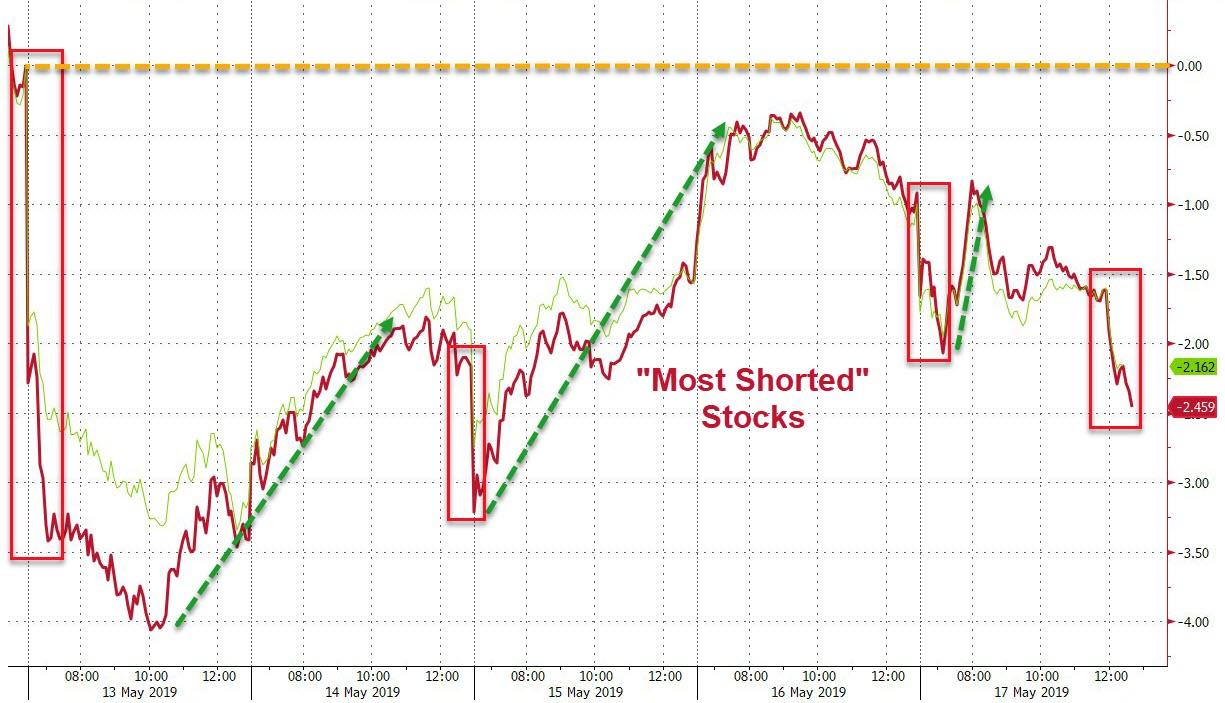
May 2016. Also, the mid-week short-squeeze
ran out of juice today causing the major indexes to end this week on a sour
note.
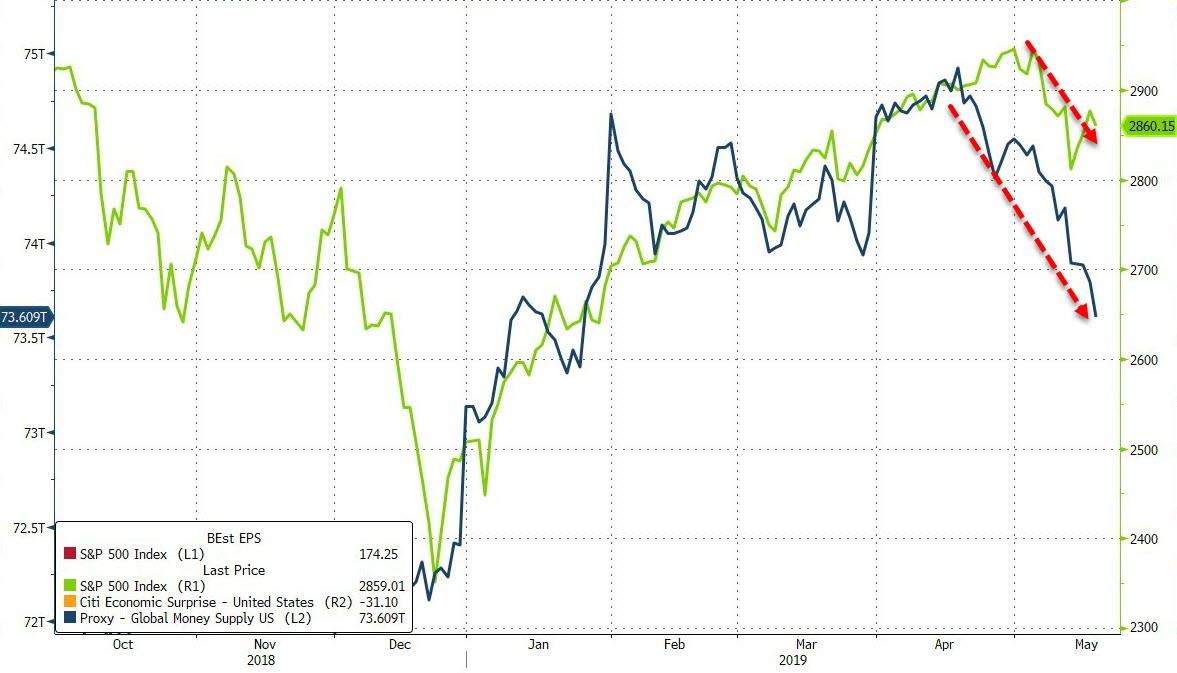
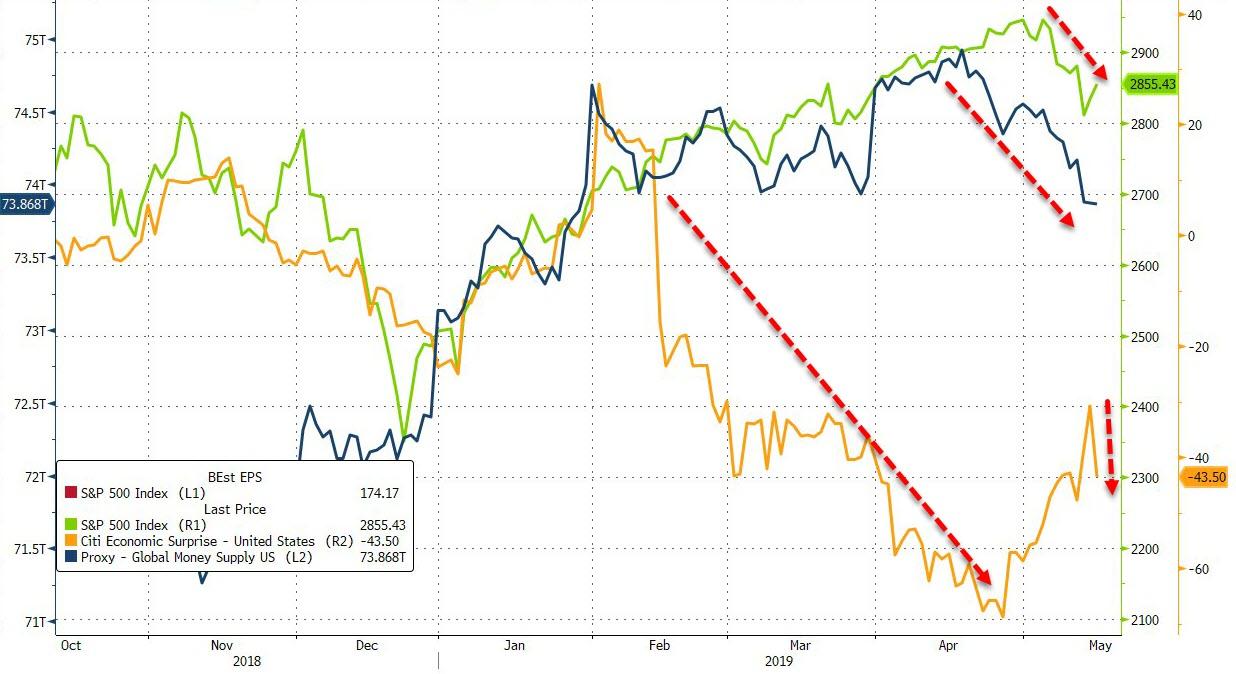
With the U.S.-China trade talks having collapsed, a new driver is needed to prop up the markets next week. Otherwise, the downside may come into play again and, as I posted before, collapsing global money supply will currently not be of any assistance to the bullish theme.
1. From the universe of over 1,800 ETFs, I have selected only those with a
trading volume of over $5 million per day (HV ETFs), so that liquidity and a
small bid/ask spread are assured.
2. Trend Tracking Indexes (TTIs)
Buy or Sell decisions for Domestic and International ETFs (section 1 and
2), are made based on the respective TTI and its position either above or below
its long-term M/A (Moving Average). A crossing of the trend line from below
accompanied by some staying power above constitutes a “Buy” signal. Conversely,
a clear break below the line constitutes a “Sell” signal. Additionally, I use a
7.5% trailing stop loss on all positions in these categories to control
downside risk.
3. All other investment arenas do not have a TTI and should be traded
based on the position of the individual
ETF relative to its own respective trend line (%M/A). That’s why those signals
are referred to as a “Selective Buy.” In other words, if an ETF crosses its own
trendline to the upside, a “Buy” signal is generated. Since these areas tend to
be more volatile, I recommend a wider trailing sell stop of 7.5% -10% depending
on your risk tolerance.
If you are unfamiliar with some of the terminology, please see Glossary of Termsand new subscriber information in section 9.
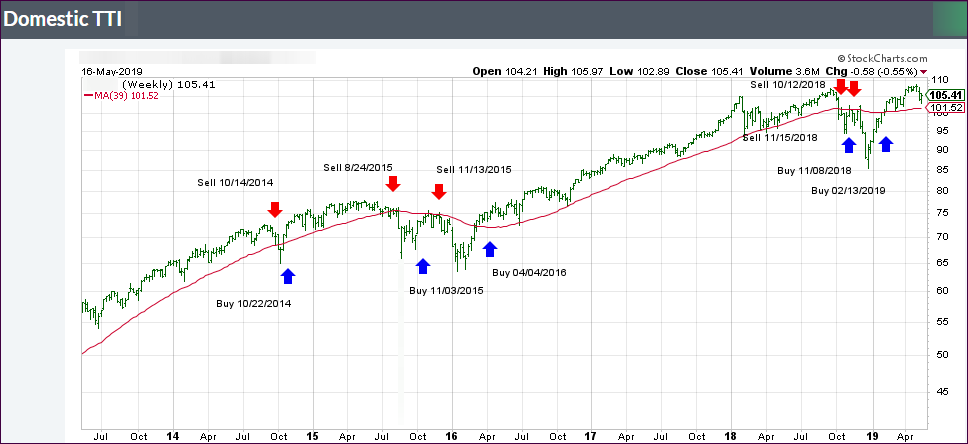
1. DOMESTIC EQUITY ETFs: BUY
— since 02/13/2019
Click on chart to enlarge
Our main directional indicator, the Domestic Trend Tracking Index (TTI-green line in the above chart) is now positioned above its long-term trend line (red) by +3.86% after having generated a new Domestic “Buy” signal effective 2/13/19 as posted.
A
third day of gains kept the bulls in charge with the major indexes ending up
solidly in the green, as it turned out that a worsening global trade picture is
now considered a good thing for equities. Go figure…
To
be fair, an early assist came from a couple of blue-chip stocks, whose upbeat
earnings helped to get things started in the bullish direction. Also, U.S. Labor
and Housing market numbers were better than expected, all of which alleviated
some of the ever-present worries over trade escalations.
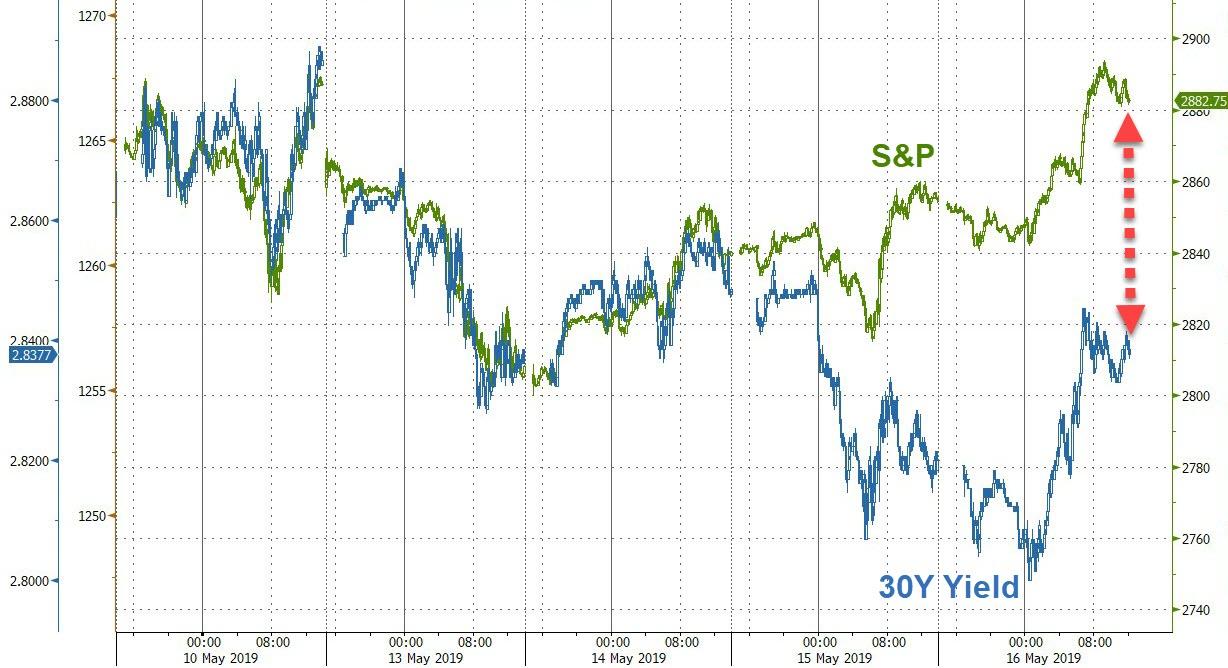
Conveniently
ignored was the decoupling
of stocks and bonds, which headed in different directions but will have to eventually
fall back in sync. The question is: “will
it be in favor of stocks or bonds?”
If
you think that traders have a handle on what goes on in the markets, you may be
pleased to hear that this is not the case. Here are some nuggets I’ve found when
evaluating if we are in a ‘risk on’ or ‘risk off’ mode:
Trade tensions have eased. Trade tensions have ratcheted up.
Things will get better. They have to. It’ll get worse before it gets better. Neither
side can afford to back down.
Use game theory to figure this whole
situation out. Use it to create a game
plan.
React to every comment. It’s the only way to survive.
Buy the dip. Derisk.
And, of course, what
is really the punchline: The global
economy is set to grow and is in a “good place;” the numbers are cratering
fast.
Which is it?
One
trader added this bon mot: Nobody know what’s going on, but
everyone is buying just in case.
There
you have it. It appears to be a mad house with everyone scrambling for explanations,
which would be funny, if this whole environment wouldn’t be so critical for the
survival of your portfolio.
I think the only reasonable thing to do is to have a clearly defined exit strategy, just in case this house of cards comes crumbling down, which it eventually will.
A
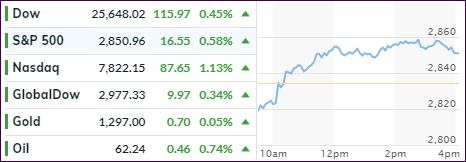
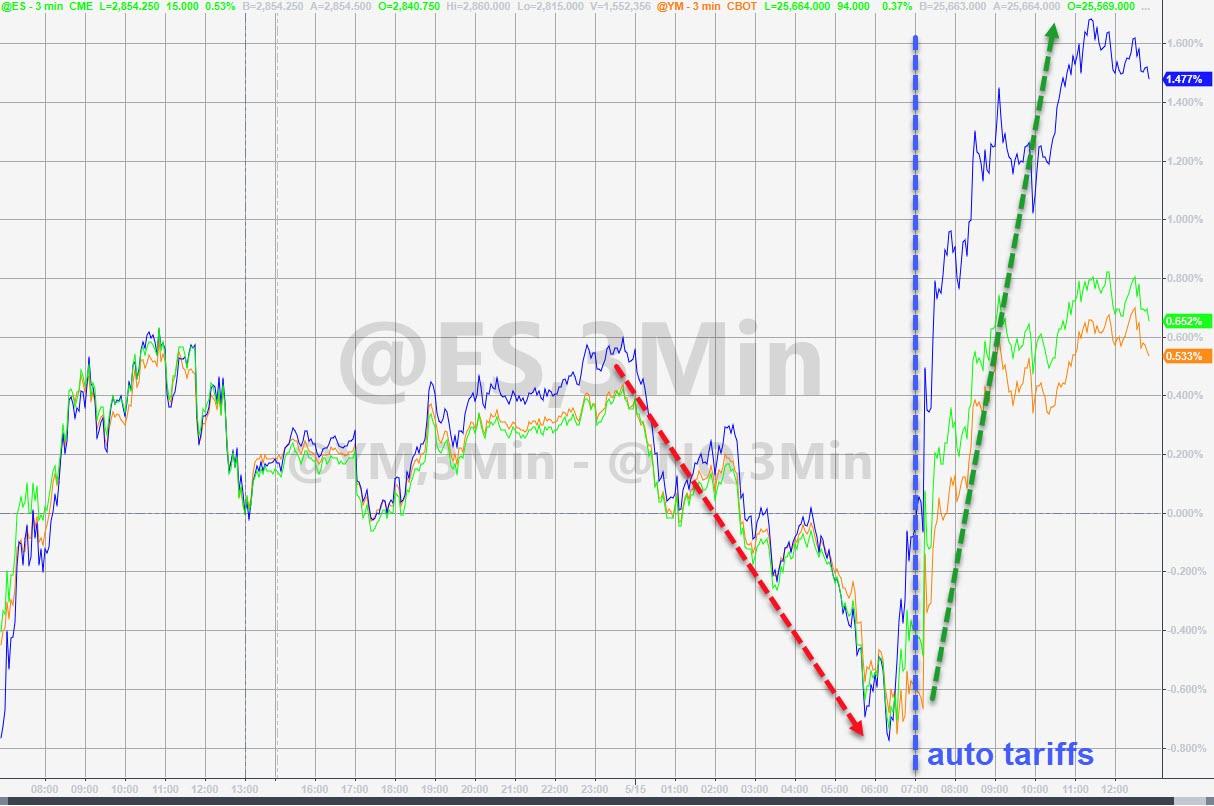
market opening in the red turned into a positive, as trade hope was kept alive
on that other trade war front, namely
Europe. We heard that an unexpected bit of good news spread like wildfire when Trump
announced that he plans to delay
imposing tariffs on EU auto imports by six months.
That
was good enough to change the mood on Wall Street to bullish, as it meant at least
a temporary trade-ceasefire on one front, while the escalation with China could
continue and morph into an outright trade war.
Domestically,
retailers are seeing declining purchases for the second time in 3 months. This means
consumer spending confirms a slowing economy, despite the widely touted low unemployment
rate, which is supposed to represent a healthy labor market.
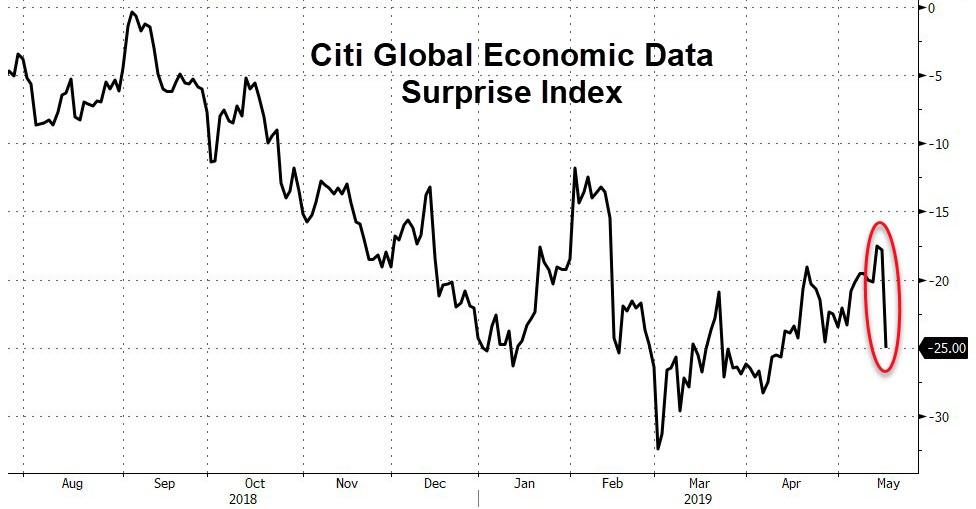
This
weakness goes along with global data, which showed disappointment, as the Global
surprise index kept heading south, which makes the current rally questionable
as to whether it sits on a solid footing or is merely based on wishful thinking
along with hope for more stimulus.
Thanks to ZH, we now have an updated chart showing that global money supply and fundamentals, as represented by the Citi Economic Surprise Index, are no longer supporting equities. We’ll have to wait and see ‘if’ and ‘when’ that reality sinks in.