Weekly StatSheet For The ETF Tracker Newsletter – Updated Through 11/07/2019

Ulli ETF StatSheet Contact

ETF Data updated through Thursday, November 7, 2019
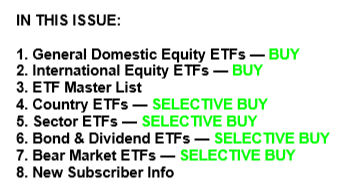
Methodology/Use of this StatSheet:

1. From the universe of over 1,800 ETFs, I have selected only those with a trading volume of over $5 million per day (HV ETFs), so that liquidity and a small bid/ask spread are assured.

2. Trend Tracking Indexes (TTIs)

Buy or Sell decisions for Domestic and International ETFs (section 1 and 2), are made based on the respective TTI and its position either above or below its long-term M/A (Moving Average). A crossing of the trend line from below accompanied by some staying power above constitutes a “Buy” signal. Conversely, a clear break below the line constitutes a “Sell” signal. Additionally, I use a 7.5% trailing stop loss on all positions in these categories to control downside risk.

3. All other investment arenas do not have a TTI and should be traded based on  the position of the individual ETF relative to its own respective trend line (%M/A). That’s why those signals are referred to as a “Selective Buy.” In other words, if an ETF crosses its own trendline to the upside, a “Buy” signal is generated. Since these areas tend to be more volatile, I recommend a wider trailing sell stop of 7.5% -10% depending on your risk tolerance.

If you are unfamiliar with some of the terminology, please see Glossary of Terms and new subscriber information in section 9.     

1. DOMESTIC EQUITY ETFs: BUY — since 02/13/2019
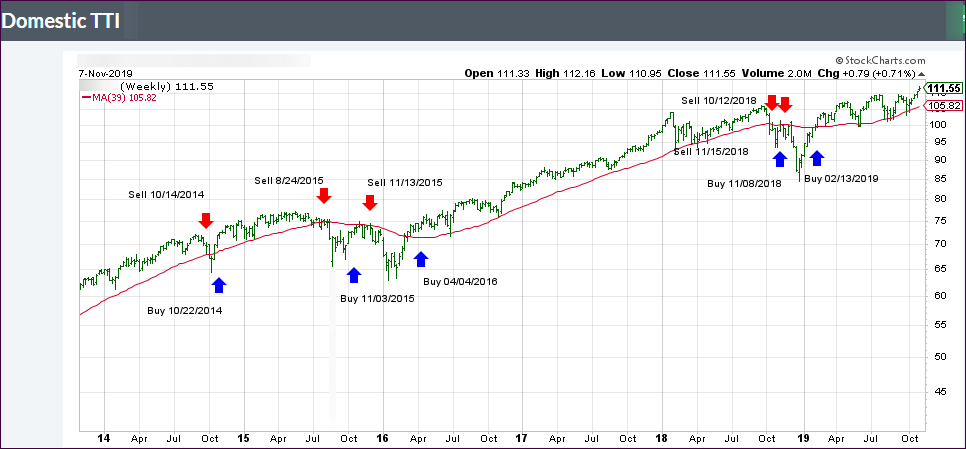
Click on chart to enlarge

Our main directional indicator, the Domestic Trend Tracking Index (TTI-green line in the above chart) is now positioned above its long-term trend line (red) by +5.72% after having generated a new Domestic “Buy” signal effective 2/13/19 as posted.

Read More
Optimistic Trade News Stokes Equities

Ulli Market Commentary Contact

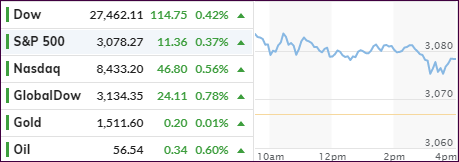
[Chart courtesy of MarketWatch.com]
  1. Moving the markets

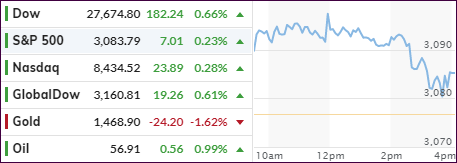
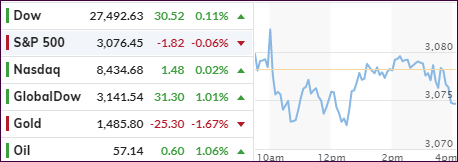
With the earnings season fading away, the US-China trade disagreement moved to center stage again, with positive statements stoking the markets and continuing the relentless push higher.

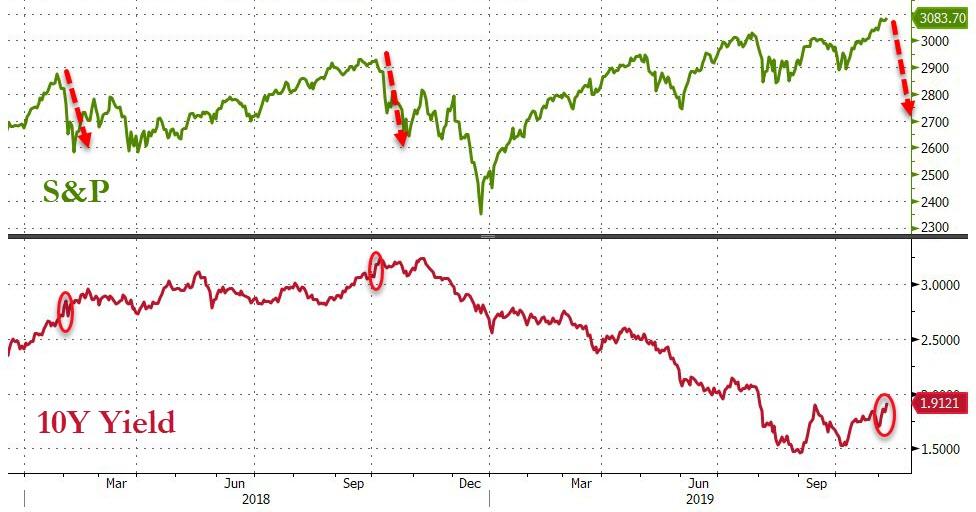
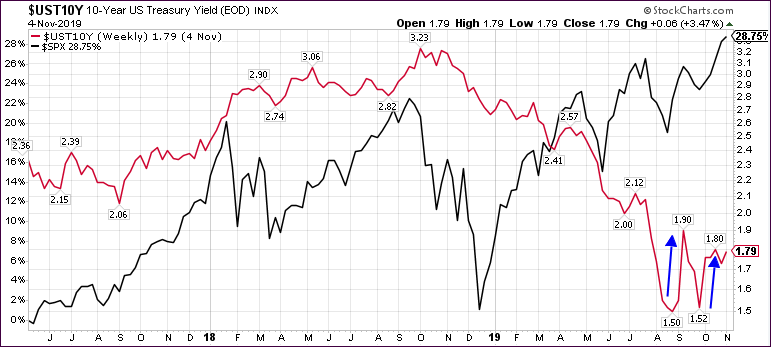
This happened again in the face of sharply rising bond yields with the 10-year jumping an amazing 10.57 basis points to end the day at 1.92%. This was an aggressive rise in yields, an event that in the past has always been a bad omen for stocks, so will it be different this time?

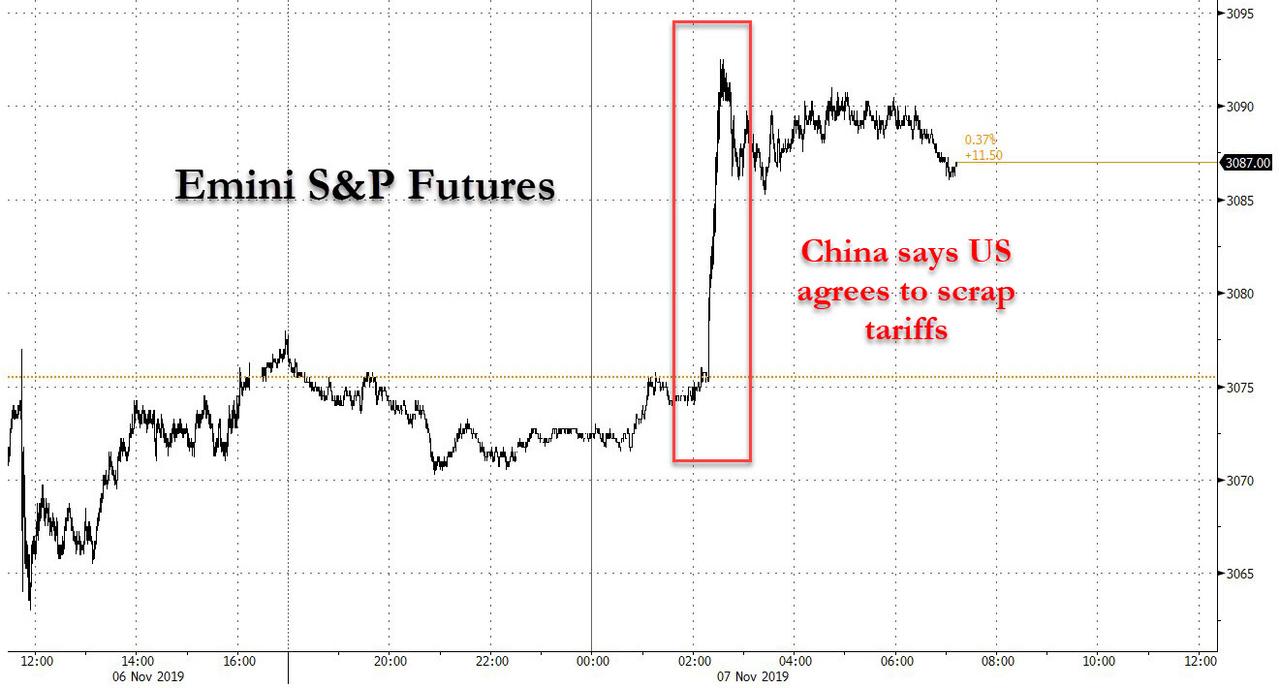
Today’s ramp started early on when the futures market set the bullish tone after China said that the US had agree to roll back tariffs. The alleged agreement was that China and the US would roll back tariffs on each other’s goods in phases while working towards a trade deal, the optimism of which has now contributed to the rally over the past 5 days.

For sure, the market’s mood kept getting better with some analysts arguing that any resolution would halt or at least slow down the current path towards the much-feared global recession. At the same time, some of the slowing countries like Europe, Japan and even China may have bottomed in terms of their economies weakening; at least so goes the hopeful thinking.

Then came a cool wind of reality when Reuters reported that according to “sources” the White House plan to roll back China tariffs “faces fierce internal opposition,” which yanked the markets off their lofty intra-day highs but still enabled the major indexes to score another winning session.

And so, the saga goes on…

Read More

No Market Commentary

Ulli Uncategorized Contact

I will be out of the office for most of the day and evening and will not have a chance to write today’s market commentary.

Regular posting will resume tomorrow.

Ulli…

Treading Water

Ulli Market Commentary Contact

[Chart courtesy of MarketWatch.com]
  1. Moving the markets

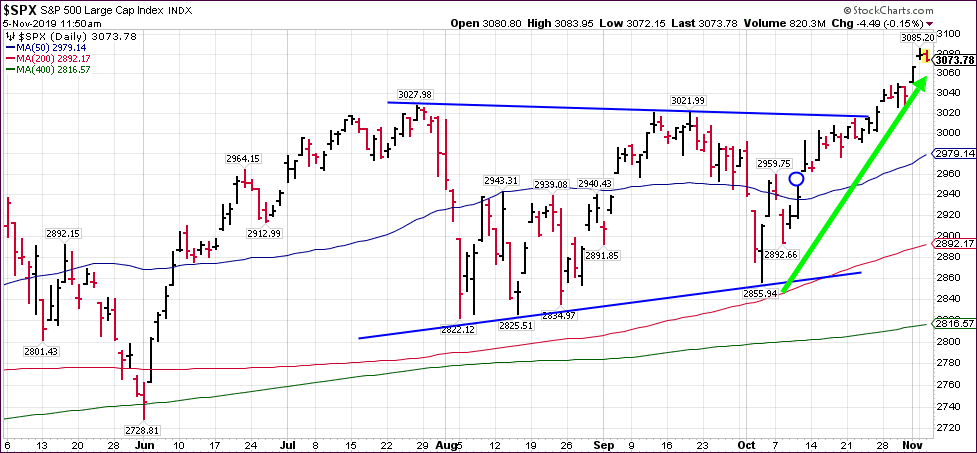
Ever since we had 2 down days at the beginning of October, equities have been on a relentless march higher (green arrow in chart) with virtually no interruption. Despite the Fed’s efforts to lower interest rates, this rally happened in the face of rising bond yields, an event that usually takes the starch out of upward equity moves.

But we seem to be living in a financial system where historical norms no longer apply. The fallout from higher rates has been a recent underperformance of not just bond ETFs but also the low volatility ETFs like SPLV, which had been one of the top performers for the first 9 months of this year. In my advisor practice, I have now reduced our exposure to SPLV.

It simply lost its luster, as a result of 10-year bond yields starting to hiccup early in September, after having been on a downward trajectory all year. Today, the yield rocketed another 8 basis points higher to close at around 1.86%, which is within striking distance of taking out the September high of 1.90%.

If this continues, there will be a point, however, when equities will be affected by rising yields, but that moment in time is still the big unknown. On the other hand, as I posted yesterday, thanks to the largesse of the Central Banks injection of liquidity (the Fed added $250 billion just in the last 8 weeks), we have now two opposing forces, that simply can be looked at as an ongoing tug-of-war between bulls and bears with the outcome to be determined.

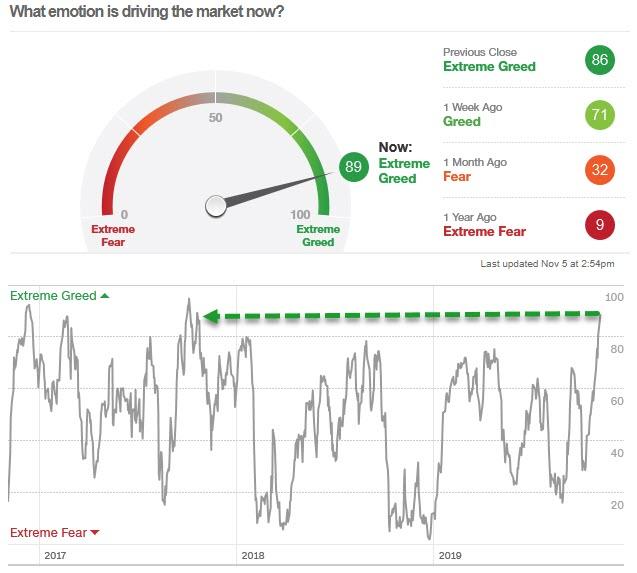
While today was a session during which the major indexes clustered around their respective unchanged lines, it looks to me, for the time being, that the power of liquidity may win and propel the markets higher, despite extreme greed having set in already.

Read More

Building On Friday’s Gains

Ulli Market Commentary Contact

[Chart courtesy of MarketWatch.com]
  1. Moving the markets

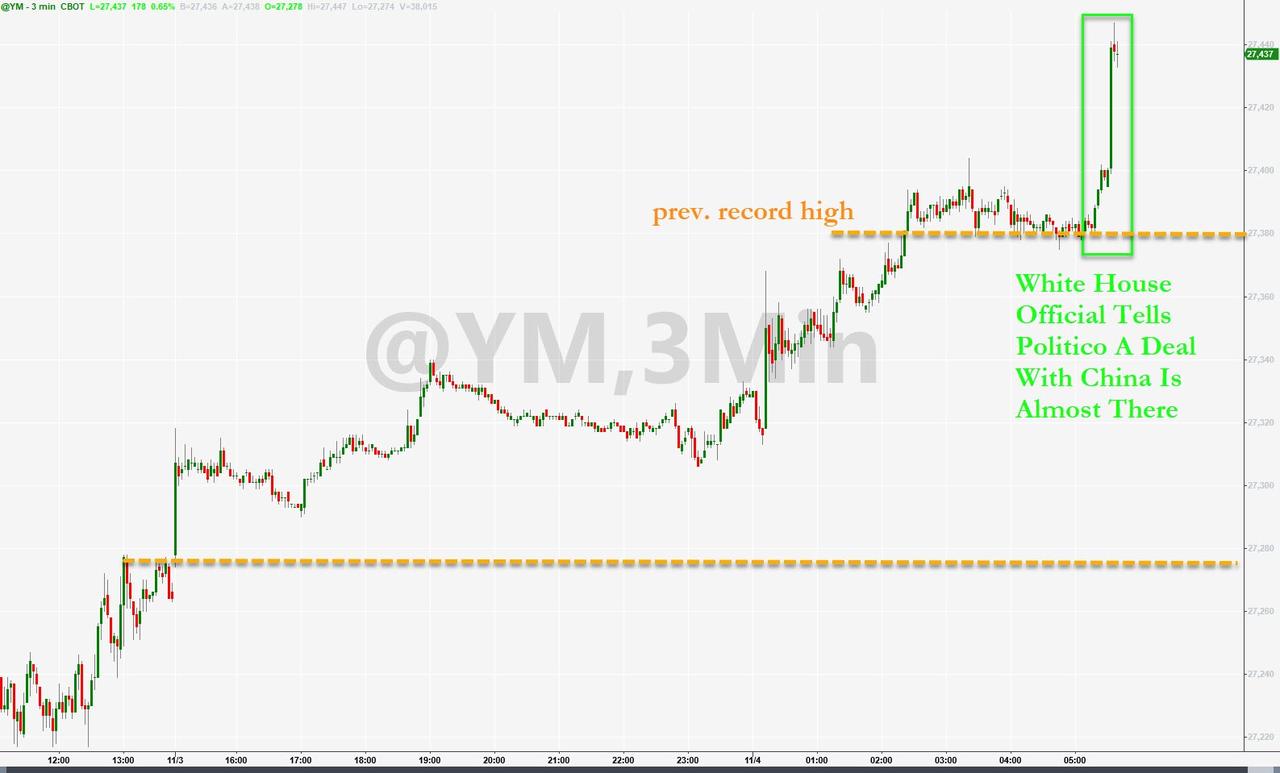
There wasn’t really a driving force behind today’s continued rally, as the futures markets started the bullish theme via the same old playbook.

The trade carrot was dangled again and came into play on a news headline that “a White House officials tells Politico a deal with China is almost there…” That was enough for the headline scanning computer algos to pump the markets higher leaving me pondering what the effect might be if there “is” or “is not” a deal? It also did not matter that bond yields surged thereby giving SPY another chance to close the performance gap with SPLV.

Then came Commerce Secretary Wilbur Ross’s announcement that, while some licenses for companies to do business with China’s Huawei Technologies, will be coming “very shortly,” he cautioned that a preliminary deal might not be ready to be signed this month.

Fundamentals certainly did not contribute to the upswing with Factory orders sagging and experiencing their biggest contraction since the middle of 2016. The YoY contraction came in at -3.5%, while Durable Goods orders added more negativity in September by dropping -1.2% MoM and -4.0% YoY. Not exactly an awe-inspiring contribution to the “best economy ever.”

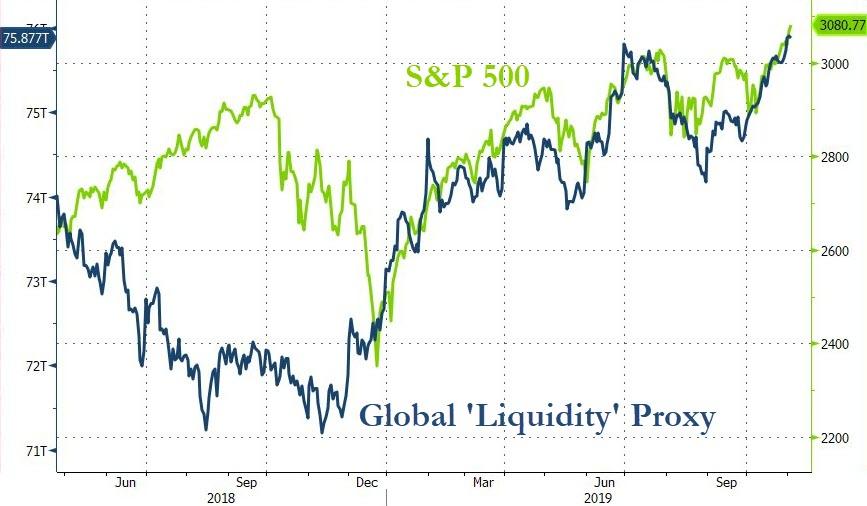
Of course, we all know that the state of the economy has nothing to do with the level of stock markets around the world; it’s liquidity that is the secret sauce behind the massive drive higher.

This chart makes this abundantly clear and, if you look at the left side, you’ll note that during the past year, a $4 trillion surge in global money supply (from $71 trillion to $75.8 trillion) was the primary reason for the bullish optimism, thereby totally discounting any underlying economic issues.

With the Fed having announced a $60 billion a month purchase program for Treasuries, there is a good chance that this added liquidity will find its way into the stock market, at least for the time being.

Read More

ETFs On The Cutline – Updated Through 11/01/2019

Ulli ETFs on the Cutline Contact

Below, please find the latest High-Volume ETF Cutline report, which shows how far above or below their respective long-term trend lines (39-week SMA) my currently tracked ETFs are positioned.

This report covers the HV ETF Master List from Thursday’s StatSheet and includes 322 High Volume ETFs, defined as those with an average daily volume of more than $5 million, of which currently 281 (last week 274) are hovering in bullish territory. The yellow line separates those ETFs that are positioned above their trend line (%M/A) from those that have dropped below it.

Take a look:                                                                   

The HV ETF Master Cutline Report

In case you are not familiar with some of the terminology used in the reports, please read the Glossary of Terms. If you missed the original post about the Cutline approach, you can read it here.