
[Chart courtesy of MarketWatch.com]
- Moving the market
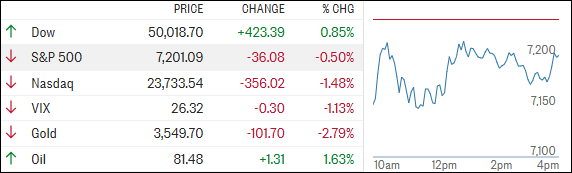
Yesterday’s AI-fueled celebration came back down to earth today.
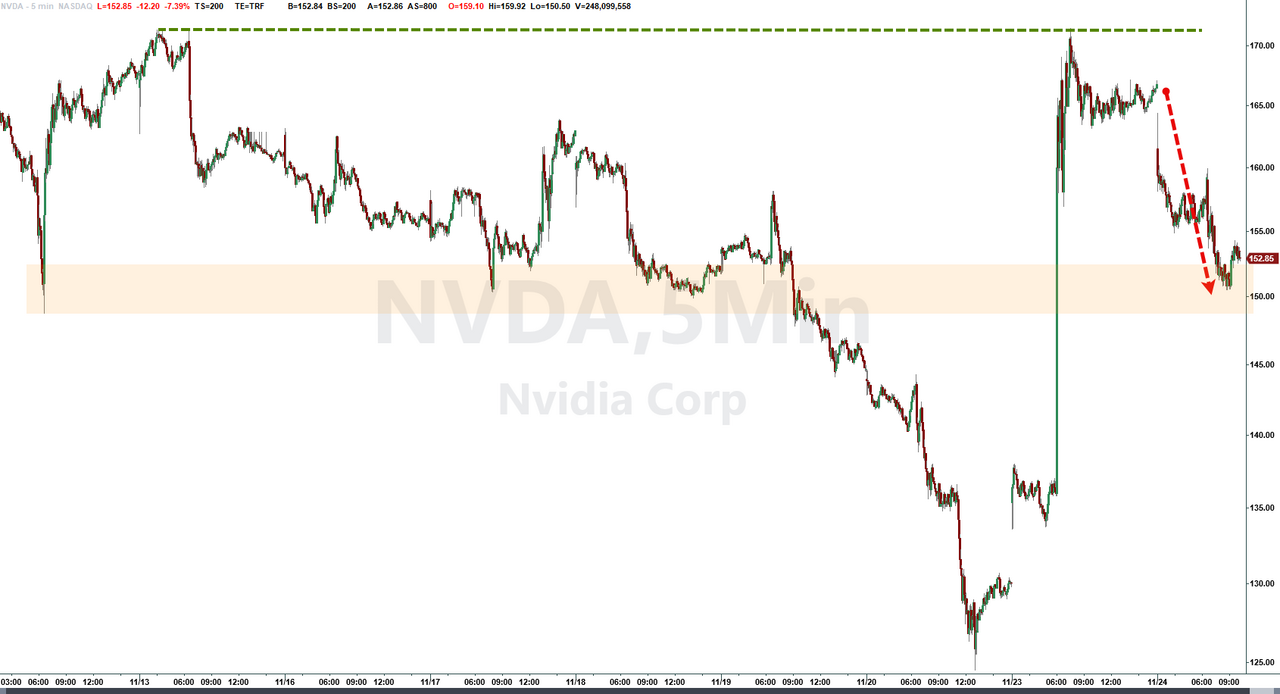
The Nasdaq surrendered a good chunk of Monday’s gains as investors took a fresh look at Nvidia and decided that bringing back Jensen Huang may have solved one problem, but not all of them.
Apparently, corporate governance concerns don’t disappear as quickly as stock prices can rise.
The selling spread well beyond Nvidia, with chips and AI names broadly under pressure. Micron, AMD, Broadcom, and parts of the Mag 7 all retreated as traders continued to “sell the rip” after Monday’s euphoric rebound.
Adding to the cautious mood, tariff concerns resurfaced just as investors were starting to breathe easier.
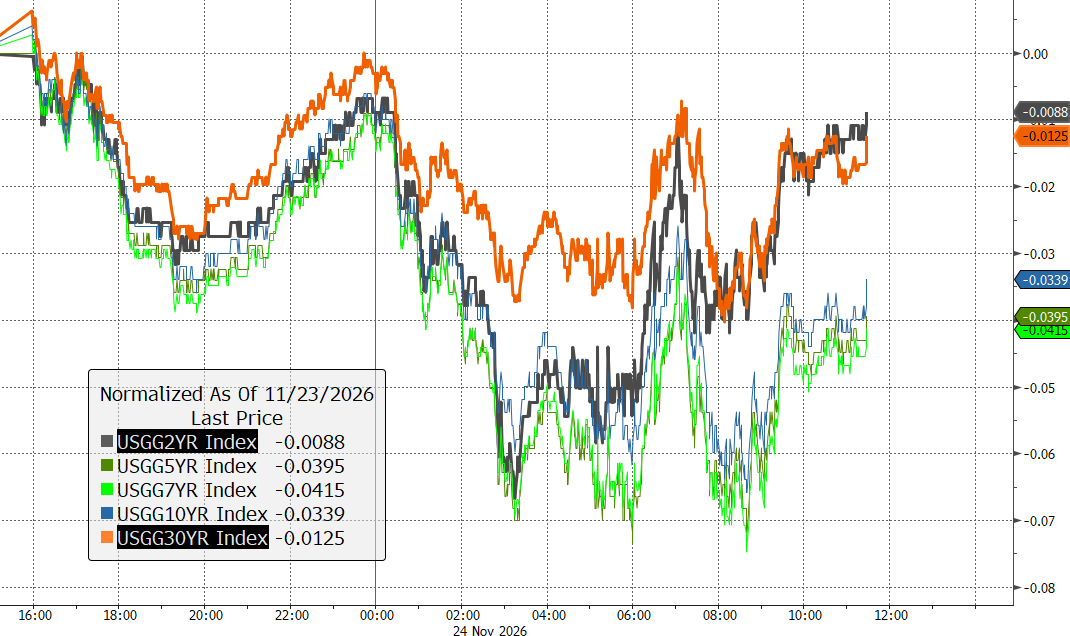
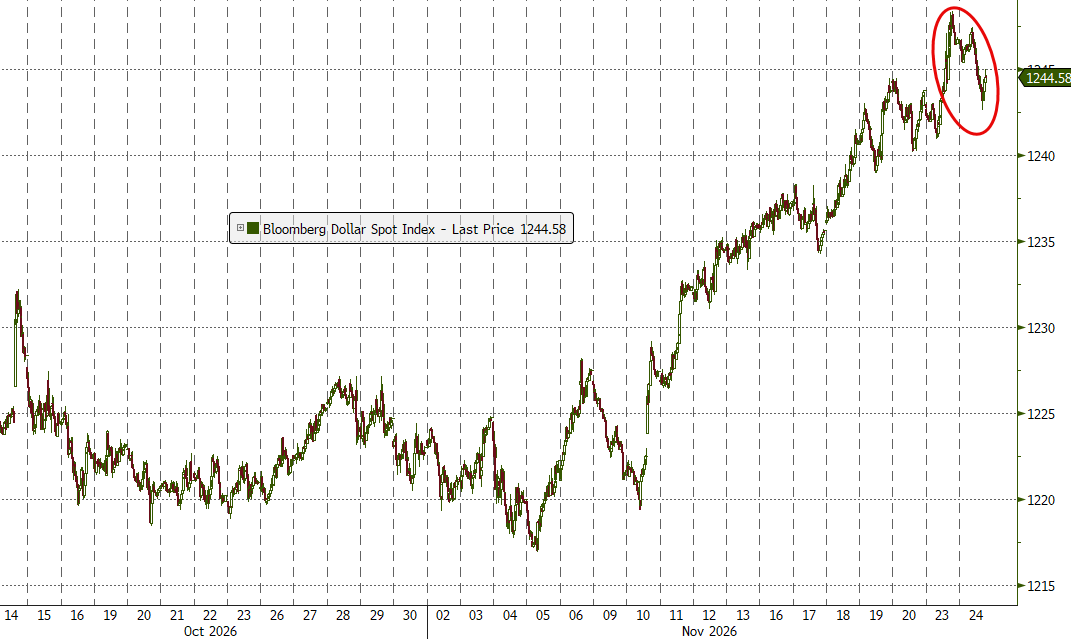
Elsewhere, bond yields eased, the dollar took a rare step backward, and gold somehow managed to decline anyway. Bitcoin followed tech lower, proving once again that when momentum leaves the room, it rarely exits alone.
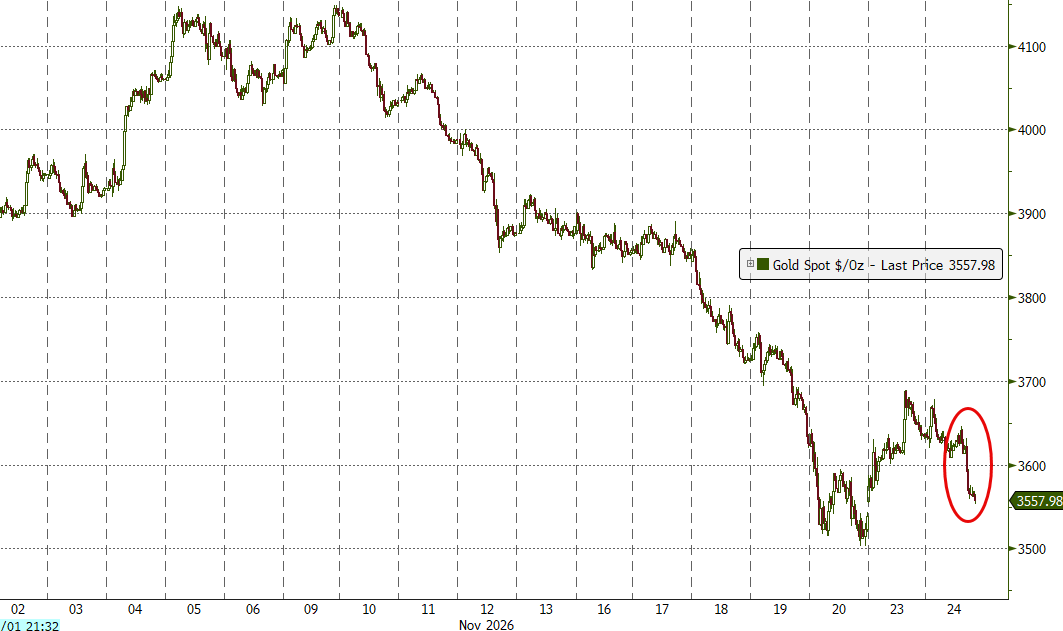
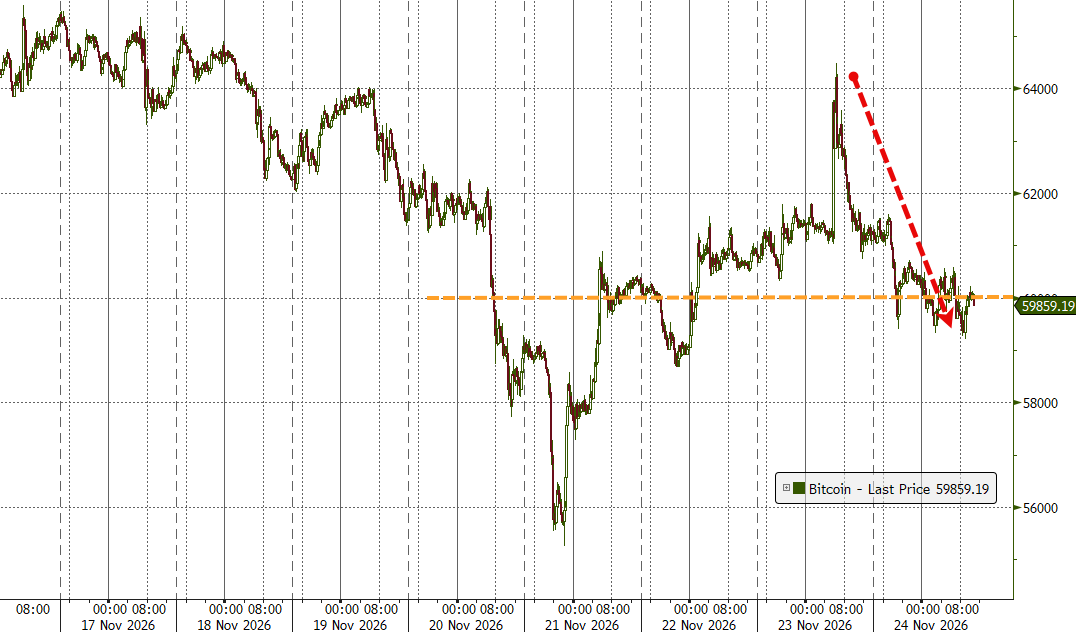
The bigger question now is whether recent market turbulence gives the Fed enough reason to pause in December, or if investors are simply hoping for an early holiday gift.
2. Current domestic “Buy” Cycle (effective 5/20/2025); International “Sell” Cycle (effective 11/23/26)
Our domestic bullish cycle that began on November 21, 2023, concluded on April 3, 2025, following a market downturn triggered by President Trump’s tariff policy announcement.
This development caused significant declines across major indexes and broader market indices. However, markets subsequently rebounded, culminating in a new domestic “Buy” signal taking effect May 20, 2025.
Concurrently, our International Trend Tracking Index (TTI) experienced parallel volatility.
On April 4, 2025, it breached critical thresholds, prompting a “Sell” recommendation. This position reversed as global markets recovered, with the International TTI regaining sufficient momentum to issue a new “Buy” signal effective May 8, 2025.
After the market’s sharp tumble in the third week of November, our International TTI flashed a Sell signal effective November 23, 2026.
Now comes the part that frustrates both investors and fortune tellers: we don’t yet know whether this is a brief panic attack or the start of a more persistent bear market.
For now, the trend is pointing south, and as every seasoned investor knows, arguing with the market is usually a losing hobby. We’ll let the data, not the drama, tell us what comes next.
3. Trend Tracking Indexes (TTIs)
Yesterday’s rally lost a little altitude today, which has some investors wondering whether it was the start of something durable or just a classic dead-cat bounce.
After all, betting that one person or one company can steer the global markets indefinitely is usually a short trip to humility.
Technology shares gave back part of yesterday’s gains, and metals joined the retreat, briefly forgetting their occasional job description as a safe-haven asset.
On the brighter side, our TTIs continued to edge higher. That said, the international index remains below its long-term trend line, a reminder that overseas markets are still showing more hesitation than conviction.
In other words, the global investing crowd is still keeping one foot on the dance floor and one eye on the exit.
This is how we closed 11/24/2026:
Domestic TTI: +2.53% above its M/A (prior close +2.22%)—Buy signal effective 5/20/25.
International TTI: -1.09% below its M/A (prior close -1.61%)—Sell signal effective 11/23/26.
All linked charts above are courtesy of Bloomberg via ZeroHedge.
———————————————————-
WOULD YOU LIKE TO HAVE YOUR INVESTMENTS PROFESSIONALLY MANAGED?
Do you have the time to follow our investment plans yourself? If you are a busy professional who would like to have his portfolio managed using our methodology, please contact me directly to get more details.
Contact Ulli